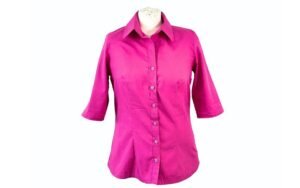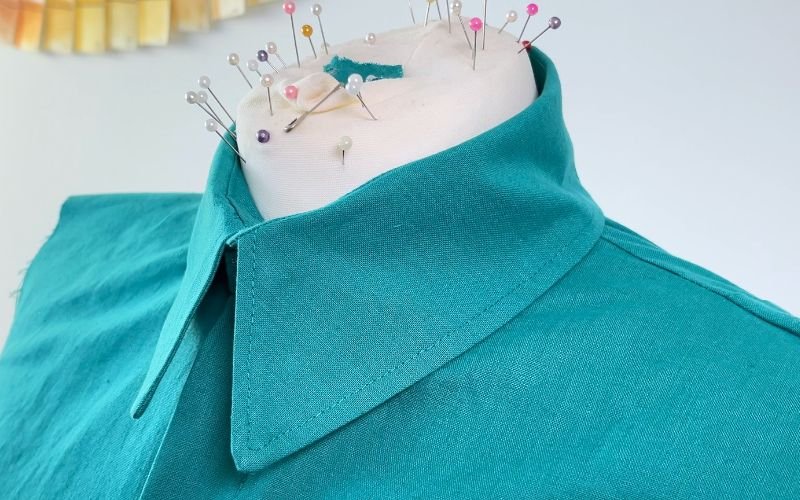
The point where the collar stand meets the button stand is where most shirts either look clean and professional—or slightly off. In this tutorial, I will show you how to sew on a collar and attach a collar stand so that this transition is smooth and precise.
I am a huge fan of classic shirt collar and I incorporate it into a lot of my work dresses and blouses. Currently, I have three handmade dresses and five shirts who all have collars and collar stands. The collar attachment has been a tricky point but with all that experience I have figured out what text books don’t tell you – how to attach collar and collar stand so that it transitions cleanly from collar stand to shirt. And in this tutorial I will share this secret hack with you.
This post on how to sew a collar and collar stand on a shirt is part of my shirt pattern drafting and construction series which teaches how to transform a self drafted basic bodice block into a complete shirt pattern and then sew into a complete shirt. The trick on getting a smooth transition from collar to button stand works on commercial sewing patterns too.
What You Will Learn in This Collar and Collar Stand Tutorial
In this tutorial, you will learn:
- how to cut a collar and collar stand following the correct grainline
- how to cut and apply fusible interfacing without shifting
- how to sew a collar and a collar stand step by step
- how to attach a collar stand to a shirt neckline
- how to sew on a collar with clean edges and no bulk
I’ll also explain why each step matters and how it affects the final result—because small details here make a big difference.
Step-by-Step Overview: How to Sew a Collar and Collar Stand
The process of how to attach a collar and how to attach a collar stand follows these main steps:
- preparing collar pieces
- applying interfacing
- sewing the collar
- turning and pressing
- preparing the collar stand
- attaching the collar to the stand
- attaching the collar stand to the neckline
- topstitching and finishing
The same approach works whether you are sewing a collar from a self drafted pattern or following a commercial sewing pattern.
What Is a Collar Stand and Why It Matters
Collar stand helps to lift collar higher up, adding vertical structure to the shirt. The shape of the collar stand is curved, with wider part nearer the neckline and narrower higher up the neck. This allows the collar to fit perfectly, without gaping or being too restrictive. Understanding this makes it much easier to follow how to sew a collar stand correctly—even without relying on pattern instructions.
I address the features and the purpose of the collar stand in how to draft a collar stand.
Parts of a Shirt Collar
A complete shirt collar consists of:
- upper collar
- under collar
- collar stand
All of these are assembled together before attaching to the neckline. In how to draft a shirt collar I delve deeper into the anatomy of the collar.
Types of Shirt Collars You Can Sew
This method shows how to sew a fold over collar shirt with a pointed collar, but the same technique applies to most collars with a stand.
The only real variation comes from fabric placement and grainline, which can slightly change how the collar behaves and sits. I am using self drafted basic collar and collar stand patterns but the same process applies for the commercial sewing pattern.
Tools and Materials for Sewing a Collar and Collar Stand
To sew a collar and collar stand you will need these tools and materials.
- patterns for collar and collar stand ( I am using self drafted patterns)
- fabric
- fusible interfacing
- iron
- matching thread
- scissors
- pins and clips (you can get away with just using pins)
- sewing machine
You can read more about each tool in my post on the essential pattern drafting tools.
Step-by-Step Guide: How to Sew a Collar and Collar Stand
This is where we go through exactly how to sew on a collar and attach the collar stand to a shirt, from cutting to final stitching.
My collar and collar stand patterns are cut without seam allowance and on the fold. I explain why I add seam allowances at the fabric cutting stage in how to add seam allowances. If you are using a commercial sewing pattern, follow the pattern directions provided, apart from the straight grain placement if it contradicts the instructions given below.
Step 1 – Prepare and Cutting Collar Pieces
Place the collar pattern on fabric fold. The fold line is the straight grain. This way the collar will have the most structure and will not collapse on itself compared to cutting on a bias or soft roll compared to cutting on a crossgrain.
I am adding 1 cm seam allowances to the collar piece as a narrower seam allowance will make the construction stage easier.
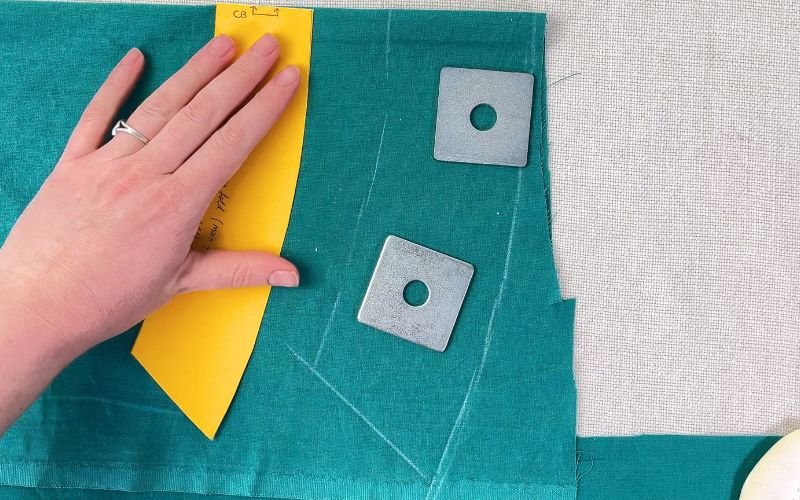
You need to cut two pieces – one of the upper collar and one for a lower collar. There is no need to flip the collar pattern as the collar is symmetrical horizontally.
If your fabric has not got a directional print, you could even fold up the fabric vertically and trace just one collar piece, while cutting four layers off fabric, to get two matching collars cut on fold. This makes the tracing process quicker.
Cut two pieces of the collar stand the same way, but this time the collar stand straight grain is perpendicular to the fold line. This alignment will reduce the chance of the fabric over stretching during the construction while being softer agains the neck.
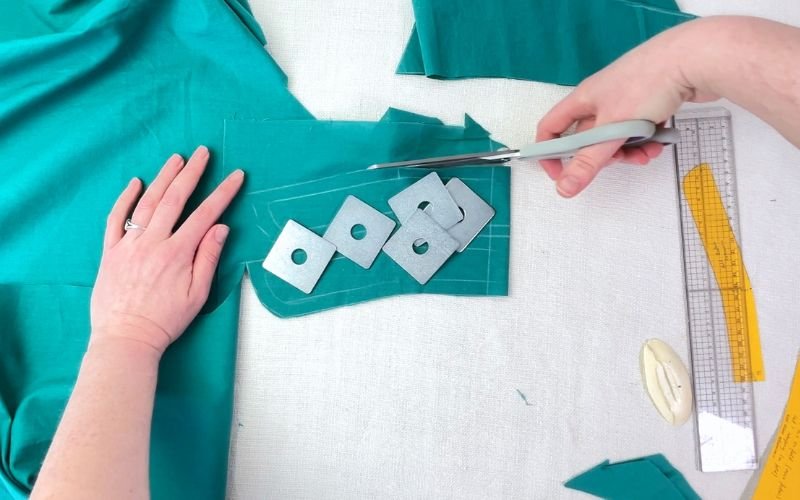
Mark mid points on the collar and collar stand by snipping the fold line within the seam allowances. Transfer the markings for the shoulder seam line on collar stand. I have guide on how to transfer markings in how to add seam allowances.
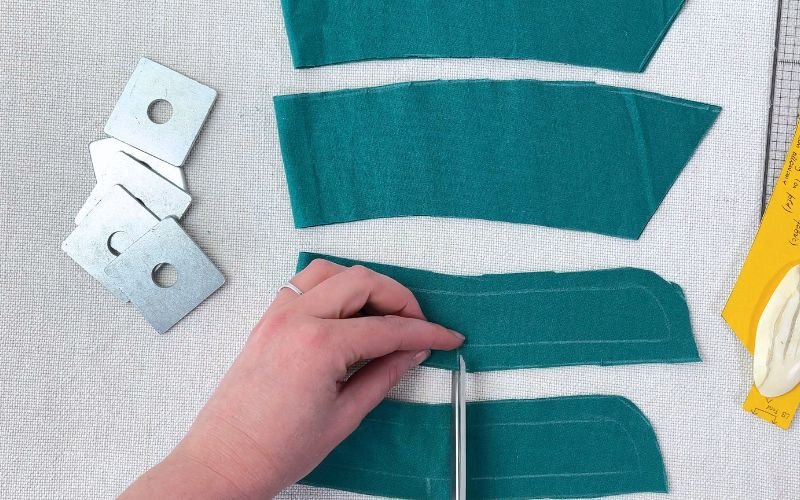
Important Note
If your pattern pieces are close to the selvedge, make sure the selvedge is not included in the seam allowance. It’s thicker and will distort the collar.
Step 2 – Interfacing Collar Pieces
Once both the collar and collar stand is cut out, place one collar and one collar stand on a piece of interfacing, with the wrong side facing the interfacing side that has the bumpy texture caused by tiny glue dots. At this stage it does not matter which collar or collar stand piece you are choosing as they are the same.
Cut out the matching interfacing pieces – one for the upper collar and one of the outside collar stand, by cutting around the collar and collar stand.
The bumpy texture of the interfacing will provide the grip and the collar pieces will not slide around. However, it is best to weight the fabric down with paperweights if you feel unsure that the fabric will stay in place or you are prone to clumsy accidents or you have a small child or cat who wants to interfere with everything you do while you are working!
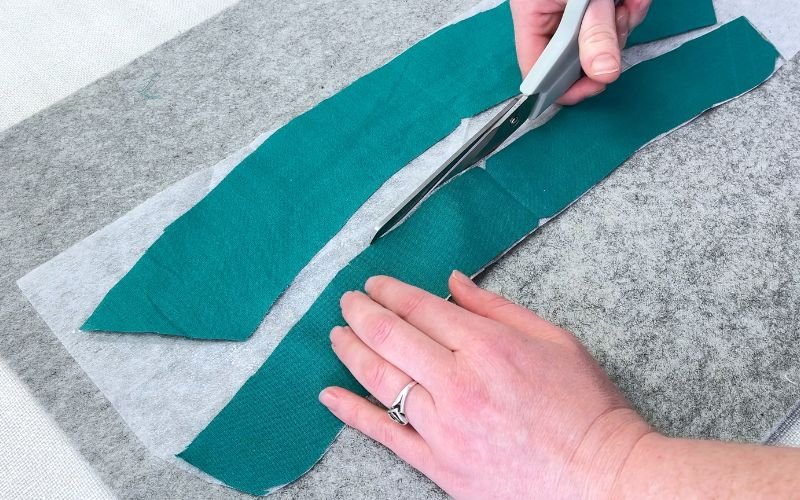
The reason why I am cutting the interfacing using the actual collar piece instead of the pattern piece because it is quicker and it gives me a little overhang of the interfacing. Then I do not have to worry whether the interfacing shifts slightly during the pressing, leaving any section of the collar or collar stand uninterfaced.
If you are short on interfacing, you can patch up the interfacing for the collar stand by overlapping the interfacing where you add another piece. But the collar must be cut in one piece. Collar is the visible part and any overlap will be visible!
It is important to press the interfacing and not glide the iron. Any horizontal movement may distort the fabric and create crease that cannot be removed.
When you cut the interfacing using the cut collar piece as a guide, there will be a little interfacing overhang. For that reason apply the fusible interfacing with fusible interfacing on top,. This way the glue will not stick to the steam iron, ruining the non slip surface.
I am using a hot steam with my iron despite the fusible instructions suggesting not to use the steam. I find that the steam is better at melting the glue on the fusible interfacing and bonding with the fabric. This trick is super helpful especially if your fusible interfacing is older and glue has dried out even more. But to be on a safe side, test how the interfacing is behaving on a scrap piece of fabric (the same you are using for collar).
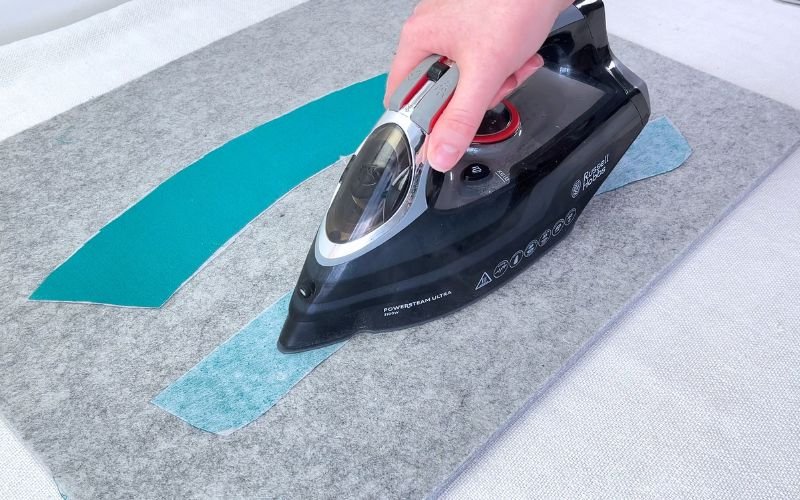
Once fused, I press it from the other side as well, to ensure the layers have properly adhered to one another. Any overhang interfacing can be cut off.
Note on synthetic or delicate fabrics
The synthetic and delicate natural fabrics such as rayon or silk do not tolerate the same amount of heat so you will need to reduce the temperature of your iron.
The interfacing gives structure to the collar and collar stand, ensuring that both retain their shape.
My recommendation is to use a lightweight interfacing instead of matching to the weight of the fabric. A heavier fabric will have some structure by itself while a lighter interfacing will be easier to work with at the construction stage, without adding too much bulk in the seams.
Step 3 – How to Sew a Shirt Collar
Next, placed both collar pieces with right sides facing and pin in place around the collar leaf edge (the outer edge of the collar). I am using clips as they do not leave marks in the fabric. Pins are fine but you would need to make sure that they are pinned just within the seam allowance or exactly on the seam line. The addition of the interfacing makes the fabric less “self-healing” through steam pressing.
Then sew the collar leaf edge with 1 cm seam allowance (or the seam allowance on your commercial sewing pattern).
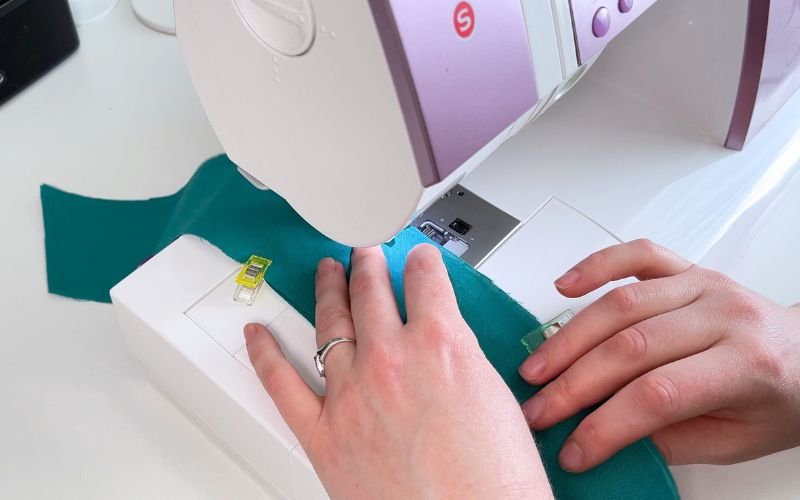
Press the seam as sewn to embed the stitching and to remove any wrinkles caused by minute fabric movement during sewing. Then press the seam open. It is easier to do if you have a tailor’s clipper but if you do not have it, press the uninterfaced seams allowance away from the interfaced seam allowance. Be extra careful around the collar point not to burn your fingers.
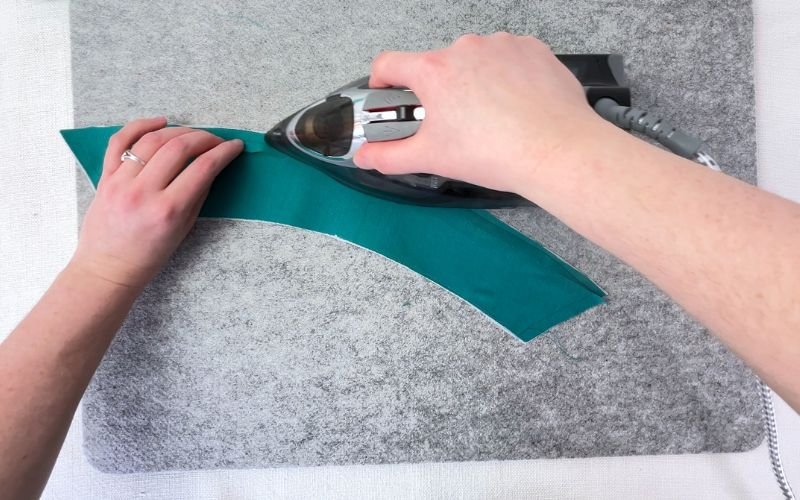
Trim the collar point seam allowance and reduce it if you had a seam allowance that is larger than 1 cm.
Step 4 – Turn and Press the Collar for Sharp Edges
Then turn the collar inside out, carefully poking the collar point with a point turner, knitting needle or another blunt tool.
Seam Roll hack
Slightly roll the collar leaf edge with your fingers, to open up the seam. This will make the pressing later easier and will make a clean edge.
Then carefully press the collar to set a smooth and sharp edge. Here it is important that you press rather than glide the iron to avoid creating creases.
Next, top stitch around the leaf edge. I find guiding the fabric along a point on a presser foot results in a neater topstitching instead of concentrating on the needle position.
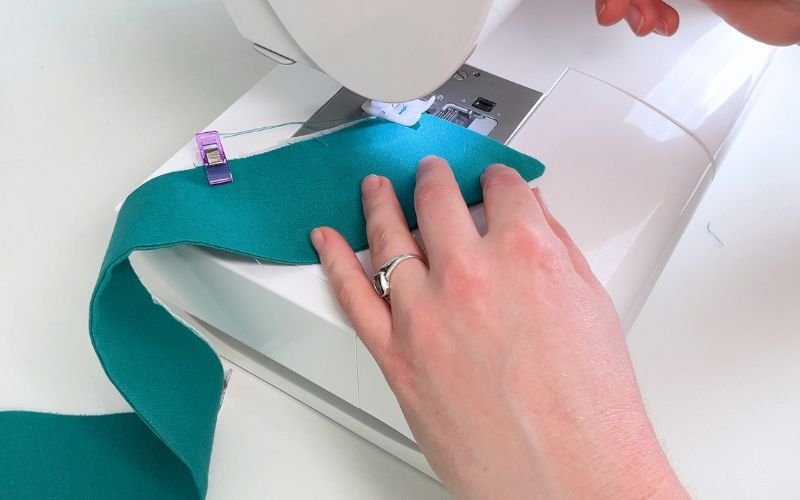
Then press again, to blend the stitching with the fabric.
Step 5 – How to Sew the Collar Stand
Once the collar is complete, we can move onto attaching the collar stand.
Place the interfaced collar stand with the right side facing the completed collar, matching the centre notches. You need to match the shortest long collar stand curve with the raw edge of the collar.
The interfaced collar stand must face the un-interfaced collar. The logic is that the interfaced collar stand would be visible when the shirt is buttoned up and would give a cleaner finish. The inner uninterfaced collar stand is also a lot more comfortable agains the skin.
Place the other collar stand on the opposite side, with the right sides facing the collar, sandwiching and aligning the curves with the interfaced collar stand. Pin in place using clips or pins but the pins should be positioned within the seam allowance to reduce the visible holes in the fabric afterwards. Pin also the short side edges. You may need to fold the collar away from the pinned edge to ensure it does not get caught in the seam.
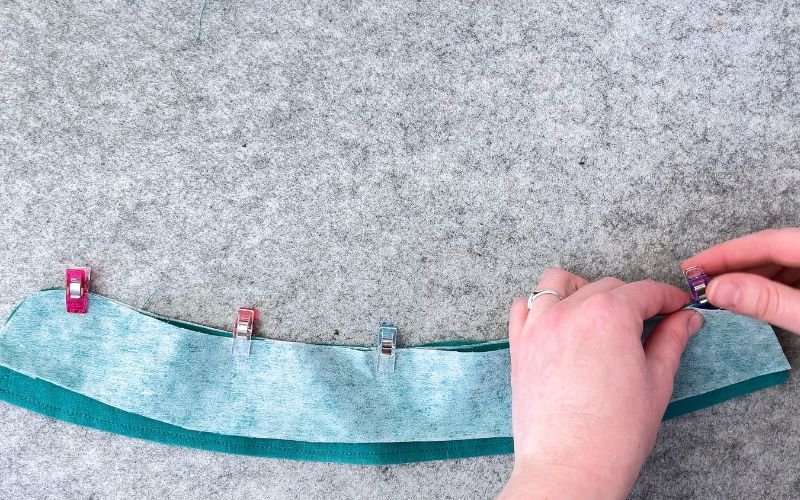
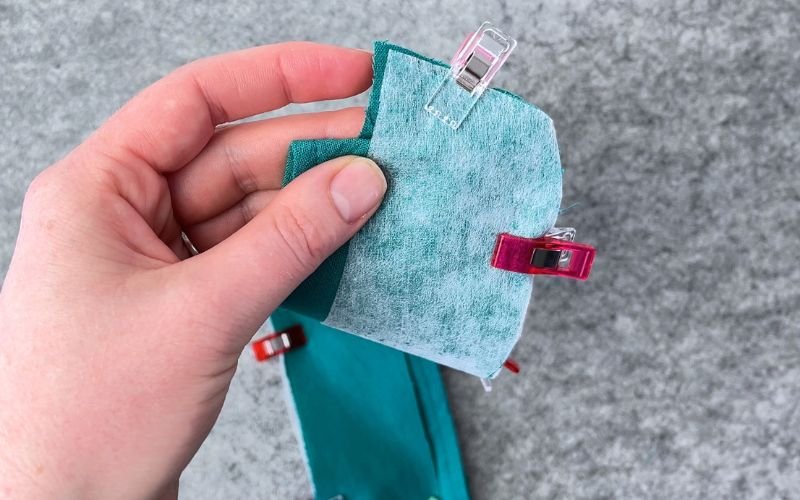
Then sew in place, by sewing the short side edges and the pinned long edge, catching the raw edge of the collar.
Next, press the seam to blend the stitching. Then press the un-interfaced seam up, towards the collar.
Trim the interfaced seam allowance and the seam allowance at the curved short side, then snip the other seam allowance to introduce some movement and flexibility. All this will make it easier to turn the collar stand right side out and will give you a smooth seam.
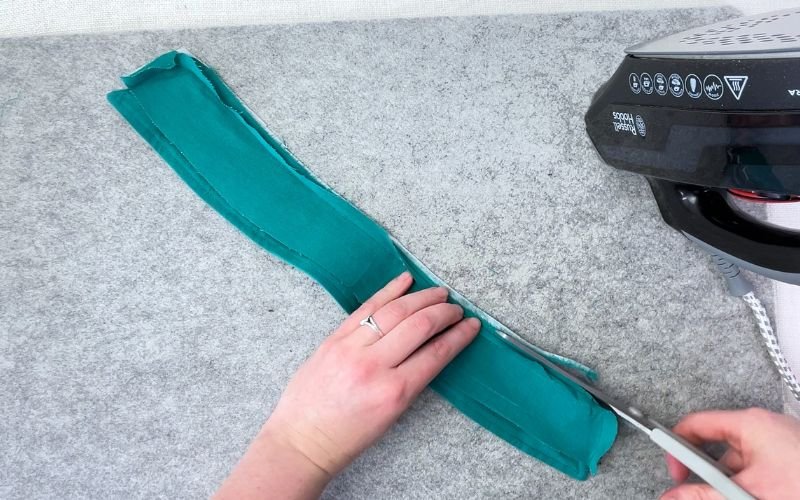
Press from the right side to create a crisp seam.
Step 6 – Completing the Shirt Neckline
Before attaching the completed collar to the shirt neckline, you need to stay stitch the neckline on the front and back bodice pieces. The neckline is a curved line which means that some of it is cut on bias is creates bias. Therefore the neckline can stretch and get distorted while applying collar. A small stitching line within the seam allowance will reinforce the neckline and stop it from over stretching.
The official advice is to stay stitch in the same direction, from the shoulder to the centre. However, I find that it makes a little difference if you are using a woven cotton fabric that has some structure to it. A lightweight or loose weave fabric will benefit from following this advice.
Next, sew the shirt front and back pieces together at the shoulder seam. Press these seam flat, then open, before finishing the raw edges. I am using an overlocker to sew the raw edges back together. I then press the seam allowance towards the back. Overlocker method provides a longer lasting edges while being a quick and effective method of seam finishing. Alternatively, you can use pinking shears or fold the seam allowance and stitch them together for more durable seam finish.
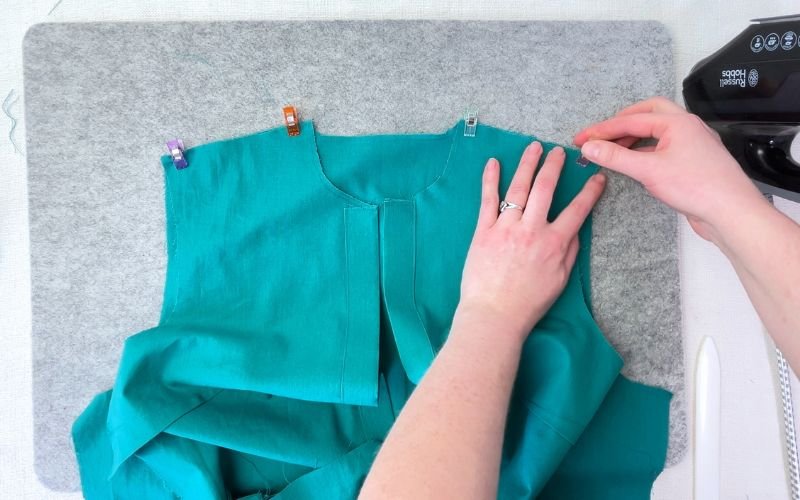
Now you are ready to attach the collar.
Step 7 – How to Attach Collar Stand to Shirt Neckline
With the right sides facing, match the centre notch on the interfaced collar stand with the centre back notch. Then match the shoulder seam with the shoulder notch on the collar, and the button stand edge with the edge of the collar stand.
Because the collar stand has a convex curve while the neckline has a concave curve, the edge of the neckline is not the same length as the edge of the collar stand. The collar stand will have a longer edge while shirt neckline has a shorter edge, despite both having exact length along the seam line. For that reason, you need to ease the collar stand into the neckline. A narrower 1 cm seam allowance makes this easier, however there is still a significant difference in the length.
Here using pins will make the easing the collar stand a lot easier. Place the pins in a way that one side of the pin goes on one side of the seam line very close to it within the seam allowance, and the other side comes out very near the steam allowances on the other side. First match all the notches, then placing the pins in the middle points between these notches. Then place the pins in the middle between the notch and th pin and so on. This way the easing is more accurate and you will get a true fit without tucks.

Perfect Transition Hack
To get a clean smooth transition from collar stand to button stand, place the edge of the button stand against the edge of the collar stand, with the collar stand seam allowance opened. Both edges must match perfectly, and the opened seam allowance is the critical point here.
Sew from one end to the other. It is a bit tricky to get close to the first edge as you start sewing. For that reason, I start as close as I can and then go back to the start and try to get closer, without catching other side of the collar stand. This way the collar stand will not get mismatched. I would not advise flipping the collar over as you loose the visibility of the collar stand seam allowance.
Remove the pins as you go. If you hit a pin, the needle could break, get blunt or the pin may get bent.
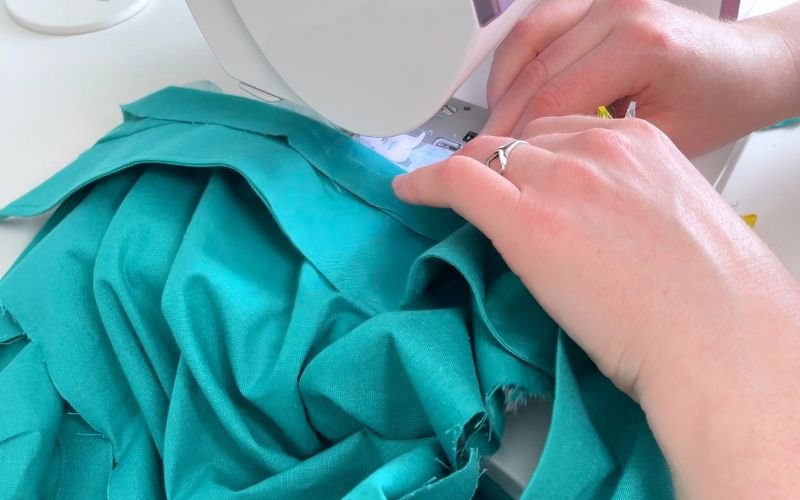
Then fold and press the seam allowance back towards the collar stand.
Step 8 – How to Attach the Inner Collar Stand (Clean Finish Method)
Next, place the inner uninterfaced collar stand over the seam, folding the raw edges up. Pin in place from the outside, placing the pin in the ditch and catching the overlapped inner collar stand on the other side.
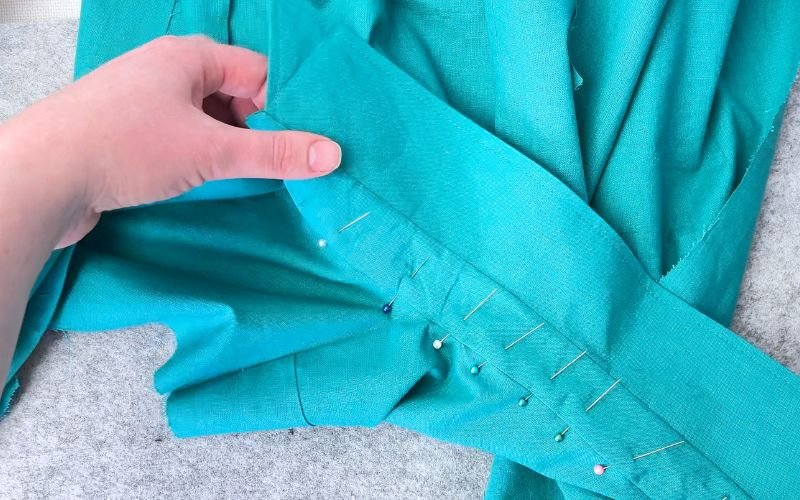
Sew in the ditch from the outside, cathing the overlapped collar stand on the other side.
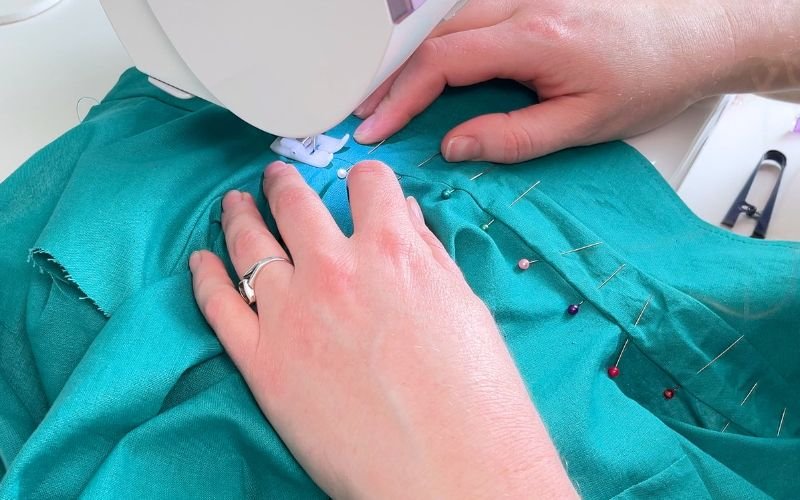
Pinning Hack
I place the pinheads on the shirt side, however, if you find that when sewing, the stitching does not quite catch the fabric on the other side, remove the stitching in this area and repin, with pinheads facing the collar. This moves the fabric away from the collar slightly, making the catching of the other collar side easier. The reason why I do not place the pins this way from the outset, is that you can end with a lot more fabric overhang on the other side, sometimes making the folded raw edge visible.
Step 9 – Topstitching the Collar Stand
Once the collar is attached, press it using a tailor’s ham, pressing all the seam allowances towards the collar stand.
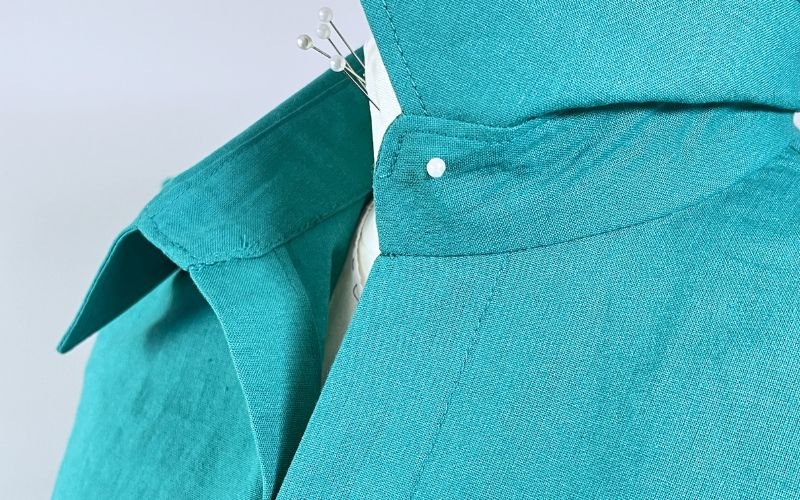
Next, topstitch the collar stand from the outside, starting from the front edge, just above the seam that joins the collar stand to the shirt. The reason why I do not start exactly at the seam is that there is a lot of bulk and the needle may struggle to get through all the layers, leading to tangled thread on the other side.
Common Collar and Collar Stand Mistakes and How to Fix Them
These are common collar and collar stand mistakes that I have experiences, with simple solutions how to fix them.
- Collar points are not sharp
- Cause: the seam allowance at the corner was not trimmed
- Fix: Trim the seam allowance to the corner, but without cutting it. Use a blunt tool to push a sharp corner.
- Neckline does not match collar stand
- Cause: the neckline has either been stretched or edges instead of seam line aligned.
- Fix: Stay stitch the neckline opening within seam allowance. When aligning the collr stand with the neckline, ease the collar stand into the neckline.
- Collar does not align smoothly with the button stand at the front.
- Issue: the collar stand seam allowance has not been aligned with the button stand correctly.
- Fix: align the edge of the collar stand to match with the buttonstand, opening the seam allowance wiithin the collar stand, to reduce the bulk.
- Bulky Seams at Collar
- Cause: The seam allowance has not been trimmed
- Fix: Trim any seam allowance that is larger than 1 cm. Trim the interface seam allowance on the collar and collar stand after each contruction stage.
Shirt Sewing Series: Step-by-Step Shirt Making Guide
This post is part of a larger step by step shirt pattern drafting and sewing series.
- How to draft a shirt pattern from scratch for beginers
- How to sew a shirt button stand
- How to trace and sew darts
- How to sew and attach a collar and collar stand to a shirt (this post)
- How to attach a shirt placket
- How to sew shirt cuffs step by step for beginners
- How to sew shirt sleeves
- How to sew a shirt (future post)
I recommend following these steps in order if you are drafting and sewing a shirt from scratch.
FAQ: Sewing a Collar and Collar Stand
Conclusion: How to Sew a Collar and Collar Stand with Precision
Learning how to sew on a collar and attach a collar stand properly gives you full control over the structure and finish of your shirt.
Once you understand how the collar, collar stand, and neckline work together, the process becomes much more predictable and easier to repeat.
Focus on accurate alignment, careful easing, and proper pressing, and you will consistently achieve a clean, professional-looking collar.
Like most sewing techniques, this improves quickly with practice—but using the right method from the start makes all the difference.
About the Author: Pattern Drafting & Garment Sewing

I’ve been sewing for over 30 years and drafting my own patterns for more than a decade. I work almost exclusively with self-drafted patterns, which means I don’t rely on instructions—I rely on understanding how garments fit and come together.
Most of my methods come from figuring things out through testing, adjusting, and breaking down common problem areas using logic and geometry rather than guesswork.
On this site, I share step-by-step tutorials on pattern drafting, garment construction, and sewing techniques to help you create well-fitted, professional-looking clothes from scratch.
👉 Read more about my approach to pattern drafting and sewing here: About Me