Sewing sleeve cuffs looks far more intimidating than it actually is. Once you understand the construction order, attaching shirt cuffs is a straightforward process that quickly becomes repetitive in the best way.
In this tutorial, I will show you how to sew sleeve cuffs on a shirt step by step, including exactly how I prepare the cuff for cleaner construction and a neater finish.
This method works whether you are sewing from a self drafted pattern or a commercial sewing pattern, and I will also explain when to attach the cuff depending on your sleeve construction method.
If you are learning how to sew shirt cuffs for the first time, the preparation stage is what makes the final construction dramatically easier.
This tutorial is part of my shirt sewing series, where I go from shirt pattern drafting to a complete shirt in comprehensive steps to create a garment without a need to purchase a sewing pattern. I have been sewing for over 30 years, concentrating on sewing from self drafted patterns in the last 10 years, creating countless garments and many shirts. In this post I have tried to convey the lessons I have learnt and the best practice that has helped me to achieve beautiful clothing each time.
I am going to use a self drafted sleeve cuff pattern but you can follow the same steps with a commercial pattern.
Process Overview: How to Sew Sleeve Cuffs on a Shirt
The process of how to sew a sleeve cuffs on a shirt follows these key steps:
- trace sleeve cuff pattern
- prepare the sleeve cuff for sewing
- attach sleeve cuff to sleeve
- sew buttonhole and button
Tools and Materials You Need to Sew Sleeve Cuffs for Women
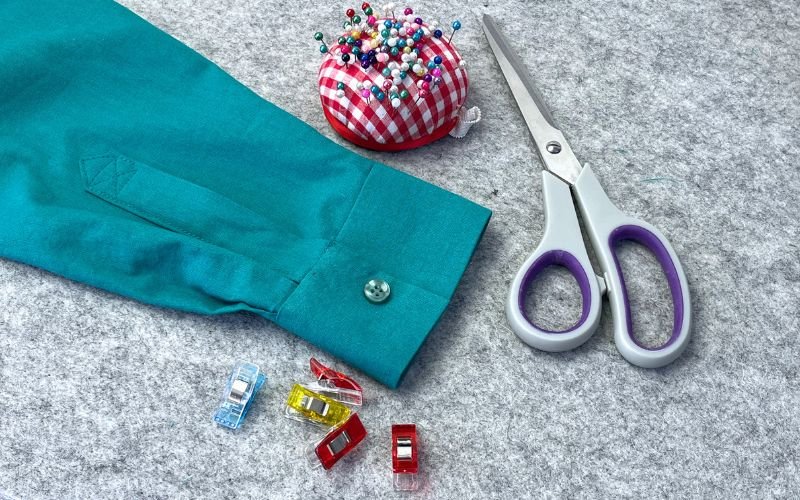
To sew sleeve cuffs neatly and accurately, you only need a few basic sewing tools and materials.
- shirt sleeve pattern
- sleeve cuff pattern
- fabric that matches your shirt sleeve. I like to use natural fibres as they are easier to maintain, keeps warm in winter and cool in summer and disintegrate in the landfill at the end of its useful life.
- matching thread
- soap, chalk or removable fabric marker. I like to use soap as I already have a lot of smaller pieces lying about and they can be removed easily with a little steam.
- scissors
- grading ruler or a basic ruler
- iron
- sewing machine
- buttons
Before sewing sleeve cuffs, I recommend learning how to sew darts for accurate shirt shaping, how to attaching a collar and collar stand and how to sew sleeve placket for a complete correct process for sewing a shirt.
Why Sleeve Cuffs Matter in Shirt Sewing
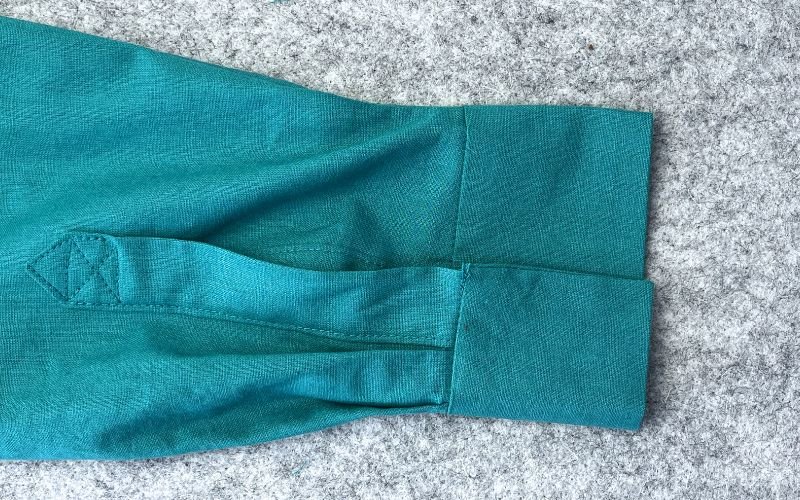
Sleeve cuffs finish the sleeve opening, provide structure around the wrist, and create the fastening needed for a functional shirt cuff.
Step By Step of How to Sew Shirt Sleeve Cuffs
Before sewing sleeve cuffs, make sure your sleeve placket is already attached, as the cuff construction builds directly on that step.
Step 1: Trace and Cut Shirt Sleeve Cuffs
You need to trace and cut two sleeve cuffs.
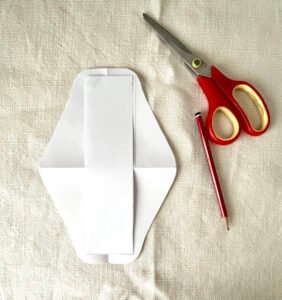
Start by tracing the shirt sleeve cuff pattern. Place the cuff pattern on the fabric with straight grain following the edge of the cuff for extra sturdiness. While crossgrain is an option with a similar result, a bias cut cuff will need interfacing applied to whole cuff area before cutting the fabric to ensure that fabric does not overstretch. However, you will end up with a thicker cuff. I explain the differences straight grain, cross grain and bias in how to make bias binding.
I am using a self drafted pattern that does not include a seam allowance so I am adding 1 cm seam allowance to all sides. I explain my choice of the width in how to add seam allowance. If you are using a commercial sewing pattern, the seam allowance is already included (refer to the pattern notes to see what seam allowance is used).
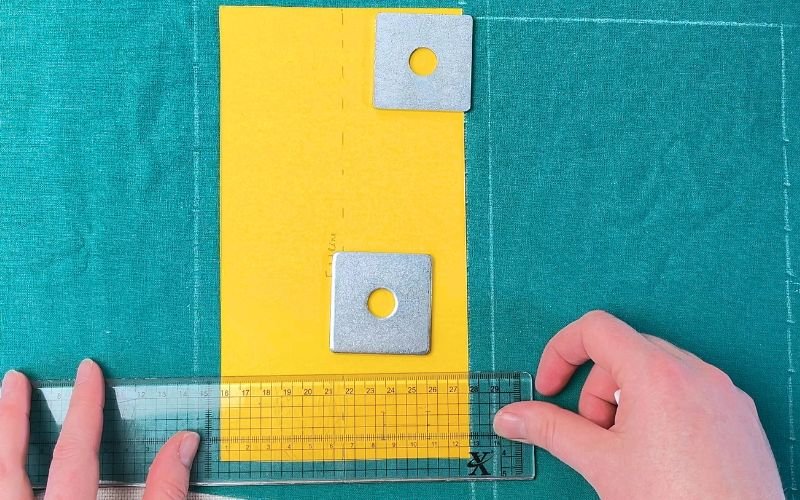
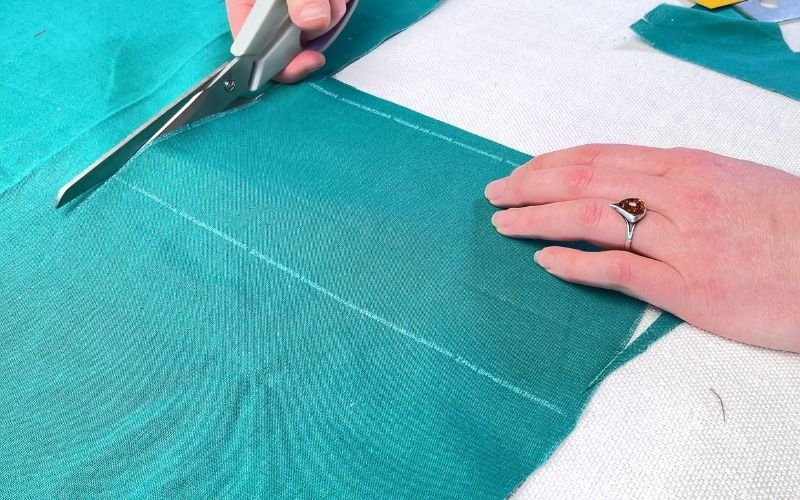
Once traced, cut out the sleeve cuffs.
Step 2: Apply Interfacing to Sleeve Cuffs
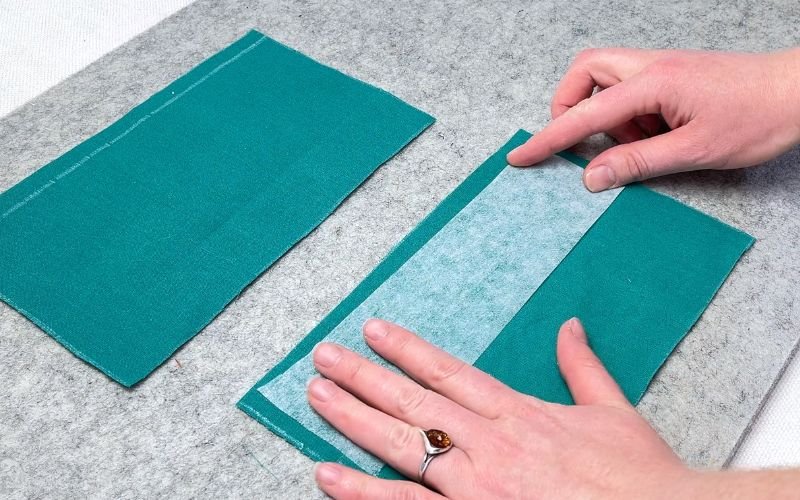
Cut fusible interfacing that is the half width of the cuff. You can cut the interfacing to be exactly half width with seam allowances included, but I like to have mine slightly smaller, to reduce the bulk in the seam allowance. However, if your fusible interfacing is older and/or has bad adhesive, then the interfacing piece should include full seam allowance or a half seam allowance to be secured with stitching during sleeve cuff construction.
Apply interfacing to wrong side of both cuffs, with one long side aligned with the middle of the cuff. This will reduce the bulk at cuff fold line. Contrary to the advise given by fusible interfacing manufacturer, I use a hot iron with steam when I apply my fusible interfacing. I find this method melts the glue and bonds the fusible interfacing to the fabric better. However, I would recommend to test your interfacing on a scrap fabric first to avoid disappointment.
Step 3: Prepare the Sleeve Cuffs for Sewing
Once the fusible interfacing is applied, fold the cuff lengthways, with wrong sides facing. Press to form a crisp cuff fold line.
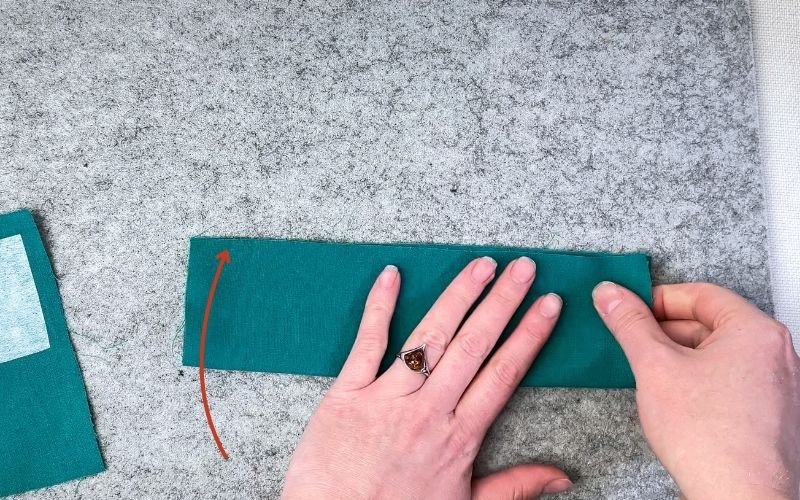
Then open the cuff and mark a line on wrong side along the length of the cuff on the side that is interfaced that is an exact the seam allowance width from the long edge. This will be your seam line and will help you attach the cuff a lot easier. I am using a removable fabric marker to mark my line as the soap is practically invisible against the fusible interfacing.
On the other side, mark a line parallel to the long edge that is a smidge smaller than twice the width of the seam allowance.
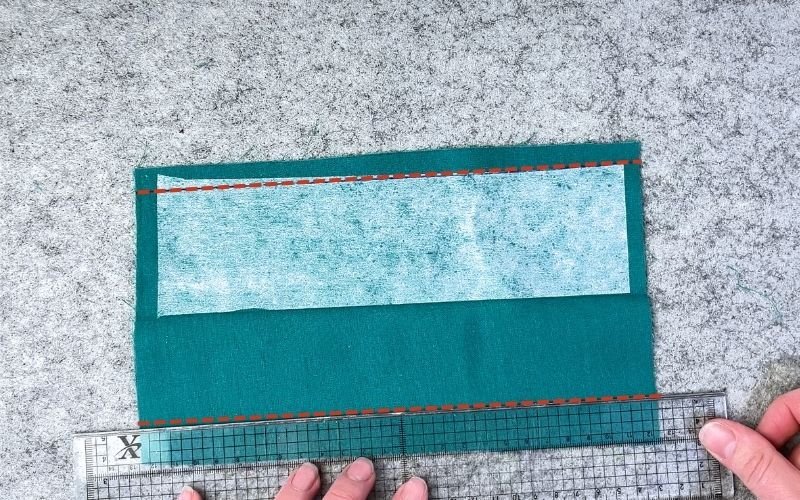
Then fold up the fabric along the long edge to meet the marked line and press with hot steam iron.
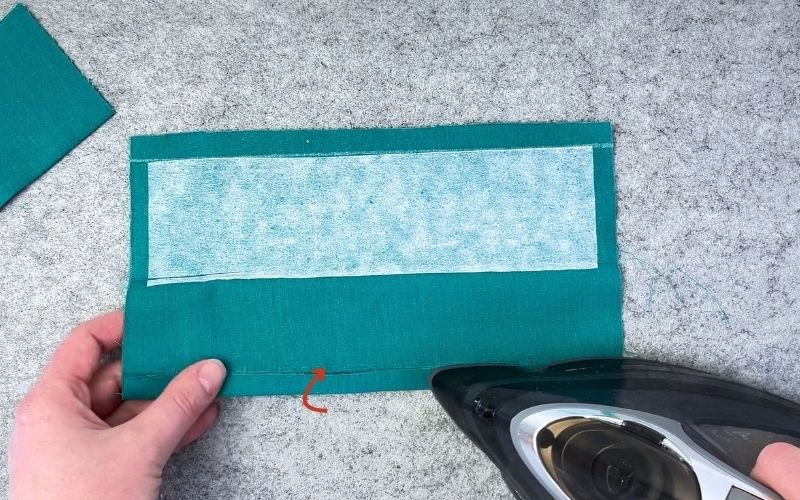
Inside Secret
By marking a line that is smidge smaller than the twice the width of the seam allowance, you are achieving two goals:
(a) you have a perfect guide to fold up the edge without measuring along it as you press it and
(b) this folded edge will cover the stitching line on the other side a lot cleaner as will be apparent in the next steps.
This method speeds up the pressing, alignment and sewing, resulting in a neater and cleaner cuff.
Step 4: How to Attach Sleeve Cuffs to the Sleeve
With all the preparation work done, you are now ready to attach the cuff to a sleeve.
If your sleeve has pleats at the sleeve opening, make sure these have been folded and basted in place.
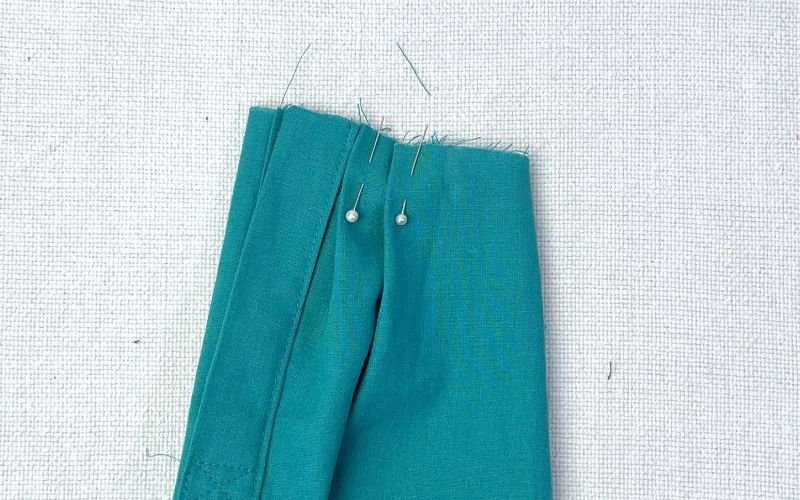
Place the interfaced cuff side on sleeve’s end, with right sides facing. Pin or clip in place, making sure that the cuff overlaps evenly on both sides at the placket opening.
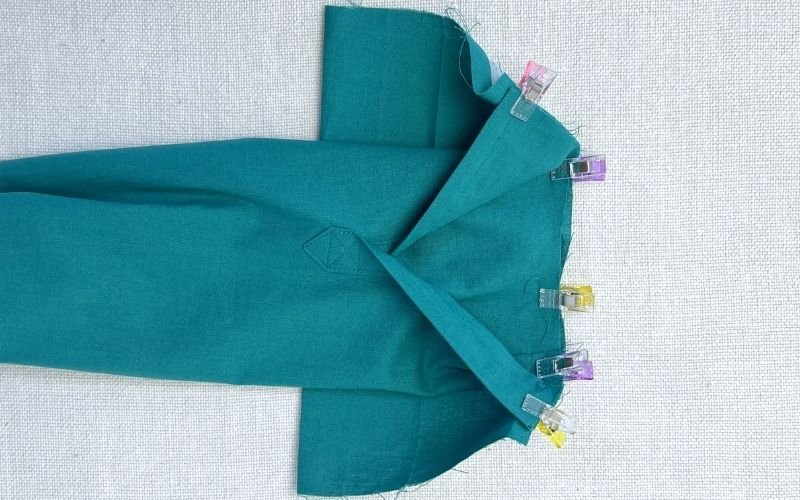
Sew along the marked stitching line, backstitching at the start and end.
Then press the seam allowance as sewn to blend the stitches, before pressing the seam open. By pressing the seam open you are creating a neater and crisper stich lin on the right side.
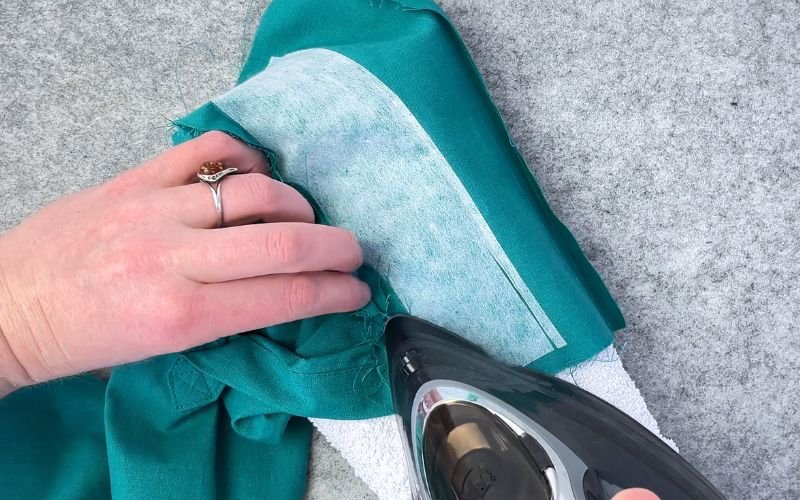
Then press the seam allowance towards the cuff before trimming the seam allowance on the sleeve side to around 7 mm (1/4 in). The measurement does not have to be accurate. You just want to grade the seam allowance to reduce the bulk and the rigidity of the cuff.
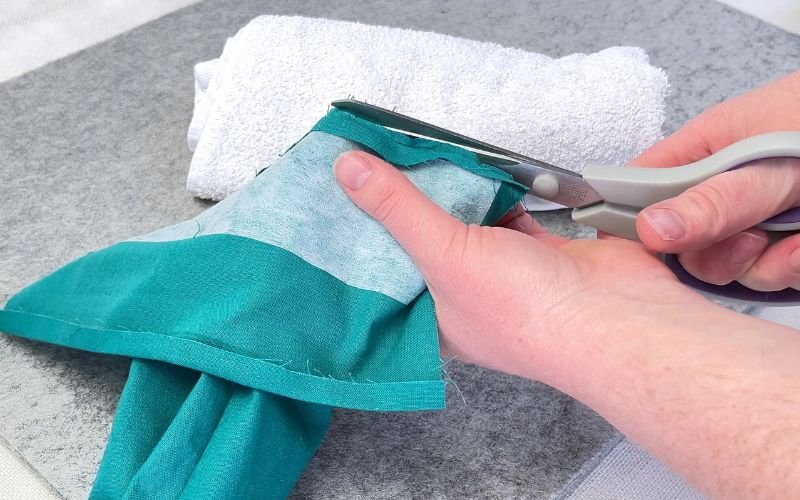
Then fold the seam allowance towards the cuff.
This is the key stage when learning how to attach sleeve cuffs neatly, as the initial cuff alignment determines how clean the final finish will look.
Step 5: Complete the Sleeve Cuff Construction
Next, fold the un-interfaced side over the interfaced side of the cuff, with right sides facing. Here you want the make sure that the folded edge goes slightly over the stitching line. This will make the sewing easier.
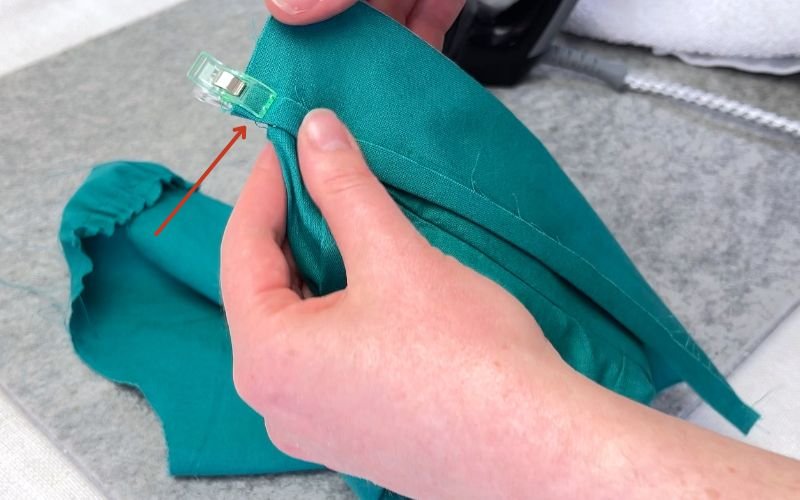
Pin in place the short edge and sew the short edges together with your seam allowance. I find it easier to start at the folded edge and sew towards the sleeve. This way the long edge does not accidentally move and ruin your attempt to make the final sewing easier.
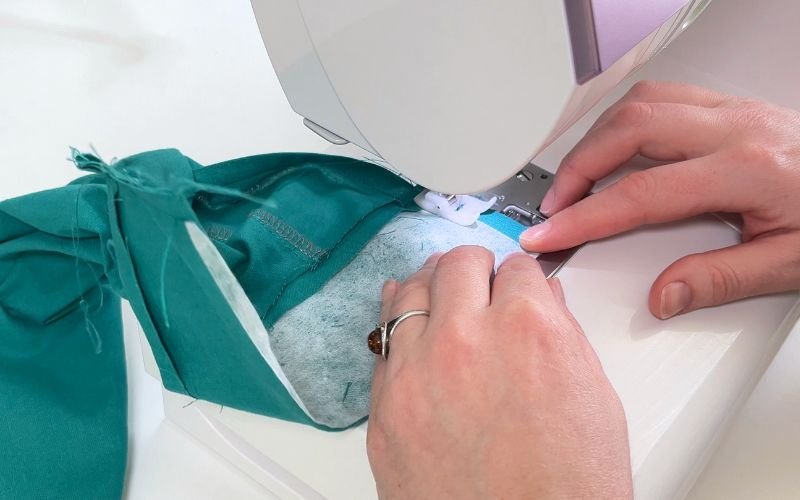
Clip the corners at the cuff fold line before turning the cuff the right way out.
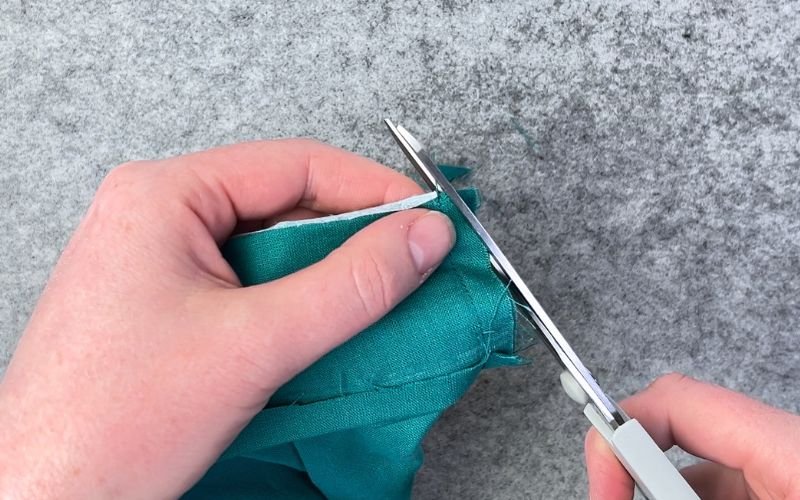
Gently poke the corners at the fold line to make them sharp. I am using scissors but any blunt tool such as old pen, knitting needle or chopstick will work.
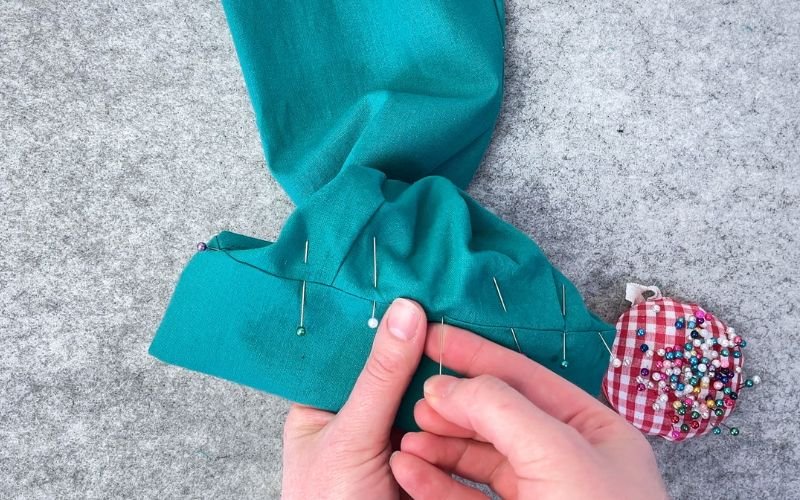
Next, place the folded long edge over the stitching line and pin in place from the right side. I place the pins directly in the seam line and then pivot them back out on the sleeve side. This way I can be sure that the stitching from right will catch the fabric on the wrong side. However, you have to be careful not to move the fabric too much over the seam as you will end up with excess fabric flap on the wrong side.
Then sew in place by stitching in the ditch from the right side, removing the pins just before the sewing machine needle hits them. Here, having that small overlap we created at the start of this section, makes the accuracy of sewing easier.
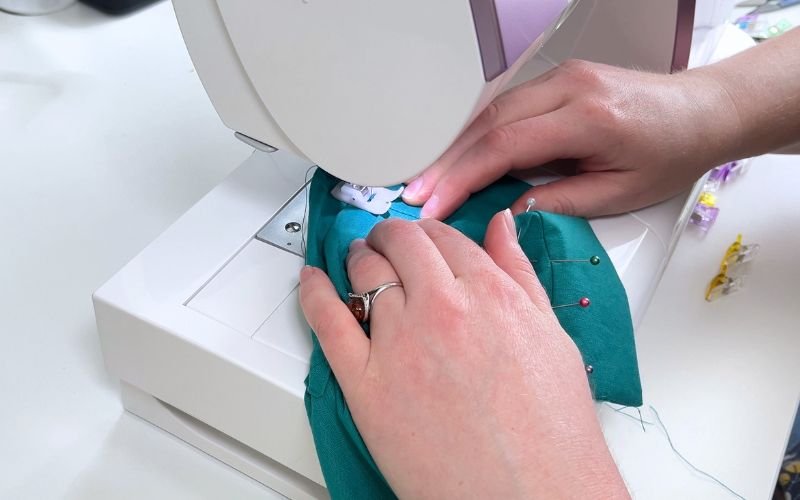
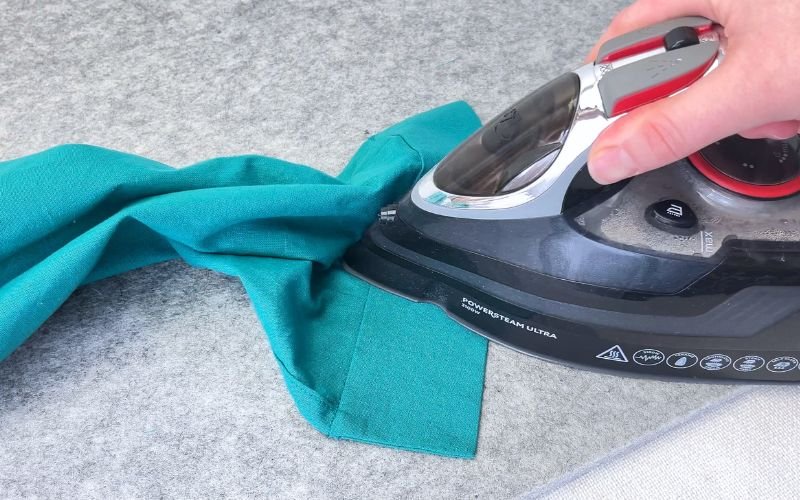
Once sewn, carefully press the cuff to create crisp seams and edges.
Step 6: Sew Buttonhole and Attach Button
Once the cuff is completed, sew a buttonhole on the side of the cuff that has decorative outer sleeve placket. Then attach a button on the other side, matching up with the buttonhole.
I tend to sew the buttonholes and buttons as the last step, once the full shirt is complete. This way there is less setting up time required by changing sewing machine feet and stitch selection.
When to Sew Sleeve Cuffs
Sleeve cuffs should be attached after the sleeve placket is complete and the sleeve seam has been sewn, but they do not need to wait until the sleeve is attached to the bodice.
You can sew the sleeve seam first and attach the cuff before setting the sleeve into the armhole, or attach the sleeve to the bodice first and sew the sleeve seam together with the bodice side seam before adding the cuff.
Both construction orders work well. In my future sleeve sewing post, I will explain both methods in detail, including when and why you may want to choose one over the other.
Common Sleeve Cuff Sewing Mistakes
These are common shirt cuff sewing issues that I have experienced and have come across repeatedly before improving my method. By keeping these issues in mind, I have achieved a neat cuff each time.
- Cuff has bulky seams
- Cause: The seam allowances are too wide and include interfacing
- Fix: Trim or grade seam allowances. Apply a smaller fusible interfacing that just goes beyond the stitching line.
- There is a fabric flap at the inside cuff and sleeve seam.
- Cause: Too much overlap at the final cuff sewing stage.
- Fix: Place the pins in the stitch line that just catches the folded fabric on the reverse.
- The stitch in the ditch did not catch the fabric on the reverse near the sleeve placket
- Cause: The short ends of the cuff were matched exactly before sewing.
- Fix: Place the un-interfaced cuff slightly over the other side of the cuff.
Shirt Sewing Series: Step-by-Step Shirt Making Guide
This post is part of a larger step by step shirt pattern drafting and sewing series.
- How to draft a shirt pattern from scratch for beginers
- How to sew a shirt button stand
- How to trace and sew darts
- How to sew and attach a collar and collar stand to a shirt
- How to attach a shirt placket
- How to sew shirt cuffs step by step for beginners (this post)
- How to sew shirt sleeves
- How to sew a shirt (future post)
I recommend following these steps in order if you are drafting and sewing a shirt from scratch.
FAQ: Sewing Sleeve Cuffs
Conclusion
Sewing sleeve cuffs may look like one of those fiddly shirtmaking steps that only advanced sewists can master, but in reality the process is very manageable once you understand the construction order.
Most of the neatness comes from the preparation stage rather than the final stitching. If you mark accurately, reduce bulk where needed, and build in that slight overlap for the inner cuff edge, the final construction becomes far easier.
Like many shirtmaking techniques, sleeve cuffs improve quickly with repetition. After sewing a few pairs, the process starts to feel surprisingly straightforward—and you will wonder why they looked intimidating in the first place.
About the Author: Pattern Drafting & Garment Sewing

I’ve been sewing for over 30 years and drafting my own patterns for more than a decade. I work almost exclusively with self-drafted patterns, which means I don’t rely on instructions—I rely on understanding how garments fit and come together.
Most of my methods come from figuring things out through testing, adjusting, and breaking down common problem areas using logic and geometry rather than guesswork.
On this site, I share step-by-step tutorials on pattern drafting, garment construction, and sewing techniques to help you create well-fitted, professional-looking clothes from scratch.
👉 Read more about my approach to pattern drafting and sewing here: About Me