Learning how to attach sleeves to a shirt neatly can feel frustrating when pattern instructions leave you with puckered sleeve crowns, twisted sleeves, or uneven ease. I know because I dealt with all of it myself when I first started sewing clothes.
Over time, I refined my process and developed three reliable methods for attaching shirt sleeves depending on the construction order and fabric type. In this tutorial, I will show you exactly how to attach sleeves to a shirt step by step, explain when to use each method, and share the tricks that help prevent puckering and imbalance.
Whether you are sewing from a self drafted pattern or a commercial sewing pattern, these methods will help you achieve clean, professional sleeve insertion.
This tutorial is part of my shirt sewing series, where I go from shirt pattern drafting to a complete shirt in comprehensive steps to create a garment without a need to purchase a sewing pattern. I have been sewing for over 30 years, concentrating on sewing from self drafted patterns in the last 10 years, creating countless garments and many shirts. In this post I have tried to convey the lessons I have learnt and the best practice that has helped me to achieve beautiful clothing each time.
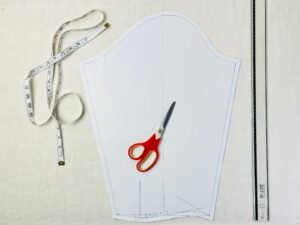
I am going to use a self drafted and modified sleeve pattern but you can follow the same steps with a commercial pattern.
What This Tutorial Will Teach You
This tutorial shows the exact sewing method I use when sewing shirt sleeves from scratch. The same approach works whether you are sewing form a commercial pattern, or adjusting sleeve fit on an existing garment.
Process overview
The process for how to attach sleeve follows these main steps:
- trace the pattern and transfer markings
- attach the sleeve to a bodice
- sew the side seam of the sleeve
The steps two and three will differ, depending on the method chosen.
Why Understanding How to Attach Sleeves to Armhole Matters
The sleeves are an integral part of the shirt pattern and construction. You need to know how each curve corresponds to the armhole and how to match the convex curve of the sleeve crown to the concave curve of armhole to avoid the dreaded puckering.
At first glance, the sleeve crown often appears longer than the armhole, which makes many beginners think the pattern is wrong. In reality, the seam lines match. The difference comes from geometry: seam allowance extends the outer edge of the convex sleeve crown while reducing the visible edge of the concave armhole. Once you understand that, easing the sleeve into the armhole becomes far less intimidating.
Tools and Materials You Need to Sew Shirt Sleeves
To sew a sleeves cleanly and accurately, you only need a few basic sewing tools.
- shirt sleeve pattern
- sleeve placket pattern (optional)
- fabric that matches your shirt . I like to use natural fibres as they are easier to maintain, keeps warm in winter and cool in summer and disintegrate in the landfill at the end of its useful life.
- matching thread
- soap, chalk or removable fabric marker. I like to use soap as I already have a lot of smaller pieces lying about and they can be removed easily with a little steam.
- scissors
- grading ruler or a basic ruler
- iron
- sewing machine
Before attaching sleeves, I recommend learning how to sew shirt placket to widen the sleeve opening and how to sew and how to attach shirt cuff for a complete correct process for sewing a shirt sleeves.
Which Sleeve Attachment Method Should You Use?
Each sleeve insertion method has advantages depending on your priorities:
- Method 1: Best for beginners and easiest for accurate sleeve insertion
- Method 2: Traditional tailoring method often used in commercial sewing patterns
- Method 3: Best compromise if you want to attach cuffs before setting sleeves without gathering stitches
I will walk through all three below so you can choose the method that best suits your project.
How to Attach Sleeves to a Shirt Step by Step
Step 1 – Trace and Mark the Sleeve Pattern
Start by tracing two sleeve pattern pieces on fabric following the directions for the straight grain. These have to be on reverse as the shirt pattern is not symmetrical. I prefer to trace the sleeve pattern after I have cut out the pattern piece for front and back bodice piece but before cutting fabric for sleeve placket, sleeve cuffs or collar. This way I can get most of my fabric and reduce fabric wastage.
I also trace the pattern pieces individually as that is easier to transfer the markings. However, you need to be mindful that you flip the sleeve pattern to get a mirrored image for the other sleeve.
Mark the shoulder notch, placket placement and pleats if the sleeve pattern includes them.
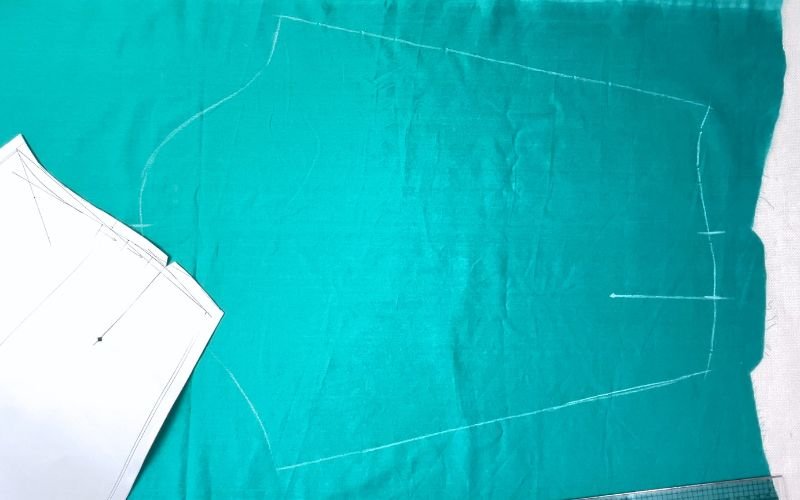
If my self drafted pattern do not include seam allowance I add them at this stage using a grading ruler and the fabric marker. I explain why I prefer this method in my tutorial on how to add seam allowances.
Then cut out the pattern pieces for sleeve.
Step 2 – Sew the Sleeve Placket
If your shirt sleeve includes the sleeve placket, this is the moment when to attach them. You need to secure the placket to the sleeve at the placket markings with right side of the placket facing the wrong side of the sleeve. Then sew around the slit line before cutting it carefully. Turn the placket to the right side. Fold the under placket first and secure with the stitching, before forming and sewing the outer placket. My step by step sleeve placket sewing tutorial gives detailed steps by step visual instructions.
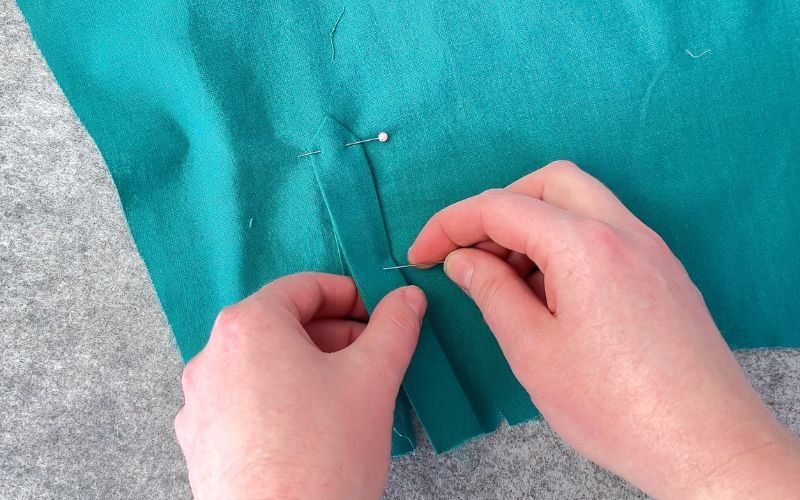
From this point onwards, the construction of the sleeve will vary. We will start by the easiest method of attaching the sleeve to armhole first. Before progressing with the sleeve sewing, make sure you have completed the buttonstand, attached the collar and have sewn the shoulder seams.
Method 1 – Attach Sleeve Flat Before Sewing Side Seams
Pinning the Sleeve to the Armhole
For this method, place the sleeve on the bodice block with right sides facing. Pin the shoulder notch at the sleeve crown to the shoulder seam. I find that it is easier to use clips instead of pins for this method as the clips stay more securely in place when managing the bulk of the shirt.
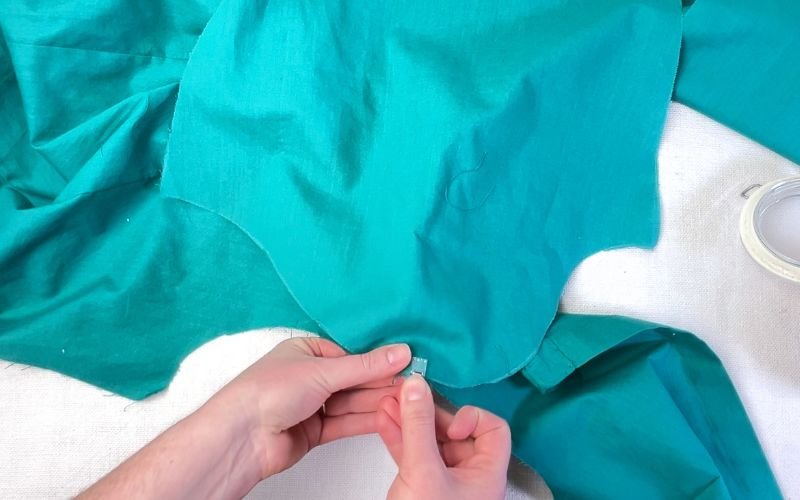
Then pin the edges of the sleeve crown to the armhole, at the side seams first.
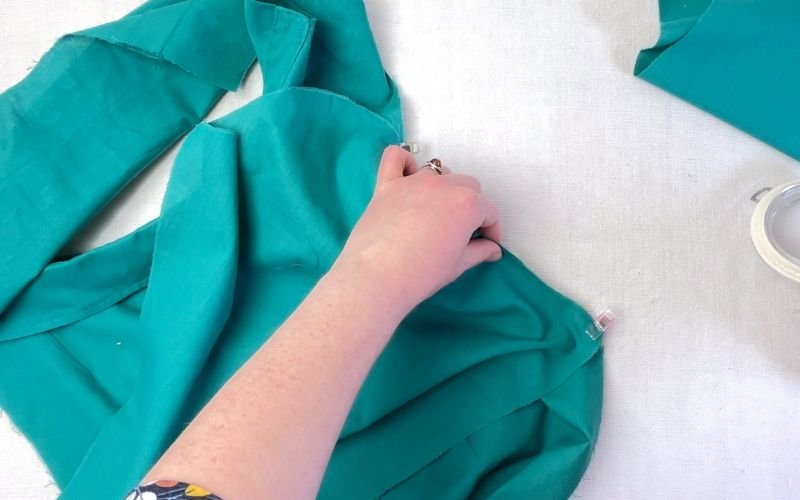
The armpit curve matches the curve on the armhole near the side seams so you can match both pieces right at the edge until the sleeve crown starts curving outwards. On most commercial patterns this point will be marked on the pattern piece as a circle for where to start the gathering stitches. I do not include this point on the self drafted pattern as it can be easily placed by judging where the curve starts going opposite direction.
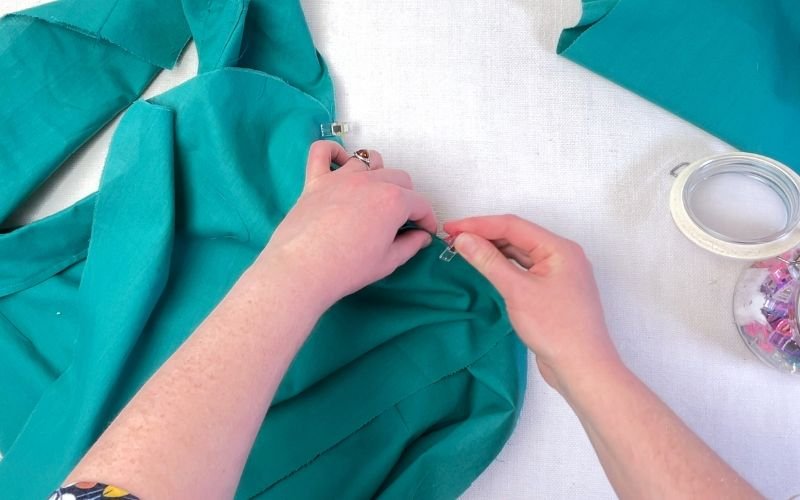
From this point, align the sleeve crown with the armhole in the middle point between the shoulder notch and the last pin before the sleeve crown curve changes direction.
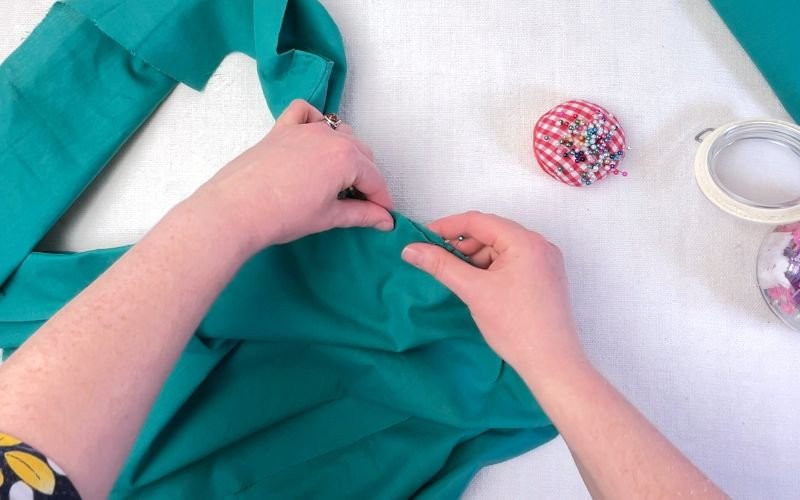
Place the next pins half way between this pin and the shoulder pin and halfway between this pin and the pin at the start of the curve. Add more pins if necessary at he half way points.
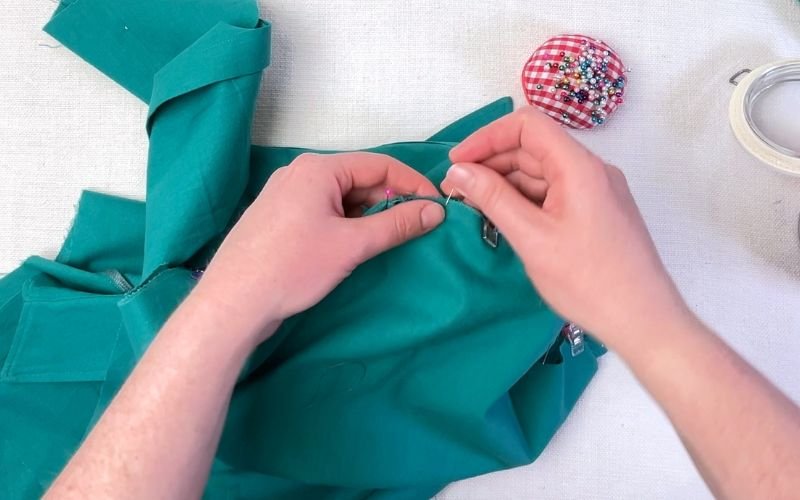
Add the pins on the other side following the same method.
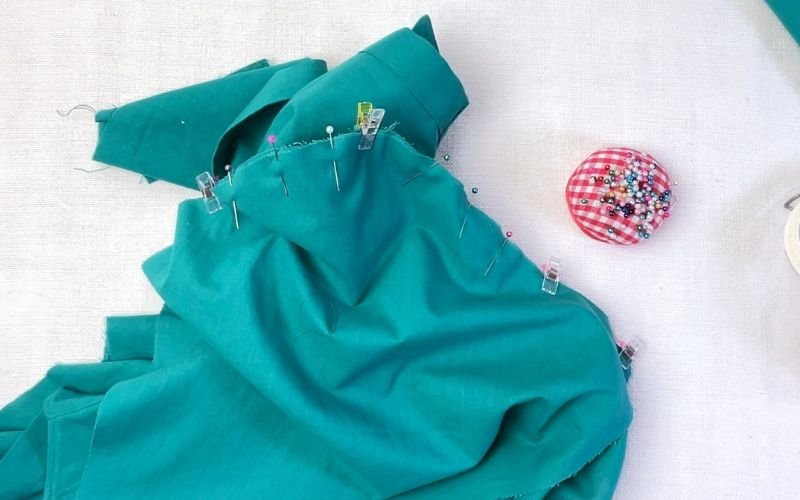
Sewing the Sleeve to the Armhole
Next, sew the sleeve to the armhole, with the required seam allowance. I use 1 cm seam allowance throughout as that is easier to manage on the curves. I keep the bodice block at the bottom and the sleeve at the top as the bodice stays straight while sleeve bows. This ensures that you have visibility of the trickier sleeve shape and reduces accidental puckers.
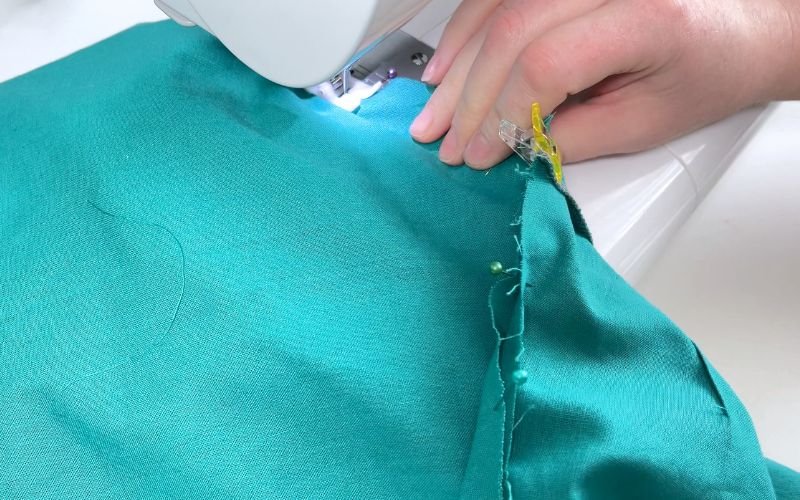
Press the seam as sewn, then press it open for crisper seam on the right side. Finished the seam using your preferred seam finish. I use overlocker as that is the quickest method.
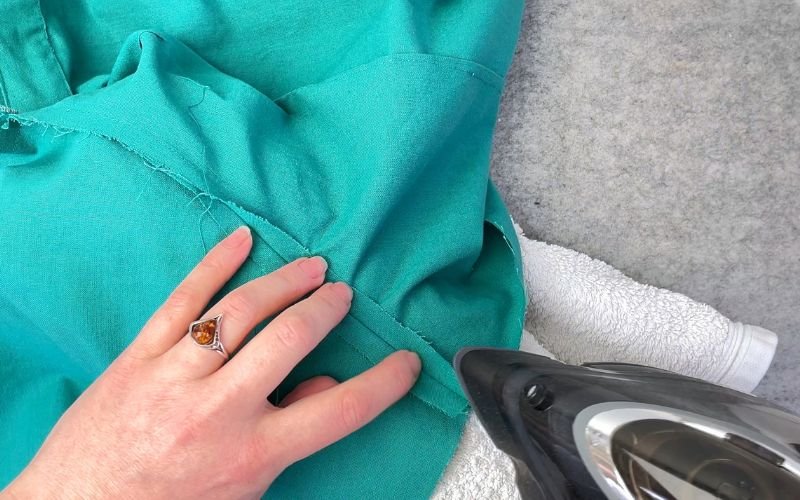
Finally, press it towards the bodice.
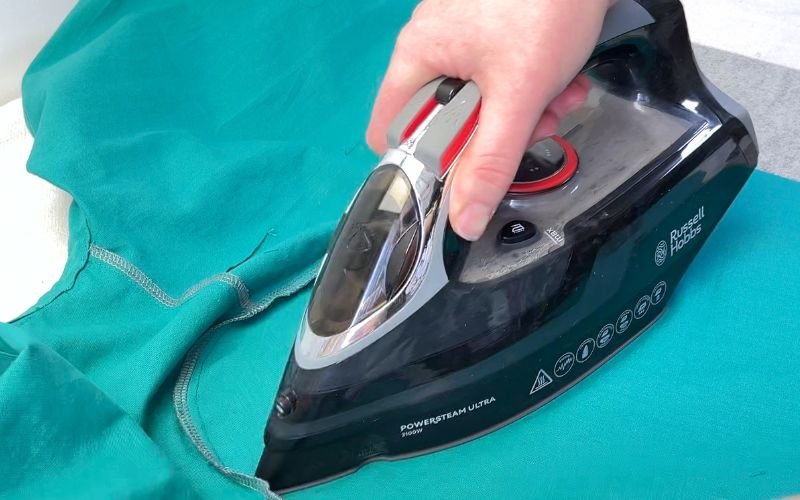
Sewing the Sleeve and Bodice Side Seam
Now, match side seams together with right sides facing, from sleeve opening to hem, pinning the sides together. At the armpit point, I make sure that the seam allowance is facing opposite direction to create a perfect cross at the intersection.
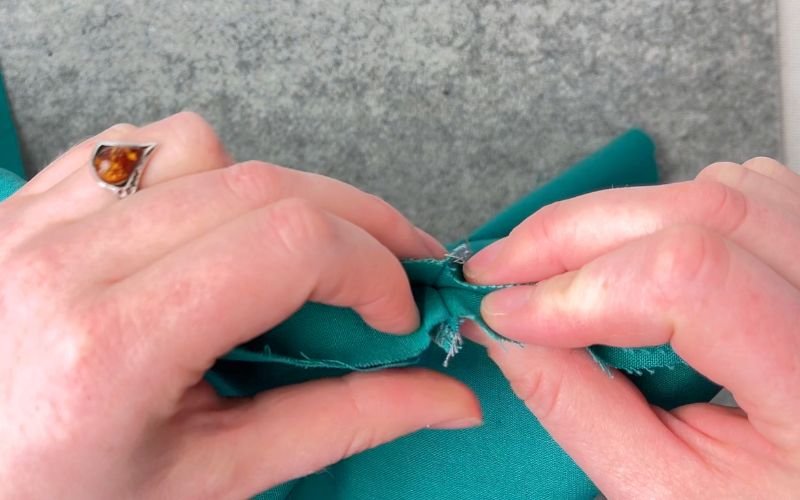
Next, sew the side seam in one go. Press the seam as stitch, then press it open before finishing the side seam with your chosen method.
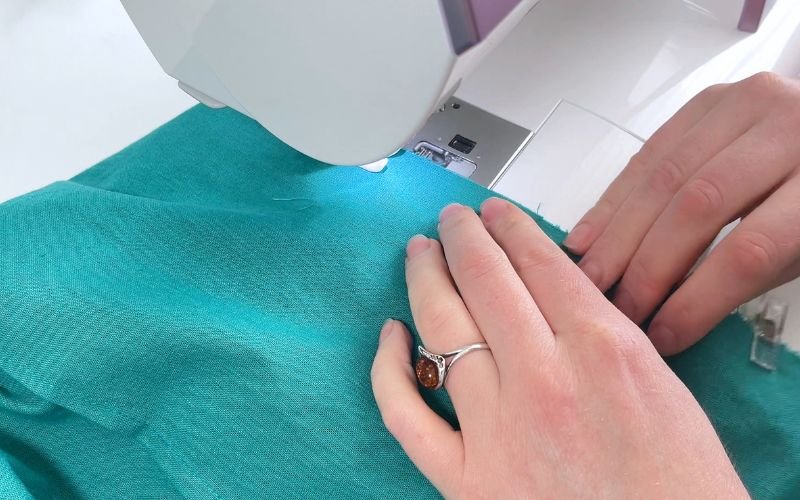
Now you can attach the sleeve cuff.
I like this method as it is quickest and easiest to follow. I was using this approach for a very long time and it is still my favourite for majority of garments, especially where I am not adding sleeve cuffs. It is easier to attach, easier to get the seam crispy at the armhole as it is easier to press the seam allowance open and towards the bodice compared to the other methods. The only downside is that you can only add the cuff after the sleeve has been sewn. This means that you have to move the whole shirt as you attach the cuff.
Method 2 – Gather and Insert Sleeve into Closed Armhole
This is a classic method that most commercial patterns will tell you to do. You need to sew the side seam of the bodice block first before attaching the sleeve.
Sew two gathering stitches, that is, two longest straight stitches along the edge of the sleeve crown between the marks if using a commercial pattern or between the points where the sleeve crown starts to be convex (faces outwards).
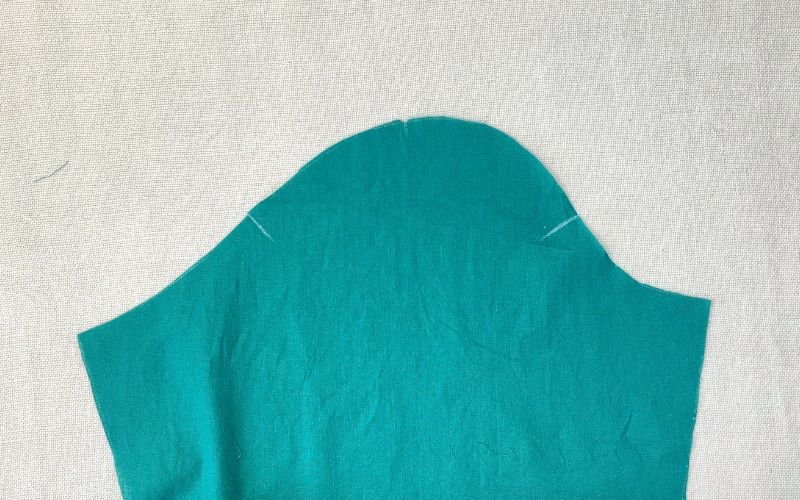
The first gathering stitch needs to be sewn within the seam allowance and the other equal distance from the seam line within the shirt. This will leave the seam line exactly in the middle between these two gathering stitches. I usually sew the gathering stitches 5mm on either side from the seamline.
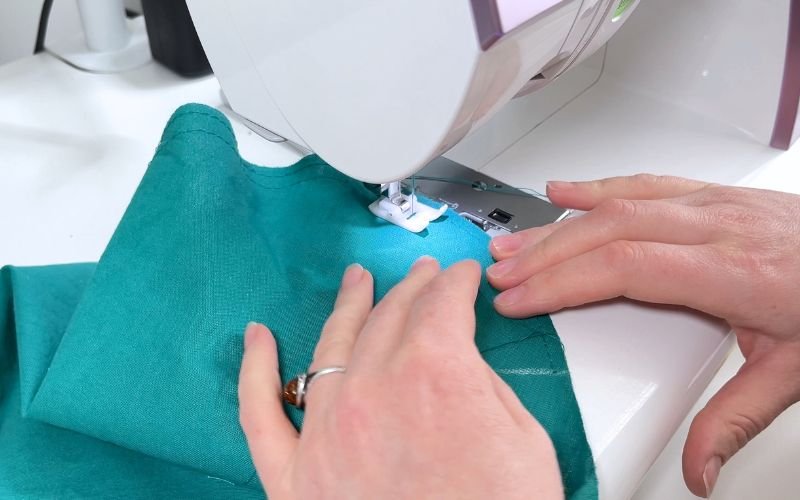
Then sew the sleeve side seams together with right sides facing before attaching the sleeve cuff. Press the seam flat as sewn to embed the stitches, then press it open to create crisp seam and finish the raw edge with your chosen method (I am using overlocker).
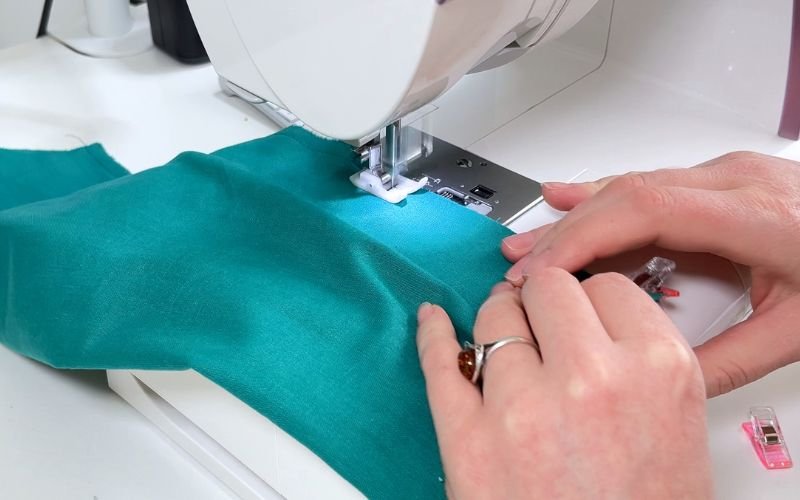
Next, pull the gathering stitches to create even gathers. It is easier to pull the bobbin stitches but either is fine. My recommendations would be to first tie the knots on the other threads you are not pulling to avoid them unravelling accidentally.
Once you have gathered the fabric, pin it in place at the armhole, matching the side seams and the shoulder notches. I like to use clips for the shoulder and the armpit sections and then I usually use pins throughout the section that is gathered. This leads to a more precise sewing without pins falling out at critical points. Make sure that the gathers are even and the shape fits into the armhole exactly.
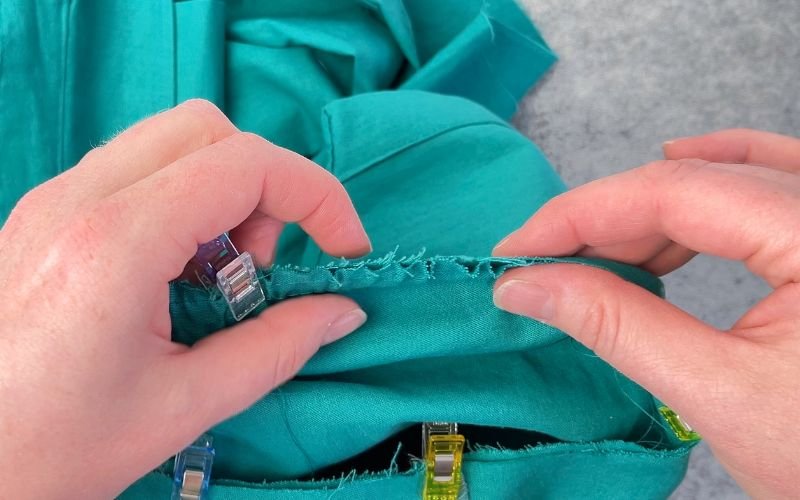
Sew the sleeve to the bodice. Then press the seam as sewn, then open before finishing the seam allowance with overlocker (or any other seam finish method) and press the seam allowance towards the bodice bock.
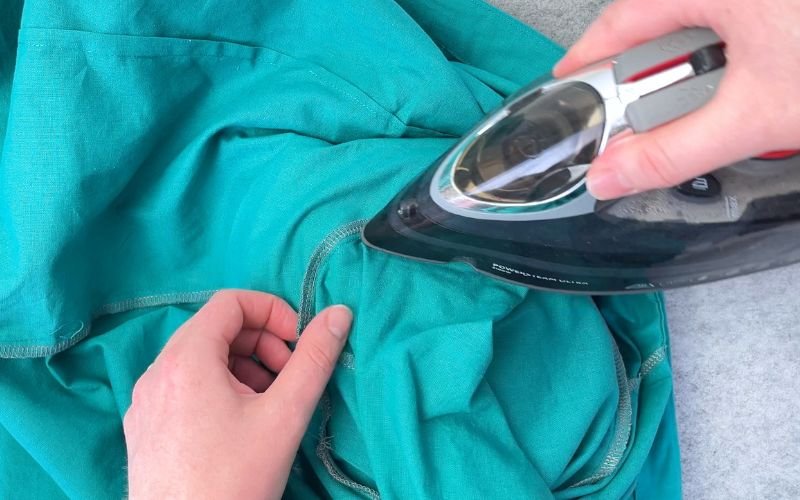
While this is a classic method to attaching sleeves to bodice, I do not like it very much. The gathering adds extra steps, it is harder to press the seams open and flat. However, the cuff is easier to attach without dragging the rest of the shirt with you. This is most suitable method for heavier fabric or fabric that frays easily and you ned to add wider seam allowance at the sleeve crown.
Method 3 – Hybrid Sleeve Insertion Method
The third method is a hybrid approach in that has elements of both. For this method, you complete the side seams and attach cuff as per the method 2, however you do not add any gathering stitches. This method is easier with narrower 1 cm seam allowance compared to the standard 1.5cm seam allowance.
Instead, you are fitting the sleeve using the logic from the first method of placing the first pins at the gathering point or where the curve goes from concave to convex. And then at halfway points between this and the pin at the shoulder notch.
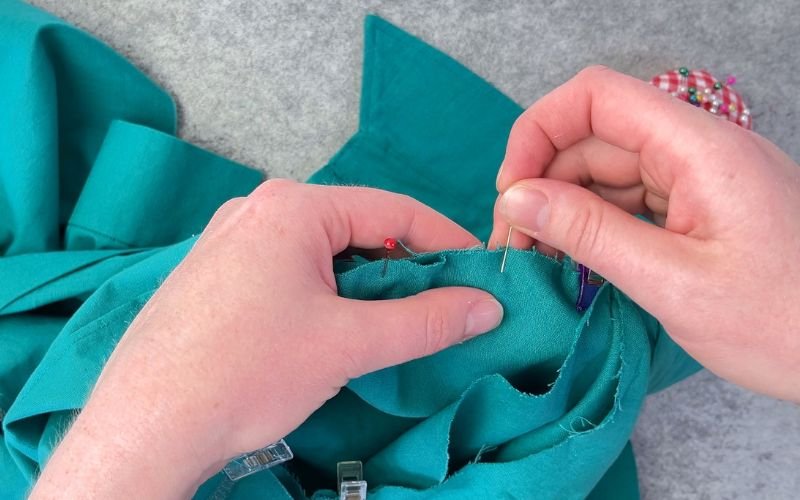
At the shoulder and armpit level I still opt to use clips for the same disappearing pins reason. But the area where the curves are opposites, you still need to use pins as they will lead to a more precise result. Just remember to place the pins just outside of the seam line.
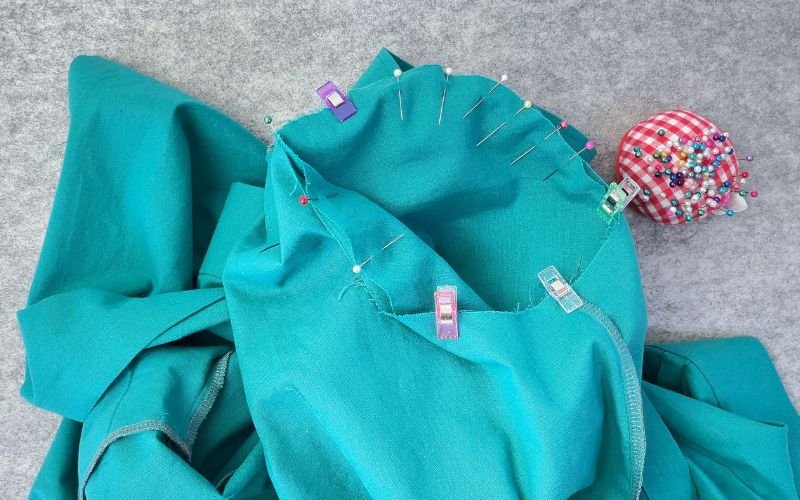
I like this method over the gathering method as it is quicker and allows the cuff to be attached before attaching the sleeve to the bodice. However, you are still left with the difficulties of pressing the seams neatly. I choose this method when I add shirt cuffs.
Common Sleeve Sewing Mistakes and Fixes
These are common [insert] drafting | sewing issues that I have experienced and have come across:
- There are puckering at the sleeve crown.
- Cause: the fabric was not gathered or distributed evenly.
- Fix: Pin the sleeve crown to the armhole at half way points between the gathering points and shoulder notch.
- The sleeve and bodice intersection seams are not aligned evenly
- Cause: The fabric shifted during the sewing.
- Fix: Pin the intersection with seams facing opposite direction. This will naturally stop the seams from shifting.
- The finished sleeve is leaning towards the back.
- Cause: The sleeve was attached back to front.
- Fix: Mark notches for the back of the sleeve in sleeve crown and insert with notches facing the back bodice.
Shirt Sewing Series: Step-by-Step Shirt Making Guide
This post is part of a larger step by step shirt pattern drafting and sewing series.
- How to draft a shirt pattern from scratch for beginners
- How to sew a shirt button stand
- How to trace and sew darts
- How to sew and attach a collar and collar stand to a shirt
- How to attach a shirt placket
- How to sew shirt cuffs step by step for beginners
- How to sew shirt sleeves (this post)
- How to sew a shirt (future post)
I recommend following these steps in order if you are drafting and sewing a shirt from scratch.
FAQ: How to Attach Sleeves to a Shirt
Conclusion
Learning how to attach sleeves to a shirt becomes much easier once you understand how sleeve crown ease actually works and why the armhole and sleeve curves appear mismatched at first glance.
While all three methods will produce a wearable shirt, my preferred approach remains attaching the sleeve flat before sewing the side seam because it gives the most control, the cleanest result, and the least frustration during pressing.
That said, each method has its place depending on your construction order and personal sewing preferences. The more sleeves you sew, the more instinctive it becomes to judge the ease, distribute the fabric, and choose the method that best suits your project.
Once you master sleeve insertion, shirt construction starts feeling far less intimidating—and a lot more enjoyable.
About the Author: Pattern Drafting & Garment Sewing

I’ve been sewing for over 30 years and drafting my own patterns for more than a decade. I work almost exclusively with self-drafted patterns, which means I don’t rely on instructions—I rely on understanding how garments fit and come together.
Most of my methods come from figuring things out through testing, adjusting, and breaking down common problem areas using logic and geometry rather than guesswork.
On this site, I share step-by-step tutorials on pattern drafting, garment construction, and sewing techniques to help you create well-fitted, professional-looking clothes from scratch.
👉 Read more about my approach to pattern drafting and sewing here: About Me