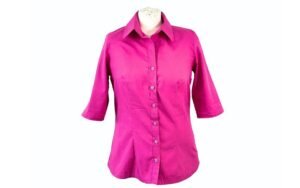
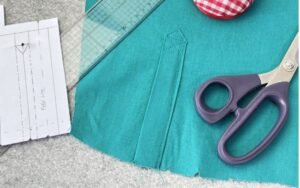
Why Is My Hem Pointy at the Side Seams?
If you have ever drafted or amended a sewing pattern you will know the pain of getting that weird looking jagged V shaped hem at the side seam. In my more than 10 years of pattern drafting experience, I made a few tops that had that giveaway flare and over time I actually delved into more detail to understand what causes it.
In this blog post I am going to explain why my hem is pointy at the side seams, why it happens, and eliminate a pointy side seam. The solution is a perfect quick fix, however there is a lot more that goes into it than this easy solution. Most of the time you will not need to know the full geometry. This is suitable for both pattern drafting troubleshooting and modification to commercial patterns and sewn garments.
Why This Happens When Extending a Bodice Pattern
My basic bodice block comes with waist shaping and is to the waistline. And most of the time that is the problem, because I am using this block as a starting point. To be fair, that’s what the block is for. While technically I should be creating a basic block that does not include waist shaping to ensure that the finished garment is perfectly balanced, I find a close fitting basic bodice block easiest to work with as I do not have to worry about recalculating the waist shaping and it allows a quick dart modification.
Drafting Practicality vs Drafting Perfection
The solutions given below are quick fix that avoids the headache of thinking of all the geometry in the pattern drafting, such as considering how the waist dart distribution impact on the side seam angles, or how the front and back bodice length difference influences either of the options. For a busy mum that loves to sew, the quick and straightforward solution is more important than a drafting school perfection.
Why is my shirt pointy at the side seams?
This is one of the most common reasons people search for why their hem is pointy at the side seams after drafting or altering a pattern.
The Geometry Behind a Pointy Side Seam
Before delving into a solution, let’s look at the problem. When you bring the side seams together, aligning perfectly, you will notice the wide V shape straight away.
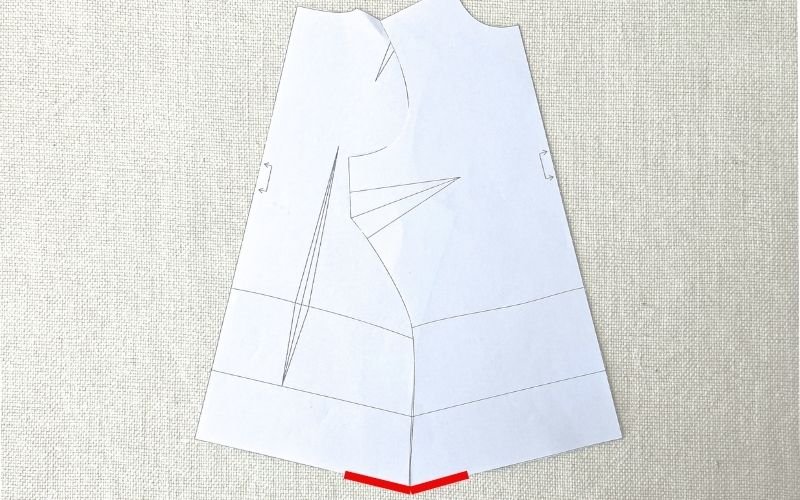
When you lower the hem on a close fitting bodice block, like I show on this shirt pattern post, both the back and front bodice pieces are worked in isolation from each other. Ideally, you would want to work on both pieces together and align them on a single sheet of paper, but let’s be real. As a home sewist you would not have a huge industrial sewing table and most likely have to use your dining table for pattern drafting. Furthermore, unless you are using a wide roll of craft paper or splash out on more expensive pattern drafting paper, you are sticking together multiple sheets of paper to make enough surface for a pattern.
Why Two Acute Angles Create the Problem
As such, you are unlikely to think at what angles the hem and the side seam meet on front or back bodice pieces. In most of the cases, when you extend the side seam outwards towards the hip, you are going to create an acute angle. That is, an age that is less than 90 degrees. And why does it matter? If you remember anything from geometry lessons, then a straight line is 180 degrees. For a smooth transition from one side to the other, both side to hem angles have to match up to be 180 degrees. And two acute angles will always be less than 180 degrees.
Now that we get the maths right, let’s look at the options for fixing the issue.
How to Eliminate a Pointy Side Seam
To eliminate a pointy side seam and avoid that jagged edge at the side seam, you have three options. All of them are simple but come with some points to consider.
Option 1: Raise the Side Seam
This option is the one that I use most frequently as it is very simple and works on both the front and back bodice patterns in isolation.
You only need to raise the side seam by around 2-3 cm (1″). The height is not as important as achieving a smooth transition from the side seam to the centre line without removing the straight angle at the front and without making the side seam way too short. Typically, I find this height works well without making the side seams visually shorter.
Once you have marked the straight angle, with a French curve (or freehand if you feel brave), smooth the sharp angle that the line from 90-degree angle and hem creates. Repeat the same for the other bodice part.
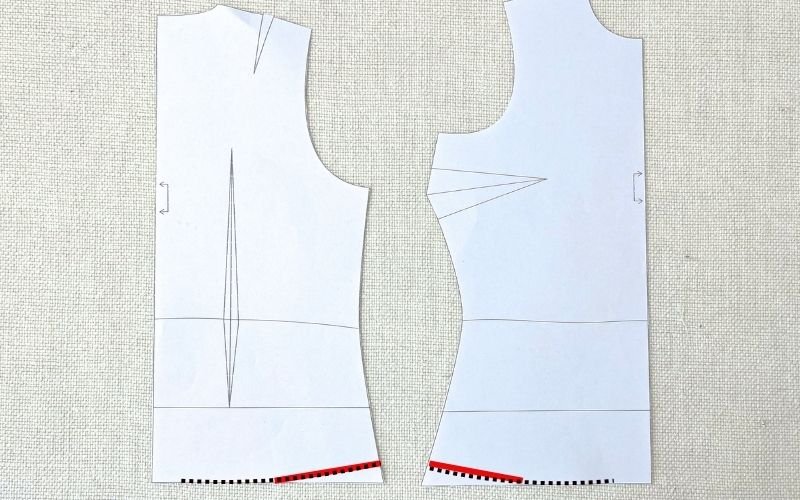
The thing to bear in mind is that by raising the seam you are increasing the total length of the hem. In most cases it will be fine, however for a very tight fitting top, the side seam may noticeably flare away from the body. To fix that, bring the side seam in slightly, to tighten the fit.
Option 2: Create a 90° Angle Without Raising the Side Seam
This is a very similar fix but instead of creating the 90-degree by raising the side seam, you are drafting the 90 degree angle from the hem. You would need to do that before cutting out the paper pattern, as otherwise you would need to stick some more paper to the side.
Similarly to Option 1, the straight line only needs to go up by 2-3 cm / 1″. Then smooth it out with a French curve to blend the side seam.
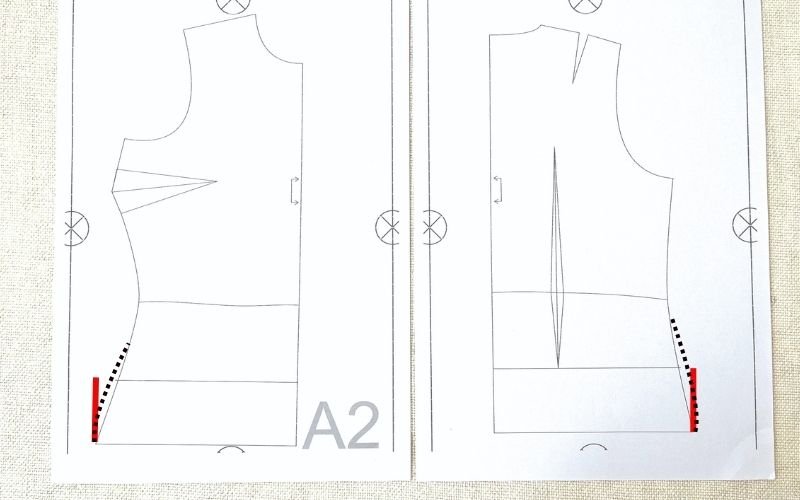
The drawback for this option is that you are introducing extra wearing ease before the hem. You could extend the waist dart to the hem but you would end up with a bulkier hem seam allowance. This may not be noticeable, however if this causes concern, then the other two options would be more suitable.
Option 3: Match the Side Seam Angles to 180°
This option works if you can bring both pattern pieces side by side or if you like to use a protractor. The latter might require some more headache to decide which should be a wide angle and which should be a narrow angle, and how high from the hem the correction should take place. Therefore, for simplicity I am only going to discuss and show the method where you pin both side seams together before adjustment. However, if you are interested in how to use a protractor for checking the angle, refer to my basic sleeve block drafting tutorial where I show you how to adjust the sleeve opening.
Simply, place the patterns side by side at the lower side seams. You do not need to worry about matching the whole side seam, just the lower section.
Then with a French curve (or freehand) draw a smooth line that eliminates the jagged edge and blends seamlessly with the rest of the hem, retaining the straight angle points at the centre front.
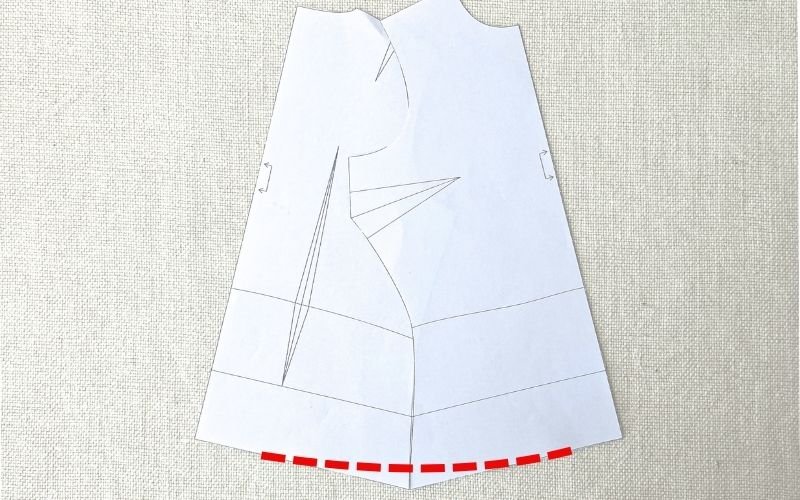
This method works best if you have already compared and adjusted the side seam length, by noting which side seam needs to be raised or lowered. I show how to do that in my basic bodice block modification tutorial when creating a shirt pattern.
Similarly to option 1, you also need to be mindful of the reduction of the side seam and increased hem circumference.
Which Method Should You Choose?
Knowing that you have not just one fix for eliminating a pointy side seam but three options to choose from, should feel like a discovery. While choice can also feel overwhelming, you can choose each method on different projects and see which one you prefer the most. Since I have a pear shaped body with a slight dip in overall circumference before the hip, for a hip length tops I would not naturally choose option 2. The choice between the other two boils down to whether I adjusted the side seam length before cutting out the pattern. If I did, I go with Option 1. If I did not, I go for option 3 and create a smooth transition taking into account the reduction in the side seam required on the front pattern piece.
Having said that, there is no wrong or right answer. It will depend on your own preferences and body specifics.
Conclusion
A pointy side seam is a common issue when drafting or modifying sewing patterns, but fortunately it is also one of the easiest to fix. Once you understand why the hem becomes pointy, you can choose the correction method that best suits your pattern and garment. Whether you raise the side seam, square the hem, or match the front and back angles, each approach will help create a smoother, more professional-looking finish.
Frequently Asked Questions
About the Author: Pattern Drafting & Garment Sewing

I’ve been sewing for over 30 years and drafting my own patterns for more than a decade. I work almost exclusively with self-drafted patterns, which means I don’t rely on instructions—I rely on understanding how garments fit and come together.
Most of my methods come from figuring things out through testing, adjusting, and breaking down common problem areas using logic and geometry rather than guesswork.
On this site, I share step-by-step tutorials on pattern drafting, garment construction, and sewing techniques to help you create well-fitted, professional-looking clothes from scratch.
👉 Read more about my approach to pattern drafting and sewing here: About Me