
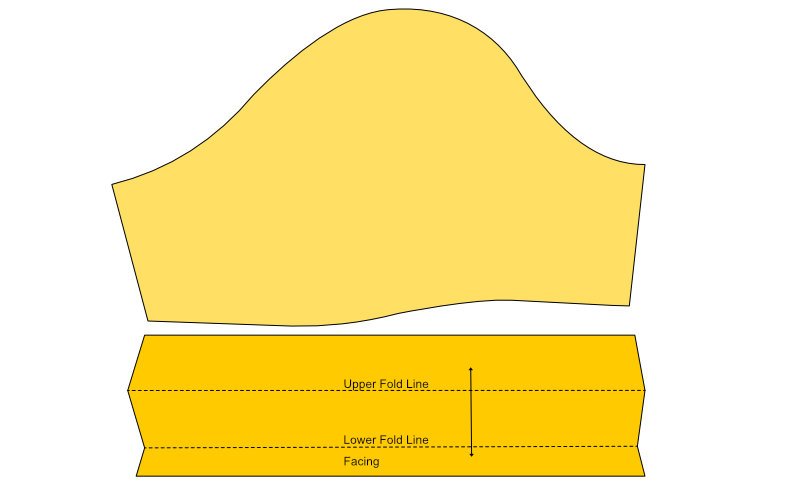
A roll-up sleeve pattern creates the appearance of neatly folded sleeves while keeping the wrong side of the fabric hidden from view. In this tutorial, I will show you how to draft a roll-up sleeve pattern from scratch, including how to create a separate roll-up sleeve facing for a professional finish.
I like rolled up sleeves because they make the outfit look less formal while still adding that power status. The actual roll-up sleeve drafting may appear confusing, but once you have figured it out, it is quite simple. Furthermore, in this post I will endeavour to make it simple and easy to follow so that you do not have any fears of attempting to draft it yourself.
What This Tutorial Will Teach You
In this tutorial I will share my exact steps that I take to create a grown on or a separate roll-up sleeve facing from scratch. The same approach works whether you are using a self drafted sleeve block or by adjusting a commercial sewing pattern.
What Is a Roll-Up Sleeve?
A roll-up sleeve is a short sleeve that includes an attached facing or extension designed to mimic a permanently rolled sleeve. Unlike simply turning a sleeve hem up, a roll-up sleeve hides the wrong side of the fabric and creates a clean, structured fold that stays in place.
There are two main reasons why I prefer to draft a separate facing instead of creating an extension to a short sleeve pattern. Firstly, a separate facing reduces the number of patterns I need to create. I reuse the same short sleeve pattern for a basic turned hem or add a facing to create a rolled sleeve effect. The second reason is that it gives more flexibility when positioning the patterns on the fabric, using it more responsibly and reducing the wastage.
Process Overview for Drafting Roll-up Sleeve Pattern
The process of drafting a roll-up sleeve pattern can be broken down into three simple stages:
- Draft a short sleeve pattern
- Create the roll-up sleeve facing
- Add grainlines, markings and seam allowances
How Does a Roll-Up Sleeve Work?
To create a roll up sleeve, you are essentially adding extra width that is the exact height of the desired roll. However, it is important to keep in mind that most likely you do not want the internal seam allowances to be visible on the right side which you get by simply rolling up the sleeve. Ideally, you want to keep only the right side of the fabric to be visible at all times, therefore you need to consider the geometry of the rolls.
A long sleeve you roll up twice, exposing the wrong side.
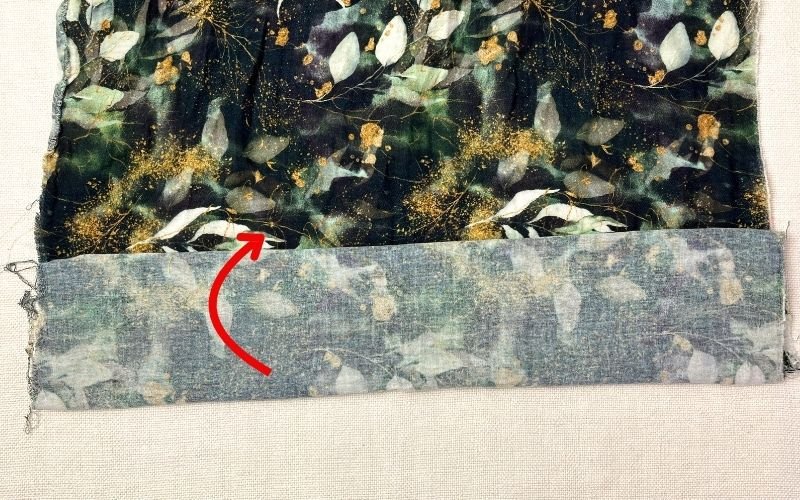
But for a roll-up sleeve you are folding the fabric up first and then down again to cover the wrong side, creating a rolled sleeve effect.
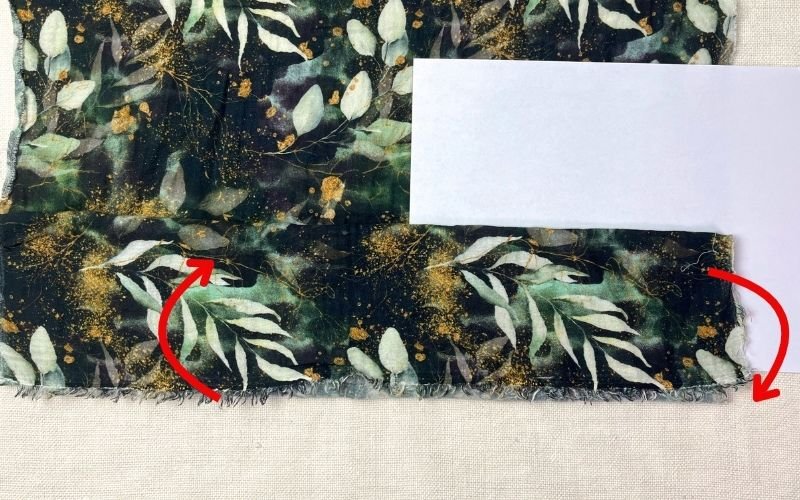
You also need to leave some fabric to cover the bottom fold line that may otherwise appear on the display.
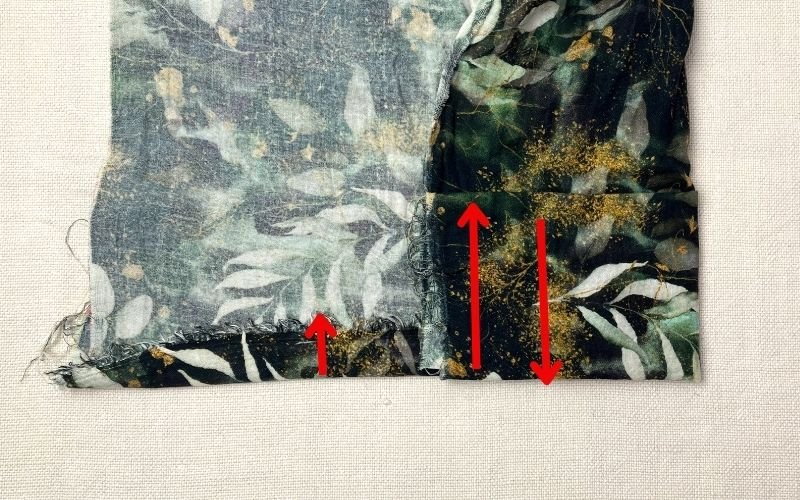
Knowing the system of how the roll-up sleeve work, should make the next steps of drafting the actual roll-up sleeve pattern a breeze.
Tools and Materials You Need to Draft a Roll-up Sleeve
To draft a roll-up sleeve accurately you only need a few basic pattern drafting tools. You can read more about each tool in my post on the essential pattern drafting tools.
- pattern paper
- grading ruler
- pen or pencil
- pencil eraser
- tracing wheel (optional)
- sleeve block pattern or a commercial sleeve sewing patter that fits you well
I am using a basic sleeve block pattern because that gives most versatility and less modifications to any future pattern adjustments you may want to make. However, a well fitting commercial pattern is a suitable base, providing you remove seam allowances.
How to Draft a Roll-Up Sleeve Pattern
Step 1: Create a Short Sleeve Pattern
A roll-up sleeve really only ever works on a short sleeve pattern. That can be anywhere between a bicep and elbow length. For anything over an elbow length, you really want o look into making a long sleeve shirt pattern instead to get most versatility and a more pleasing design.
To create a short sleeve pattern, you need to trace the basic sleeve block to the desired length. If you do not already have a sleeve block, start with my guide on How to Draft a Basic Sleeve Block.
In my short sleeve pattern drafting tutorial I show you how to do that step by step. There I also show you how to adjust a sleeve opening curve, but you only need to do that if you choose to make a separate roll-up sleeve facing.
I find that leaving a curved edge and creating a separate roll-up or double fold facing makes the sleeve fit better and stops it from flaring away from the body.
Step 2: Draft the Roll-Up Sleeve Facing
The roll-up sleeve facing is the section that creates the folded appearance of the sleeve while keeping the wrong side of the fabric hidden. Drafting this facing correctly is what gives a roll-up sleeve its clean and professional finish.
This step you can either complete directly on a sleeve pattern before you cut it out, or you can create a separate pattern altogether. I prefer the latter method as that gives more options for pattern placement and you can play with mixing up different fabrics for a custom look.
Essentially, you are going to create a cuff that you can fold up and secure in place with a quick stitch at the side seam for that classic rolled up sleeve hem look. The width of the facing can be as wide as you want, but I find anything between 3 to 5 cm look best and does roll back down on its own.
I will show you how to draft a separate facing, but you can tape it onto the short sleeve pattern and cut out as one piece.
As I am using a short sleeve pattern that has an S shaped opening, therefore I measure the length of the sleeve opening instead of tracing directly from side seam to side seam. A curved edge will always give extra length compared to a straight line.
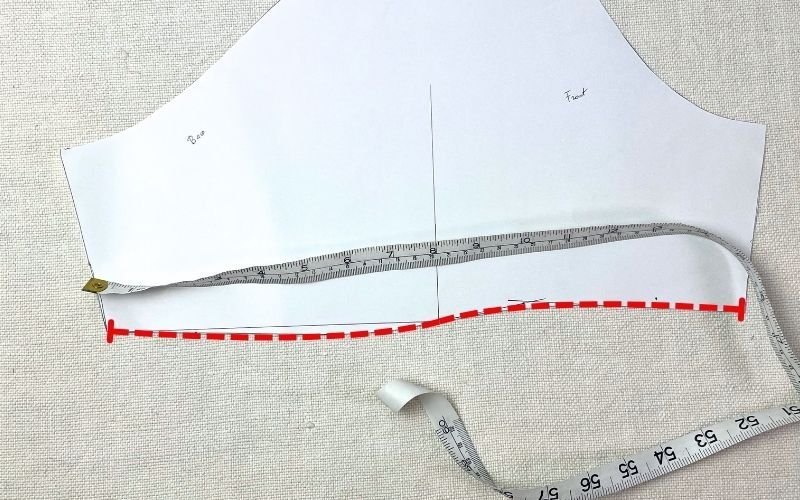
Next, on a separate piece of paper, draw a line that is the exact sleeve opening measurement. This is going to be the length of the double fold facing for a roll-up sleeve.
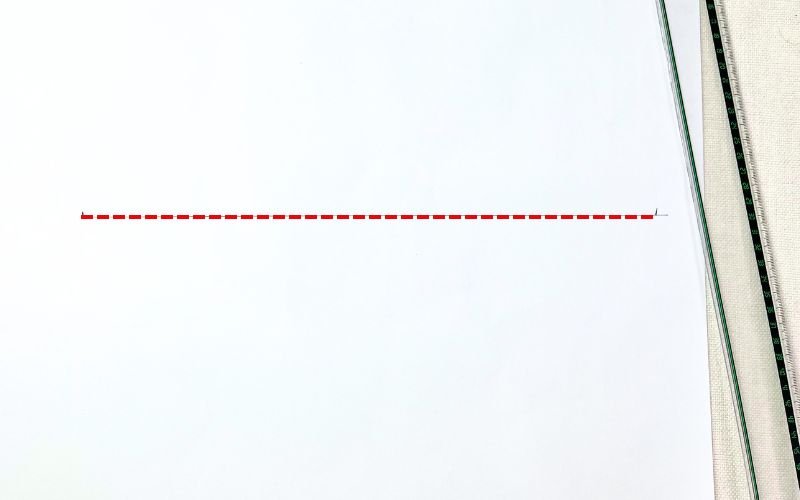
Then mark a line 3-5 cm below this line. This is going to be an upper fold line.
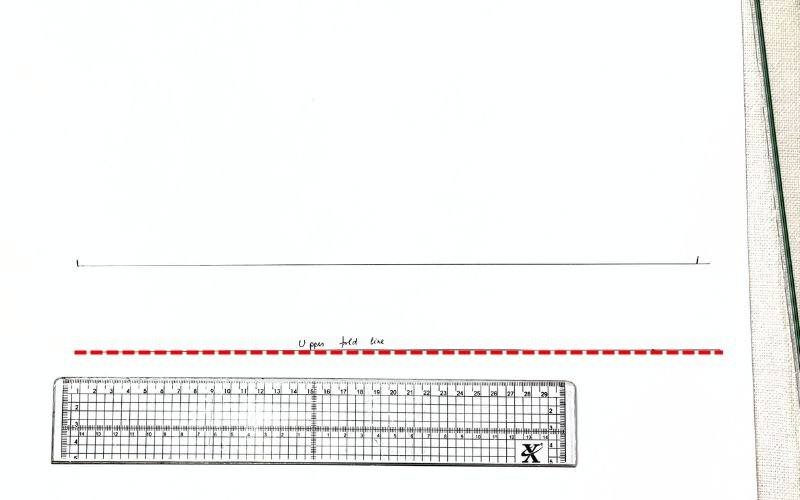
Next, draw another line below the upper fold line that is the same distance as the one above. This is your lower fold line.
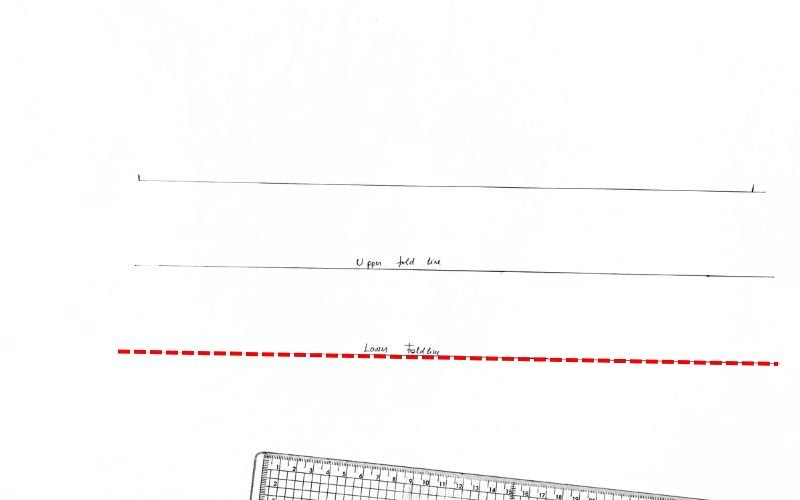
Finally, add another line below the lower fold line that is 1.5 – 2 cm below it. This is going to be the facing that will hide the wrong side of the fabric peeping at the lower fold line.
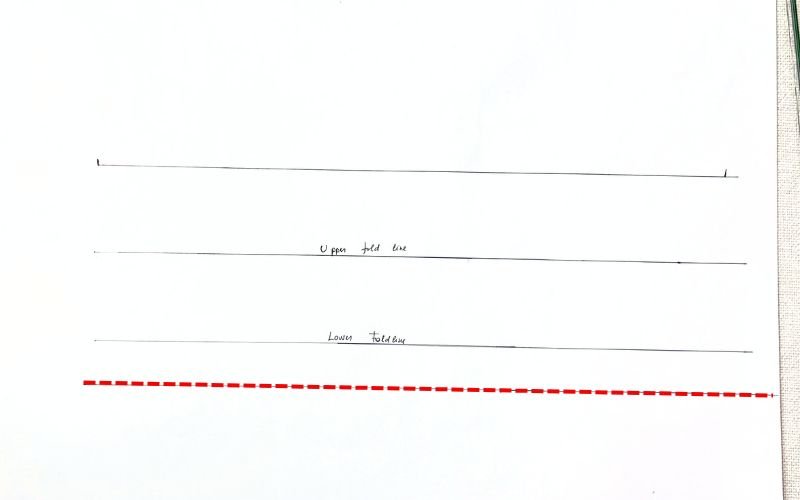
Next, you can cut out the pattern as a rectangle, or just cut along the top and bottom lines, leaving plenty of space on either side for further modification for a perfect fit.
Step 3: Shape the Facing Side Seams for a Better Fit
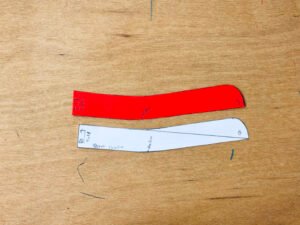
You can use the double fold facing that you just drafted for a roll-up sleeve as is. However, I find that ensuring that the side seams actually follow and mimic the sleeve side seam angle result in a better fitting roll without any tightness around the upper fold line. This also more comfortable around the arm as the shaped roll up facing does not reduce the wearing ease.
In the below picture you can see how a straight cut facing would reduce the circumference of the sleeve at the upper fold line.
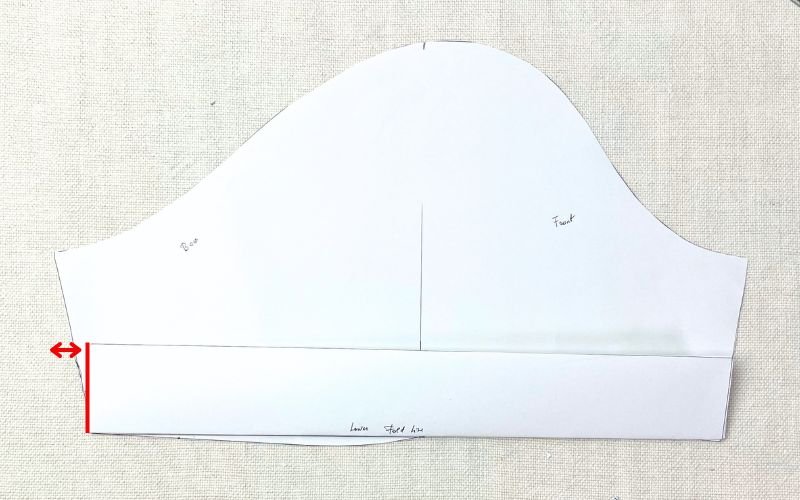
This is completely optional step as the roll-up can be created from a basic rectangle. A basic rectangle is easier to sew too. But if you want to make your life a little harder to achieve that perfect fit, then here is an adjustment that you need to make:
- Fold the double fold extensions along the fold lines like it would be on a final garment.
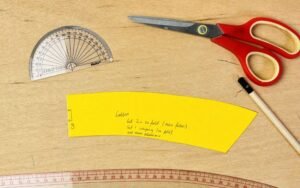
- Place a sleeve pattern atop, matching the lower corners. Using a tracing wheel (or a pencil) trace the side seams.
Before you trace the side seams, make sure that the lower fold line’s length matches the sleeve opening. To check that, trace one side seam and then measure the exact sleeve opening measurement along the lower fold line to the other side. Then move the other side of the sleeve pattern to match up with this mark.
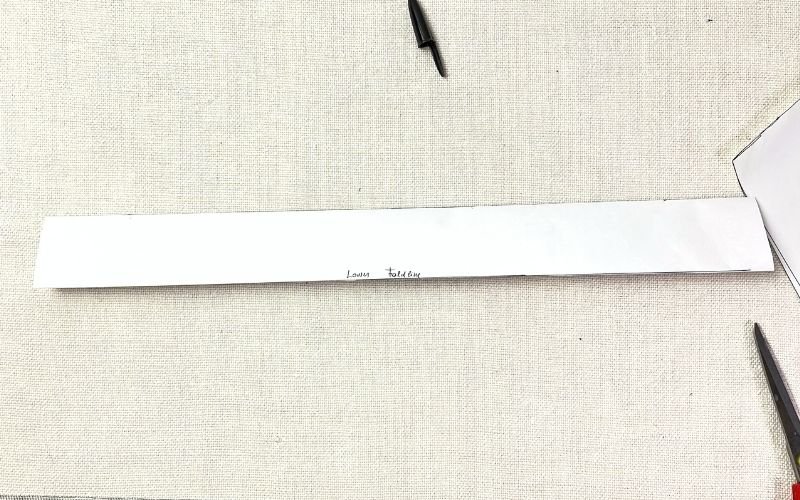
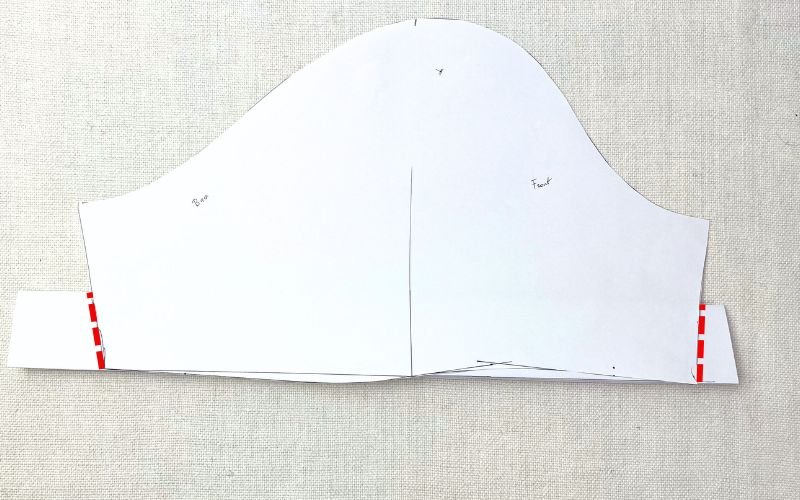
If you traced the side seams with a pencil, cut off the edges along the pencil line. This will create an exact shape for the pattern.
If you traced it with a tracing wheel, unfold the facing and retrace the indentations left by the tracing wheel. I like to cut notches at the points where the lines change directions. These are easies to transfer onto the fabric rather than trying to redraft the whole side seam lines.
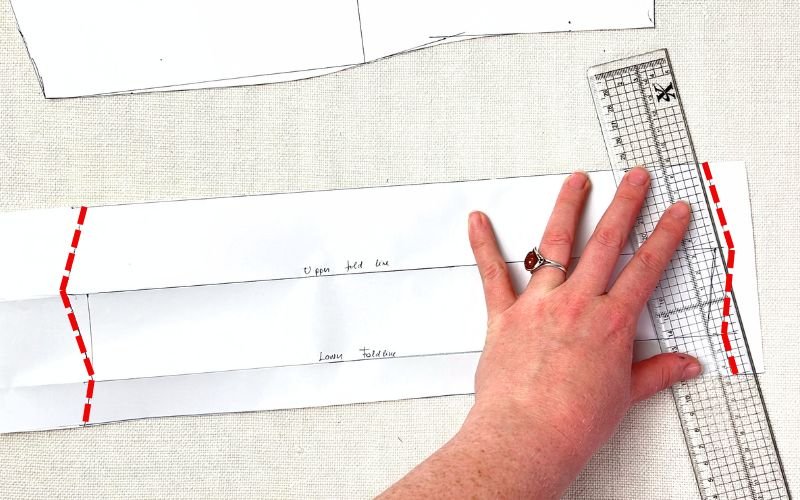
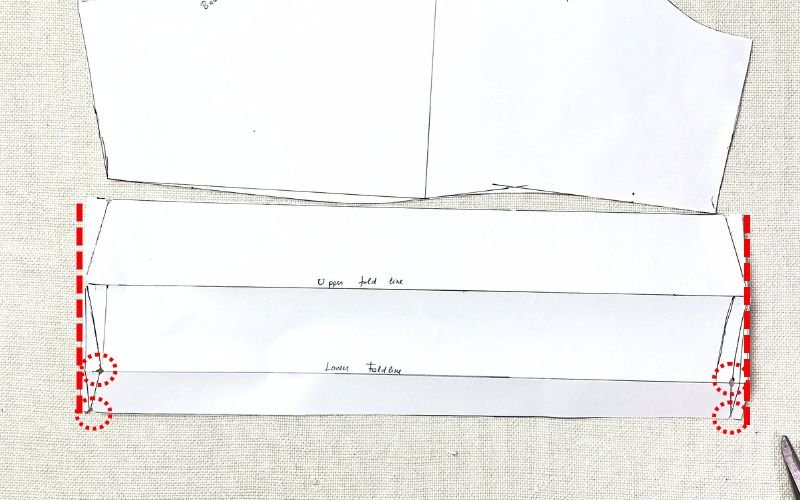
Then draw the side seams that captures all the side points create a larger rectangle It is easier to cut out a fabric from a shape with straight edges than the zig caged lines at the side.
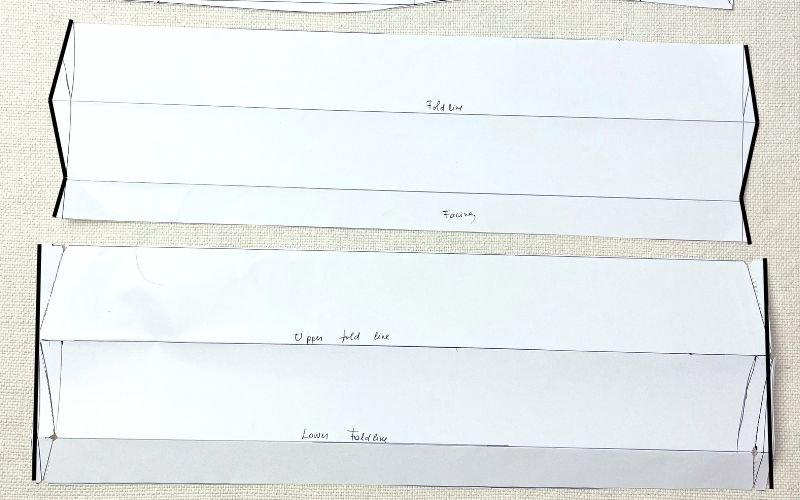
Step 4: Add Grainline and Pattern Markings
Once you are happy with the roll-up sleeve pattern, too can transfer it onto a sturdier cardstock to ensure the longevity of the paper pattern. Add straight grainline that can go either parallel or perpendicular to the fold lines. If you are going to cut the roll-up facing from a fabric that matches the sleeve, then the grainline needs to follow the same grainline as the sleeve pattern. That’s typically perpendicular to the fold lines. However, if you intentionally want to change the a direction of the fabric surface pattern or want to use a contrasting fabric altogether, then the direction can be parallel to the fold line. You could even cut the roll-up facing along the bias line, however you will need to be mindful that the bias stretch and will not retain its shape as well as a cross or straight grain.
If you are getting confused as to what a straight grain, cross grain or bias is, I have explained each in my post on how to make bias binding.
You can add seam allowances at this stage but as I explained in my detailed guide on how to add seam allowances, I keep my base patterns without seam allowance.
Common Roll-Up Sleeve Pattern Drafting Mistakes
These are common mistakes that I have experience myself when drafting a short sleeve patterns. The suggested fix will help you achieve that perfect short sleeve that you want to use for your sewing project.
- The short sleeve with roll-up facing does not hung flush against the arm, instead the hem flares outwards away from the body
- Cause: the sleeve hem drafted as a straight line or a C curve on a wider fitting sleeve.
- Fix: adjust the sleeve hem into a S shaped curve.
- The upper fold line of the roll-up sleeve is too narrow
- Cause: the roll-up sleeve facing was drafted as a straight rectangle
- Fix: fold the paper pattern up along the fold lines and cut matching the shape of the sleeve pattern
- The wrong side of the sleeve is visible along the lower fold line
- Cause: the facing was not considered and included.
- Fix: add 1/5 – 2 cm wid facing at the lower fold line
When to Use a Roll-Up Sleeve Pattern
You can use a roll-up sleeve pattern for any casual and relaxed office clothing with short sleeves, such as shirt dress, a top or short sleeve shirt.
Frequently Asked Questions
Conclusion
A roll-up sleeve pattern is a simple modification that can transform a basic short sleeve into a more polished and intentional design. Once you understand how the folds work and why the facing is needed, drafting the pattern becomes surprisingly straightforward.
Whether you choose a grown-on extension or a separate roll-up sleeve facing, the key is allowing enough fabric to create the fold while keeping the wrong side of the fabric hidden. By starting with a well-fitting short sleeve pattern and carefully shaping the facing, you can create a professional rolled sleeve effect suitable for shirts, tops and shirt dresses.
Now that your roll-up sleeve pattern is complete, you are ready to cut your fabric and sew the finished sleeve into your garment.
About the Author: Pattern Drafting & Garment Sewing

I’ve been sewing for over 30 years and drafting my own patterns for more than a decade. I work almost exclusively with self-drafted patterns, which means I don’t rely on instructions—I rely on understanding how garments fit and come together.
Most of my methods come from figuring things out through testing, adjusting, and breaking down common problem areas using logic and geometry rather than guesswork.
On this site, I share step-by-step tutorials on pattern drafting, garment construction, and sewing techniques to help you create well-fitted, professional-looking clothes from scratch.
👉 Read more about my approach to pattern drafting and sewing here: About Me
Thanks so much for this! This is exactly what I’m Looking to do with a top I’m working on using my husbands old shirts.
I’m fairly new to drafting my own patterns (and sewing clothes in general).
Would I still need to add a seam allowance at the bottom of the facing piece or is the lower fold line basically the line I’m sewing on?
I’m trying to create a rolled up sleeve very close to the shoulder. It’s quite a loose fitting shape and the bodice pieces already overhang the shoulder. Ideally I want the roll up facing to attach straight to the bodice armhole without an extra sleeve piece. Is that possible?
Do you have any Tipps for that? Would I just measure the armhole circumference instead of the end of the sleeve length?
Thanks so much!
The seam allowance addition will depend on how you intend to finish the facing’s raw edge. If you use an overlocker, then there is no need to add a seam allowance. I added to mine in the blogpost on how to sew a rolled sleeve, to hide the raw edges. It adds a little bit of a bulk but makes it look neater compared to an overlock finish.
I would still recommend to create a sleeve rather than attaching just the roll up extension, as the roll up bit at the armhole section ( where the side seam is) would be sewn to the bodice seam rather than a sleeve. And the addition of the extension there may pull the bodice away from the body, crating a gap. Having said that, this may be a trial an error project. And if you have a few shirts that you can play with, then trialling on the one that you like the least would be a way to go! 🙂