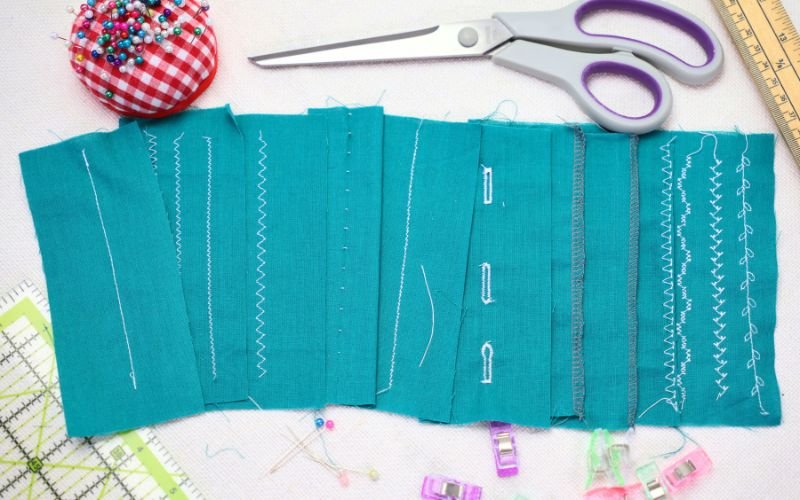
In my first ever sewing project on a sewing machine at school, I created a visual reference sheets with basic sewing stitches. At the time I was around 10 years old and I was just so excited to learn a new skill and how to use a sewing machine. Over time I also started to appreciate the value of those reference samples. Yes, they were not the neatest or straighter stitches that I made, but they served a purpose of not only learning how to sew, but also how each sam looks like.
As the years passed, I either lent the reference book to someone else or it got misplaced and recycled. So, today some 20 years later I am going to recreate the project, with some improvements and expansions. I’ve recreated that idea as a printable Sewing Stitch Sample & Reference Book that you can download for free later in this guide.
In this blog post, I will share the essential basic sewing stitches for beginners but they are also the ones that I use every day on ay sewing project. I will explain the best use for each and how to a slight modification to the settings increases the variety of application.
Tools and Materials
You will need these tools and materials to make the samples:
- sewing machine – any home sewing machine will do, however the retro sewing machine will only do limited variety of stitches
- basic sewing foot
- blind hem sewing foot – this is optional. I do blind hems with a basic sewing foot but I appreciate that for a beginners maintaining a straight and even stitching can be a challenge and therefor a blind hem sewing foot might be useful. And it typically is included in the sewing feet set that comes with a sewing machine.
- overlocker – you do not need overlocker if you do not have one. But it is a great investment if you plan to make the sewing a regular hobby.
- fabric – a plain cotton fabric is best as that has a good structure and it is the one that I suggest for beginners. However, you can consider other natural fibres for garment sewing.
- thread – contrasting thread will be better because you need to be able to see how the stitch looks
- scissors or snips for cutting the thread
- ruler, rotary cutter and mat or just plain fabric scissors
Preparing for Sewing the Samples
The samples that I am preparing is guided by the reference book that I am going to insert them. In fact, I am using a file folder that is made for A4 sheets of paper. Therefore, the fabric that I am cutting for the samples measure 15 cm (6″) long and 6.5 cm (2.5″) wide. I will be able to comfortably fit 3 samples on a sheet of A4 paper.
Build Your Own Sewing Stitch Reference Book
Learning sewing stitches is much easier when you can see real examples in front of you. That’s exactly how I learned, and it’s why I’ve recreated my own stitch reference book for you.
Subscribe below to download my free Sewing Stitch Sample & Reference Book. You’ll get printable pages where you can attach your own stitch samples, record your machine settings, and build a handy reference guide you’ll use for years to come.
Which Sewing Stitch Should You Use?
If you are new to sewing, the number of stitches on a sewing machine can feel a little overwhelming. The good news is that you do not need to learn them all. In reality, most sewing projects rely on the same handful of stitches, with each one having its own purpose. Some are designed for constructing garments, others for finishing raw edges, sewing stretchy fabrics or creating decorative details.
The comparison table below gives you a quick overview of the basic sewing stitches and when I would use them. If you are unsure which stitch to choose, this is a handy place to start before reading the detailed explanation for each one.
| Sewing Stitch | Best Used For | Woven Fabrics | Stretch Fabrics | My Recommendation |
|---|---|---|---|---|
| Straight Stitch | Sewing seams, topstitching, basting, inserting zips and gathering | ✓ | ✗ | This is the first stitch every beginner should master. It is the one you’ll use on most woven sewing projects. |
| Zig Zag Stitch | Sewing stretch fabrics, topstitching jersey, sewing elastic, cording, finishing raw edges and manual buttonholes | ✓ | ✓ | One of the most versatile stitches on a sewing machine. A narrow zig zag is my preferred choice for many stretch sewing projects. |
| 3-Step Zig Zag Stitch | Attaching elastic and decorative stitching | ✓ | ✓ | My favourite stitch for sewing elastic because it helps reduce tunnelling and creates a durable seam. |
| Blind Hem Stitch | Sewing invisible hems on skirts and trousers | ✓ | ✗ | A useful stitch for machine-sewn blind hems, although I still prefer a hand-sewn blind hem for the most invisible finish. |
| Stretch Stitch | Sewing jersey, cotton lycra and other knit fabrics | ✗ | ✓ | If your sewing machine has this stitch, it is a great option for constructing stretch garments. |
| Buttonhole Stitch | Sewing buttonholes on garments | ✓ | ✓ | An essential stitch once you start making shirts, blouses, dresses and jackets. |
| Overlocker Stitch | Constructing and finishing seams in one step | ✓ | ✓ | My go-to stitch for sewing stretch garments quickly and creating professional-looking seam finishes. |
| Overcast Stitch | Finishing raw fabric edges without an overlocker | ✓ | Limited | A great alternative if you don’t own an overlocker. It creates a neat, durable edge finish on a regular sewing machine. |
| Decorative Stitch | Decorative topstitching and embellishment | ✓ | ✓ | Nice to have for adding interest to plain fabrics, but not one of the first stitches a beginner needs to learn. |
Basic Sewing Stitches Every Beginner Should Know
The following basic sewing techniques form the foundation of almost every garment sewing project.
Straight Stitch
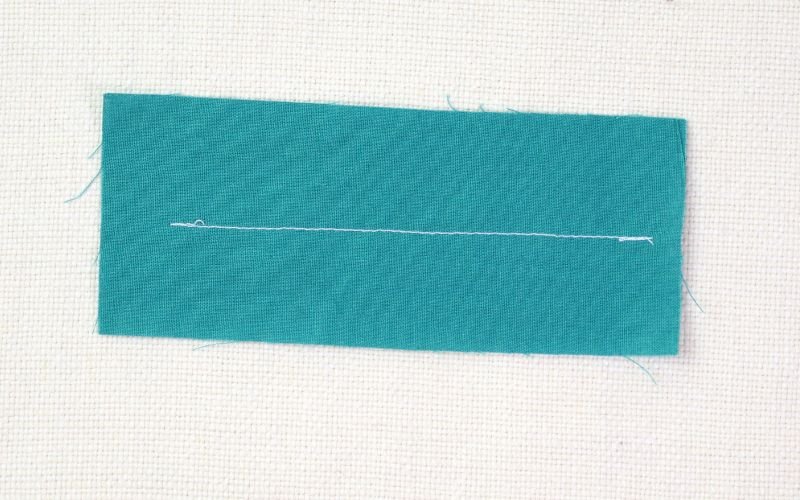
A straight stitch is the most basic sewing stitch for beginners and experienced tailors alike. It is most prevalent and pretty much all woven garments will use a straight stitch. As such, this is the first one that you need to learn. While it is quite basic and straightforward, the challenge comes from being able to sew in a straight line. My advice is to look at how the fabric moves against the edge of the sewing foot, keeping the alignment consistent. If you looked at the sewing needle instead, you are not leaving any room for correction. Any fabric movement will create a visible direction change on the stitched line.
You can modify the stitch length from 0 to around 5 or 7 mm. On a more basic sewing machine that has a separate dial for changing the width of the fabric you can also reposition the sewing needle to the left, by increasing the width on the dial from 0. On a more advanced sewing machines, you can also move the needle to the right. The ability to change the needle location comes in handy for sewing a lightweigth fabric where the sewing machine may otherwise chew up the fabric, or where you need to topstitch around a button or embellishment.
However, before starting sewing a new project, make sure that the needle is positioned in the middle. There was a time when I truly believed that there is no invisible zipper foot available for my sewing machine. Until a friend pointed out that my needle is positioned to the left and that’s why it would hit the sewing foot instead of going through the much smaller central opening.
I used this sewing stitch throughout my shirt sewing project.
Used for: woven fabrics
Best setting: 2.5 or 3mm with central needle alignment for most project. The longest stitch (5 or 7mm) for gathering stitches.
Best for: Most woven projects, for inserting zip, basting
Avoid if: Sewing stretch or jersey fabrics with standard sewing thread. Instead either use a stretchy thread or a zig zag stitch or an overlocker.
Watch out for: Needle position when switching sewing machine feet. Some sewing feet have smaller openings through which the needle goes through to reduce the chances of fabric being pulled into the feed dogs.
My verdict: This is the stitch that you will need to master. Practice sewing straight lines on straight and curved projects.
Zig Zag Stitch
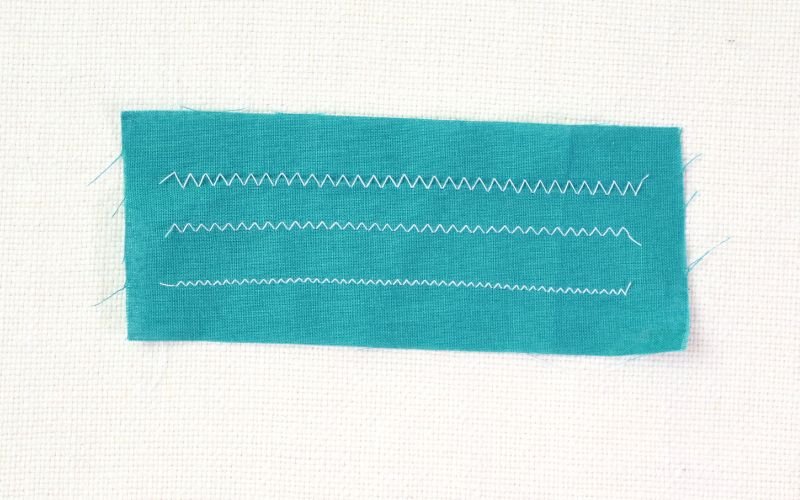
This stitch is used on stretchy fabrics as it adds the required flexibility without popping the seams. However, you will be excused if you believed that the use for zig zag stitch ends with a jersey fabric. In fact, this is the most versatile stitch that can be used on topstitching stretch fabrics, adding decorative element and neaten the raw edges on woven fabrics, and for adding cording. It can be also used for sewing an elastic, however I find that the wider setting can lead to elastic tunnelling, that is, bulging in the middle, with edges being pulled closer to the centre. However, I will use it to sew together the end of the elastic to ensure that the stitches do not break when pulled.
Another excellent application is the manual buttonhole swing if you do not have a specific buttonhole foot or button hole setting on your fabric, or just simply need to sew a buttonhole on a thick fabric on which the standard buttonhole foot does not work. I explain how to use the zig ag stitch in my post on how to sew buttonholes on a sewing machine.
I also use it to gather a tulle fabric for petticoats, by sewing on either side of a cording that I can pull later to create even gathers. This method is quicker and gives less headaches in case of some threads popping. However, bemindful that any gathering stitches will need to stay in seam allowance.
I used zig zag stitch when I topstitched the neckband on the T-shirt.
Used for: sewing together stretch fabrics, topstitching stretch fabrics, sewing hems on jersey fabrics, sewing buttonholes on thick fabrics, sewing elastic, adding cording
Best setting: 2 or 1.8 mm length and 1.8 mm width for sewing stretchy fabrics and neat top stitching. Wider and longer stitch if used for gathering.
Best for: Stretch fabrics, topstitching stretch fabrics.
Avoid if: sewing elastic or thin woven fabric, as it is prone to tunnelling.
Watch out for: tunnelling. If that happens, reduce the stitch width and length or switch to 3-step zig zag stitch.
My verdict: A very useful stitch if you do not own an overlocker. I prefer a narrow and short zig zag stitch over a double needle or overstitch, as the stitching is more secure. This stitch is slower than a straight stitch as it takes two steps to cover similar distances.
3-Step Zig Zag Stitch
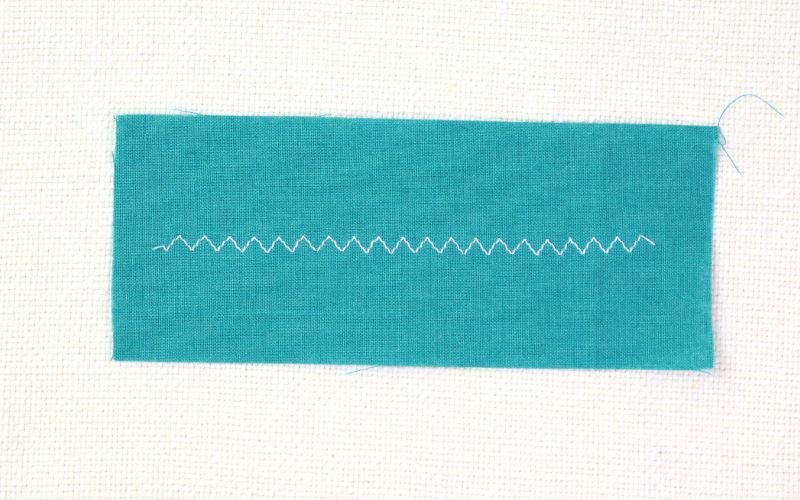
While a three-step zig zag stitch is classed as a decorative stitch, it actually is very useful for attaching an elastic to a fabric, like I did when fixing the loose elastic on a waterproof mattress. The stitch reduces any chance of tunnelling as instead of long stitches to either side, it creates three smaller stitches on each side of the zig zag shape. It is a slow stitch even on the max speed on a home sewing machine. However, this slower speed gives a lot more control when attaching elastic.
Used for: decorative stitch or sewing elastic.
Best setting: will depend on the required width of decorative stitch and the width of the elastic. I tend to use a middle setting for both the width and length.
Best for: elastics and fabric embellishment.
Avoid if: speed is of an essence or you are sewing multiple thick layers.
Blind Hem Stitch
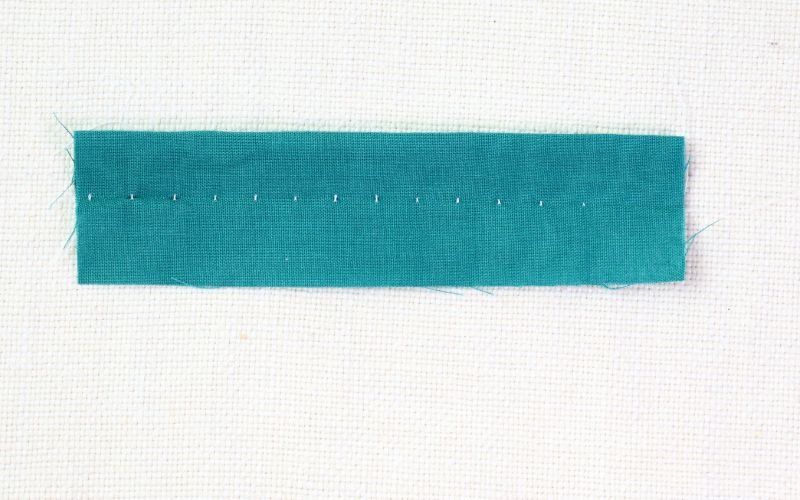
This stitch requires a specialist foot that is included with most starter kits that come with the sewing machine. Whenever I am using a blind hem stitch, I actually only use the basic standard sewing foot as I cannot be bothered to look for the blind hem foot. That said, the result will be more accurate with a blind hem foot once you have done a few test stitches.
To sew a blind hem, you will need to press raw edge up to the wrong side, press up over again and then fold the double folded hem to the right side, exposing a sliver of folded edge. The sew along the hem from the wrong side, with the inside hem on your right side, catching a few threads on the left.
While this works, I personally find hand sewing leads to a better result and a truly invisible stitches, while the sewing machine blind hem will not be invisible.
Used for: Sewing double folded edge on skirts or trousers.
Best setting: standard settings. You can adjust the width but I find positioning the project is easier and leads to better result than playing with stitch length or width.
Best for: woven fabrics
Avoid if: you want a truly invic=sible stitch and do not have a matching thread. Opt for hand sewn hem instead.
Stretch Stitch
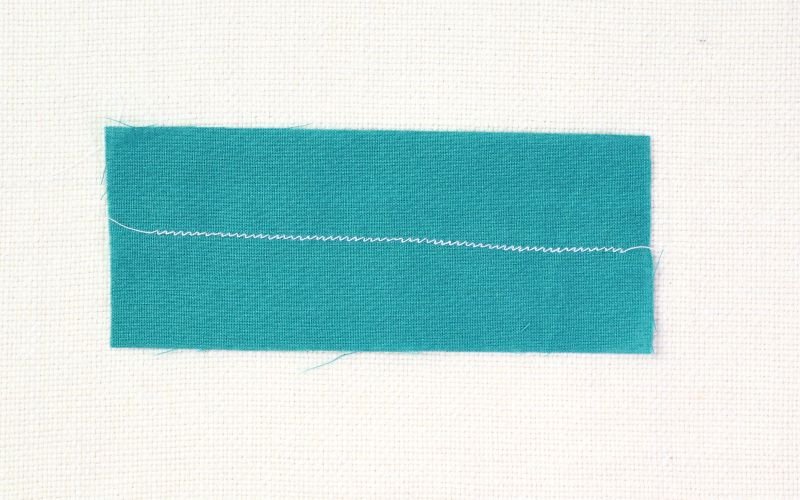
I am adding stretch stitch to basic stitch selection that every beginner should know, but in reality this stitch is not available on all sewing machines. It is a specialist stitch that is something between a zig zag and a straight stitch. It introduces minuscule needle redirection in form a zig zag, while appearing less wide and straighter than any zig zag stitch. It is used to sew together stretch fabrics and jerseys, however I would not use it for topstitching heavy fabrics, such as French Terry or thicker cotton jerseys. The multiple layers significantly slows down the sewing speed and shortens the length of the stretch stitch.
Used for: sewing stretchy fabrics, such as cotton jersey, cotton lycra and French Terry
Best setting: I don’t usually play with the width, whatever is the middle setting I stick with it, however heavier fabrics would benefit from larger stitch length.
Best for: basic seams on a stretch fabrics
Avoid if: multiple heavy layers are sewn together, e.g., when topstitching neckline
Buttonhole Stitch
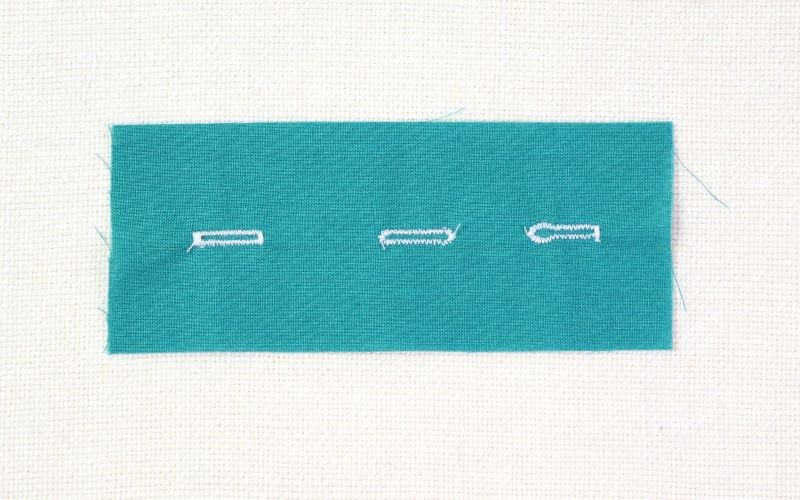
At some point in your sewing journey you will get brave to sew buttonholes. When that happens, you may surprised that not only there are different sewing machine options to sew a buttonhole ( I discuss it on my blog post how to sew a buttonhole on a sewing machine), but there are also different buttonhole finishes.
The most prevalent and the one I use far more often than any other is a squared end buttonhole. You will find it on most shirts, blouses and dresses.
The other options are for a rounded and keyhole buttonholes. These are typically present on jackets and coats and for a much larger buttons. The added rounded shapes make the opening wider, to allow a much larger button to slide through the thicker suiting or coating fabric.
Overlocker Stitch
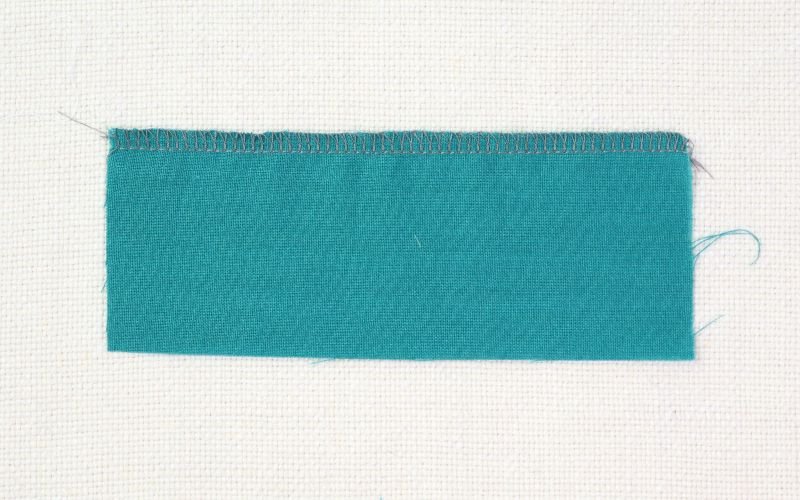
Overlocker stitch will require a specialist overlocking machine. As it may seem like an additional expense, once I got mine nine years ago, I could not believe how I could not live without it. I first used it only to neaten the raw edges, however over time it has become my go to for sewing anything stretchy. The overlocker is a lot faster than using a zig zag stitch.
The overlocker will have four threads – two loopers and two needle threads. When using an overlocker for a construction, you will be using all four threads, like I did in my T-shirt construction post.
By removing one of the needles, you can turn the overlocker into a 3 thread machine. Removing the right needle will create a wide seam, suitable for raw edge overlocking and you will not be wasting the thread. However, I am not usually bothered to remove the needle and overlock the raw edges with all four threads.
Removing the left needle, will create a narrow seam, that can be applied to create a decorative edge like I did on the hair scrunchies, or to sew smaller fabric pieces that have tight curves, like I did on my no-show shoe liner socks.
Overcast Stitch
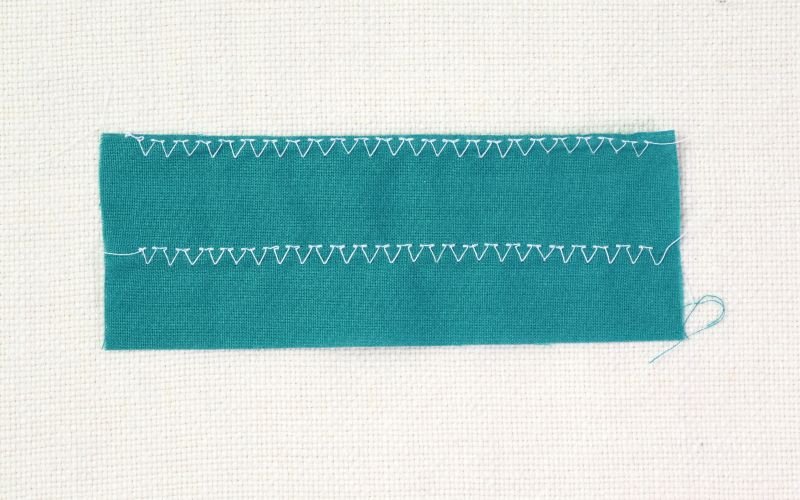
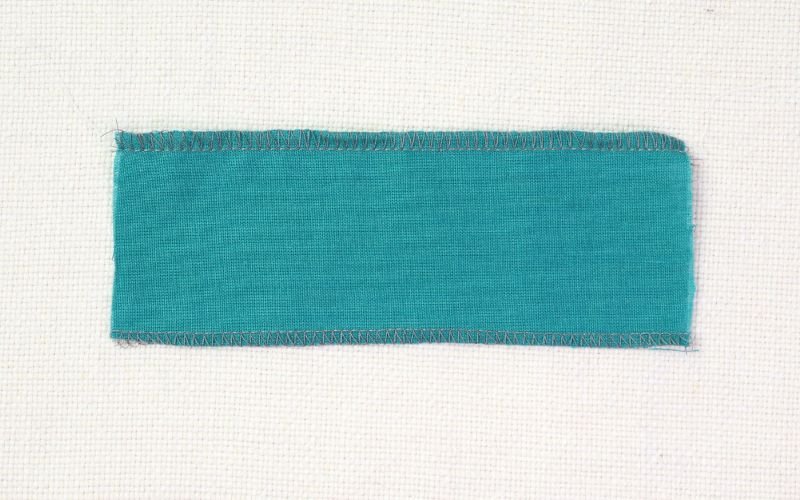
If you do not have an overlocker, you can use an overcast stitch on your sewing machine. It will not cut off the raw edge like the overlocker does, but will create a similarly strong raw edge treatment. Optionally, you can then trim the edge yourself, close to the stitching.
Decorative Stitch
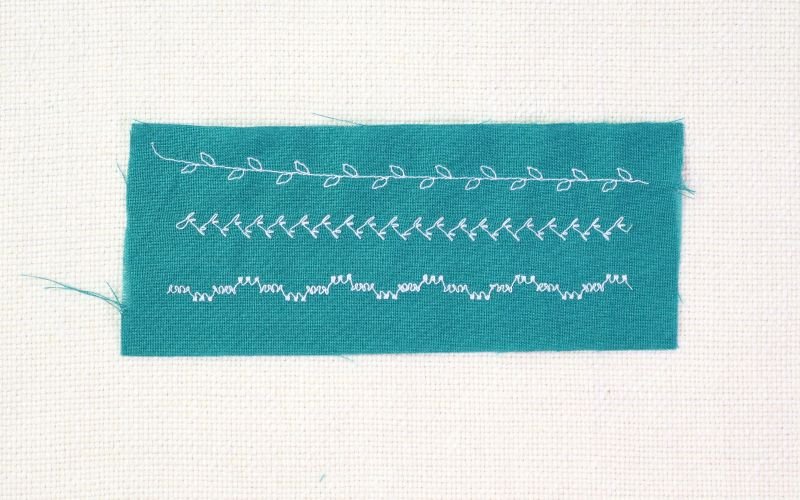
Most modern sewing machines will come with decorative embroidery stitch options. While more expensive ones will have a lot of them, like my Singer Quantum sewing machine, in reality I only ever use very few of them. My preferred one is the wavy line that I used when sewing reusable sanitary pads. The others I have not used that much with majority never been selected at all. Mu suggestion would be to select one that you like and incorporating in projects that use plain fabrics, to add interests to hems, sleeve or neck openings, using a contrasting thread.
Mastering these basic sewing stitches will make almost every future sewing project easier and more enjoyable.
How to Choose the Right Sewing Stitch
Each of the stitch discussed above serves a specific purpose. When constructing a garment from woven fabric, you will use straight stitch. Meanwhile, a stretchy fabric will call for either a zig zag stitch or an overlocker. The best option for attaching an elastic is a 3-step zig zag stitch, while a woven fabric hem can be completed by either a straight stitch or a blind hem stitch. On a stretchy fabric, you will use a zig zag stitch or a stretch stitch instead.
A quick seam finish can be done with an overlocker, overcast or a zig zag stitch. Buttonhole stitch is only ever useful in combination with a button or as an opening for ties on a wrap skirt or a wrap dress.
Decorative stitch comes in handy for more interesting top stitching or fabric embellishment.
Overtime, you will create your own preferences when you can use a multiple options. In my sewing projects, I specifically call out which stitch is more appropriate.
Conclusion
Learning these basic sewing stitches is one of the best investments you can make at the start of your sewing journey. While it might seem like there are countless stitches available on modern sewing machines, you will quickly discover that only a handful are used on a regular basis. Once you understand when to use each stitch and how small changes to the stitch length or width affect the result, you will be able to tackle a much wider variety of sewing projects with confidence.
Don’t feel that you need to master every stitch in one sitting. Create your own reference samples, experiment with different settings, and keep them nearby whenever you start a new project. I still find it useful to test a stitch on a fabric scrap before sewing the real garment, especially when working with a new fabric or trying a different technique.
These basic sewing stitches for beginners will become second nature with practice, and before long you’ll instinctively know which stitch is the right choice for every project. The more you sew, the more you’ll appreciate that mastering the basics is what leads to consistently professional-looking results.
Frequently Asked Questions
About the Author: Pattern Drafting & Garment Sewing
I’ve been sewing for over 30 years and drafting my own patterns for more than a decade. I work almost exclusively with self-drafted patterns, which means I don’t rely on instructions—I rely on understanding how garments fit and come together.
Most of my methods come from figuring things out through testing, adjusting, and breaking down common problem areas using logic and geometry rather than guesswork.
On this site, I share step-by-step tutorials on pattern drafting, garment construction, and sewing techniques to help you create well-fitted, professional-looking clothes from scratch.
👉 Read more about my approach to pattern drafting and sewing here: About Me