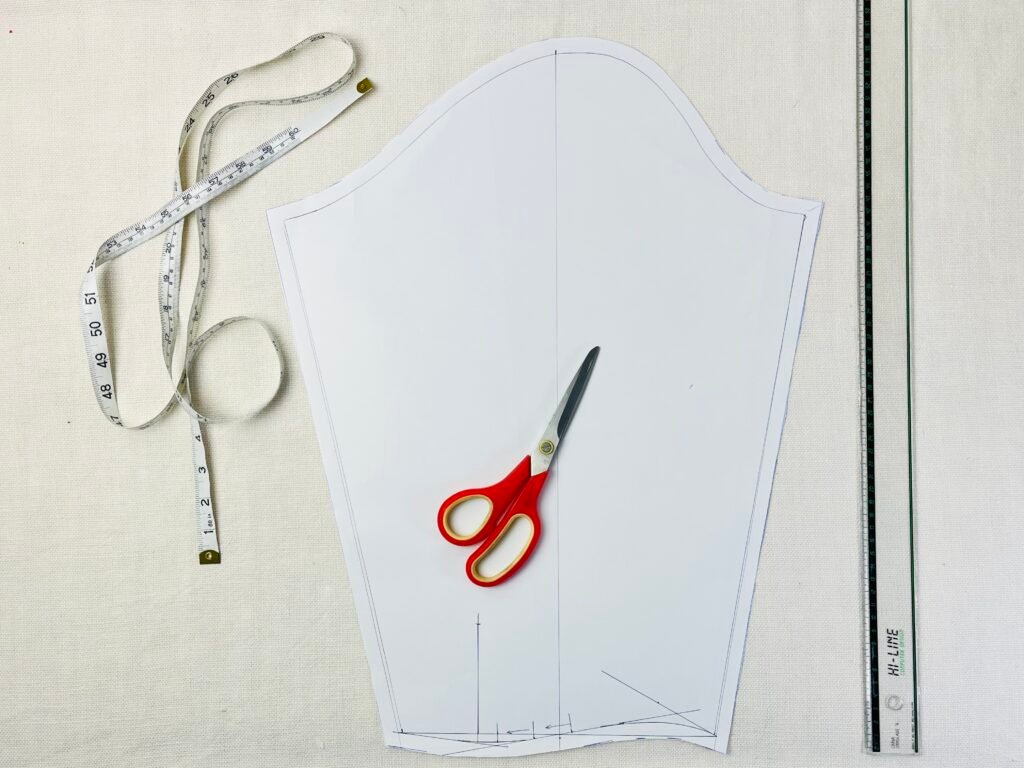
To draft a classic shirt sleeve pattern, the basic sleeve block must be modified to include a cuff and sleeve placket. This adjustment changes both the sleeve length and the sleeve opening width so the cuff and placket fit correctly.
This tutorial shows the exact method I use to modify a sleeve block for a shirt sleeve, including shortening the sleeve length, marking the sleeve slit, and adjusting the sleeve opening to match the cuff and placket dimensions. For the full cuff and placket drafting process, see my detailed tutorials on how to draft a shirt cuff pattern and how to draft a sleeve placket pattern.
In this tutorial I explain how to adjust the sleeve block length, position the sleeve slit, and modify the sleeve opening so it works correctly with a shirt cuff and placket.
I draft all my garment patterns from basic blocks, and this is the same sleeve modification method I use when drafting shirt patterns for my own sewing projects. The approach works whether you are modifying your own drafted sleeve block or adapting a commercial sewing pattern. This method allows you to convert a basic sleeve block into a functional shirt sleeve pattern used in classic button-up shirts and shirt dresses.
What This Tutorial Will Teach You
This tutorial demonstrates the pattern drafting method I use to convert a basic sleeve block into a shirt sleeve pattern.
You will learn how to:
- add pleats or seam adjustments when needed
- shorten the sleeve for a cuff
- mark the correct sleeve slit position
- adjust the sleeve opening to match cuff and placket dimensions
Sleeve Block Modification Process Overview
The process for modifying the sleeve block to create a shirt sleeve pattern, follows these four main steps:
- Shortening Sleeve Block Length
- Marking the Shirt Sleeve Slit
- Reducing the Width of the Sleeve Opening
- Adding seam Allowances
Why Understanding the Sleeve Block Modification Matters
A basic sleeve block is drafted without a cuff, which means the sleeve length must be shortened before a cuff is added.
The sleeve should be reduced by the finished cuff width, otherwise the sleeve will be too long once the cuff is attached. Shortening the sleeve also changes the shape and width of the sleeve opening, which must then be corrected so the sleeve fits smoothly into the cuff. A classic shirt placket will also add extra width at the shirt opening that will need to be considered at this stage.
You will need to address that by taking in the side seams and / or including pleats.
Tools and Materials You Need to Modify Shirt Block
To modify the sleeve block for shirt sleeve pattern you will need a few basic pattern drafting tools and the cuff and placket pattern dimensions. You can read more about each tool in my post on the essential pattern drafting tools.
- pattern paper
- grading ruler
- protractor
- pen or pencil
- French curve
- pencil eraser
- completed sleeve cuff pattern
- sleeve block pattern
Step by Step Process of Modifying the Sleeve Block
When drafting a shirt sleeve pattern, the sleeve block must be adjusted so the sleeve opening works with a cuff and placket construction. Unlike casual sleeves, shirt sleeves require a exact wrist opening, sleeve slit, and often pleats to distribute fullness neatly into the cuff.
Step 1: Trace the Basic Sleeve Block
For this tutorial I am using a basic sleeve block pattern that I showed you how to draft in my detailed guide on how to draft basic sleeve block.
Start by tracing the basic sleeve block onto a large sheet of paper.
Mark the centre points for the shoulder and wrist, connecting them with a straight line. You will need this line for the pattern adjustment in the next steps.
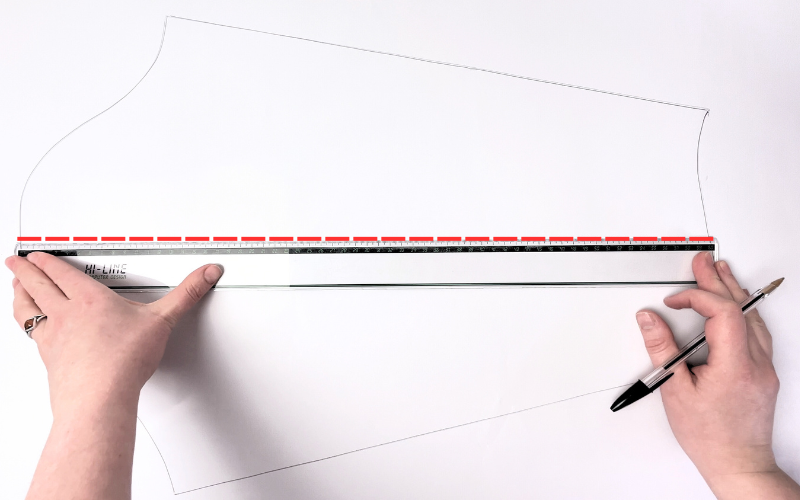
Mark the front and back of the sleeve on the traced pattern.
Commercial Pattern
You can use any sleeve pattern that you already own, but make sure that you remove the seam allowances once you have traced the pattern.
Step 2: Shorten the Sleeve Block Length
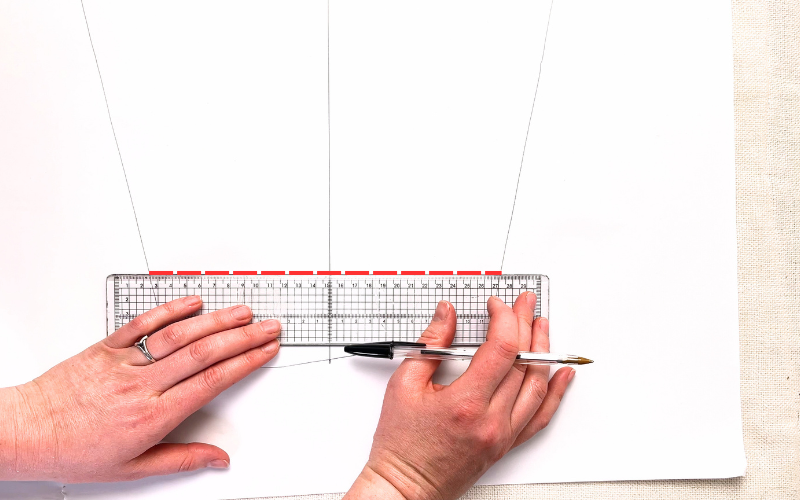
Along the centre line, starting from the wrist, measure the width of the finished cuff pattern width. Be mindful that you only use the half width of the cuff if the cuff is drafted in double width as in step 2 of my detailed guide on how to draft cuff pattern.
Then square to left and right to connect with the sides of the shirt sleeve pattern.
Step 3: Redraft the Sleeve Opening
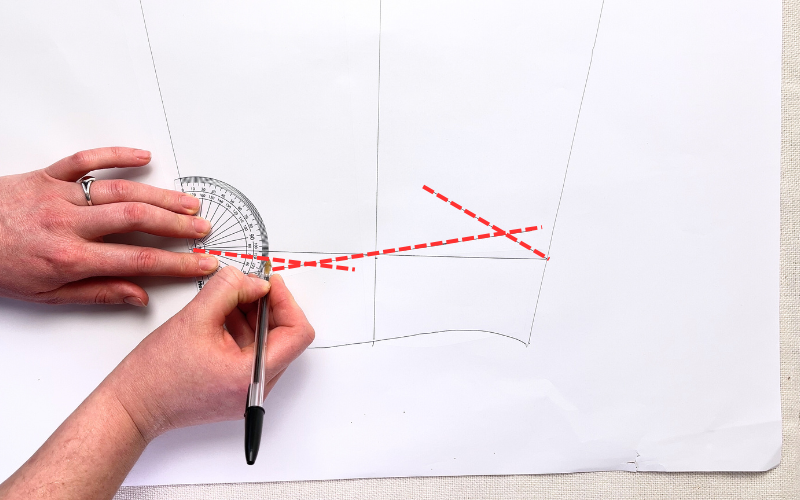
In my basic sleeve block pattern drafting tutorial I explain why you need to have a wavy sleeve opening. As removing the width required for cuff has lead to a straight sleeve opening, you need to adjust it, to create 180 degree angles at the side seams. Follow the step 5 of the sleeve block pattern drafting tutorial to correct the wrist line.
Step 4: Mark a Shirt Sleeve Slit
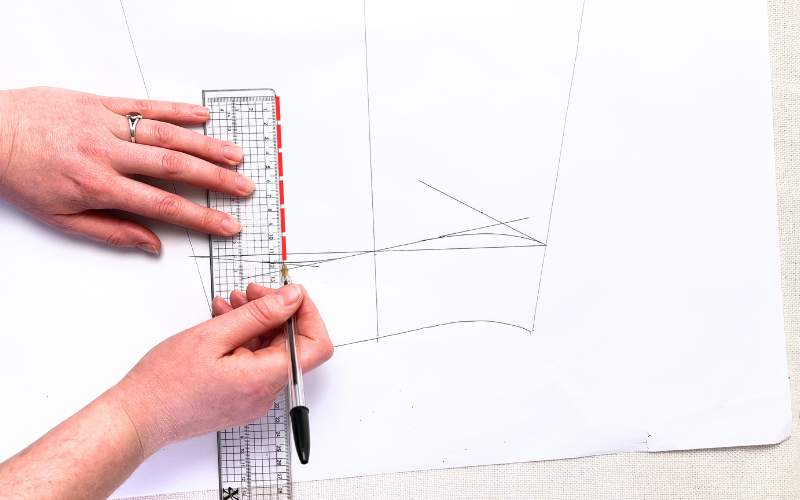
The typical shirt sleeve slit length ranges between 9 cm and 12 cm. The exact length depends on hand size, wrist circumference, sleeve fit, and personal preference. As a rule of thumb, fitted sleeves require a longer sleeve slit so the hand can comfortably pass through the cuff opening.
The sleeve slit for the cuff is marked halfway between sleeve’s centre line and the side seam on the back portion of the sleeve after the sleeve is modified to include cuff.
Important Note
Measure the sleeve slit length from the curves wrist line and not from the straight line for accurate measurement.
Step 5: Adjust the Width of the Sleeve Opening
Measure the sleeve opening along the curved line. Compare this measurement to the cuff length and the final placket width. Cuff length is taken directly from the cuff but the placket width is worked out by identifying the finished width of the outer placket plus half of the width of the inner narrower placket.
Add the plackets measurements to the sleeve opening measurement. From this number subtract the cuff length. The result is the measurement that we need to remove from the sleeve opening. There are two options that can be used simultaneously:
- Adjust the side seams inwards by the difference (or part of the difference)
- Introduce pleats near the slit opening
The larger the difference between the cuff and the slit, the more likely that you will need to use both methods.
Remember
The visible pleat width reduces the sleeve opening by half of the pleat measurement, because the fabric folds back onto itself.
Adding Pleats
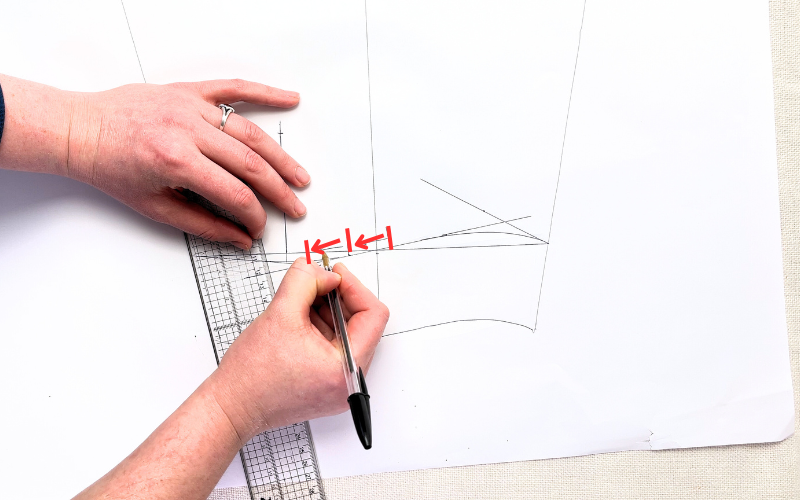
You can add up to two pleats, each up to 3 cm wide (that reduces the sleeve width up to 1.5cm each and combined reduction of up to 3 cm). The pleat that is furthest to the right should not go much beyond the centre line for clean and neat sleeve finish.
From the slit, measure 1.5cm and mark a point for the left of the first pleat. Measure up to 3 cm for the other side of the pleat.
If you are adding another pleat, from the right side of the first pleat, mark the end of the second pleat with the same width as the first one. Both pleats continue into one another.
Adjusting Side Seams
You can bring the side seams in to reduce the sleeve opening to match the cuff dimensions. You need to move both side seams by the same amount, by measuring the required distance along the wrist line and connecting the points with the sleeve crown.
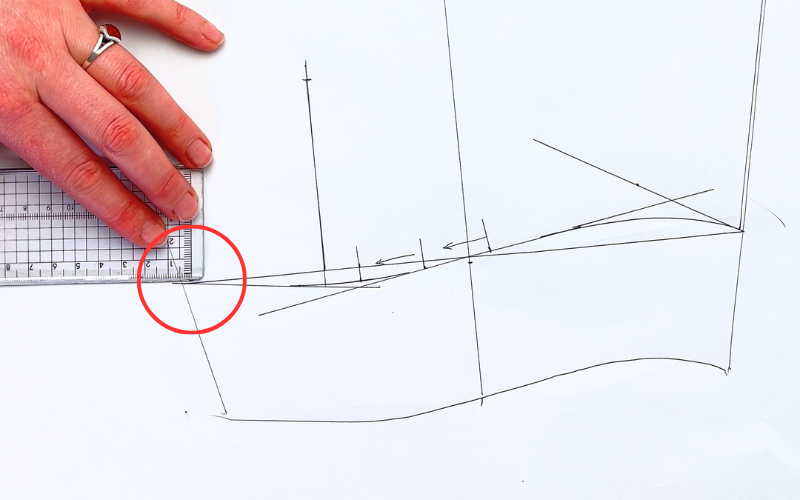
Here you may also need to readjust the wrist line curve for a smooth transition as in step 3 and ensure the side seams at the sleeve crown curve create 90 degree angle.
Step 6: Add Seam Allowances and Grainline
Once the required adjustments to the sleeve opening and side seams are made, you can go ahead and add seam allowances. My detailed guide on how to add seam allowances provides the method of adding seam allowances to your patterns.
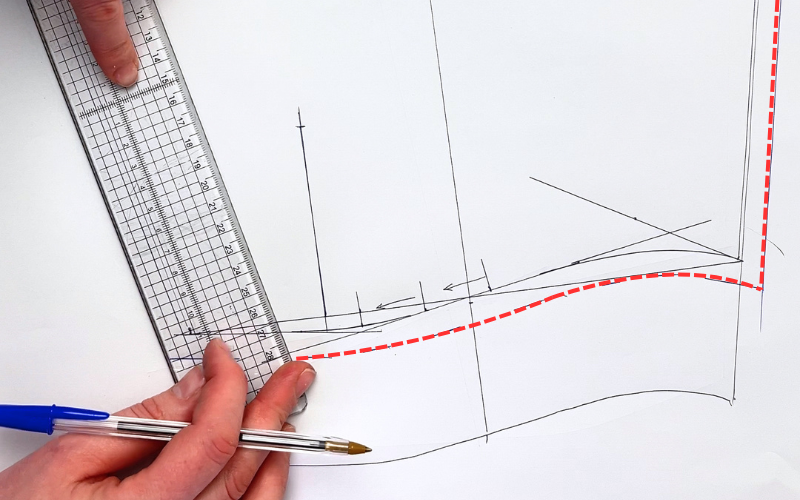
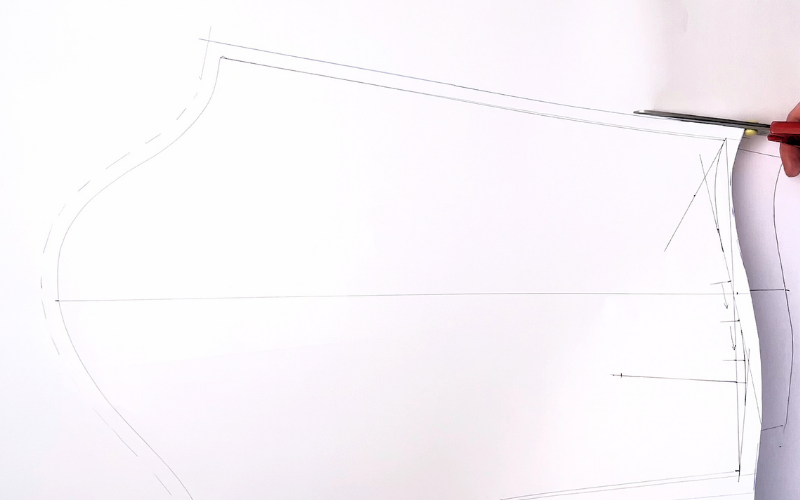
Add a straight grainline that is parallel to the centre sleeve pattern.
Now you are ready to cut the pattern along the seam allowance line.
Testing the Modified Sleeve Pattern Before Cutting Fabric
If you have made multiple adjustments, including adjusting the side seams, it is prudent to make up a test sleeve from similar weight fabric before cutting the fabric for the final garment. This step will allow you to test that the sleeve opening is wide enough and that the sleeve fits over the elbow and biceps.
Heavier fabrics naturally create less ease. Testing the sleeve pattern in a similar fabric weight will give the most reliable result.
Common Shirt Sleeve Pattern Modification Mistakes
When modifying a sleeve block for a shirt cuff, several drafting mistakes appear frequently. These are the most common issues and how to fix them.
- The Sleeve is too short:
- Cause: The double width of the cuff was used to adjust the sleeve length
- Fix: redraft the pattern and only reduce the length of the sleeve by the finished cuff width
- The side seams do not align smoothly, creating a V shape at the sleeve opening and near the sleeve crown.
- Cause: the wrist line and the side seams were not adjusted
- Fix: Adjust the wrist line and side seam near the sleeve crown by ensuring that the seams create 180 degree angles when combined.
- The pleats cover a lot of the sleeve opening
- Cause: The pleats are too big.
- Fix: Reduce the size of the pleats bring them closer together near the sleeve slit. Adjust the side seams to reduce the width of the sleeve opening.
How This Fits Into the Shirt Drafting Series
The basic sleeve block needs to be modified, to create a shirt sleeve pattern that includes a cuff and a placket. This modification reduces the length of the sleeve and the sleeve opening in line with the cuff and placket dimensions.
Shirt Drafting Series
This tutorial is part of my step-by-step shirt pattern drafting series, where I show how to draft every component of a classic shirt from basic blocks.
- How to Draft a Basic Bodice Block
- How to Draft a Sleeve Block
- How to Draft a Button Stand
- How to Draft a Collar Stand
- How to Draft a Shirt Collar
- How to Draft Shirt Sleeve Cuff
- How to Draft Shirt Sleeve Placket
- How to Modify Sleeve Block for Shirt Pattern (this post)
- How to Modify Bodice Block for a Shirt Pattern (coming soon)
- How to Draft a Shirt Pattern From Scratch(coming soon)
FAQ: Sleeve Block Modification for Shirt pattern
Conclusion
Modifying the sleeve block is a necessary step when drafting a shirt sleeve pattern with a cuff and placket. By shortening the sleeve length, marking the sleeve slit, and adjusting the sleeve opening to match the cuff and placket dimensions, you transform the basic sleeve block into a sleeve that works correctly for classic shirt construction.
This adjustment ensures the sleeve opening fits the cuff neatly while still allowing enough room for the hand to pass through. Small drafting choices—such as how much to reduce the sleeve opening or whether to add pleats—will influence both the function and the final appearance of the sleeve.
Once the sleeve block has been modified, the sleeve pattern is ready for the next steps of construction, including sewing the sleeve placket, forming the sleeve pleats, and attaching the cuff. Together, these elements create the structured sleeve finish that defines traditional shirt design.