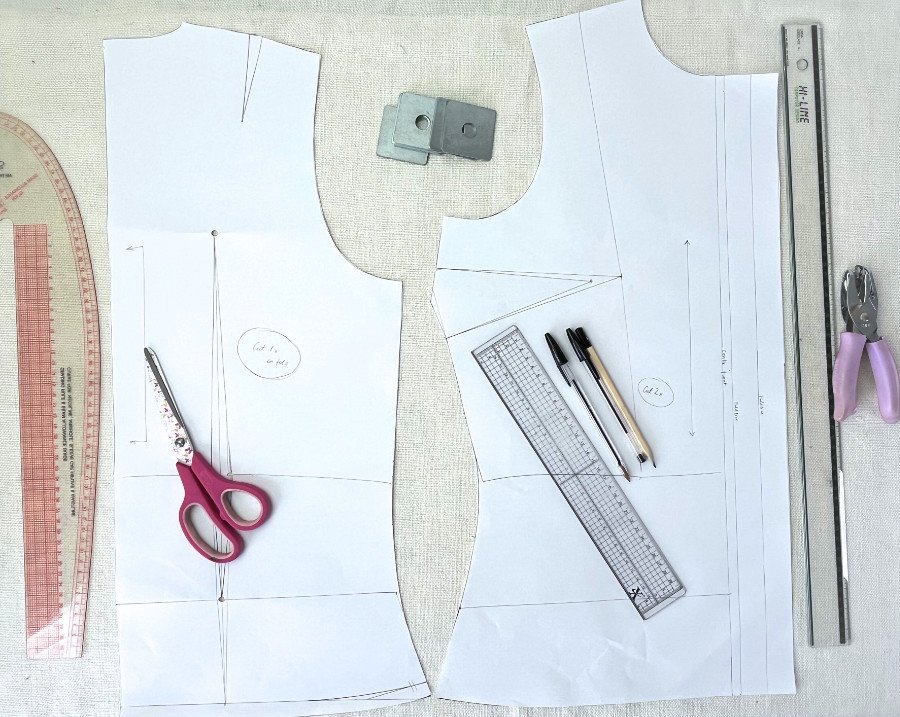
This step-by-step tutorial shows exactly how to modify a basic bodice block to create a shirt pattern from scratch. You will learn how to reposition darts, extend the bodice length, draft a button stand, and prepare the pattern for sewing. This method works for both self-drafted bodice blocks and commercial patterns.
For this tutorial I will be using a self drafted bodice block from my detailed guide on how to draft a close fitting bodice block. However, you can use any other self drafted bodice block or even a commercial pattern that you like and would like to modify to create a shirt pattern.
What You Will Learn in This Shirt Pattern Drafting Tutorial
This tutorial shows exact drafting steps I use when making a shirt pattern from scratch. The same approach works whether you are drafting an entire shirt pattern or modifying a commercial pattern. This is a foundational technique in shirt pattern drafting and is often the first step when learning how to draft a shirt pattern from a bodice block.
Shirt Pattern Drafting Process Overview
This tutorial provides a step-by-step method for modifying a basic bodice block into a shirt pattern, including dart manipulation, pattern extension, and structural adjustments. The process follows six main steps:
- tracing the bodice block pattern
- repositioning a dart
- extending the waistline to the shirt length
- drafting a button stand
- matching the back bodice side seam to the front bodice side seam
- adding seam allowance
I draft all my sewing patterns from scratch using a structured pattern drafting method based on body measurements rather than pre-made templates. The process shown here is the exact method I use to develop wearable shirt patterns that fit consistently without repeated adjustments.
This tutorial is part of a larger system where each pattern component is drafted individually and then combined into a complete garment.
Why Understanding the Bodice Block Modification Matters
Bodice block modification is an essential skill if you want to make your own custom sewing patterns. As drafted, the basic bodice block does not have the required dart adjustments to remove the sharp point at the bust, the button stand extension or the length to go below waistline.
Once you learn some basic modifications for shirt pattern, you will soon find yourself delving into more fun changes to create stylish and comfortable clothing that fits you every time. See my tutorials on how to draft a basic bodice block and how to draft a button stand extension.
Tools and Materials You Need to Modify the Basic Bodice Block
To modify the basic bodice block, you will need a few tools and materials. You can read more about each tool in my post on the essential pattern drafting tools.
- basic bodice block
- drafting paper
- calculator
- waist to mid hip and hip measurement from the completed list of basic measurements
- grading ruler
- long ruler
- French curve
- pen or pencil
- pencil eraser
- scissors
- optionally: single hole puncher
Understanding Shirt Block Anatomy Before Drafting
Let’s have a quick look at the shirt block anatomy before diving into basic block modification.
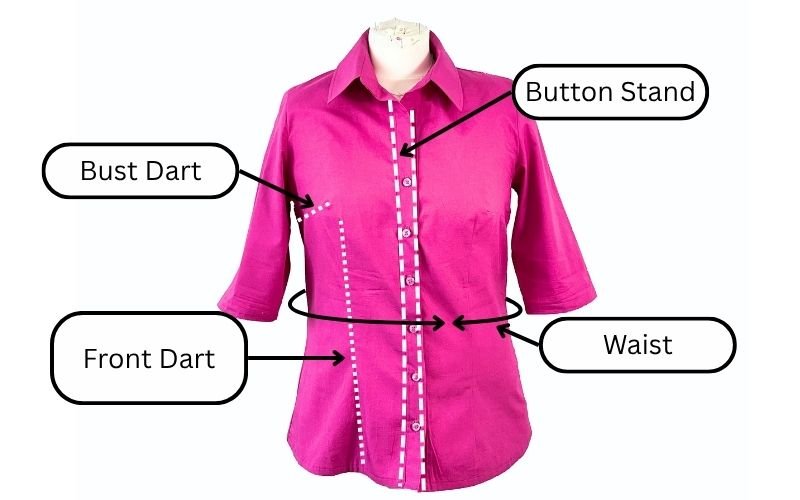
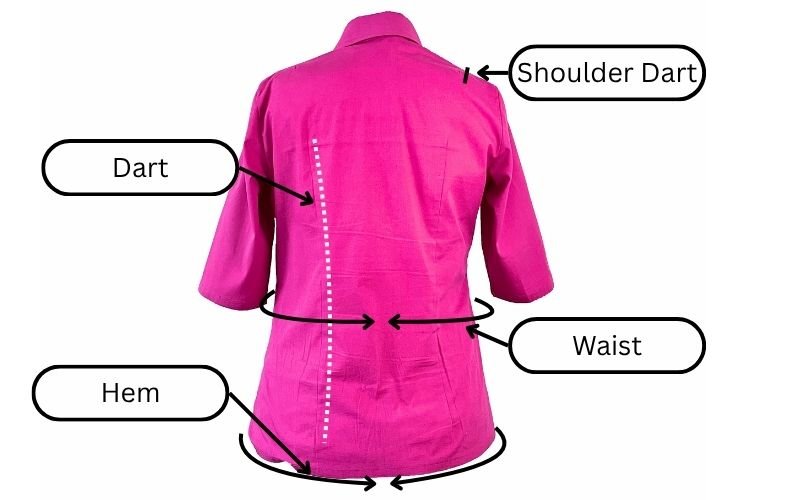
- The shirt block has bust darts pointing at the bust point, however they do not go as as far as the actual bust point to avoid sharp point (think Madonna’s stage outfits)
- The shirt block may also have a front waist dart, that extends from waist up to the bust point (slightly below that) and down to the mid hip, hip or hemline. However, the waist dart at the front can be transferred to the side seam entirely.
- The shirt hem sits below the waistline, either at the mid hip, at hip or somewhere in between.
- The waistline, however, is still the narrowest point on the shirt block.
- On the back, the waist dart is extended below the waist, either to the mid hip, hip or the shirt’s hem
- The shoulder dart remains the same as on the basic bodice block.
Step By Step of Modifying a Basic Block for Shirt Bodice Pattern
In this section, we will go through the actual basic block modification step by step for easy pattern drafting for beginners. If you are using a commercial bodice pattern, make sure you have removed the seam allowances and have extended the bust darts all the way to the bust point for easier block modification.
Step 1: Trace the Centre Front of the Front Bodice Block
The front bodice block will require most modification to include button stand, bust dart modification and the hemline adjustment.
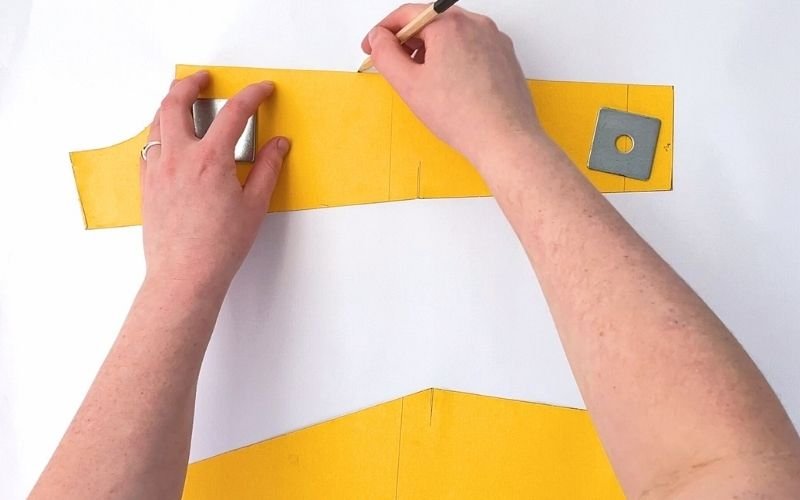
Start by tracing the bodice block. My front bodice block is naturally split in two parts at the bust point, however I have marked the exact bust point location on both parts on the front pattern. Therefore, trace the centre section first, marking the bust point location.
Step 2: Simple Front Dart Modification
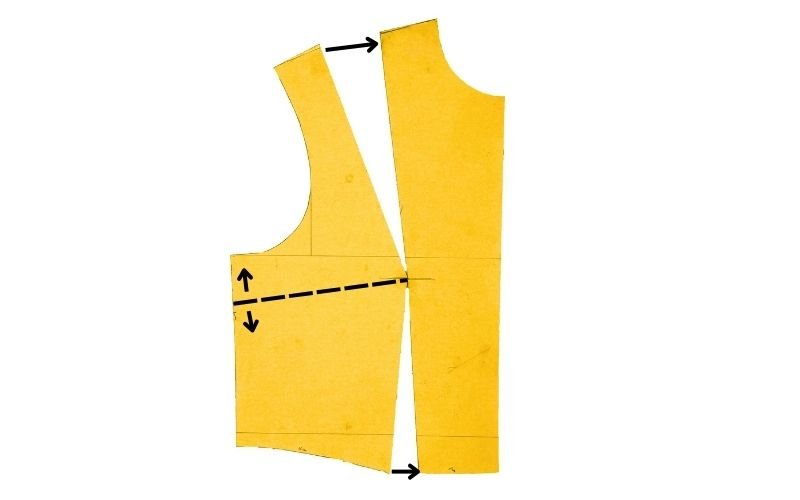
Here you need to make a decision on the location of the bust and waist darts. In this tutorial, I am eliminating the front shoulder and waist dart, by moving both darts to a single side seam dart.
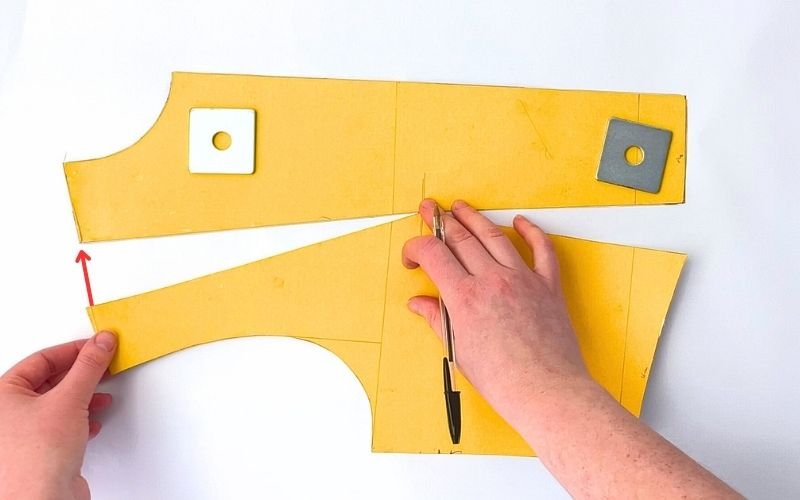
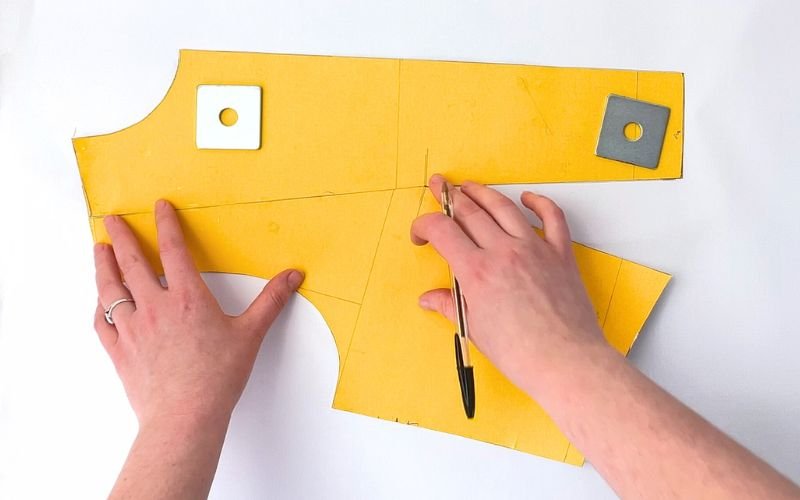
Make a mark some 5 cm below the armpit on the side front block. This will be the location of the side bust dart.
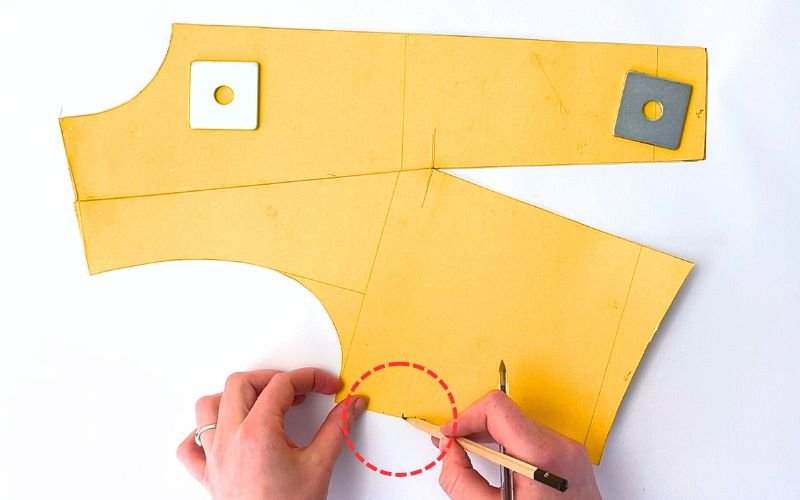
Then align the side front block with the centre front block at the shoulder seam, making sure that the bust points are aligned.
Trace around the side front block from shoulder (where the shoulder dart was) to the mark on the side seam that indicates the location of the new bust dart.
Next, pivot the side front block at the bust point to close the waist dart.
Trace around the rest of the side panel, starting from the same mark on the side seam and ending at the location where the waist dart was.
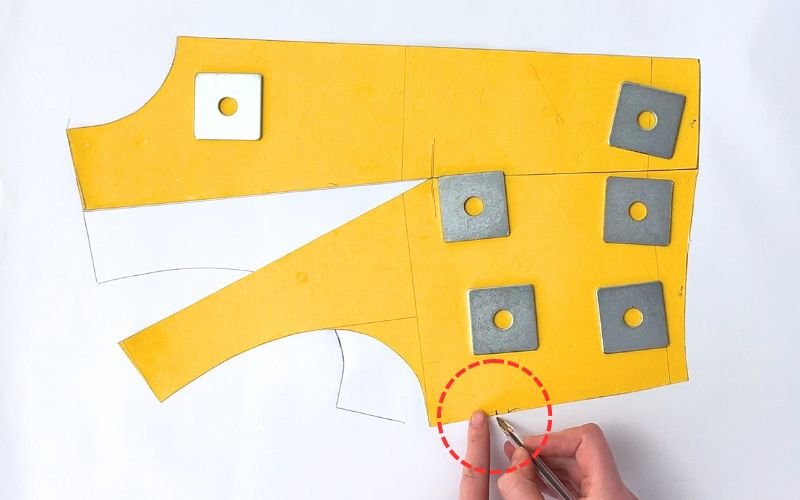
Step 3: Adjust the Bust Dart
On a sewing pattern, the bust dart should end 2 – 3 cm before the actual bust point. This eliminates a sharp point at the bust. While there is nothing wrong with a pointy bust if that is your jam, I just cannot get a picture of my great aunt’s ditsy leaf bra out of my head. In all reality, a single dart pointing at the apex of the bust is unlikely to produce a Madonna worthy stage outfit.
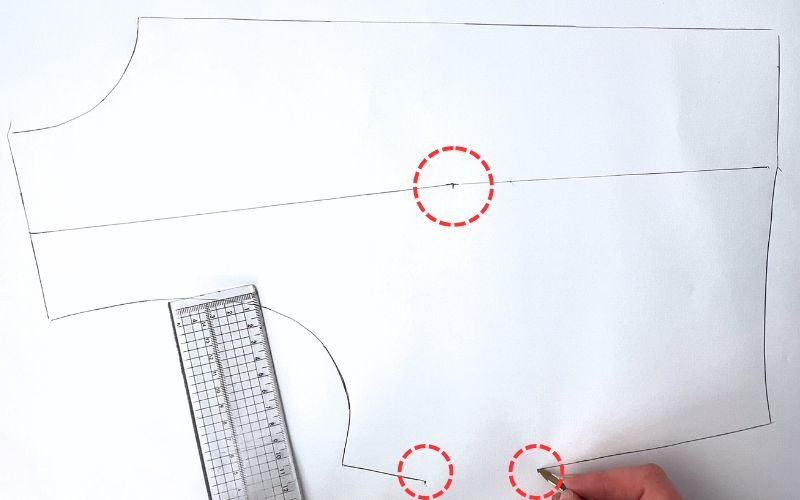
Either way, connect the gap edges on the side seam with the actual bust point. Then mark a dot that is around 3 cm from the bust point and reconnect the dart sides with this new bust point. I usually mark this point closer to 3 cm mark as at a construction stage the bust dart ends up a little closer to the actual bust apex due to fabric shifting and the width of the marking for bust point.
Step 4: Draft a Hemline
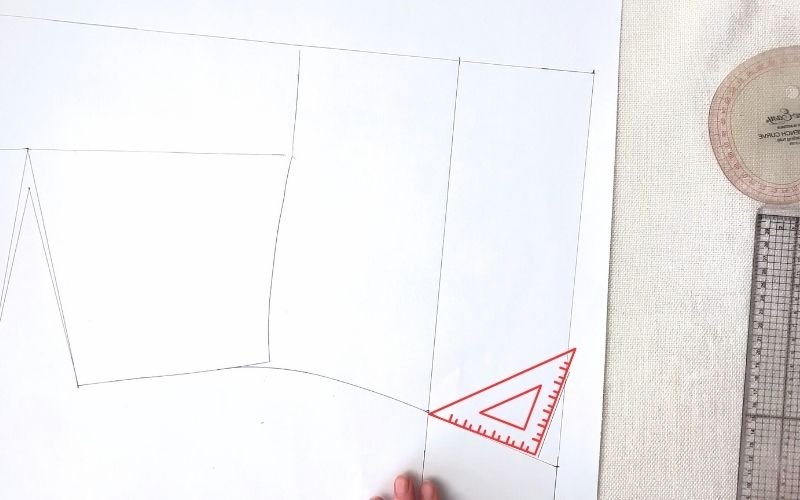
Next we are going to lower the hemline to the hip level. The length of the shirt can go even lower than this but I find that the shirts that will be tucked into a trousers or skirt have less visible bulge if the hemline is not lower than hip.
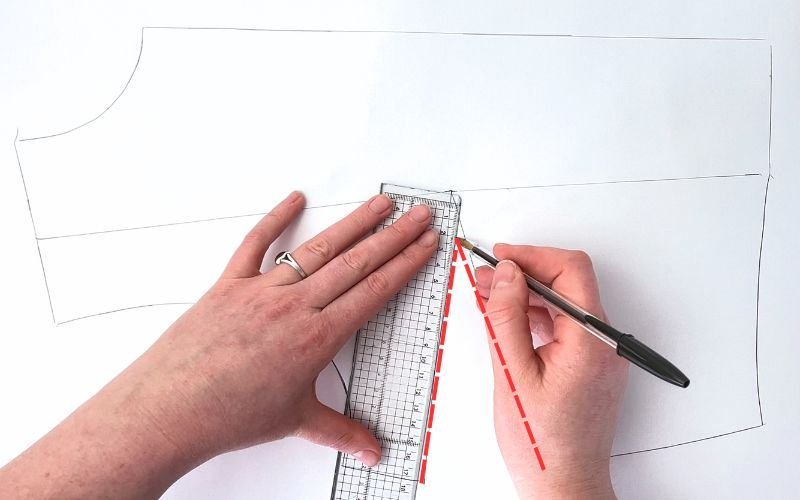
Extend the centre front line down. Then mark your waist to mid hip and waist to hip measurements along this line.
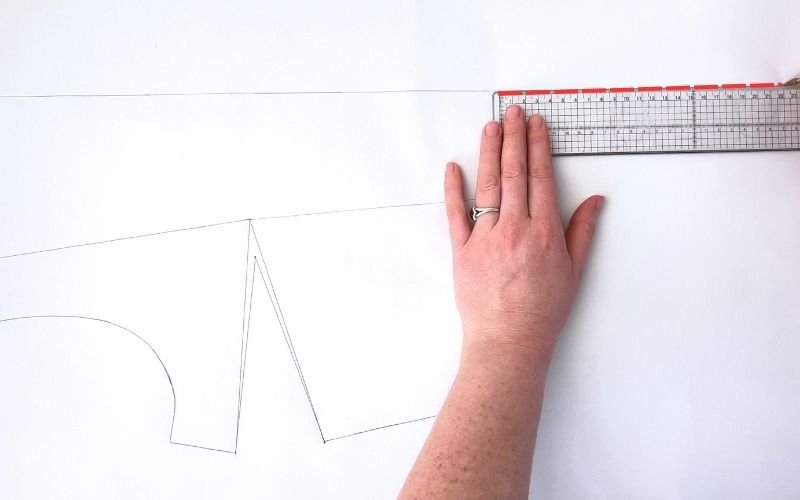
Square to the left beyond the side seam.
Next work out the shirt block width at the mid hip and hip. To do that, check what seam allowance you used for the basic bodice block. In my guide on how to draft a close fitting bodice block, I am using 6 cm seam allowance. You need to use the same seam allowance for a cohesive look. For a mid hip, mark a point on the mid hip line that is your mid hip circumference plus your seam allowance, divided by 4. Repeat the same for hip, using the hip circumference and the same seam allowance.
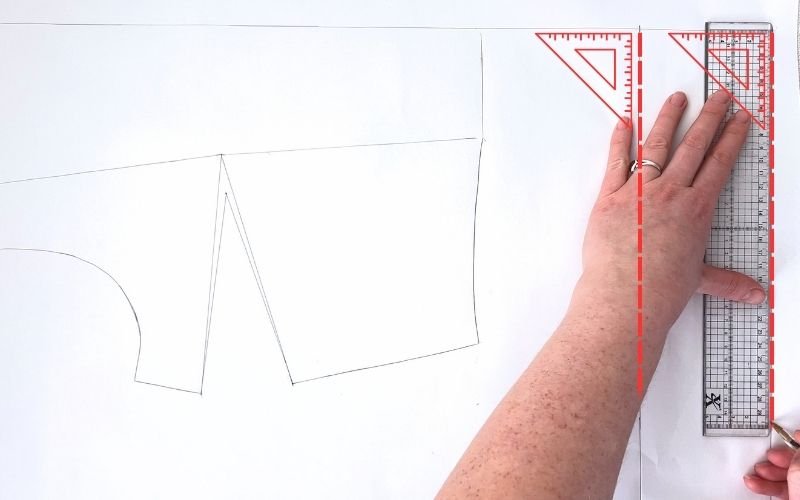
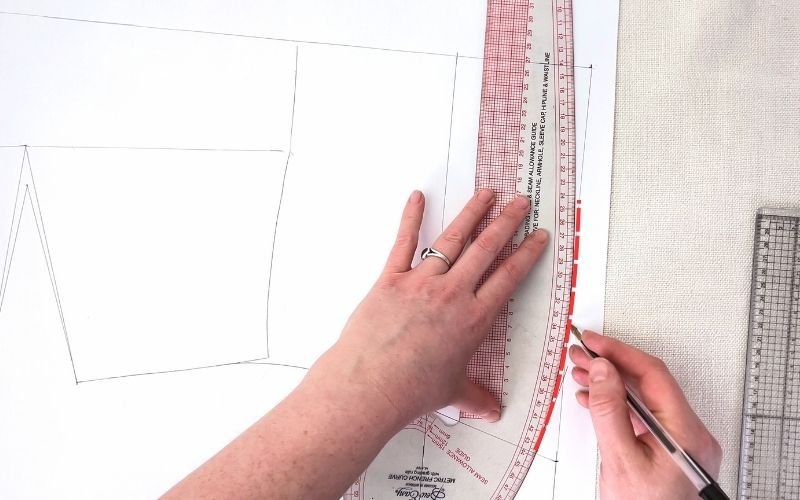
Now, connect the side seam with the new points at the hip and mid hip with a a smooth curved line, using a French curve.
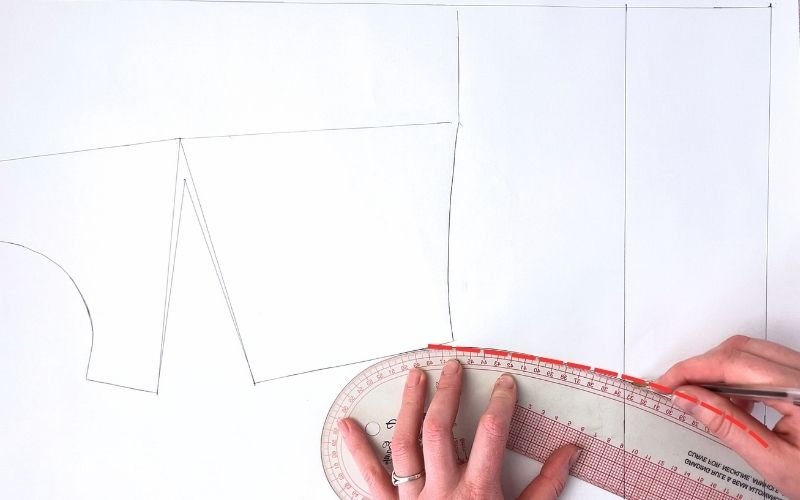
Lastly, create a 90 degree angle at the hem and side seam, by lifting the side seam up 1-3 cm. Connect with the hem with a smooth curve, using a French curve.
Step 5: Add a Button Stand
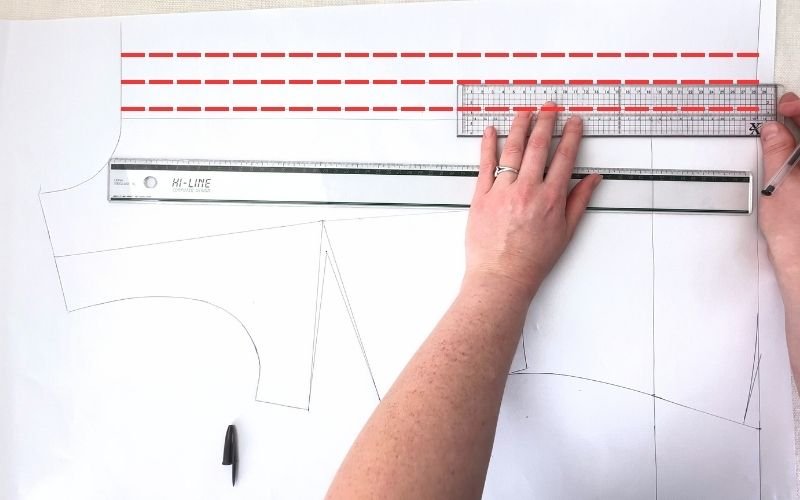
Draft a button stand at the centre front line. My detailed guide on how to draft a button stand gives a complete step by step instructions.
Step 6: Trace the Back Bodice Block
With the front shirt sewing pattern completed, now it is time to draft a shirt back pattern.
I am creating a shirt pattern without a shirt yoke for a quicker sewing project. However, shirt yoke adds extra durability at the upper back bodice stress points. In a future post I will add instructions on how to modify the shirt pattern to include a yoke.
Begin by tracing the back bodice pattern completely, leaving enough space at the bottom of the paper to add the shirt hem.
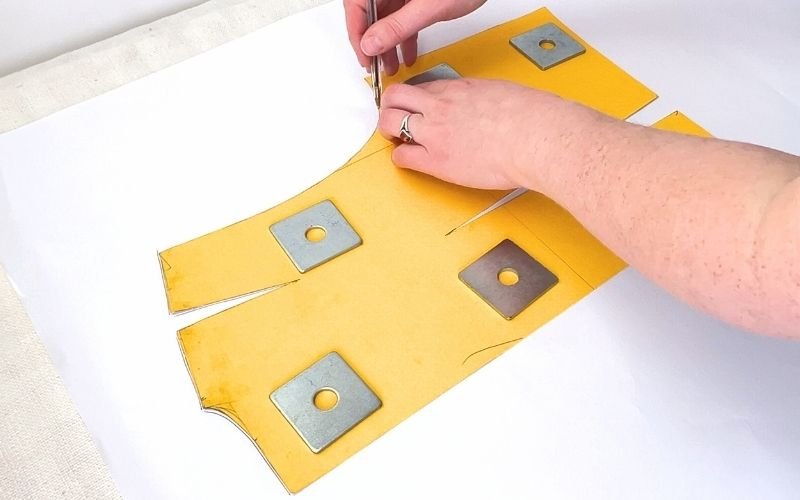
Extend the centre back line to mid hip and hip points, the same as you did in Step 4.
Square to the left to the side seams the same distance for mid hip and hip location as you did for front pattern.
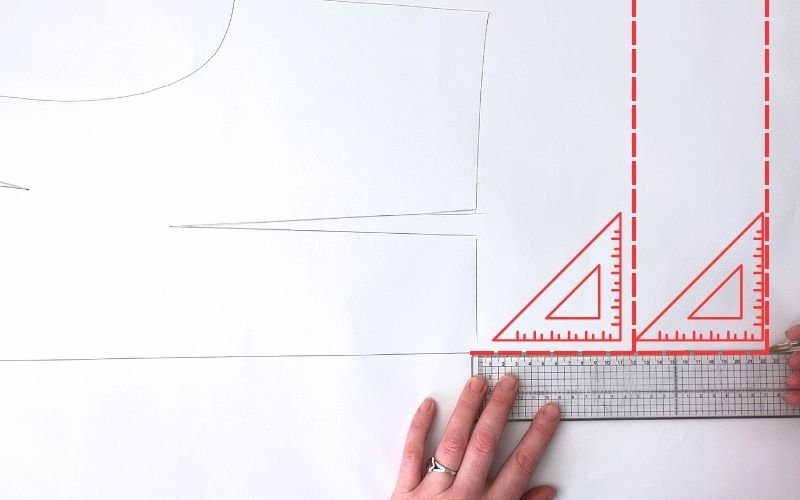
Step 7: Extend the Waist Dart
Mark a point on the dart’s base that is exactly in the middle of the dart. Connect the tip of the dart with the middle point, extending the dart to the mid hip or hip line. Either options are fine, however, a shorter waist dart at the back will create a more pleasing silhouette.
Then connect the dart base points to the other tip of the dart to create a complete back dart.
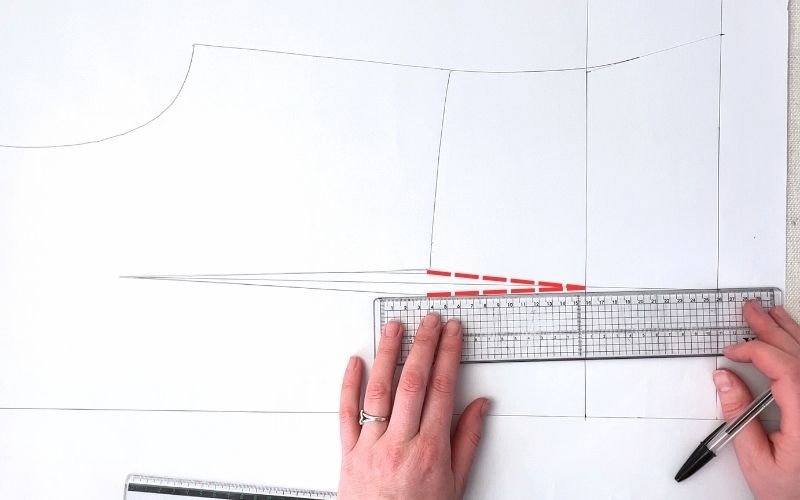
Step 8: Draft Shirt Pattern Back Hem and Side Seam
Next, connect the side seam with the mid hip and hip points.
Create the 90 degree angle at the hip and side seam connection, by raising the hemline by around 2-3 cm. This point will need to be readjusted at the next step so exact measurement does not matter as much.
Reconnect the side seam with the hem with a smooth curve, using a French curve.
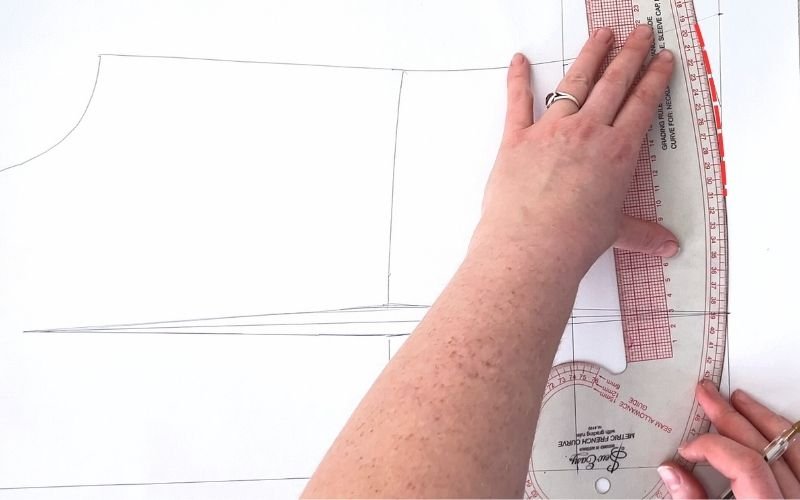
Step 9: Walk the Side Seams
Inevitably, there will be some side seam discrepancy for front and back pattern pieces that need to be addressed.
To do that, place the front pattern piece upside down with the side seam along the back side seam, matching both patterns at the armpit. Where there patterns curve in opposite directions, make a mark on both patterns.
Then pivot the top pattern until it matches the side seam of the back pattern pieces. Where the side seams diverge, make another mark. Pivot to match and repeat until you reach the hem.
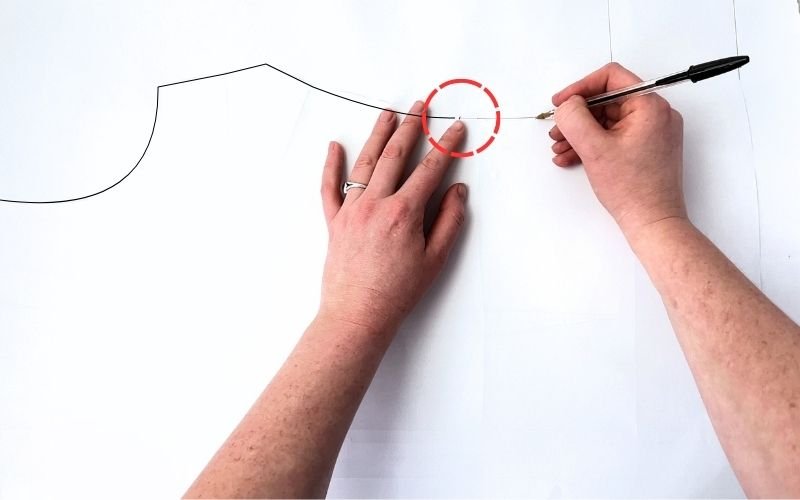
At the hem, you most likely will need to extend the side seam for the back bodice pattern. This is because the front pattern is longer due to the bosom. The difference is more pronounced if you have a sway back.
If you need to extend the side seam for the back pattern, draw the missing section by tracing the front pattern’s side seam at this point. Then draw another 90 degree angle that lowers the back hemline by around 1-2 cm. Connect with the centre back with a smooth curve using a French curve, make sure that the hem and the centre back line makes a 90 degree angle for a smooth transition.
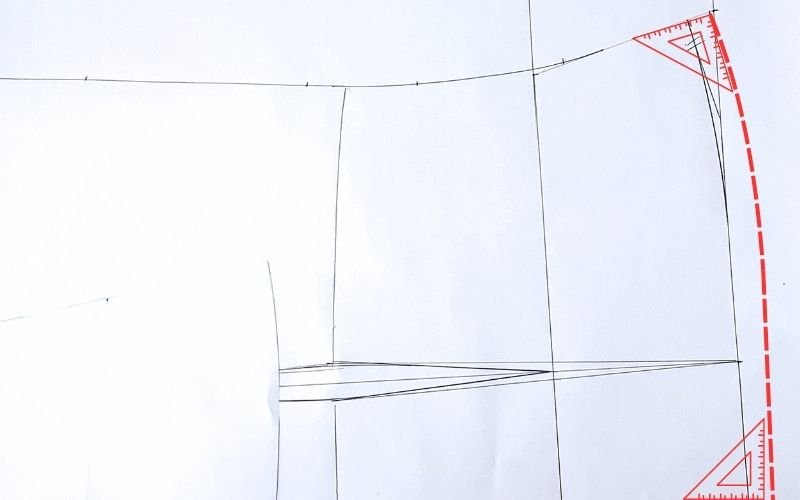
Step 10: Add Seam Allowances, Dart Markings and Grainline
Once you have completed the required modifications, you can add seam allowances before cutting out the pattern.
Many professional pattern makers keep master patterns without seam allowance so that seam allowances can be adjusted for different construction methods. You can add seam allowances at this stage but as I explained in my detailed guide on how to add seam allowances, I keep my base patterns without seam allowance.
However, even if you are not adding seam allowances until the fabric cutting, you will need to add “seam allowance” for the side bust dart and shoulder dart at the back if you are not cutting out the shapes for the dart. I tend to leave the darts intact on the sewing pattern for easier pattern storage and to maintain the pattern’s integrity. The additional paper makes pattern sturdier.
This addition is not an actual seam allowance, it is there to ensure the you are leaving enough fabric to fold the dart. Follow my instructions on adding the seam allowances to darts.
Then, make marking for the base of the side bust dart and back shoulder dart by cutting triangle where one side matches the dart line and the other is within the dart.
Cut out holes for the dart points on all darts and base points on the back waist dart. You can use scissors for this task or a single hole puncher. Fold the paper so that the points are on the crease and cut out triangle shape with scissors or a half circle with a single hole puncher.
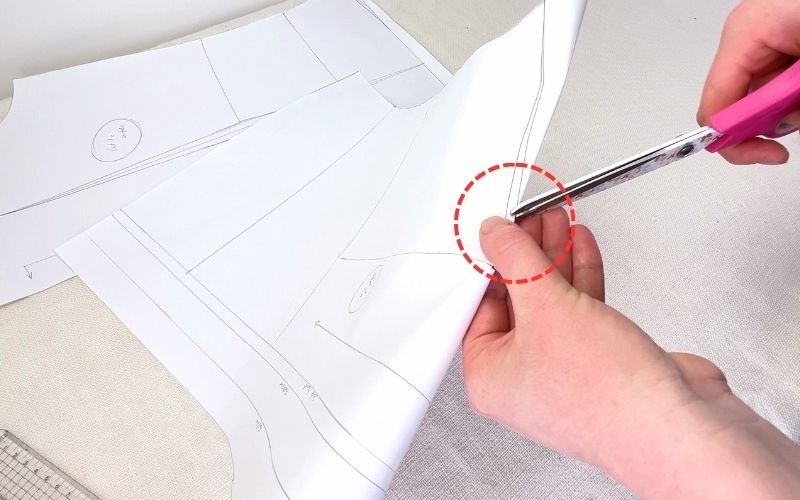
Finally, mark a straight grainline that runs parallel to the centre back and a centre front line. The centre back line is also going to be a fold line.
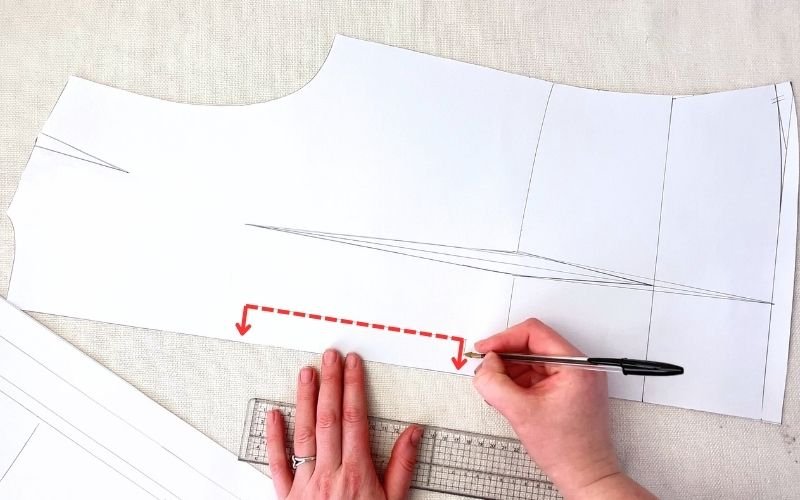
Cut out the completed pattern.
Should You Test the Shirt Pattern Before Cutting Fabric?
I do not usually test the patterns that are modified from a basic blocks as I am confident that the changes applied will work well. However, it is prudent to make a toil from a cheaper cotton calico fabric in a similar weight to the final fashion fabric. This way you can make changes to the pattern without wasting more expensive fabric.
Drafting Variations
You can make a different shirt appearance by manipulating darts. The location of the darts significantly impacts the overall look and behaviour of the fabric, especially on a directional print or striped fabric. The choice of the dart inclusion and location will also impact whether you can add a pocket to your shirt. As a rule of thumb, do not add a pocket that covers any part of a dart. Darts create a three dimensional shape while pockets are cut in two dimensions and both do not align well (think of how it looks trying to glue edges of a square paper to a beach ball).
Common Shirt Pattern Drafting Mistakes
These are common shirt pattern drafting issues that I have experienced in my own pattern drafting practice and seen beginners make:
- Bust points have sharp points:
- Cause: the bust darts end at the actual bust point
- Fix: move the dart end point 2-3 cm away from the actual bust point
- The side seams are not equal length
- Cause: the side seam on the back pattern piece is shorter
- Fix: Walk the front and back side seams to align the length of the side seams. Reposition the hemline on the back pattern.
- Side seams create a V shape when sewn together
- Cause: The side seam and hemline have not been squared
- Fix: Lift the hemline at the side seam 2-3 cm to create a 90 degree angle. Redraw the hemline with a smooth curve.
- There is not enough fabric to fold the bust dart accurately:
- Cause: The correct allowance have not been added to the base of the dart
- Fix: Extend the seams on the either side of the dart beyond the middle point. Connect dart sides with the highest point on the extended lines in the centre of the dart base.
How This Fits Into the Shirt Drafting Series
The basic bodice adjustment is the first step to create the a shirt sewing pattern. From the modified basic block then you can go on to create a shirt collar stand and collar, modify sleeve and add a button stand.
Shirt Pattern Drafting Series
This tutorial is part of my step-by-step shirt pattern drafting | sewing series where I show how to draft every component of a classic shirt from basic blocks.
- How to Draft a Basic Bodice Block
- How to Draft a Sleeve Block
- How to Draft a Button Stand
- How to Draft a Collar Stand
- How to Draft a Shirt Collar
- How to Draft Shirt Sleeve Cuff
- How to Draft Shirt Sleeve Placket
- How to Modify Sleeve Block for Shirt Pattern
- How to Modify Bodice Block for a Shirt Pattern (this post)
- How to Draft a Shirt Pattern From Scratch(coming soon)
FAQ: Modifying Basic Bodice Block for a Shirt Pattern
Key Takeaways
Modifying a bodice block into a shirt pattern involves dart manipulation, length extension, and structural adjustments.
The most important steps are repositioning the bust dart, extending the hemline correctly, and ensuring the side seams match.
Once you understand these principles, you can draft multiple shirt styles from a single base block.
Conclusion
Modifying a basic bodice block into a shirt pattern is one of the most practical pattern drafting skills you can learn. It allows you to create well-fitting garments based entirely on your own measurements rather than relying on standard sizing.
Once this process becomes familiar, you can adapt the same method to draft different shirt styles, adjust fit, and build a complete wardrobe from your own custom patterns.