While I personally prefer elbow-length sleeves, some garments require the structure and finish of a classic long sleeve shirt. To attach a traditional shirt cuff, the sleeve needs a sleeve slit finished with a sleeve placket.
In this tutorial, I will show you how to draft a shirt sleeve placket pattern step-by-step, so you can add a professional sleeve opening to your own sewing patterns. This tutorial shows how to draft a shirt sleeve placket pattern from scratch, using simple pattern drafting tools and measurements.
This drafting method is the same approach used in traditional pattern making: first draft the sleeve slit guide, then build the placket shape around it to ensure the placket fits the sleeve opening precisely.
If you draft your own sewing patterns or modify commercial patterns, understanding how sleeve plackets are drafted gives you far more control over sleeve finishes. It allows you to adjust the sleeve opening width, sleeve slit depth, and cuff compatibility.
Sleeve Placket Drafting Process Overview
The process for drafting a shirt sleeve placket pattern follows four simple stages:
- Draft the sleeve slit guide
- Draft the hidden inner placket section
- Draft the visible outer placket section
- Add seam allowances and grainline
Drafting the placket around the sleeve slit ensures the placket will bind the opening accurately when sewn.
Why Understanding Sleeve Placket Drafting Matters
A sleeve placket is a functional component of classic shirt construction. Without the sleeve slit opening, the sleeve cuff would be too narrow for the hand to pass through.
In order to add a cuff to a shirt sleeve pattern, in most cases you will need to make an opening for the sleeve end wider. This sleeve slit serves two purposes:
- It enables the cuff to be attached to the the sleeve and fastened as intended
- The sleeve slit widens the sleeve opening, allowing the hand to fit through and roll up the sleeves
The sleeve slit must be finished using either a sleeve placket, a simple facing, or bias binding. Each finishing method affects the final sleeve opening width differently. A traditional shirt sleeve placket adds width, a facing slightly reduces the opening, and bias binding keeps the sleeve width unchanged. Practically, this means you will need to consider the required adjustment to the sleeve to fit the shirt cuff.
Knowing how the width of the placket impacts on the sleeve dimensions is crucial when you want to draft your own sewing patterns from scratch or want to modify a commercial sewing pattern.
Tools and Materials You Need to Draft Sleeve Placket
To draft a shirt sleeve placket, you will need just a few basic pattern drafting tools. You can read more about each tool in my post on the essential pattern drafting tools.
- A4 paper
- Pen or pencil
- Grading ruler
- Scissors
Understanding the Sleeve Placket Anatomy Before Drafting
A shirt sleeve placket is a shaped strip of fabric used to bind and reinforce the sleeve slit opening.
It consists of two sections:
- a narrow inner placket, which sits inside the sleeve opening
- a wider outer placket, which folds over the slit and forms the visible finished edge.
The narrower side is hidden under the larger, more decorative and visible wider side.
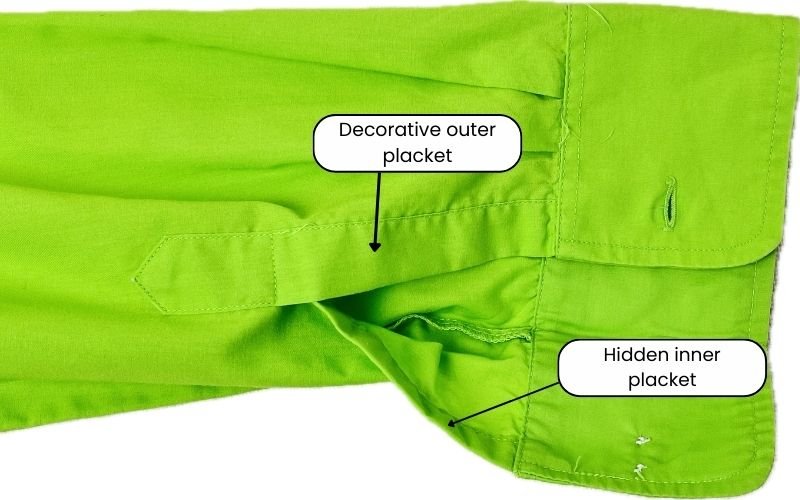
This construction allows the sleeve opening to spread when the hand passes through while remaining neat and structured when closed.
Step by Step of Drafting the Sleeve Placket
Step 1: Decide on the Size of the Sleeve Slit and Placket Width
The typical sleeve slit length ranges from 9–12 cm. The exact length depends on wrist size, hand circumference, sleeve fit, and personal preference. A larger hand and closer fitting sleeve will require a longer sleeve slit. I will cover sleeve slit placement and sleeve modifications in more detail in my upcoming guide on how to modify a sleeve block for a shirt pattern.
The sleeve placket’s width depends on preferences but typically range from 2 to 3 cm. The best pointer I can give you here is to check the width of the placket on your favourite shirt and use that as a guide. I like 2cm wide placket so that’s what I am using for this tutorial.
Step 2: Draft Sleeve Slit Opening on a Placket
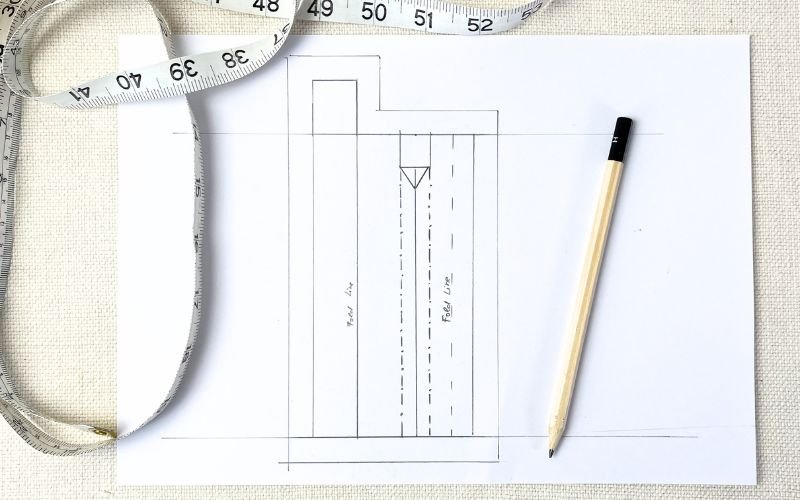
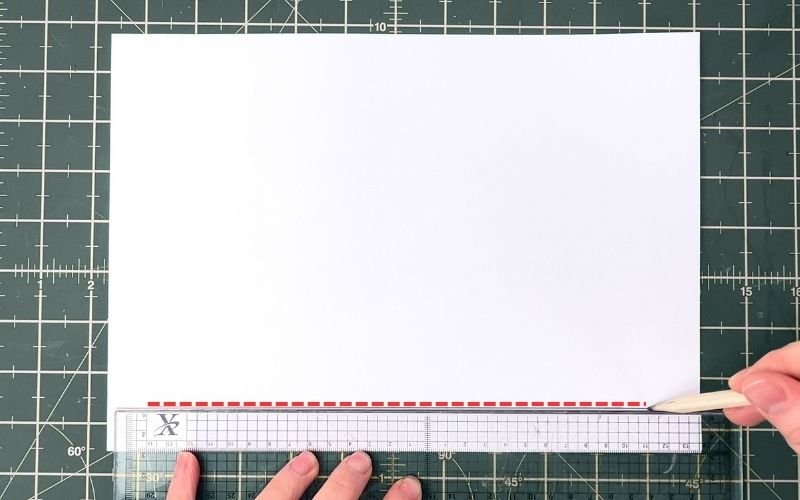
Start by marking a horizontal line 2 cm from the bottom edge. This will be the bottom edge of the sleeve placket.
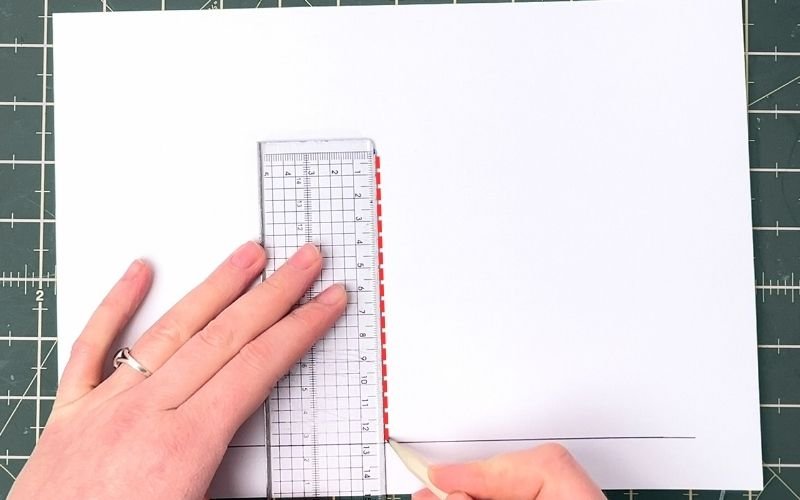
Then draw a vertical line in the centre of the paper. The length of this line is the exact length of the chosen sleeve slit.
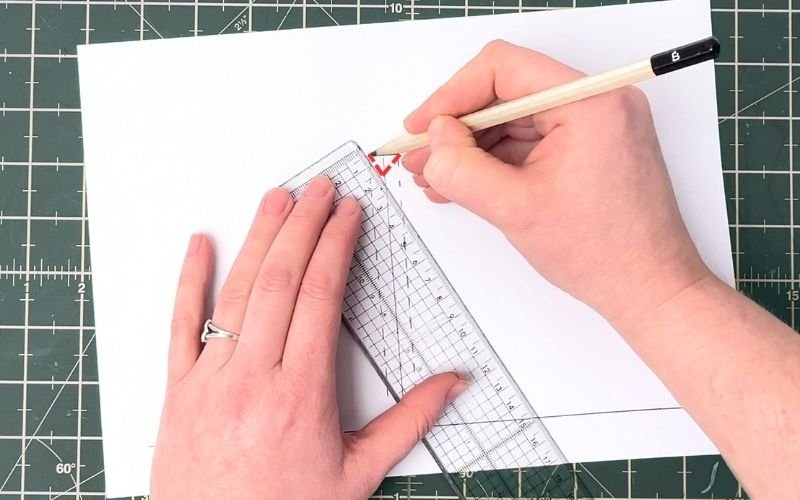
Mark two additional lines 0.5 cm on either side of the centre line.
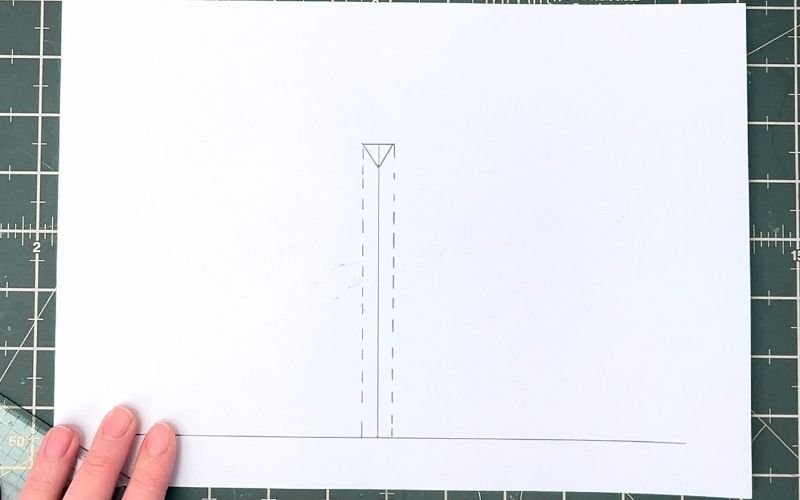
Connect all three lines together at the top and draft a triangle at the top, connecting top corners with the middle line, 1cm from the top. These lines represent the seam lines of the sleeve slit. We will be drafting the sleeve placket around it. This will ensure that the placket matches the sleeve slit perfectly.
Step 3: Draft Narrower Side of the Placket
Mark a dot 1.5 cm above the top of the sleeve slit and square to the left and right. This will be the height of the narrower side of the sleeve placket. Extend the sleeve slit side seams to this line.
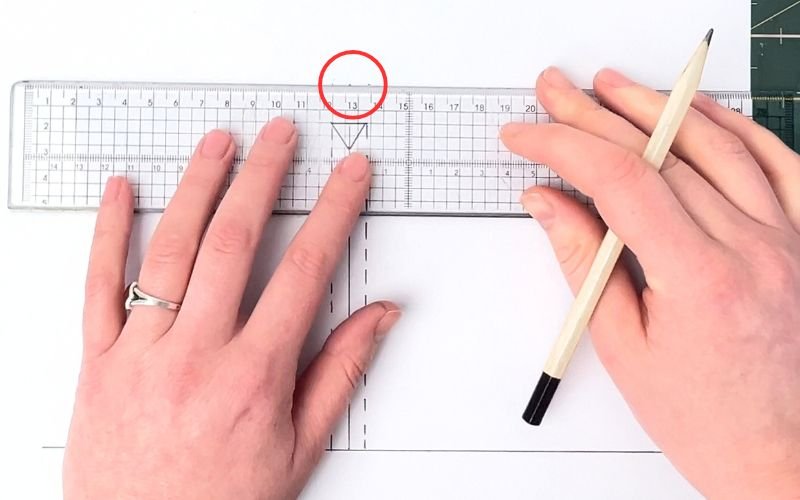
Draw a line to the right of the slit seam that is the width of your chosen placket. For me that is 2 cm.
Then, divide this width in half, marking the line as a fold line. It is prudent to mark the fold line as a dashed line to differentiate between full placket width and the middle fold line.
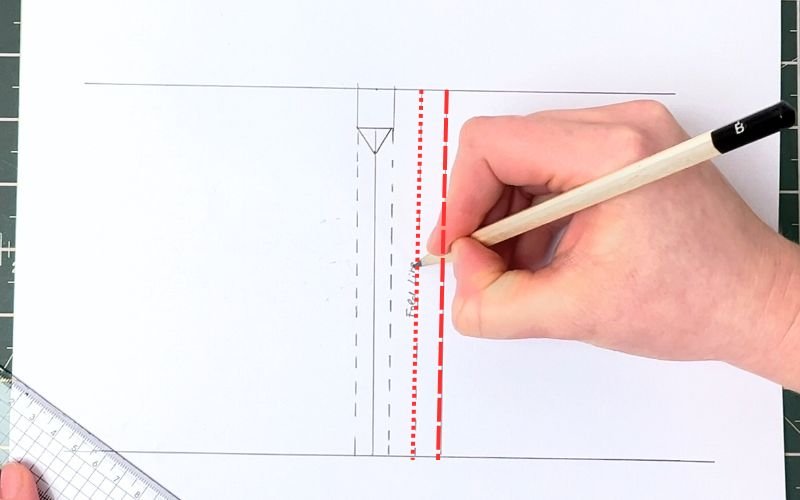
Pattern makers usually draft the inner placket slightly narrower than the outer placket so the visible placket cleanly covers the inner section after pressing.
Step 4: Draft Wider Placket Side
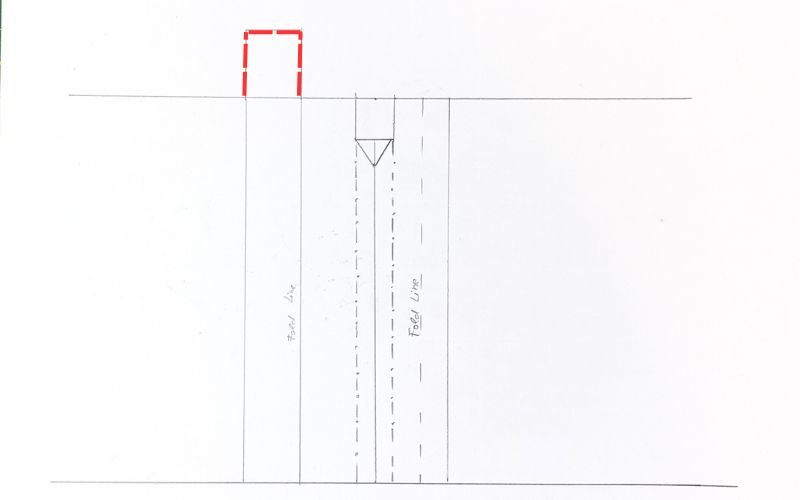
Next, draw two parallel lines to the left of the sleeve slit that both are the width of the sleeve placket each. The first line is a fold line and the one furthest to the left is the placket’s outside edge.
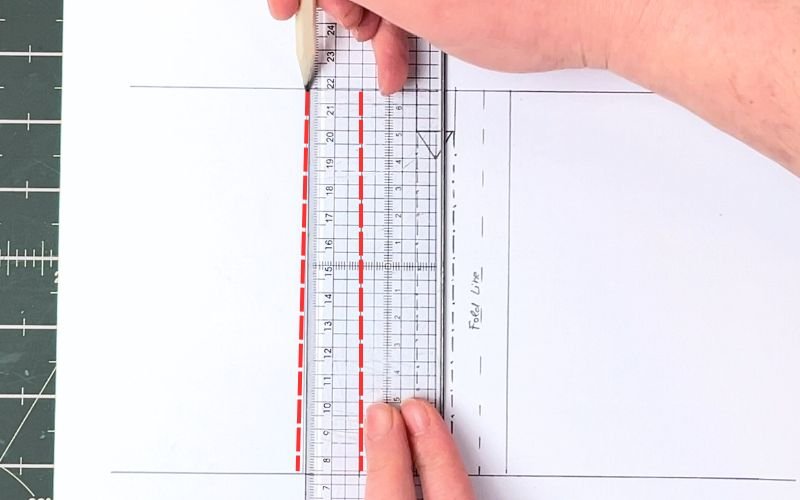
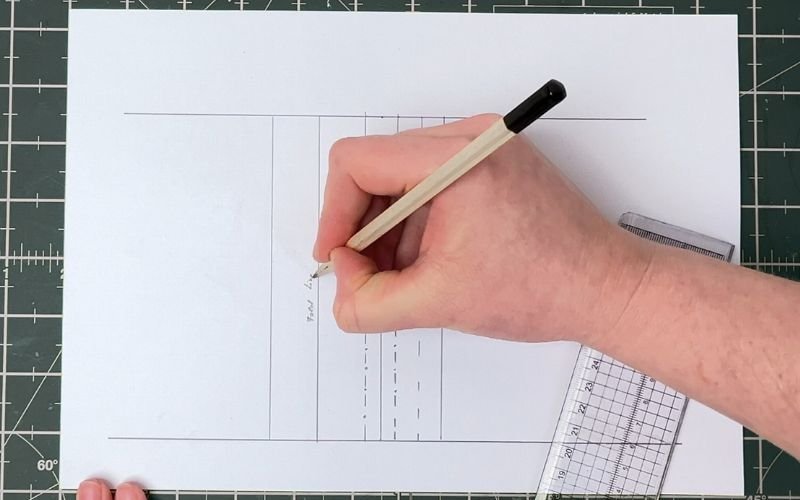
Extend both lines up by at least the same measurement as the final width of the placket. My placket is 2cm wide but I am extending by additional 0.5 cm to the total extension height of 2.5cm. This part of the placket will cover the construction elements of the slit and will hide the inside part of the placket.
Step 5: Add Seam allowances and Grainline
Lastly, add a consistent seam allowance all around the placket’s shape. My detailed guide on how to add seam allowances provides step-by-step instructions for this step. Many professional pattern makers keep master patterns without seam allowance so that seam allowances can be adjusted for different construction methods.
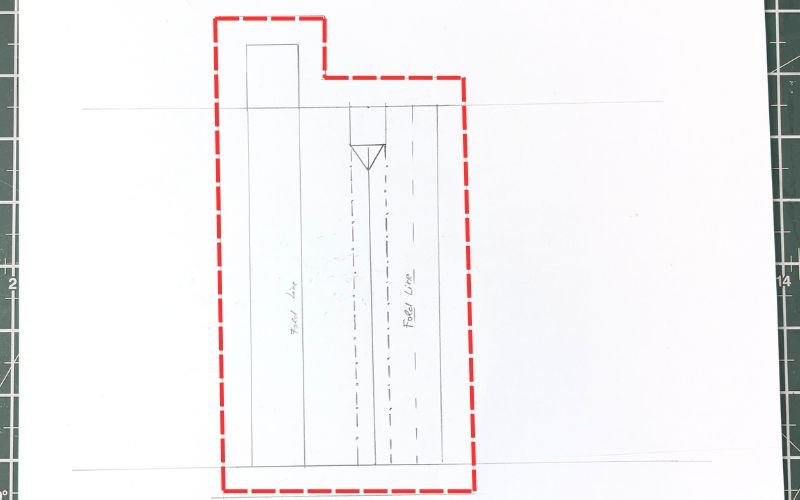
The straight grainline is marked parallel to the sleeve slit guide.
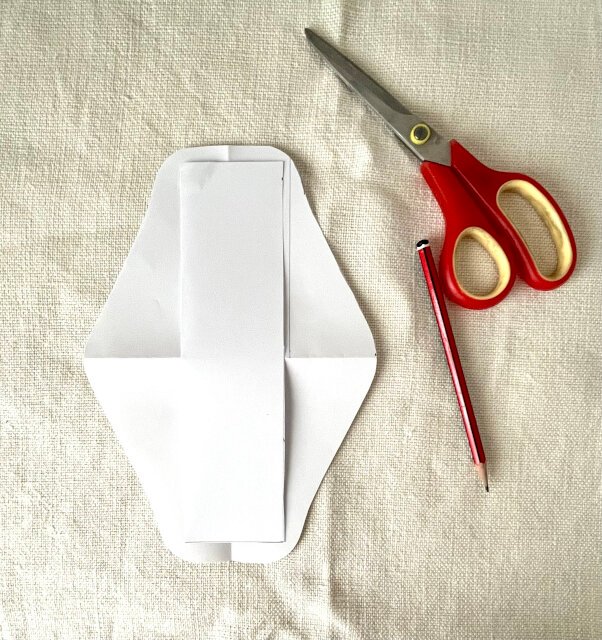
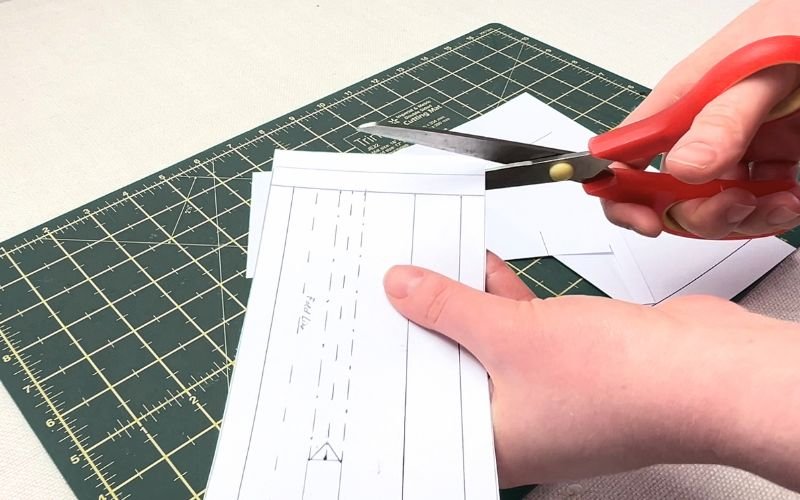
Once you are happy with the placket pattern, cut it out along the seam allowance line.
Drafting Measurements Guide
Typical proportions for a sleeve placket:
| Component | Typical Measurement |
|---|---|
| Sleeve slit depth | 9–12 cm |
| Placket width | 2–3 cm |
These measurements work well for most classic shirts but can be adjusted depending on sleeve style and fabric thickness.
Testing the Sleeve Placket Draft Before Cutting Fabric
Because sleeve plackets involve several folds and directional stitching, testing the placket once before sewing your final garment is highly recommended.
The construction of the sleeve plackets can be a little confusing. However, to check that the placket is correct size, it is worth the effort to do a test sew using a scrap piece of fabric. Testing the sleeve placket in similar fabric weight to the shirt, will give you the most reliable result.
This allows you to check:
- that the chosen width of the final placket is sufficient to bind the sleeve slit
- test the construction steps before sewing the shirt
Sewing a quick test version for the sleeve placket takes very little time but will save you from headaches at the final garment construction stage.
Drafting Variations
Sleeve plackets can be drafted in different proportions by adjusting the slit depth and placket width. You may also want to consider using a simple facing, cut wider and longer than sleeve slit. or using a bias binding to bind the sleeve slit, avoiding more complicated sleeve placket construction. All three methods are valid, although a sleeve placket or bias binding generally produces a more professional finish than a simple facing.
Common Sleeve Placket Drafting Mistakes (and How to Fix Them)
These are common sleeve placket drafting mistakes that I have experienced:
- The sleeve placket is not covering sleeve slit:
- Cause: The placket width is too narrow to cover the sleeve slit.
- Fix: Draft the sleeve slit guide first, then build the placket shape around it.
- The outside placket does not cover the inner placket side:
- Cause: The inner placket side is drafted too big or the outer seam allowance is too wide.
- Fix: Reduce the width of the inner placket to slightly less than half width of the outside placket and / or reduce the right seam allowance to 0.5cm after pressing into shape.
How This Fits Into the Shirt Drafting Series
You will need to use the sleeve placket when choosing a classic shirt cuff sleeve finish. The sleeve placket is drafted after the decision on the sleeve slit is made at the sleeve modification stage.
Shirt Drafting Series
This tutorial is part of my step-by-step shirt pattern drafting series:
- How to Draft a Basic Bodice Block
- How to Draft a Sleeve Block
- How to Draft a Button Stand
- How to Draft a Collar Stand
- How to Draft a Shirt Collar
- How to Draft Shirt Sleeve Cuff
- How to Draft Shirt Sleeve Placket(this post)
- How to Modify Sleeve Block for Shirt Pattern (coming soon)
- How to Draft a Shirt Pattern From Scratch(coming soon)
When to Test Sleeve Placket in Fabric
If you are drafting a new sleeve placket style or working with unfamiliar fabric, it is worth testing the placket pattern in muslin before cutting your final garment.
This allows you to check how the placket will look and how the chosen fabric will behave.
FAQ: Shirt Placket Drafting
Conclusion
Drafting your own shirt sleeve placket pattern allows you to adapt sleeve designs for cuffs, wider sleeve openings, or different shirt styles.
Once you understand the relationship between the sleeve slit and the placket shape, you can confidently modify sleeve patterns and create more professional shirt constructions.
In the next tutorial, I will show how to modify a sleeve block for a shirt pattern, including how to position the sleeve slit correctly.