Sewing a sleeve placket can look intimidating, but once you understand the steps, it is a quick and repeatable process. In this tutorial, I will show you how to sew a sleeve placket on a shirt step by step, using a method I rely on to achieve clean, structured plackets with a professional finish.
This approach works whether you are using a self drafted pattern or a commercial sewing pattern, and it will help you avoid common issues like twisted plackets or bulky edges.
If you are learning how to attach a sleeve placket for the first time, this method focuses on accuracy at each step so the final result looks clean on both sides.
This tutorial is part of my shirt sewing series, where I go from shirt pattern drafting to a complete shirt in comprehensive steps to create a garment without a need to purchase a sewing pattern. I have been sewing for over 30 years, concentrating on sewing from self drafted patterns in the last 10 years, creating countless garments and many shirts. In this post I have tried to convey the lessons I have learnt and the best practice that has helped me to achieve beautiful clothing each time.
I am going to use a self drafted sleeve placket pattern but you can follow the same steps with a commercial pattern.
Process Overview on How to Make Sleeve Placket
The process of how to sew a sleeve placket on a shirt follows these key steps:
- trace sleeve placket pattern and transfer markings
- sew the slit
- sew the short placket edge
- form the upper part of the placket
- topstitch the placket
Why Understanding How to Sew Cuff Placket Matters
A sleeve placket is essential in shirt sewing because it allows the sleeve opening to widen so your hand can pass through comfortably. A basic sleeve pattern can be drafted to be an exact width of the wrist, however such pattern is unlikely to fit unmodified as the wrist is too narrow compared to the dimensions of the hand. Without a placket, a fitted sleeve opening would not function properly, especially on tailored shirts.
By understanding how to insert a sleeve placket to widen a sleeve opening, you can make narrower sleeves that fit closer to your arm using any sleeve pattern or sleeve pattern modification.
Tools and Materials You Need for Sleeve Placket Attachment
To sew a sleeve placket cleanly and accurately, you only need a few basic sewing tools.
- shirt sleeve pattern
- sleeve placket pattern
- fabric that matches your shirt sleeve. I like to use natural fibres as they are easier to maintain, keeps warm in winter and cool in summer and disintegrate in the landfill at the end of its useful life.
- matching thread
- soap, chalk or removable fabric marker. I like to use soap as I already have a lot of smaller pieces lying about and they can be removed easily with a little steam.
- scissors
- grading ruler or a basic ruler
- iron
- sewing machine
Before sewing sleeve placket, I recommend learning how to sew darts for accurate shaping and how to attaching a collar and collar stand for a complete correct process for sewing a shirt.
Step By Step of How to Sew Shirt Sleeve Placket
Step 1: Prepare Sleeve and Placket Pattern Markings
Before you cut the fabric, you need to prepare the sleeve and sleeve placket patterns. Check that the length of the sleeve slit marking on the sleeve pattern matches the length of the slit on the placket pattern. Adjust the length as required This step will ensure that the sleeve and placket align and you get the desired result without wasting any fabric.
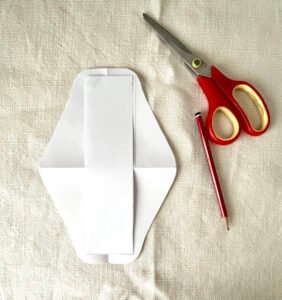
Then, cut a small hole on the sleeve pattern corresponding to the end of the sleeve slit in the middle of the pattern. I fold the paper pattern in half at the mark and cut a triangle with scissors. You can use a single hole puncher instead. I have both but I tend to use whatever is nearest to me.
Make a notch on the sleeve opening where the sleeve slit starts.
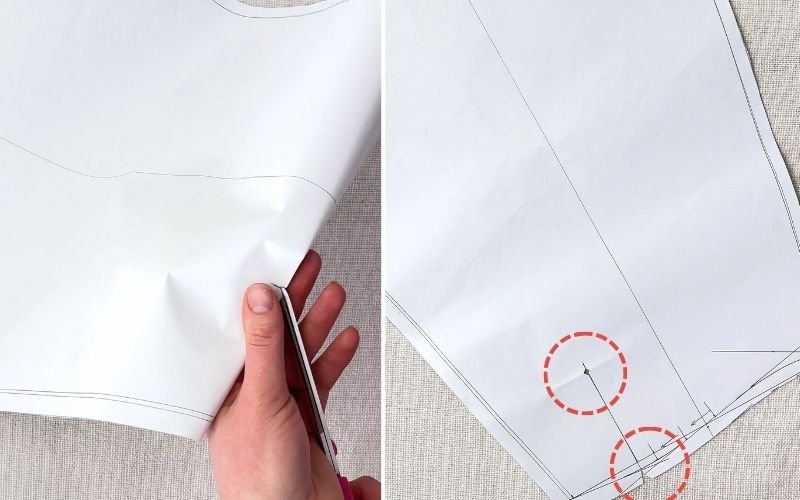
Repeat the same process for the sleeve placket, cutting a hole and a notch for the slit end points. This will make the transfer of the slit opening points easier, regardless which side of the patten you are using.
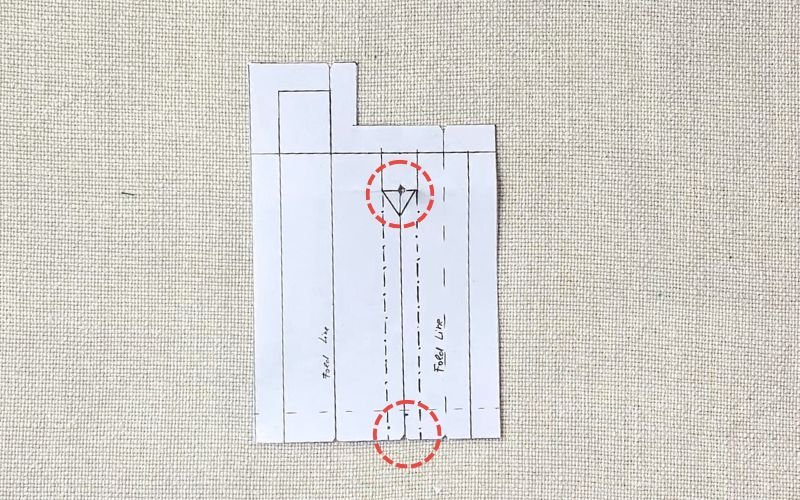
Step 2: How to Transfer Sleeve Placket Markings to Fabric
Transfer sleeve slit markings on the sleeve pattern onto the reverse of fabric cut for sleeves. Remember that you need to flip the sleeve pattern to get mirrored pieces. You can connect the markings with a straight line, using a fabric marker and ruler. This is completely optional as only the slit end points are important. The rest will be invisible.
Then, trace and cut two mirrored pieces for the sleeve placket, placing the placket on a fabric with straight grain running parallel to a sleeve slit.
Transfer the slit markings on the wrong side of the placket fabric pieces.
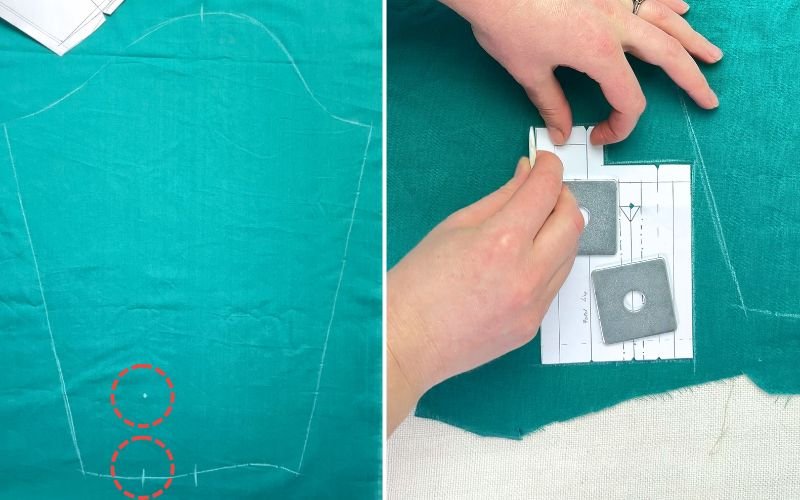
Here you can also transfer the fold line markings and the slit stitch lines, however only the stitch lines will give you a real accuracy advantage. The other lines (other than slit markings) will shift depending on the accuracy of slit stitching.
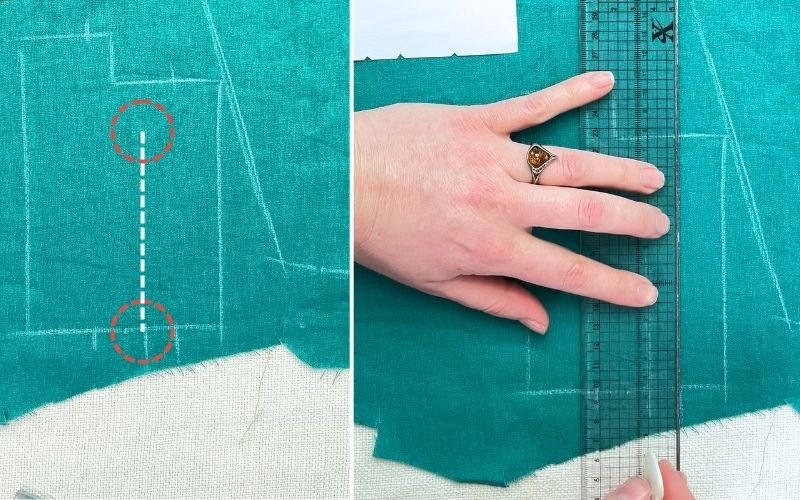
Step 3: How to Sew Sleeve Placket to Shirt Sleeve
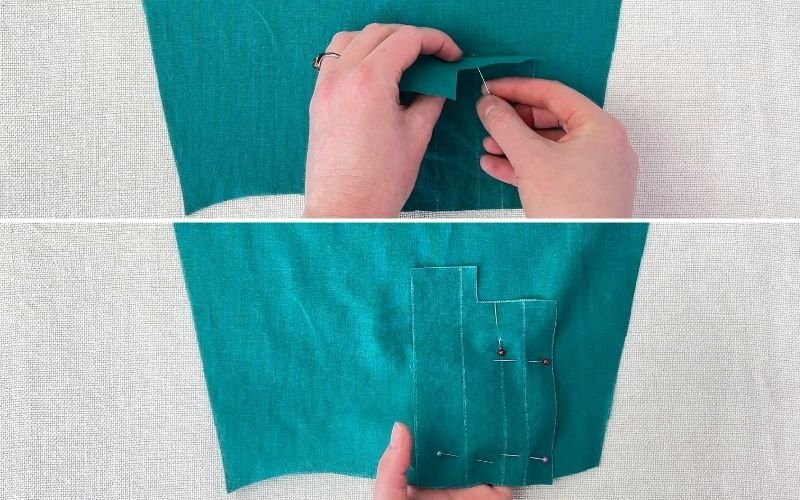
Next, place the sleeve placket on the sleeve, with the right side of the sleeve placket facing the wrong side of the sleeve, and the narrower sleeve placket edge facing the back of the sleeve. Align the sleeve slit markings.
Pin in place before sewing around the slit marking. My slit seams are 0.5cm from the slit line. I did not drew a seam guide but used a point on the sewing machine presser foot as a guide for a consistent seam width. This is quicker but requires some calibration and testing to ensure that your mark matches th required seam depth.
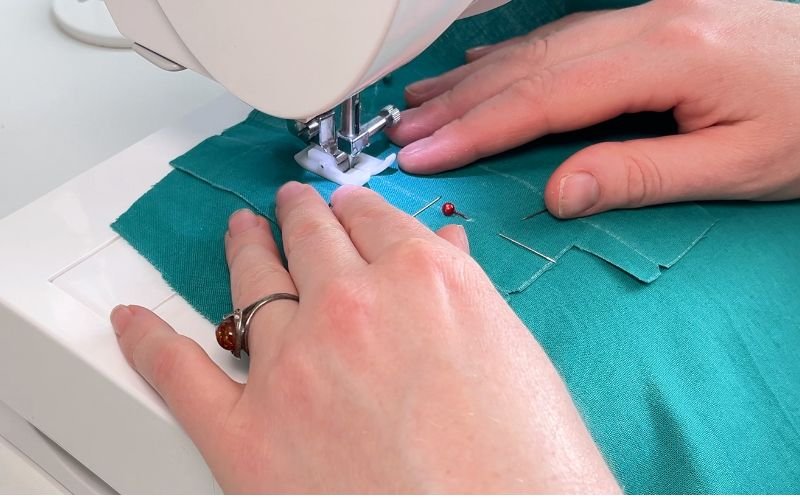
Steam press the stitches to blend with the fabric and to remove any minute fabric wrinkles.
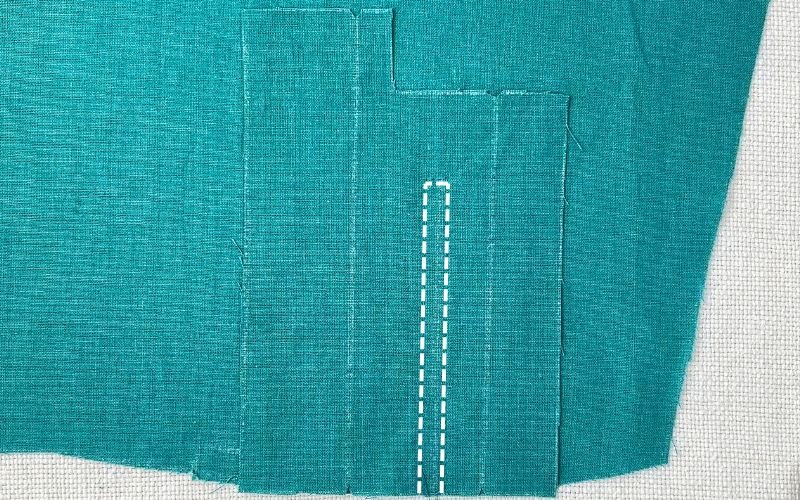
This stage is key when learning how to attach a sleeve placket, as accurate stitching around the slit determines how clean the final placket will look.
Step 4: How to Cut and Turn the Sleeve Placket
Carefully fold the placket away from the seams, pressing the seam with your fingers or with the steam iron away from the sleeve and towards the slit. This will make the turning the placket to the right side easier.
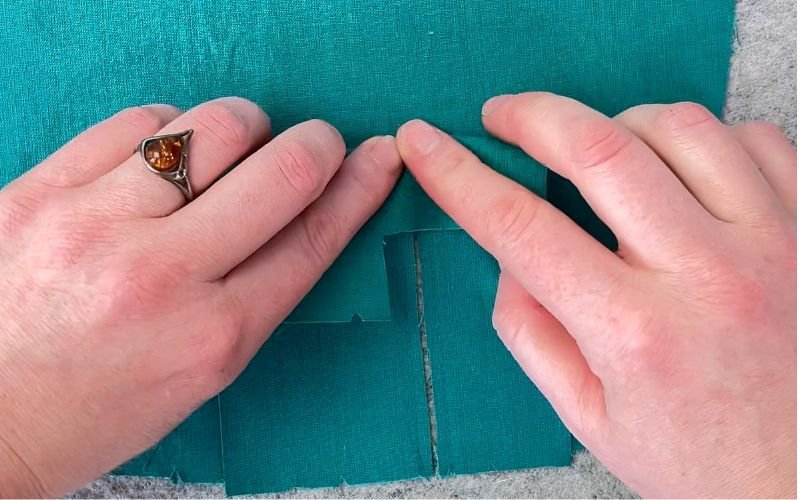
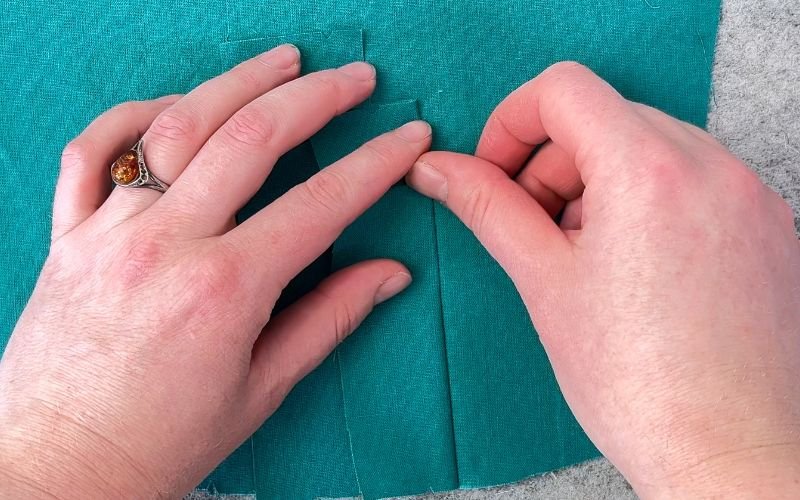
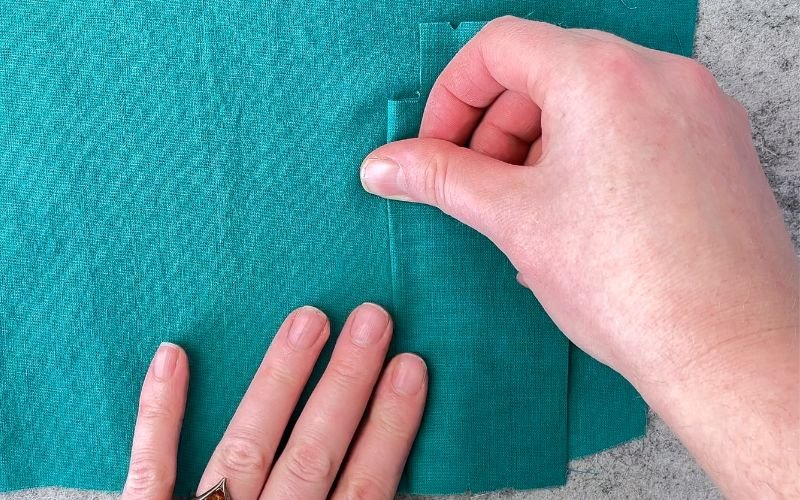
Cut the sleeve slit open, along the slit guide. Before you get to the top of the slit, pivot the cut to the corners, snipping as close to the stitching as possible, without cutting through the thread. If you cut through the thread, the integrity of the placket is compromised and you will end up with seams that unravel in the washing machine.
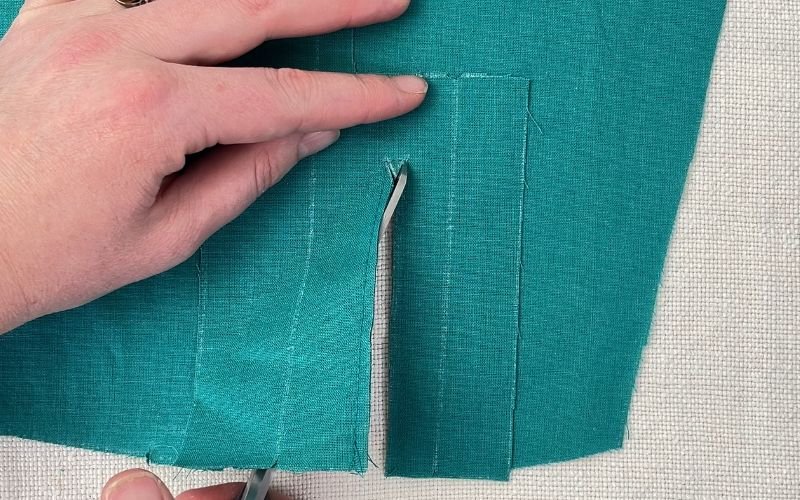
Turn the placket to the right side and press with a steam for a clean finish.
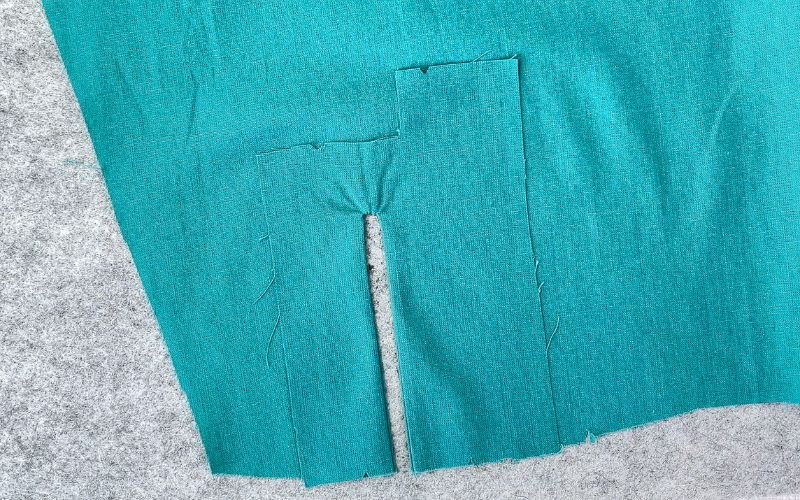
Step 5: How to Sew the Inner Sleeve Placket
Fold the narrower placket side back to cover the slit opening.
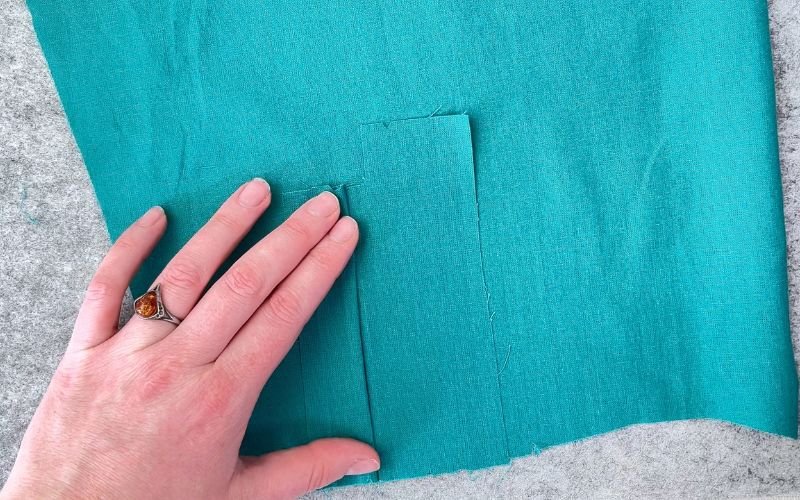
Then fold up a narrow seam allowance, pressing it into place.
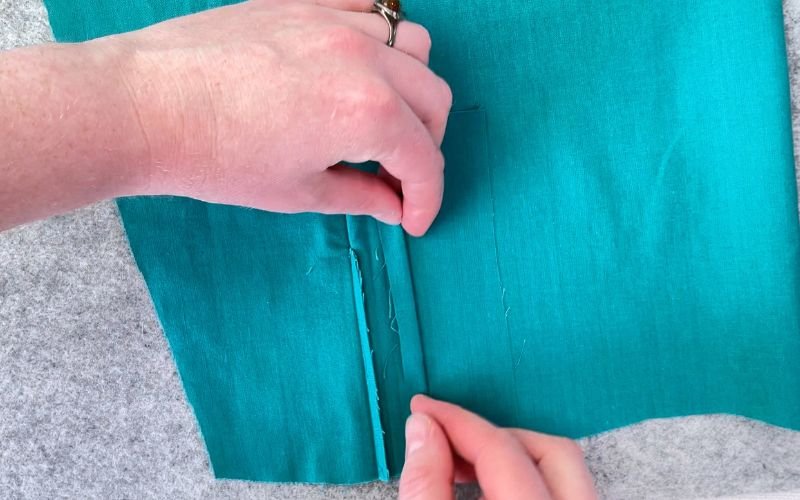
Next, fold the placket back over to the right, with the folded edge covering the sleeve slit on one side, and the seam allowance and stitch line on the other side.
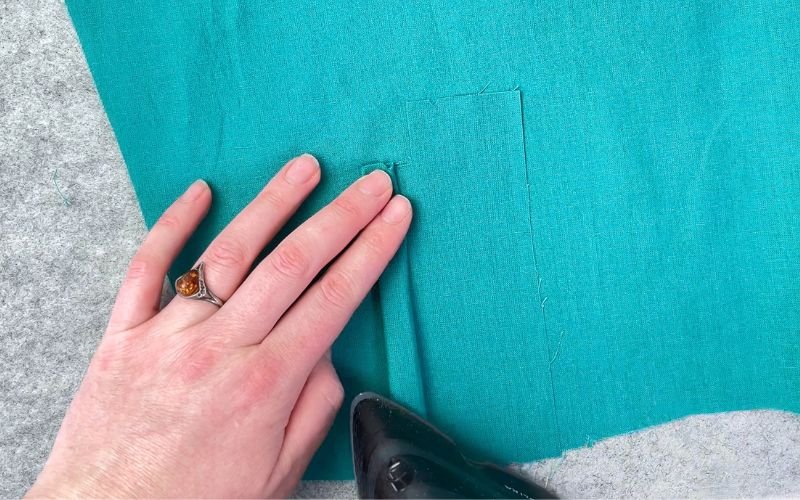
Pin in place, before sewing along the edge to secure the hidden sleeve placket in place.
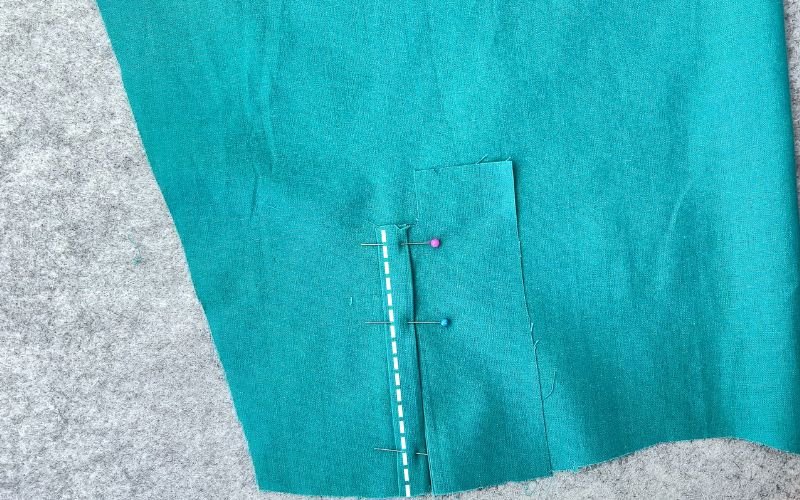
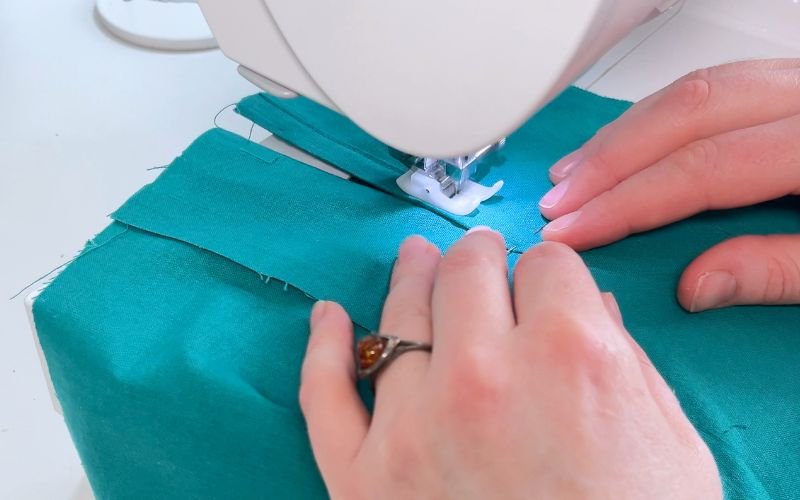
Step 6: How to Sew the Outer Sleeve Placket and Finish
Fold the wider placket over the inner placket.
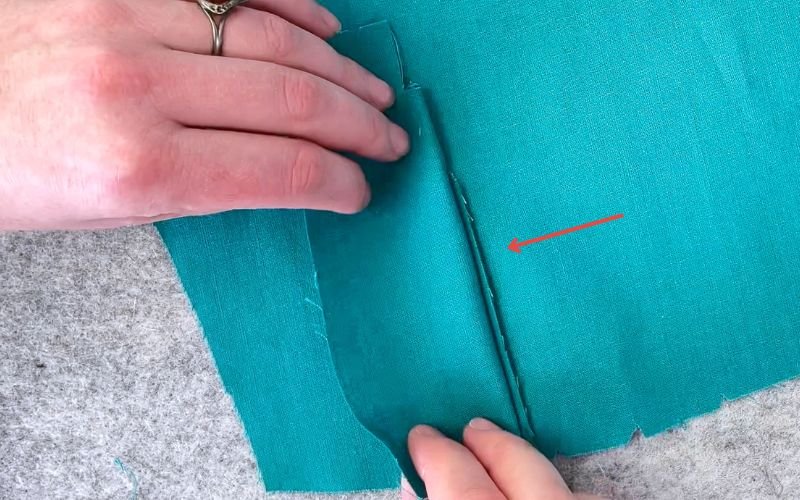
Fold down 0.5 cm of the top of the packet and press in place.
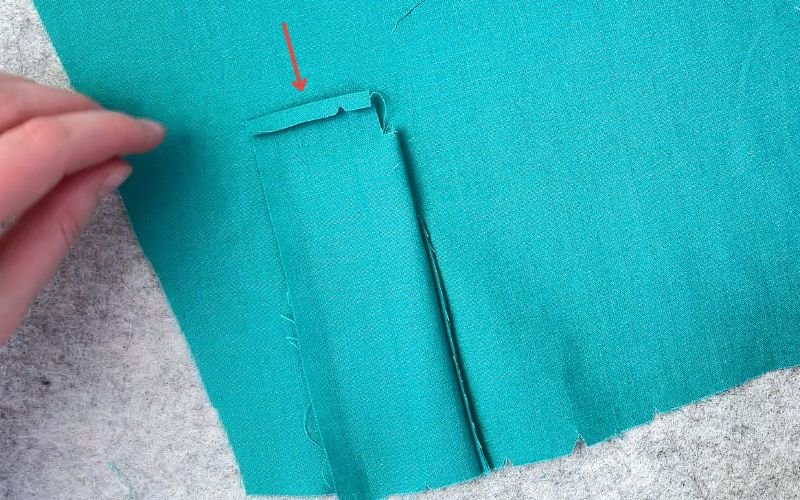
Then fold a triangle at the top, with the point in the middle of the wider placket side. Press the formed triangle in place.
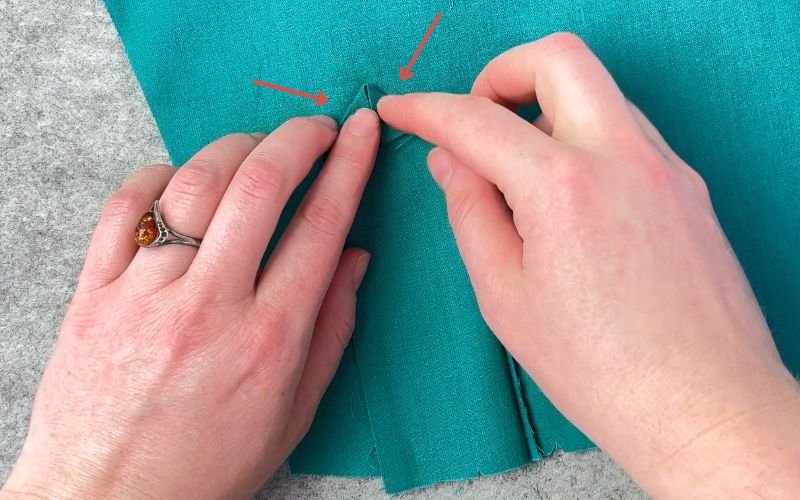
Then fold back a seam allowance, pressing it into a place.
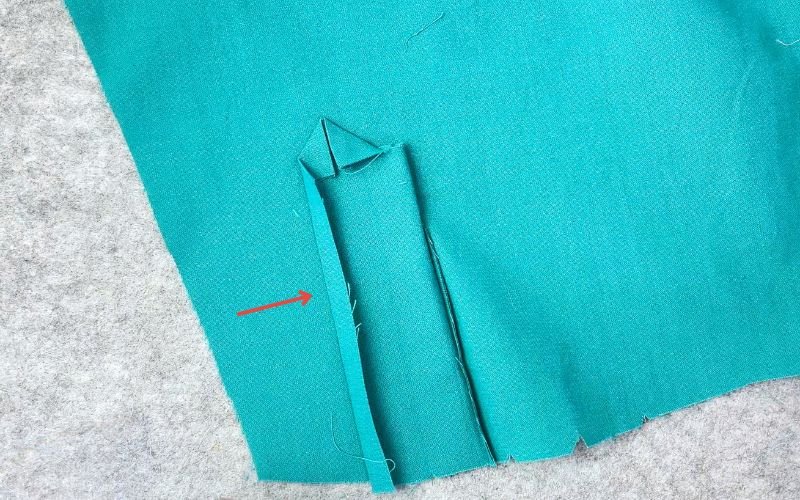
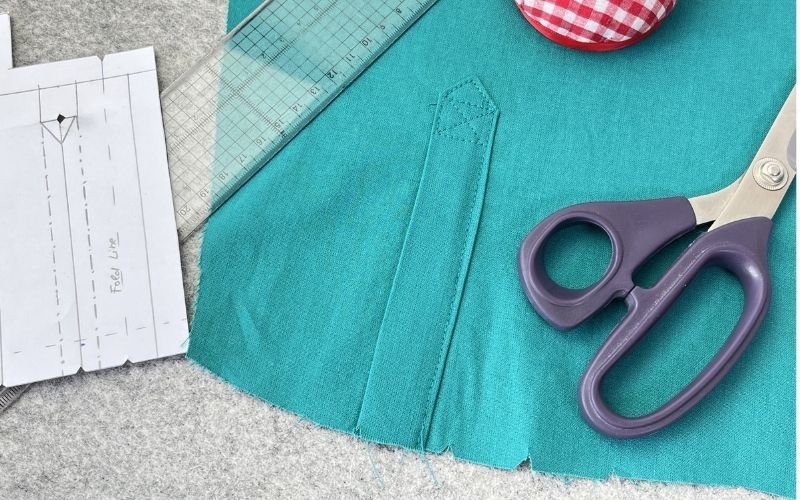
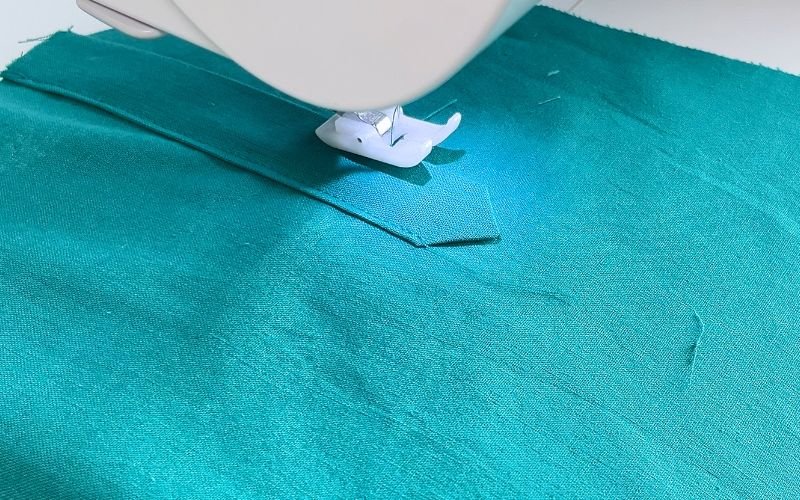
Next, fold the placket in place, covering the hidden inner placket on one side and the seam on the other side. Pin in place before sewing the long edge to secure.
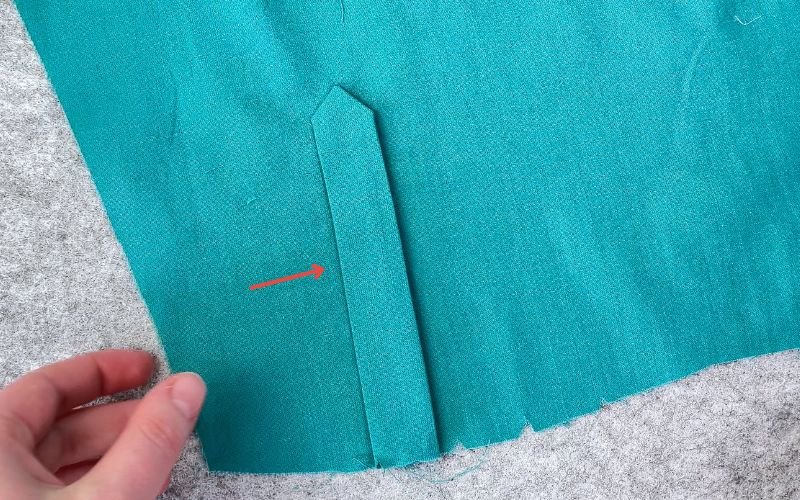
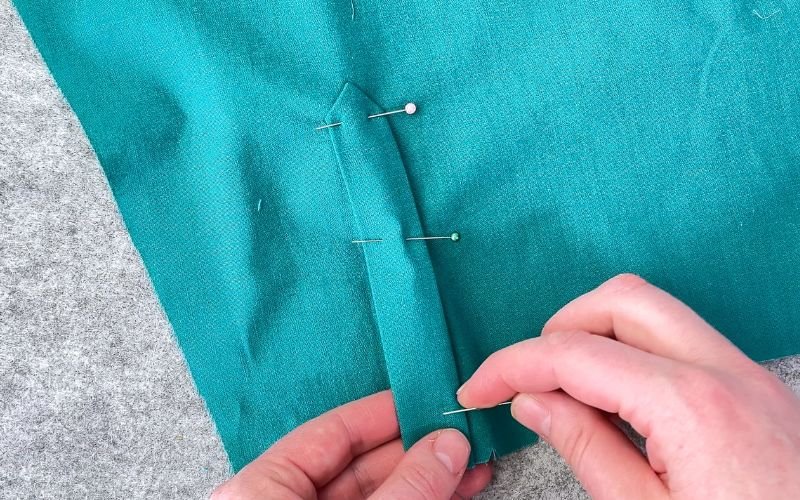
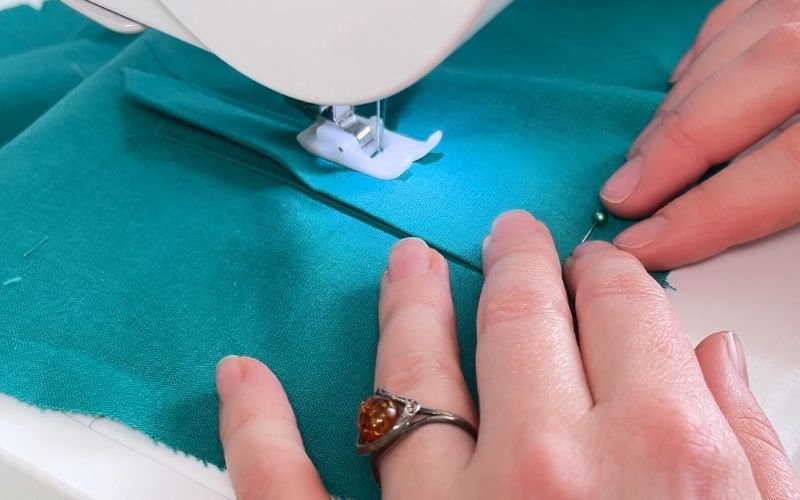
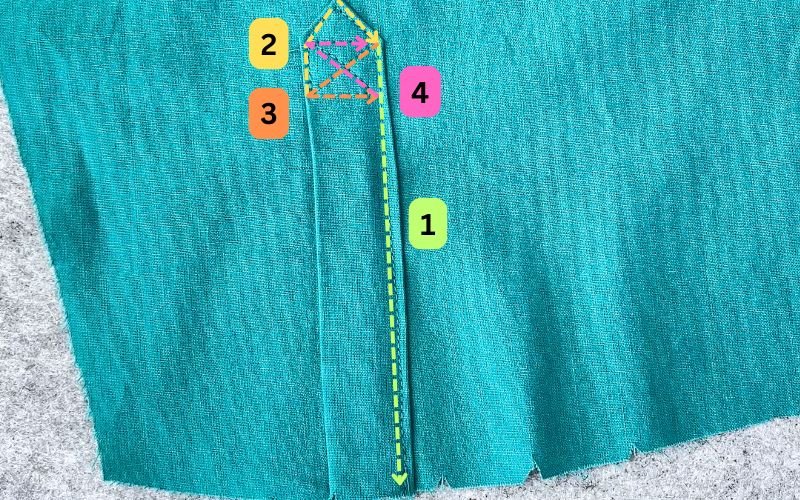
Lastly, sew around the decorative triangle, adding the reinforcement stitches. The visual guide gives an order on how to best sew the sleeve placket, without any double stitching at the reinforcement.
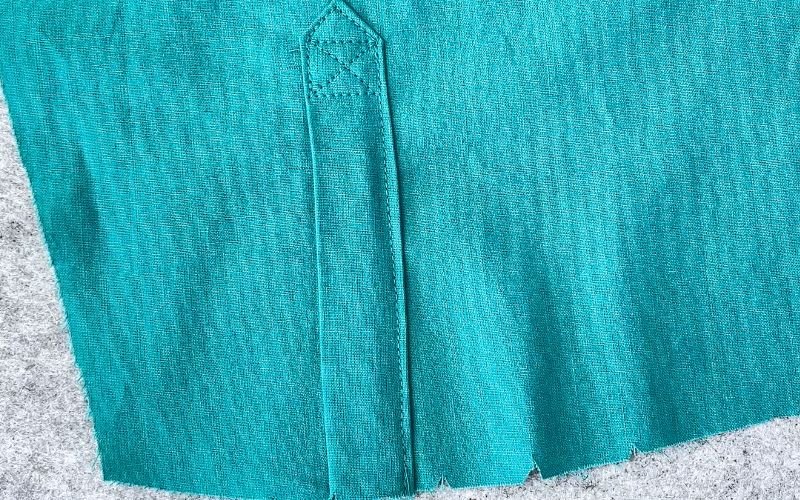
Finally, press all the stitch lines to blend the threads with the fabric for that professional finish.
Common Sleeve Placket Sewing Mistakes
These are common shirt placket sewing issues that I have experienced and have come across repeatedly before improving my method:
- It is hard to turn the placket to the right side without wrinkles
- Cause: You did not cut the triangle at the top of the sleeve slit line and did not press the seams before turning.
- Fix: Cut a triangle at the top of the sleeve slit, to get as close to the corners as possible before pressing and turning the placket.
- Raw edges visible at the top of the placket.
- Cause: Seam allowance was not folded back before forming a triangle.
- Fix: Press a seam allowance in place before forming a triangle.
- The inside of the placket does not look neat.
- Cause: The slit was too narrow, making the placket too wide to fit.
- Fix: Mark a seam guide directly on the placket before sewing.
Shirt Sewing Series: Step-by-Step Shirt Making Guide
This post is part of a larger step by step shirt pattern drafting and sewing series.
- How to draft a shirt pattern from scratch for beginers
- How to sew a shirt button stand
- How to trace and sew darts
- How to sew and attach a collar and collar stand to a shirt
- How to attach a shirt placket(this post)
- How to sew shirt cuffs step by step for beginners
- How to sew shirt sleeves
- How to sew a shirt (future post)
I recommend following these steps in order if you are drafting and sewing a shirt from scratch.
FAQ: How to Sew a Shirt Sleeve Placket
Conclusion
Sewing a sleeve placket may look complicated at first, but once you understand how each step builds on the previous one, it becomes a very logical process. The key is accuracy at the marking stage and careful stitching around the slit.
When done well, a sleeve placket not only makes the sleeve functional but also adds a clean, tailored detail that elevates the entire shirt.
Like most sewing techniques, this is one of those skills that improves quickly with repetition. The more you sew it, the more natural the process becomes, and the cleaner your finish will look each time.
About the Author: Pattern Drafting & Garment Sewing

I’ve been sewing for over 30 years and drafting my own patterns for more than a decade. I work almost exclusively with self-drafted patterns, which means I don’t rely on instructions—I rely on understanding how garments fit and come together.
Most of my methods come from figuring things out through testing, adjusting, and breaking down common problem areas using logic and geometry rather than guesswork.
On this site, I share step-by-step tutorials on pattern drafting, garment construction, and sewing techniques to help you create well-fitted, professional-looking clothes from scratch.
👉 Read more about my approach to pattern drafting and sewing here: About Me