Drafting a shirt pattern from scratch allows you to create garments that fit your body precisely. In this step-by-step guide, I show exactly how to draft a shirt pattern, from a basic bodice block to a complete, sew-ready design.
This tutorial is designed for intermediate sewists who already understand basic pattern blocks and want to draft their own custom shirt pattern. If you are new to pattern drafting, I recommend starting with the how to draft a bodice block and how to draft a sleeve block tutorials.
I draft all my garment patterns from scratch using flat pattern drafting techniques. The method shown in this guide is the same process I use to create well-fitting, wearable shirts for my own wardrobe. This approach ensures that all pattern pieces work together accurately, reducing fitting issues during sewing.
This method is best suited for woven fabrics and classic shirt designs. It may not be suitable for stretch garments or oversized styles without further adjustments.
Shirt Pattern Drafting Series Overview
This complete shirt pattern drafting series walks you through every step required to draft a professional, well-fitting shirt pattern from scratch:
- How to Draft a Basic Bodice Block
- How to Draft a Sleeve Block
- How to Draft a Button Stand
- How to Draft a Collar Stand
- How to Draft a Shirt Collar
- How to Draft a Shirt Cuff
- How to Draft a Sleeve Placket
- How to Modify Sleeve Block for a Shirt Pattern
- How to Modify Bodice Block for a Shirt Pattern
- How to Draft a Shirt Pattern From Scratch(this post)
Each tutorial focuses on a single component, allowing you to build accuracy step by step. You can follow the steps in order or return to this page as your main reference.
How to Draft a Shirt Pattern Step by Step
If you prefer a video tutorial, you may want to watch my Youtube episode on how to draft a shirt pattern from a basic bodice block.
Step 1: Draft the Bodice Block
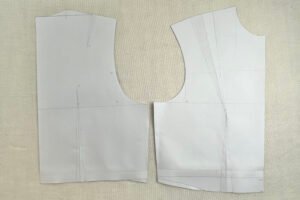
The process of the shirt pattern drafting begins with a basic bodice block. This block covers the key areas of bust, waist, shoulders, neckline and armholes, creating a three-dimensional flat pattern that fits your own custom measurements. The bodice block is the foundation for most fitted garments.
Use the how to draft a bodice block tutorial to create your custom base.
Then, use this block as a starting point, tracing it to lower the hem to mid hip or hip line. The shirts are longer than the waist unless you are creating a trendy cropped top that ends exactly at the waist. The exact shirt length depends on how you intend to wear it and what your personal aesthetics are. I personally go for shirts that are somewhere between mid hip and hip in length.
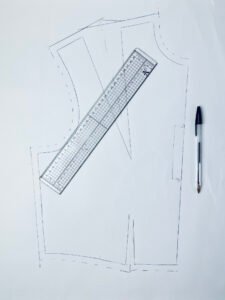
Next, reposition the bust darts to avoid sharp points and extend the waist darts to mid hip or hip line. The extension of the waist darts will smooth the transition from hip to waist to bust on the front or to shoulder blade on the back.
Follow the how to modify a bodice block for a shirt pattern guide to complete this step.
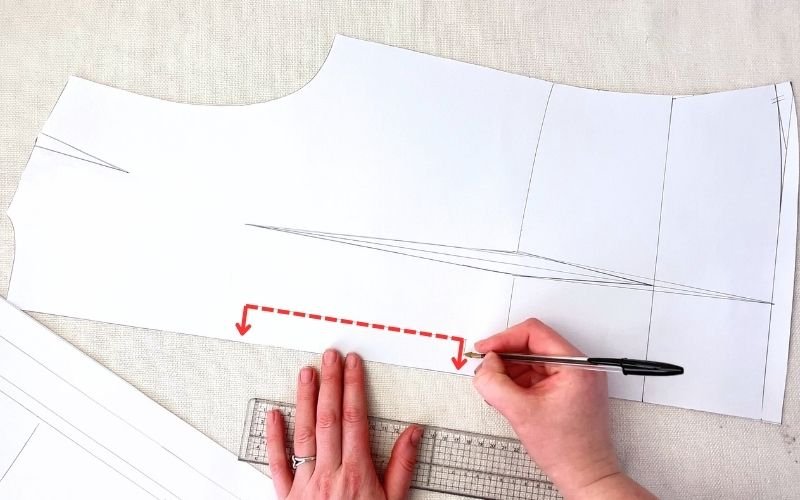
Once the bodice block is modified, you can add a button stand.
Step 2: Draft the Button Stand
The button stand needs to be added for a classic button closure. Start by deciding the size of the buttons you intend to use for the shirt. Typically, the shirt buttons are around 10 mm wide. I have found that the best button stand width is one that is 2.5 times the size of the chosen button, however this is mostly guided by preference rather than a specific rule.
The point to note is that if the button stand is too narrow, the edges of the buttons might dig into the skin or fabric may pull around the buttons, creating a wavy line instead of a crisp straight line that is so important for a structured shirt. On the other hand, a button stand that is too wide could become a nuisance with the edges curling up and catching on other clothing or items that you come in contact.
Whichever size button stand you choose, for a basic button stand you need to draft a button stand extension that is 2.5 times wider than the desired final button stand width.
Follow the how to draft a button stand tutorial to create a clean and functional closure.
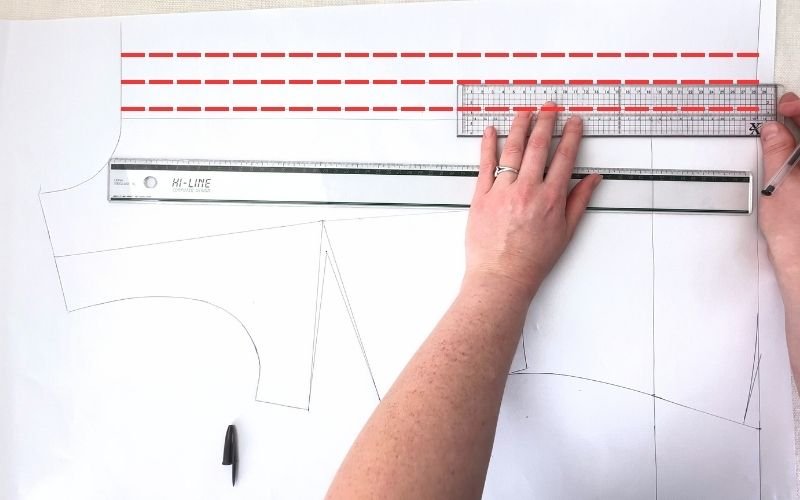
Quick note
The same button stand is used for both the button and the buttonhole placement.
Once the button stand is complete, you can draft a collar stand.
Step 3: Draft the Collar Stand
The collar stand connects the neckline to the collar and determines how the shirt sits around the neck. It must match the bodice neckline with the button extension perfectly, to ensure that the patterns align correctly. If the collar stand is too long, you will have puckers on the collar stand at the construction stage. If it is too small, the shirt may not fit around your neck comfortably.
The shirt collar stand is directly influenced by the chosen button stand width and the neckline of the modified bodice block. In the shirt bodice modification stage I did not change the neckline. However, the addition of the button stand alters the neckline length.
To draft a collar stand, draw a rectangle that is the width of the half of the neckline plus the final width of the button stand. The height of the rectangle is your desired height of the final collar height minus 1 cm. The reduction in height is to allow the collar to roll without causing fit issues. The addition of the collar increases the final height of the collar and collar stand.
The rectangle then needs to be curved to shorten the upper seam line of the collar to reduce the gaping at the neck. The neckline of the bodice block was drafted at the base of the neck where the neckline is wider. The collar stand sits straight up and without the curved adjustment it would be too loose around the upper edge.
Follow the how to draft a collar stand tutorial for the full step-by-step method.
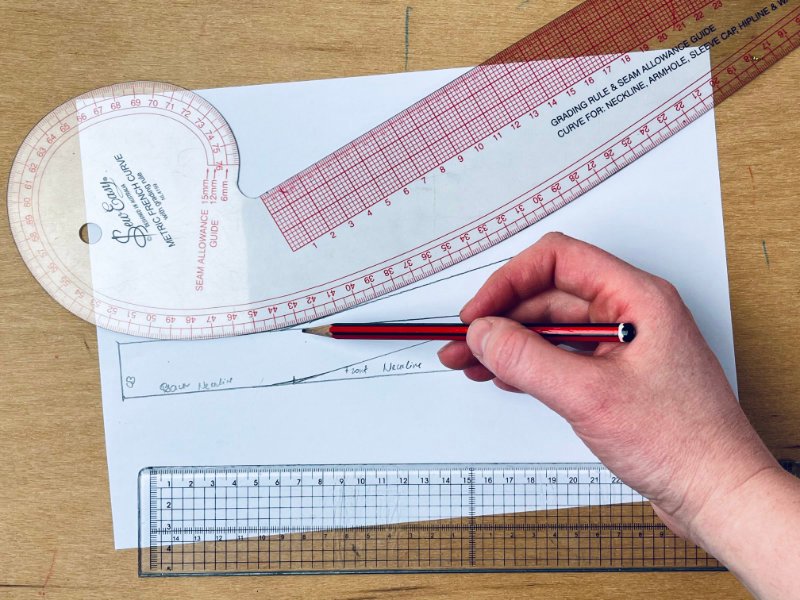
Once the collar stand is complete, you can draft the collar itself.
Step 4: Draft the Shirt Collar
The classic shirt pattern comes with a pointy collar. The collar is drafted once the collar stand is completed to match with the collar stand exactly. It should be higher than the collar stand’s height to cover the collar stand completely when the collar is rolled down. It is also narrower than the upper edge of the collar stand to allow space for button overlap. Typically, the shirt collar is positioned between the centre front markings but can be even narrower if you intend to wear a tie (a tie otherwise may reduce the wearing ease and cause a tightness and discomfort).
Use the how to draft a shirt collar tutorial to create a collar that fits your neckline accurately.
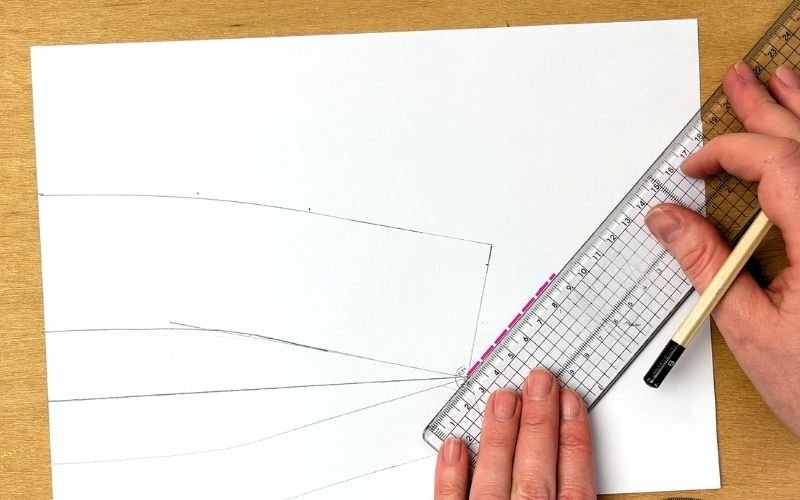
Step 5: Draft the Cuff
Another important part of a classic shirt pattern is a presence of a cuff. The cuff adds structure to the sleeve and keeps a crisp silhouette. The cuff should be drafted before you draft and modify the basic sleeve pattern as the cuff width will directly impact on the sleeve length.
Use the how to draft a shirt cuff tutorial to create a cuff that fits your wrist, includes button overlap, and matches your desired width.

Step 6: Draft the Sleeve and Sleeve Placket
To complete the shirt pattern, draft a sleeve block. You will only ever need to create one basic sleeve pattern that you can reuse for majority of the sewing projects with woven fabrics.
Use the how to draft a sleeve block tutorial to create your base sleeve pattern.
Technically, you can use the sleeve block as it is without adding any cuffs and sleeve plackets for an alternative sleeve opening, such as inserting an elastic for alternative sleeve styles such as elasticated or blouse sleeves. I personally love elbow length shirts as the full length sleeves are just a nuisance.
However, for a classic shirt pattern the sleeve block needs to be adjusted to reduce the length by the width of the cuff. You will also need to add a sleeve slit and reduce the width of the sleeve opening with carefully positioned pleats to ensure that the sleeve opening matches with the sleeve cuff dimensions. If the sleeve opening is not reduced, you will have excess bulk or uneven pleats or gathers.
Follow the how to modify a sleeve block for a shirt pattern guide to make these adjustments.
Finally, add a sleeve placket. The sleeve placket length is directly related to the sleeve modification above. Therefore, the sleeve placket should be drafted either before or alongside the sleeve pattern modification to ensure that the sleeve slit, sleeve placket and cuff match.
Use the how to draft a sleeve placket tutorial to complete this step.
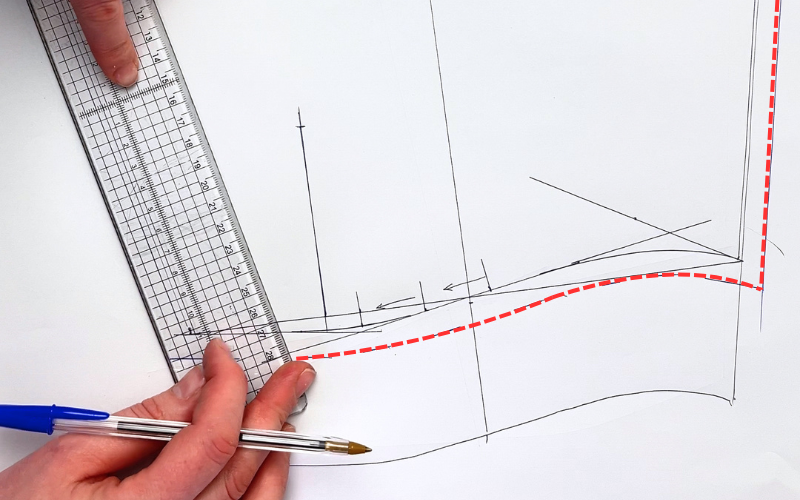
Step 7: Assemble the Shirt Pattern
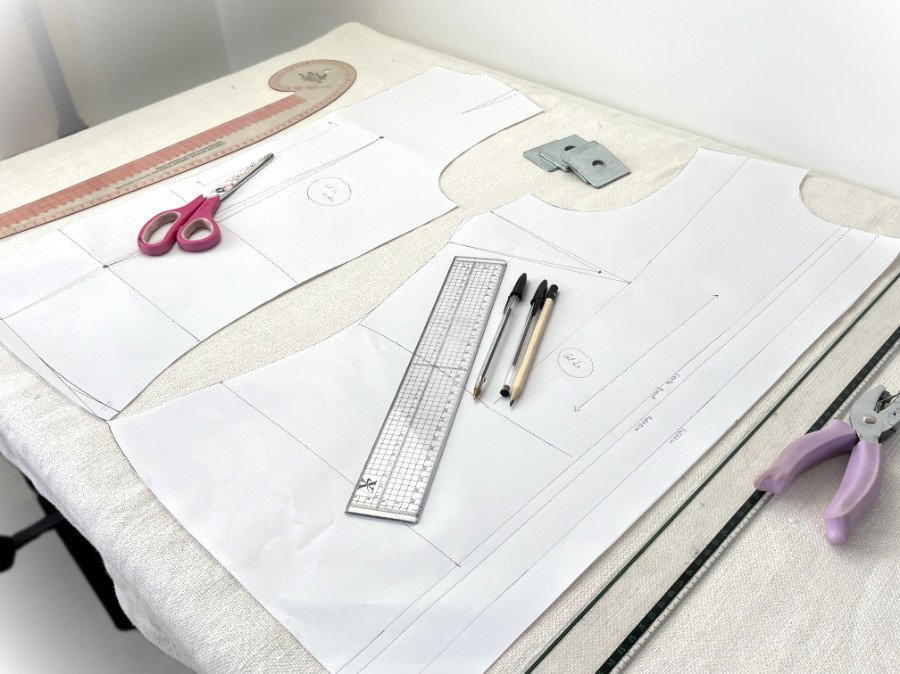
To complete the shirt pattern, you now should have these pieces:
- a shirt pattern for front (with button stand)
- a shirt pattern for back
- a modified sleeve pattern
- a pattern for sleeve placket
- a cuff pattern
- a collar stand pattern
- a collar pattern
All pattern pieces must have matching seam allowances. For example, the armhole seam allowance on the bodice must match the sleeve crown seam allowance. See the how to add seam allowances to a sewing pattern guide to ensure consistency.
At this stage, check:
- matching seam lengths
- consistent seam allowances
- correct notches and markings
- balanced sleeve and armhole measurements
How to Sew a Shirt From a Self Drafted Pattern
In how to sew a shirt I share with the exact instructions on how to sew a completed completed shirt pattern to create a truly marvellous piece of clothing that you will be glad to show in public. In a nutshell, the process is:
- close all darts
- complete the button stand
- attach front and back at shoulder seams
- sew the collar
- attach the collar stand to the neckline
- insert the collar
- attach sleeve placket to the sleeve slit
- construct the cuffs
- attach cuffs to sleeves
- set sleeves into armholes
- sew the side seams
- finish the hem
- sew buttonholes
- attach buttons
FAQ: Shirt Pattern Drafting
Before You Start Sewing
Before cutting your fabric, I recommend to test your pattern using a toile (mock-up). This allows you to check fit, proportions, and construction details before committing to your final fabric.
You do not need to sew buttonholes or both sleeves, even just one sleeve will show any areas for attention. However, completing the pattern in a similar weight fabric to your final garment will give you best view of overall pattern and the areas to address.
If you tested the basic bodice and sleeve blocks, then you only need to pay close attention to how the design elements, such as collar, collar stand, sleeve placket and cuff work together with the modified sleeve pattern.
Conclusion
Drafting your own shirt pattern gives you full control over fit, style, and construction. By following this step-by-step process, you can create a reusable base pattern that can be adapted into multiple shirt designs.
Use this guide as your main reference and work through each linked tutorial to complete your pattern accurately.
About the Author: Pattern Drafting & Garment Sewing

I’ve been sewing for over 30 years and drafting my own patterns for more than a decade. I work almost exclusively with self-drafted patterns, which means I don’t rely on instructions—I rely on understanding how garments fit and come together.
Most of my methods come from figuring things out through testing, adjusting, and breaking down common problem areas using logic and geometry rather than guesswork.
On this site, I share step-by-step tutorials on pattern drafting, garment construction, and sewing techniques to help you create well-fitted, professional-looking clothes from scratch.
👉 Read more about my approach to pattern drafting and sewing here: About Me