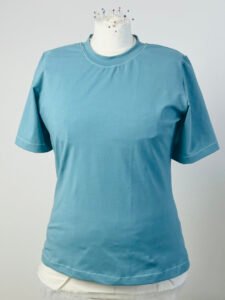
Knowing how to draft a shirt collar pattern allows you to expand your handmade wardrobe to include well-fitting shirts and shirt dresses. In this step-by-step tutorial I show how to draft a shirt collar pattern that fits any collar stand, using a collar stand drafted from a basic bodice block. You can read more about the collar stand and bodice block in my detailed guide on how to draft collar stand and how to draft a close fitting basic bodice block.
This tutorial is part of my shirt pattern drafting series, where I explain how each component of a shirt pattern works together, including the bodice block, button stand and collar stand.
This step by step tutorial is suited to beginner and more experienced pattern drafters. I will share some tips and tricks as well as insights why each step matter and how it impacts overall look of the collar.
Over nearly a decade of drafting garment blocks and shirt patterns from scratch, I’ve refined a collar drafting method that consistently produces a clean collar roll and balanced proportions.
Shirt Collar Drafting Overview
The process for drafting a shirt collar pattern follows six main steps:
- Trace the collar stand seam line
- Draft the collar base line
- Shape the collar fall
- Draft the collar front edge and collar point
- Adjust collar fall at the centre back
- Add grainline and seam allowances
This method creates a collar pattern that fits any collar stand drafted from the bodice neckline.
Why Understanding Collar Drafting Matters
A shirt collar is not drafted independently. It is drafted from the collar stand seam line, which itself is based on the bodice neckline and button stand extension. If you make an adjustment to one, it will directly impact on the others and the overall look of the collar. For this reason it is important to understand how the collar pattern is drafted and how it relates to the collar stand seam line. It avoids a common mistake of having a collar that is too big or too small for the collar stand or does not take into consideration the presence (or lack of) a button stand.
The commercial sewing patterns work because they are based on the same steps, however they do not explain the correlation between each part and why the collar should be attached at exactly those pattern notches. When you draft your own collar pattern, each of these construction steps make sense and lead to a better and more professionally looking shirt or dress.
Additionally, knowing how to draft collar pattern gives you a control over collar roll, spread and height, giving you opportunity to customise the design the way you want. My posts on how to draft a collar stand, button stand and basic bodice block provides step by step instructions how to create each component for a cohesive pattern.
When these relationships are understood, drafting collars becomes predictable and repeatable rather than trial and error.
Tools and Materials You Need to Draft a Collar Pattern
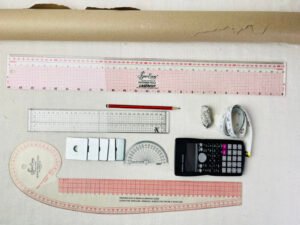
To draft a collar pattern accurately you only need a few basic pattern drafting tools. You can read more about each tool in my post on the essential pattern drafting tools.
- Drafted collar stand
- Pattern paper
- Ruler + French curve
- Pencil
- Protractor
- Pencil eraser
NB!
Always draft the collar after the bodice neckline, button stand and collar stand are finalised. Even a small neckline adjustment will change the collar geometry and the final collar roll.
Understanding Collar Anatomy (Before Drafting)
Understanding the anatomy of a shirt collar makes the drafting process easier and helps explain why each line on the pattern exists.
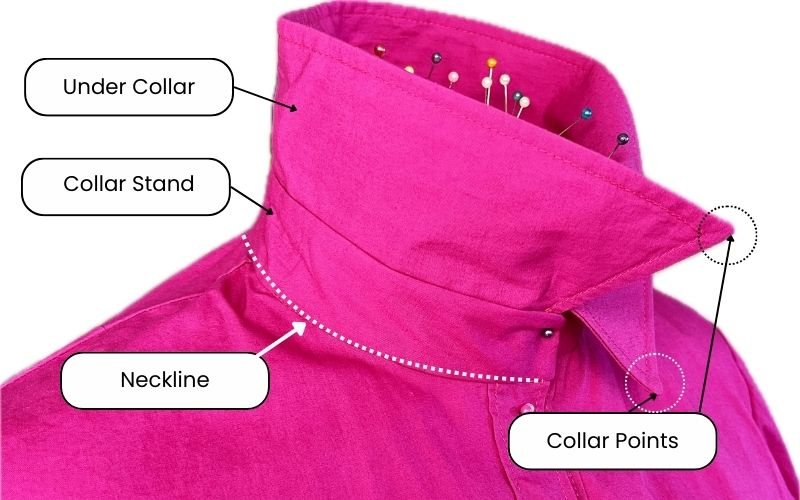
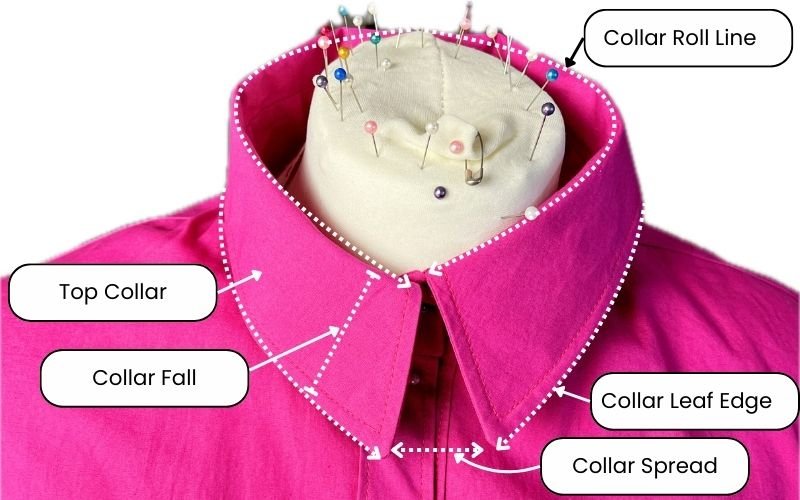
Collar drafting comes with lots of technical drafting terms that can be confusing. To make it easier for you to navigate it I have created a infographic below that shows each collar component. If you feel lost, refer to this to get back on the right track.
These are the elements to the collar:
- Under Collar – the bottom part of the collar. This is usually not interfaced as it is not visible and allows the collar to roll without restrictions. It can also be cut with a narrower Collar Spread compared to the Upper Collar to hide the Under Collar.
- Collar Stand – also referred as neckband. It adds height and structure to the collar.
- Neckline – the neckline on the bodice pattern to which the collar stand is attached. It will include a button stand extension if a button stand is used.
- Collar Points – the pointy ends of the collar a the front. These could be also rounded for softer and feminine look.
- Top Collar – the upper part of the collar that is visible when folded. This part is interfaced to achieve a clean and crisp look.
- Collar Roll Line – the line at which the collar folds. It is not the same as the collar stand upper seam line at which the collar attaches as the collar will fold above it. The height f the roll depends on the material used – a heavier coating fabric will have roll line higher above the collar stand and collar connecting seam line compared to a lightweight woven cotton. You can read more about the natural fabric properties in my detailed guide on choosing best natural fibres for sustainable sewing. The roll line is not marked on the pattern but forms naturally when the collar is attached to the stand and folded during wear.
- Collar Leaf Edge – this is the outer edge of the collar. It does not follow the seam line if the Under Collar is cut with a narrower Collar Spread.
- Collar Spread – the distance between the Collar Points.
How to Draft Shirt Collar Pattern
The blog list out all the steps that you need to take to draft the collar pattern. However, if you prefer to watch a video guide instead, here is my Youtube tutorial, showing how to draft a shirt collar pattern.
Step 1: Trace the Collar Stand
The first step in drafting a shirt collar pattern is to trace the collar stand seam line.
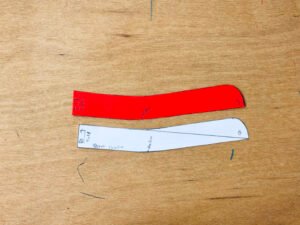
To start the collar drafting, trace the collar stand that does not include seam allowance. If your collar stand pattern includes the seam allowance, trace the pattern and then mark the seam line on the pattern inside and erase the seam allowance line.
NB!
Drafting the cutting edge instead of the seam line is the most common reason collars don’t match stands.
Professional pattern makers always draft collars from the seam line rather than the cutting line.
If the collar stand includes button stand, then mark the centre front points. You will not need the button extension.
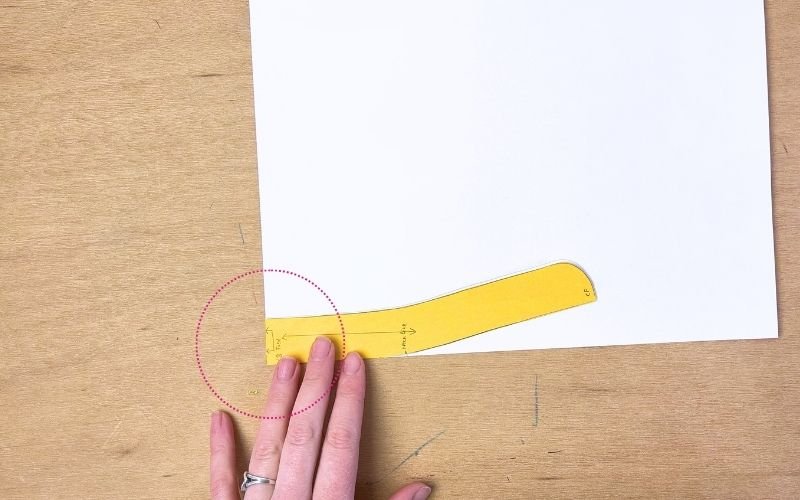
We are going to draft a half pattern for the collar so if you are using a full width collar stand pattern, then trace the collar stand only to the centre back line, placing the centre back line against the straight edge of the drafting paper.
I am using the collar stand pattern that I created in my previous post on how to draft a collar stand. It does not include a seam allowance or button stand allowance and is rounded at the centre front.
Step 2: Draft the Collar Base
Straighten the centre front line if your collar stand had a rounded centre front edge, by extending the upper and centre front line, eliminating the rounded upper corner.
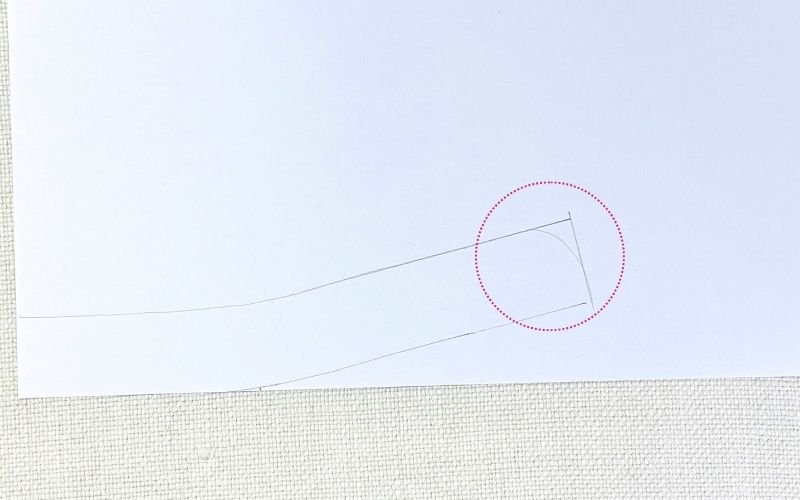
Then draw a straight line that connects the upper centre point with the paper’s straight edge with a square angle. This is going to be your collar’s base line.
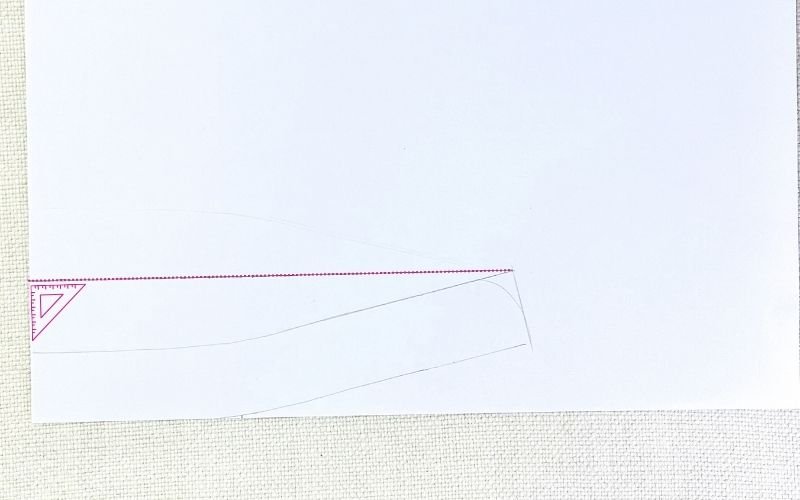
Next, measure the angle of the collar stand’s centre front point and the collar base line with protractor and ruler as shown. Mine is 103 degrees. You can read more about how to use protractor in step 4 of my detailed guide on how to draft a custom bodice block.
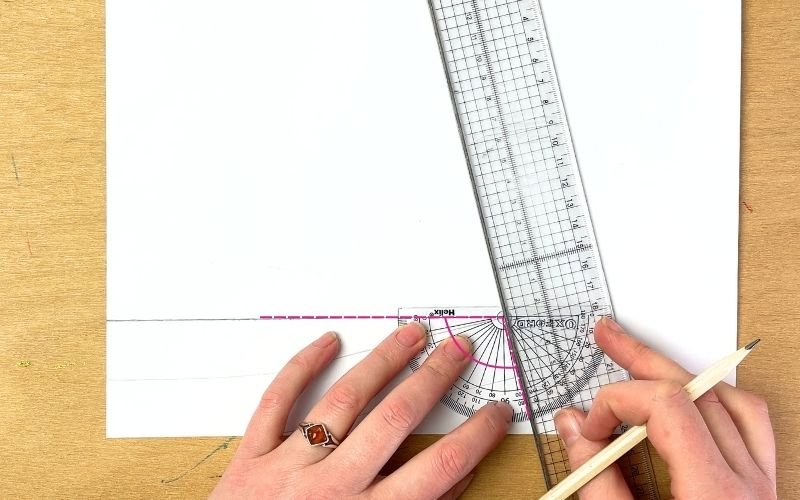
Then, mark a point at the front of the collar base line that is the same angle as the one measured above as shown.
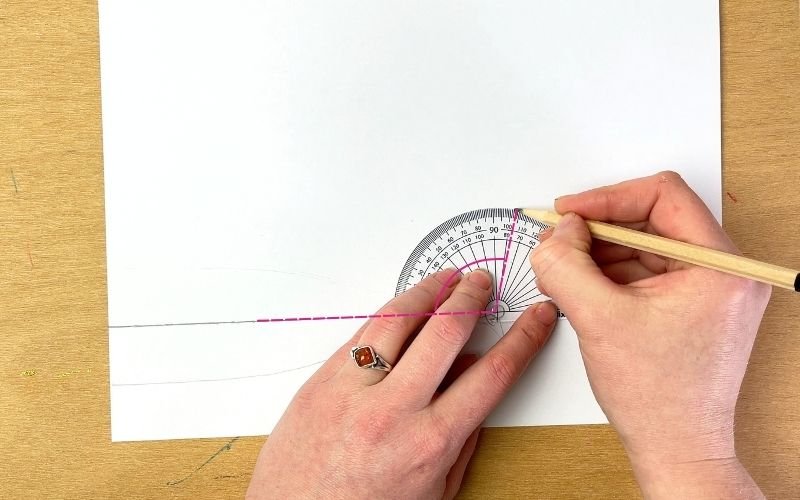
Next, connect the marked point with the centre front point with a straight line. This is your front edge for the collar.
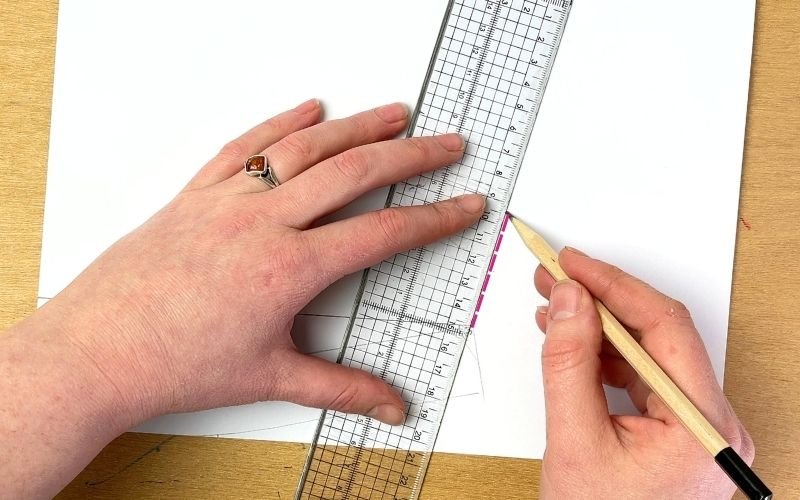
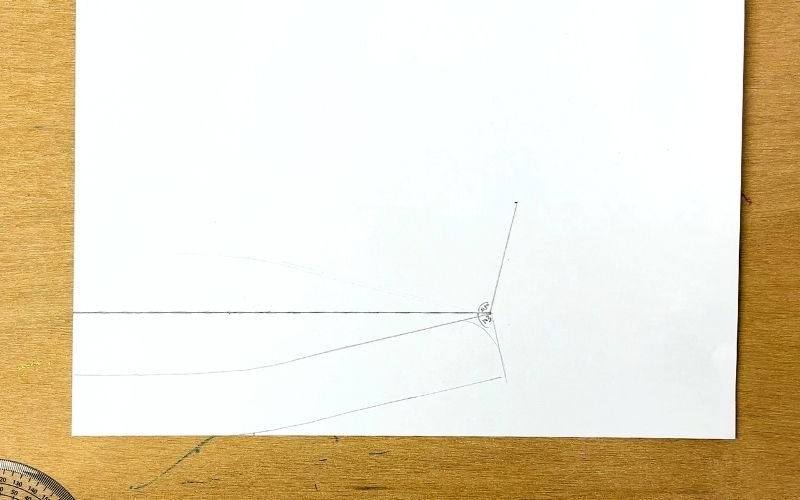
Then, draw a line from the centre point that connects collar and collar stand creating straight angle with collar front edge. The line needs to be around 10 cm long but it is not a precise measurement. This line will help keep the angle at the collar front edge straight.
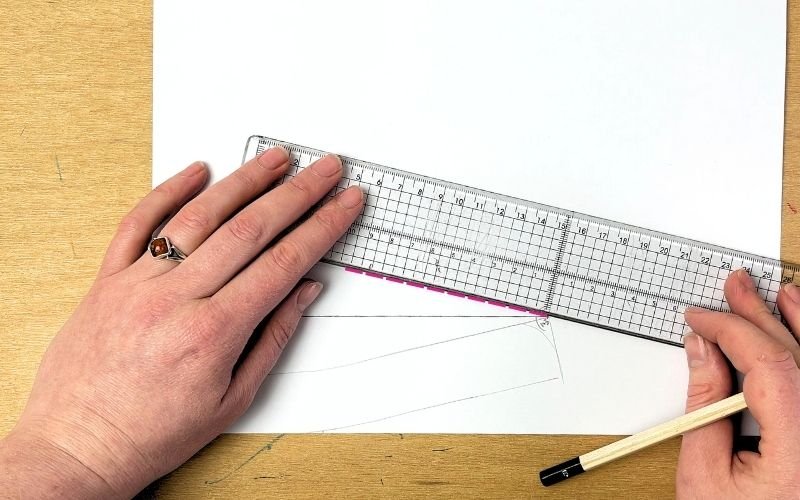
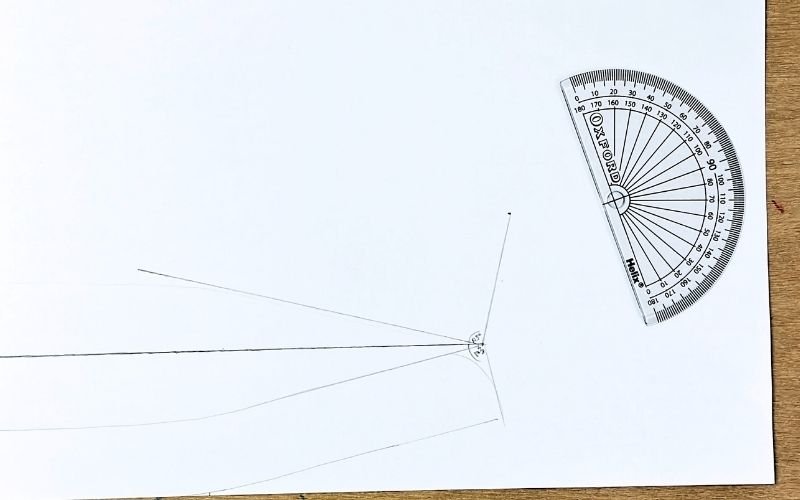
Next, place a mirrored collar stand’s centre back against the paper’s straight edge, connecting the centre point. Trace the collar stands lower edge to create a matching collar’s seam line.
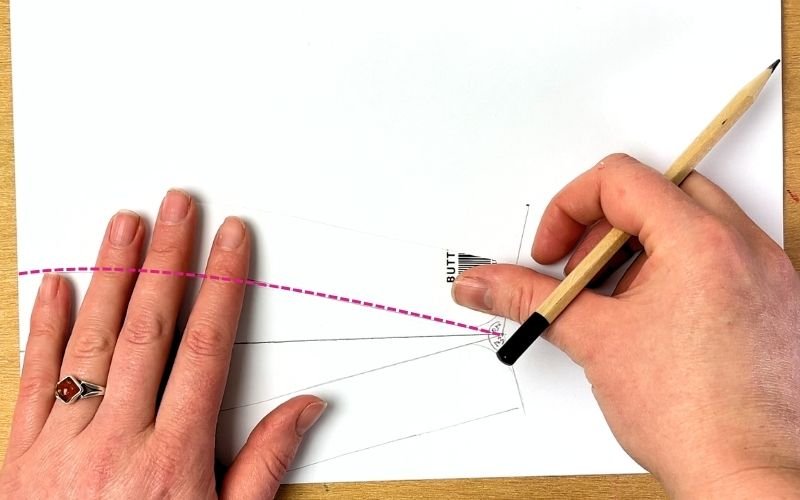
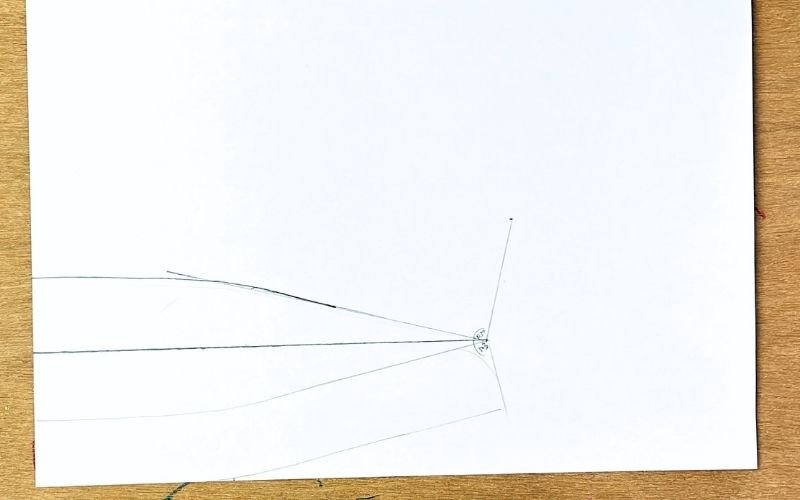
Step 3: Shape the Collar Fall
The collar fall at the centre back needs to be at least 1 cm wider than the collar stand for lighter fabrics and at least 2 cm wider for heavier fabrics. This will ensure that the collar covers the collar stand when folded.
Apart from this rule, the collar fall can be as wide as you prefer, measuring the desired height of the completed collar and collar stand combination at the centre back or centre front. A higher collar fall adds visual structure to the collar but reduces softness at the collar roll.
For everyday shirts a collar fall between 5 cm and 6 cm paired with a 2–2.5 cm collar stand creates a balanced proportion.
I like my collar fall to be 5 or 6 cm to pair with 2.5cm high collar stand. The higher collar fall measurement pairs well with shirts or dresses where I do not intend to button the garment all the way up to the collar. If the same height collar fall was used on a fully buttoned garment, the collar points may bend up or there could be drag lines across the front chest near the collar. The extension of it depends on the collar spread (wider spread leads to less fit issues) and the difference between depth of the front and back bodice neckline (the higher the difference, the lesser amount of issues).
Mark your chosen collar fall measurement at the collar’s front edge, extending the edge as required. I have chosen 6 cm wide collar fall.
Then square to the left 5 cm. The distance is not as important as it will be adjusted at a later stage. This line ensures the square corner at the collar front edge.
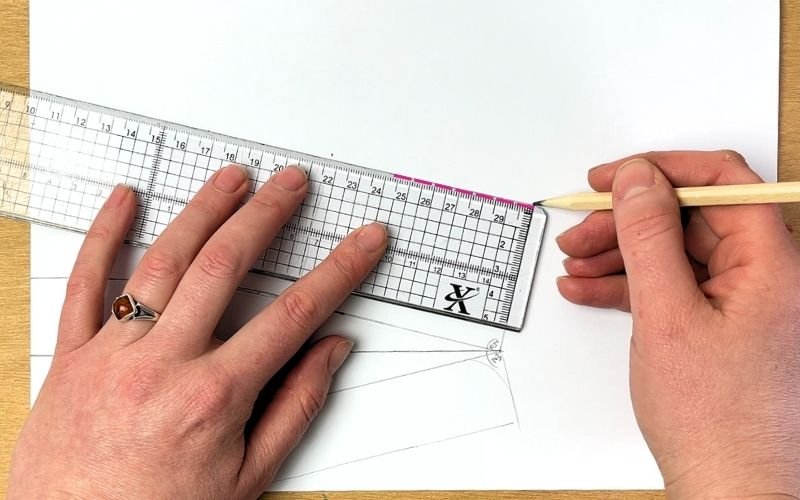
Next, mark several dots that are exactly your chosen collar fall measurement way from the collar base seam line.
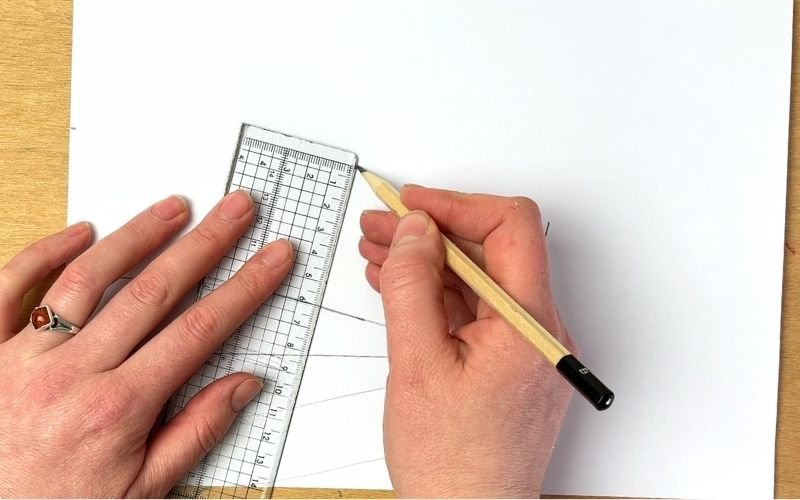
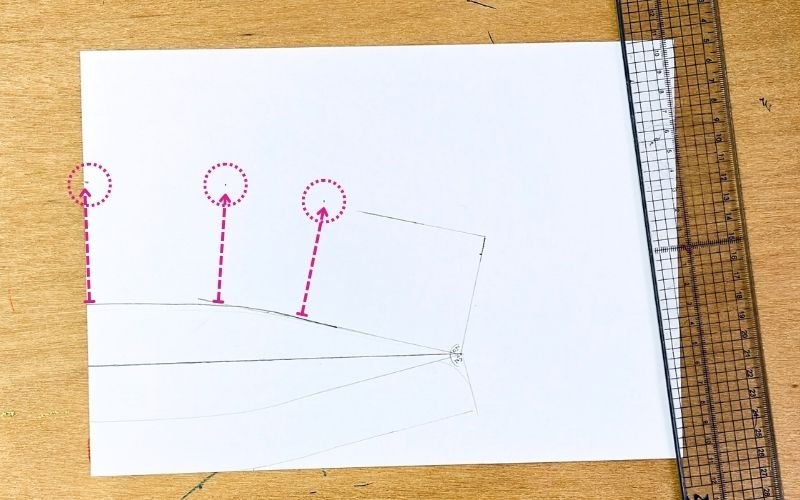
Then, connect the dots and the straight line with a curved line, using a French curve to complete the collar’s leaf edge. Some dots may be above or below the curved line, but make sure that the line create straight angle at the collar front edge and the centre back line.
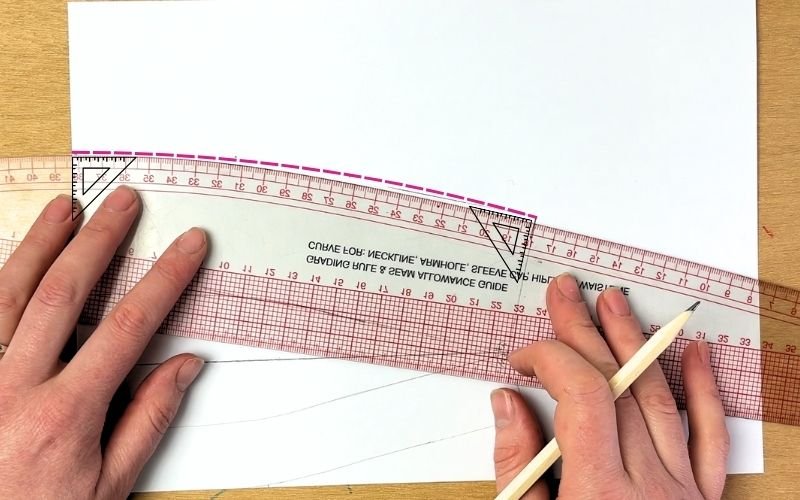
Step 4: Draft Collar Point
The collar as drafted so far can be used as is. However, there is around a 90 degree angle at the centre front. I prefer a moderate to narrow collar spread, which works well for everyday shirts and shirt dresses.
Depending on the anatomy of the bodice block, you can increase the front edge and collar base seam line angle up to 135 degrees. Higher difference between the front and back neck depth gives a wider angle. In practice, an angle of around 120 degrees works well for most shirt collars.
To increase the angle, align the vertex of the protractor with the centre front pain, with 0 or 180 degree angle point aligned with the collar’s base seam line. Mark the desired angle point.
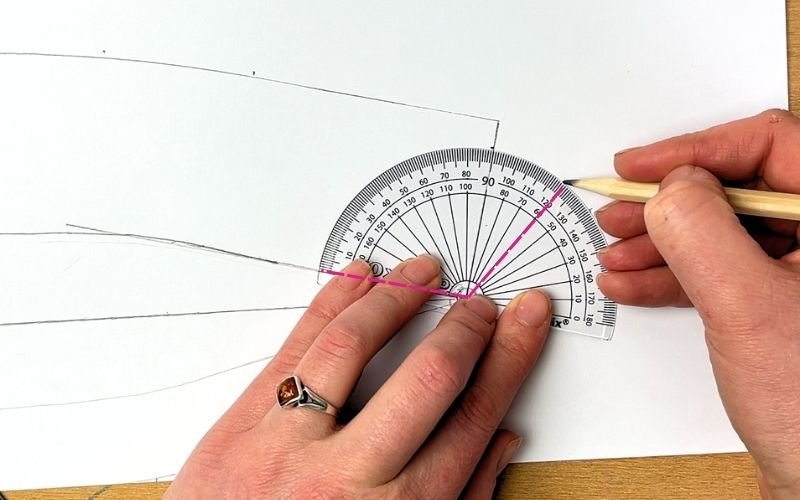
Then connect the centre front point and the marked angle point with a straight line to create a new centre edge to the collar. The line can be longer than the desired collar fall as it is now a hypotenuse (recall to the geometry lesson on Pythagorean theorem), however you can keep the same length to reduce the possible fit issues at the collar points.
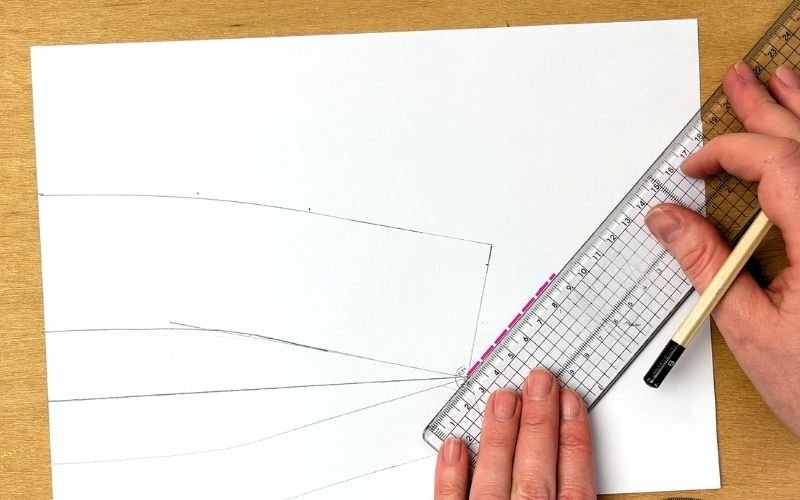
Next, connect the new front collar front edge with the collar leaf edge with a smooth curved line.
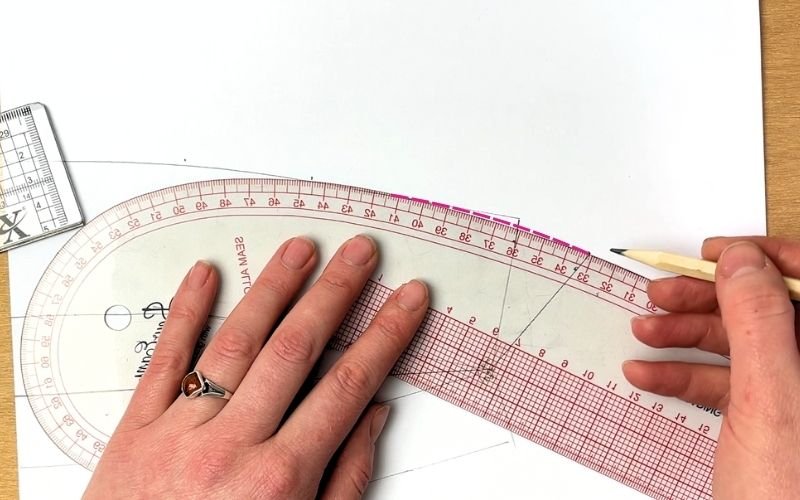
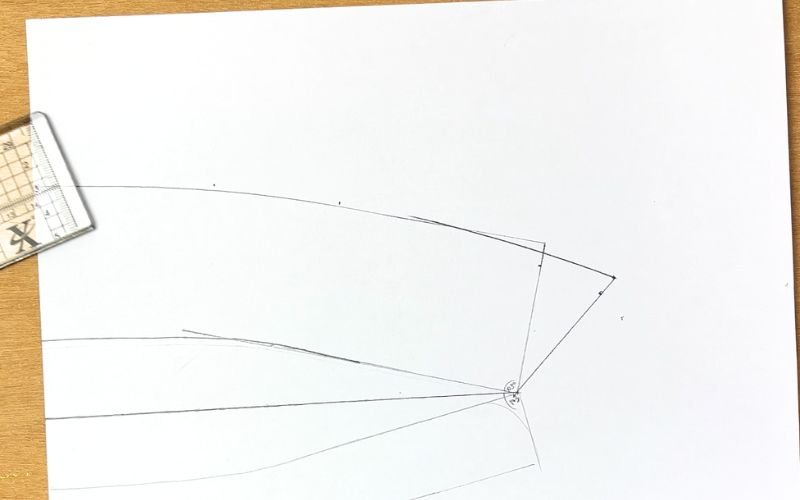
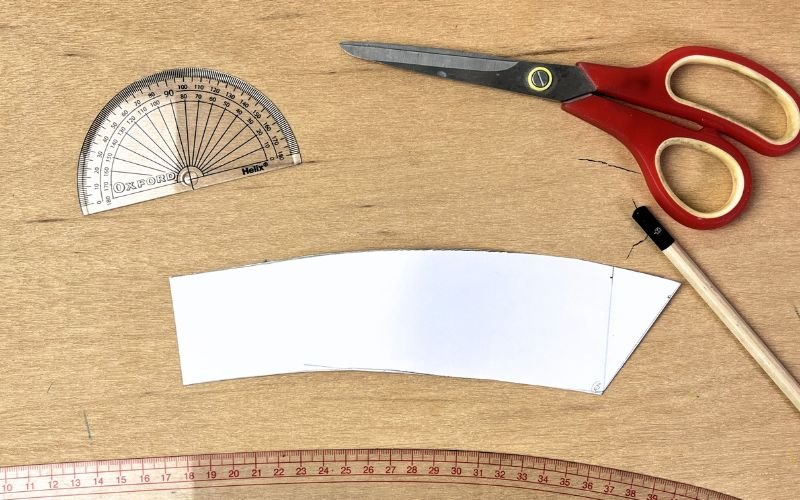
Now, you can cut out the completed collar base pattern.
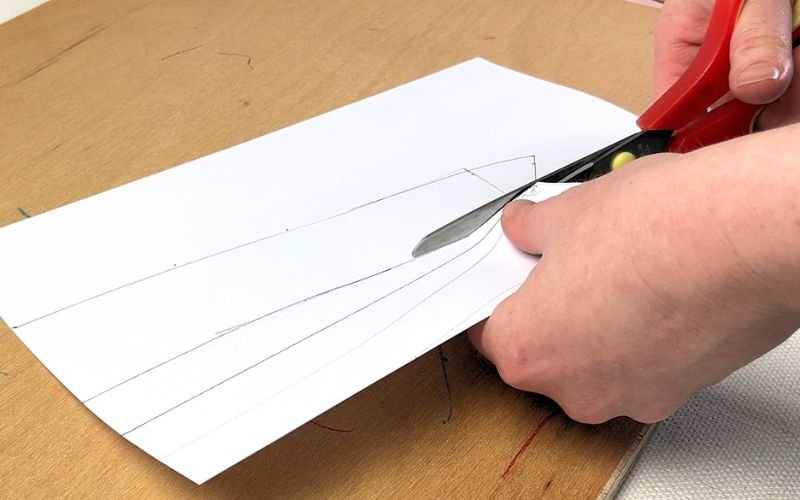
Step 5: Adjust the Collar Fall
The collar can be used as is, however, you may want to reduce the collar fall at the back whilst still maintaining the larger measurement compared to collar stand as discussed at the step 3. The reduction at the collar fall at the back is useful if you want a wider collar fall at the front but the back of the neck cannot accommodate as wide collar fall.
In my case, the collar looks and fits better with 5cm collar fall at the back.
You can adjust the width of the collar fall by removing the width at the centre back with a straight line and smoothing the line to the front leaf edge with a French curve.
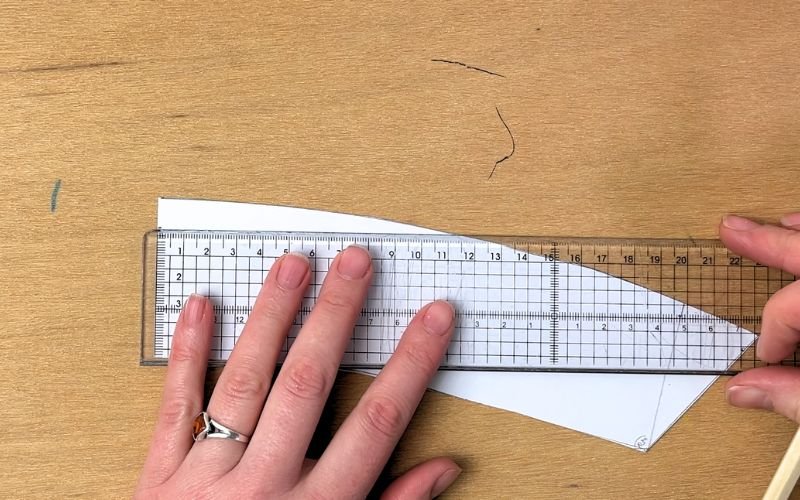
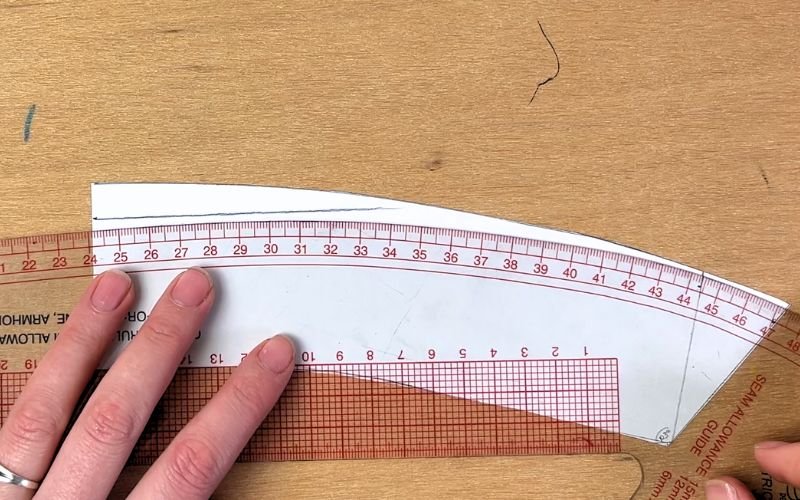
Alternatively, make the adjustments at the Step 3, by marking the dots closer to the centre back with a narrower distance from collar base seam line.
Step 6: Add Seam Allowances and Grainline
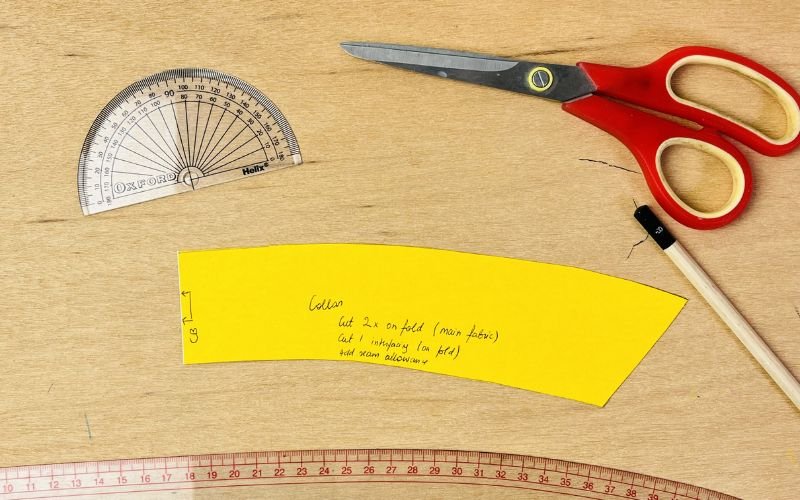
Once you are happy with the collar’s shape, transfer the collar to a sturdier paper or cardboard. Many professional pattern makers keep master patterns without seam allowance so that seam allowances can be adjusted for different construction methods. You can add seam allowances at this stage but as I explained in my detailed guide on how to add seam allowances, I keep my base patterns without seam allowance.
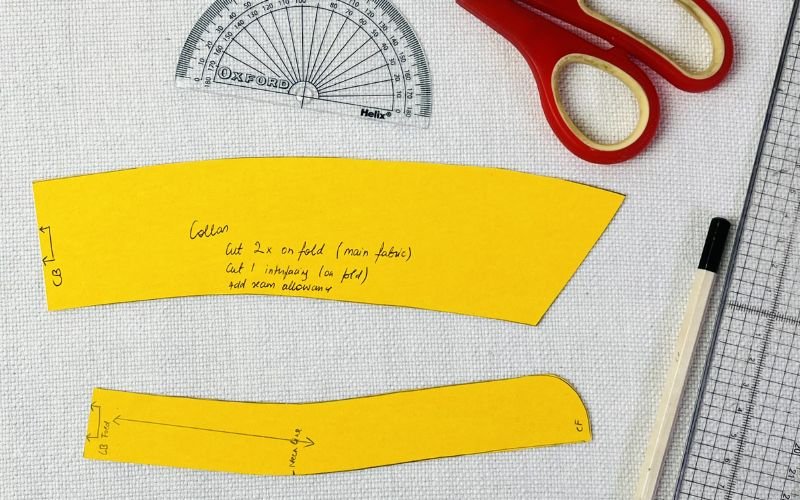
Regardless whether you are going to add the seam allowances or not, you will need to add centre back fold line and grainline placement. As a standard, the grainline should be parallel to the centre back to create structured collar. However, by adding a fusible interfacing, the grainline direction is less important as the interfacing will add most structure to the upper collar.
The addition of interfacing will also let you play with directional prints, especially on designs with stripes.
If you are choosing an interfacing that does not fuse to the collar, the collar will need to cut with grainline in mind. A straight grain that is parallel to the centre back will create a structured roll that does not collapse on itself, while a collar cut on crossgrain or bias will have a softer roll. I talk more about the fabric grain in my tutorial on how to make a bias binding.
Shirt Collar Drafting Measurements Guide
Typical proportions for a balanced shirt collar:
| Component | Typical Measurement |
|---|---|
| Collar stand height | 2–2.5 cm |
| Collar fall | 5–6 cm |
| Collar fall vs stand | 1–2 cm wider than stand |
| Collar spread angle | 110–120° |
These proportions work well for most everyday shirts and shirt dresses and provide a balanced collar roll.
Checking the Collar Against the Stand
Before cutting fabric, it is good practice to walk the collar seam line against the collar stand. This simple check ensures the seam lengths match and prevents problems during sewing.
My method above uses the exact collar stand therefore the collar will fit perfectly with the collar stand. However, for ease of mind you can always walk the seam line of the collar against the collar stand before adding seam allowance. This is easier done on softer drafting paper compared to the cardstock.
It is also useful to cut out the collar on folded paper and fold it around a mannequin or tailors ham, taking into consideration the difference between the neckline height at the bodice front and back. This approach will give you an idea how the collar will look when finished and what the final collar spread will be.
Testing the Collar Draft Before Cutting Fabric
Even when the collar pattern is drafted correctly, it is worth testing the draft before cutting into your final fabric. Pattern drafting works best when the pattern is checked in three dimensions rather than only on paper.
A quick test collar can reveal how the collar roll behaves, whether the collar spread sits comfortably at the neckline, and whether the collar fall proportions suit the garment design.
Method 1: Paper Test
Cut the collar pattern from folded paper and attach it temporarily to the collar stand pattern.
Fold the collar along the seam line and shape it around a tailor’s ham or mannequin neck. This will give you a quick preview of:
- collar roll
- collar spread
- collar fall coverage over the stand
Small adjustments to the collar fall or spread can easily be made at this stage.
Method 2: Muslin Test
If you are working with a new collar style or unfamiliar fabric, sew a quick test collar in scrap fabric or muslin.
This allows you to check:
- how the fabric affects the collar roll
- whether the collar points sit flat
- whether the collar comfortably covers the collar stand
Because collars are small pattern pieces, a test version takes very little time but can prevent fit issues in the final garment.
Practical Tip
Heavier fabrics naturally create a higher collar roll, while lightweight fabrics tend to collapse closer to the collar stand. Testing the collar in a similar fabric weight will give the most reliable result.
Drafting Variations
Once you understand the basic collar draft, the same method can be used to create many shirt collar variations. There are multiple options to vary your collar shape.
Narrow Collar
You can make a narrow collar by selecting the minimum collar fall as described in Step 3. If you are going to use a neck tie as in period costumes, the collar roll can be eliminated and the collar cut with even narrower collar fall.
Wide Collar
By increasing collar spread (by narrowing the angle at the front edge) you can experiment by adding longer collar fall. The increased collar spread will eliminate the fit issues at the collar front where points tend to roll up if they interfere with the bodice front.
Pointed Collar
If you increase the collar fall width at the front edge (while keeping the back collar fall unchanged), you can create sharper or pointier collar points. You will need to consider the collar spread – a wider collar spread will result in better fit.
Soft Feminine Collar Variation
By rounding the collar point, the resulting collar will have softer and more feminine appearance.
Common Collar Drafting Mistakes
These are common collar drafting issues that I have experienced and have come across:
- Collar is too wide for the collar stand.
- Cause: Not considering whether the seam line is included in the collar stand.
- Fix: Remove the seam line from the collar stand before drafting the collar.
- Forgetting button overlap.
- Cause: The button stand is not considered when tracing the collar stand, creating a collar that overlaps at the front.
- Fix: Trace the collar stand up to the centre front line instead to the front edge if the button stand is included in the collar stand.
- The collar points are rolling up.
- Cause: The collar spread is too narrow or the collar fall is too large at the front for the collar spread.
- Fix: Increase the collar spread or reduce the collar fall at the front.
- Collar rolling up at the back
- Cause: The collar fall is too large at the back.
- Fix: Reduce the collar fall at the back by the amount that is rolling up.
- Collar does not sit flat
- Cause: Collar fall is too narrow to cover the collar stand.
- Fix: Increase the collar fall by at least 1–2 cm wider than the collar stand height
How This Fits Into the Shirt Pattern Drafting Series
This collar pattern works together with the other components of a shirt pattern. In this series I explain how to draft each element step by step, including the basic bodice block, button stand, collar stand, sleeve and cuff.
Shirt Pattern Drafting Series
This tutorial is part of my step-by-step shirt pattern drafting series:
- How to Draft a Basic Bodice Block
- How to Draft a Sleeve Block
- How to Draft a Button Stand
- How to Draft a Collar Stand
- How to Draft a Shirt Collar (this post)
- How to Draft a Shirt Cuff
- How to Draft a Sleeve Placket
- How to Modify Sleeve Block for a Shirt Pattern
- How to Modify Bodice Block for a Shirt Pattern
- How to Draft a Shirt Pattern From Scratch
Each guide explains one component used to create a complete custom shirt pattern.
When to Test a Collar in Fabric
If you are drafting a new collar style or working with unfamiliar fabric, it is worth testing the collar in muslin before cutting your final fabric.
This allows you to check the collar roll, collar spread and how the collar sits against the neckline.
FAQ: Shirt Collar Pattern Drafting
Conclusion
Drafting your own shirt collar pattern gives you full control over the collar roll, spread and overall shape of the collar. Once you understand how the collar relates to the collar stand and neckline, it becomes much easier to customise shirt designs or adjust commercial sewing patterns.
Even small changes to the collar outline can dramatically change the look of a shirt. However, the key to a professional result always starts with accurate collar stand drafting and precise collar geometry.
About the Author: Pattern Drafting & Garment Sewing

I’ve been sewing for over 30 years and drafting my own patterns for more than a decade. I work almost exclusively with self-drafted patterns, which means I don’t rely on instructions—I rely on understanding how garments fit and come together.
Most of my methods come from figuring things out through testing, adjusting, and breaking down common problem areas using logic and geometry rather than guesswork.
On this site, I share step-by-step tutorials on pattern drafting, garment construction, and sewing techniques to help you create well-fitted, professional-looking clothes from scratch.
👉 Read more about my approach to pattern drafting and sewing here: About Me