I have been in a market for a table cover for video and photography backdrop for a while but I have not found anything that i like. I was close to glueing in some burlap on the table or repaint the table all white. Both would have involved buying extra stuff without any guarantee that either idea would work.
With my recent frugal mindset, I decided to use what I already have.
Why Make a DIY Table Cover for Video and Photography Backdrop
There are many benefits to making the DIY table cover for video and photography:
- It is cheaper to buy fabric by meter than most of the high quality backdrops.
- You can make the cover as large as you want. You are really only limited by the size of your tab.
- There are a lot of different types of fabrics available, with various textures, colours and surface prints that you are going to find something that fits your bill quite easily.
- Your backdrop is going to be unique from others.
- The fabric does not have a glare.
- Your product shots, tutorials, craft videos and flat lays will be greatly improved by having a homogenous background.
- The phots and videos will have clean and consistent background.
Best Fabrics for Sewing a Photography Background Table Cover
I would recommend using a heavier weight fabric with some texture to add interest to your background. Linen and cotton canvas in light colour would be my preference for a professional finish. You can mix up the colours if your subjects are plain or to add a different dynamic.
Alternatively, you can use cotton calico, any matte cotton fabric, twill weaves, various wool fabrics and even a blackout fabric.
It is important to avoid the types of fabrics that would create a glare or reflection. Velour or velvet fabrics would not be suitable. Especially if you are going to change the position of the camera angles as they have different sheen and appearance, depending on the source of the light.
Light colours are going to make your overall photo brighter, while dark colours will add some heaviness. You need to consider what subjects you are going to snap or film, to decided on the colour of your background.
London Image Institute provides a good insight on how the colour affects the mood of the beholder.
The List of Materials to Make a Custom Table Cover for Backdrop
- Fabric of your choice for backdrop
- Backing or lining fabric (optional)
- Pen or heat removable pen or chalk
- Scissors
- Tape measure
- Long ruler
- Elastic (optional)
- Matching thread
- Sewing machine
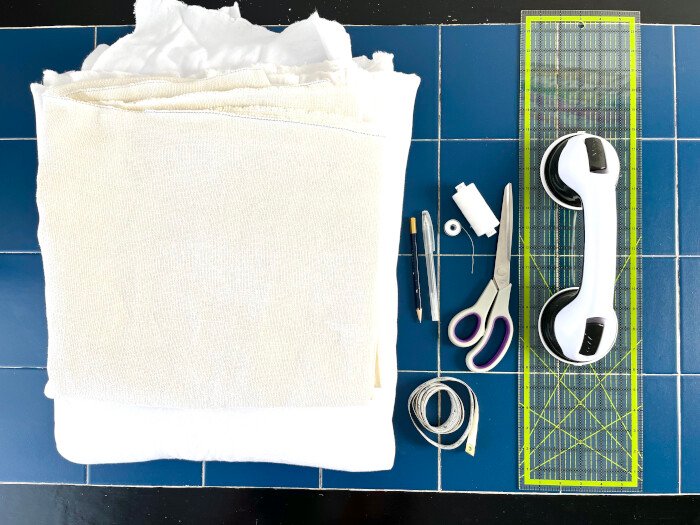
How to Measure Your Table for a Custom Backdrop
To start your project to sew backdrop for photography and video shoots, you will need to measure the tile for which you want the cover. You need to take three measurements – a length, a width and a depth or drop of the table, as shown in the images below.
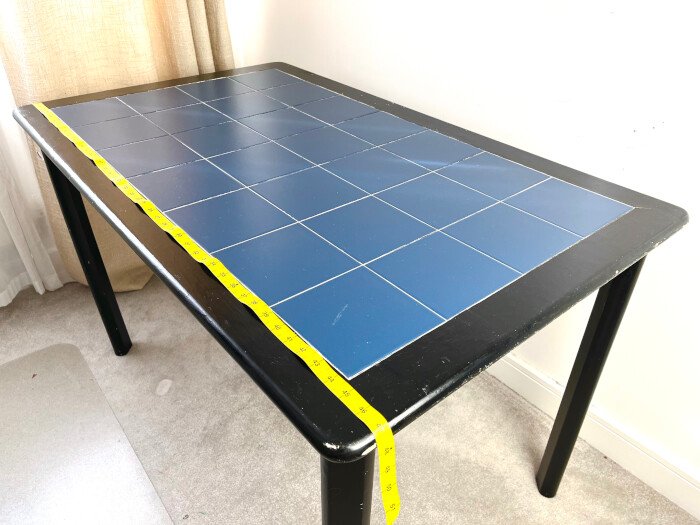

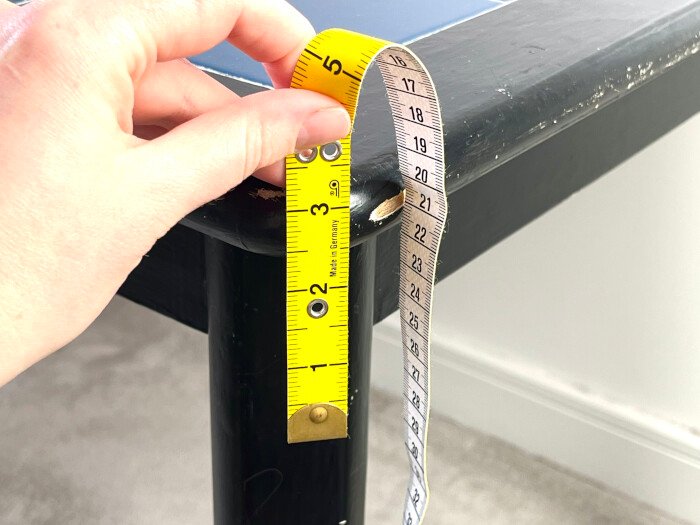
Then, you will need to add a seam allowance. I suggest 1″ seam allowances for the hem to give enough space for double hemming. This will be sufficient for 1cm wide elastic but you can increase the seam allowance for heavier fabrics or for wider elastic if you are going to use it.
Drafting the Pattern for a Fitted Table Cover Background
The pattern for custom table cover is essentially a rectangle with these dimensions:
- Width = table width + 2 x seam allowance + 2 x depth or drop
- Length = table length + 2 x seam allowance + 2 x depth or drop
My table is 47″ long and 29″ wide and I opted for 3″ drop. So, the rectangle that I am drafting for the backdrop for video and photography is going to be 37″ wide and 55″ long.
The width of the fabric that I am using is 55″. I am going to use that as a length of the custom table cover for photography. I folded the fabric in half, selvedge to selvedge, to make it easier to measure and cut the fabric.
From the cut edge (as opposed from the selvedge of the fabric), I measure the width of the backdrop table cover in multiple places. And then connect the measurements with a line, using a ruler.
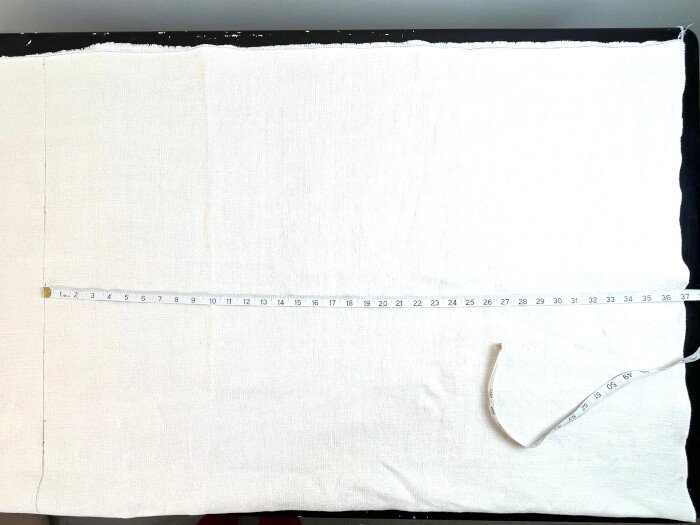
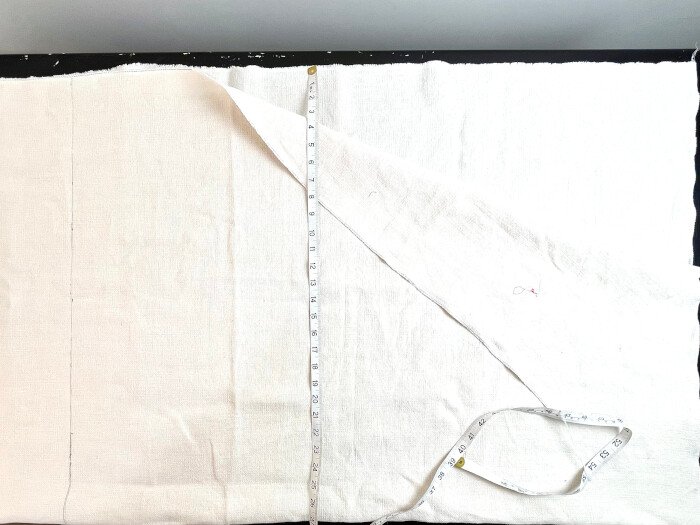
Then, cut along the drafted line.

Before progressing with the box corners, I threw the cut material over the table, to check that it fits as I expected. Next, on each corner I measure and cut out squares with a dimensions of the measurement of the drop plus the seam allowance and minus 0.5″ seam allowance. So, for my custom table cover for photography backdrop I cut out a squares that are 3.5″ x 3.5″.
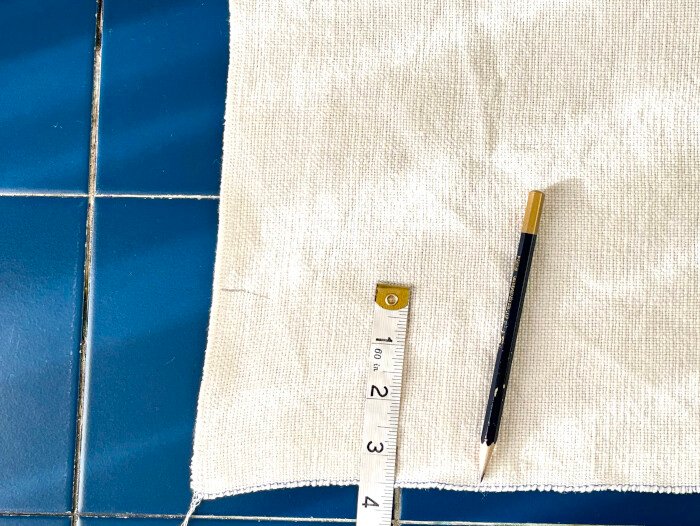


How to Sew a Table Cover for Photography Step by Step
The sewing and assembly is quite straightforward. Bring together the sides of the squared areas that you cut out, pin with a clips and then sew with 1/2″ seam allowance, backstitching at the start and the finish.
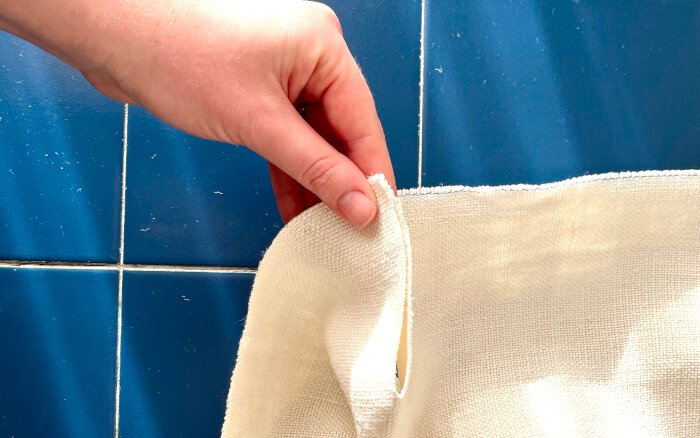
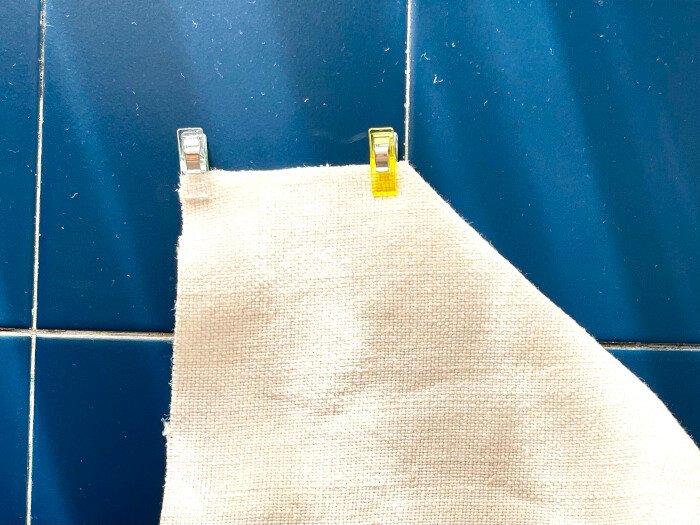

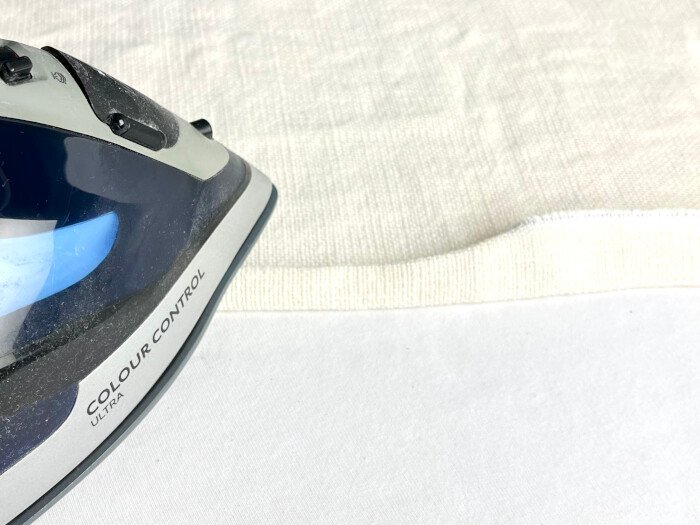
Then, with a steam iron, press the seams flat to blend the stitch lines. Then press the seams open, being careful to press sharp corners at the tip of the seam.
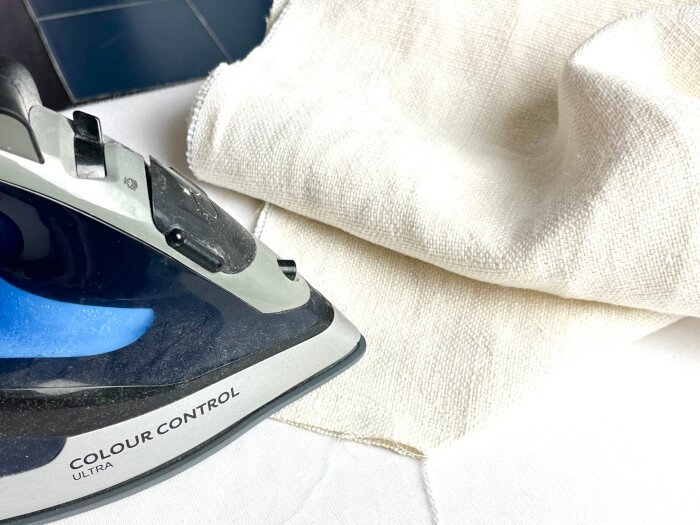
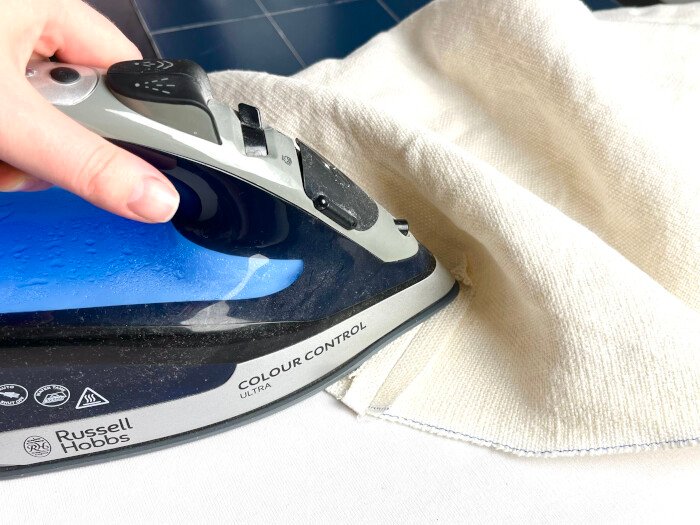
Next, fold up the hem of the custom table cover of the required hem allowance and press. I opted for 1″ hem allowance.
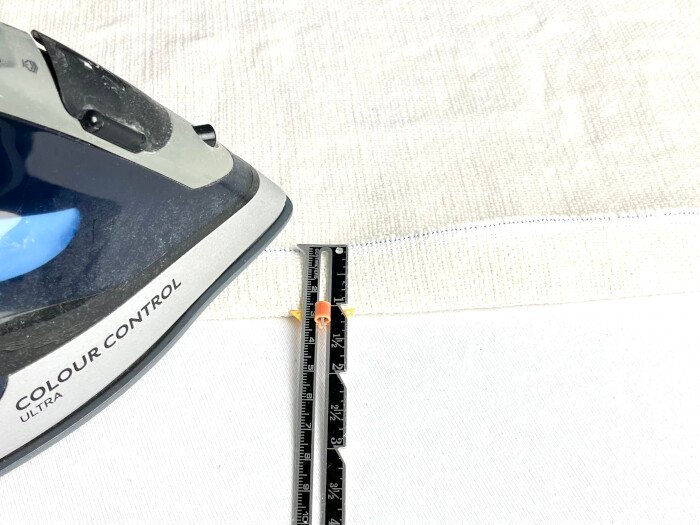
Then double fold the hem to hide the edge and press again. Here you have to be careful to leave the hem to be a width that is slightly larger than your elastic, if you are using it.
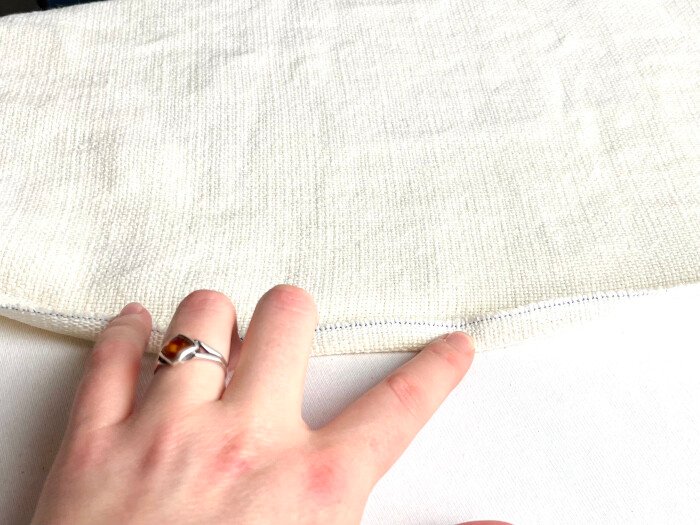
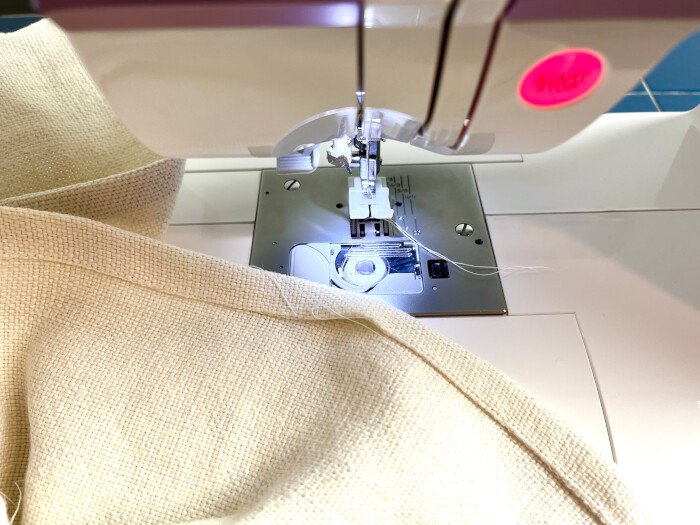
Bring the backdrop back to the sewing machine and sew close to the edge, capturing both layers. Leave a gap for elastic if you are going to insert it.

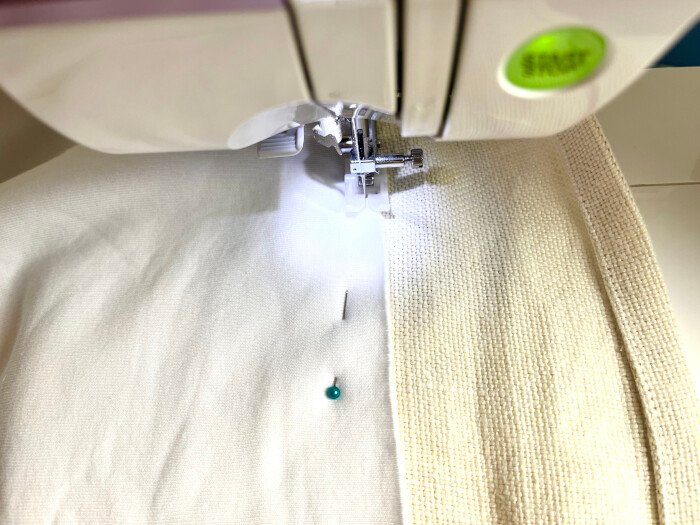
I was concerned that the table cover was a little see through despite the heavy weight linen that I was sing. To counteract, I cut out a rectangle of a soft, white sweatshirt fabric, exactly the size of the top of the table.
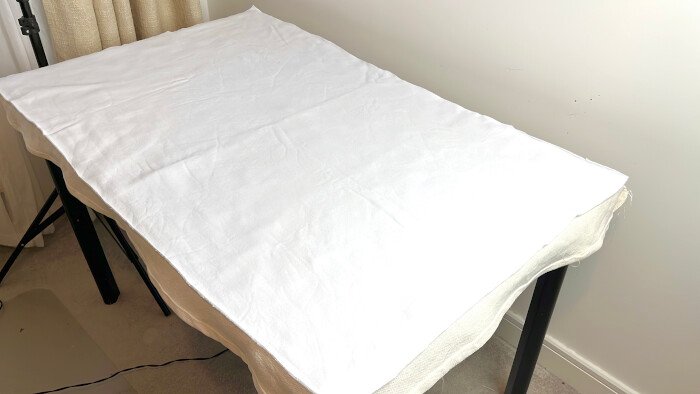
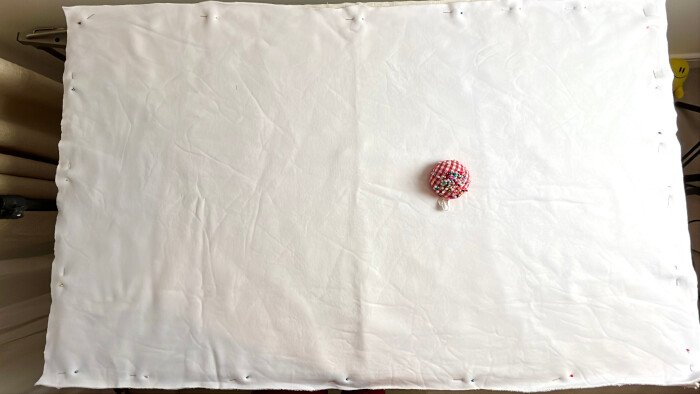
I pinned to the back of the backdrop for video and photography and sew around it, close to the edge with the longest stitch on my sewing machine.
Finishing Options for Professional-Looking Backdrops
There are alternative options that you can use to finish the backdrop. You do not need to add the drop to the custom table cover. You can easily just cut to be the exact width and length of the table cover and then choose one of the two options to finish the hem:
- Cut another rectangle of the same or different fabric as a lining. Sew both fabrics together with right sides facing, leaving a gap to turn it inside out. Then topstitching all around it, closing the turning hole.
- Sew a bias binding around the custom backdrop, hiding the raw edges. You can add a lining fabric to this option too.
If you opt for a table cover without a drop, to keep it in place and taught, you can add ties on the corners to tie it around the corners of the table. Or you can use the ties to secure some weights or rice bags to them. Alternatively, you can sew elastic on the reverse of the corners that would slip over the table top to secure the cover in place.
Reversible and Washable Table Cover Ideas
To make the custom table cover more versatile as a backdrop for photography and video shoots, you can make a reversible backdrop. Make the table cover to be exact measurement of the table top dimensions. Then cut three layers of fabric in three different fabrics – two layers will face outwards and can be the colour or texture of your choice. The middle layer should be neutral colour to block the other colour from peeking through, and thicker / softer to even any textural differences.
Align the layers as follows. The middle layer on the bottom, either side facing. Then one of the outside layers on top, with right side up. Then the other outside layer with right side facing down.
Then finish using either of the hemming options suggested above. If you are going to add the elastics on the corners, sew them in between the outside laters, when you are stitching all layers together. Just be mindful of which layer you should turn inside out.
How to Keep Your DIY Table Cover Wrinkle-Free on Camera
The DIY table cover for photography backdrop can be quite wrinkly, after you have done making it. Especially, if it is made of natural fibres. Linen and heavy cotton fabrics are quite stubborn to release the wrinkles. And you definitely want to remove them to avoid the shadows on your video or photography.
To remove the wrinkles, spray the backdrop with copies amount of water and press with very hot iron. If there is any artificial fibres in the cover, or if you are unsure of the fabric content, then use a pressing cloth – a dish towel or muslin cloth. For added steam, you can soak and wring out the pressing cloth before placing on the table cover.
Once you have completely ironed the cover, place it on the table overnight, to evaporate any residual moisture.
If you are using a textured fabric, you will need to add a light source to both sides of the table or add a soft overhead light to even out any stubborn wrinkle.
When you are storing the cover, to reduce waviness, always keep the backdrop rolled up.
Troubleshooting Table Cover Sewing Problems
If you are concerned that the fabric is stretching too much, you can apply a fusible interfacing to the wrong side of the fabric before sewing it.
After a while you may notice that the corners of the backdrop without a drop are rolling or curving up. If you have not added an elastic on the corners, you can add them now. Either by sewing on the wrong side of the cover or unravelling a little openings in the sides close to the corners. The latter option is great for reversible table covers.
A day before the filming, if the table cover has been stored layer out on top of the table, remove any lint with a lint remover. If the table cover was stored rolled up or, in the worst scenario, folded) then spray the backdrop with water and then iron it. Leave it to dry out overnight.