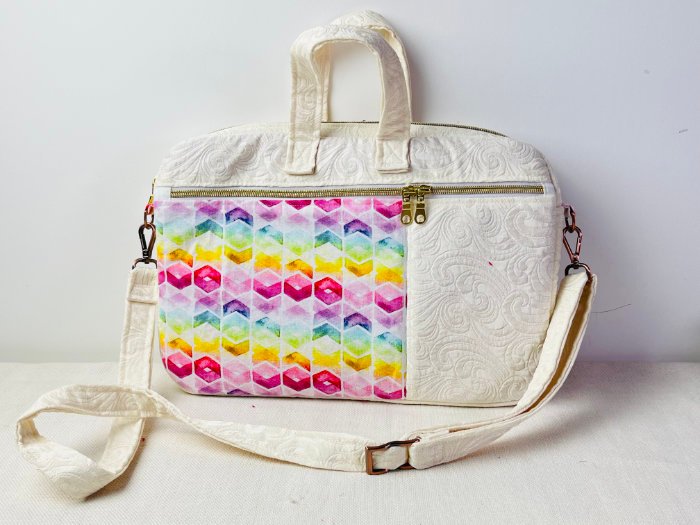
In this step-by-step laptop bag sewing tutorial, I show you exactly how I sewed a fully lined and padded laptop bag using my own self-drafted sewing pattern. This project includes exterior zipper pockets, a structured gusset, sturdy top handles and an adjustable shoulder strap.
I chose natural fibre fabrics from my stash to keep this project sustainable and reduce textile waste. If you are comfortable sewing zippers and working with interfacing and foam, this laptop bag is a rewarding advanced beginner project that results in a professional-looking finish.
Is This Laptop Bag Sewing Tutorial for You?
This DIY laptop bag tutorial is ideal if you:
- Have sewn zippers before
- Feel confident applying fusible interfacing
- Want to sew a custom laptop bag instead of buying one
- Prefer natural fabrics and slow fashion sewing projects
The full project takes approximately 3–4 hours, with most time spent cutting, interfacing and preparing the zippers.
Before You Start
If you have not drafted your pattern yet, read my full guide: How to Draft a Custom Laptop Bag Sewing Pattern. I also recommend reading: How to Add Seam Allowances to Sewing Patterns
Materials & Tools for Sewing a Laptop Bag
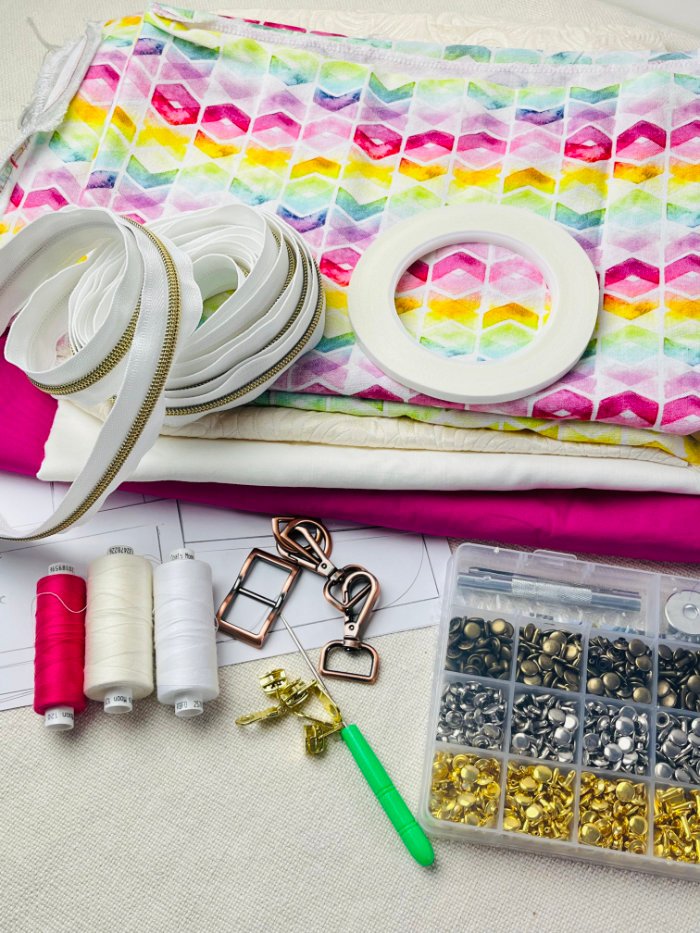
Below is the exact list of materials I used to sew my padded laptop bag, including fabric types and hardware sizes for accuracy.
- Main fabric – cotton and linen will make it easiest to sew. You do not need specialist waterproof fabric. When properly interfaced, cotton canvas or linen canvas becomes structured and lightly water resistant — suitable for everyday laptop protection. I used linen canvas and some textured fabric I thought was cotton but turns out i probably is some kind of blend with polyester as it did not press well. You can use two or more different fabrics to add interest to your final DIY laptop bag. Just keep them similar in weight.
- Lining fabric – any medium woven cotton
- Fusible interfacing – this is a must to stabilise a a fabric and to add water resistant properties to the laptop bag
- Foam for padding – I had foam in my stash already but if I had not, I would have used french terry, sweatshirt fabric or flannel as all of these would add similar protection and softness albeit a different rigidity and stability for the finished bag.
- Bias binding – I made my own double fold bias binding
- Nr 5 zip with sliders – the length depends on the size of the bag you make but I used around 1m with 4 sliders
- D rings – 2 x size 25mm
- Strap slider – I used 25mm but you can choose wider ones for wider straps
- Swivel hooks – use the same width as the strap slider to fit the strap
- Matching sewing thread
- Narrow double sided tape to keep fabric together if the pressing does not work
- Clips and pins
- Scissors
- Sewing machine
- Sewing machine needle – I used sharp needle 10/70 but I upgraded to 14/90 half way through the project as the needle broke when I hit zip teeth.
- Steam iron
- Removable fabric pen, soap or chalk.
- Long ruler
- Scissors
- Rivets – optional. In the end I did not use any as my sewing machine was behaving this time.
Sew a Laptop Bag Step by Step
This was my first time sewing a fully structured laptop bag with multiple zipper pockets, and I share the exact construction order I found worked best to avoid bulk and misalignment.
I am using 1cm seam allowance throughout the construction of the laptop bag except for the basting. The basting stitches are added within the seam allowances.
Step 1: Cutting Out the Pattern Pieces for Padded Laptop Bag
To start the project of sewing the laptop bag, you will need to cut out all the pieces from main fabric, lining fabric, interfacing and foam. I have listed all the pattern pieces and what to cut from each:
- Two part back piece – one of each on fabric and interfacing. You can use contrasting fabric for each piece.
- Three part front piece – one of each on fabric and interfacing. You can use contrasting fabric for each piece. I used the same fabric for the upper and smaller side piece.
- Full sized pattern piece – four pieces of lining and two of foam
- Upper gusset piece – two of main fabric, two of lining, two of interfacing and two foam pieces
- Lower gusset piece – one of main fabric, one of lining, one of interfacing, and one of foam piece
- Inner pocket – one piece of lining fabric and one piece of interfacing
- Handles – four pieces of main fabric and four half width pieces of interfacing
- Shoulder strap – two pieces of main fabric and two half width pieces of interfacing
- D-ring tabs – two pieces of main fabric and two pieces of interfacing
- Zip tabs – 12 pieces of quilting cotton fabric in contrasting or matching colour.
Step 2: Apply Interfacing for Structured Laptop Bag
Apply interfacing to all these main fabric pieces:
- Outside front and back pieces
- Gusset pieces cut from main fabric (-s)
- Straps and handles – apply the interfacing to the middle section across the whole length. If you interfacing is too short, overlap it where you need to add new strip of interfacing
- Inside pocket piece – I added interfacing to the pocket piece and reinforces the reverse of the lining where I was going to attach the pocket. You do not need to do the latter, the interfacing just on the pocket piece is sufficient.
Applying interfacing before construction prevents distortion and ensures the laptop bag holds its shape over time.
Step 3: Make Strap and Handles for Custom Laptop Sleeve Bag
I started by making the strap and handle pieces first to not to forget to add them before sewing the structured laptop bag together.
Firstly, fold up the edges of the strap pieces to the wrong side, to middle section across the whole length of the strap, using the fused interfacing as a guide. Press in place.
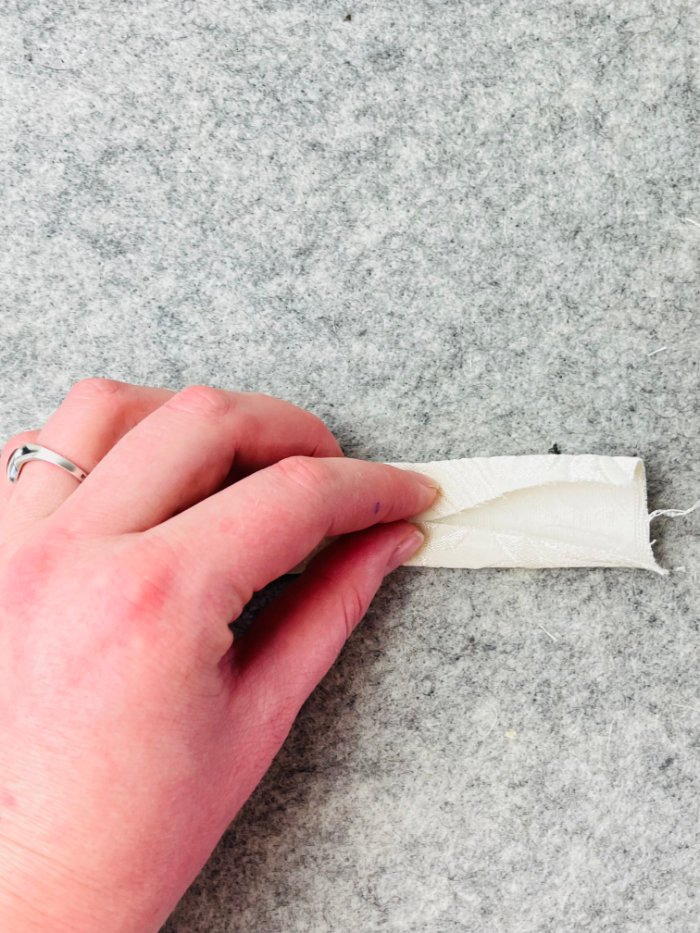
My fabric did not press too well, so I applied double sided tape to the middle and glued the sides to it to keep in place.
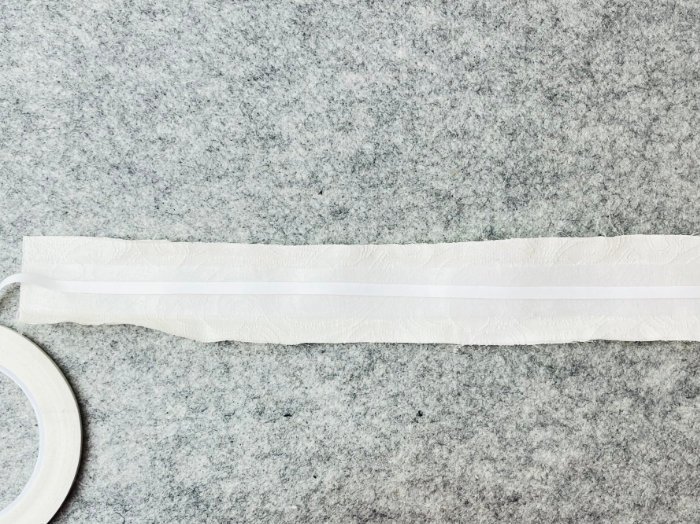
Then place both strap sides on top of each other, the raw centres facing, and clip in place.
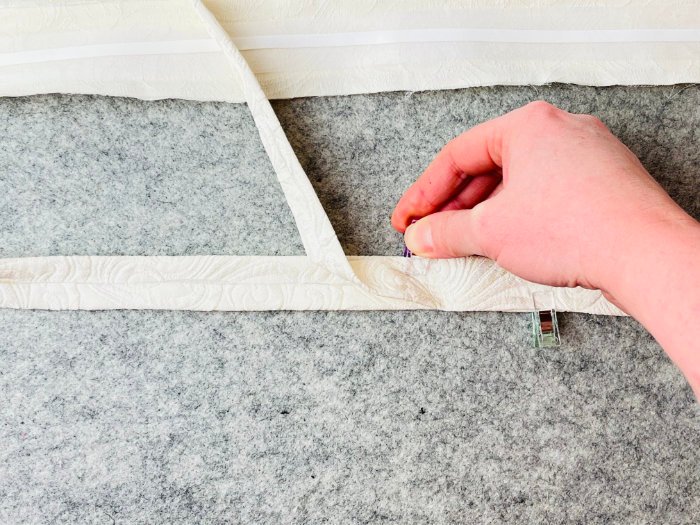
Next, sew the long edges together with a neat topstitching, enclosing all the raw edges and keeping the sides even. More careful you go here, neater the finished straps will look. I sew the sides closed in the same direction to avoid fabric shifting unevenly
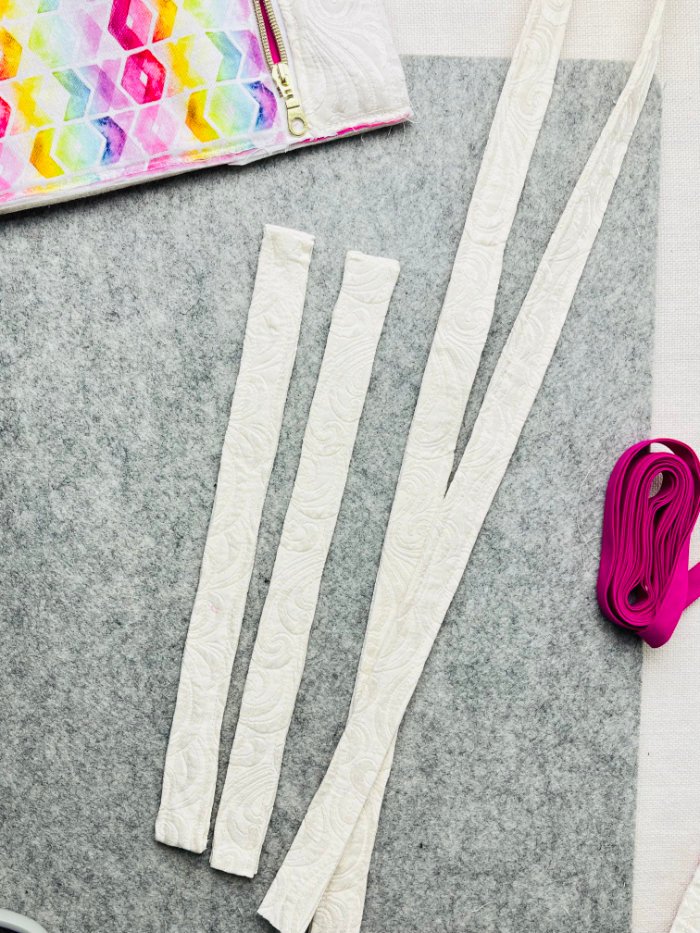
Repeat the same with the handle pieces but fold the short ends back on themselves to hide the raw edges before topstitching on all sides.
Sewing both long edges in the same direction reduces fabric shifting and results in straighter straps.
Step 4: Sew the Interior Pocket for Handmade Laptop Bag
The DIY laptop sewing pattern allows the interior pocket to be made as a zip pocket, however I find them inconvenient at most times and prefer the inner pocket to have smooth edges. Therefore I made a single welt pocket. Let me show how to make it.
Firstly, mark the centre of the lining on the wide edge and on the interior interface pocket piece on its shorter edge. Then, measure 7 cm from the top of the pocket piece and draw a line 7 cm either direction from the centre on the wrong side. This is going to be the middle of the pocket opening.
Draw a rectangle around it that is 1.5 cm high (0.7 mm either side from the pocket opening central line) and mark triangles on the short edges with peak 1.5cm from the short edge.
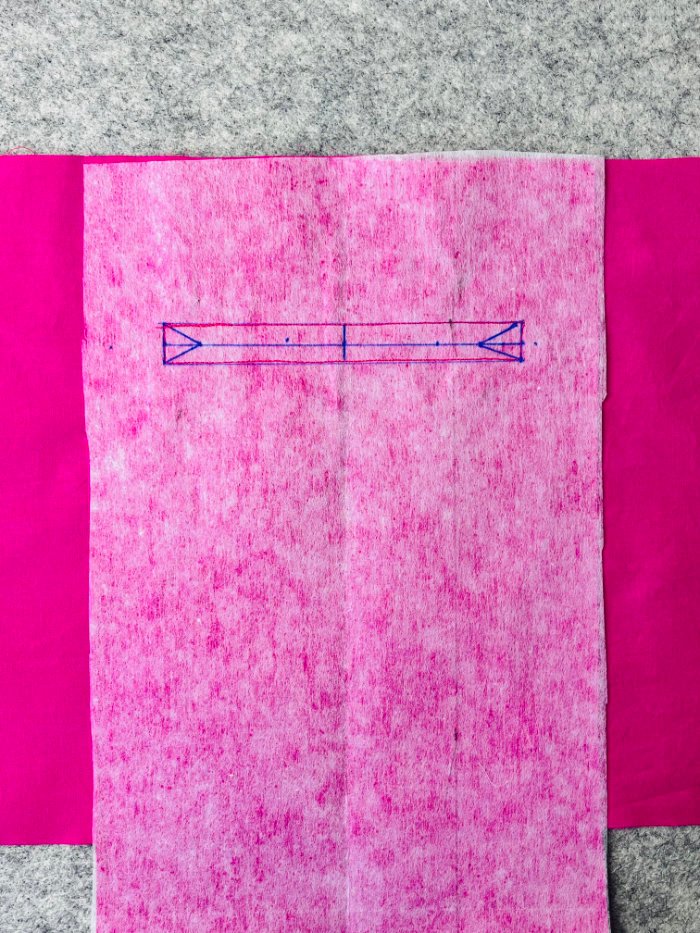
Place the pocket piece on the lining with right sides together, aligning the top edges and the centre points. Pin in place.
Then, sew along the rectangle line on all sides.
Next, cut through the pocket central line up to the triangle peaks. Carefully snip the triangles along thr drawn lines to the corners, without cutting the stitching.
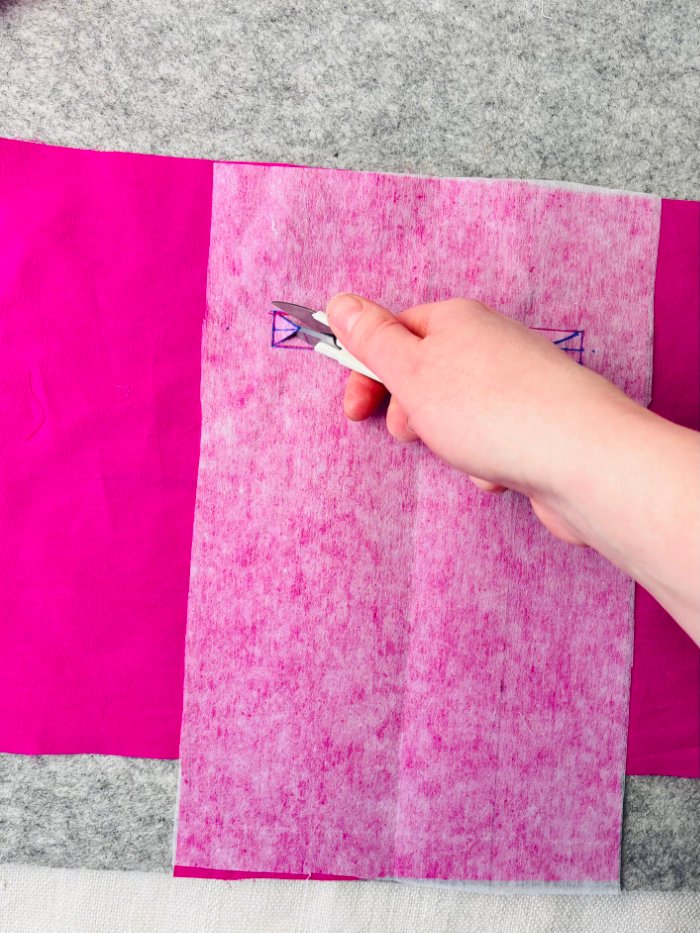
Turn all the pocket piece to the other side and press to create a smooth pocket opening.
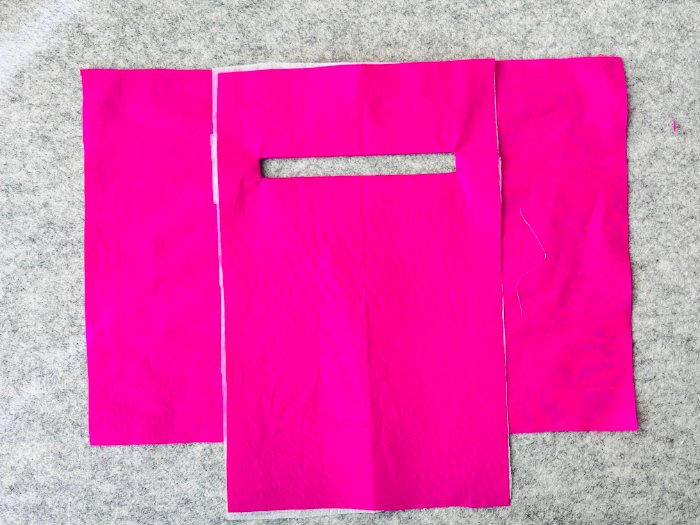
On the wrong side, bring the top section of the pocket over the pocket opening and press in place. Fold the top raw edge to the inside and press in place.
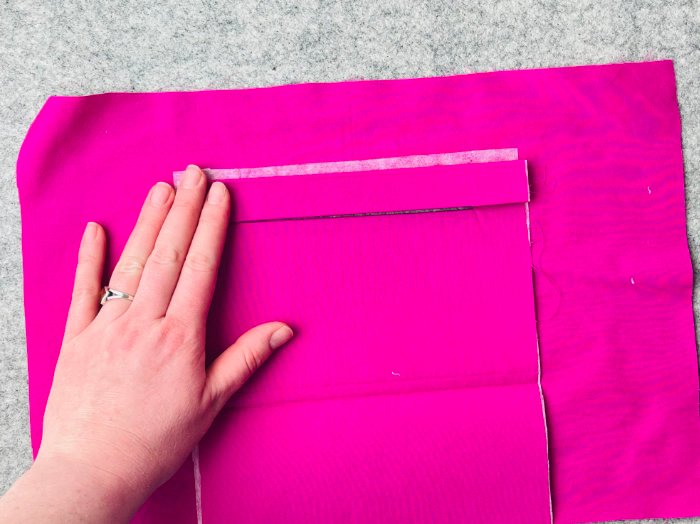
Lift the lower edge of the pocket piece up to meet the top edge and press in place.
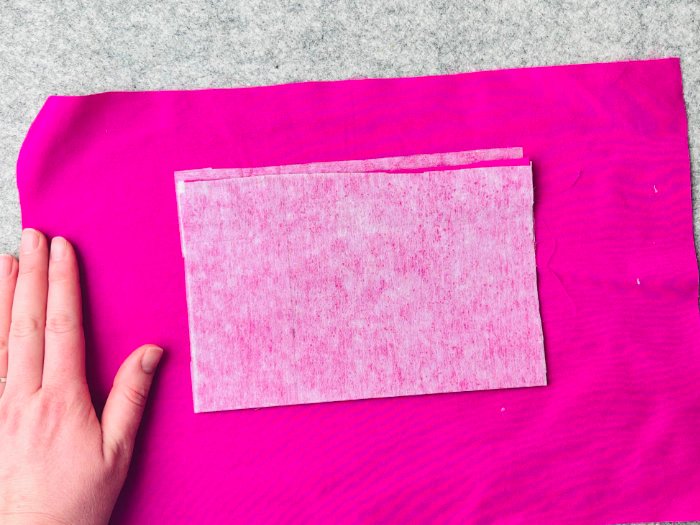
From the right side, stitch the welt in place along the three sides of the pocket opening (the sides and the top)
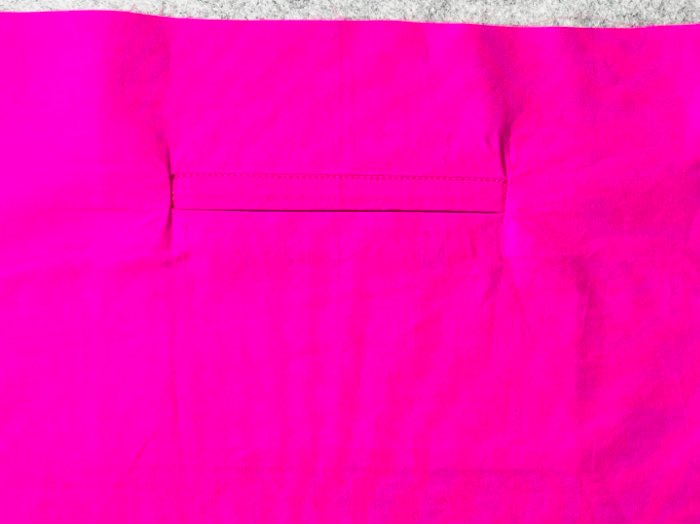
From the wrong side, move the lining to the side and sew the triangles close to the welt pocket seam. Then saw the pocket seams.
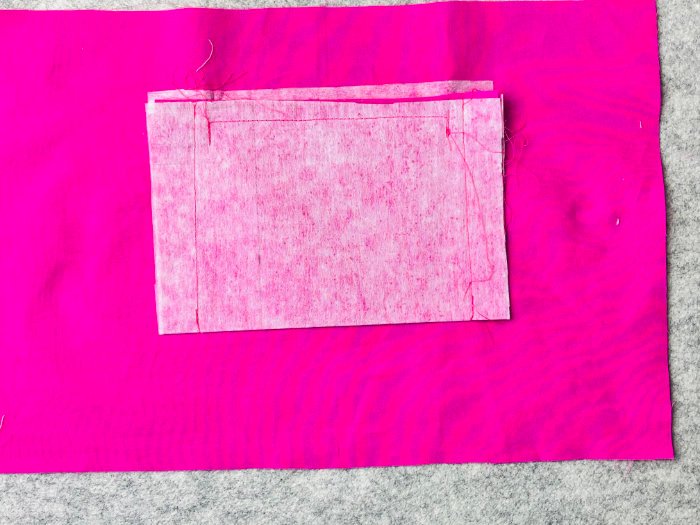
You can trim the excess fabric on the sides if you wish. I made the pocket piece larger than required for easier turning and manipulation.
Step 5: Prepare the Zips for Laptop Bag with Zipper Pockets
Align the continues zip with the upper outside piece as a measurement, and cut two pieces of zip, that are 2 cm shorter than the width of the upper outside part.
Cut a third piece of zip that is 2 cm shorter than the upper gusset length.
Add zip sliders to all zips. One exterior pocket zip will need two zip sliders that close the zip to the middle.
Then, align two zip tabs with the end of the zip, and clip in place. Sew the tabs to the zip with 1cm seam allowance. I backstitch a few times over the zip teeth to secure the zip.
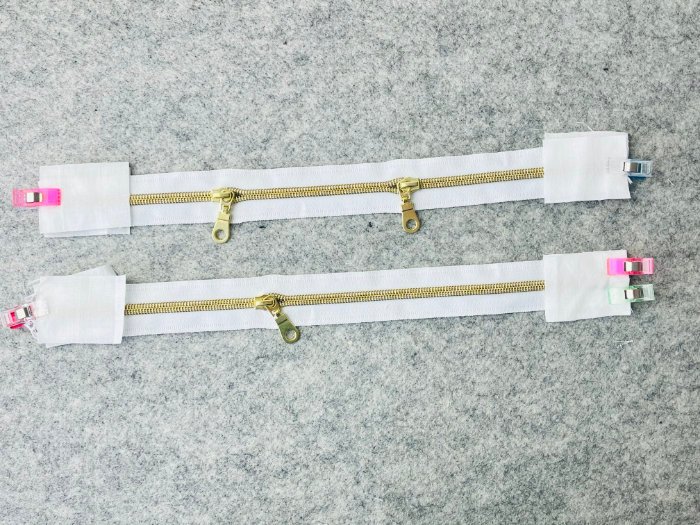
Fold the tabs back to extend the zip and topstitch close to the seam. This will keep the zip tab in place and provide extra strength to the zip ends.
Repeat on all the other zip ends.
Step 6: Sew the Exterior Zip Pockets
Pin two smaller lower pocket pieces together. Then sew with 1cm seam allowance.
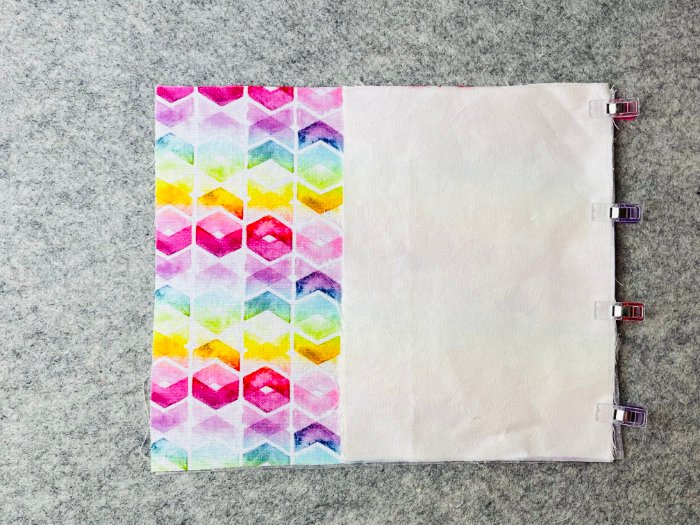
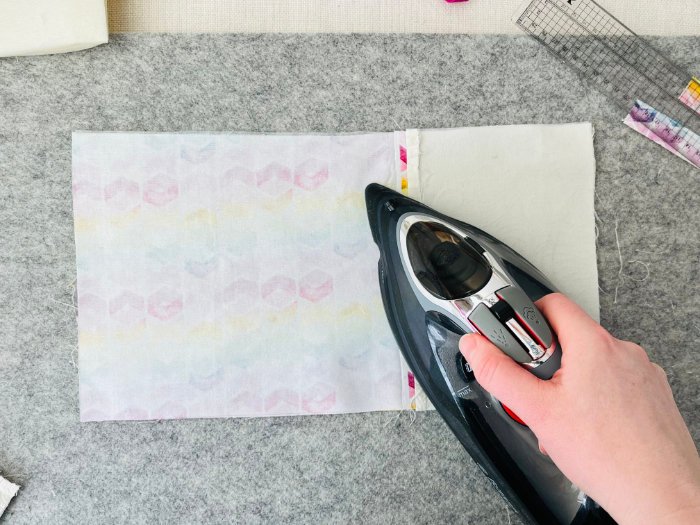
Press the seam open and topstitch. (I forgot to topstitch at this point but corrected my mistake later when attaching the zip).
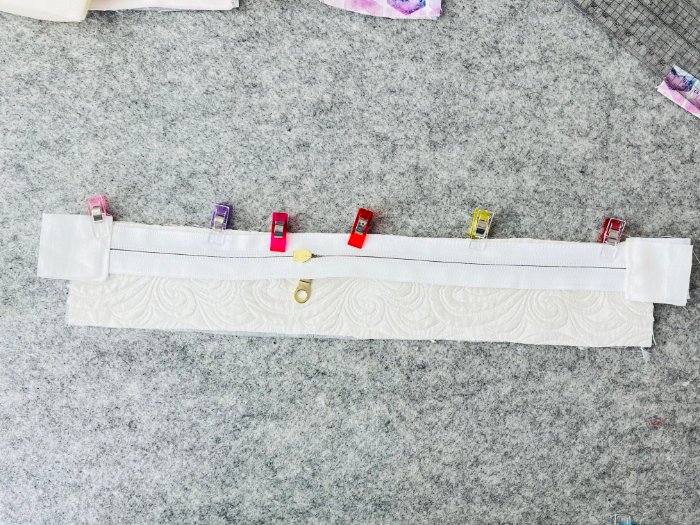
Align the right side of the zip with the right side of one of the upper outside piece. Pin and then sew in place.
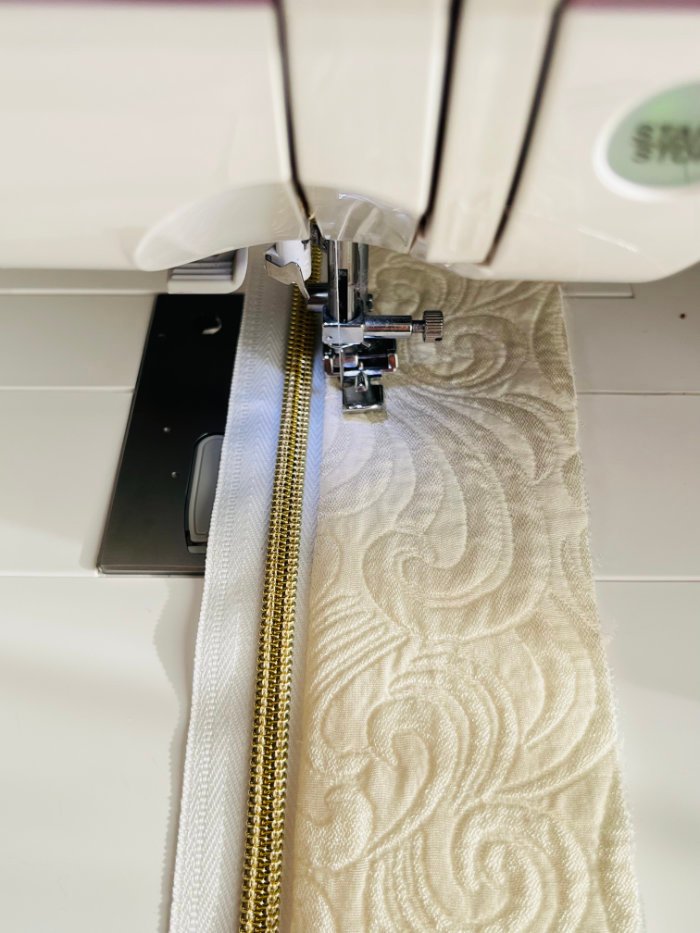
Topstitch along the seam from the right side.
Attach the other pocket zip to the other upper outside part as above.
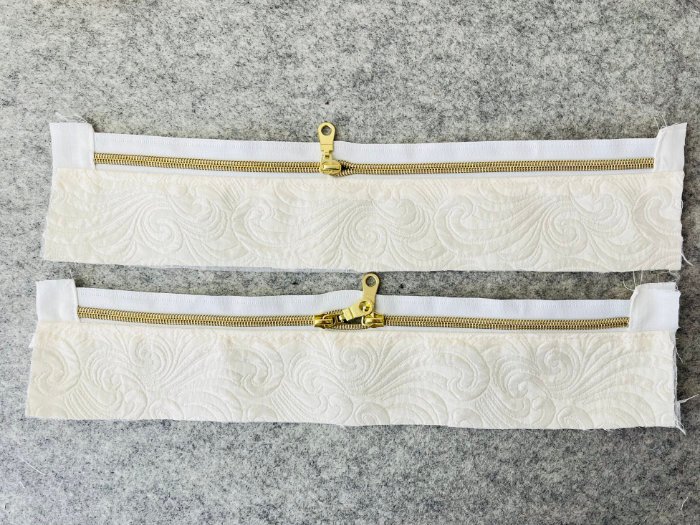
Then, align the lower outside part with the upper part, with right sides facing and zip aligned with upper edge. Pin and stitch in place. Then topstitch. Here it is important to remember that the zip with two sliders is for the outside pice that has two lower parts. And the zip with one slider is for the other outer side with one lower part.
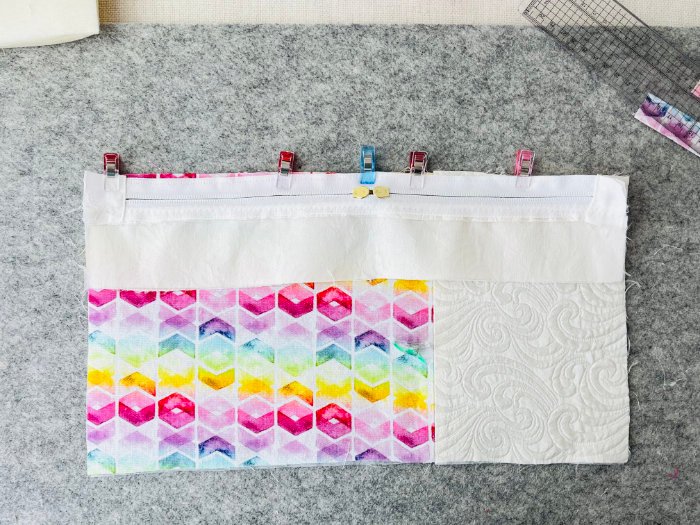
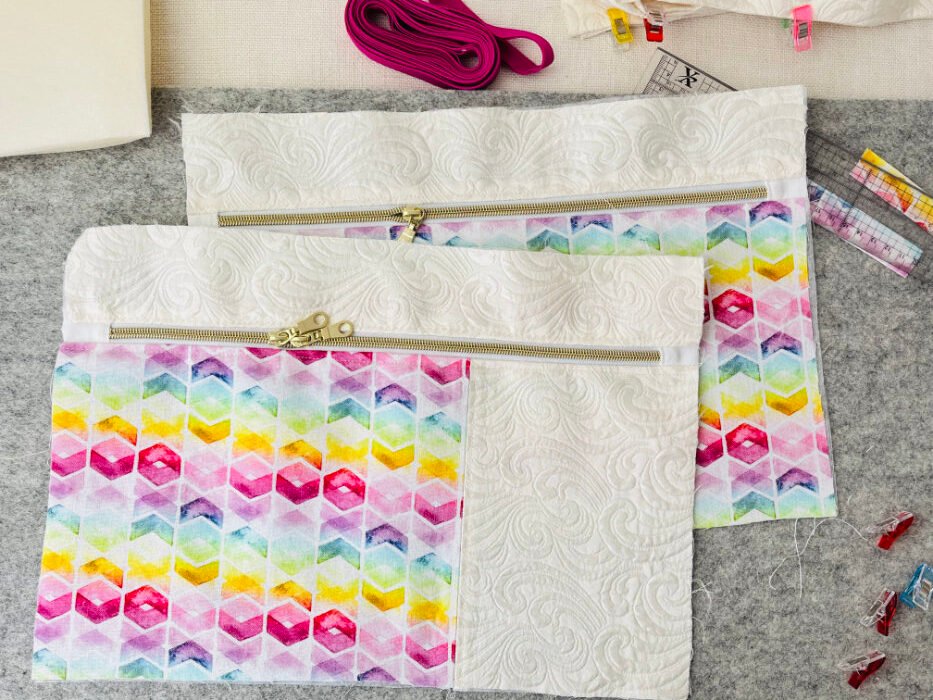
Place a lining over the outside part, with right side of the lining facing the wrong side of the outer part. Baste it in place along the outer edges with longest stitch, close to the edge. Repeat for the other exterior pocket.
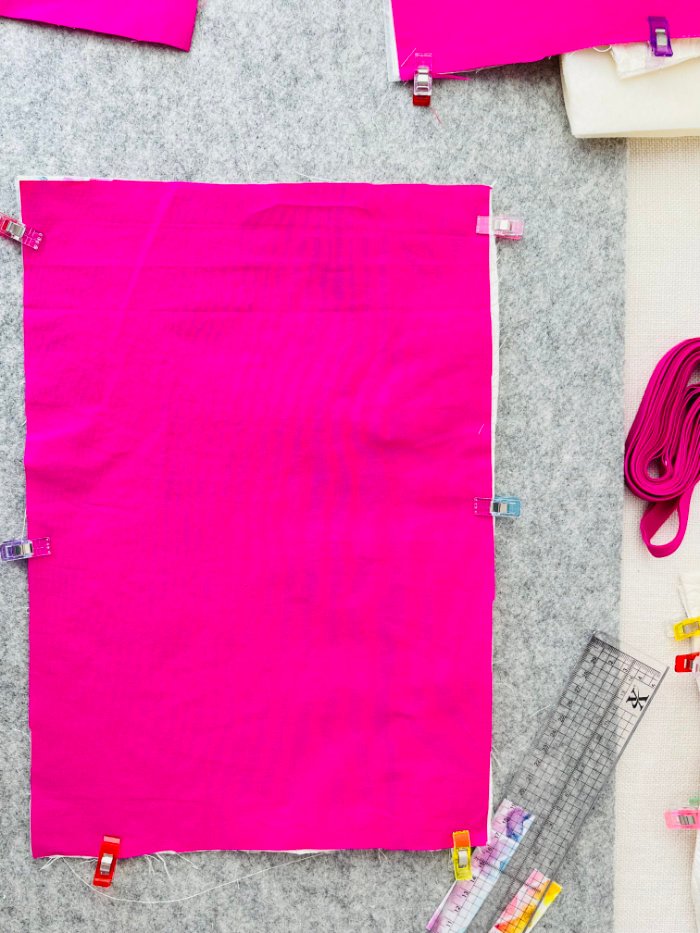
Then stitch in the ditch along the seam line on the exterior side that has two lower panels, to create two pockets. Do not stitch over the zip, only the lower section needs separating to create two separate pockets.
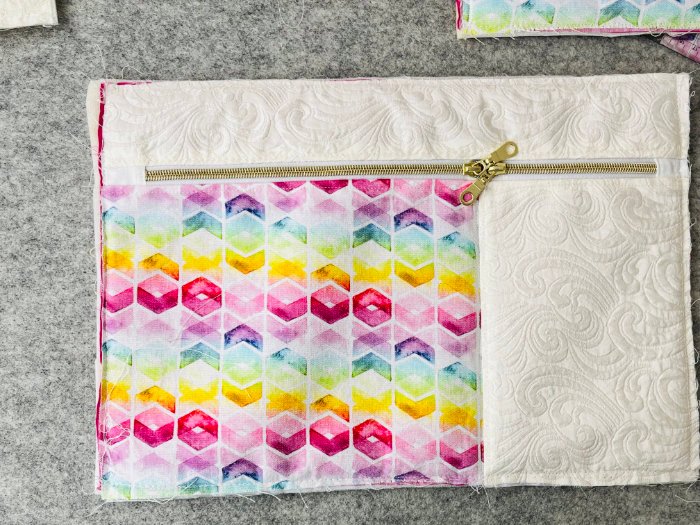
Step 7: Attach the Foam and Lining to the Exterior Pockets
Place the foam on the wrong side of the exterior side. Place a lining on top, with the wrong side down. Baste in place along the edge of the exterior pockets.
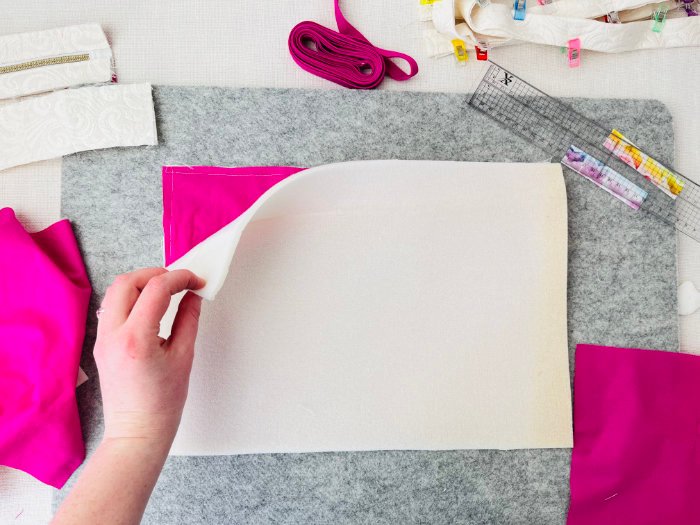
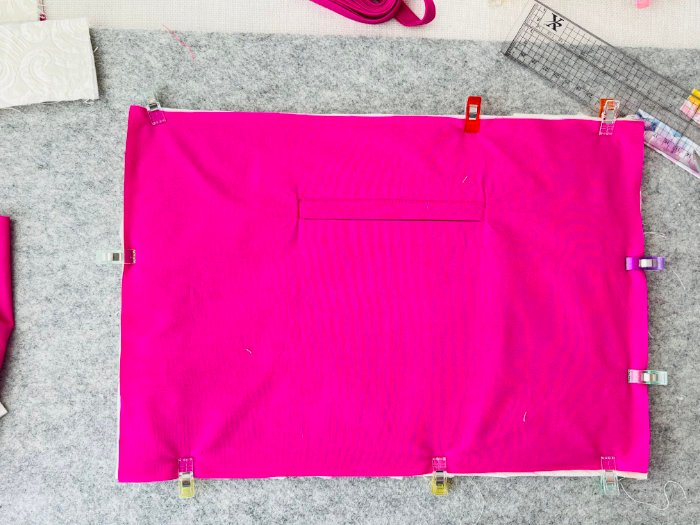
Repeat the same for the other side.
Foam padding absorbs minor impact and protects the laptop from everyday knocks, while maintaining structure.
Step 8: Attach Handles to DIY Laptop Bag
Mark a centre point on the laptop bag exterior side. Measure 3 cm either side of the centre line and mark the point.
Align the right side of the handle with the mark on the left and 1 cm above the zip. Clip in place.
Align the left side of the handle with the mark on the right side and 1 cm above the zip. Clip in place.
Then sew the handles in place 2 cm from the top of the bag, creating a boxed seam. For extra security, sew a cross in the middle of the box.
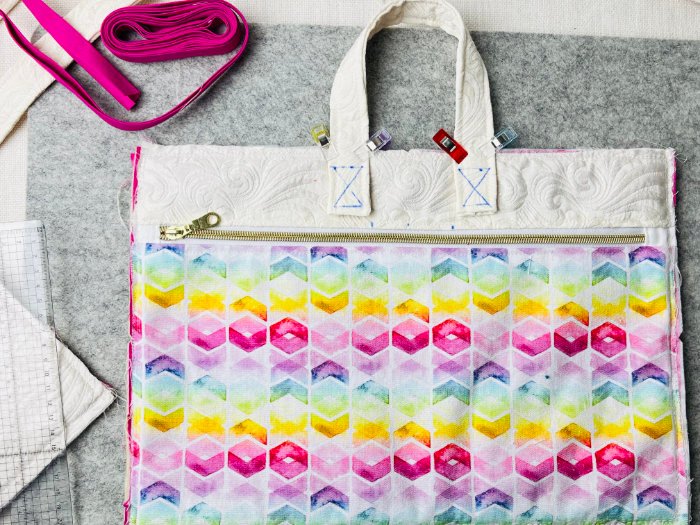
Repeat the same with the other handle.
Step 9: Assemble the Gusset for Handmade Laptop Bag
Place a foam upper guesser piece on the wrong side of the upper gusset piece. Baste in place close to the edge with widest stitch length on your machine.
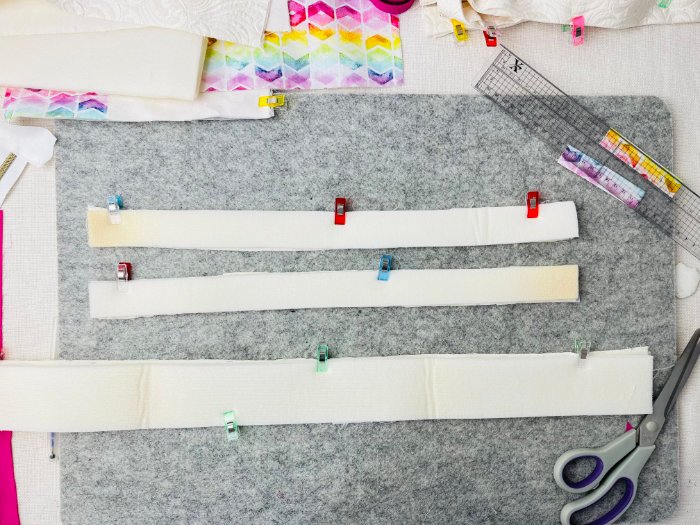
Repeat with the other upper and lower gusset pieces.
Pin a zip to one of the upper gusset pieces with right sides facing.
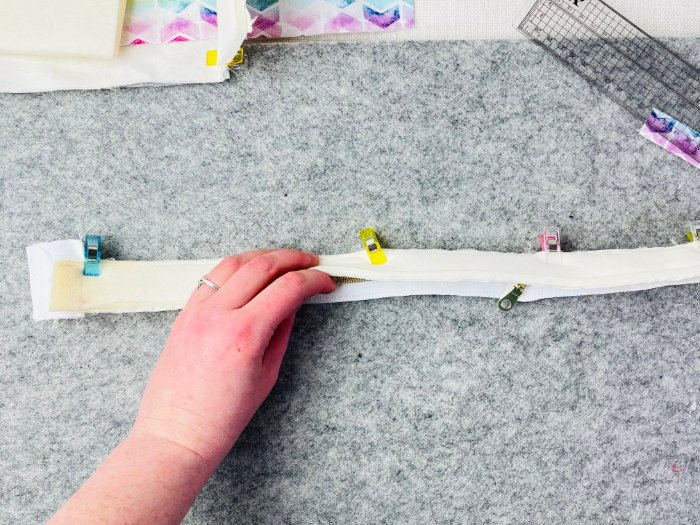
Baste in place. Then place the matching lining piece on the wrong side, clip in place.
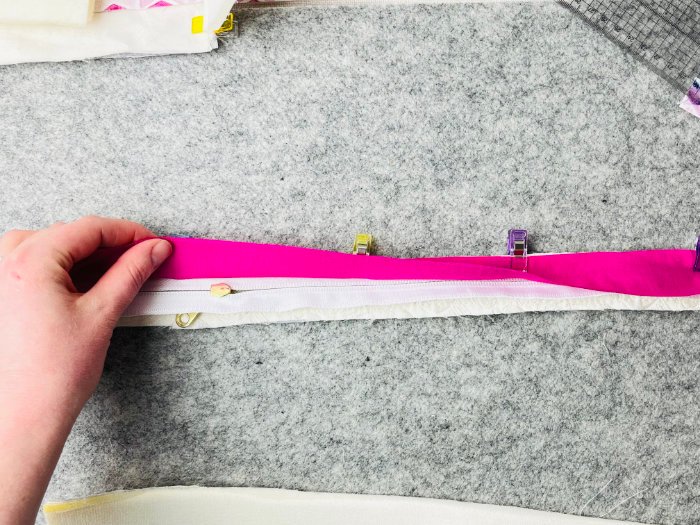
Sew the lining and upper gusset piece together with the zip with 1 cm seam allowance.
Then fold the ling and upper gusset piece back. Align the raw edge o the main fabric and lining and clip in place.
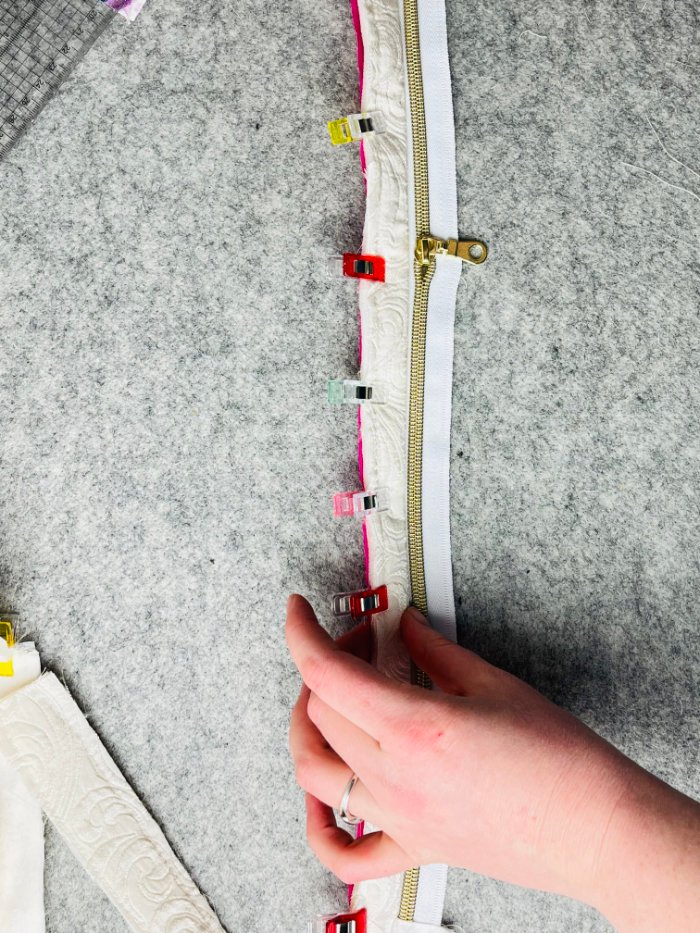
Topstitch the zip in place. Then baste the raw edge.
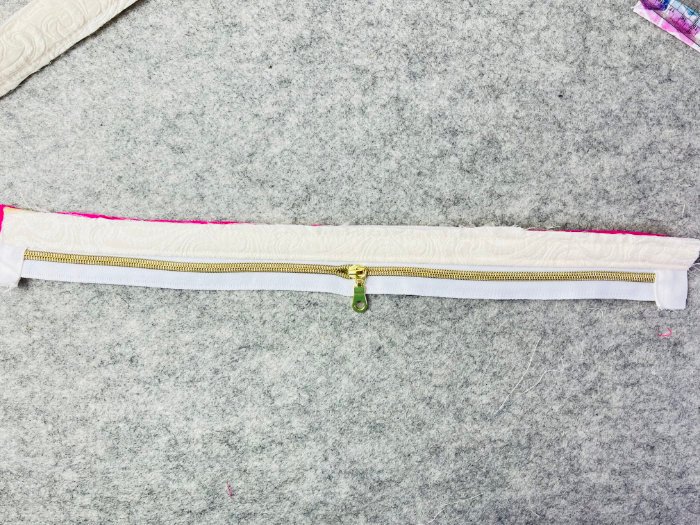
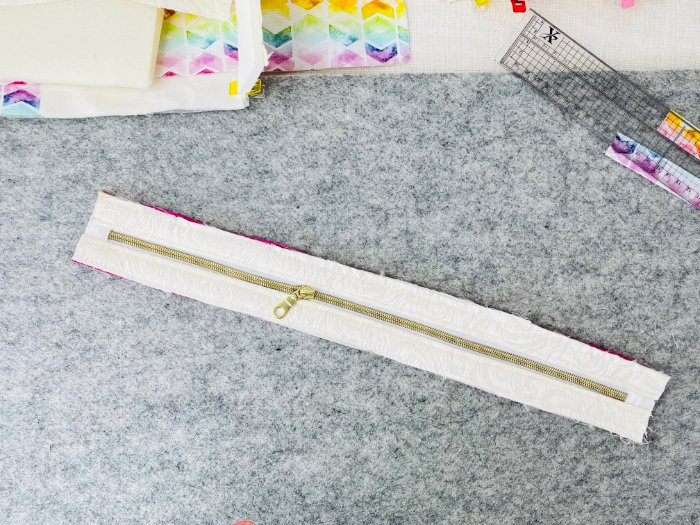
Next, attach the other upper gusset and lining pieces to the main zip the same way, topstitching and basting as before.
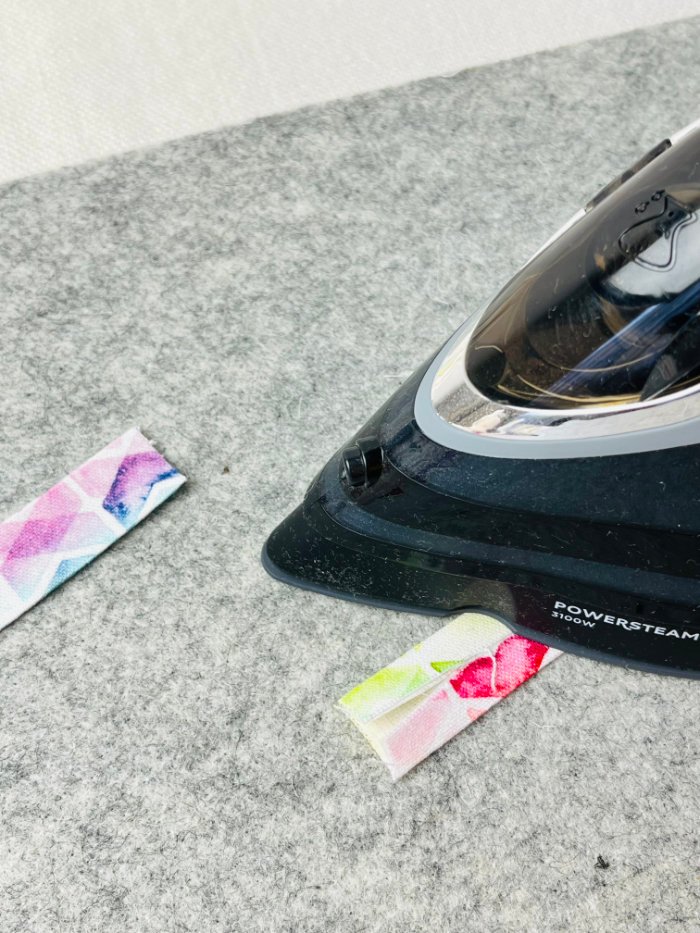
Fold the D-ring tabs long edges to the middle of the tab and press in place.
Feed the D-ring tab in the D-ring, with the clean sides facing out.
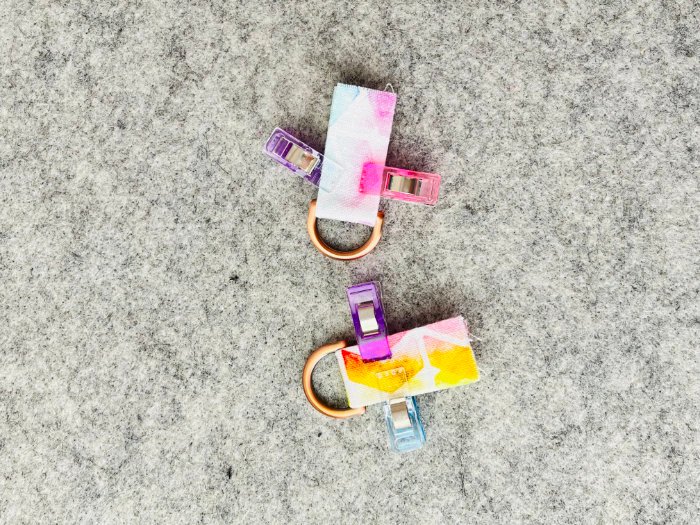
Sew as close to the D-ring as you can, to secure the D-ring.
Then place the completed D-ring tab on the short end of upper gusset piece with the raw edges matching, with the D-ring tab overhanging by about 1 cm. Stitch on place, backstitching to enforce the D-ring tab.
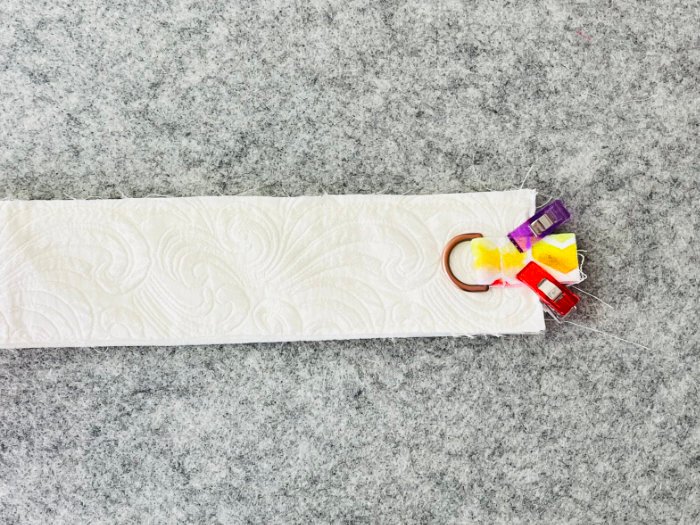
Place the completed upper gusset piece on top of the lower gusset piece with right sides together. Place the lower gusset lining on top of the upper gusset with right side down. Pin in place at both short edges.
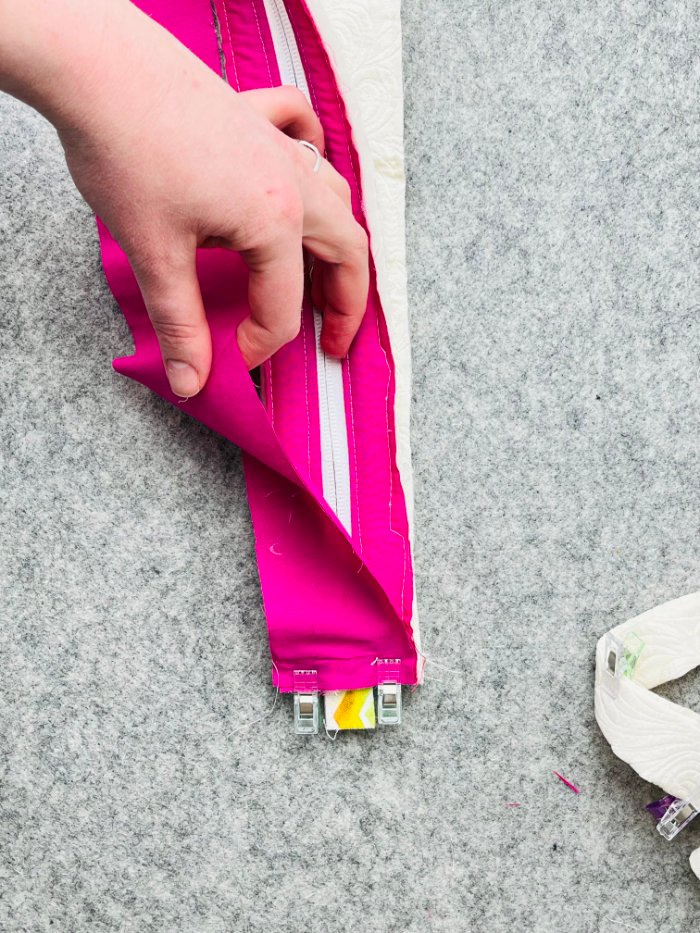
Sew the short edges in place, backstitching a few times to enforce the seam.
Then turn the gusset the right side out and topstitch the seam.
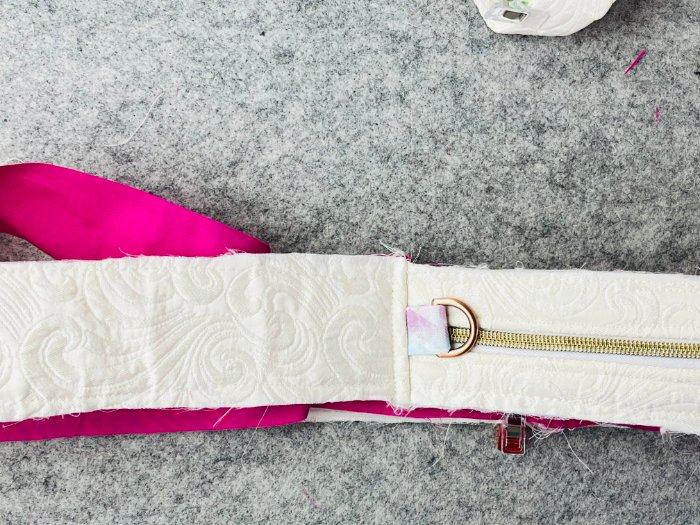
Pin the lower gusset lining to the main fabric. I had to bend the gusset slightly to make the lining the same length as the lower gusset. Otherwise you may end up with extra lining fabric!
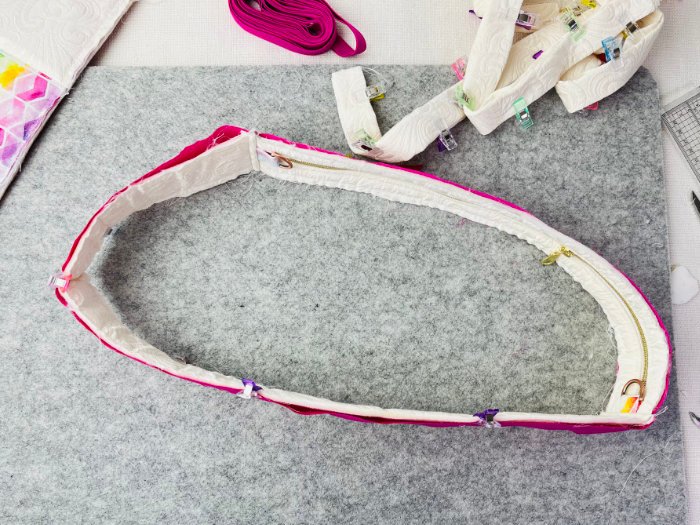
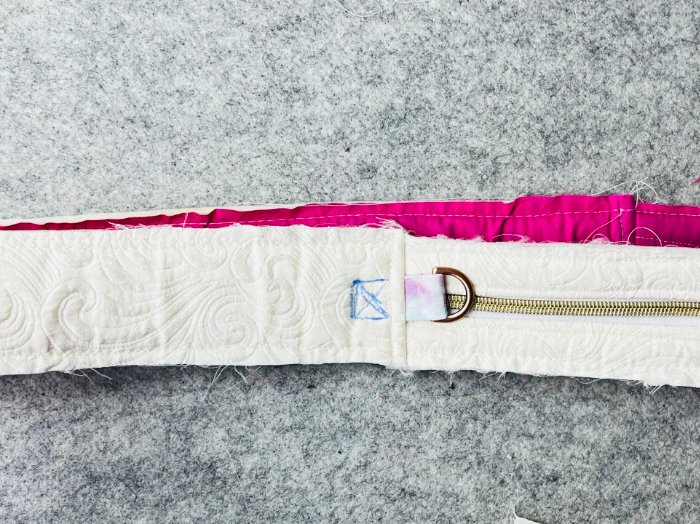
Baste the lining and main fabric along the long edge. Reinforce the seam for the D-ring tab by first drawing a box and cross on the gusset where the D-ring tab is .. then stitching along the guideline.
Step 10: Assemble the Structured Outer Laptop Bag
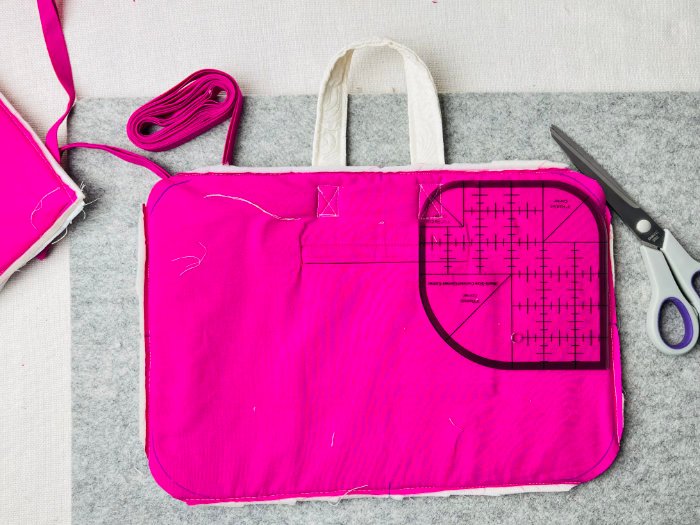
Cut of the corners to create a rounded shape on the outside parts of the bag. I am using a quilting ruler that has 6 cm radius guide to draw the cutting line but you can create a similar paper guide with compass.
Mark the centre points on all sides of the exterior parts and centre and quarter points on the gusset.
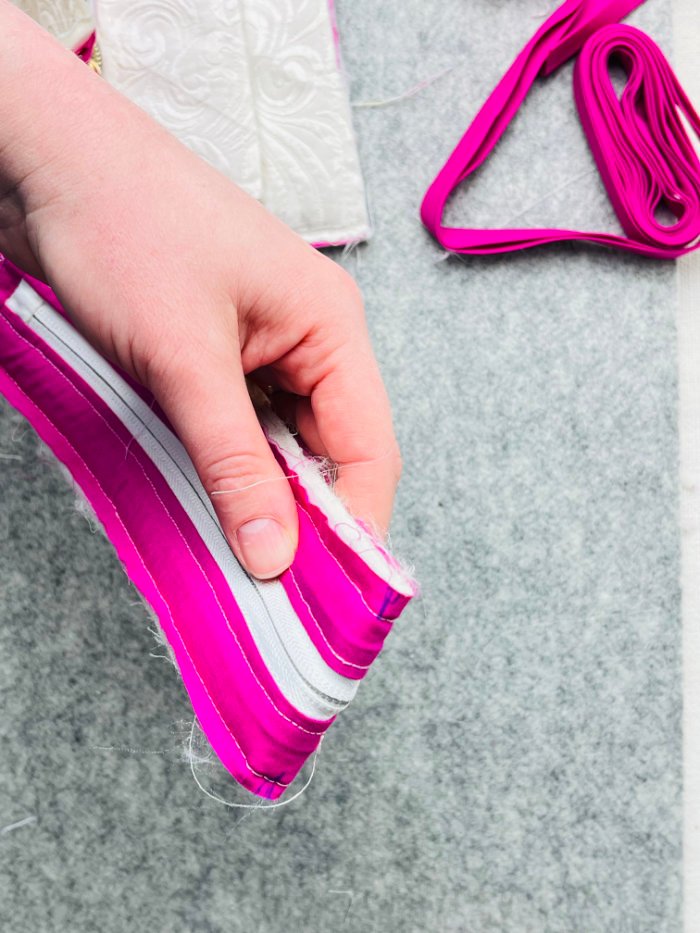
Place the right side of the gusset on the right side of one of the exterior pieces, matching centre and back pieces. Pin in place the straight edges first, then ease the rounded corners.
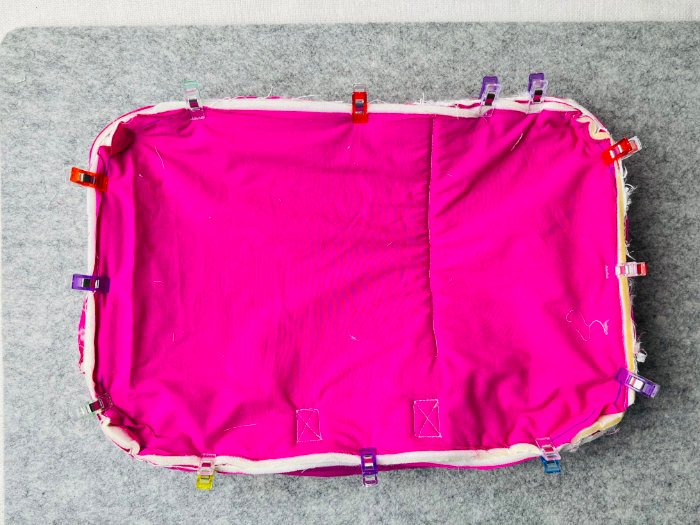
Sew with 1cm seam allowance, with gusset piece on top.
You may need to clip the gusset piece seam allowance a little to match the bag’s seam length.
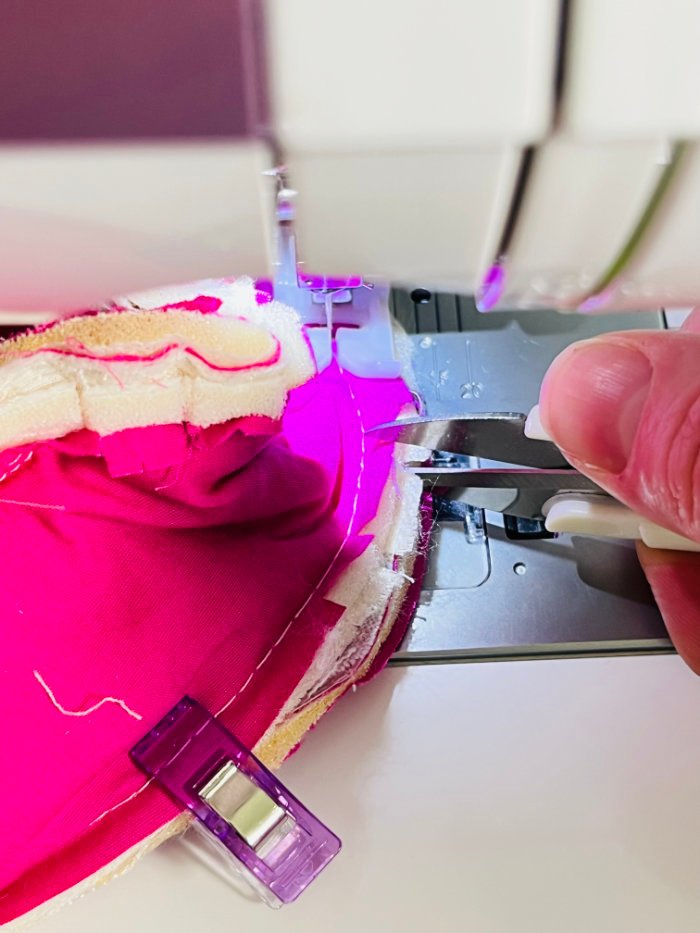
Then unzip the gusset, before clipping and sewing the other side to the gusset piece, following the same steps as above.
Step 11: Attaching Bias Binding to a Padded Laptop Bag
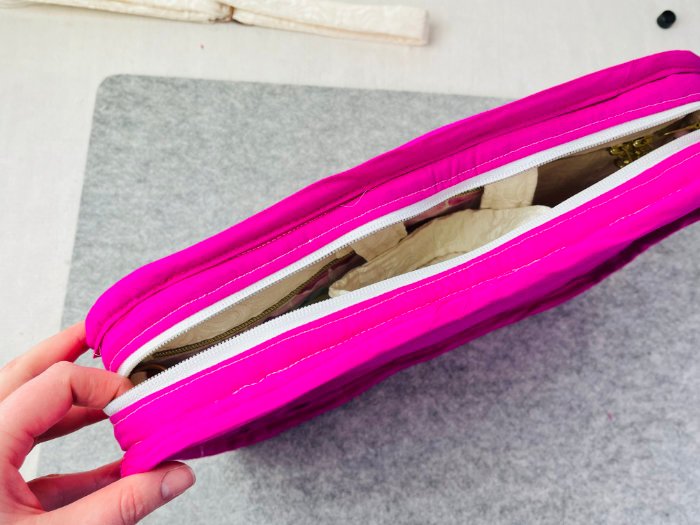
Hide the raw seams on the inside of the bag, by sewing a bias binding around the seam.
First, unfold the bias binding and align one raw edge with the bag’s raw edge. Fold back the fabric at the staring point to hide the raw edge. Clip the bias binding in place.
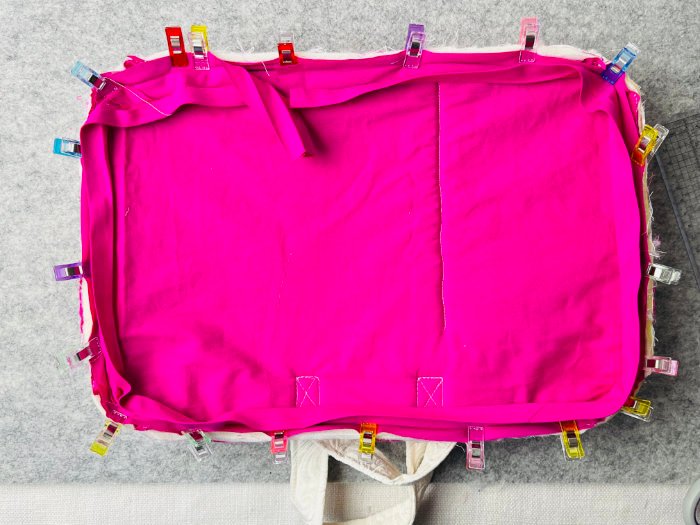
Sew along the fold line all around the bag.
Then fold the bias binding over the raw edge to hide it.
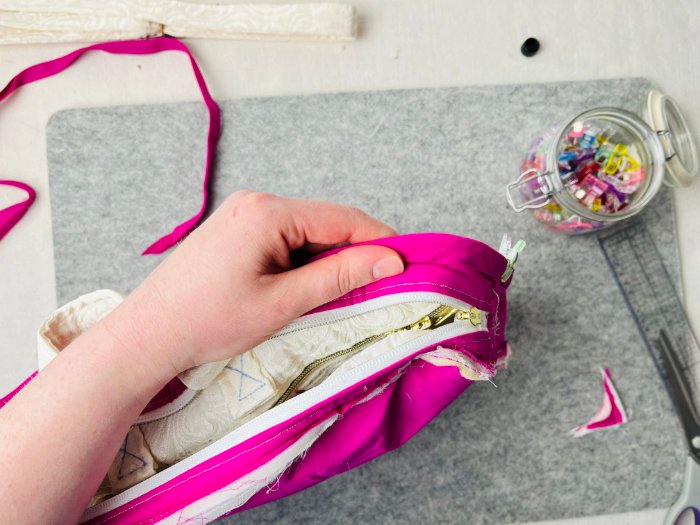
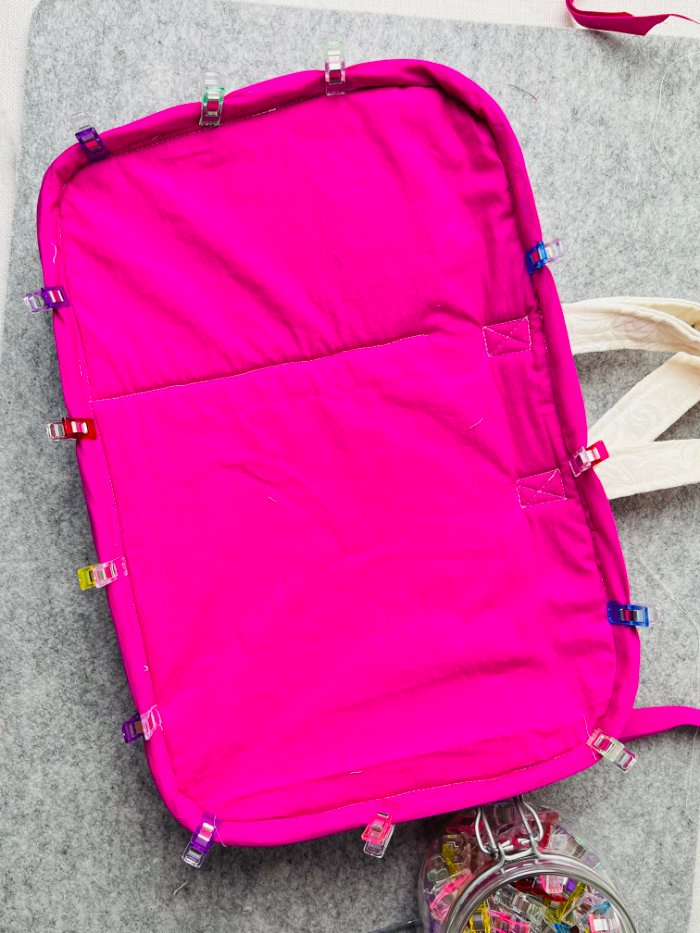
And sew the other side of the bias binding.
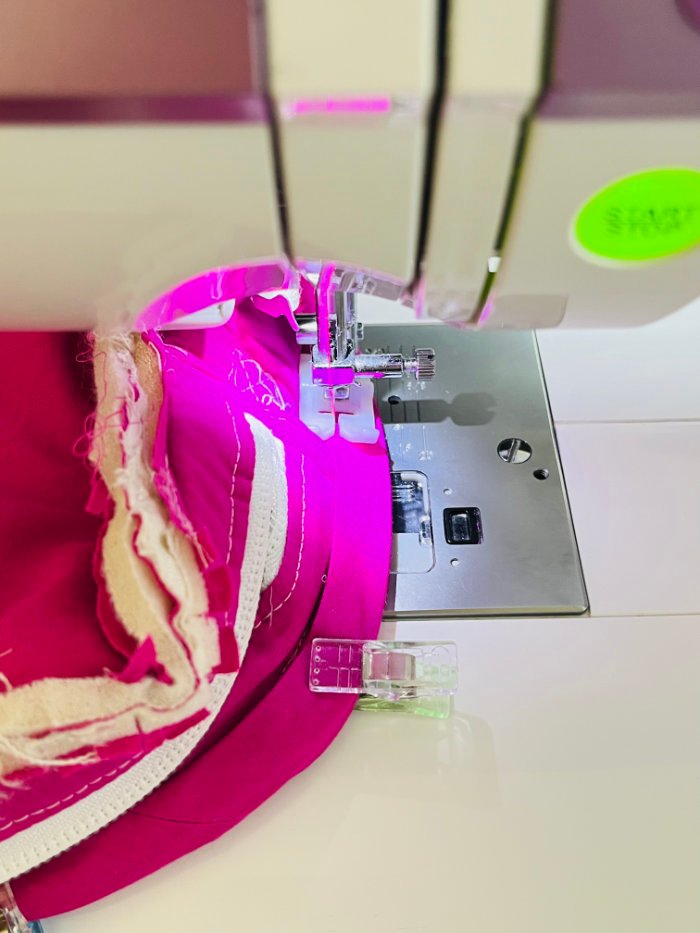
Repeat the above steps for the other saw edge.
Step 12: Complete the Strap for Adjustable Shoulder Strap Bag
Guide a strap slider onto the strap. Fold the raw edge back and sew close with box and cross seam, hiding the raw edge.
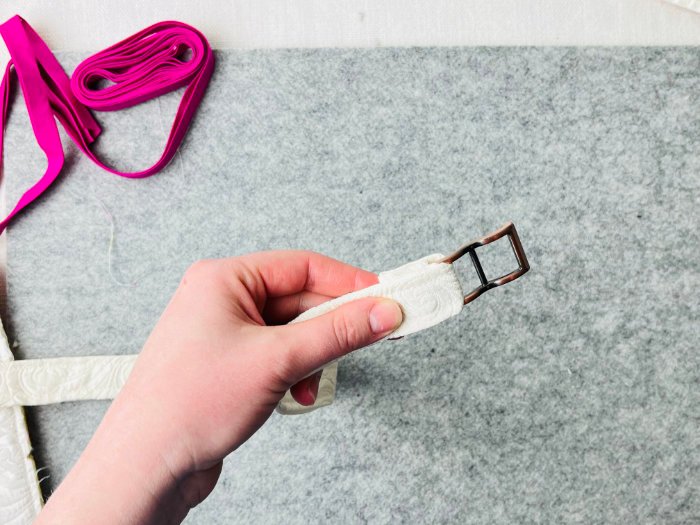
Then guide the swivel hook onto the strap, before placing the other end of the strap through the strap slider. Check that the slider and the swivel hook are facing the right direction
Place the swivel hook on the other end of the strap and sew the end the same as for the strap slider above.
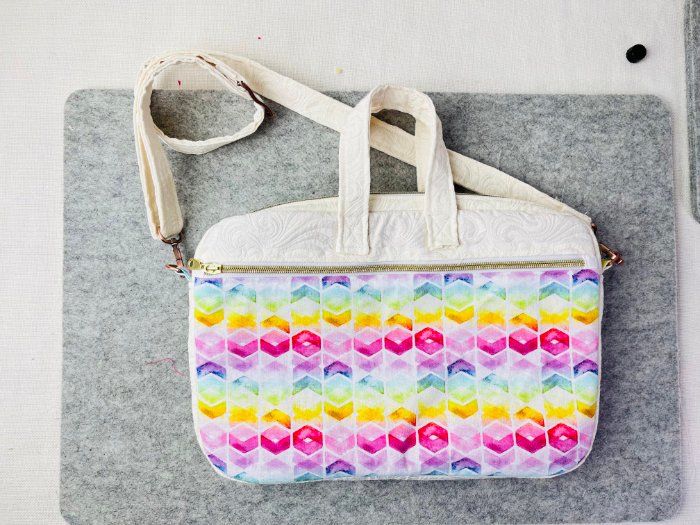
Attach the strap to the D-rings to complete the laptop bag sewing project.
Common Mistakes When Sewing a Laptop Bag
- Not unzipping the gusset before sewing the second side
- Skipping interfacing (results in a floppy bag)
- Using too light a needle when sewing through zip teeth
- Forgetting to reinforce D-ring tabs
Take your time at the gusset stage — this is where most shaping issues happen.
Frequently Asked Questions
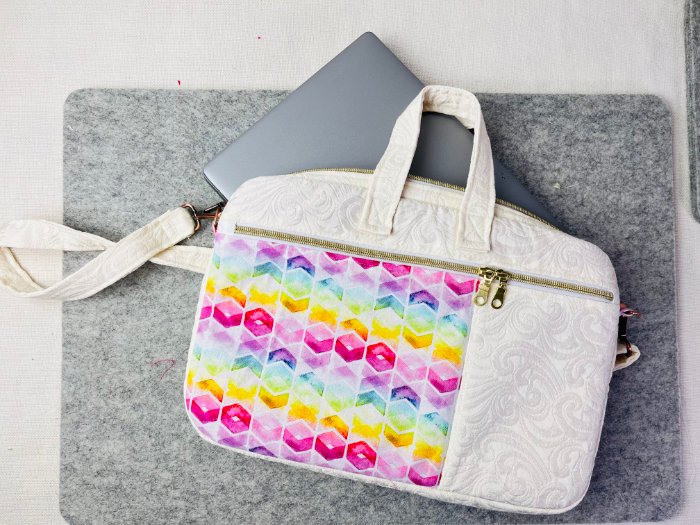
Finished DIY Laptop Bag
This handmade laptop bag is structured, padded and practical — with secure zipper pockets and an adjustable strap for daily use.
Sewing your own laptop bag allows you to control fabric quality, sustainability choices and custom sizing. Once you have made one, you can easily adapt the design for tablets, document bags or travel organisers.
About the Author
I draft my own sewing patterns and focus on practical, sustainable sewing projects using natural fabrics wherever possible. All tutorials on this blog are based on projects I have personally tested and sewn.