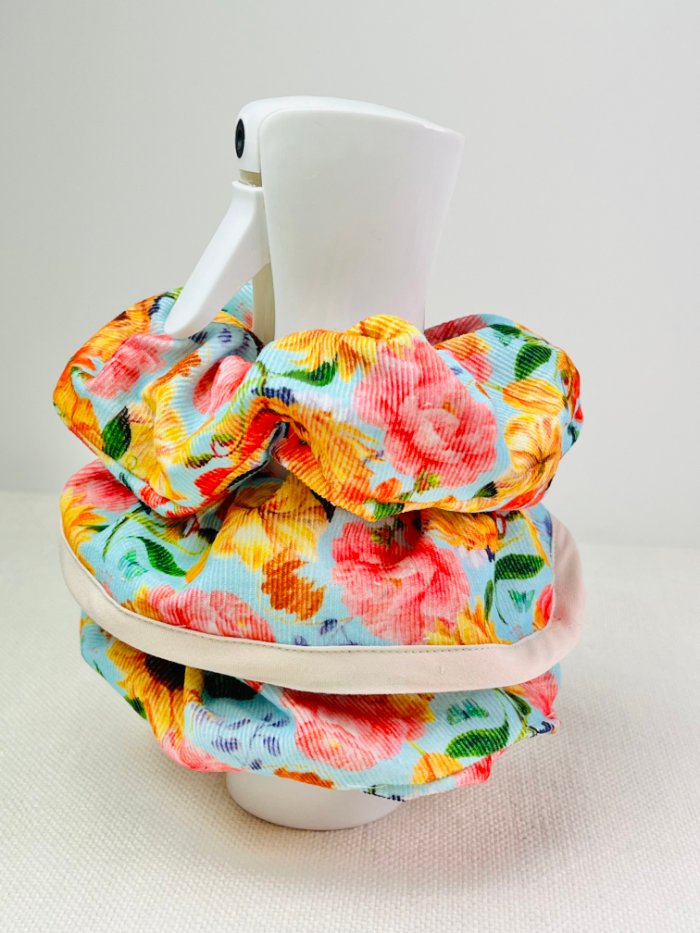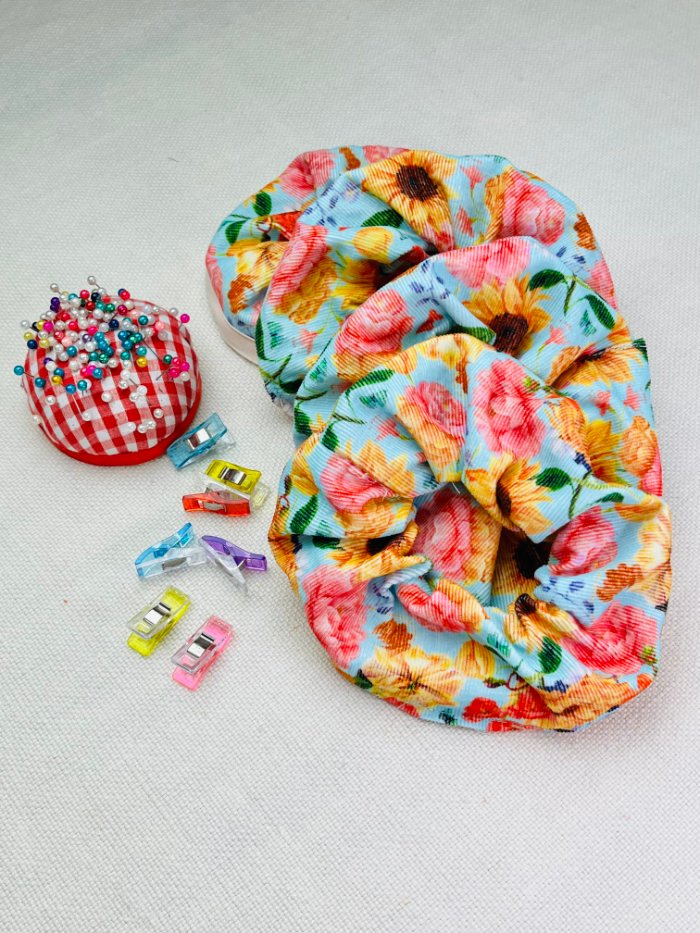
In this beginner-friendly hair scrunchie sewing tutorial, you’ll learn four easy ways to sew a scrunchie using less fabric, including low-waste cutting methods and clean finishing techniques. This guide is ideal for beginners and anyone interested in sustainable sewing projects.
This beginner-friendly guide covers measurements, fabric choices, elastic length, and multiple construction techniques.
Oh, and my intended users are the children coming to my daughter’s birthday party, I will be adding the scrunchies to the party bags.
Or so I thought until I run out of time! Turns out that when you organise party at home there is a lot more to do than just create a playlist on Spotify and make a few sandwiches 😀
Never mind, my daughter will hand them out to her friends as she is no need for six scrunchies the are the same. At least not while she has not lost five!
I wanted to make hair scrunchies for a while, and my current blog writing approach is to show you the things that I make to provide a valuable and useful content. But there are so many scrunchies sewing tutorial out there and to avoid repeating inventing the wheel I will add my own spin to the tutorial. As I am all about the reduced impact on the environment in this tutorial I will share how to cut fabric to not to leave jaggered fabric pieces left that you have no home.
Without further ado, let’s jump straight in!
Table of Contents
- Materials and Tools Needed to Sew a Hair Scrunchie
- What Is the Best Elastic for a Hair Scrunchie?
- What Is the Best Fabric for Sewing a Scrunchie?
- Hair Scrunchie Measurements (Fabric Length, Width & Elastic)
- How to Cut Fabric for a Hair Scrunchie (No Fabric Waste)
- How to Sew a Hair Scrunchie: Step-by-Step Methods
- Hair Scrunchie FAQs
Materials and Tools Needed to Sew a Hair Scrunchie
To make and sew a hair scrunchie you will need the following:
- A fabric that is complete width as you buy from the fabric store (any natural fabric is great choice)
- Elastic
- bias tape (optional)
- cutting mat (optional)
- rotary cutter (optional)
- matching thread
- long ruler or quilting ruler
- sewing machine
- safety pin or bobbin for threading the elastic
- fabric marker (chalk, soap, erasable fabric marker)
- scissors
What Is the Best Elastic for a Hair Scrunchie?
There are a lot of elastics available. My preference s for a soft elastic that is around 1cm wide. While you can use any elastic, a soft 12 mm elastic will be gentler on the hair, reducing a chance of hair breakages hair elastic dents and will make it easier to tie up your hair without coming undone.
What Is the Best Fabric for Sewing a Scrunchie?
The best hair for elastic is silk as it is very smooth and does not damage the hair. The next best option is soft cotton or viscose jersey, however any natural fabric will do. I personally would stay away from polyester fabric for hair accessories as the positively charged hair in interaction with negatively charged polyester will create a static energy, leading to hair breakages.
Natural fabrics work best for scrunchies. If you’re interested in sustainable sewing, see my guide on choosing the best natural fibres for fabric sewing.
Hair Scrunchie Measurements (Fabric Length, Width & Elastic)
Ultimately, the measurements for hair scrunchie is personal preference.
As a guide, the fabric should not be less than 40 cm (16″) long. A scrunchie that is made with less fabric will be very tricky to put on the hair as it will not stretch enough to go over the hair more than once.
And this is where you are going to be guided but the width of the fabric. Most fabrics that you can buy from the store come in two widths – around 112cm and around 140 cm. You can cut two scrunchies from any fabric that is closer to the narrower width and three from a wider width.
The width of the fabric for hair scrunchies depends on the method of sewing you are going to use. The basic method where you sew the long edges first or by finishing the edges with overlocker or bias tape, allows you to go as narrow as twice the width of your elastic plus 2x seam allowance (e.g, if you had 1cm elastic, the min width for the scrunchie would be 4cm (1.5″). The Burrito method where you sew the short edges first will require a wider width, at least 12 cm (5″).
How to Cut Fabric for a Hair Scrunchie (No Fabric Waste)
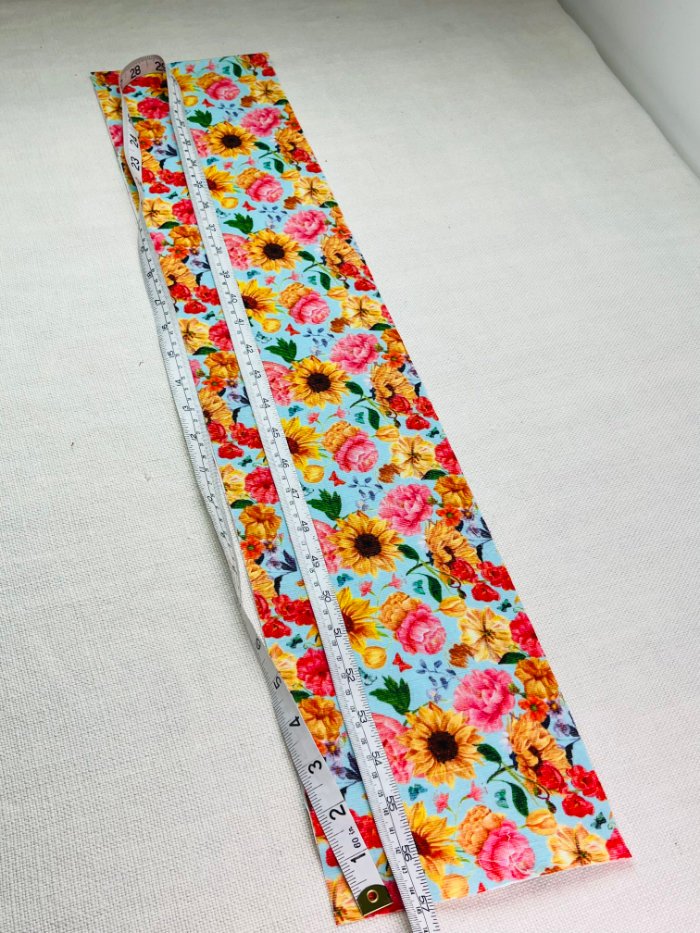
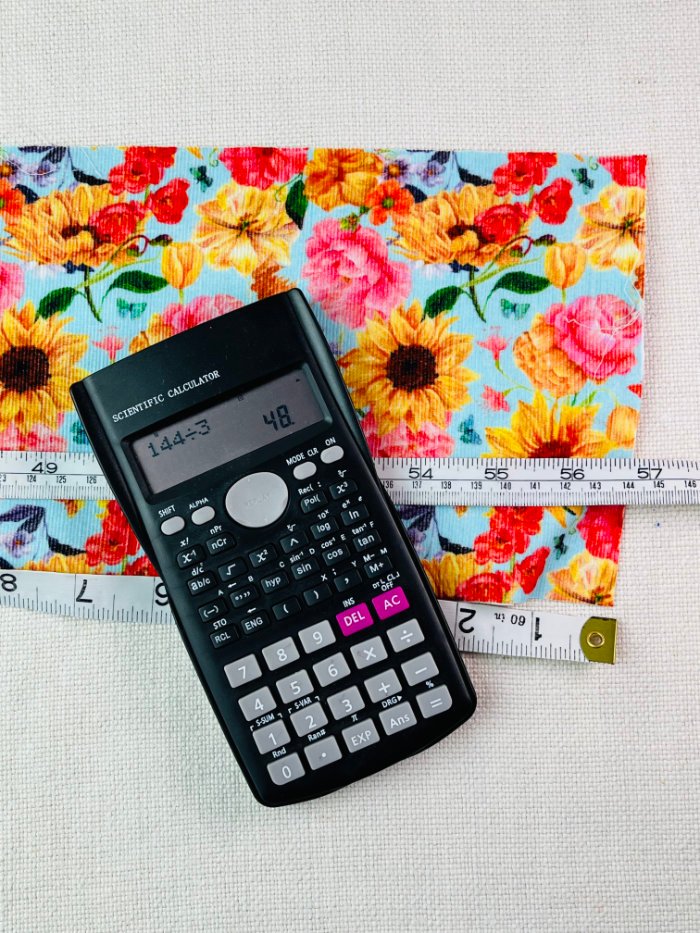
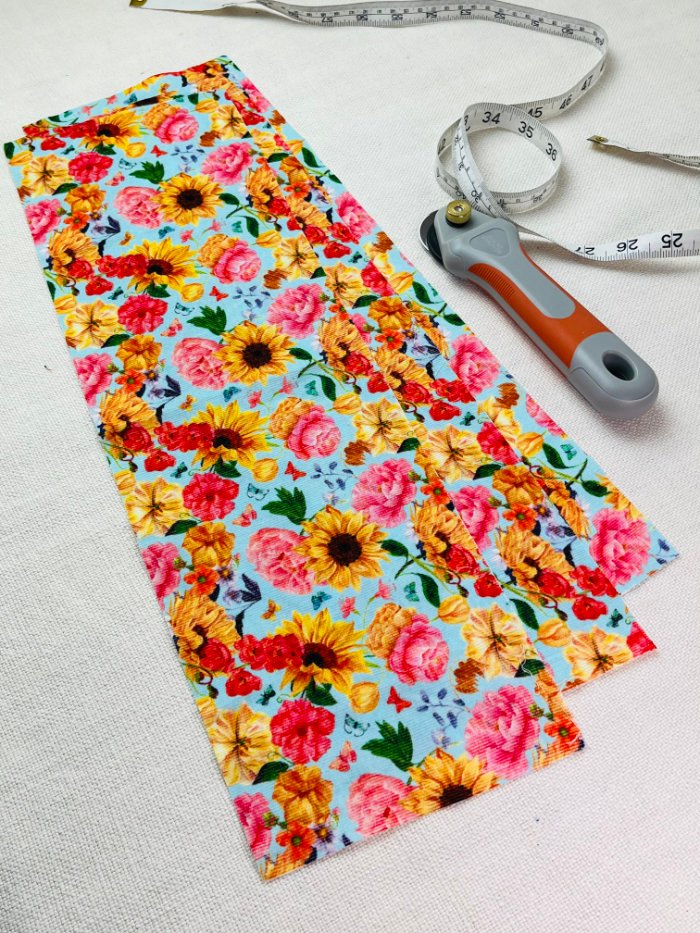
All the methods will have the same scrunchie measurements. My fabric is 144 cm wide, therefore from one width I can made three scrunchies that are 48cm long and I have gone for 6″ wide scrunchie as that is the width of my quilting ruler.
To cut the fabric in the required strips, I folded the fabric in half, selvedge to selvedge and then half again, leaving the selvedge exposed to be trimmed off later. Folding the fabric will make it easier and quicker to cut it.
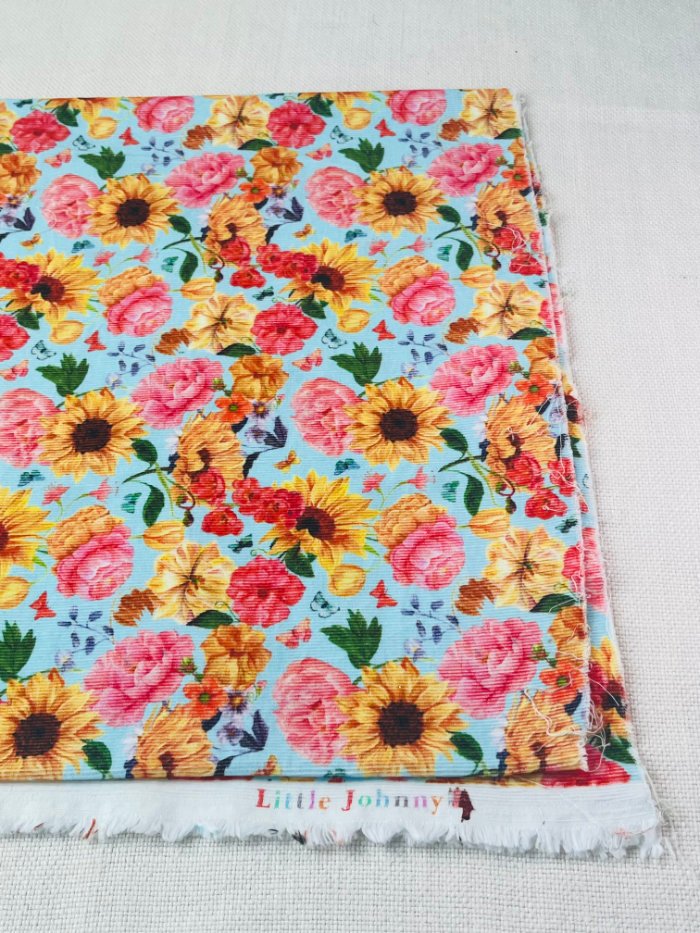
Then place the folded fabric on a cutting mat and trim off any uneven edge. Alternatively you can mark the cutting line with a fabric marker and cut with scissors along the traced line.
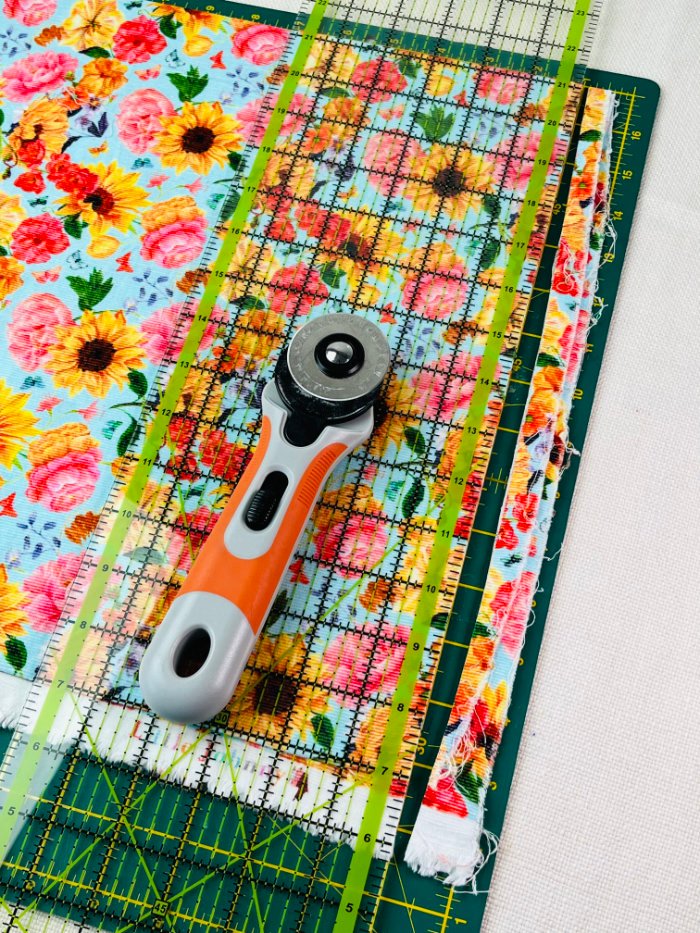
New, measure and cut a strip for your required width. As mentioned before, I am going for 6″.
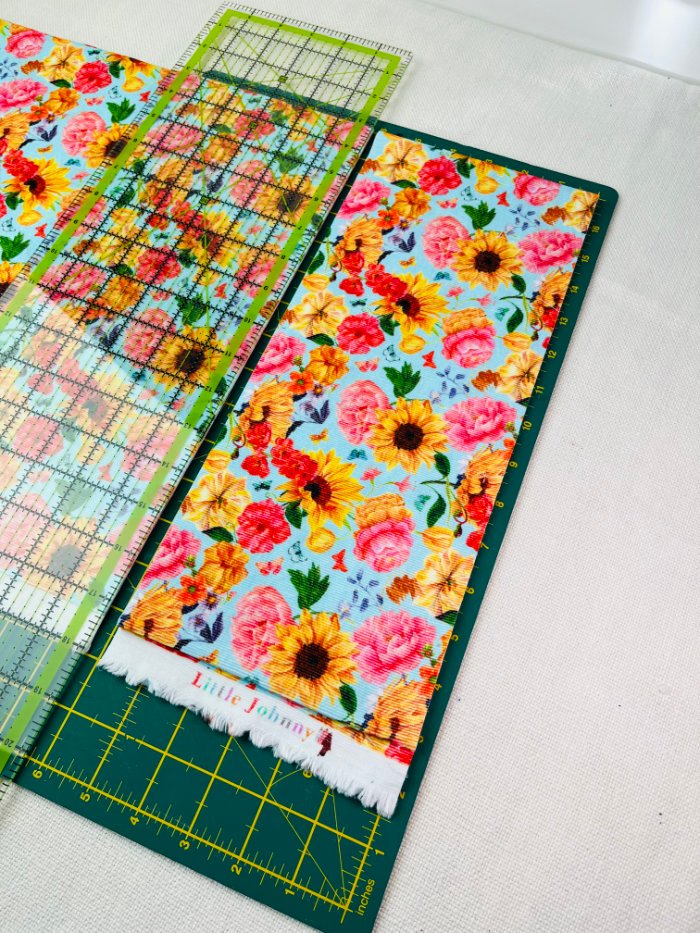
Cut off any selvedges.
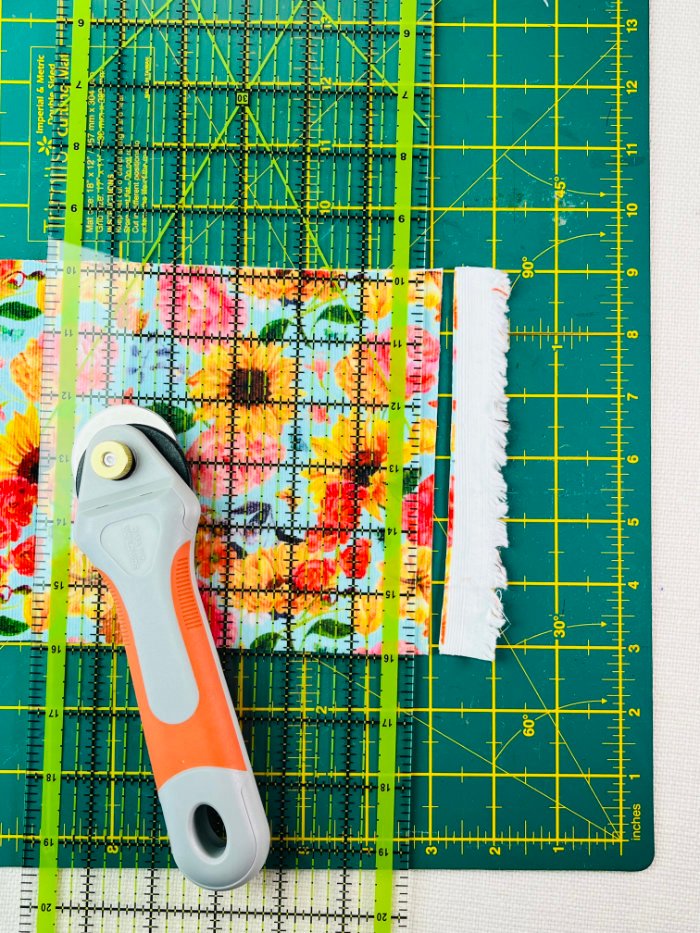
Then unfold the strip and measure the total length to work out how many scrunchies you can make from one width of the fabric. My fabric is 144 long so I am cutting three trips, each 48cm long.
How to Measure and Cut Elastic for a Scrunchie
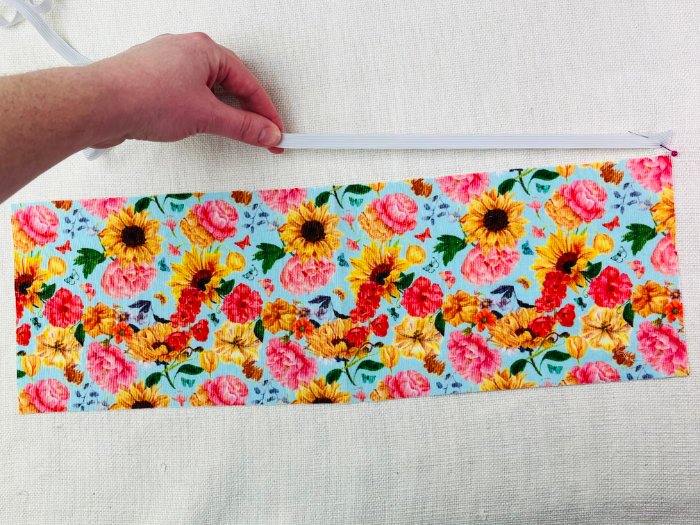
To work out the length of the elastic that you need for a hair scrunchie, take one end of uncut elastic and align with the end of the fabric for scrunchie.
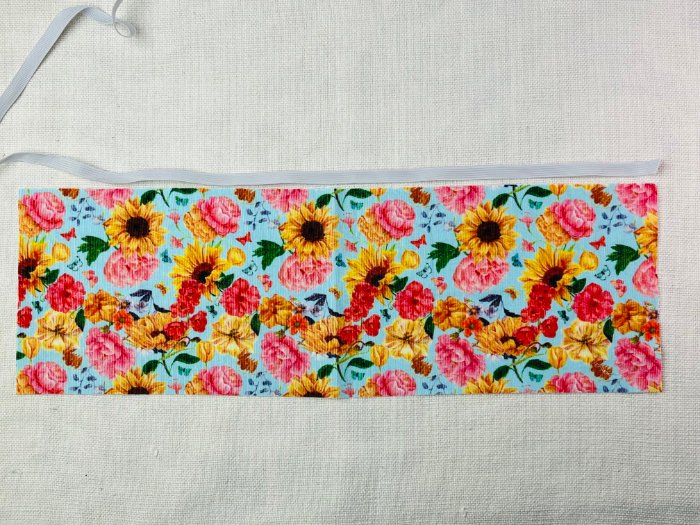
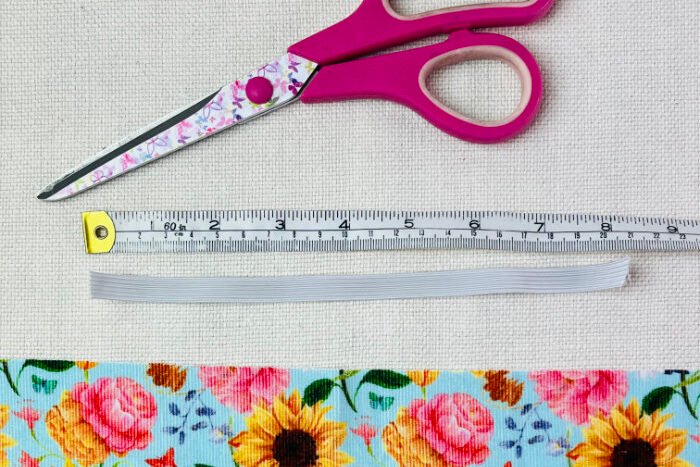
Then, holding the end of the elastic in place, stretch the elastic as far a it goes to the other end of the fabric.The elastic should go the the other end of the scrunchie fabric when stretched to its maximum. Add extra 1″ of unstretched elastic and cut.
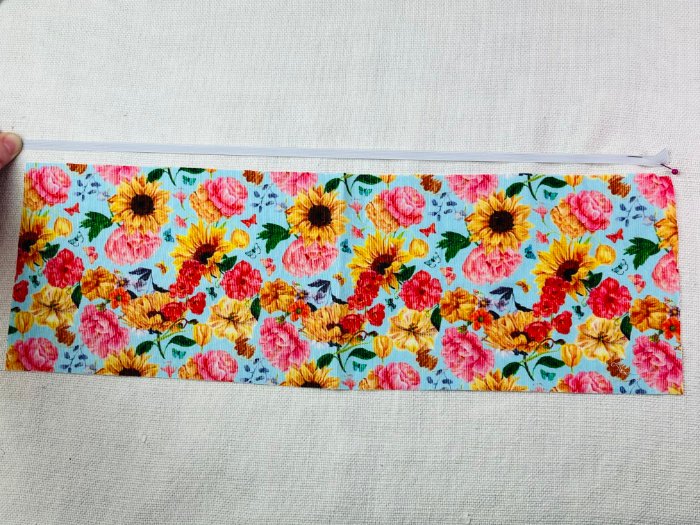
My elastic is 21cm long, however do not use it as a guide for your scrunchie as the elastic that you use might have totally different elasticity. If you are going to use the same elastic for all the scrunchies, then use the first measured elastic piece as a cutting guide and cut as many strips as you need.
How to Sew a Hair Scrunchie: Step-by-Step Methods
In this tutorial, you’ll learn four beginner-friendly ways to sew a hair scrunchie. They are all easy once you figure how they work and will require different tools and techniques. All use the same measurements and are designed to minimise fabric waste. I will start with the simplest methods that require sewing machine and will finish with overlocker. These are the techniques that I will teach in this tutorial:
- Basic method with sewing machine
- Burrito method
- Sewing scrunchie with a bias tape
- Sewing the scrunchie with overlocker
The basic method of sewing the hair scrunchie with sewing machine
This basic sewing machine method is the easiest way to sew a hair scrunchie and is ideal for beginners without special tools.
Step 1 – Pin the long edge together with high sides facing.
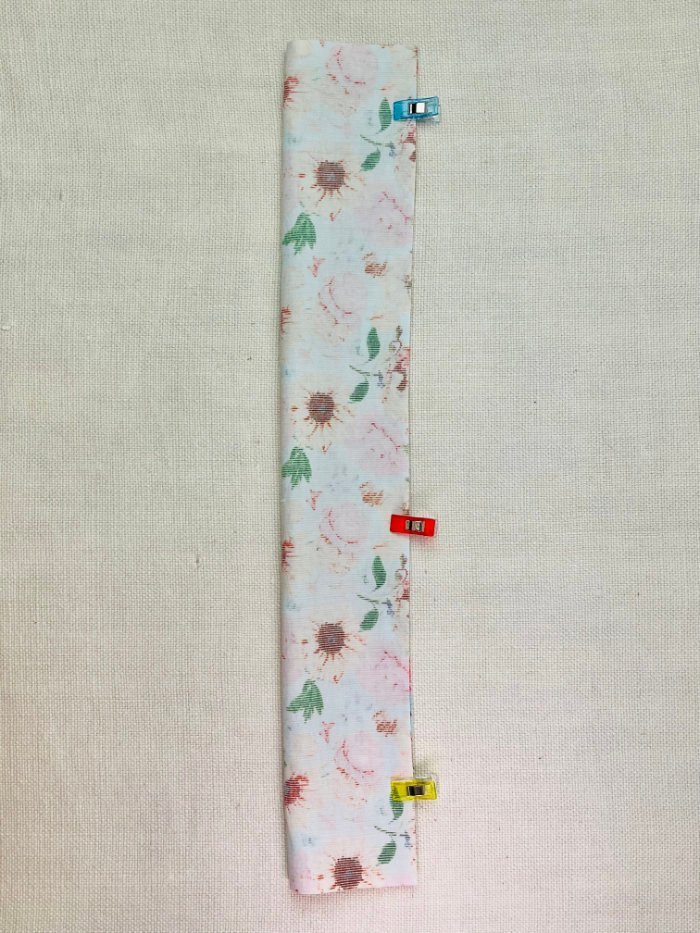
Step 2 – Sew with a straight stitch along the pinned edge with 1 cm seam allowance, backstitching at the start and end.
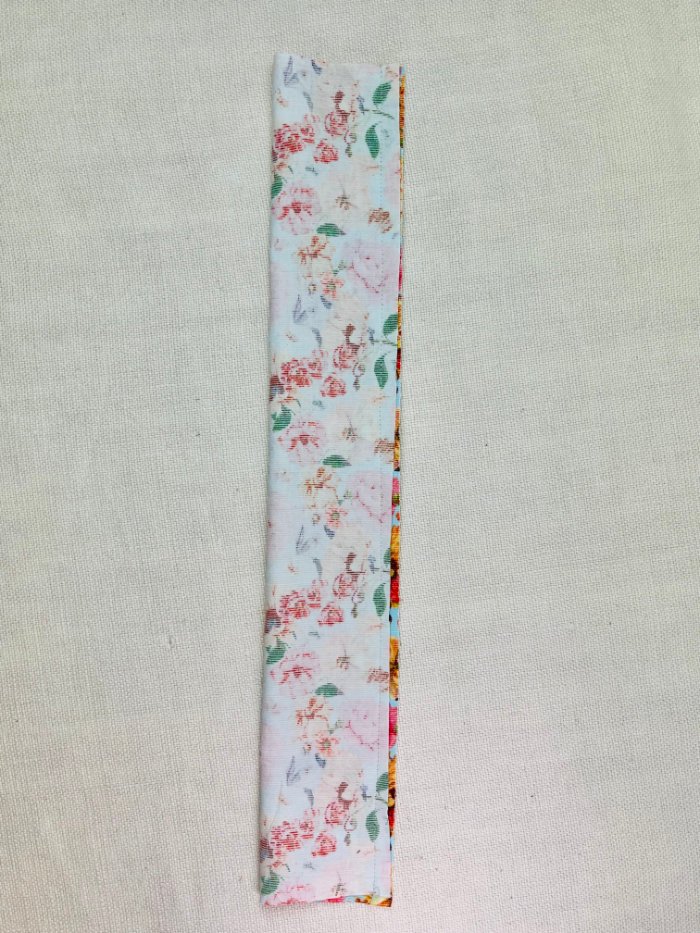
Step 3 – Turn the long tube inside out.
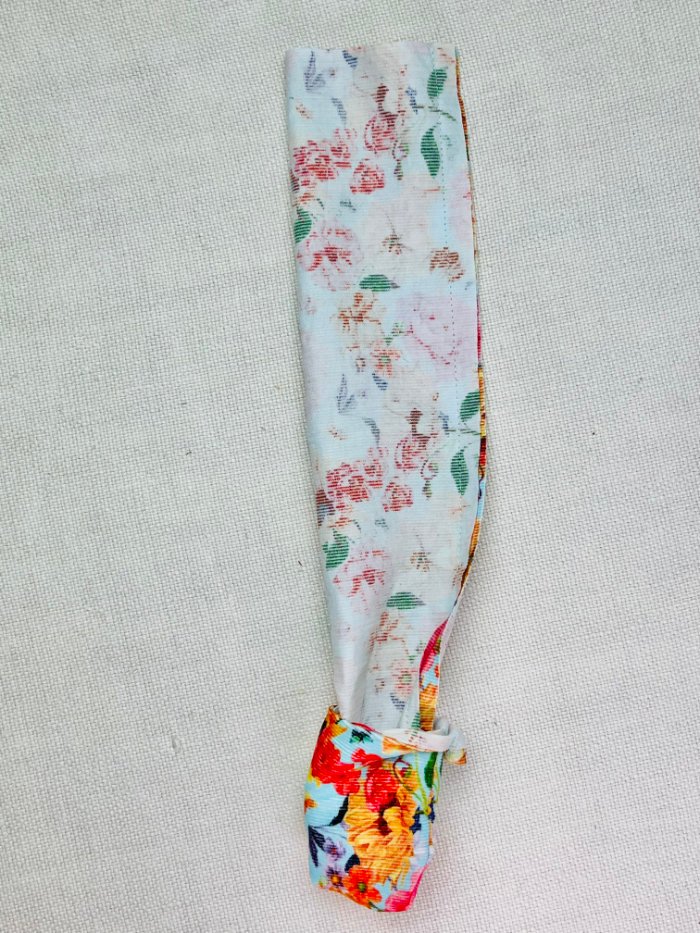
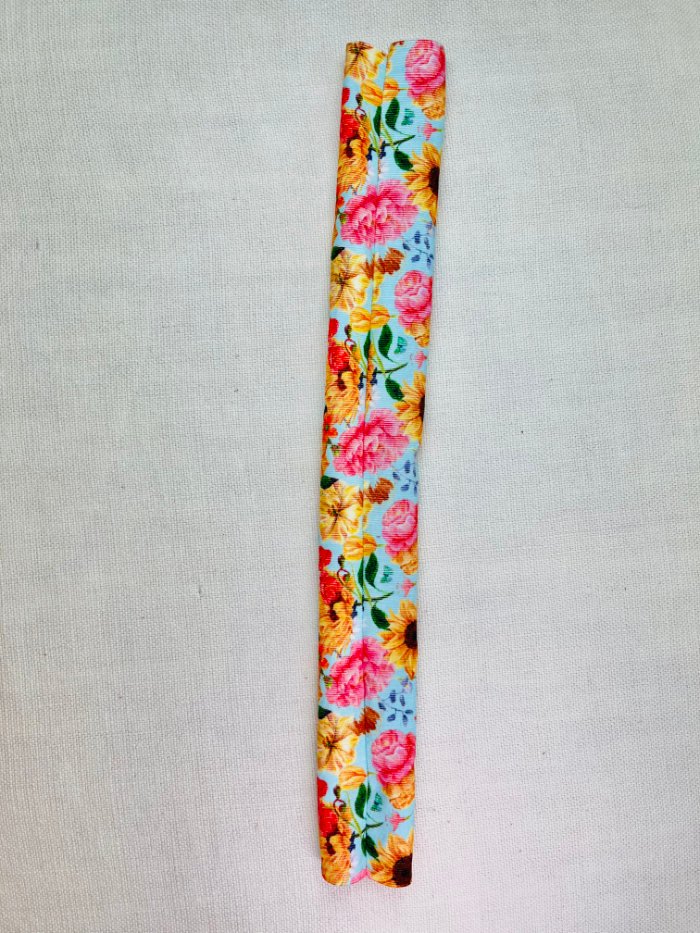
Step 4 – Pin one end of the elastic to the end of the the tube and pull the other end to the other side, using a bodkin or safety pin.
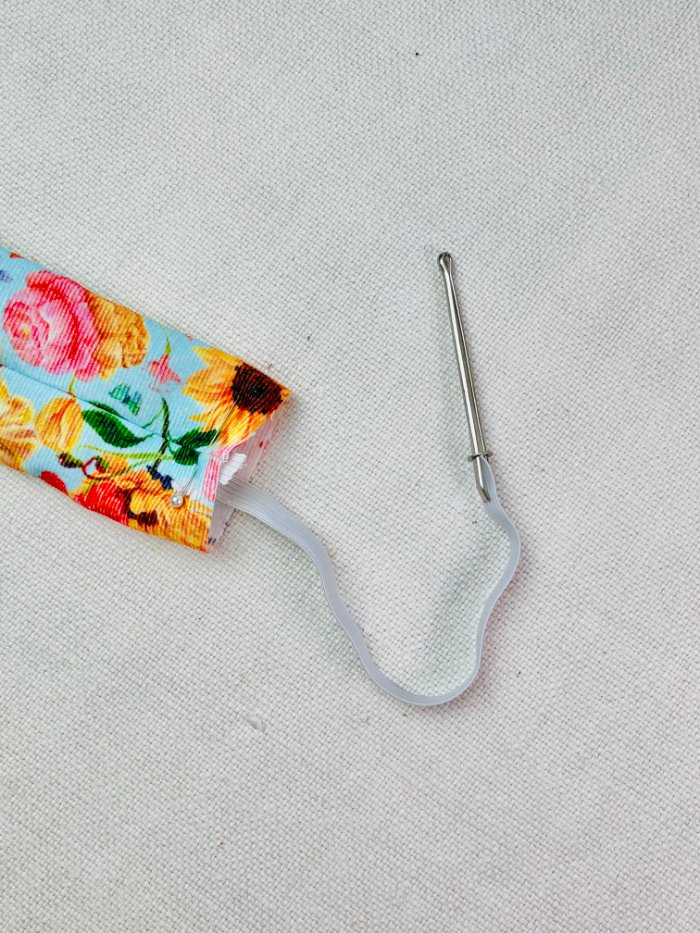

Step 5 – Bring both ends of the elastic together, ensuring that it has not twisted in the middle.
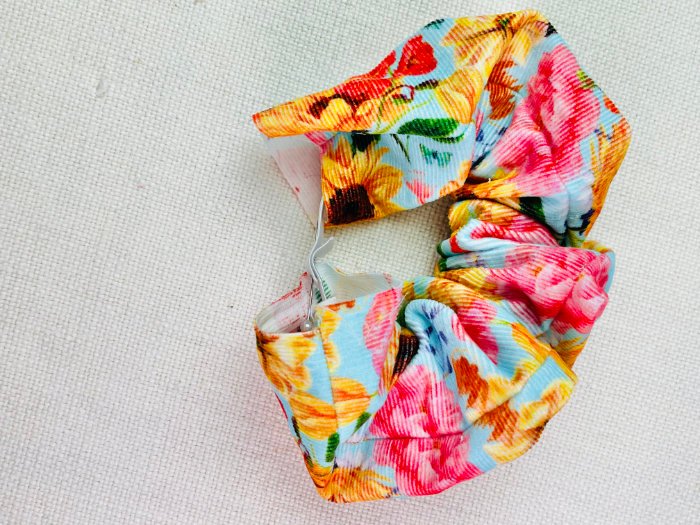
Step 6 – Overlap the ends of the elastic and secure with a zigzag stitch, backstitching at the start and end.
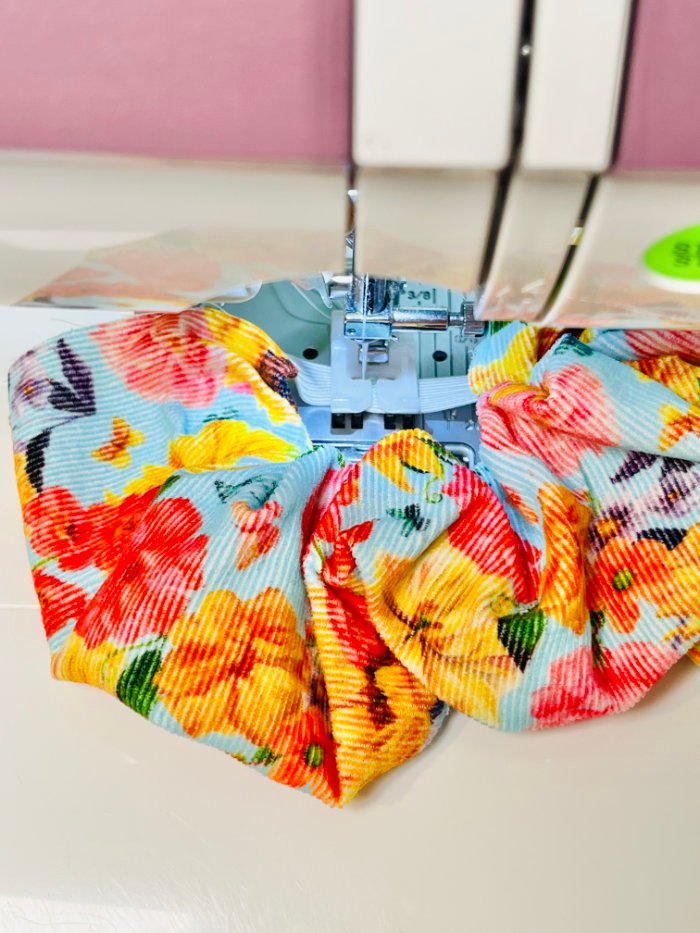
Step 7 – Then, fold one raw edge of the tube to the inside by 1 cm and pull it over the other end of the tube.
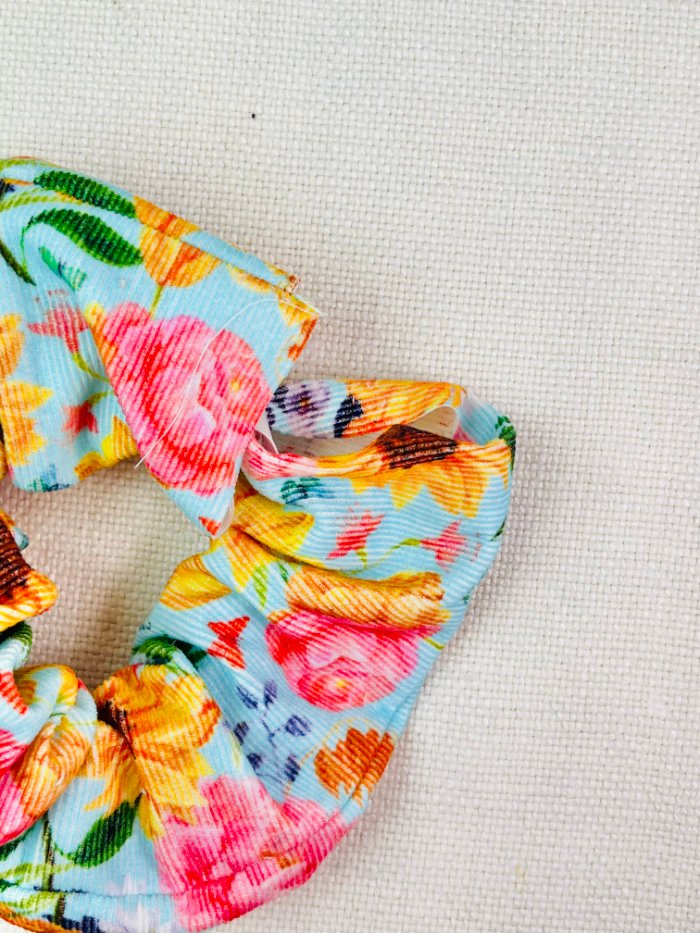
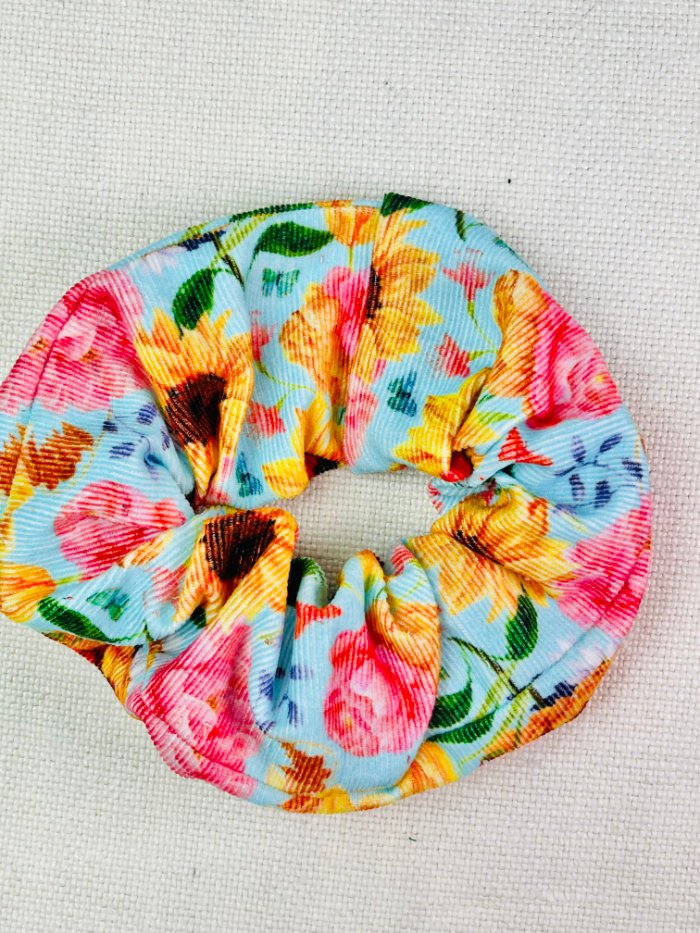
Step 8 – Next, stitch over the overlap with a straight stitch to secure the scrunchie.
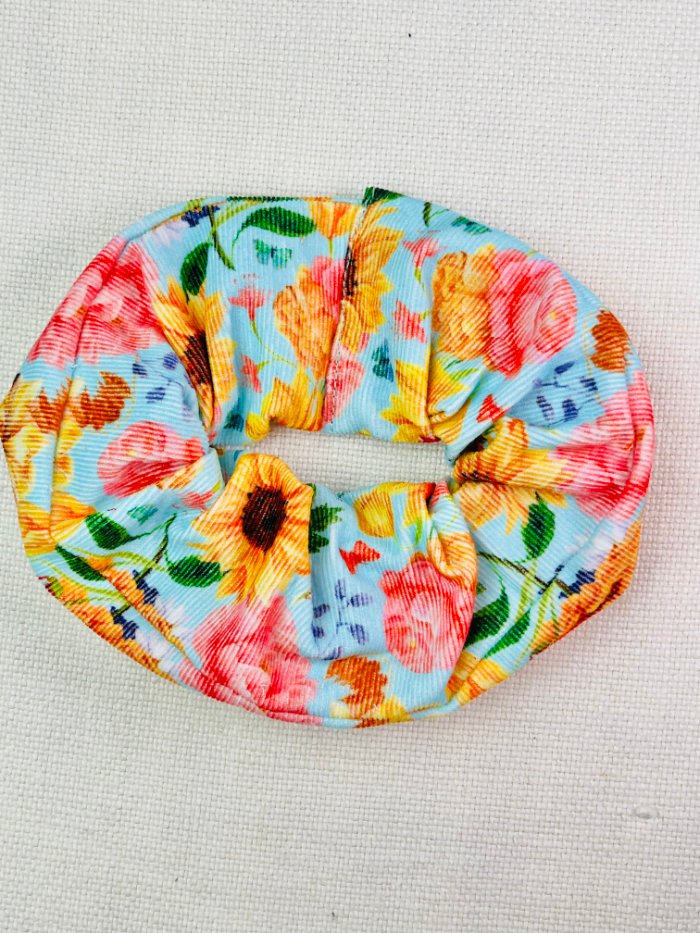
This method is most prevalent method however I find that I do not like the seam that secures the both ends of the fabric tube. To make a prettier finish, you can hand stitch the folded end of the tube to the other end of the tube to hide the seam line.
Burrito method of sewing DIY hair scrunchie
This method makes the scrunchie without a need for unsightly joining seams or hand stitching. While this requires some thought it actually is surprisingly simple and can be undertaken by even the beginners.
Step 1 – For this method, start by overlapping and then sewing the ends of the elastic together with a zig zag stitch. Backstitch to secure the threads.
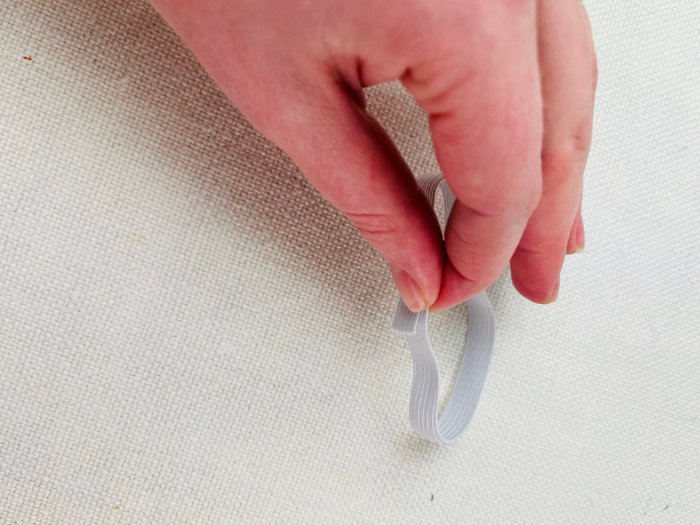
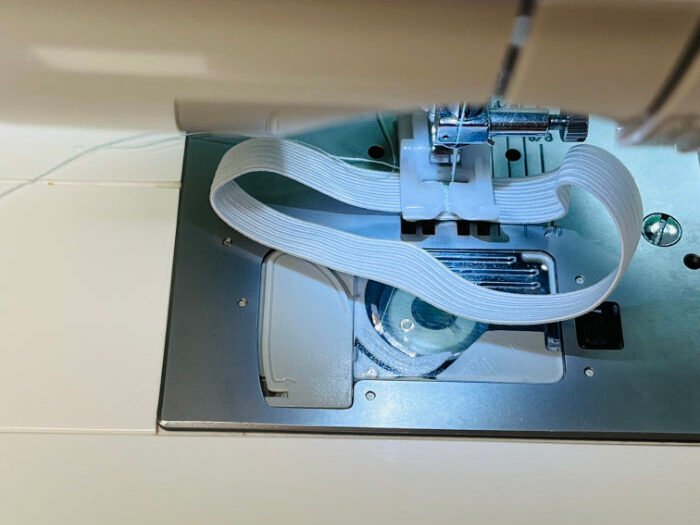
Step 2 – Next, bring the short ends of the fabric together with right sides facing and sew with 1cm seam allowance and a straight stitch, backstitching at the beginning and end to stop the threads from unravelling.
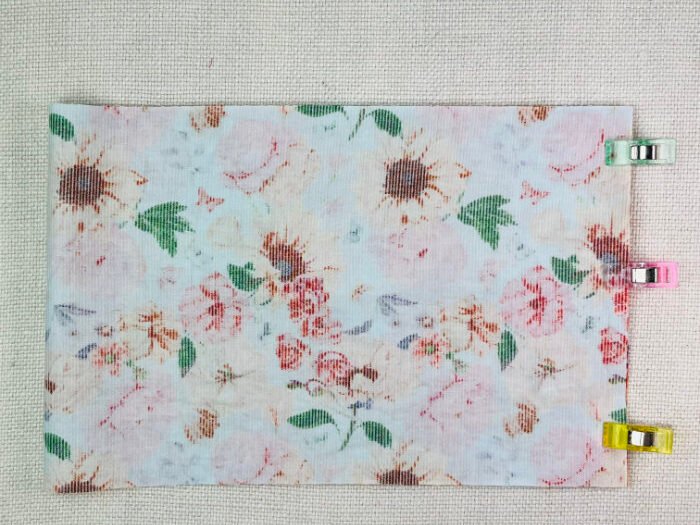
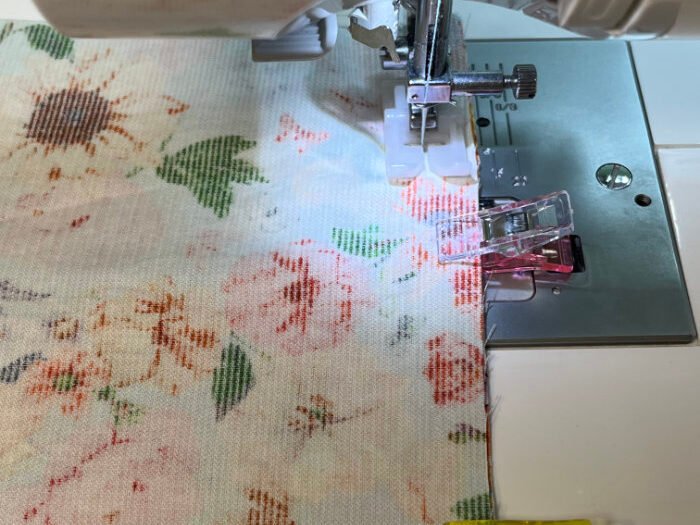
Step 3 – Place the elastic over the fabric tube (similarly as you would put the hair band on the hair).
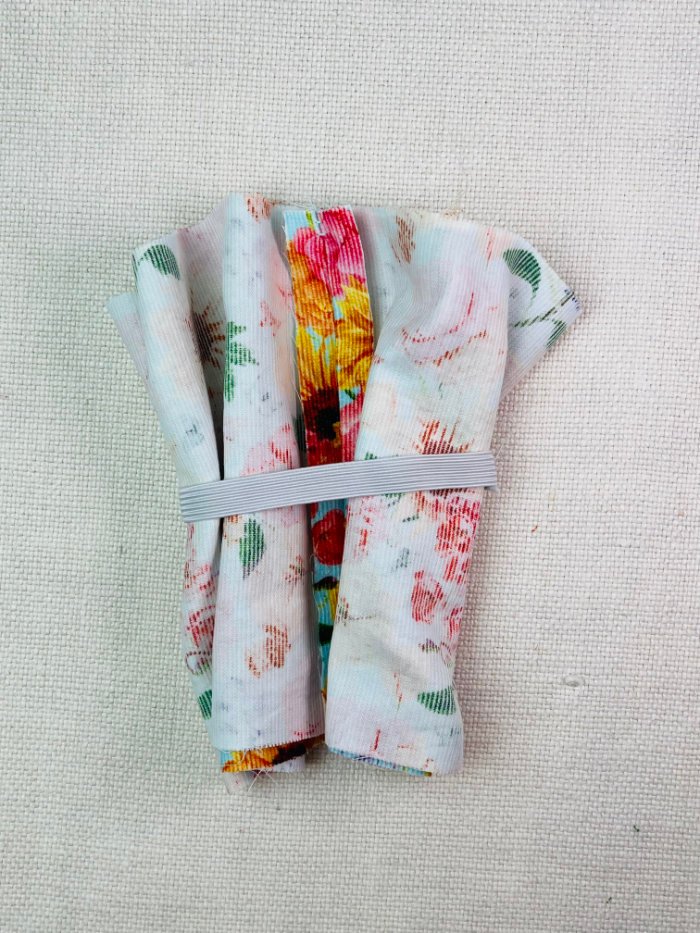
Step 4 – Then fold the upper fabric from the bottom up to the middle and from the top to the middle overlapping both and exposing the fabric on the right side.
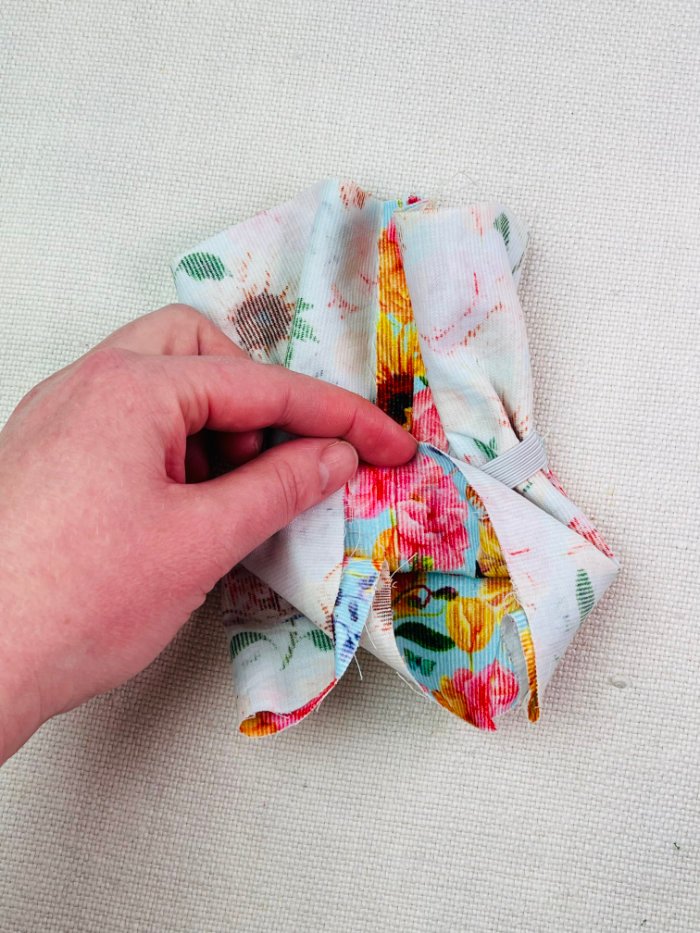
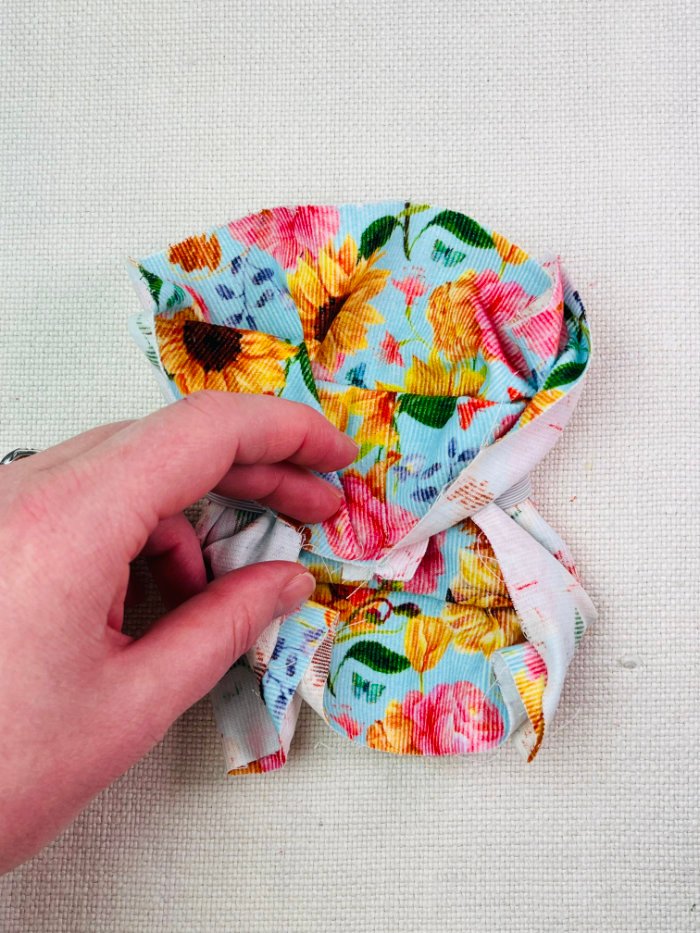
Step 5 – Next, fold the bottom fabric that has not been folded over to the top, enclosing the folded fabric in the middle.
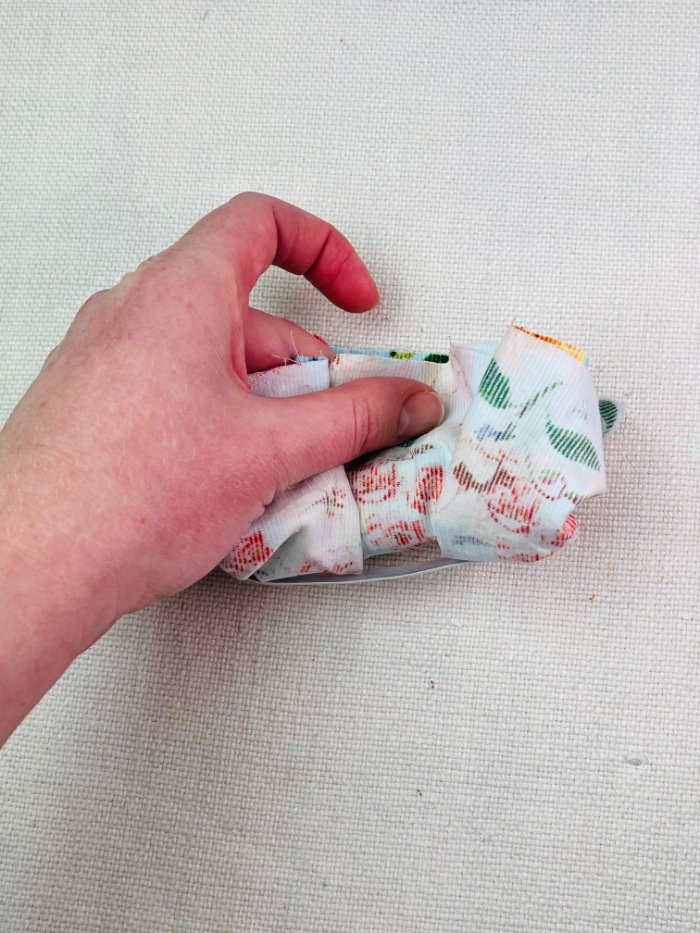
Step 6 – Pin along the edge as far as you can, without catching the folded fabric in the inside.
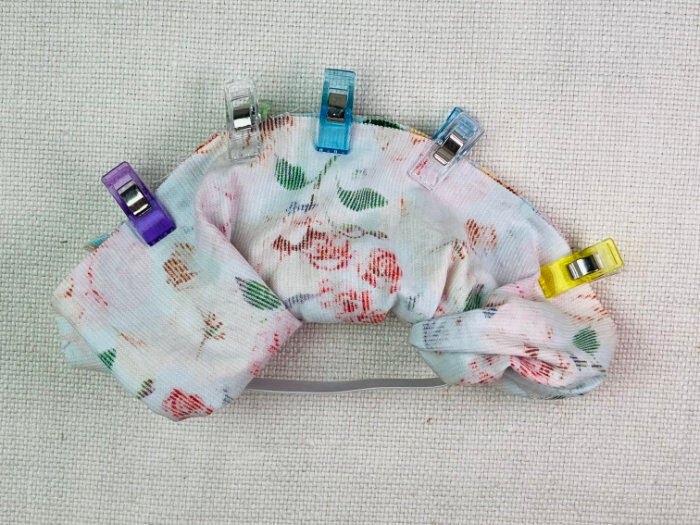
Step 7 – Sew along the pinned edge with 1 cm seam allowance as far as you can. Then either pull the fabric from the inside the extend the the seam or, I find this easier, backstitch and trim the thread. Then pull the fabric out as much as possible to continue matching up the seam. Pin and sew again. Repeat until you have sewn all but last 4 cm for the turning hole. Backstitch at this point and trim the threads.
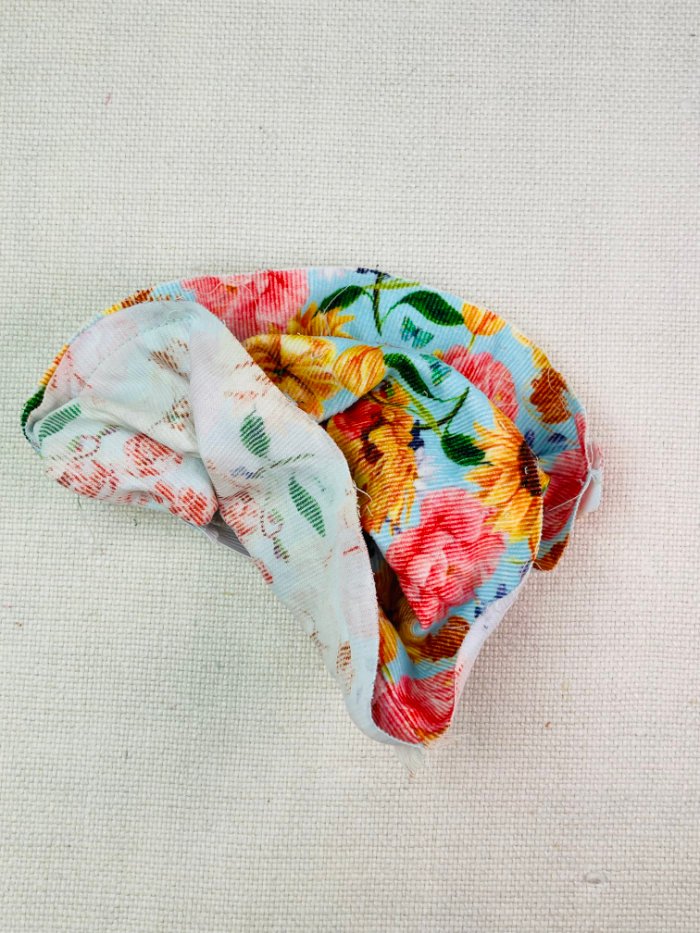
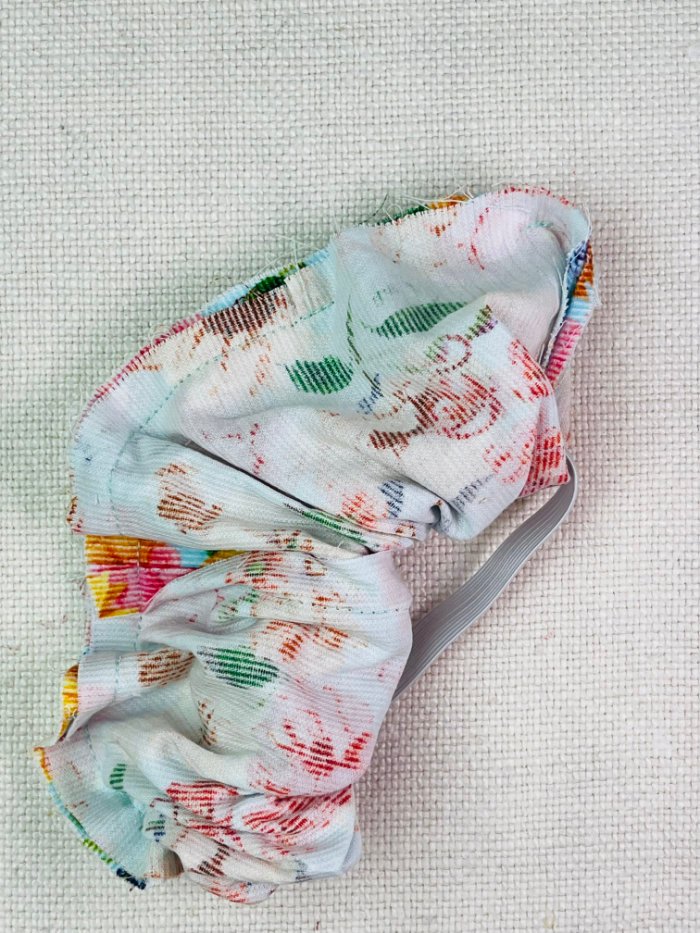
Step 8 – Pull the scrunchie out through the turning hole.
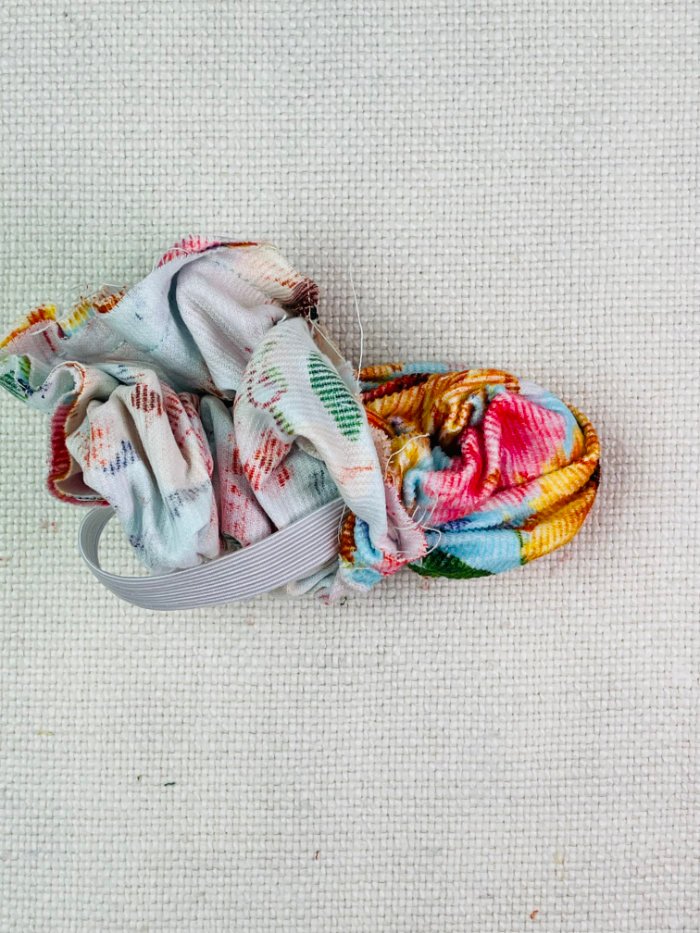
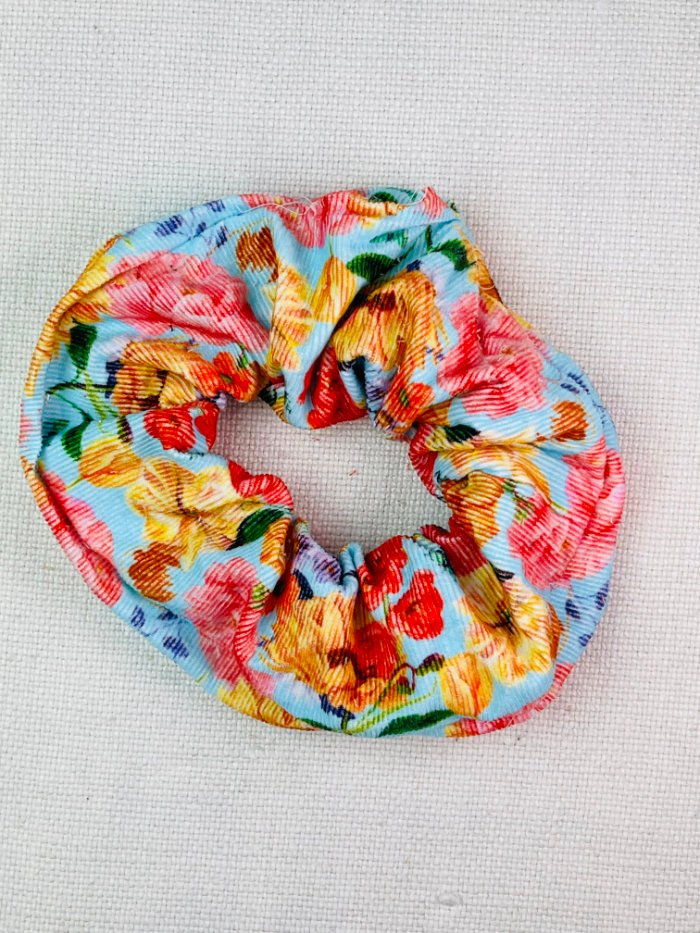
Step 9 – Pin the turning hole together and stitch to close it.
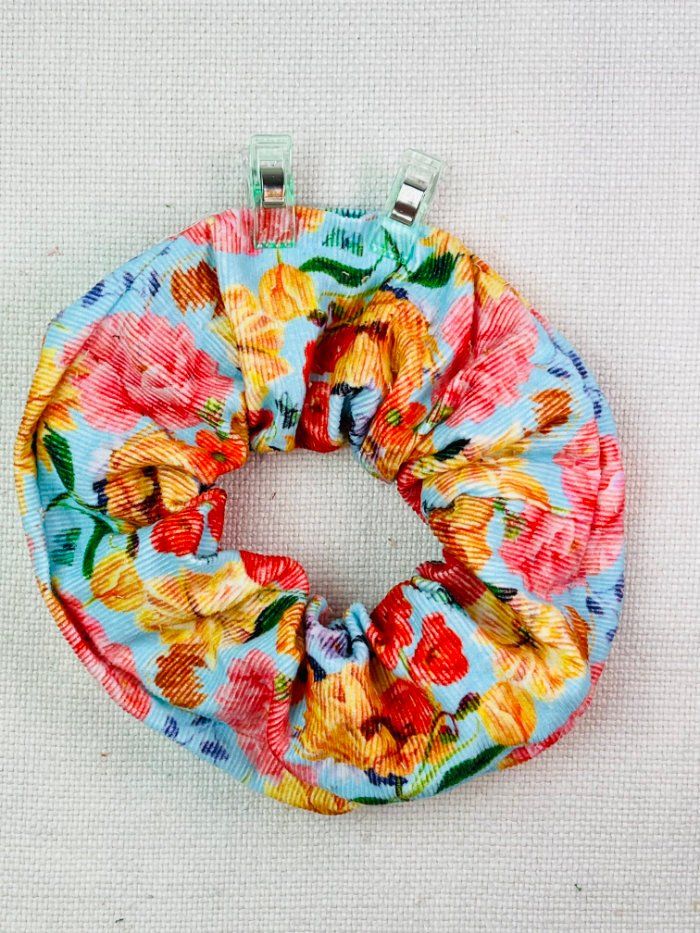
Sewing scrunchie with a bias tape
This method is simple and provides a decorative outer edge. You will need to be slow and careful while attaching the bead binding to ensure that the seam covers both sides of the bias tape.
Repeat Steps 1 to Step 3 from the Burrito method.
Step 4 – Bring the end of the raw edge up to meet the other raw edge, with wrong sides facing. Pin in place the whole raw edge.
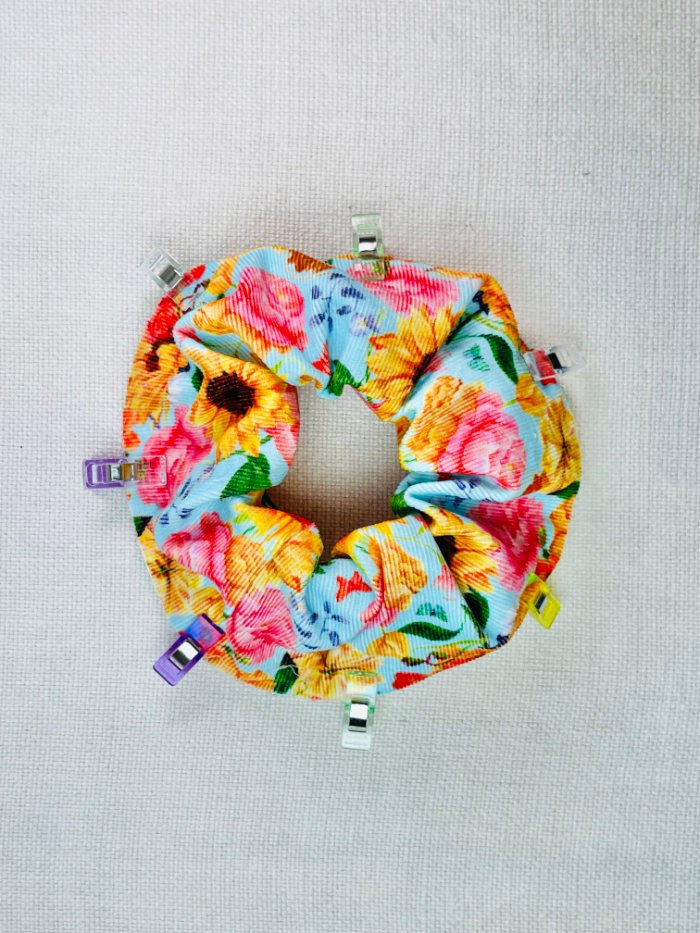
Step 5 – Sew around with a scant 1cm seam allowance. Then trim the seam allowance to around 0.5cm.
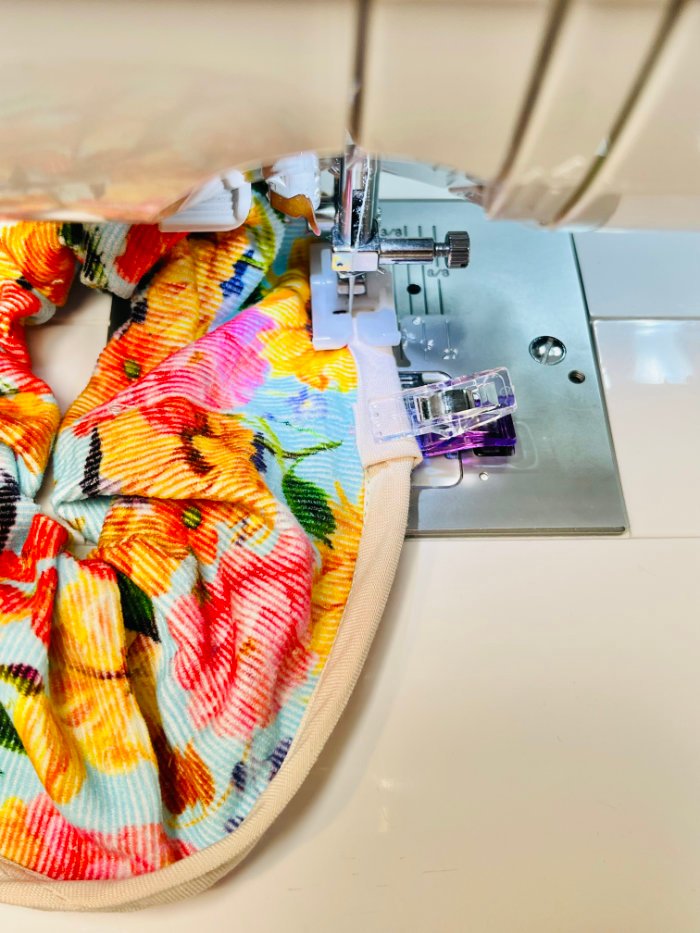
Step 6 – Place a double folded bias tape over the sewn raw edge, pin and sew in place.
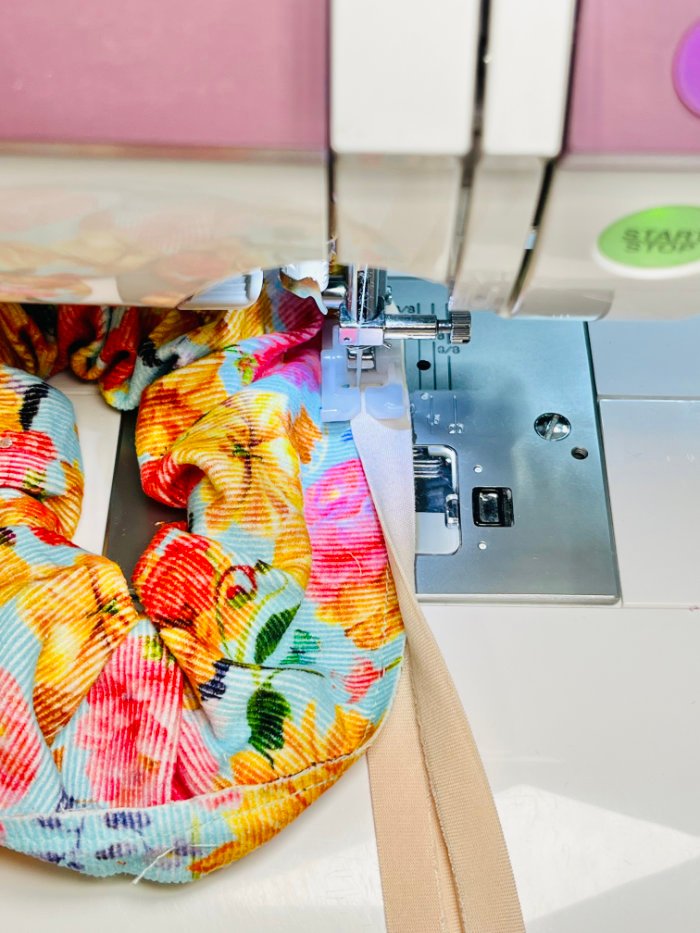
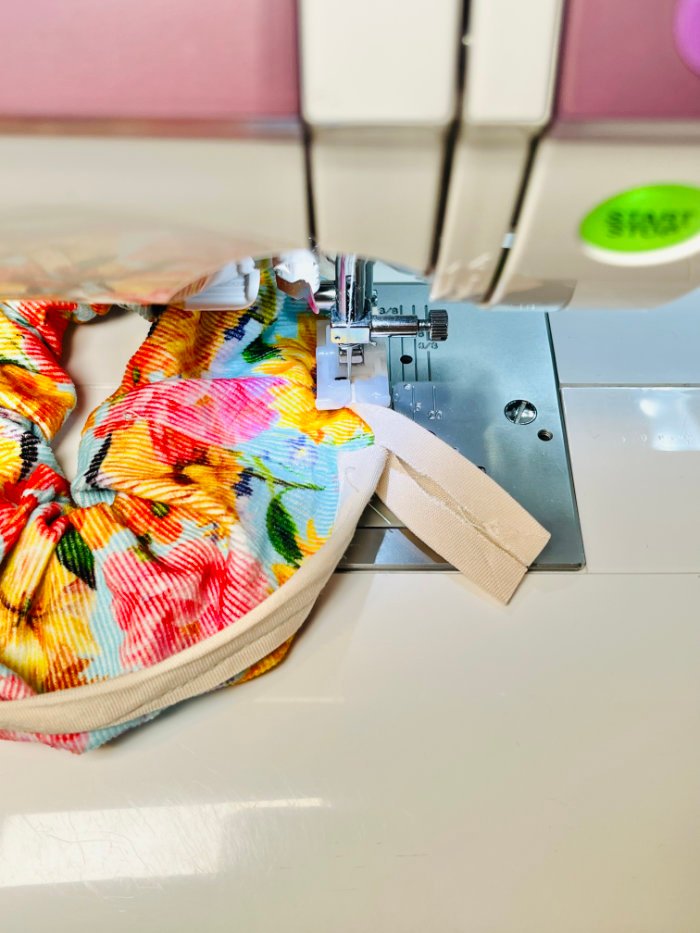
Step 7 – When you get to the end, trim the bias tape slightly longer than the raw edge. Fold it back to create a smooth end and place it over the start of the bias tape. Then finish the seam.
Sewing the scrunchie with overlocker
This definitely is the quickest and simplest methodic if you own an overlocker. The method does not require you to turn the scrunchie inside out to finish it.
Repeat the Steps 1 to 4 from the method with the bias tape.
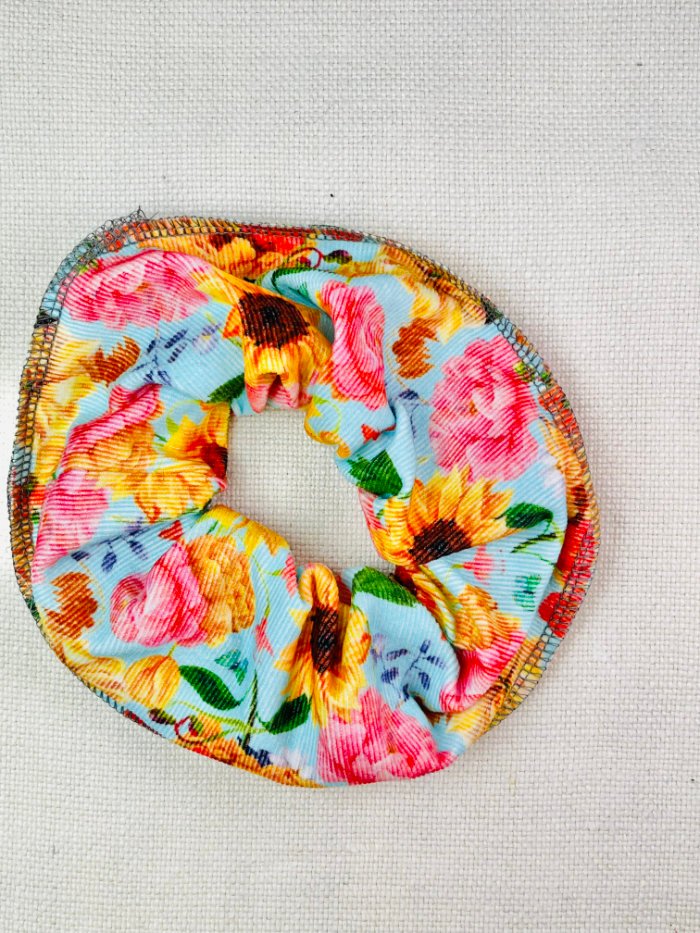
Then, using an overlocker, sew the raw edges together. Here you can remove the left needle to create narrower seam. You can use a colourful thread to create an interest or keep to neutral threads such as ivory, grey or navy.
What Makes a Good Hair Scrunchie?
Good scrunchie will undoubtedly be pretty with clean straight stitches. However, the most important characteristics for the scrunchie is that it will stretch enough to go over your hair at least twice, will be made of a soft natural fabric that does not damage your hair and stays in place at light activity. My tutorial above has addressed all these points to create a beautiful and reliable hair scrunchie that you can match with your outfit.
Are Hair Scrunchies Bad for Your Hair?
Although the scrunchie is gentler option than rubber bands, they still can damage your hair long term if you are using it consistently. If you can get away with it, braid your hair overnight without using hair ties. But if your hair is too short or are quite silky, it is best to sleep with hair in a scrunchie above your head.
Hair Scrunchie Sewing FAQs
Final thoughts and Conclusions
As I was sewing each scrunchie following a different method, I kept changing my mind as to which one is my favourite. However, once I had finished at least one scrunchie in each method, I went back to the Burrito method to complete the rest. It was a little struggle to pull the scrunchie out to continue sewing the outer seam, but I discovered that if you mark the opposite sides that you pull over in Step 5, then the fabric is not skewed and turning becomes easier. I just liked the clean outer seam better compared to overlocked edge.
If you enjoyed the tutorial, do not forget to save it on Pinterest for future reference!
Happy Sewing!
If you enjoy low-waste accessories, you may also like my tutorials on reusable sanitary pads and handmade baby drool bib.