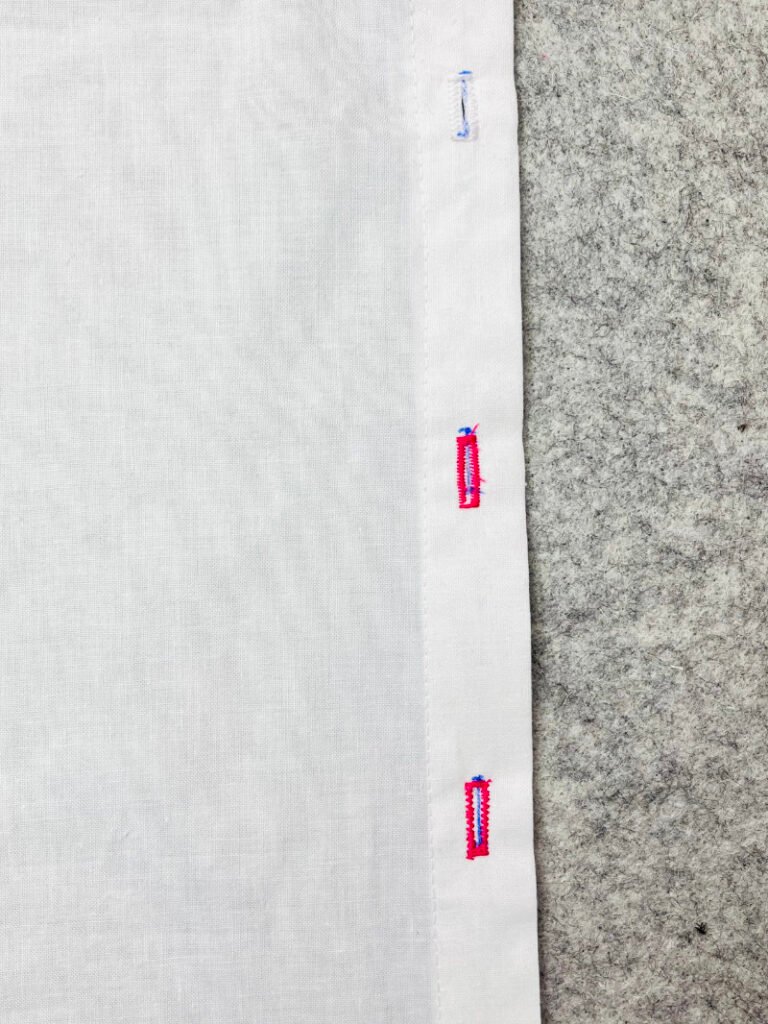
In this step-by-step sewing tutorial, I will show you exactly how to sew a buttonhole on a sewing machine using three methods: one-step automatic, four-step, and manual zigzag. You will also learn how to prevent puckering, uneven stitching, and thread jams so your buttonholes look clean and professional.
I have sewn buttonholes on shirts, shirt dresses, children’s garments and structured accessories, and this is the exact method I use for reliable results.
I used to be scared to sew buttonholes on a sewing machine as the thick stitching made me concerned that I will not be able to fix a mistake. Or that I was not sure which direction I should be positioning the garment. And that all before even figuring out how to attach a buttonhole foot on my sewing machine!
Over time, the love for shirt dresses made me pull up my big girl pants and embrace the unknown. In this post I hope to convey a simple method on how to sew a buttonhole without fear. I use this exact method when sewing shirts and children’s garments to ensure durable, clean buttonholes.
When Do You Need Buttonholes
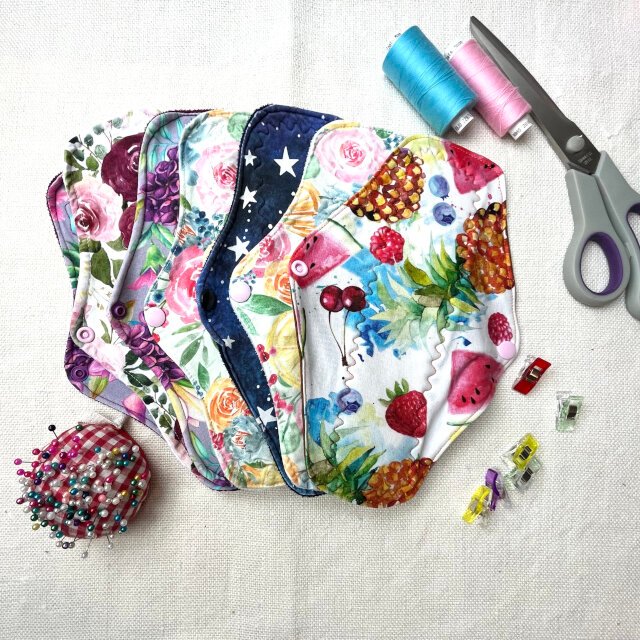
Buttonholes are incredibly versatile fastening method that uses comparatively less materials. Buttonholes are most commonly used on shirts, shirt dresses, cuffs, plackets, children’s clothing, and structured bags. Even my sanitary pad sewing tutorial recommends button and buttonhole as a valid and simple closure option. If you are seriously into sewing, you will come across project that requires a buttonhole. So, knowing how to do it will not turn your head away from the project.
Learning how to sew a buttonhole on a sewing machine is a foundational garment construction skill.
What You Need to Sew a Buttonhole
Here is a complete list of the things that you will need to sew a buttonhole on a sewing machine.
- Sewing machine
- Buttonhole foot
- Interfacing
- Fabric scrap for testing
- Button
- Seam ripper
- Pins
Optional but recommended: a fresh universal needle (size 70/10–80/12 for light to medium fabrics) and matching thread. A blunt or damaged needle is one of the main causes of skipped stitches in buttonholes.
Very Useful Tip:
Always test your buttonhole on scrap fabric with the same interfacing before sewing on your garment.
Types of Buttonholes
In this post I will show how to sew a one-step automatic buttonhole, a four-step buttonhole and a manual buttonhole, but there are a few more options that you could consider for various sewing projects.
There are several types of buttonholes used in garment sewing. The right method depends on your sewing machine, fabric type, and the level of finish you want to achieve.
One-Step Automatic Buttonhole
In a one-step automatic buttonhole the machine does all the work for you after you have positioned the fabric. It is guided by the size of your button and you only need to lower the presser foot and press a button.
One-step automatic buttonhole is the simplest and best option for beginners. However, not every sewing machine will have a one-step buttonhole. Furthermore, the automatic process of sewing the buttonhole can be daunting and leaves less room for corrections.
Four-Step Buttonhole
Four-step buttonhole is the most common option on basic sewing machines. For this method you are controlling the width and the length of the buttonhole by changing the step dial on your sewing machine. While the one step automatic buttonhole sews the buttonhole forward from the starting position, on the four step sewing machine you are sewing the buttonhole backwards from the starting position.
So, while this method gives most control, it requires a little bit of patience and precision when finishing the buttonhole.
Manual buttonhole on a Sewing Machine
Manual buttonhole is completed with the basic sewing foot and by changing the stitch selection manually. If you are most confused on how to apply a buttonhole foot or which way the sewing will go, this option might actually be the easiest. I also like this method because the buttonhole sewing is then not restricted by the buttonhole foot, allowing this method to be used on thicker fabrics.
The drawback is that the first buttonholes will not be perfect and you will need to practice sewing them on scrap fabric first.
Machine-corded buttonhole
The machine corded buttonhole is sewn using the same approaches as above, but you are adding a cord to the sides of the buttonholes. This reinforces the buttonhole and is more useful on knit jersey fabrics to reduce the chance of the buttonhole stretching out of the shape.
The buttonhole foot will have hooks and guide to add the cord but on the manual approach with the basic sewing machine foot you will need to guide the cord ourself by carefully aligning it with the machine needle.
Piped Buttonhole
Piped buttonhole is made using the piping cord, aligning the raw edge of the buttonhole, sewing the piping in place from the right side. Then it is pushed through to the other side and secured from the right side. You do not need a specialist sewing foot or sewing machine with a zig zag stitch to make a piped buttonhole. So this is a perfect option if you have an antique sewing machine that only does straight stitch.
It is a decorative buttonhole that is useful to reinforce coat or jacket buttonholes but can be used on other sewing projects too.
Bound Buttonhole
Bound buttonhole is commonly used on high quality jackets and coats. It reinforces the buttonhole and stops it from distorting while also giving a decorative finish. The construction is similar to the piped buttonhole but it uses just a patch of same or contrasting fabric.
Hand Sewn Buttonhole
There is an option to make a hand sewn buttonhole with an embroidery thread and embroidery techniques. It is essentially a blanket stitch stitched closely together to form a rope on the opened edge of the buttonhole.
It is definitely the longest process of making a buttonhole and therefore add a lot of charm and personality to the finished article.
Prepare the Fabric for Buttonhole
Before sewing a buttonhole, stabilising the fabric is critical. Most buttonhole problems — puckering, tunnelling, or distortion — are caused by insufficient stabilisation.
If there is just a single layer of fabric or the fabric is quite thin, fuse an interfacing on the reverse.
If you are adding a buttonhole to a reusable sanitary pad, there is no need for interfacing as the layers are thick enough. On a shirt, you can opt to add an interfacing to stabilise the fabric and make it easier to sew the buttonhole. However, it is not mandatory if the button stand is folded twice.
Mark a Buttonhole Placement
Regardless of the type of the buttonhole you select, you need to mark the buttonhole placement. The location of the buttonhole depends on the finish you want to achieve and the direction of the buttonhole. I will aim to publish a separate blog post on how to position buttonholes on a shirt or dress button stand, so in this post I am addressing just how to mark a single buttonhole location.
Measure the width of the buttonhole with a seam gage or tape measure. For thicker buttons, measure both the diameter and the thickness of the button and add that full measurement to ensure the button passes through easily. Add extra 3mm as an allowance for buttonhole ends.
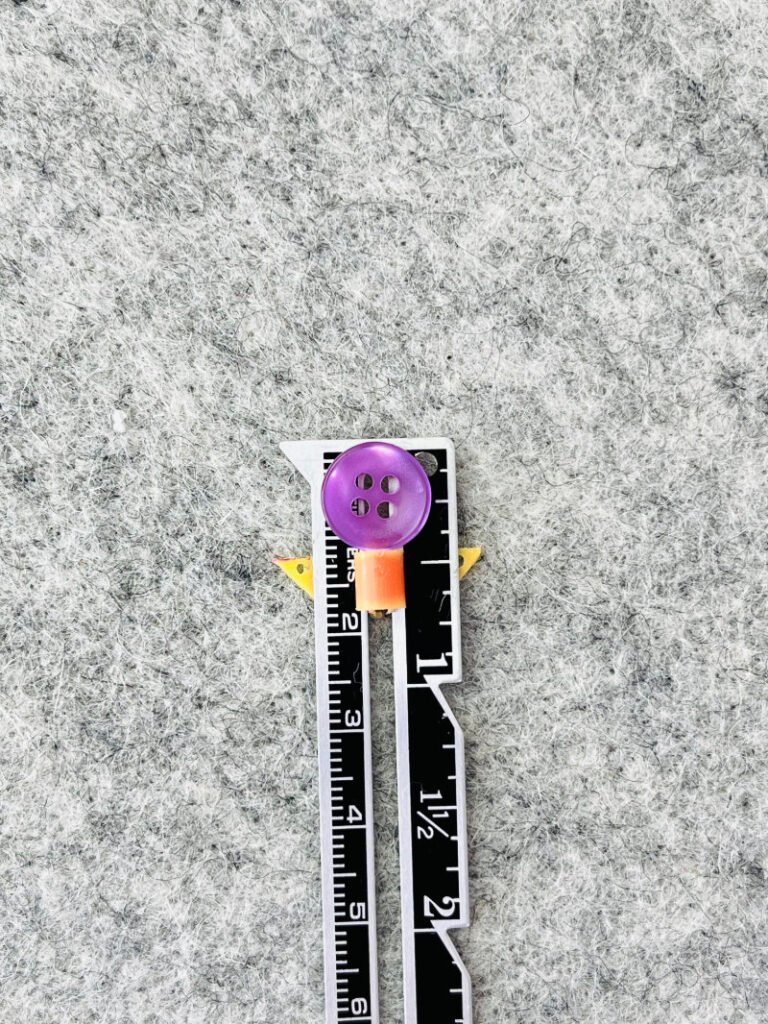
Mark this measurement on the garment or your sewing project, placing dots at the either end of the buttonhole and then connecting the dots with a straight line. Additionally, I tend to add a dash at either end of the buttonhole to make the ends more visible and reduce the errors if the marking gets smudged out.
Good Practice
Before sewing the buttonhole on your sewing project, recreate the layers and interfacing (if used) on a fabric scrap from the same project and practice the buttonhole couple of times. This way you will familiarise yourself with speed and the order that buttonhole is sewn as well as see how the machine handles the fabric.
I do this every time when I sew buttonholes.
Step-by-Step: How to Sew a Buttonhole on a Sewing Machine
Now that we have covered the theory, let’s look at the step by step instructions on how to sew a buttonhole on a sewing machine.
How to Sew Automatic One-Step Buttonhole
I am using a Singer Quantum Style Touch 9985 sewing machine but the instructions will be very similar to other sewing machines that has an automatic one-step buttonhole option.
Step 1: Place the button in the buttonhole foot at the rear of the buttonhole foot.
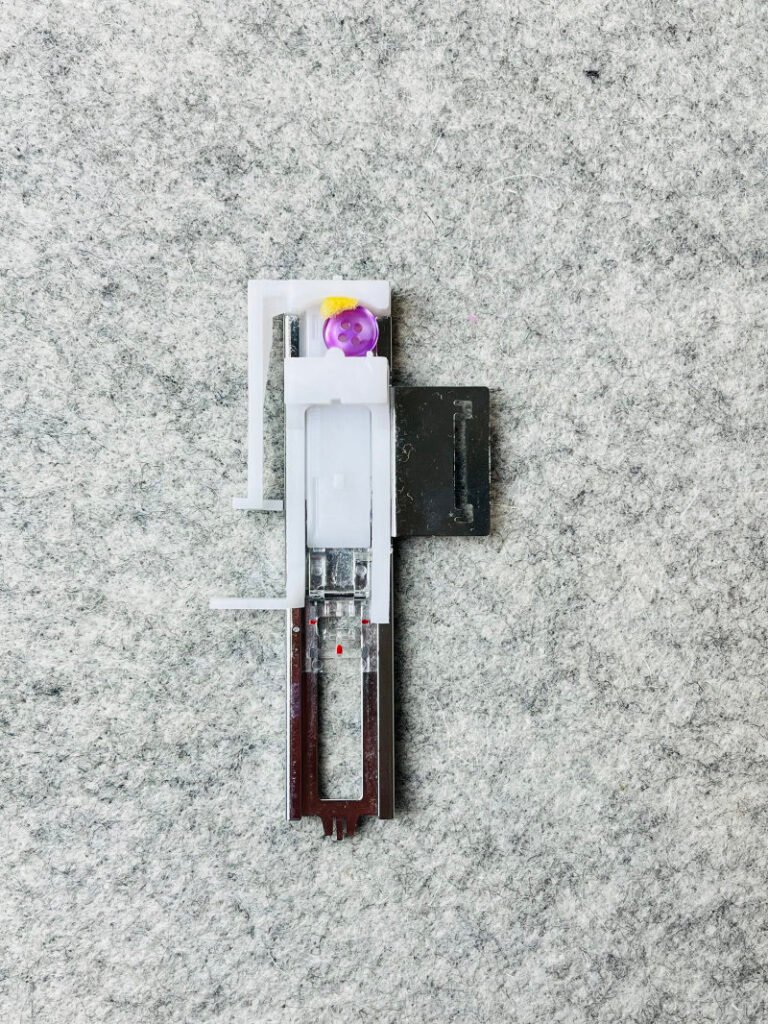
Step 2: Attach the buttonhole foot to the sewing machine and lower the buttonhole lever guide on the left side.
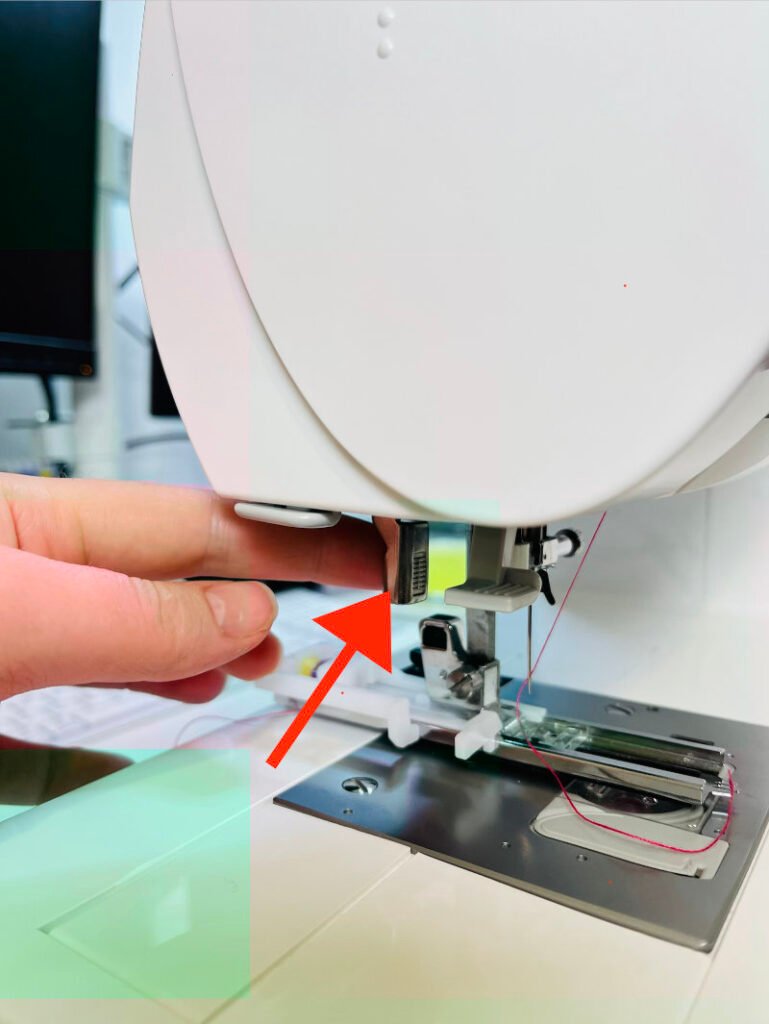
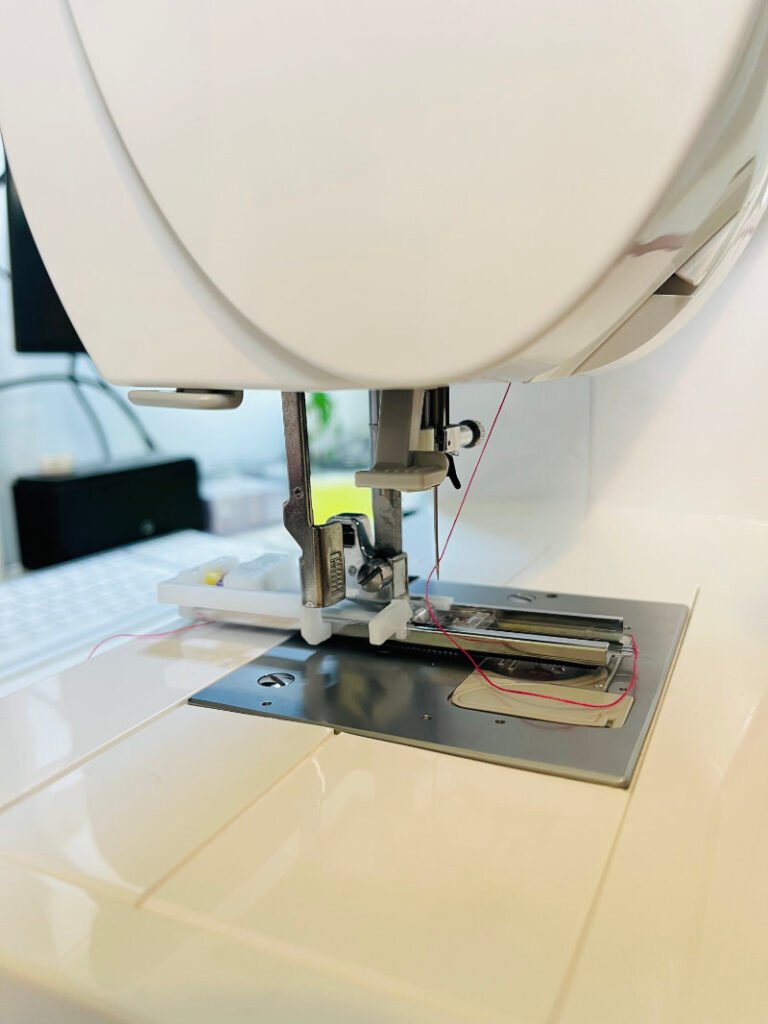
Step 3: Place the fabric under the buttonhole foot, aligning the centre marking on the buttonhole foot with the top of the buttonhole marking. Lower the foot.
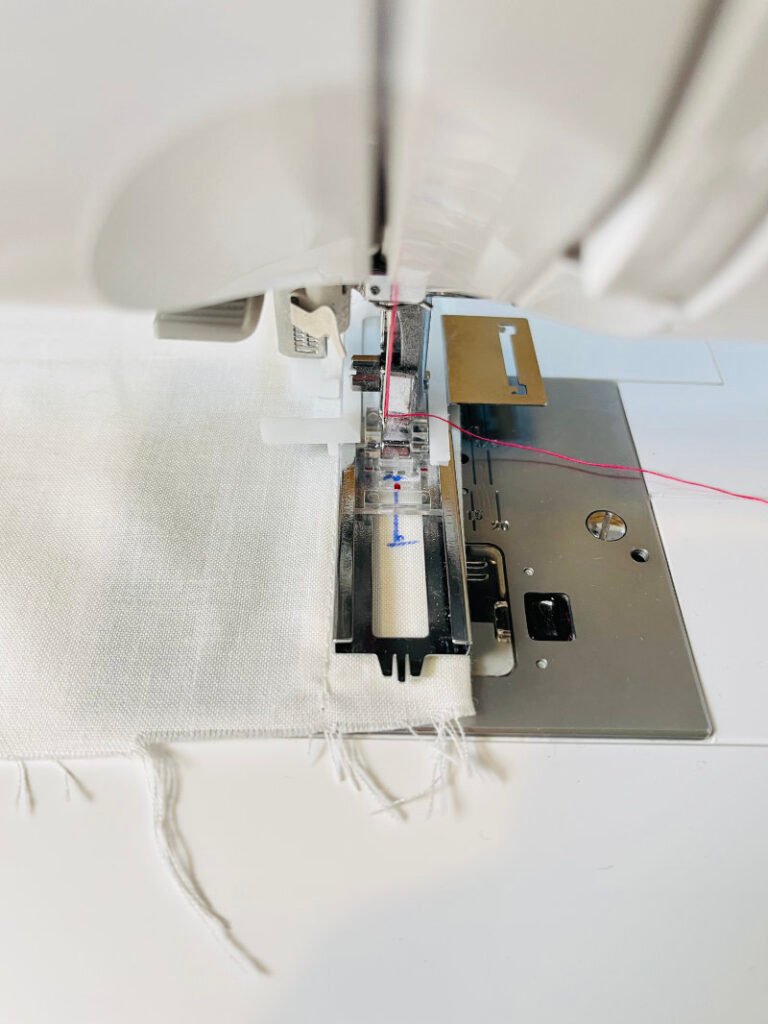
Step 4: Select the buttonhole option on the sewing machine. My sewing machine comes with many options but I tend to go just with the basic straight edge buttonhole on most sewing projects.
Step 5: Sew the buttonhole. Do not pull or push the fabric while sewing. Let the feed dogs move the fabric naturally to avoid uneven stitch density. I remove the foot pedal when I am sewing the one-step buttonhole as the machine does all the steps and stops once the buttonhole is complete. This way I only need to worry about guiding the fabric which is also mostly done by the sewing machine itself.
Step 6: Cut the threads or move onto the next buttonhole (you can cut the threads at the end if there is more than one buttonhole on the button stand).
Top Tip
Pull the upper thread under the buttonhole foot before starting to sew to reduce the tangles.
How to Sew Four -Step Buttonhole
I am using Singer Talent sewing machine but the instructions will be the same for sewing machines with four step buttonhole option.
Step 1: Attach the buttonhole foot to the sewing machine.
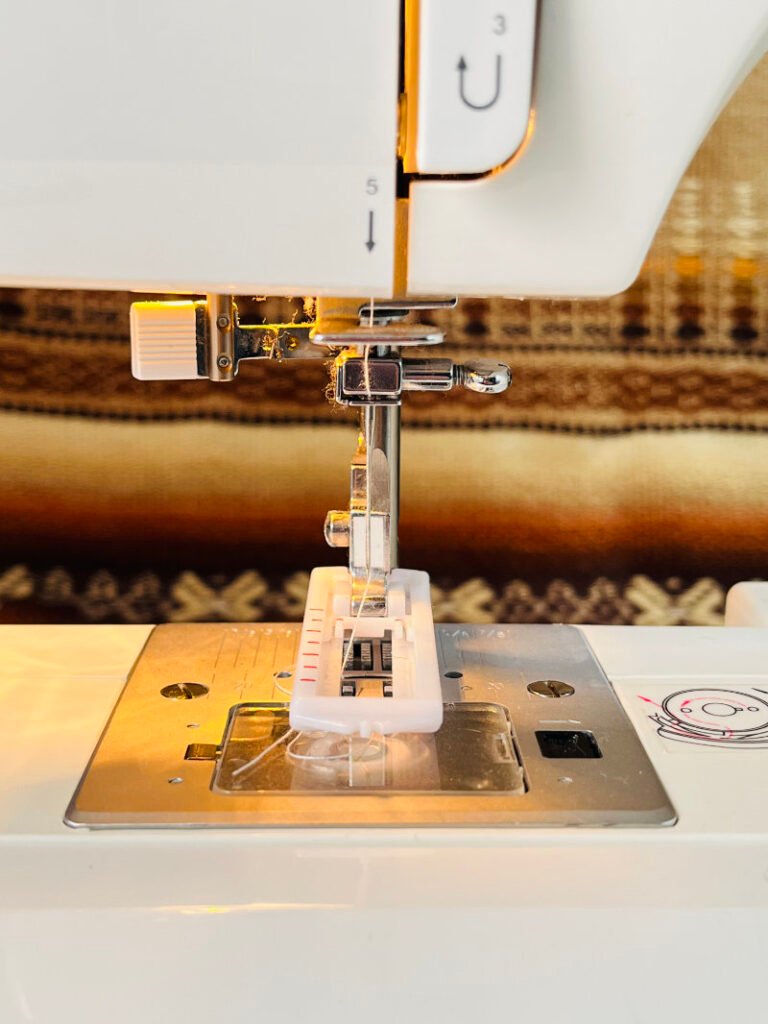
Step 2: Place the fabric under the buttonhole foot.
Step 3: Align the buttonhole foot with the top buttonhole mark. Mentally mark the location of the other buttonhole end on the buttonhole foot.
Step 4: Carefully glide the buttonhole foot and fabric together until the mental marking on the side of the buttonhole foot matches the other end of the buttonhole. You are doing this because you are going to sew a buttonhole backwards.
Step 5: Change the width of the stitch width dial to the maximum width. On my sewing machine it is 6. Select the buttonhole stitch on the Stitch length dial. If your sewing machine allows it, you can select the stitch length to be somewhere between 1 and 0 for closer stitching on the buttonhole sides.

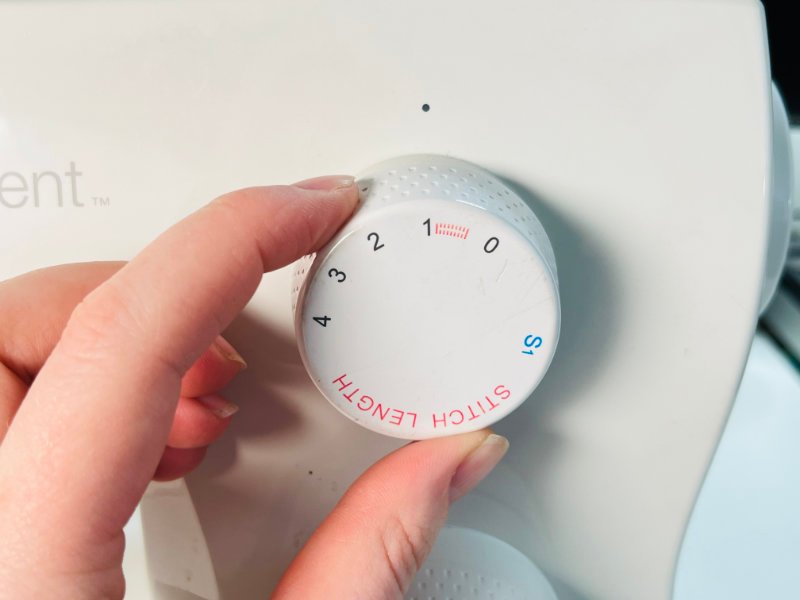
Step 6: Select the Step 1 on the stitch dial.
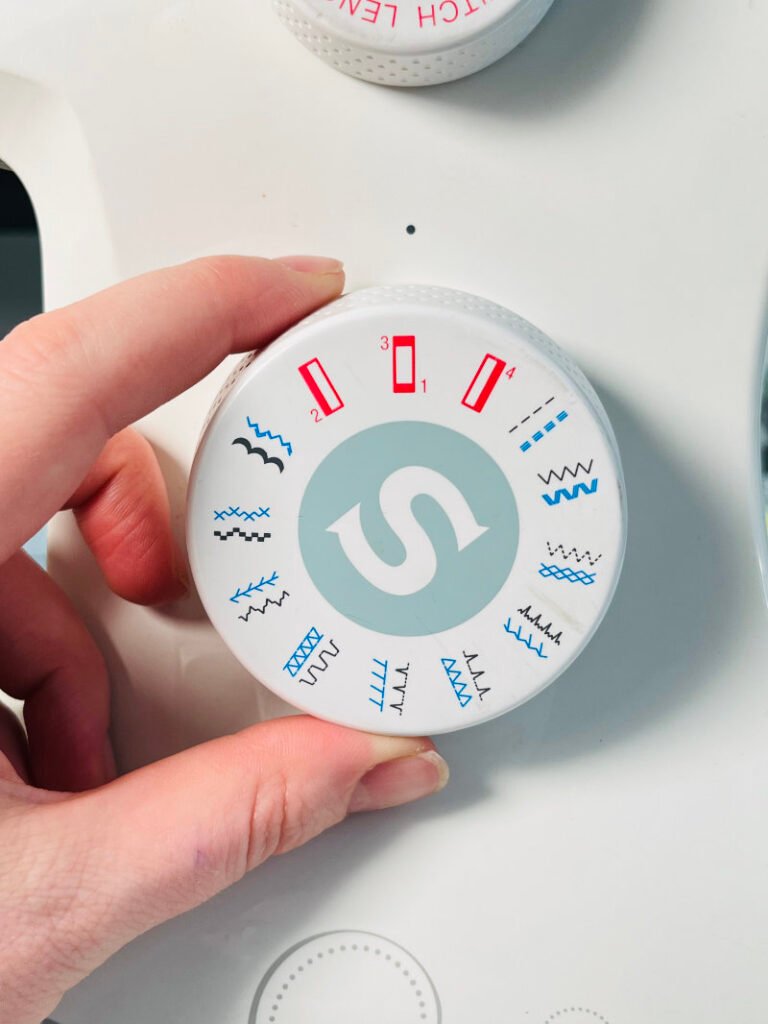
Step 7: Sew the first step stitch a few times (5-6 times), ending with the needle on the left side. Lift the needle up!
Step 8: Select the second step stitch on the stitch dial. Sew the left side of the buttonhole until it hits the end (the buttonhole foot stops you from moving beyond the end point but may allow you to still sew in spot). Lift the needle up!
Step 9: Select the third step stitch on the stitch dial and sew the top end of the buttonhole couple of times, ending with the needle on the right side. Lift the needle up!
Step 10: Select the fourth step of the stitch dial and sew the right side of the buttonhole, until you return to the other side of the buttonhole. Do a few reverse stitches to secure the thread. Cut the threads or move onto the next buttonhole (you can cut the threads when all the buttonholes are made).
Consistency is key. Use the same number of stitches at both ends of the buttonhole to keep it symmetrical.
How to Manually Sew a Buttonhole on a Sewing Machine
You still can make buttonholes with a sewing machine if you have an old sewing machine that does only straight and zig zag stitch and does not come with a specialist buttonhole foot.
Step 1: Place the presser foot on the top end of the buttonhole in the centre of the buttonhole. Sew 5-6 wide zig zag stitches with 0 stitch length, returning to the left side.
Step 2: Change the stitch width to anywhere between 1 and 2 mm, with stitch length less than 1mm. Position the needle to the left of your buttonhole and stitch to the other end of the buttonhole.
Step 3: Change the width and stitch length of the zig zag stitch to that of Step 1 and sew wide zig zag stitch.
Step 4: Match the stitch length and stitch width with Step 2. Either turn the fabric, sew backwards if the sewing machine has this option, or move to the other end of the buttonhole and complete the other side of the buttonhole. Secure the thread with reverse stitching or by moving the fabric back a little and over sewing the end.
How to Open a Buttonhole Without Ruining It
Now that you have made the buttonholes, you need to open the buttonholes without ruining them. You have three options – using a seam ripper, small embroidery scissors with sharp point or using a chisel.
Cutting Buttonhole Open with Scissors
When cutting the buttonholes open with scissors, carefully poke a hole in the middle of the buttonhole. You can do that with either scissors or seam riper. Then cut to either end of the buttonhole with tip of the scissors, being careful not to cut the buttonhole threads.
Cutting Buttonhole Open with Seam Ripper
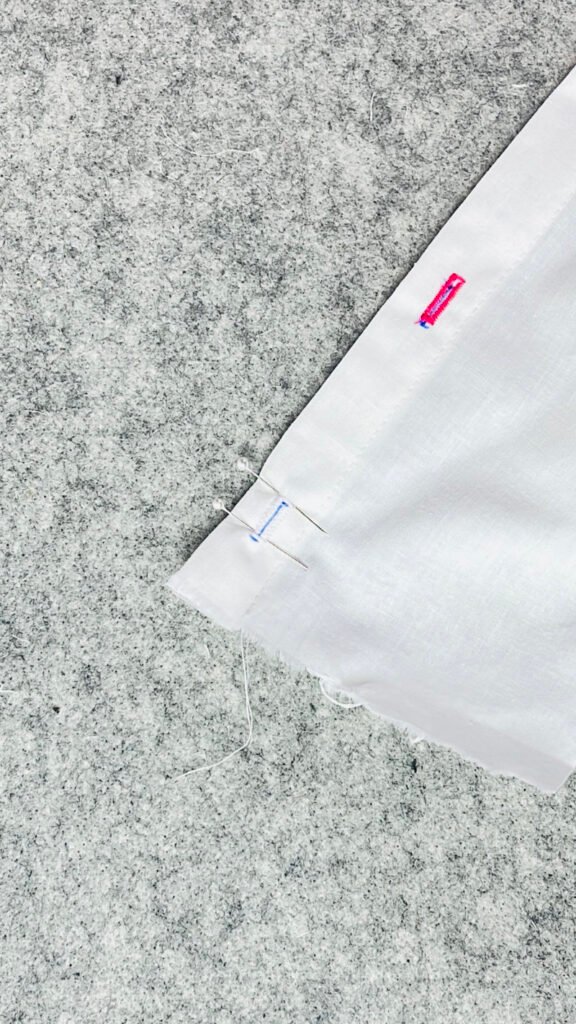
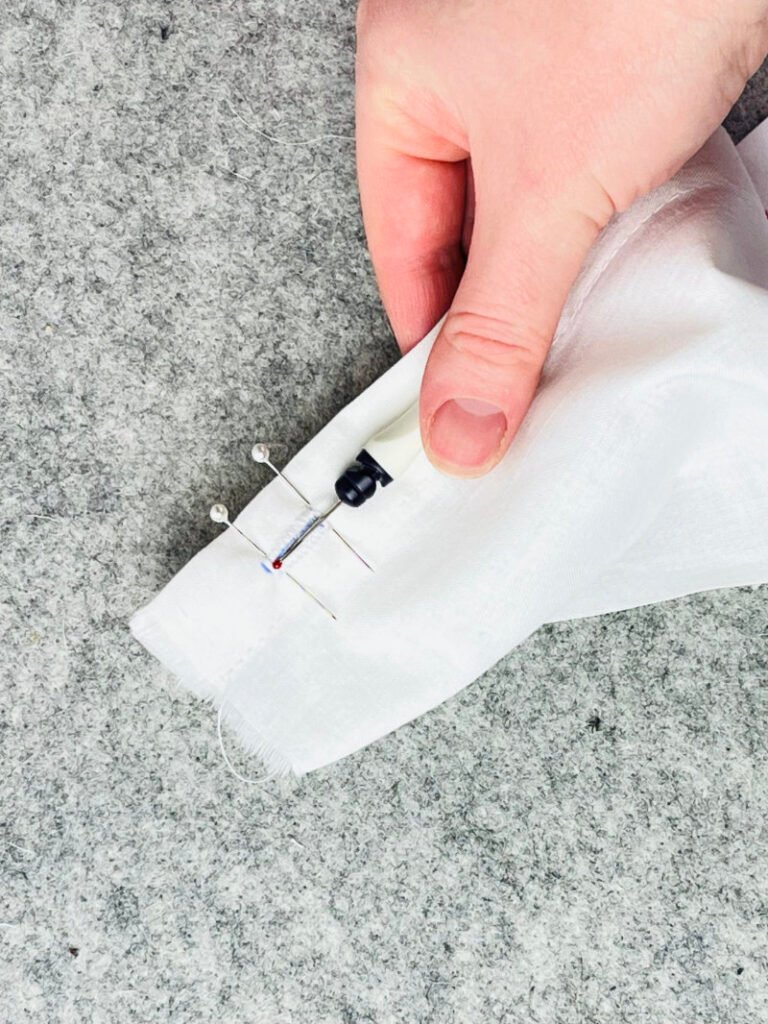
If you are using a seam ripper, place pins at either end of the buttonhole. This will stop the seam ripper accidentally slicing through the stitches. Then poke a hole in the middle and slice to either end until the seam ripper touches the pins.
Cutting Buttonhole Open with a Chisel
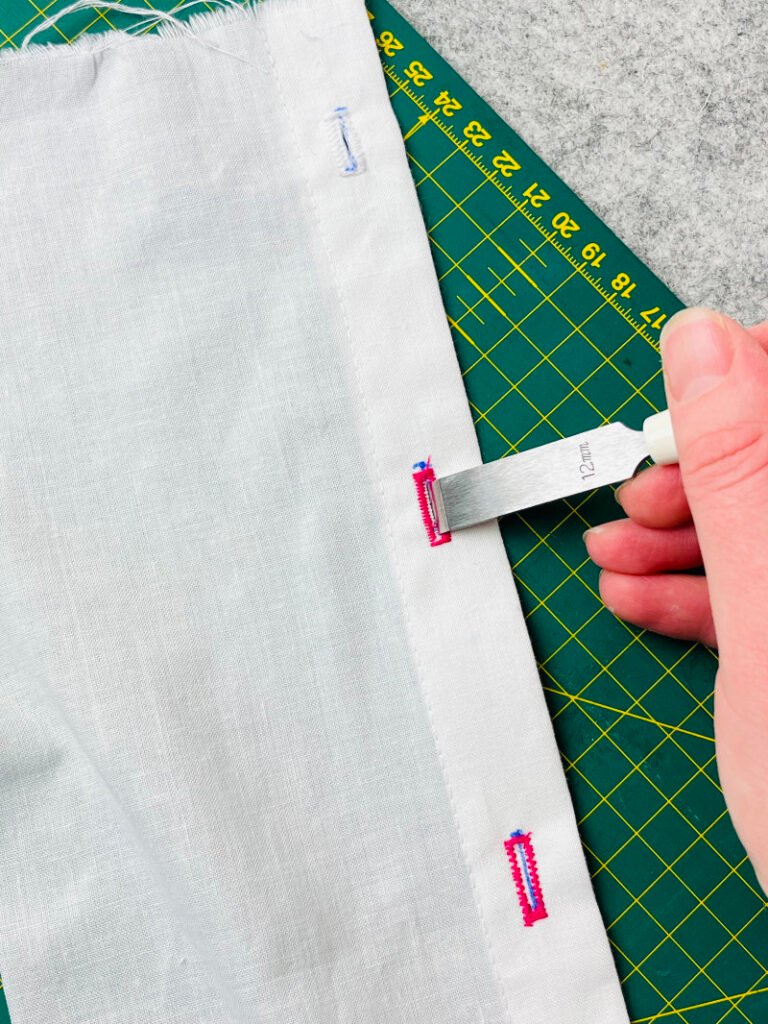
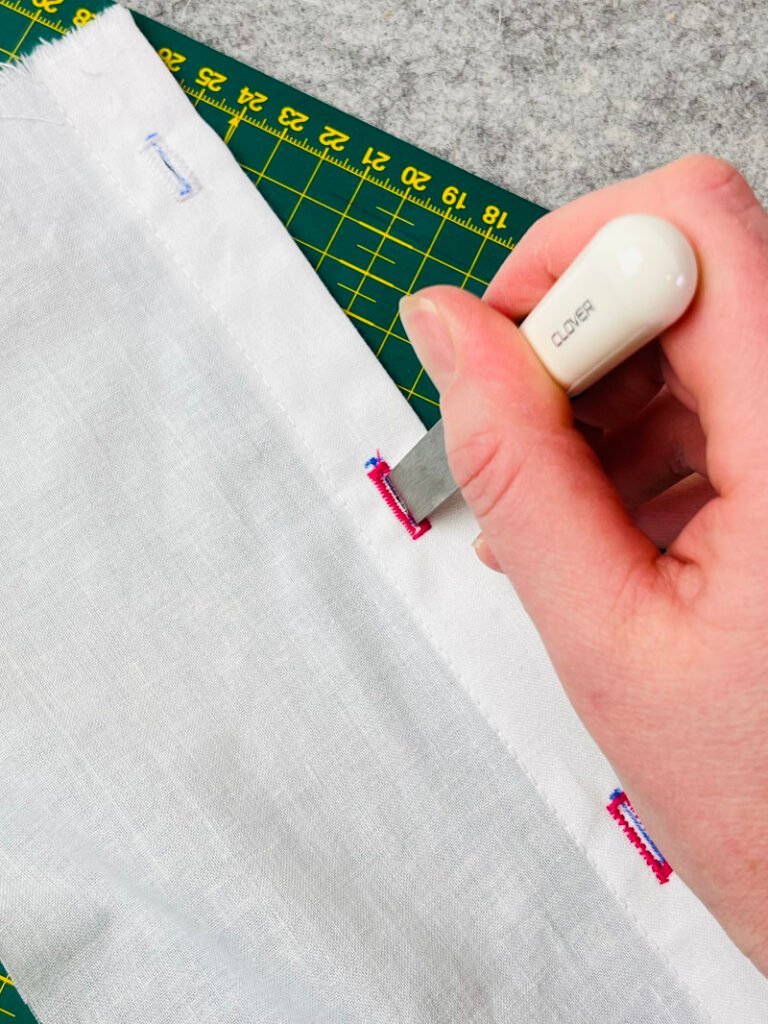
I prefer the chisel option as it makes it the cleanest cuts but you need to be careful not to cut side stitching.
Put the sewing project on a cutting mat ensuring there are no other layers of fabric under the buttonhole.
Then place the chisel in the middle of the buttonhole with an angle from side. Then straighten the chisel and push down to cut the buttonhole open.
How to Tidy Buttonholes
Depending on the width of the buttonhole, there are extra threads in the middle of the buttonhole in which the button can get tangled. So, I trim any fabric threads that come off the sides with sharp scissors. This makes the buttonhole slightly larger. Therefore it is a good idea to make the initial cut that opens the buttonhole smaller than you need.
Why Your Buttonholes Look Messy (And How to Fix Them)
These are the common problems with buttonholes with my suggestion son how to fix each.
- Fabric puckering.
- Cause: Fabric not stabilised or stitch density too tight.
- Fix: Either use better quality interfacing that glues the threads in place on future projects, or carefully cut the loose threads with sharp scissors. You can also apply small amount of fray check or fabric glue on the cut edges.
- Uneven sides.
- Cause: Fabric was pulled during stitching.
- Fix: Practice sewing the buttonholes on scrap fabric first, paying attention on how you pull the fabric. Keep hands lightly guiding only. Do not resist feed dogs.
- Dense stitching jam.
- Cause: Lint buildup or incorrect tension.
- Fix: Clean the lint under the needle plate, needle shaft and under the bobbin holder. Check the sewing machine tension and rethread the sewing machine.
- Buttonhole too small.
- Cause: Incorrect button measurement.
- Fix: Carefully widen the opening and adjust measurement for future buttonholes.
Pro Tips for Professional-Looking Buttonholes
These are my tips to achieve professional looking buttonholes
- Practice the buttonholes on scrap fabric until you are happy with the results before any new project.
- Stabilise fabric with fusible interfacing.
- Match thread and fabric colour to hide imperfections.
- Adjust stitch density for thick or very light fabric. Lighter density for heavy fabric and heavier density for lighter fabric.
- After cutting open the buttonhole, apply a small amount of fray check or clear fabric glue inside the cut edges (especially on loosely woven fabrics). Allow it to dry completely before inserting the button. This significantly increases the buttonhole durability and reduces frayed threads.
Buttonhole FAQ
Final Thoughts
Learning how to sew a buttonhole on a sewing machine is a core garment construction skill. With proper stabilisation, accurate marking, and a little practice on scrap fabric, you can achieve clean, durable, professional-looking buttonholes on any sewing project
Download the free Buttonhole Length & Placement Guide and eliminate guesswork when sewing shirts, dresses, cuffs, and structured garments.