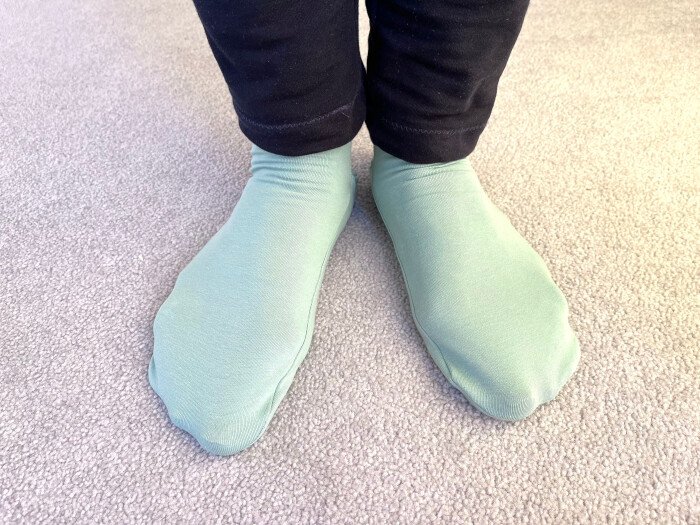
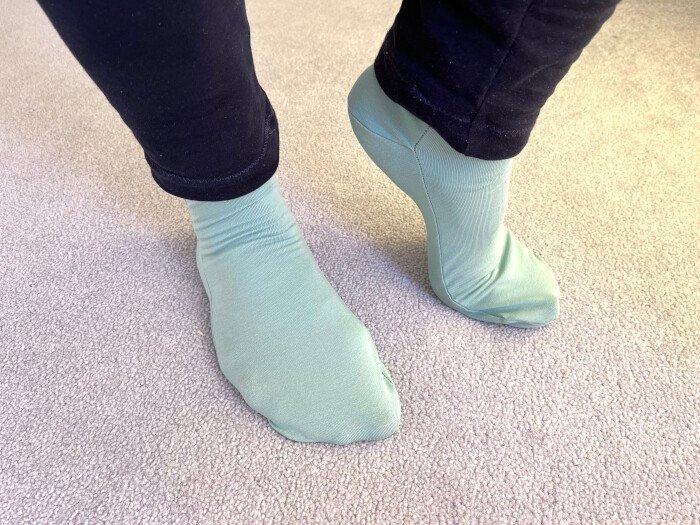
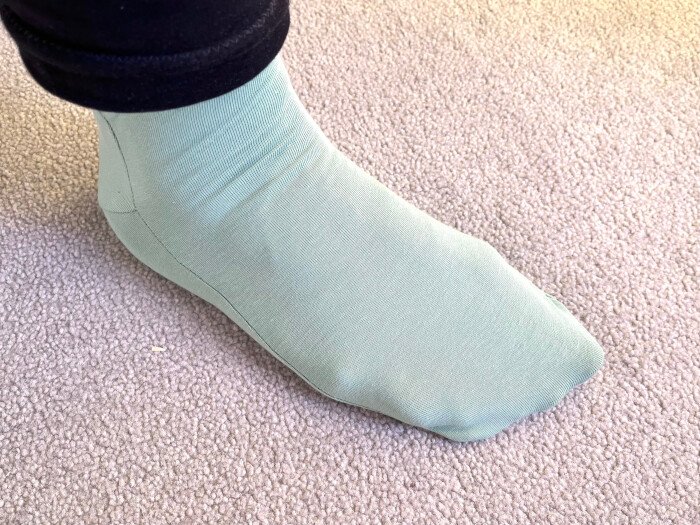
Why sew socks at home
Within my 30 year experience of sewing, it has never occurred to me that I could sew socks at home from a self drafted sew sock pattern. Not even that, actually. I did not even consider that it might be an option as the socks seemed to be such a small item and they all appear to be knitted.
I did not even consider making them when the income was scarce and I was low on socks. I just kept darning the holes to extend the live of the ones I owned or wore a hand knitted socks that were taking longer to make.
So, what changed? Well, one day after folding the laundry and waiting for a missing sock to appear from the pile yet to fold, I glanced at the lonely sock laying on the side table. And I looked at it. Like, really looked at it and I notices the simplicity of the sock and how it could be easily turned into a sock sewing pattern.
And then the lightbulb switched on and all the options and benefits of the handmade cotton socks popped in my head:
- DIY sock pattern is easy to make
- There are just four seams so the project are quick from start to finish once you have made a sock pattern
- When you sew socks at home you can use up all the fabric off cuts.
- The handmade socks use small fabric pieces
- You can mix and match the fabric pieces to create unique socks
- Handmade socks can be so colourful and beautiful
Best fabrics for stretchy socks
Technically, you can use any stretchy fabric to sew socks at home but the weight and the stretchiness of material matters a great deal. With my sustainability hat on, I would not consider a polyester fabric as that would have a larger impact on the environment. Well, if you already have a stretchy polyester fabric and have no home for it, then of course it is always best to use what you already have. But I would not suggest for you to run out and buy a synthetic material.
The best material to use when you sew socks at home is cotton jersey with added Lycra or Spandex that give you a four way stretch. I would go for a medium weight of around 200-220 GSM but a different weight would work too, with minor adjustments to the pattern.
If you choose a lighter material, reduce the width of the pattern by 1cm. For a heavier fabric, add 0.5 cm seam allowance when you cut out the pattern pieces.
I have tried making the sock with a heavier french terry and for that i needed to add 2cm width to all pattern pieces to make it comfortable. Otherwise it will be quite tight around the ankle and you will be conscious of wearing socks that do not fit quite right.
Tools and materials that you will need to make a sock pattern
- A4 size paper x 3
- pencil
- ruler
- tape measure
- calculator
How to draft a sock pattern that fits
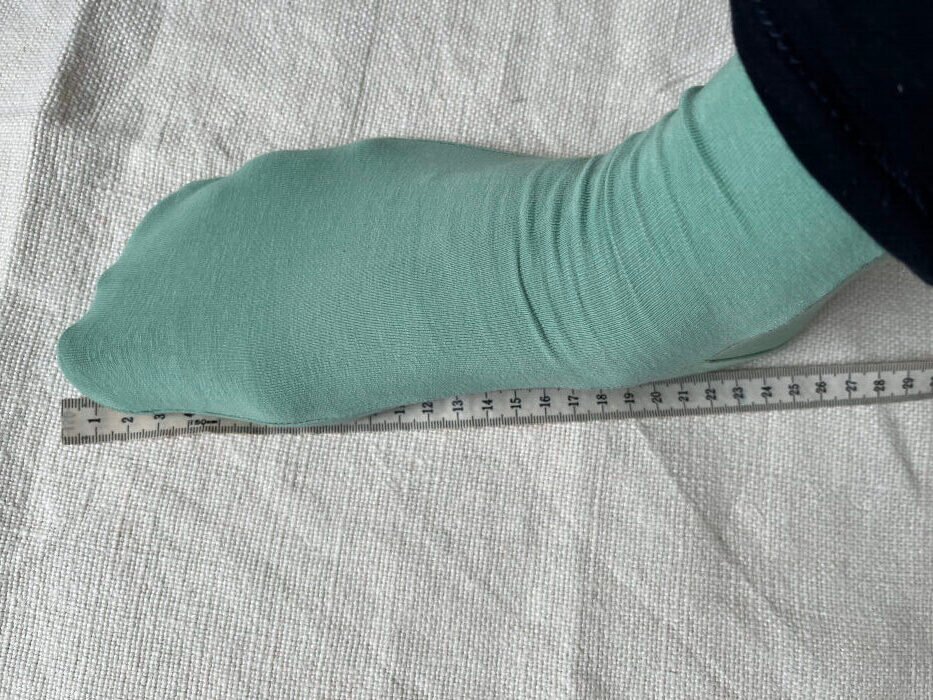
Start by measuring the length of your foot. Either by stepping slightly onto the tape measure or by drawing the outline of the foot on a piece of paper like I have done on this blog post on how to make your own shoe liner socks. Mark the measurement for later use.
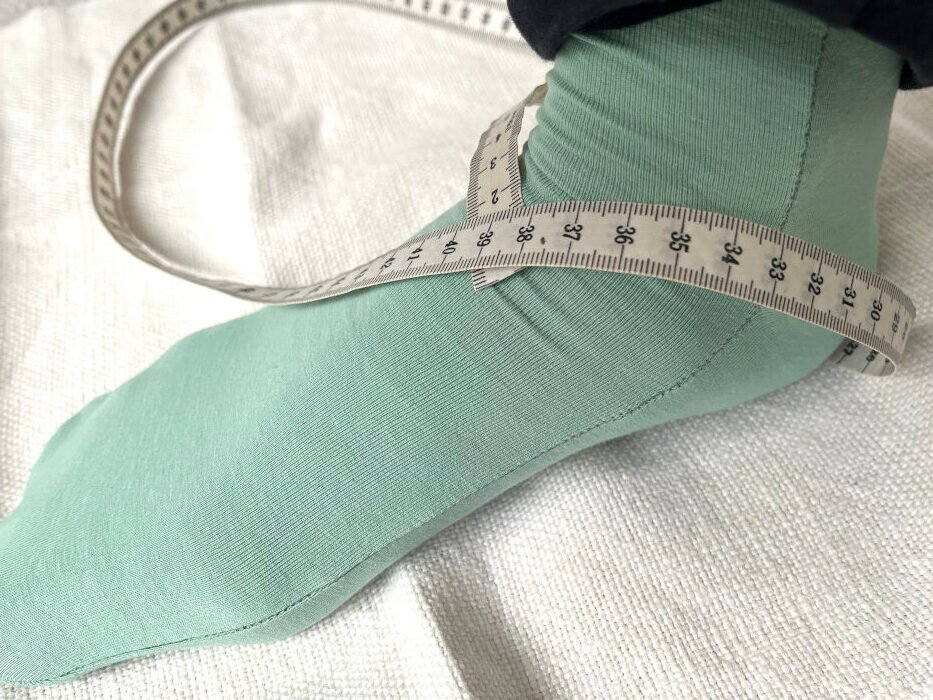
Then measure the circumference of the foot around the ankle and the heel. This is going to be used to calculate the width of the foot. The measurement around the ankle and heel is the widest point that needs to fit through the sock. If you used the widest circumference on the feet, the resulting sock would be too tight around the ankle.
To measure the height of the sock, stand up and measure the distance from the floor to the required sock height.
Now, that you have the length and the width of the foot and the desired sock’s height, let’s draft the sock sewing pattern to sew socks at home.
Take 1 A4 piece of paper and fold it into quarters with the folded corner on the bottom left side.
Measuring from the bottom left corner, mark a point that is one half of the foot length multiplied by 0.8. You can round this measurement to the nearest full centimetre. My feet are 25.5cm long, so the distance I am marking is 10 cm (25.5cm/2 x 0.8). Square to the right.
Next, measure and mark a point on this line that is a quarter width of the foot width (see above on how to measure the width of the foot) multiplied by 0.7. You can round it to the nearest half centimetre. My foot width is 32cm, so I am marking 5.5 cm (32/4 x 0.7). Square down to the bottom of the page.
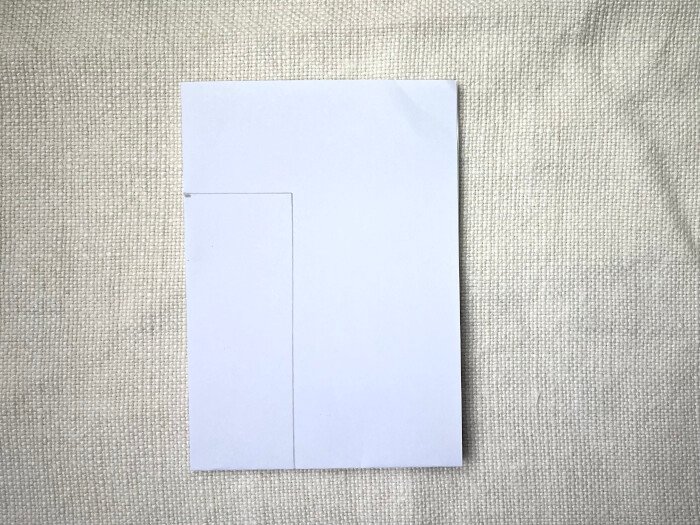
Then, mark two points on both lines that are 3 cm from the top right corner of the rectangle that you made.
Connect both points with a curve line. I did it freehand but you can use a compass or any round shape to trace around.
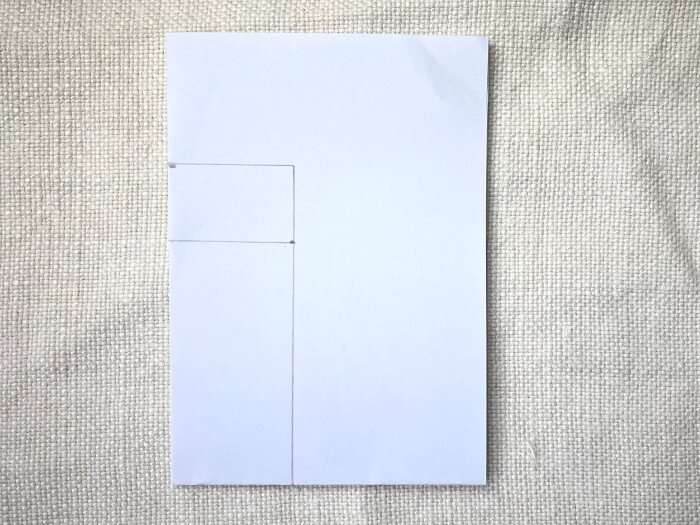
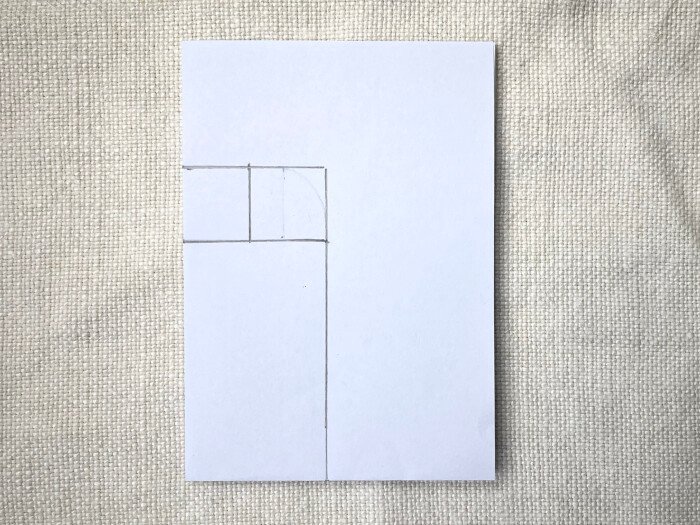
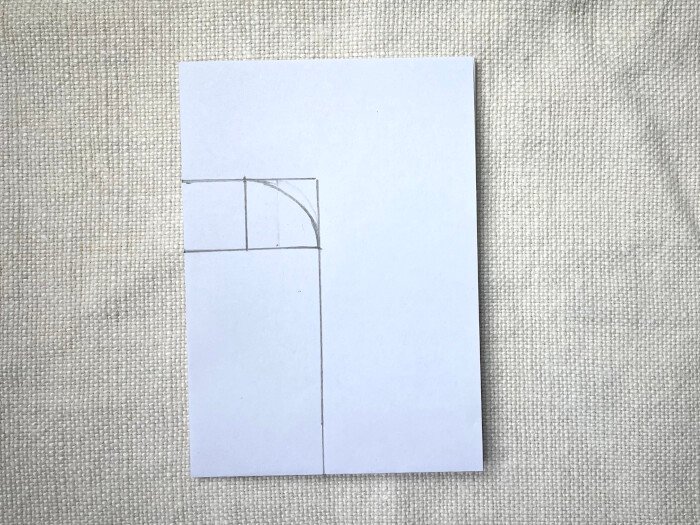
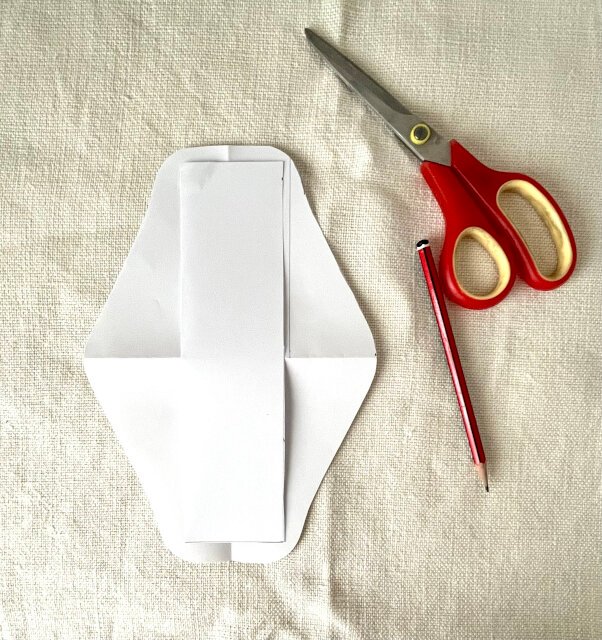
Now, carefully cut the shape with scissors, while keeping the paper folded. You have created a symmetrical pattern for the sock’s sole.
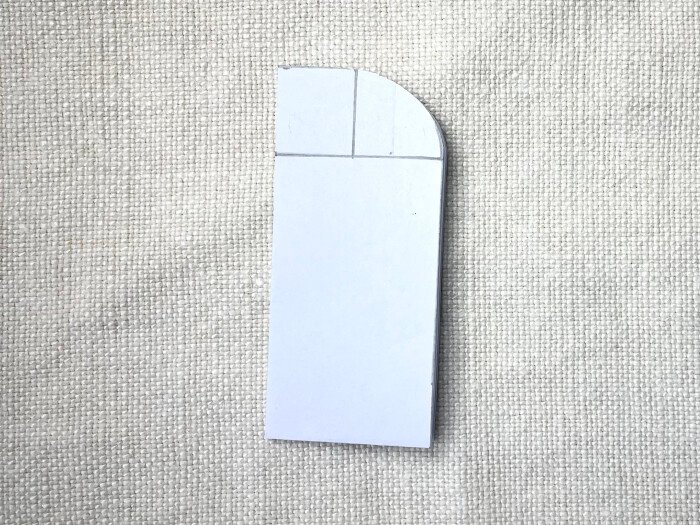
Let’s move onto the back and top pieces for the sock sewing pattern.
Trace two copies of the sole pattern onto separate sheets of A4 paper.
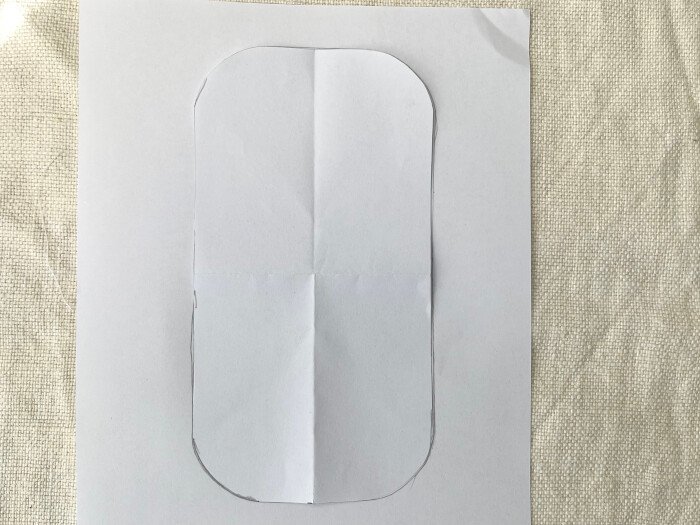
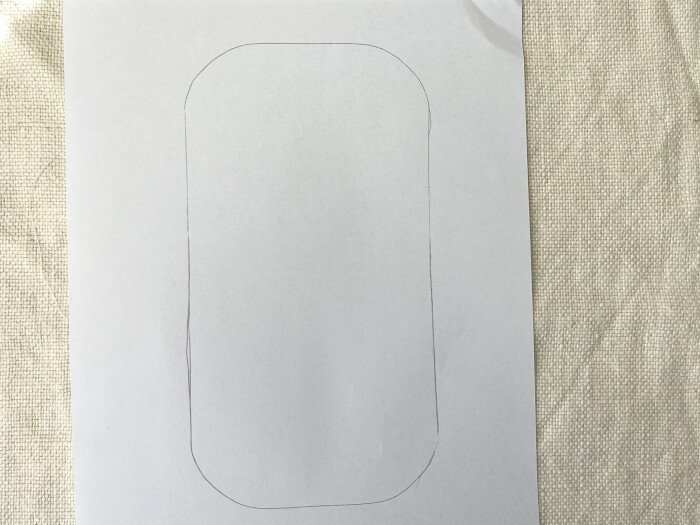
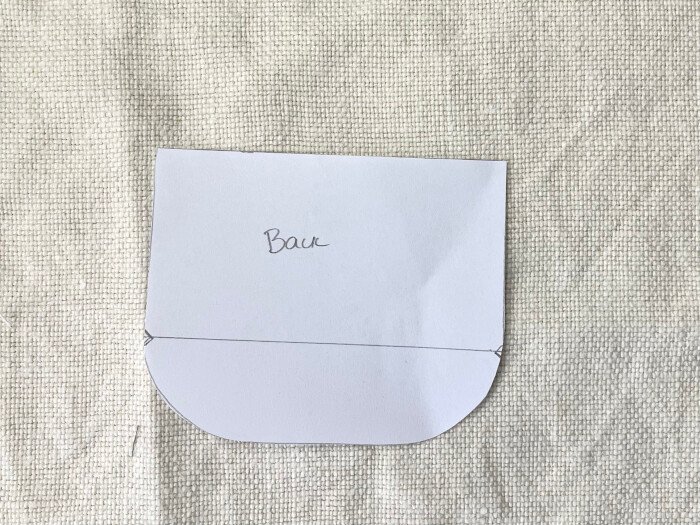
On one of them, measure a distance from the curved edge that is the desired height of the sock minus 2 cm. I am making a sock that is just above my ankle and the height that I want the finished sock to be is 8 cm. So, i have measured 6 cm up from the curve. Square across to meet the sides.
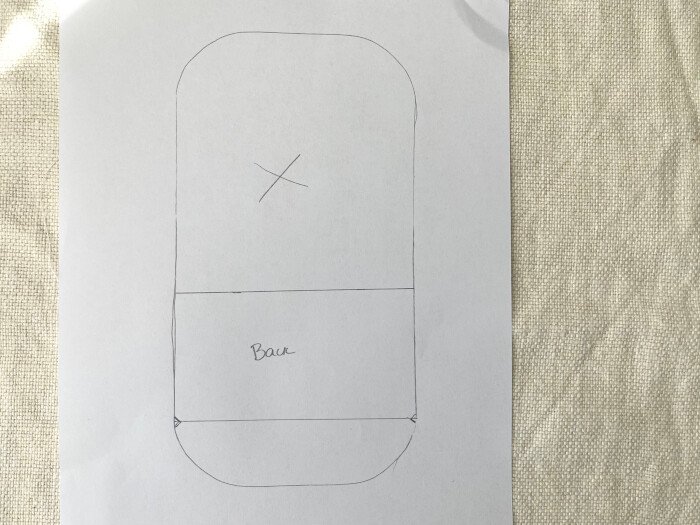
Then cut out the back pattern, cutting off the part of the traced sole that you do not need.
Mark the beginning of the curve on both sides (3 cm up from the bottom). You will need to transfer these onto the fabric to mark the start and end of the stitching.
Next, on the second traced sole pattern, from one curved edge, measure up 3 cm and connect with the sides. Essentially, you are cutting off the whole curve, to make the piece straight.

Take the back piece, turn it to align the marks on the sides with the lines created on the previous step. Trace around the back piece to extend the top of the sock.
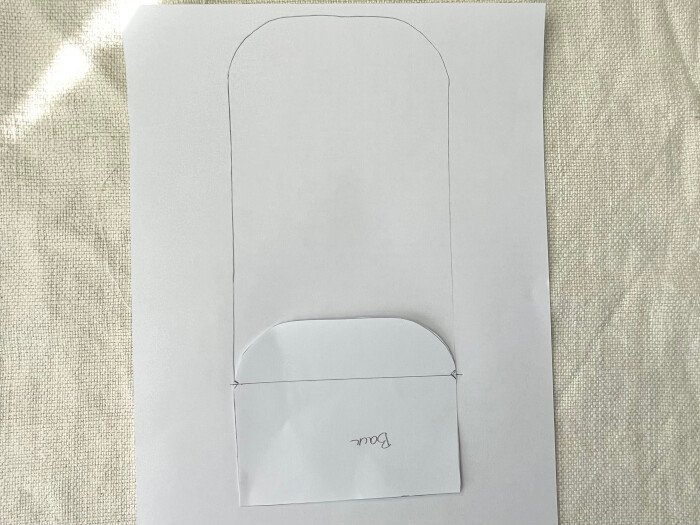
What you have created is the top piece that is the exact length as the sole and back piece combined, excluding the curves. You can use the pattern as is, however, to reduce the bunching at the front of the foot around the ankle, you need to reduce the length by 1 to 3 cm. I opted for 1 cm on this pattern.
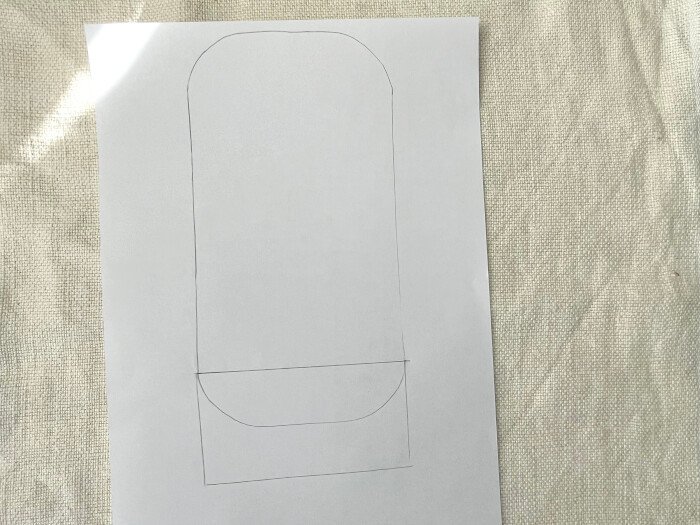
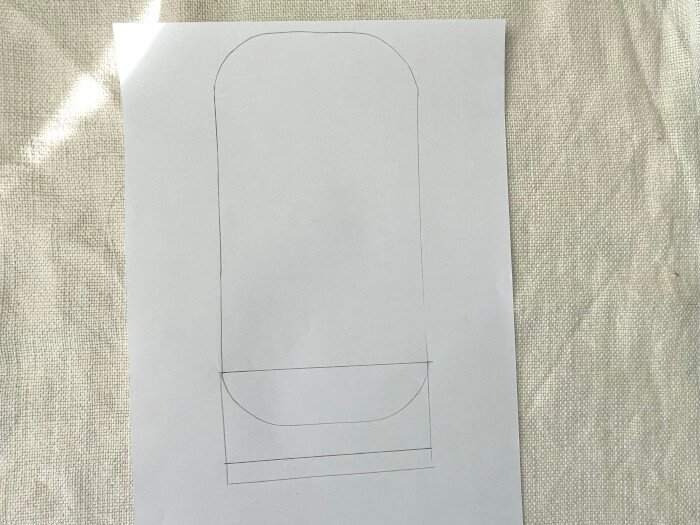
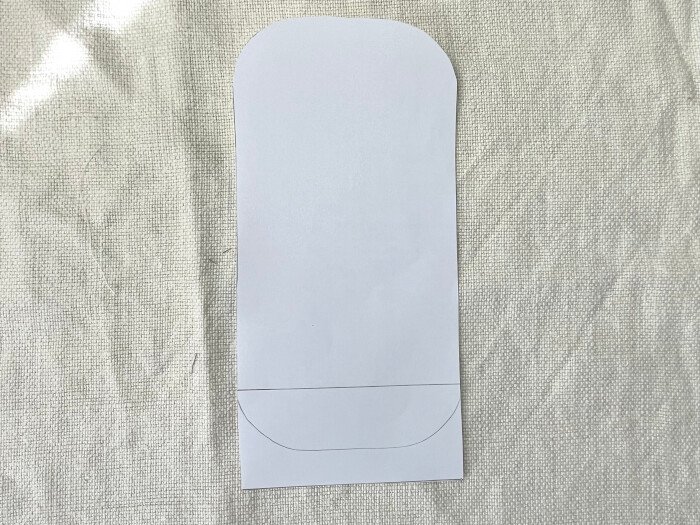
The last pattern piece that you need to create is the cuff. Technically, you can add a seam allowance to the front and back pieces to create a casing for an elastic. However, my feet sometimes swell up so I do not want unsightly indentations on my legs, so I opt for cuffs.
To draft a pattern for cuffs, you need to make a rectangle that is 6cm high, with a width that is 90% of the foot width (either back or front piece width multiplied by two). Round it to the nearest full cm. My back (and front) piece width is 11cm, so I need to create a cuff that is 20 cm wide (11 x 2 x 0.9)
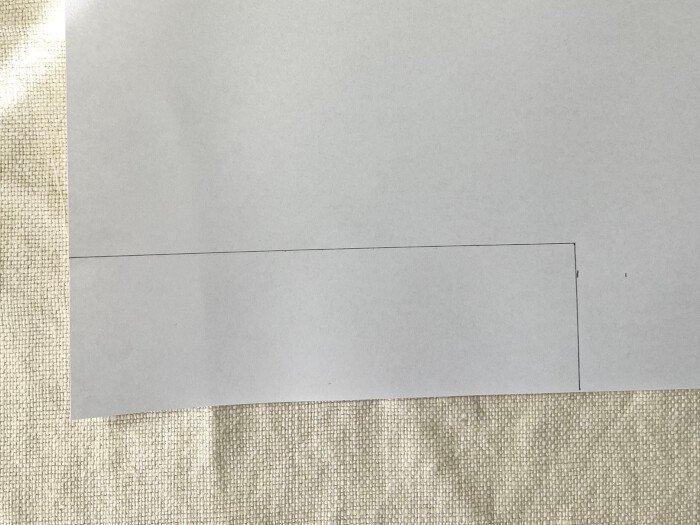
Cut out the pattern piece for the cuff.
I added grain line markings on all pieces, to remind myself which way to lay the pattern pieces on the fabric.
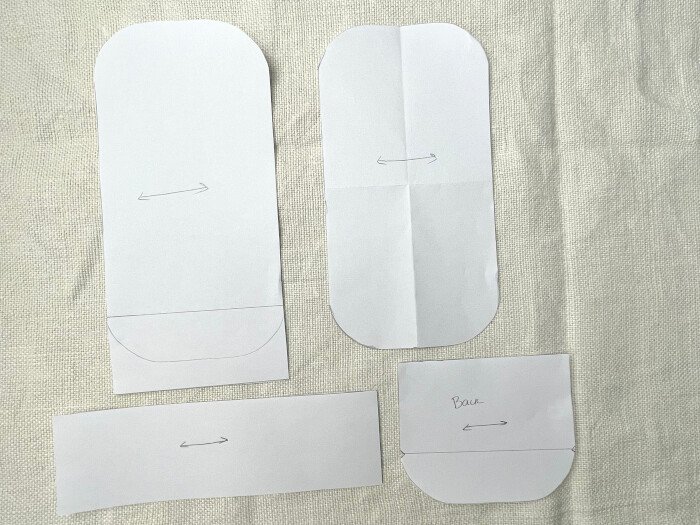
Now, that you have created this easy sock sewing pattern, you are ready to cut the fabric and sew them together.
Cutting your fabric pieces for handmade cotton socks
You will need to cut out two pieces of each pattern to sew socks at home. They do not need to be mirror images as the patterns are symmetrical both horizontally and vertically. However, if you want to match the surface pattern then you need to be mindful how to place the sock sewing pattern pieces on the fabric.
Lay the DIY sock sewing pattern on the fabric of your choice. Then either trace with a removable marker and cut with scissors or cut with rotary cutter. The latter option will make the sewing project even quicker. There are no seam allowances added to the sole, back and top pattern pieces as the seams are going to be very narrow and the fabric will stretch enough. However, if you are going to use a heavy cotton jersey fabric, add the seam allowances as indicated above as you cut out the articles.
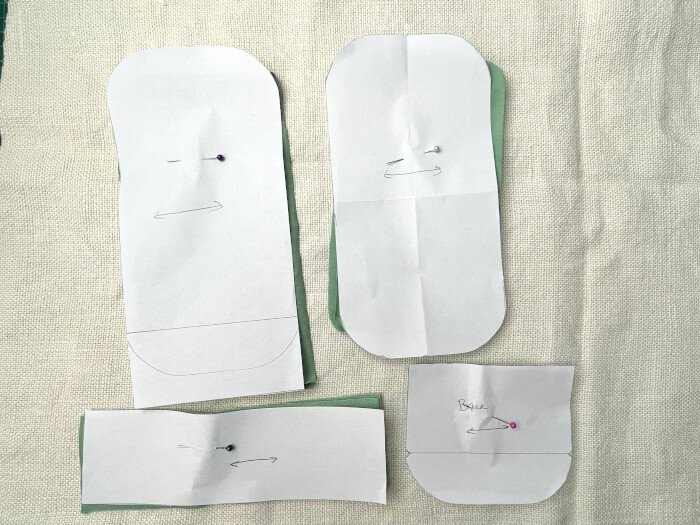
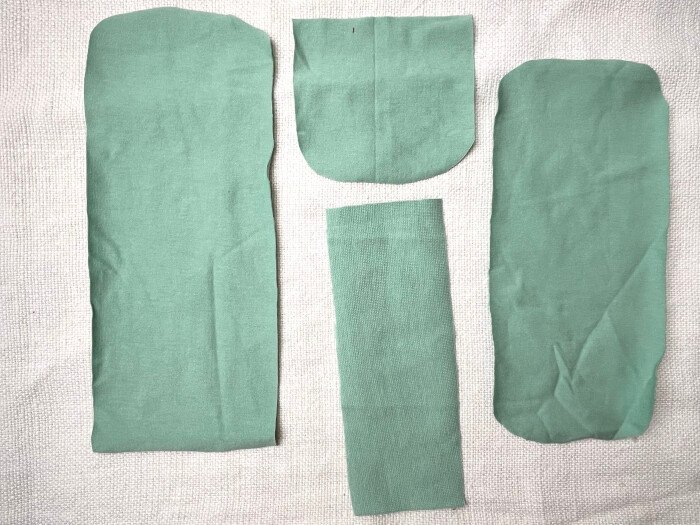
Mark the notches on the back piece with a small cut or with a removable marker on the wrong side of the fabric.
Step-by-Step sewing instructions to sew socks at home
Start by aligning the back piece to a sole piece, with right sides facing. Then stitch around the curved edge from the marking to marking, using a narrow zig zag stitch on your sewing machine or on overlocker with left needle and thread removed.

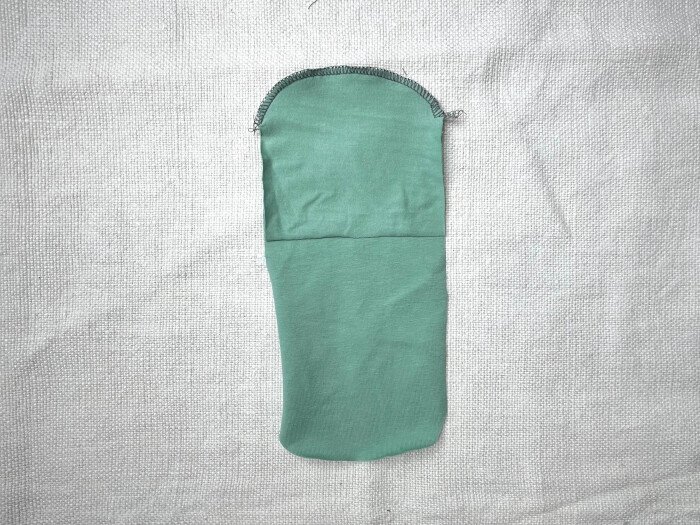
Push the heel up and align the top piece with the combined sole-back piece, with right sides facing.
Add clips to the toe section and the sides, rightly 2.5cm away from the heel seam, measured on the tp piece. Then pull the fabric up to the top of the sock and add clips or pins to keep the parts in place.
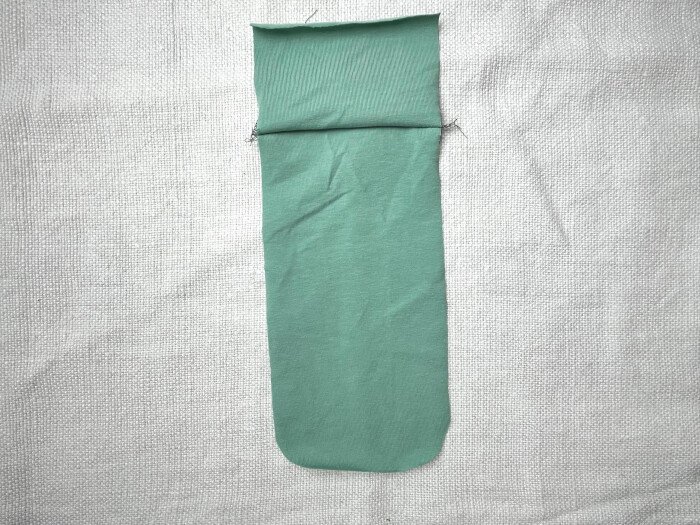
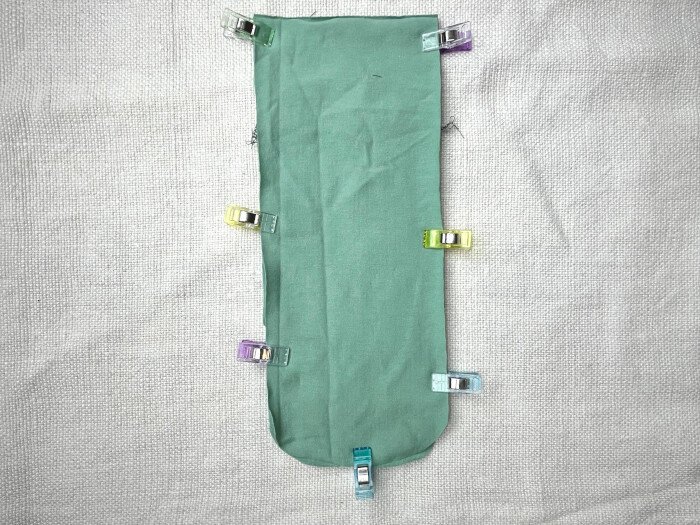
Sew around the sides, keeping the sole-back piece on top. When you start sewing, keep the top aligned but not pinned. When you get to around 2.5 cm from the heel seam, pull the top piece to stretch it between this point and the next clip/pin after the heel seam. When you approach the clip on other side of the sock, stretch the top piece again, to extend the top piece.
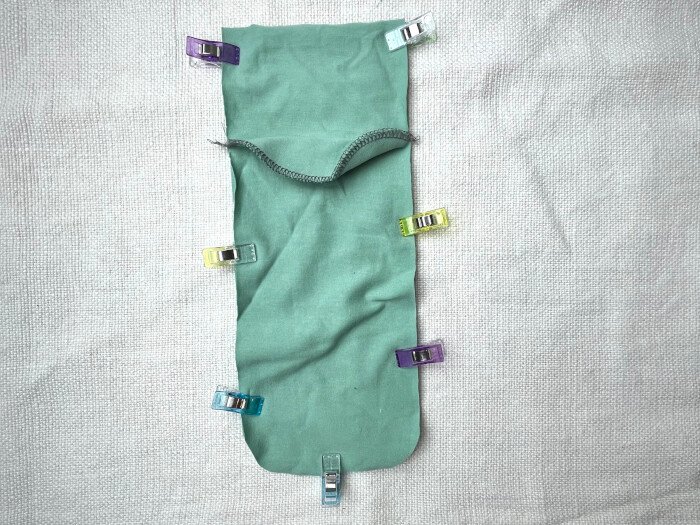
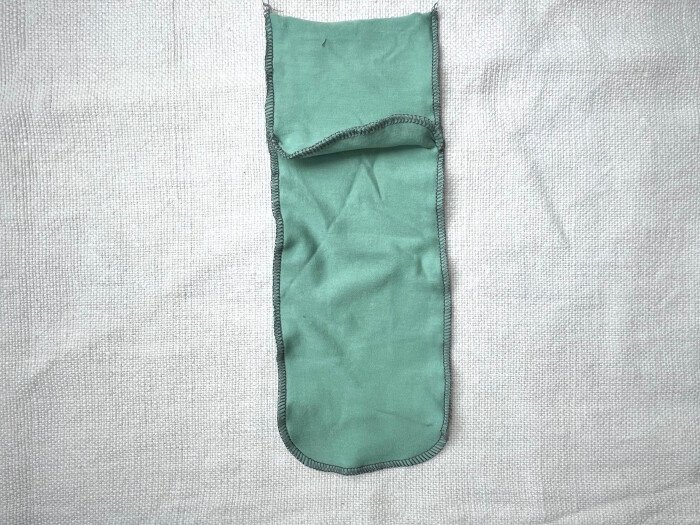
Turn the sock inside out and put aside. Take the cuff and fold it in half, with right sides facing.
Then sew the side with open edges together.

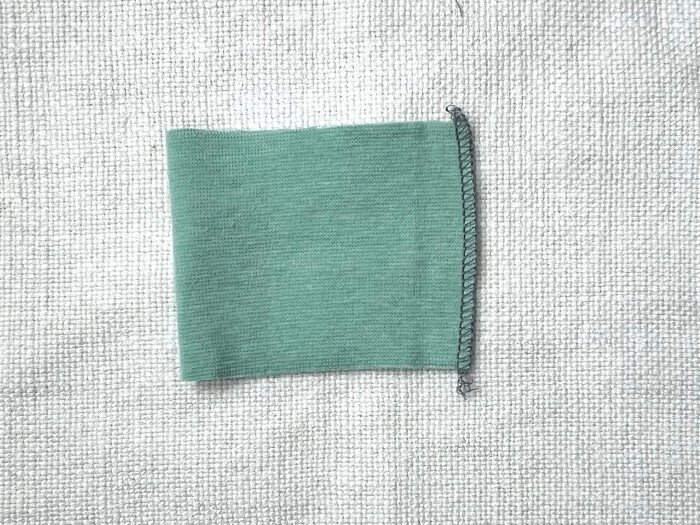
Fold the cuff the right way out, then fold it up with wrong sides facing and the open edges on the top.
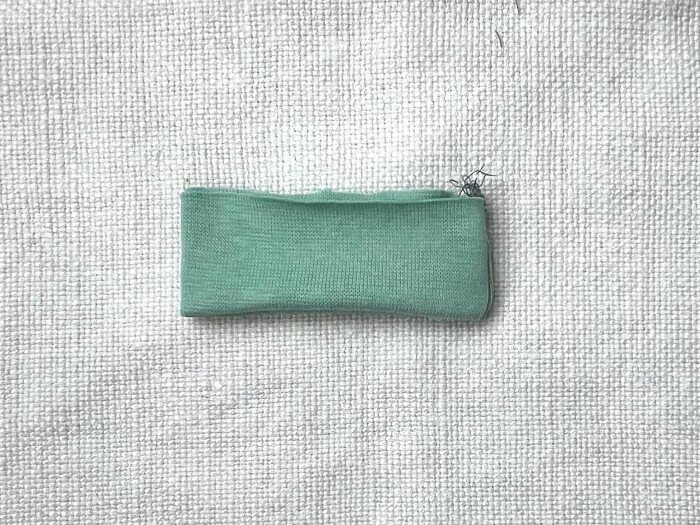
Put onto the right side of the sock, matching the side seams. Stretch the cuff to align it with the sock and pin in place.
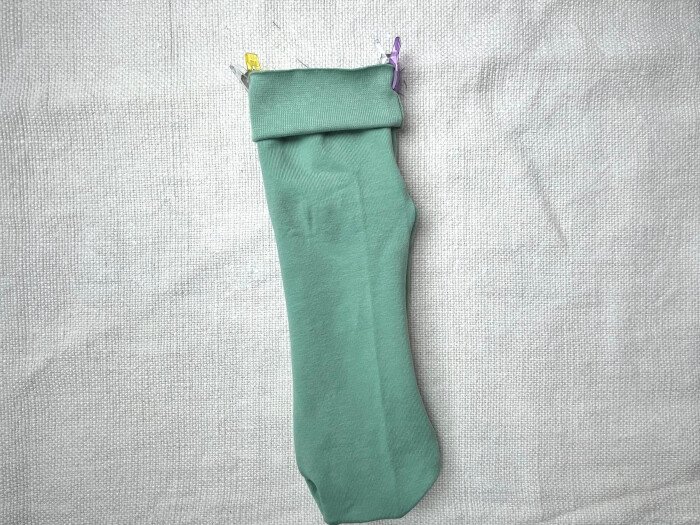
Sew all around the raw edge from the inside of the sock.
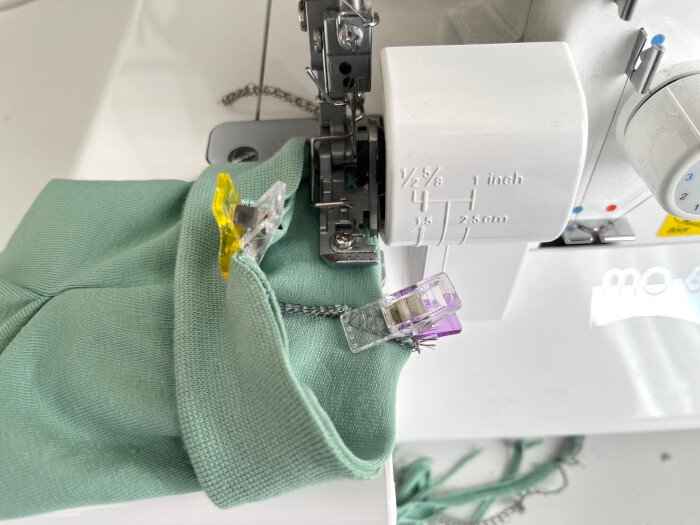
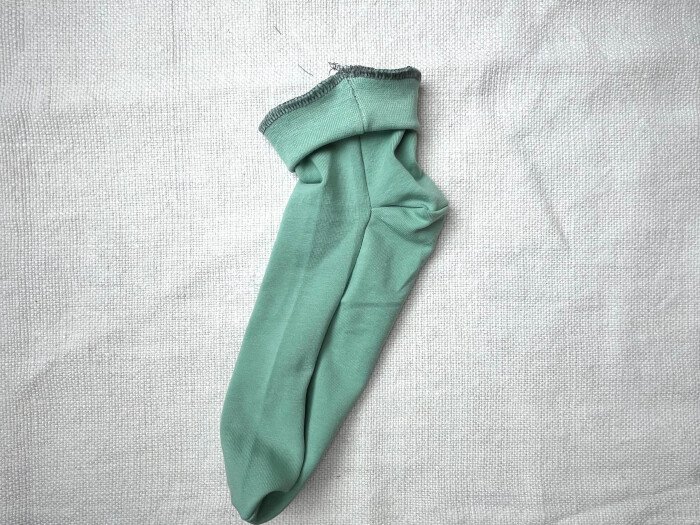
Repeat the same steps with the other sock. When you get to the step to attach the cuff, make sure that the side seam of the cuff is positioned on the other side of the sock, to keep both seams on the inside of the feet.
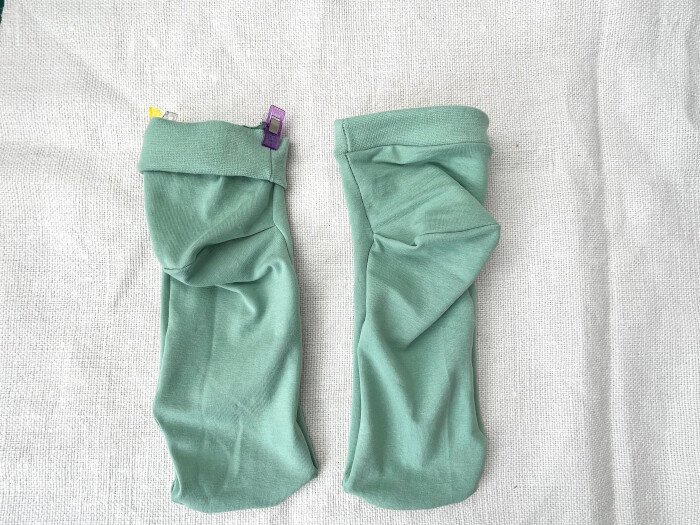
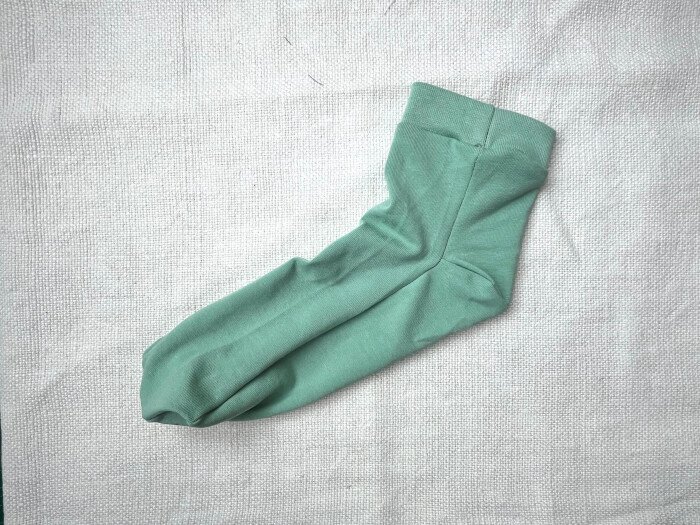
That’s it. You have complete all the steps to sew socks at home and have made a pair of handmade cotton socks.
Caring for your handmade socks
The finished pair of handmade socks can be put in your regular wash routine. They do not need anything special to keep them serving you well. The socks can be hand washed, using laundry detergent or a regular bar of soap.
Creative variations and style ideas to sew socks at home
You can make socks as beautiful as the wonderful fabric in your stash. I have since made a few socks in patterned cotton jersey, and while I do not usually like colourful socks, the various cotton jersey prints make them something else. The socks can even be matched up with your outfit.
I have made a few pairs by mixing and matching the fabric offcuts, usually going by solid sole and colourful top, back and cuff pieces. The world is your oyster.