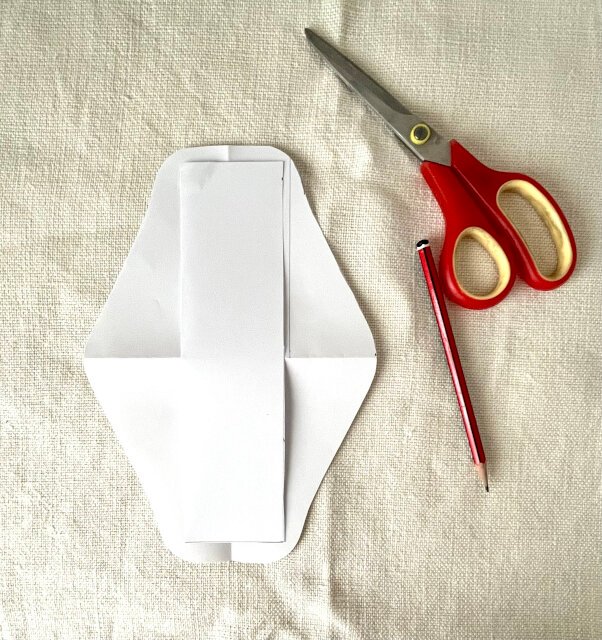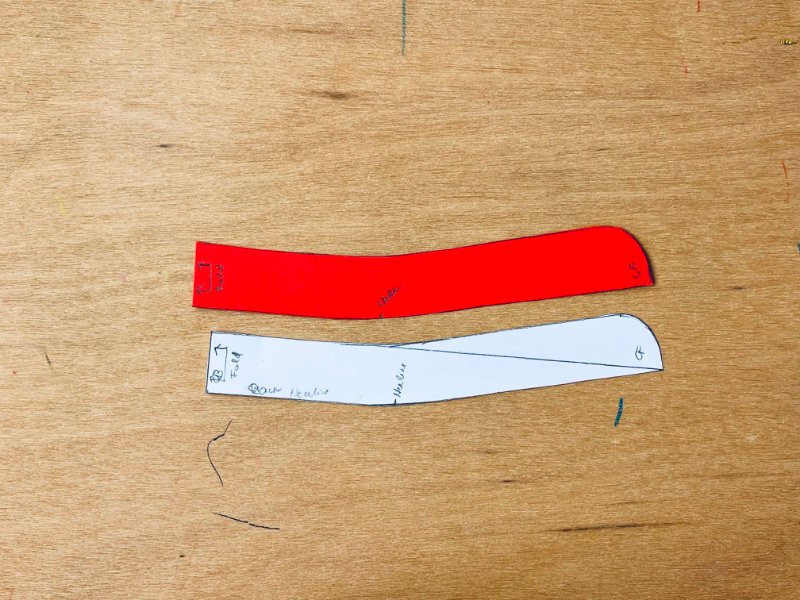
Knowing how to draft a collar stand sewing pattern is a fundamental skill in shirt pattern drafting. In this step-by-step collar stand drafting tutorial, I will show you exactly how to draft a collar stand pattern from your bodice neckline measurement, so it fits accurately and sits comfortably around the neck. You can use this method for shirts, shirt dresses, blouses, mandarin collars and structured stand collars.
This tutorial focuses on drafting a separate collar stand pattern piece (also called a neckband) that can be paired with a collar or used on its own.
I draft all my shirt patterns from a basic bodice block, and this collar stand method is the same one I use in my own garment construction work to ensure accuracy and repeatability. You can read more about basic bodice block in my detailed guide on how to draft a close fitting bodice block.
I will be using a basic bodice block as a guide but you can use any bodice sewing pattern with a seam allowance removed.
What Is a Collar Stand in Sewing?
A collar stand (or neckband) is the structured band that sits upright against the neck. The collar attaches to the top edge of the collar stand and creates the visible fold. While a collar can technically be sewn directly to a neckline, the collar stand provides height, structure and a clean roll line, which is why it is standard in classic shirt construction.
A collar stand can be paired with a collar to create a classic shirt or on its own to create a straight or mandarin collar finish.
Tools You Need for Drafting a a Collar Stand
All the tools needed for the collar drafting are listed below. All these are from my essential list of pattern drafting tools.
- Grading ruler
- Pencil
- Eraser
- Paper
- French Curve
Measurements Required to Draft a Collar Stand
To draft a collar stand, you will need needs these measurements, all taken from the basic bodice block or an adapted shirt or blouse bodice sewing pattern.
- Front neckline (excluding button stand if relevant)
- Back neckline
- Total neckline seam line
- Button extension allowance (if applicable)
- Finished collar stand height
The finished collar stand height is a preferred height from either the collar bone or from the nape (the protruding neck bone on the spine). Be mindful that the finished collar stand should be lower than your chin, especially if you are going to pair it with collar. This will ensure that the collar stand is comfortable. As a rule of thumb, use 2.5cm as the finished collar stand height.
Collar Stand Length Formula
Collar stand length = neckline seam measurement + button extension (if needed)
Step 1 – Prepare and Measure the Neckline
I am using a basic bodice block for the demonstration purposes, however, if you intend to change the neckline on your final garment, then you will need to measure the neckline on the adjusted sewing pattern.
If you are adding a collar to a sewing pattern that you already have, then mark a seam line on the pattern. Ensure that the seam line is also marked at the centre front and centre back (if neither pattern pieces are cut on fold) and on the shoulder. You need to measure along the seam line and not an edge of the seam allowance.
Important:
Always measure the neckline along the stitching line, not the cutting line. Even a 2–3 mm difference will affect the final collar fit.
Either place the bodice blocks together at the shoulder line (overlapping seam to seam if there is seam allowance included) or measure back and front pieces separately.
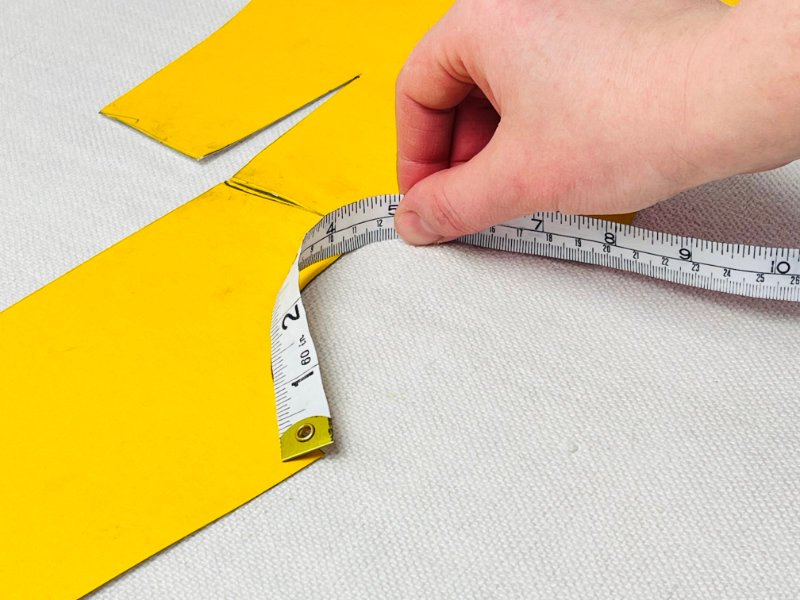
Take the measurement along the stitching line. If you measured as one continuous seam from centre front to centre back, then note the measurement for back neckline.
Just to clarify, this is the half neckline measurement.
Step 2 – Draft the Base Rectangle for the Collar Stand
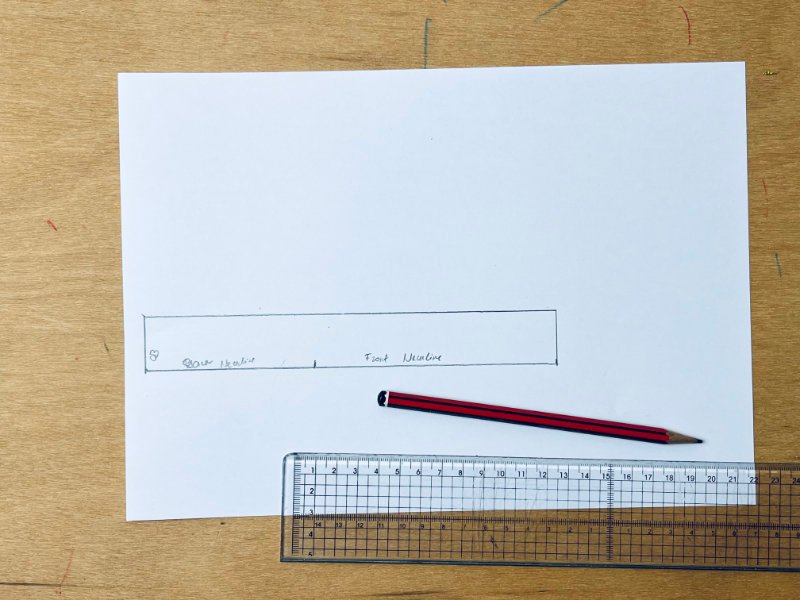
Let’s draw the drafting framework first. On a piece of paper, draw a horizontal line that is the neckline measurement taken in Step 1 (so half of the total neckline measurement).
Add a collar stand height to create a rectangle.
Mark the left side as centre back and the right as the centre front. Mark a back neckline length on the base of the rectangle. This is going to be your shoulder point that will need to be matched with the bodice pattern’s shoulder seam line.
Step 3 – Shape the Collar Stand Curve
The rectangle that we have drawn could be used as a collar stand as is, however, there would be a lot of gaping as the collar stand will stand away from the neck. The neck measurement used for pattern making is a lot wider than the actual neck measurement. You can read more about taking precise body measurements in my detailed guide on accurate body measurements for pattern drafting.
For this reason, we introduce shaping to the collar stand so that the neckline seam remains wide enough to attach to the bodice, while the neck opening edge becomes slightly smaller to sit neatly against the neck.
There are two ways how you can adjust the collar stand curve. One is to use an actual measurement and the other is a generic guide. Either option its fine.
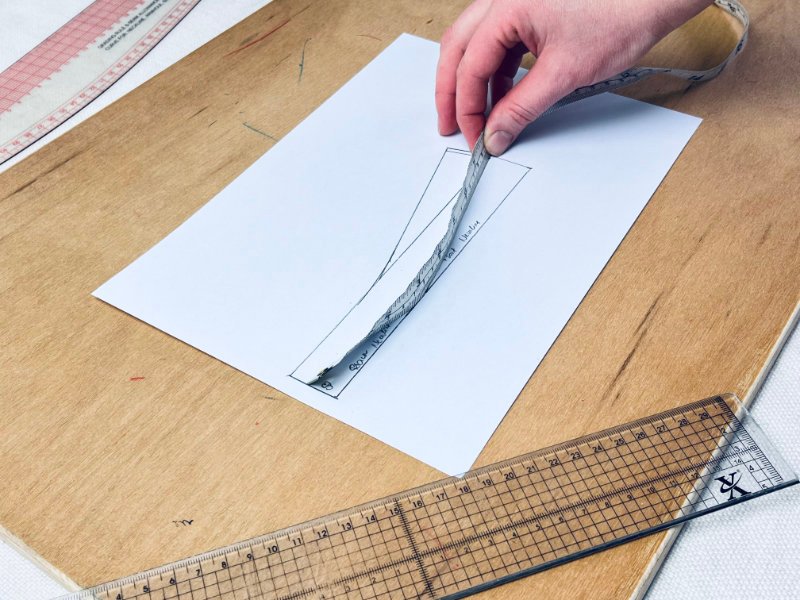
For an actual measurement, measure around your neck (not the neckline), leaving enough gap so that the measuring tape does not feel restrictive. Divide this measurement in half and subtract the difference from the neck measurement taken in step 1. Or, alternative, use 2.5cm as a rule of thumb. I tend to use 2.5cm instead of the actual measurement as that gives me comfortable fit and enough ease to not to worry about the density of fabric layers at the collar fold.
This reduction compensates for the difference between flat pattern neckline measurement and the three-dimensional neck circumference. Without this shaping, the collar stand will gap.
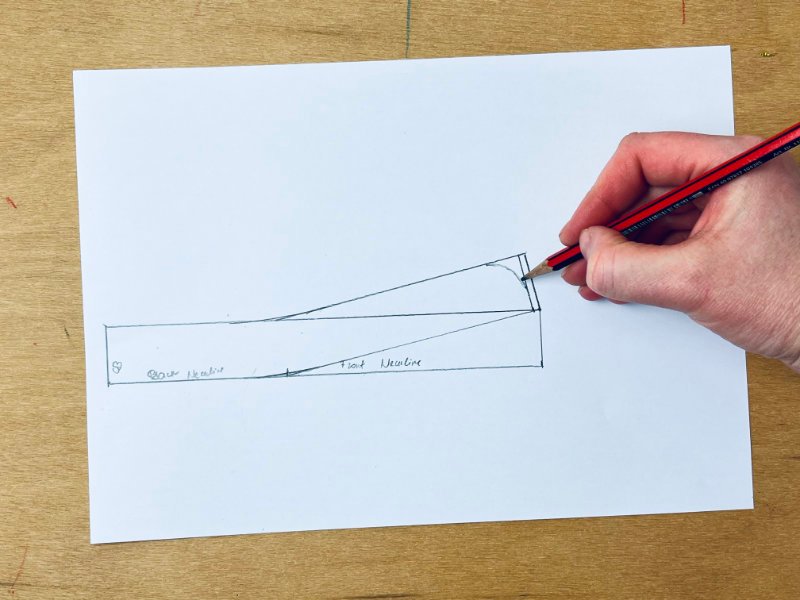
Now, rise the front by the difference (or by 2.5cm).
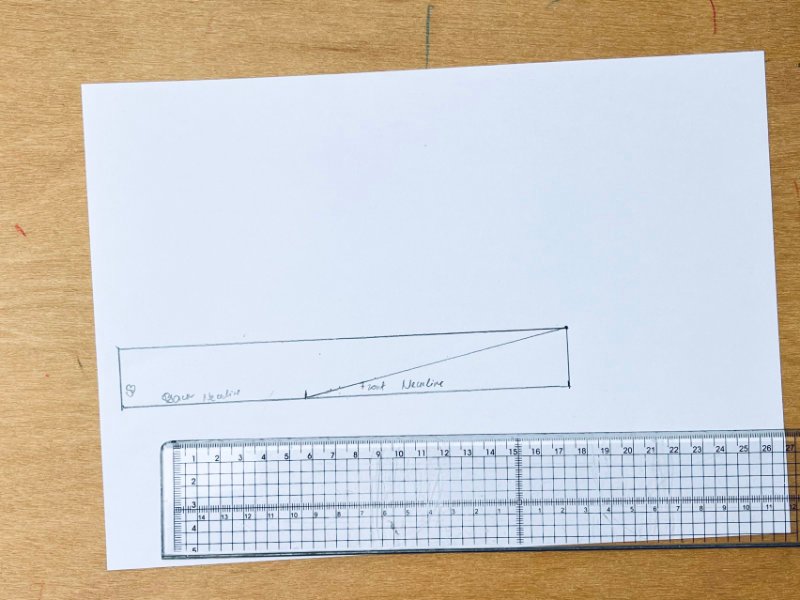
Reconnect the centre front to the shoulder points with a straight line first, then use a French curve to smooth the line (without cutting into the collar stand).
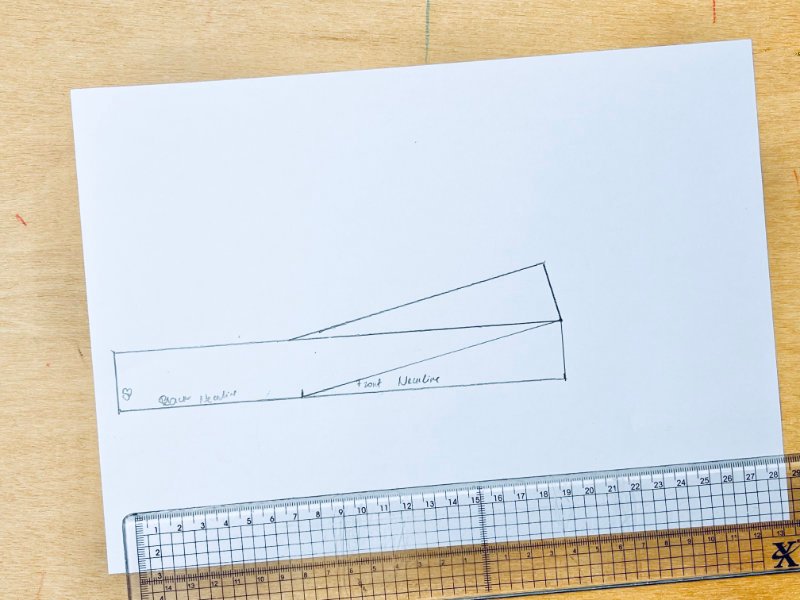
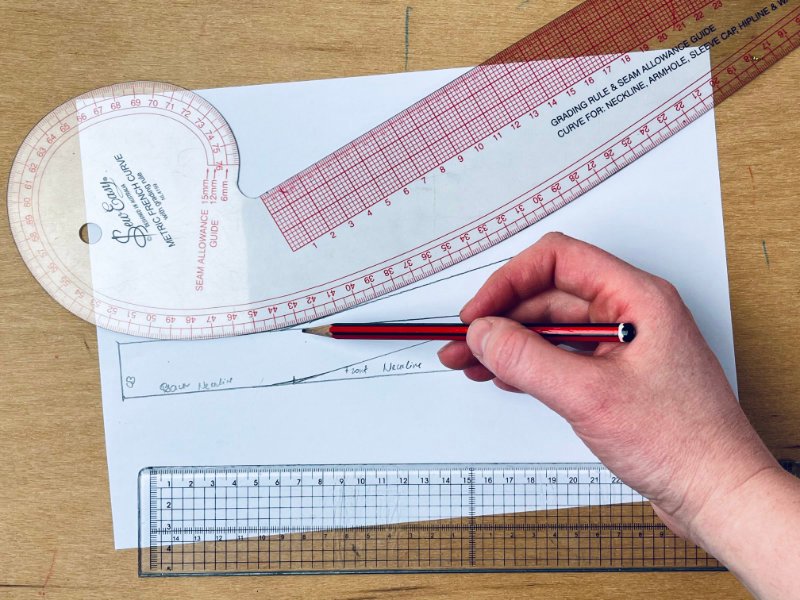
Curves are longer than straight lines so you will need to adjust the length of the lower curve. Measure the length of the lower curve and adjust the length by required distance to match the length of the half the neck measurement. The difference will be just a few mm but you need to have a precision at this stage to ensure that the collar fits the neckline.
Step 4 – Add Front Extension (Button Stand Consideration)
If the shirt (or dress) will have a button stand, then you need to extend the collar stand by the half your completed button stand width. You can read more about the button stand in my detailed guide on how to draft a button stand.
You can either do that by adding the required measurement at the centre front or the centre back point. I prefer to add it to the centre back and readjust the shoulder point and the centre front line by the same amount. This way I can keep just one basic collar stand block instead of redrafting new one from scratch each time I am changing the neckline finish.
The adjustment to the collar stand is the same regardless whether you are using a concealed or regular button stand as the collar sits above the button stand.
Step 5 – Add Seam Allowances and Notches
Finally, curve the upper edge at the centre front and mark the centre back fold line to complete the collar stand pattern.
Your finished pattern now will have these sewing marks:
- centre back fold line
- shoulder alignment point
- centre front (this will be also marking for collar attachment)
- front edge (if using as a stand for collar)
- straight grain that runs perpendicular to the centre back fold line
- a note that you will need to cut two pieces on fold.
It is important to mark the notches before you add the seam allowances to ensure the precision in sewing and to eliminate any puckers or uneven edges. Once you are happy with the pattern, add seam allowances. My post on how to add seam allowances provides invaluable information on what the ideal seam allowances should be.
NB!
The resulting pattern is for one half of the collar stand. You will need to cut the collar piece on fold with straight grain perpendicular to the fold line.
How to Check and True Your Collar Stand Pattern
To double check the accuracy of your collar stand sewing pattern, walk the collar stand neck seam line against the bodice seam line.
Smooth the collar stand top edge if there are any sharp angles. The corner at the centre back fold line must be a straight angle to ensure smooth transition from one side of the collar stand to another.
Common Collar Stand Drafting Mistakes
These are common collar stand drafting mistakes with my suggested solutions:
- Measuring cutting line instead of seam line
- Fix: Mark the seam line on the completed pattern that includes seam allowance.
- Making stand too tall
- Fix: Measure the desired collar stand height at the nape and compare the height at the front.
- Not shaping front curve
- Fix: Raise the centre front by 2–2.5 cm to reduce neckline gaping and reshape the top edge smoothly with a French curve.
- Forgetting button extension
- Fix: Extend the collar stand at centre back by adding the button extension dimension (half width of the completed button stand). Move centre front and shoulder notches to the left by the same amount.
Variations of the Collar Stand
There are several applications to the collar stand.
- Traditionally, the collar stand will be used on a shirt in combination with a collar to achieve a formal look.
- You can add a collar to the stand directly as a one piece collar with stand, by drafting the base rectangle higher (by at least doubling the collar stand height) in Step 2. Additionally, you can play with the top right corner for different finish – rounded, square or angled to the right.
- A collar stand can be used as is for mandarin collar or band collar. This can be used on a bodice that is cut on fold at the front but you will need to consider neck opening at the back.
- A standing straight collar does not require the collar stand to be curved. You can use as is after Step 2 (adding button extension if required) or curve it with a smaller adjustment to leave a gap at the neck.
- You can create a polo collar from the basic collar stand as created in step 2. The height of the collar stand then should be four times the desired folded polo collar. For a knit fabric, use the basic T-shirt pattern as a base for drafting the collar, reducing the neckline length to 0.8 of the original. For a woven fabric, cut the polo collar on bias, similarly to creating bias binding.
- Lastly, you can create a wing collar that is common on men’s dress shirts and historical costumes. For this, you need to increase the height of the collar stand at the centre front (not the edge of the button stand)by additional 6 cm, by drawing up a squared line from base rectangle starting at the centre front notch. Then square to the left to connect to a line extended from centre back, before curving the top line to original centre back. Next shape the front wing triangle as desired (this will take a little practice to get a shape that you want).
Do You Need to Interface a Collar Stand?
Yes. A collar stand should be interfaced to provide structure and prevent collapse at the neckline. Typically, the inner collar stand piece is fused with lightweight woven interfacing. Heavier fabrics may require softer interfacing to avoid stiffness.
How the Collar Stand Connects to the Collar
The collar attaches to the collar stand’s upper edge, between the centre front notches. The collar stand will support the collar roll (the fold of the collar).
You will need to interface the collar stand piece that will be on the shirt’s inside to add a structure and stability to the collar stand.
Frequently Asked Questions on Collar Stand
Final Pattern Checklist Before Cutting Fabric
Once you have created a collar stand make sure that you have :
- added all the seam allowances if you are adding them to the paper pattern. My post on adding seam allowances explain why you may not want to add seam allowances to your patterns.
- marked the grainline that is perpendicular to the centre back
- noted to cut two pieces on main fabric and one piece of interfacing
- marked the shoulder and centre front notches on both the upper and lower curved lines
- labelled clearly as “Collar Stand – [Garment Name] – Cut 2 on Fold”
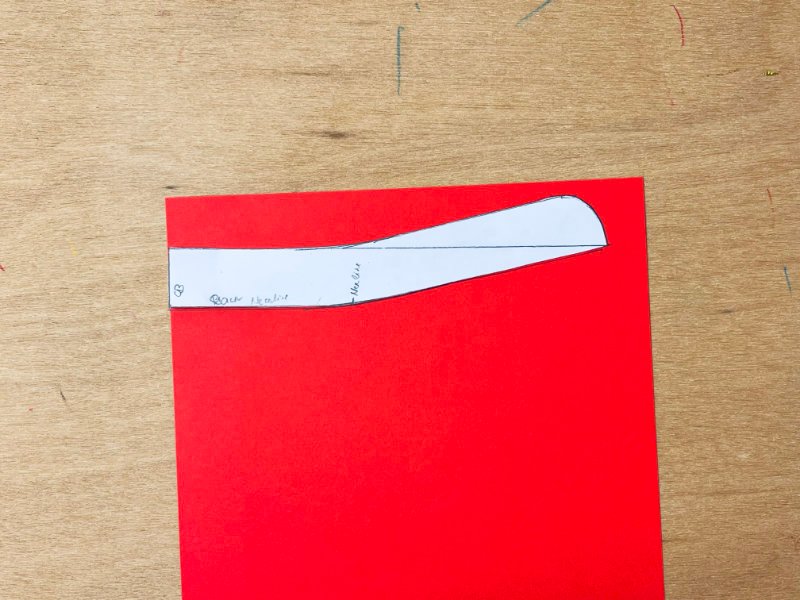
As I make the basic pattern blocks that are adjusted later for a specific sewing project, I transfer my pattern to a cardstock to make it sturdy.
Conclusion
Drafting a collar stand sewing pattern is not complicated, but it does require accuracy. The precision comes from measuring the neckline correctly, shaping the curve intentionally, and checking the seam length before adding seam allowances. Once you understand why the collar stand is reduced and shaped, the process becomes logical rather than mechanical.
This basic collar stand block can now serve as a foundation for multiple variations — classic shirt collars, mandarin collars, polo collars or more structured designs. Instead of redrafting each time, you can adjust height, front shaping or extensions depending on the finish you want to achieve.
Take your time at the measuring and trueing stage. A well-drafted collar stand will sit cleanly against the neck, support the collar roll properly, and elevate the entire garment.
Once this piece is correct, the rest of the shirt construction becomes significantly easier.