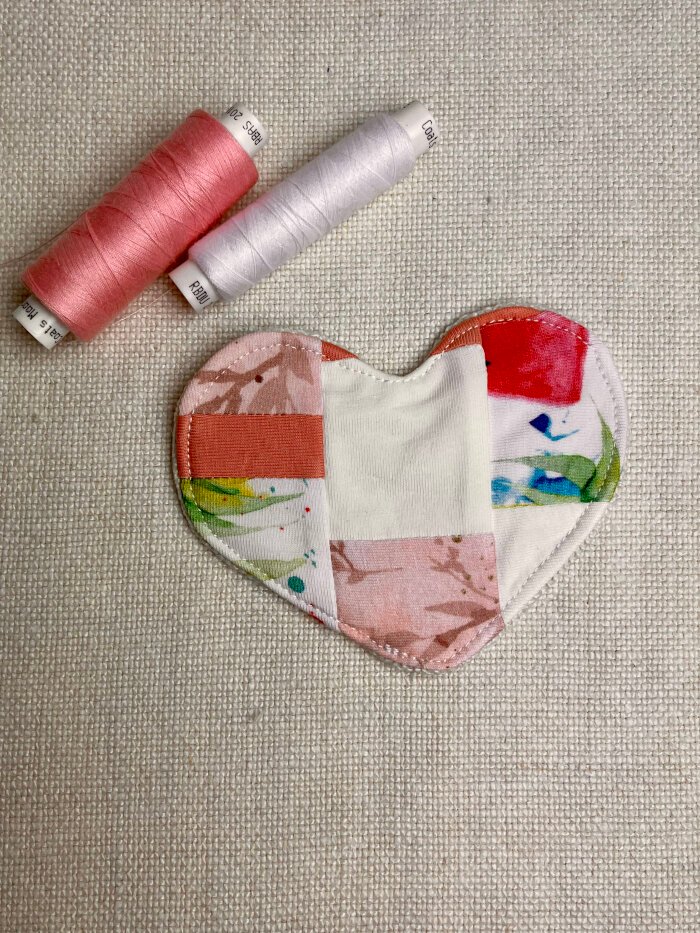
In this tutorial I will show how to sew a heart shaped fabric coaster from fabric scraps as a practical DIY Valentine’s Day gift.
Valentine’s Day gifts are the ones I struggle the most. I like to gift practical presents that will not age on the next day or be forgotten or never used. Considering how much thoughts, sweat, tears and time are put into a handmade gift, I would like for my gift to be cherished or at least used!
So, the Valentine’s day is a tricky one. Yes, the heart shaped gifts in red are so beautiful. However, unless your aesthetics and home decor agrees with the all lovers choice of colour, how much monotone bright pink and red one can stash in all corners? In a quest for something different, practical on every day and still romantic, I came up with an idea to create a heart shaped coaster. Yes, I know, this has been done so many times before and it is nothing ground breaking.
But hear me out! I am going to sew a coaster from muted pink and coloured fabric scraps! Has it made you excited yet? No? Well, let me tell you that this is the project your fabric off cuts have been screaming at for years (or will be if you are just starting out). When I was little younger, I used to chuck all the scraps so as not to fill my limited sewing space and storage. However, just like a good wine I improve with age, I have been conscious of my impact on the environment for some time and while I accept that is is not possible to avoid landfill altogether, without returning to rather basic lifestyle, we should strive to be more intentional.
If our intentions align, or you are just curious, let’s jump right into the eco-friendly scrap fabric sewing project that is beginner-friendly.
Materials for heart shaped fabric coaster

- colourful fabric offcuts (while craft cotton would be the easiest to sew with, I have quite a lot of cotton jersey offcuts that are too pretty to be thrown out). More offcuts you use, eco friendlier this project is going to be.
- backing fabric (light coloured cotton)
- fabric for reverse of the coaster (you can use the same quilted back as front)
- matching thread
- pen and paper
- scissors,
- pinking shears (optional, but makes life so much easier)
- removable fabric pen, chalk or pencil
- sewing machine
- a coaster or mug for size reference
How to draft a heart shaped coaster template
Firstly, let’s draft a heart shaped coaster template for a fabric coaster pattern.
I tried two ways for drafting the heart template. You can either roughly sketch out the border for the fabric and use accurate measurements to draw the heart shape template or, and this is what worked for me, draw a heart shape freehand. Then draw a line in the middle, splitting the heart in half vertically. Fold along this line. Then cut out from the side with which you were happier to create a symmetrical heart shape coaster template.

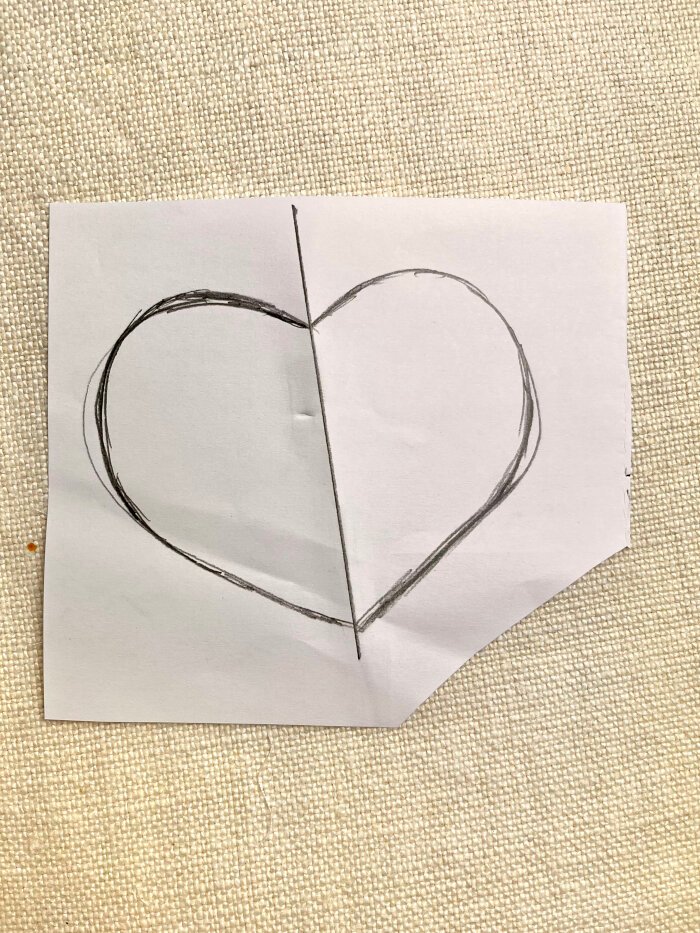
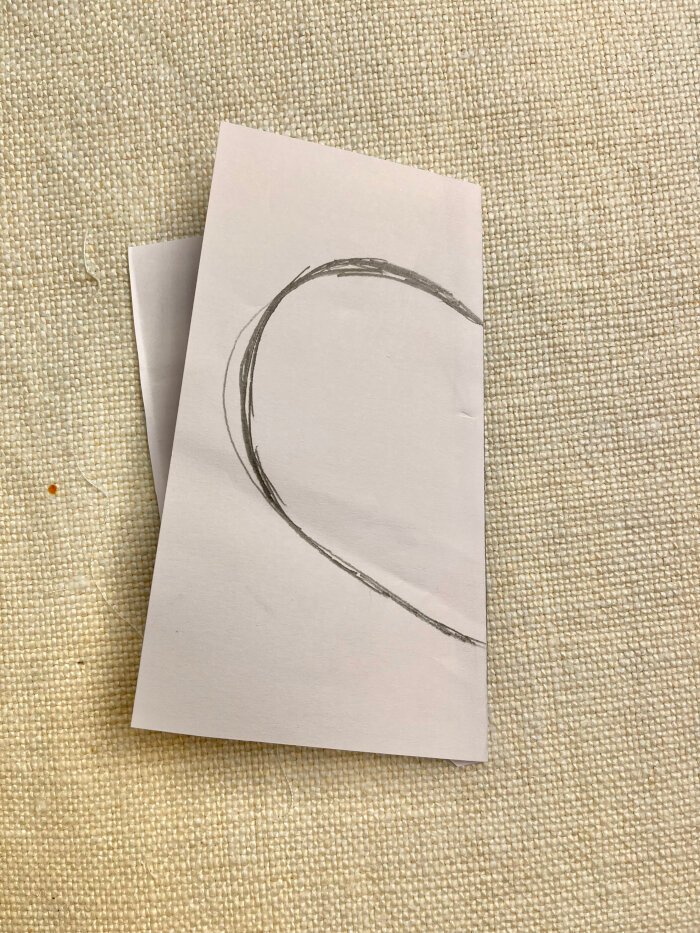
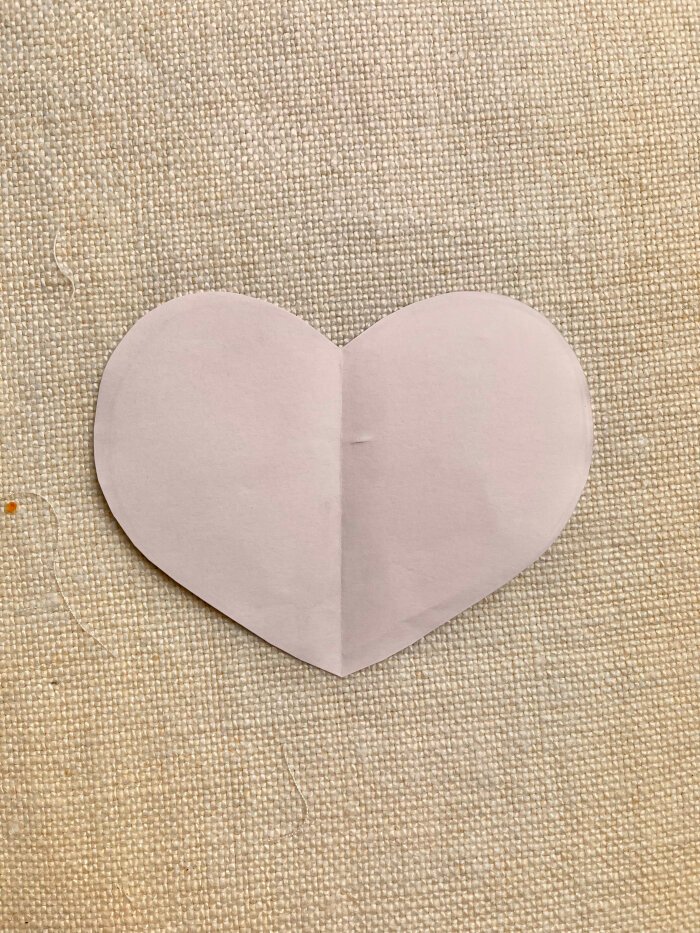
It is not necessary to have the heart to be symmetrical (nothing in real life is), but it may be easier to get a pretty outcome.
How to sew with fabric scraps for coasters
The technique that I will teach you below is ideal for sewing with fabric scraps and small fabric offcuts.
Find your scrap fabric and arrange by pieces that work well together. While it does not matter what type of fabric you are using, I would suggest to stick to the same weight so as not to create different textures and uneven surface within the same coaster. After all, you do not want the cup of coffee or tea to topple over.
I cut the larger scraps into 2″ x 2″ squares but even smaller pieces would get a prettier result.
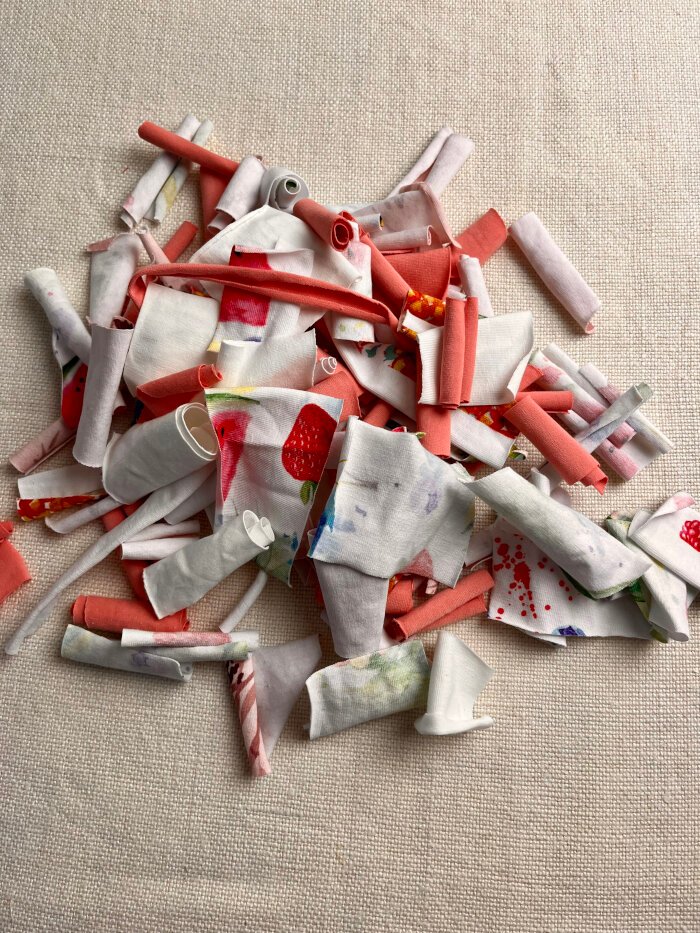
Then, align two pieces together with right sides facing and sew along the edge. It does not mater whether the grain goes in the same direction or which way the pattern is facing, however I would put a solid colour next to a colourful fabric, lighter one next to darker and so on, to create a little contrast and difference.
Match more pairs and sew them all in pairs. I do not cut the thread when I finish the first pair, I just continue to sew the next one, creating many pairs connected with a thread in between. At this point it may seem like this is going to take forever (and we have not even got to the ironing stage) but I promise it will get easier and quicker.
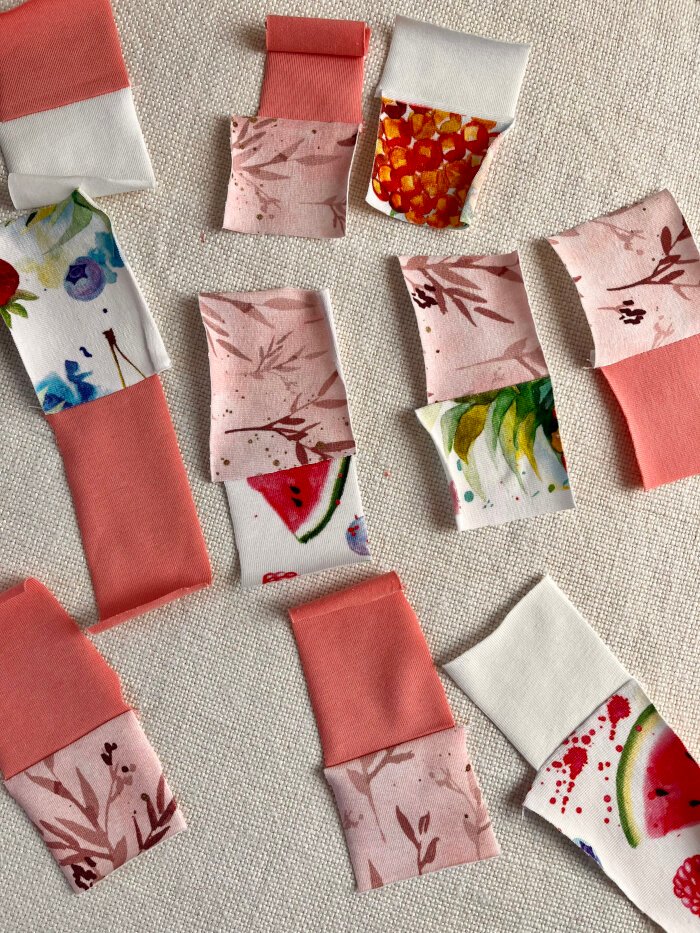
Then cut the thread connecting the pairs and iron the pieces. First, iron them flat as sewn to blend the stitching, and then press the seam allowances to either one side or open. Ideally, you want to press the seam allowances open but in my case I had gone for quite a skinny seam allowance and the cotton jersey did not want to lay flat.
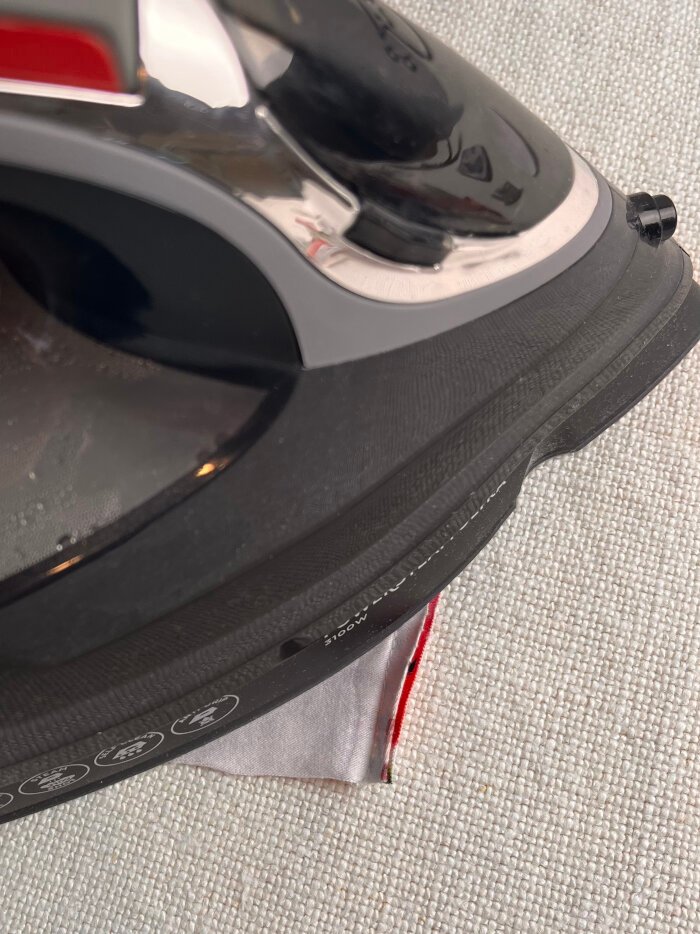
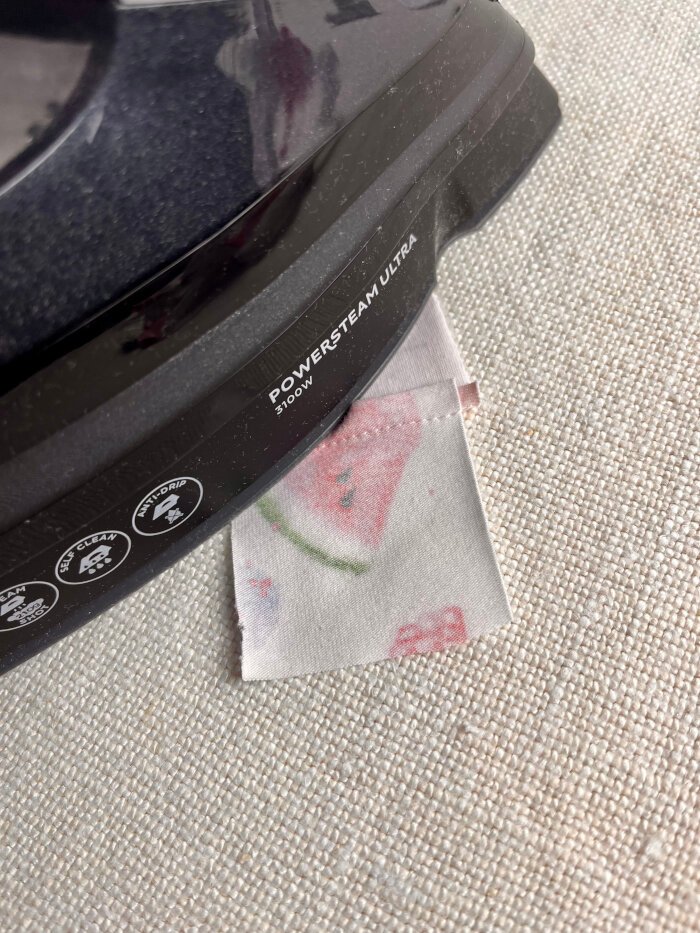
Then, place each pair against the another pair with right sides facing, and sew together the short ends to create a chain of 4 fabric pieces. Repeat for all the other pairs.
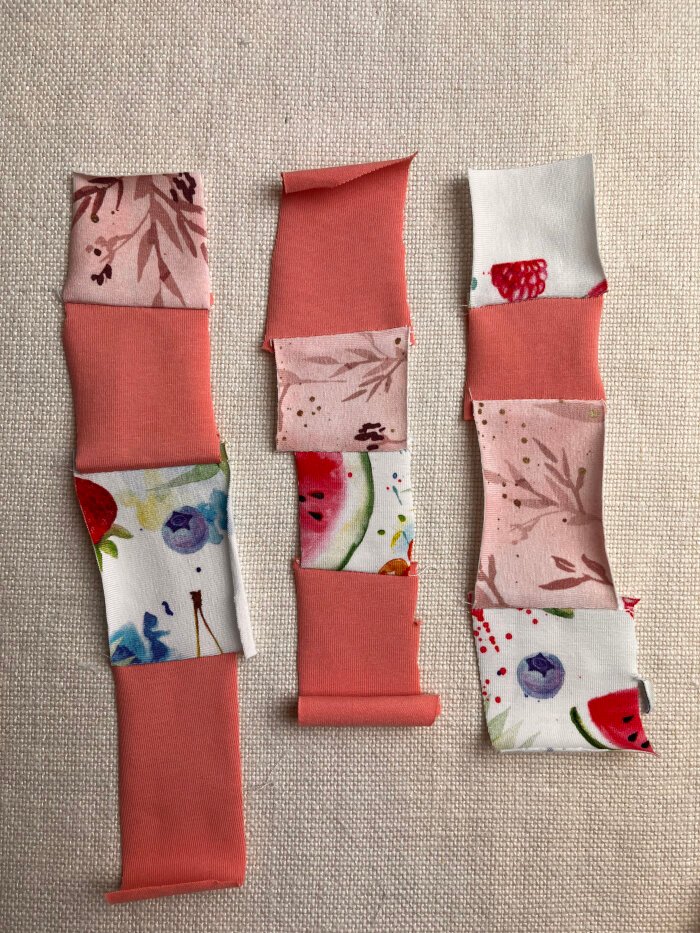
Again, press the seams flat and open (or to one side). Then connect the chains of four in pairs with stitches along the short edge to create chains of 8 pieces. Press the newly created seams.
Next, connect the first set of 8 squares with the next 8, sewing down the short edge. This time, instead of making pairs, add the next set of 8 to the other end of the previous 8 and sew together. No need to cut the threads, just make sure you are attaching the chains right sides together.
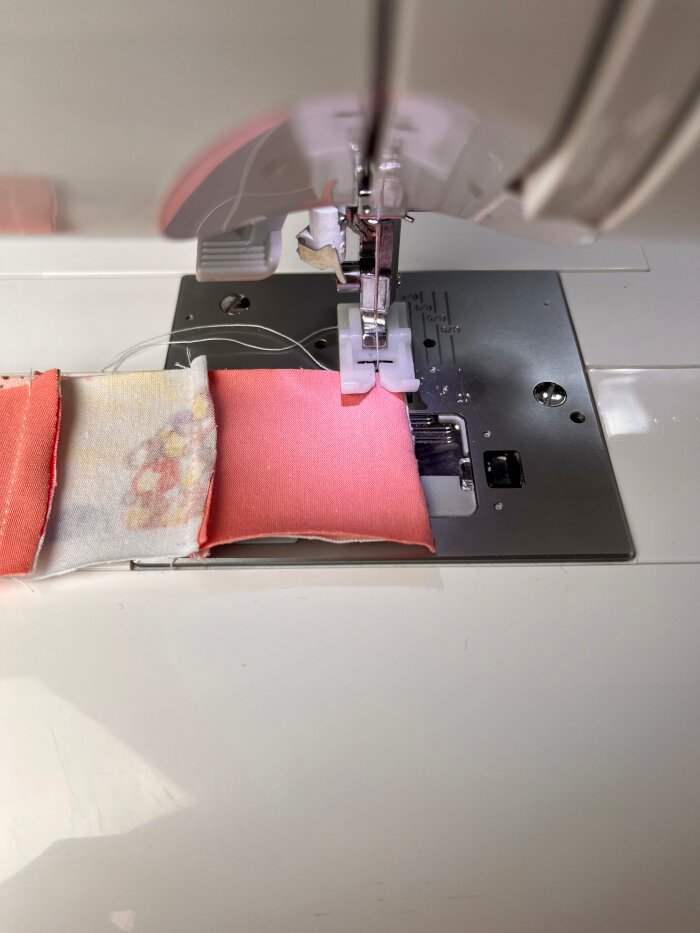
Once all the chains are attached, press the new seams. Then roll the long chain into a roll.
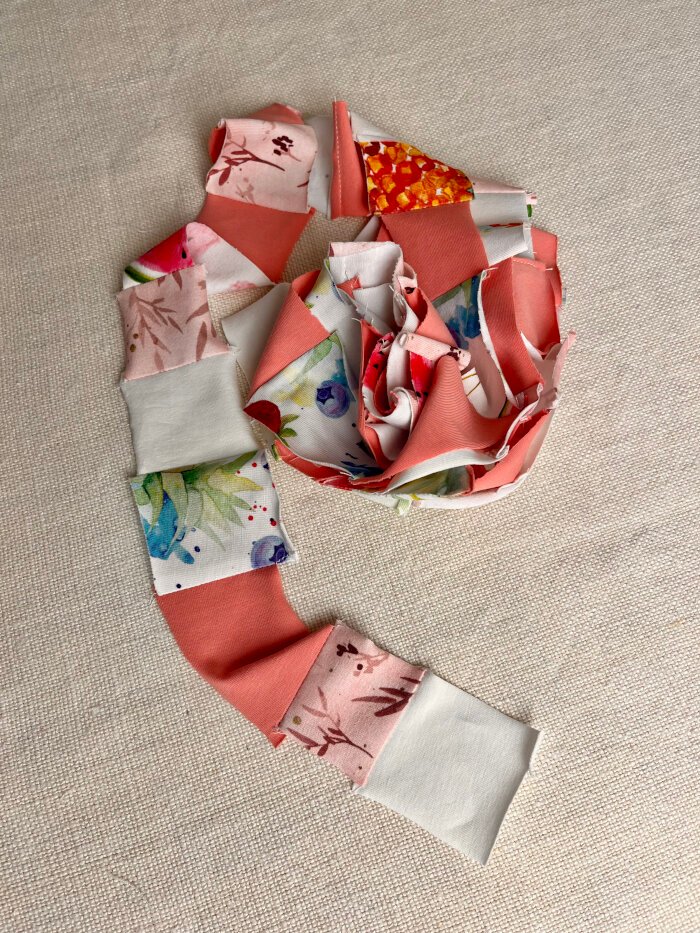
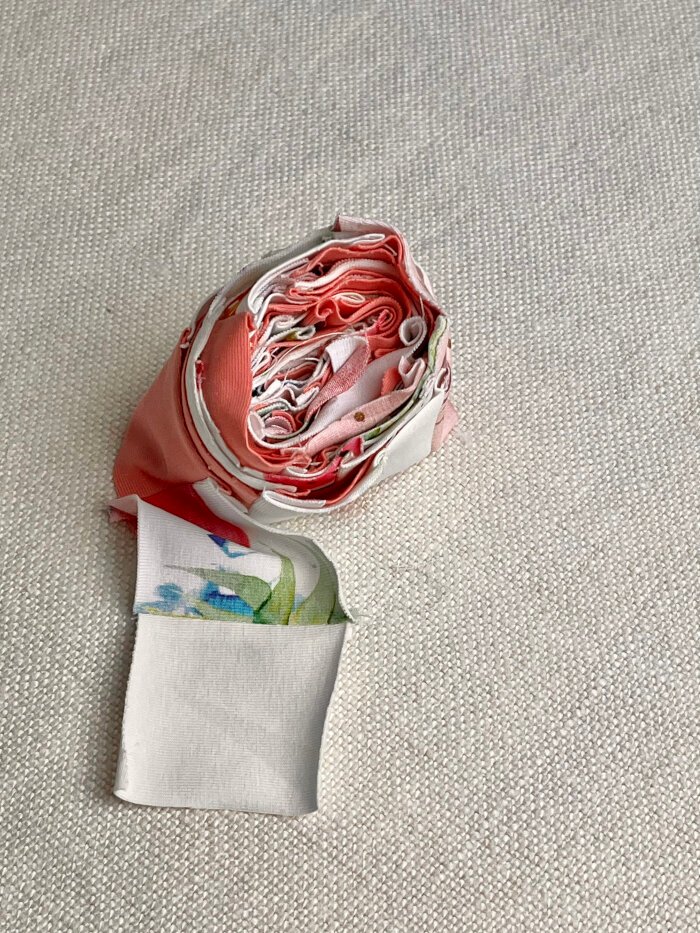
I truly enjoyed this bit. Creating something from almost nothing gives such a sense of achievement! And while creating the chain, so many other ideas popped into my head for scrap fabric quilting. I will endeavour to share with them on another post!
Making quilted top for heart shaped fabric coasters
The following steps will create a quilted fabric coaster top from the scrap fabric chain you created in the previous step.
Cut backing squares or rectangles that are at least 0.5″ wider and 0.5″ longer than the heart template. My heart template is 4.5″ at its widest point and 3.5″ tall, so the rectangles for the backing fabric are 5″ x 4″. In this quilted coaster tutorial I will be making four coaster with different reverse, so I cut out four backing pieces ( you will need 8 if you are going to use a quilted back for your fabric coaster).
Then, take the roll of the scrap chan and place on the backing square, and cut it, making sure that the end of the chain overhangs a little. Create as many smaller strips as required to cover the whole backing fabric with a little overhang on either side. It does not matter that the pieces may be different width, you will even it out when sewing. You can also play around with the positioning of each strip to create a pleasing pattern for your fabric coaster.
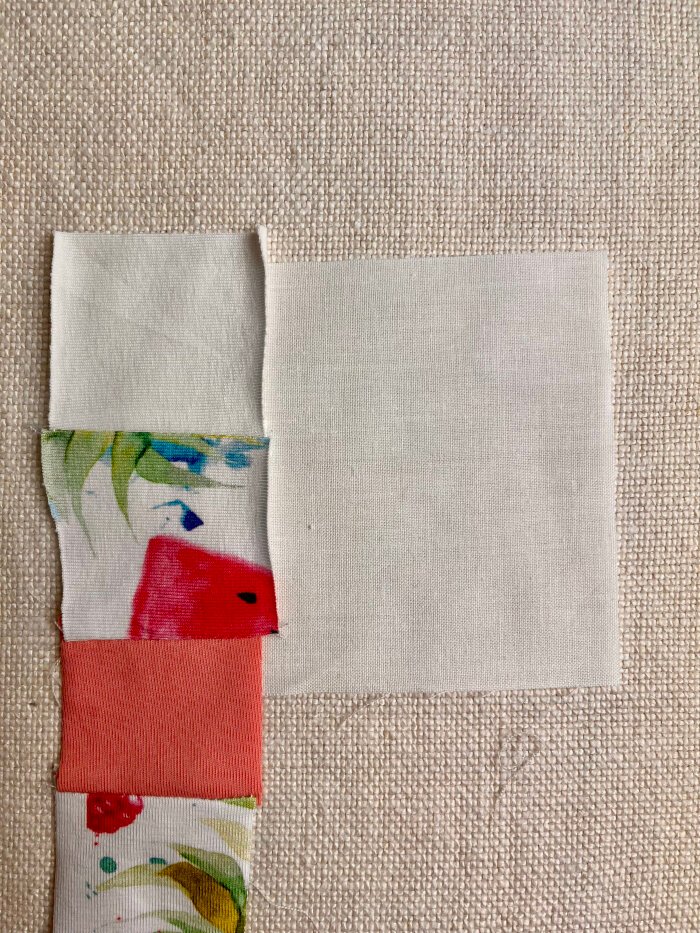

We will start sewing the chains on the backing fabric from the left to right. Place the first strip on the left, aligning with the short edge of the backing fabric. Sew a holding seam close to the left side.
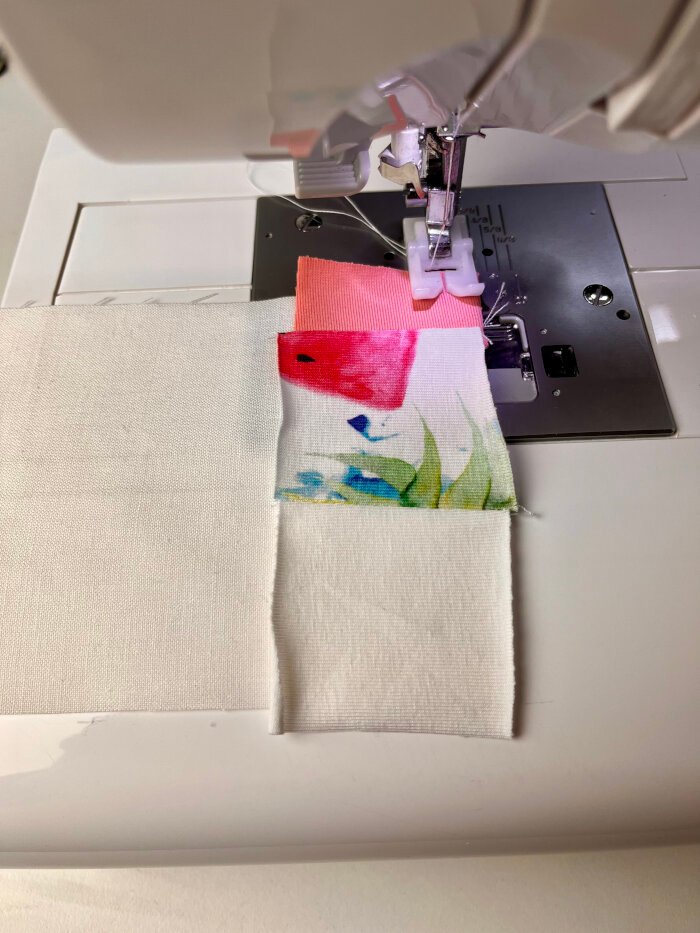
Then place the next strip over the first one, with right sides facing and ensuring the on the right side the sides at least meet (if there is a gap, move the upper strip to the left until there is no gap). Sew the strips together on the right side, onto the backing fabric.
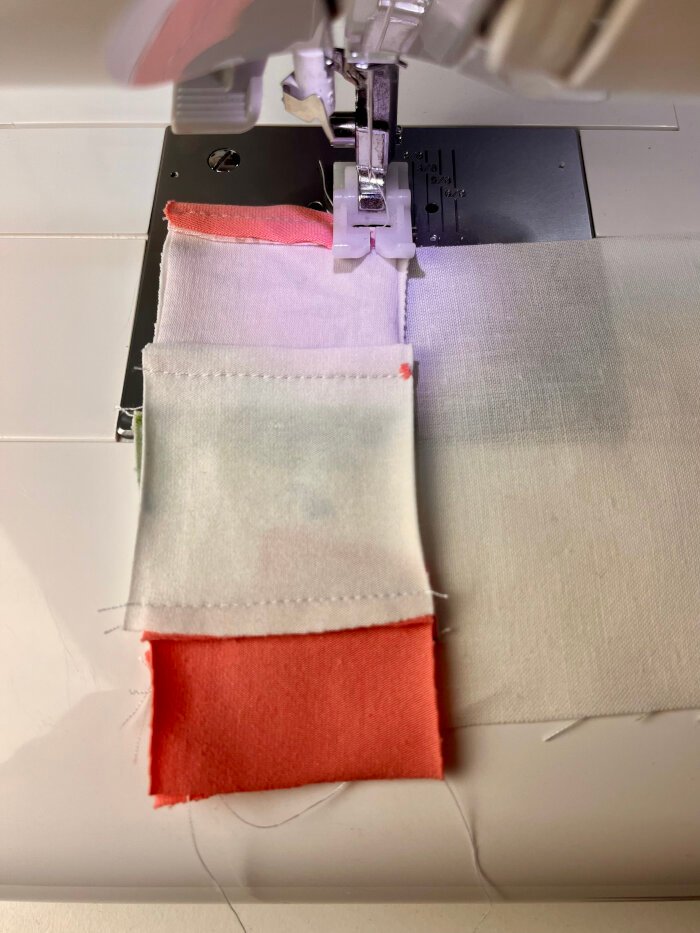
Then press the seam flat as sewn, and then open.
Next, place another chain of fabric scraps and place over the previously sewn strip, with right sides together. Sew on the right, then press. Repeat until the whole backing fabric is covered with scrap chains.
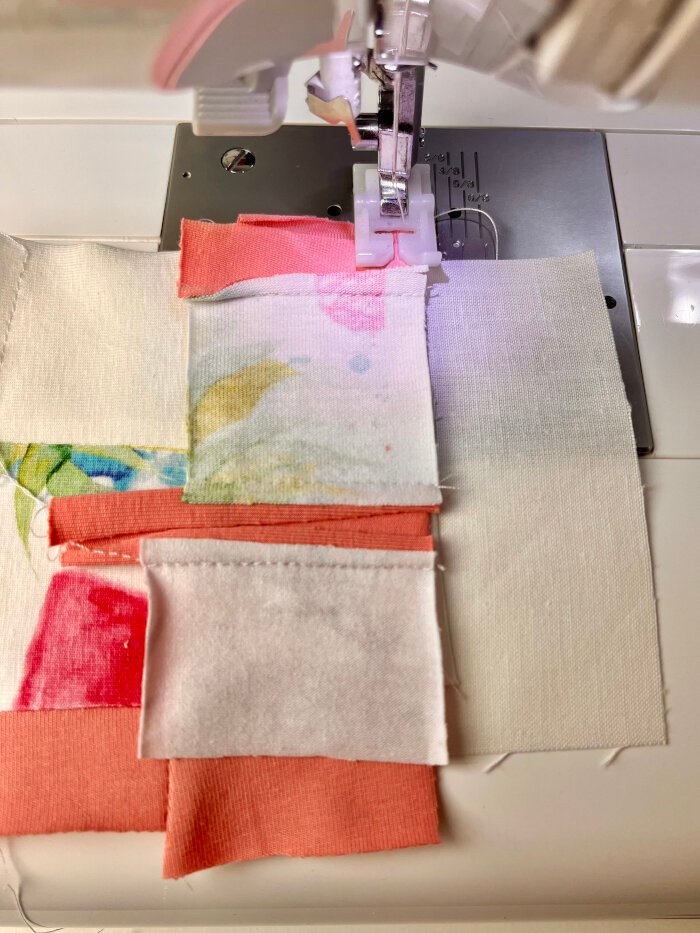
Now, you can either sew rows of topstitching over the quilted patches or leave as they are. I topstitched two and left two without the topstitching.


Sewing the heart shaped fabric coaster together
The last step is to sew the heart shaped coaster.
If you are using a different reverse for the coaster, cut out the reverse fabric the same size as the backing fabric or the finished quilt patches. If you are using another quilt patch, then follow the instructions as for the different reverse but use the quilted patch as the reverse.
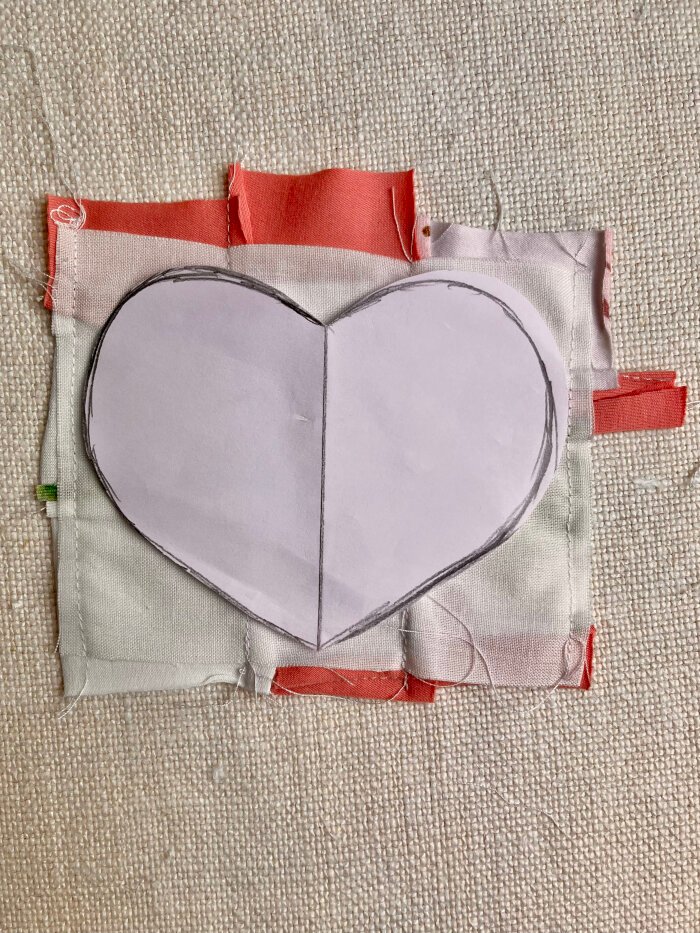
Place the heart shaped template on the wrong side of the quilted fabric coaster top, and trace around it with a pencil, chalk or removable fabric marker. Mark a placement for opening near the lower tip of the heart (the pointy bit at the bottom). This should be around 1″ wide. The heavier the fabric, the longer the opening should be to make it easier to pull the heart shaped coaster right side out. Make sure that the turning hole is on the straight line of the heart and not on the curve or the tip. This will ensure that the heart shaped coaster maintains its shape later on.
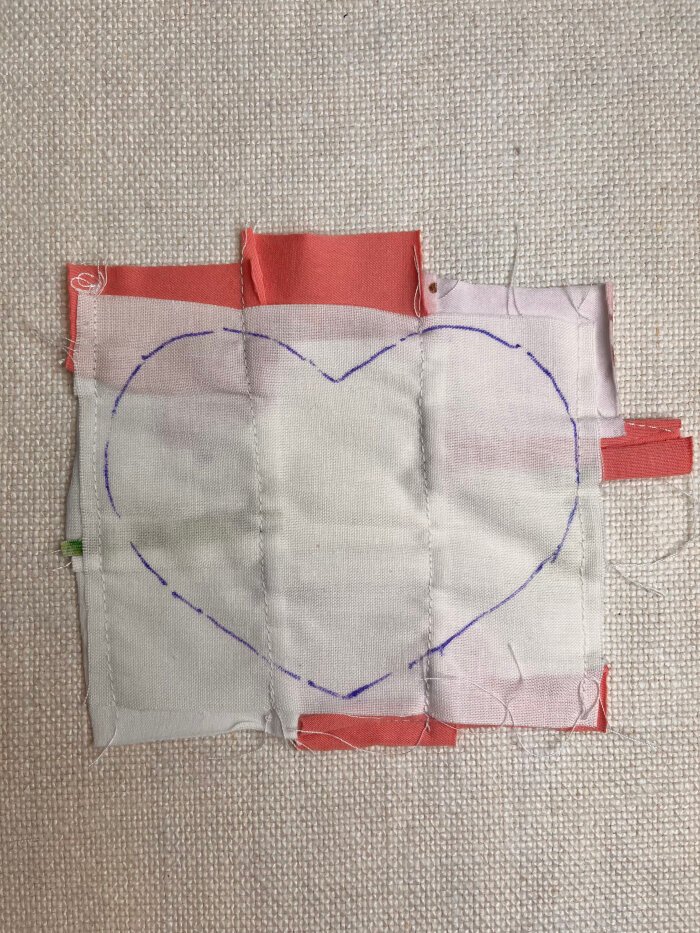
Place the quilted coaster top on the reverse fabric with right sides together. Pin both layers together to stop them moving around when sewing.
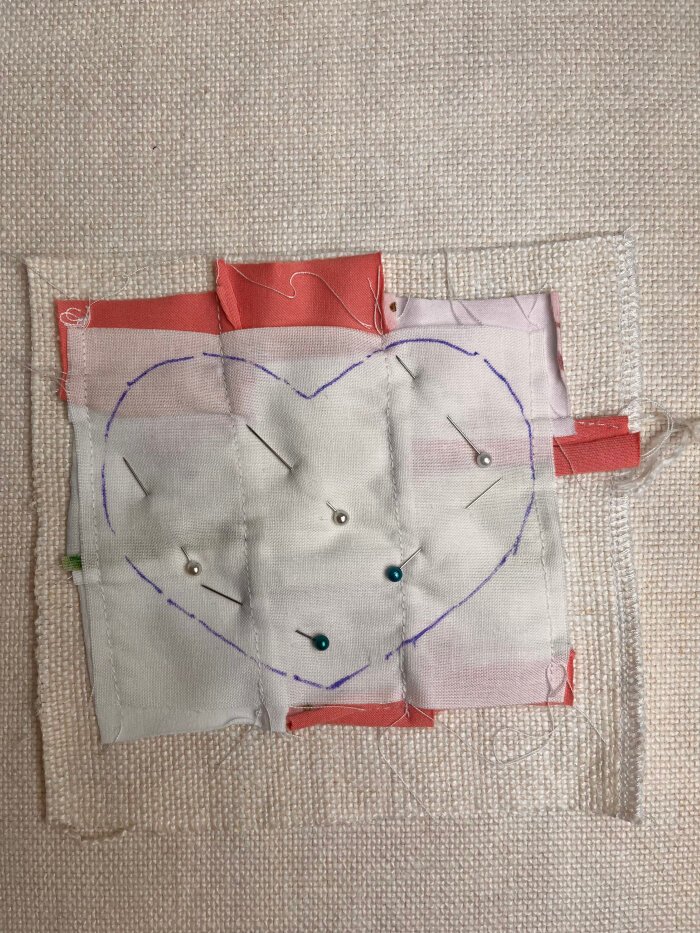
Sew the pieces together on the marked stitch line, starting from one side of the opening all the way to the other side, backstitching at the start and the finish. The backstitching is important here to not to break the seams when turning the heart shaped coaster inside out.
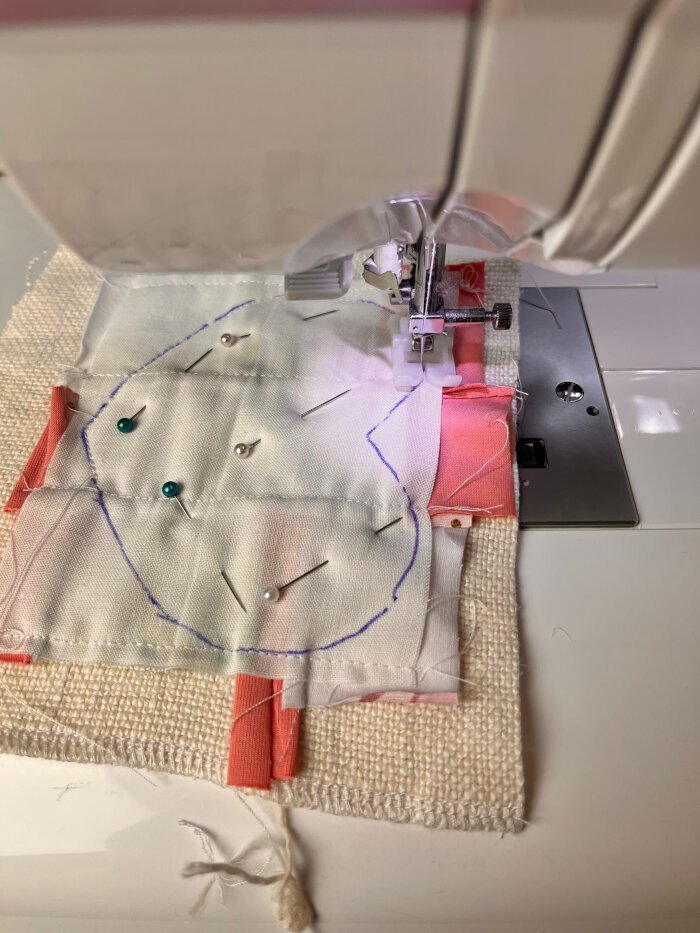
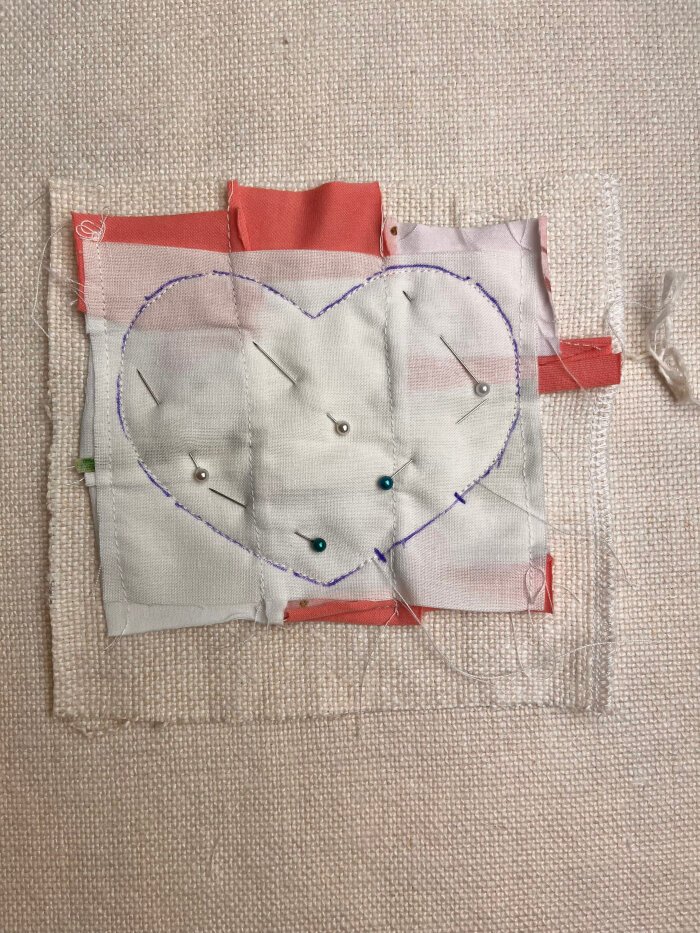
Trim the seam allowance with pinking shears, leaving larger seam allowance at the turning hole. If you do not have pinking shears, cut out small triangles all the way around the seam allowance, being careful not to snip the stitching.
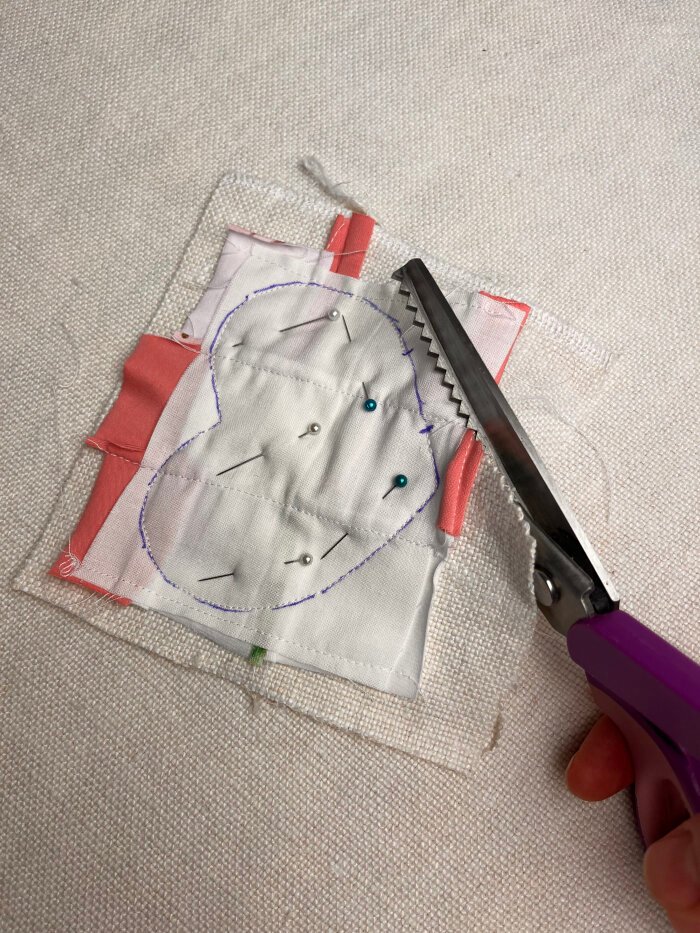
Cut the corner at the top of the heart close to the seam line but be super duper careful not to snip the actual stitching.

Turn the fabric coaster inside out, then press with a steam iron.
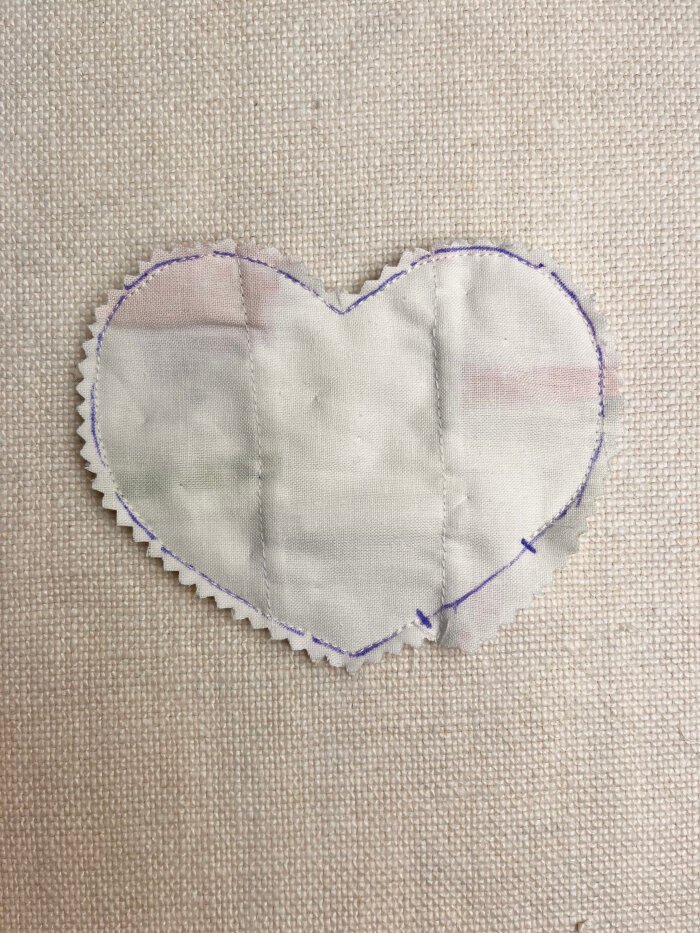
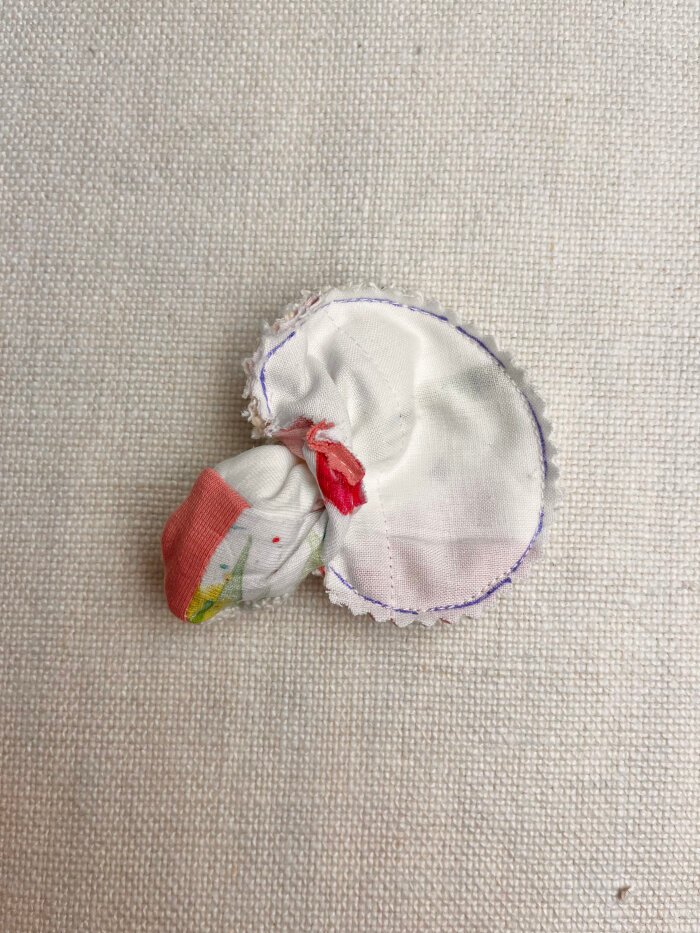
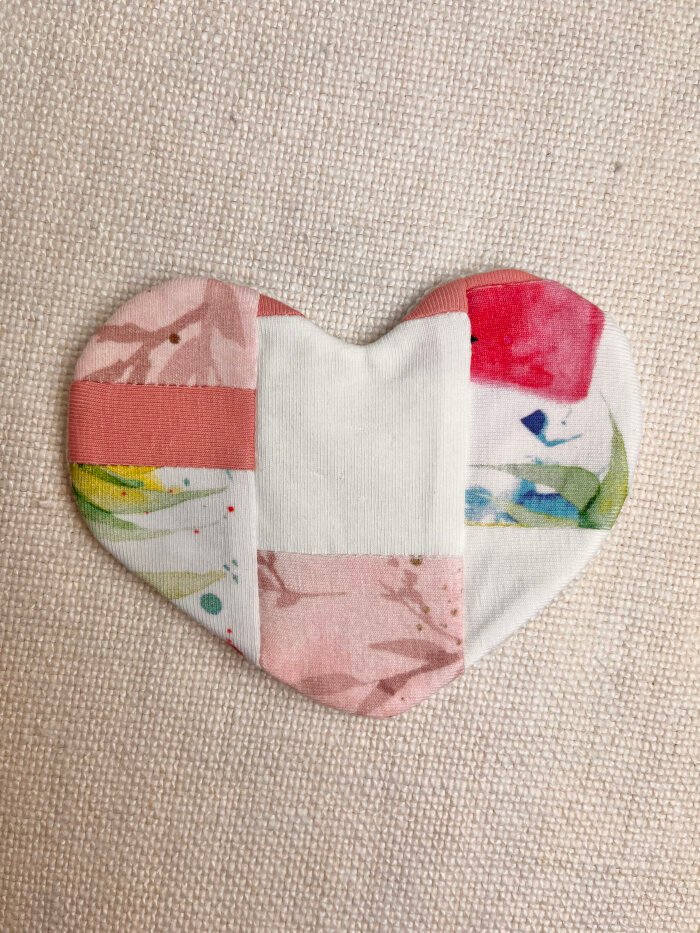
Next, top stitch close to the edge all around the heart shaped coaster, securing the turning hole. Then press again to blend the stitches.
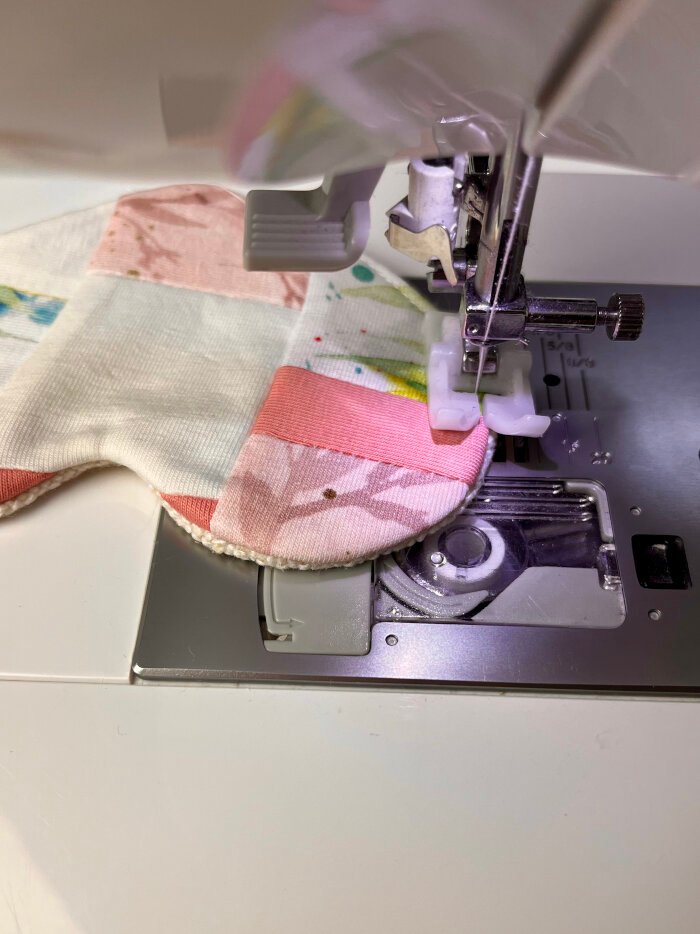
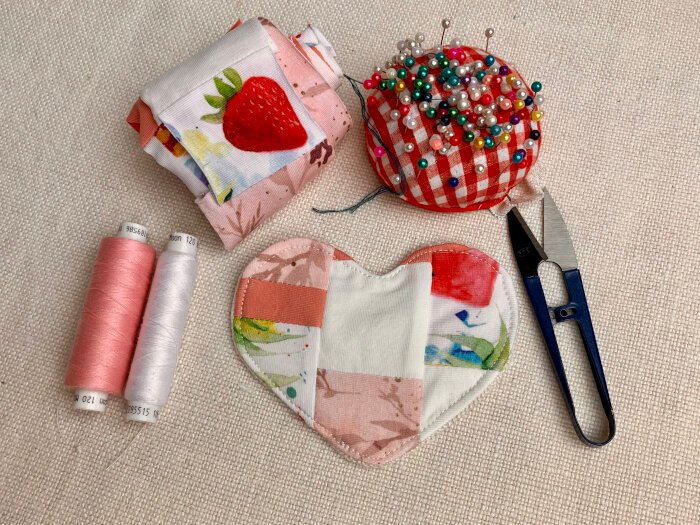
That’s it. You are all done and have and completed the fabric coaster tutorial! Create a few quilted fabric coasters more to make a nice set of four and give it to the loved one as a heart warming handmade Valentine’s gift.
Conclusions
While at the start the whole fabric scrap project may appear very daunting, I promise you, this is going to be one of the easiest and heart fulfilling project that you will do this year. And it is not just because this tutorial is an eco friendly sewing project. It is pretty straightforward sew, just trust the process. And once you have made your first coaster, you will find that the other ones are breeze to make.
I made my set in one evening with lots of interruptions from my two small children and while taking photos and videos for the tutorial. So it should not take you that much time either. 🙂 Your loved one for sure will appreciate this handmade Valentine’s Day present.