In the final instalment on materials for reusable pads I will delve into some predictable and some creative options for closure materials for reusable pads. Some options will include what you already might have in your fabric and notions stash.
If you wanted to catch up in the previous posts in the series, here is the full list of articles on materials for reusable pads:
- Backing materials for reusable pads
- Absorbent materials for reusable pads
- Top layer materials for reusable pads
- Closure options and materials for reusable pads
Closure options and materials for reusable pads
- KAM snaps
- Metal snaps
- Sew on snaps
- Hook and Loop tape / velcro
- Button and buttonhole
- Ties
KAM snaps

KAM snaps are plastic snaps that are very popular on the reusable pads vailable on the market. I have yet to come across any reusable pads that are not secured by these snaps.
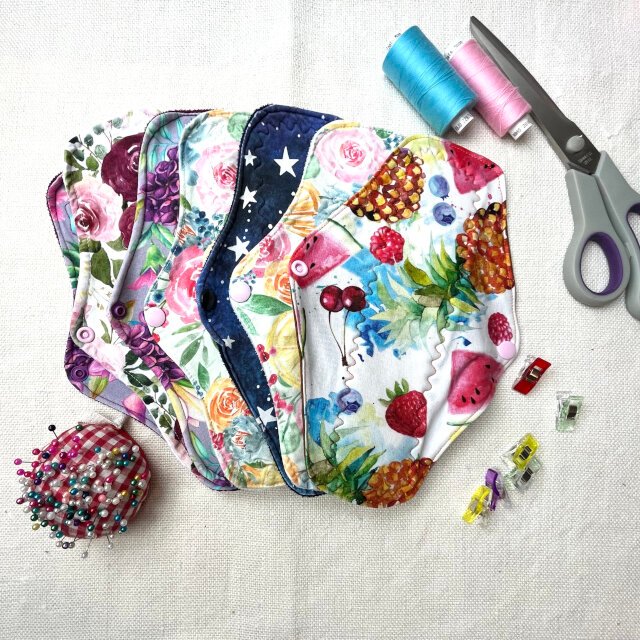
They are fairly easy to come by on Amazon and independent online shops. The snaps are inexpensive and I bought them in small sets to make 100 pairs. There are many colours available to match most fabrics. I tend to match my snaps to the background or dominant colour of the top layer material, however it is just an artistic choice.
There are a male and female snaps – a stud and a sucket, and a cap (one for stud and one for socket). The reusable pads are sandwiched between the socket (or stud) and the cap.
If you procure a set of multiple colours, the sets come with pliers to attach the snaps. I do not particularly like the pliers as they do not apply the pressure evenly on the snaps, smashing one side of the prong on the cap more than the other. For that reason I had invested in a heavy duty press but it is not necessary for the reusable pads, however it makes life a little easier. So, if you are going to make the pads as a side hustle, I would recommend obtaining one, even if it just from a second hand market.
I personally like KAM snaps, although they would not be my first choice if I already did not have them. After all, they are made of plastic and can be a little bulky (there are 4 layers of plastic once you snap the wings close), albeit unnoticeable when wearing the reusable pads.
Metal snaps
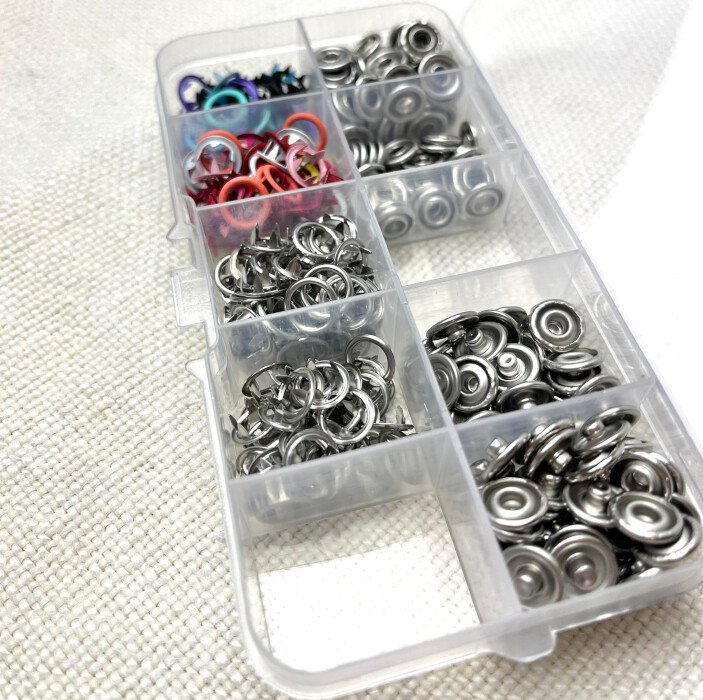
Metal snaps are applied similarly to KAM snaps and have the same challenge if applied by hand pliers. You can procure separate die set to go with a snap press to ensure proper alignment.
The metal snaps would be less bulky, however, I would be concerned of storing the wet, rinsed reusable pads until a wash day, to eliminate the chance of metal corrosion and rust damage on the pads. I have stored some dump baby vests with these snaps and have not had any issues but I am always mindful of that happening.
If you like the idea of snaps then I would chose the metal snaps over the plastic ones due to lover impact on the environment at the end of the useful life of the pads.
Sew on snaps
Sew on snaps are also a great alternative to plastic KAM snaps. There are both plastic and metal snaps available, however I would stick to the metal snaps for the reasons mentioned above.
These snaps are available in most highstreet and online fabric stores and are one of the easiest to attach. You will only need a thread and a needle to do that. The downside is that it would take a little longer but that should not be an issue for small stash for personal use.
Hook and loop tape
Hook and loop or Velcro tape are straightfordward materials for reusable pads. You would need to attach a small patch of hook and loop tapes on opposite sides of the wings with a sewing machine or by hand sewing.
I have not made any pads with hoop and loop tape as I find this notion to be quite loud when I want to be discreet in the ladies room and not to announce to fellow females that my course has arrived. It is abvioulsy just a self conciousnes and you may not care for such scruples.
The other aspect to consider is that hook and loop tapes are made of plastic. They may also have sharp corners on the pieces attached to the reusable pads, therefore I suggest that you cut the material with curved rather than straight edges, so as not to scratch yourself.
Button and buttonhole

From all the options that I have discussed in this post, the old school button snd buttonhole is my favourite by a long while. Despite the button being made out of plastic I consider this one of the most environmentally friendly option as the button can be recycled into other projects.
In fact, most of my buttons come from my husband’s shirts when they are at the end of their life and before I turn them into some other projects or discard, I always cut off the buttons. If you are seriously into sewing, you will have random single buttons in your sewing box – either as a leftover from a set, a found button or thrifted button from a garment that you no longer need or that does not need that particular button.
I think it is great to have a slight obsession with collecting buttons 🙂
For the reusable pads, I recommend to use plastic shank less buttons. Metal or wooden buttons migth have more wear and tear if you are going to use oxygen bleach to restore the brightness of the light colours of the reusable pad. They might also corrode or submit to mould if they are in damp environment for too long.
Buttons would be your only fastening materials for reusable pads that would come in single per pad rather in pairs, thus reducing the bulk of the pad when closed. When adding the button, my recommendation is to sew the button facing the pad, so that essentially you are putting button in the buttonhole rather than buttonhole over the button. This way the button would not catch or leave an imprint on a thigh.
The buttonhole should be a tight fit to reduce any accidental opening of the closure, especially if you are using stretchy fabrics for your reusable pads.
Ties
Another alternative is to sew in or on some ties to close the pad. If you are pursuing this option, you will need to reduce the width of the wings because the ties do not require an overlap.
The ties can be a slim ribbon or you can make some spaghetti ties yourself, using any fabric from your stach. You will need to make them long enough to be able to tie a bow and short enough not to have them trailing down your leg (unless you like that kind of staff).
Summary of the fastener materials for reusable pads
You do not need to procure any new materials to make functional reusable pads. There are many alternatives available and the list above should give you plenty of ideas, varying in environmental impact. Buttons are my favourite options, but because I already have a lot of snaps I use them. Buttons are more useful for the shirts and blouses I make myself.