Fabric Advent calendar has been on my cards to make for a few holiday seasons. And a blog post seemed to be an appropriate way of sharing the process with you in case you wanted to follow the urge to be more intentional. In the post I will share the step-by-step instructions, and help you to turn the best specimens of your growing pile of scraps into a stunning fabric advent calendar.
Introduction: Why Make a Fabric Advent Calendar?
Let’s start with the reason why to make a fabric advent calendar. No doubt, you already have some personal reasons to do that but it would be nice to round it up in case anyone asks.
- There is no need to rush to the store the last minute to purchase the advent calendar. You have one to be used every year.
- The fabric advent calendar can be tailored to match with the interior of your home.
- You can decorate the DIY advent calendar in whichever way you want, adding appliqués or embroidery. Plus you can add some additional embellishment to it each year over time.
- It is a perfect scrap busting project. Homemade advent calendar uses up the scraps and reduces impact on environment.
- No addition al waste produced (other than the one arising from the fillings that you use).
- Fabric advent calendar is cheaper to make since you most likely already have all the materials at home.
- You can fill the DIY advent calendar with whatever fillings you want – shop bought or handmade sweet, sewing items embroidery items, makeup items – you name it.
- The handmade advent calendar makes a perfect gift to a loved one (though you have to start making it earlier than end of November).
- The best of all – you can reuse it every year!
Materials You Need (Scrap-Friendly Options)
All the materials are scrap friendly, however you can choose any other fabrics if you want to make it with a specific colour theme and you do not have matching scraps.

- Small fabric scraps (the smallest pocket that I would recommend is 3″ x 3″ , however you can sew smaller pieces together to make the required size)
- Wool thread or any other thread that you may have, at least 30″ long for a hanging loop
- 25″ long wooden rod or small light curtain rod. The length needs to be at least 4″ longer than the width of the backing fabric. You can go pick up a wooden stick from your walks in a wood or from a homeware store. I used a bean climbing stick that I already have.
- Backing fabric, 26″ x 15″
- Lining Fabric for the base, 26″ x 15″
- Fusible interfacing 25″ x 14″ or sturdy fabric to sew in the middle, the same size as backing fabric.
- Embroidery thread for numbers
- Matching thread
- Sewing machine
How to Choose the Best Scraps for the Fabric Advent Calendar
Start with an idea on what colour theme you want. Either match it to the interior colours of your home, or go for the traditional red, green, gold, silver or combination of all of these. You can look up the colour of the year published by Pantone if you want to keep up with a trend. For 2025 it is Mocha Mousse.
Any natural, neutral or typical Christmas colour scheme will be evergreen (no pun intended) while current trends change. And, unless you specifically like that colour, you will soon feel outdated.
When you have decided on the overall colour scheme, start collecting scraps that match. It is safe to stick with the same colour family, but you can mix and match with contrasting colours. The post by Canva goes deeper into the colour theory. However, you can choose whatever makes sense to you, while avoiding looking chaotic. To be on the safe side, you can always make more pockets and see what fits together.
Match the sewing thread to the backing fabric. Only the topstitching on the backing fabric will be visible so you do not need to worry about matching the thread to all the pocket pieces. Embroidery thread, however, you will need to match to the pockets or stick to one colour that suits all the pockets.
Step-by-Step: Turn Scrap Fabric into an Advent Calendar
Prepare the Base Panel
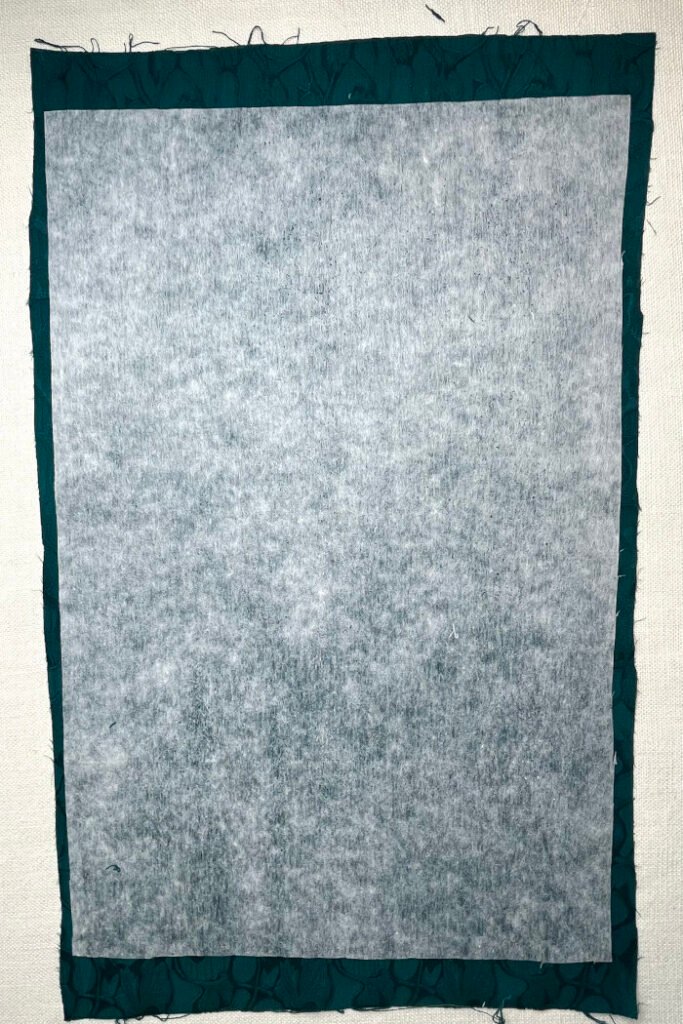
You will start with the base panel for the fabric advent calendar. Cut out the backing fabric, the middle fusible interlining or thicker fabric (see notes above) and a lining fabric. Bond the fusible interlining with the wrong side of the backing fabric. If you are using a firmer fabric as a backing fabric, sew it to the wrong side of the backing fabric with a longest stitch length on your sewing machine.
Then, place backing fabric together with the lining fabric, with wring sides facing. Pin all around.
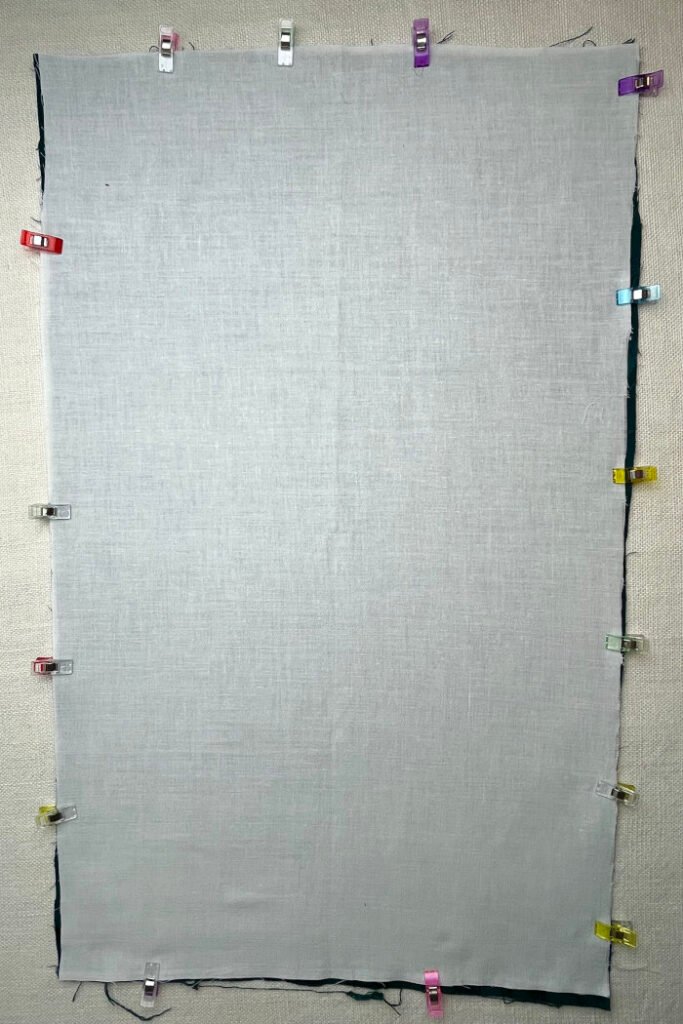
Sew with 1/4″ seam allowance, leaving 1″ gaps at the top end of the backing fabric for the rode and a turning hole on the side seam. I have indicated the turning holes with a pin to ensure the I do not sew over them.
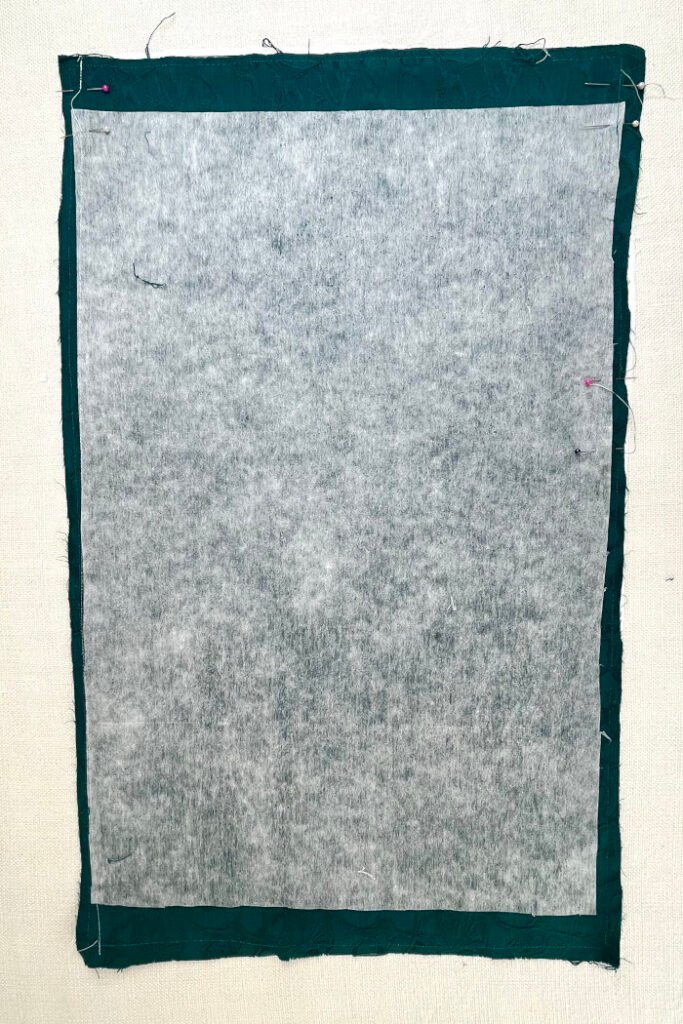
Press the stitch line to bond the fabrics and the thread together.
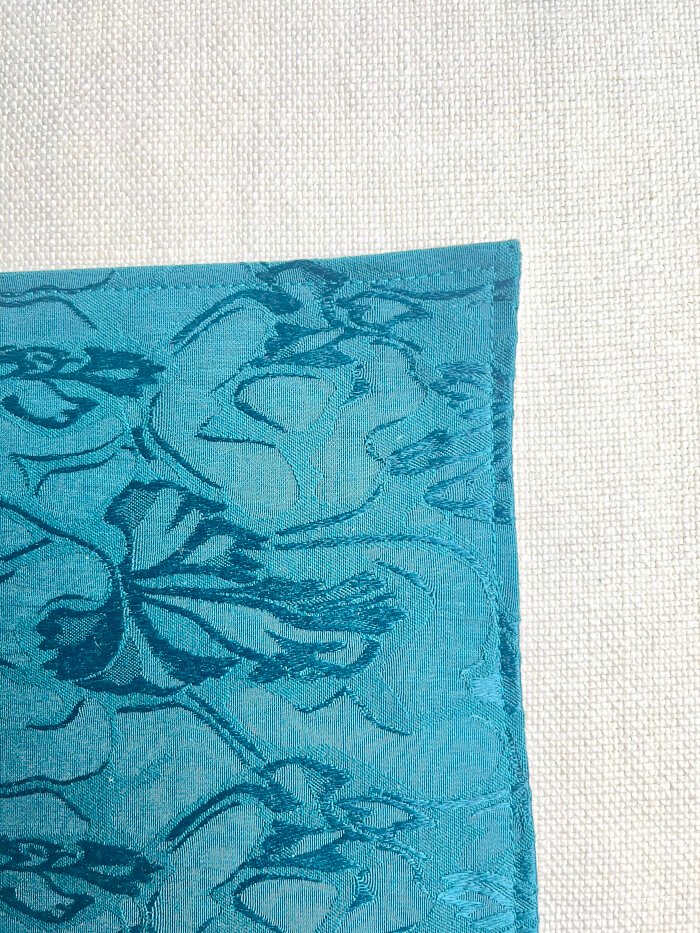
Trim the corners close to the stitch line, being careful not to snip the thread. Turn the backing piece for the fabric advent calendar inside out and press it well.
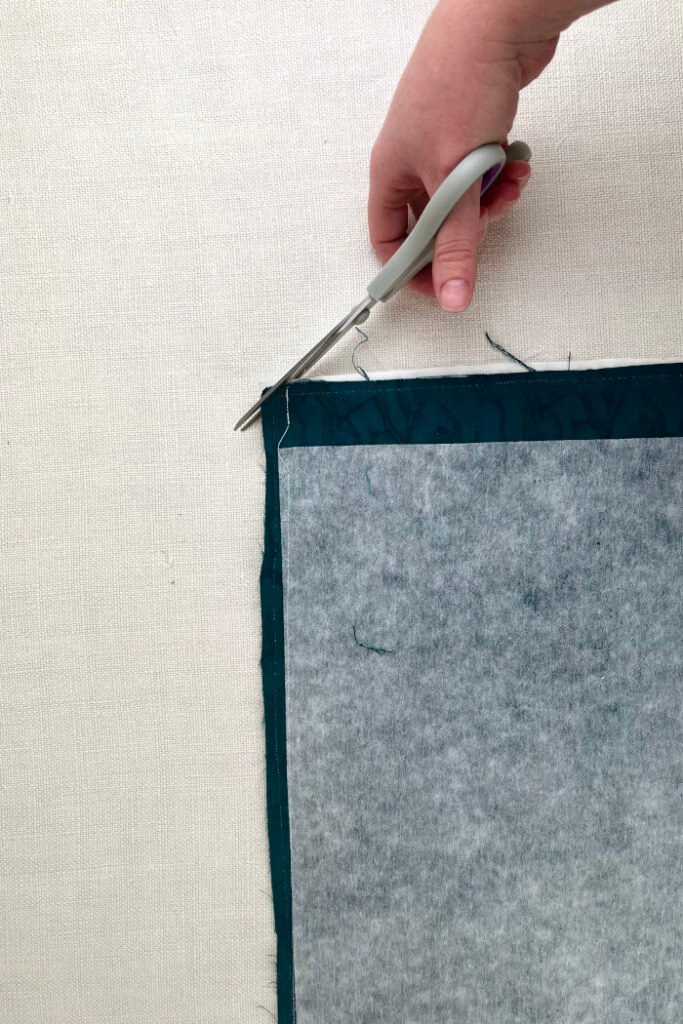
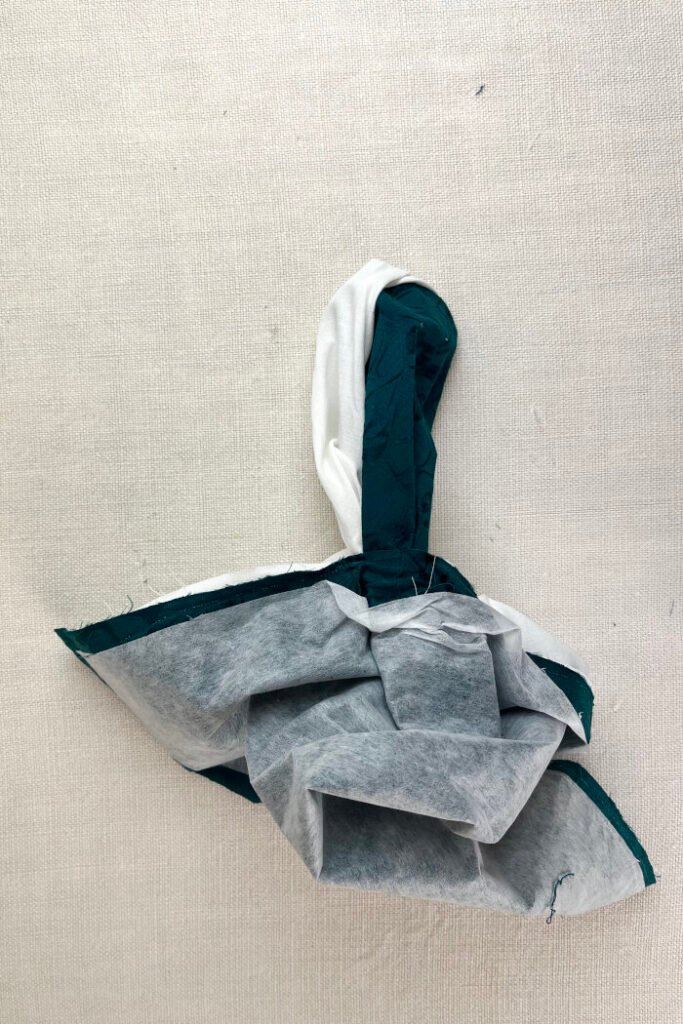
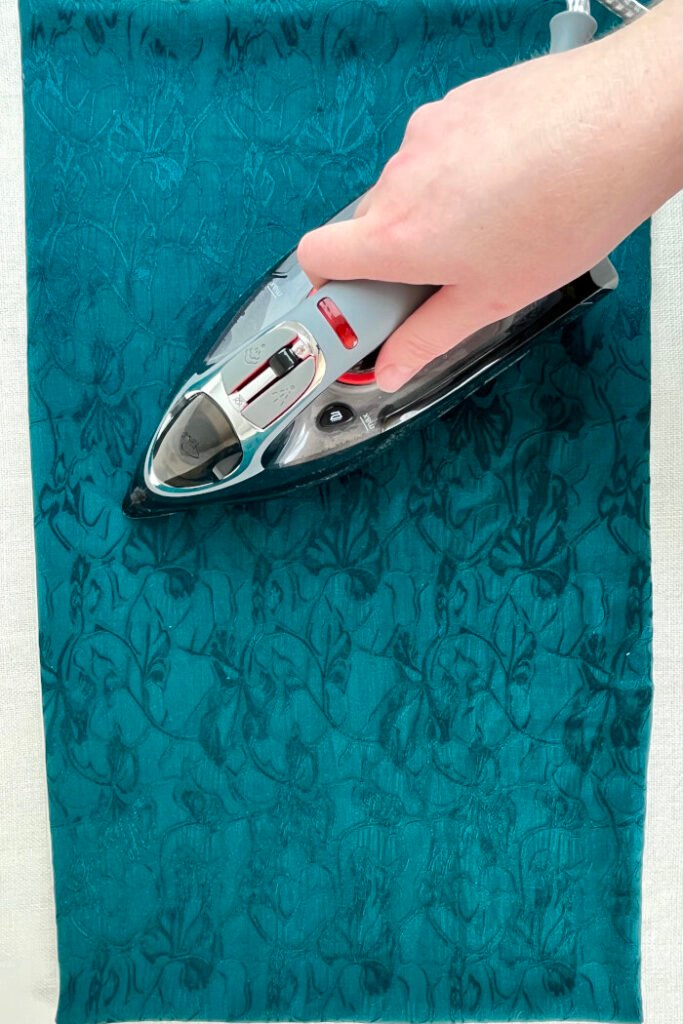
Then topstitch all around it, except the openings for the rod. Press the stitch line to blend the stitches with the backing panel of the fabric advent calendar.
Sew the Fabric Pockets
Next, you will need to work on the fabric pockets. I cut the fabric scraps to either 6″ x 6″, 6″ x 3″ or 3″ x 3″. Larger pieces will be slightly quicker to assemble but eventually you are going to cut all of them to 3″ x 3″. If you are sing any fabric scraps that are made of stretchy fabric, apply fusible interfacing to stabilise them.
For the squares that are 6″ x 6″, on the wrong side of the fabric mark middle lines with chalk, a piece of soap or erasable fabric pen. You can use pencil for this too as the lines will not be visible. Repeat the same for the 6″ x 3″ pieces, but just one middle line, visually slicing the piece into two 3″ x 3″ squares.
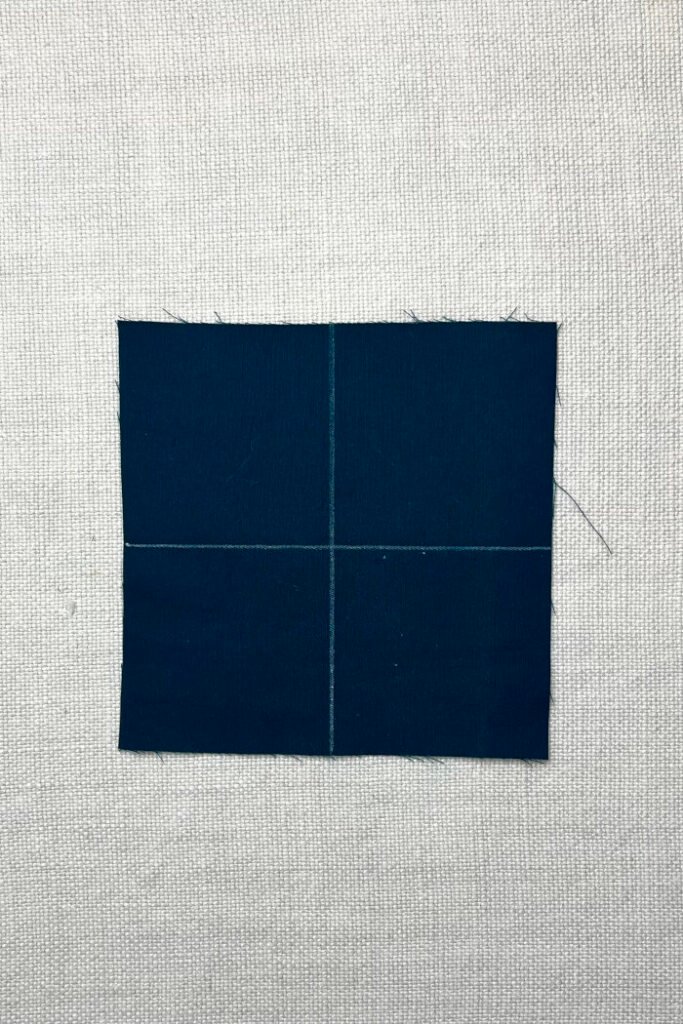
Then, pin the pocket pieces together with the lining, wrong sides facing. I had larger piece of lining fabric so I did not cut it down to individual squares but pin the pocket squares directly to the lining fabric.

Sew the pocket pieces to the lining with 1/4″ seam allowance, leaving one side open for turning. For the larger pieces, sew 1/4″ seam of either side of the marking in the middle. Press the stitching, to blend with the fabric.


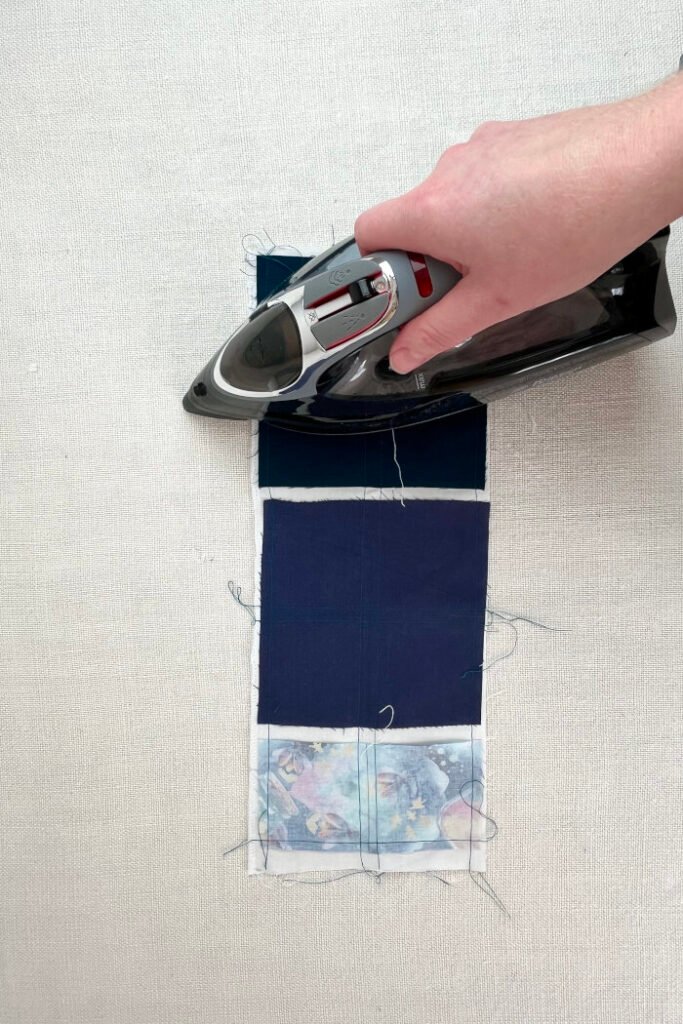
Cut the larger pieces along the middle lines, to separate into smaller 3″ x 3″ squares.
Trim the corner of each pocket square, being careful not to cut the stitch line.
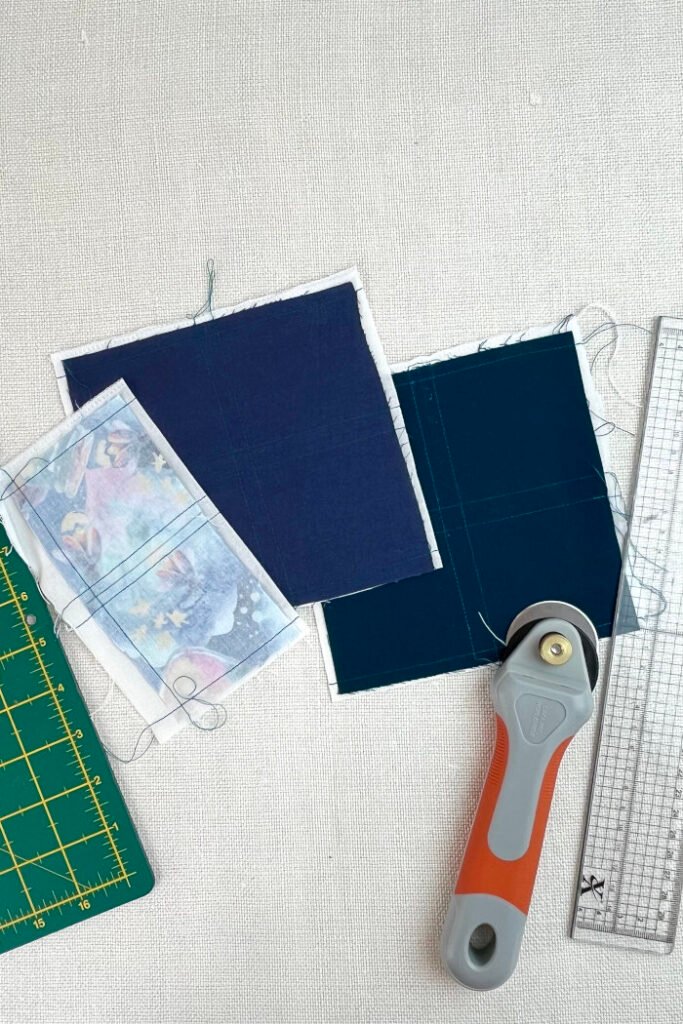
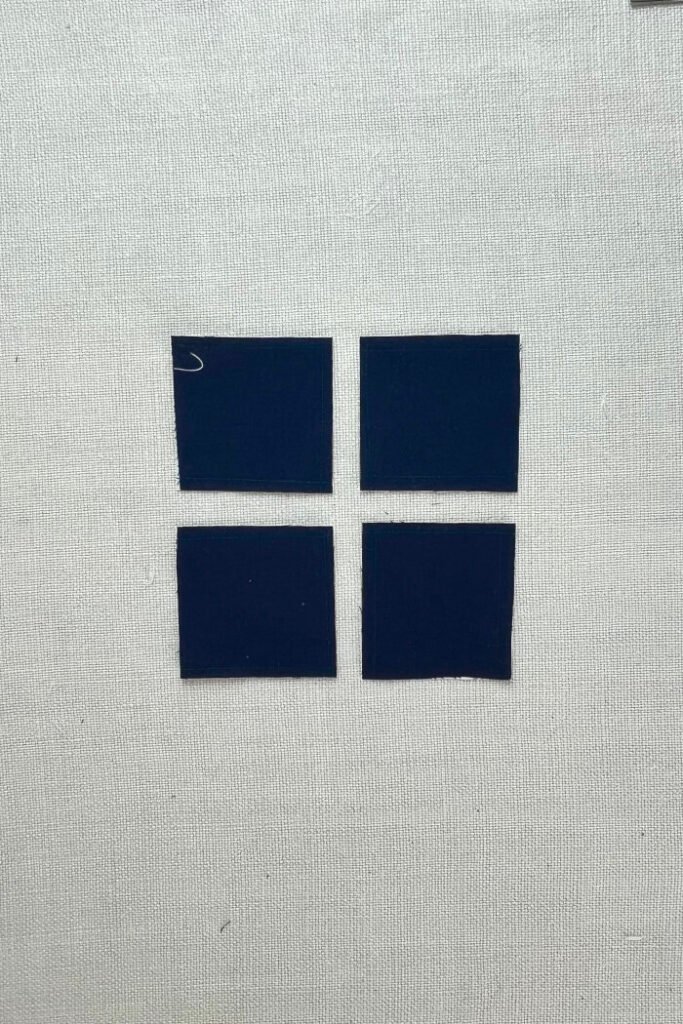
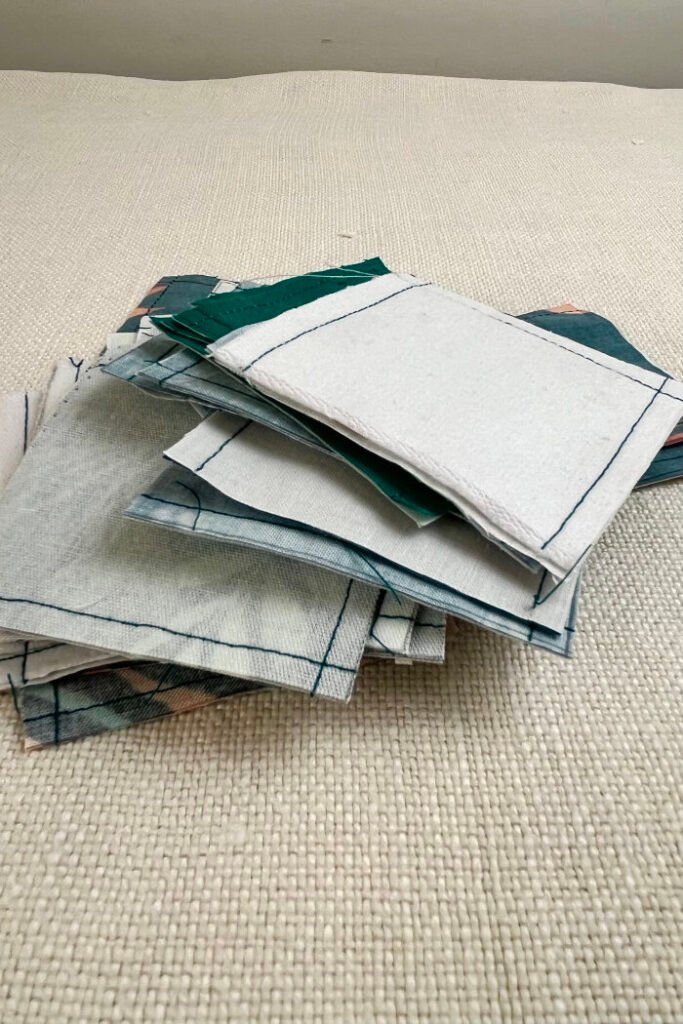
Then turn the fabric advent calendar pockets inside out, being careful not to open the sewn seams at the opening. Carefully poke the corners, to make them as sharp as possible. Press the pockets, keeping the edges neat and even.
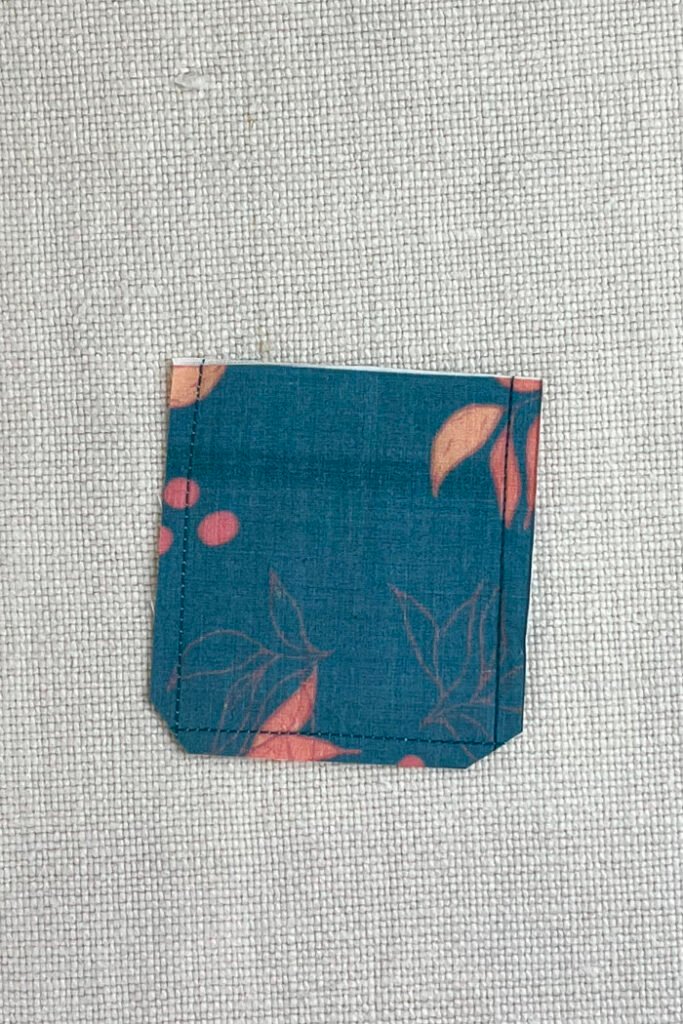
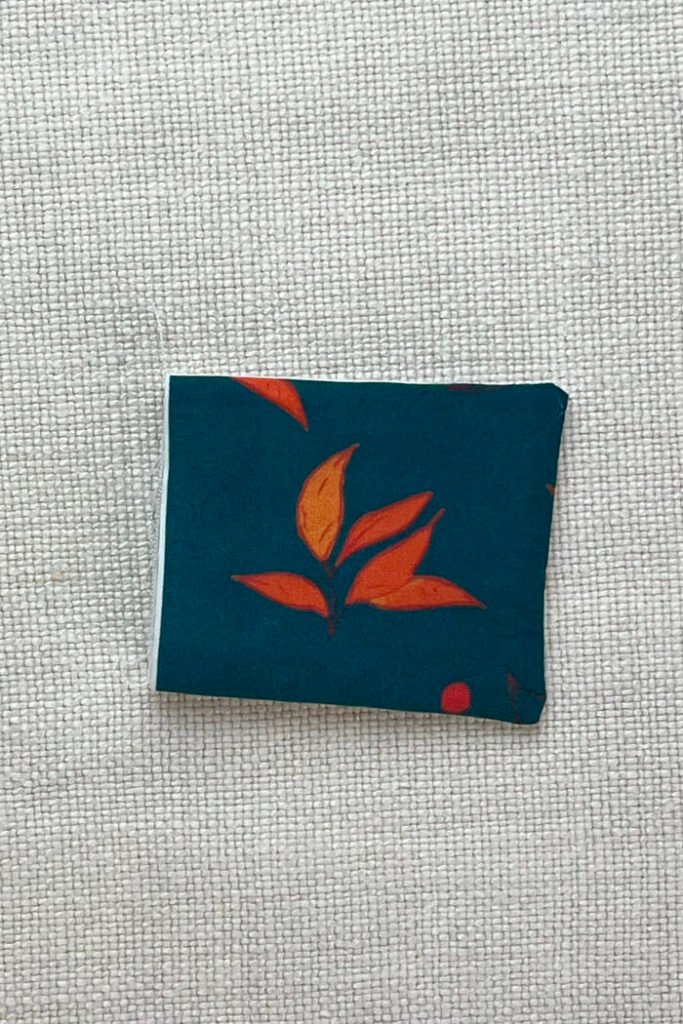
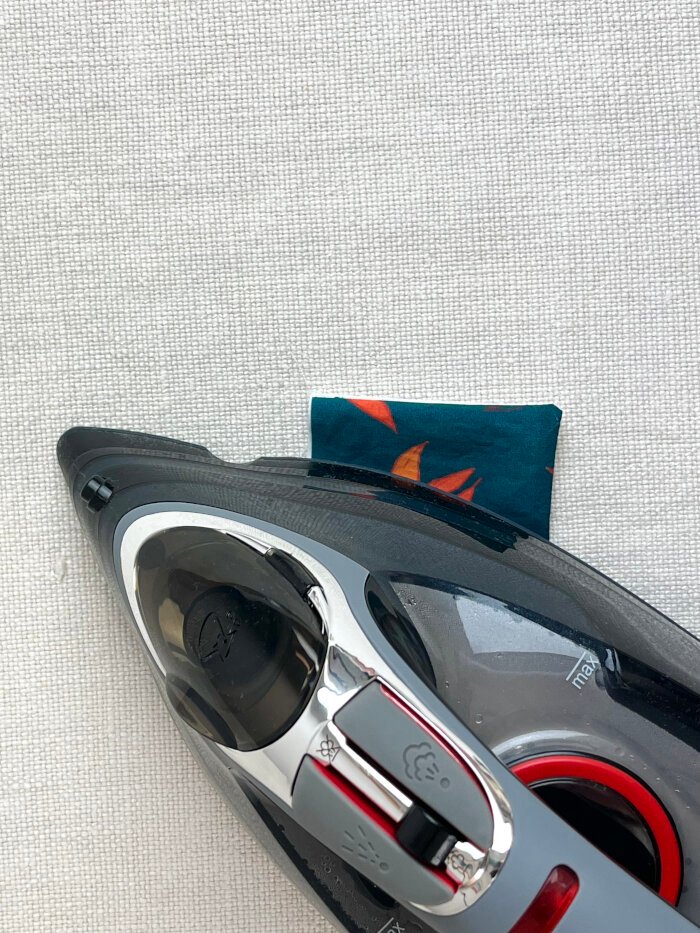
Next, press up the raw edge to the wrong side (the side with the lining) by 1 cm. This is going to be the bottom edge of the pocket.
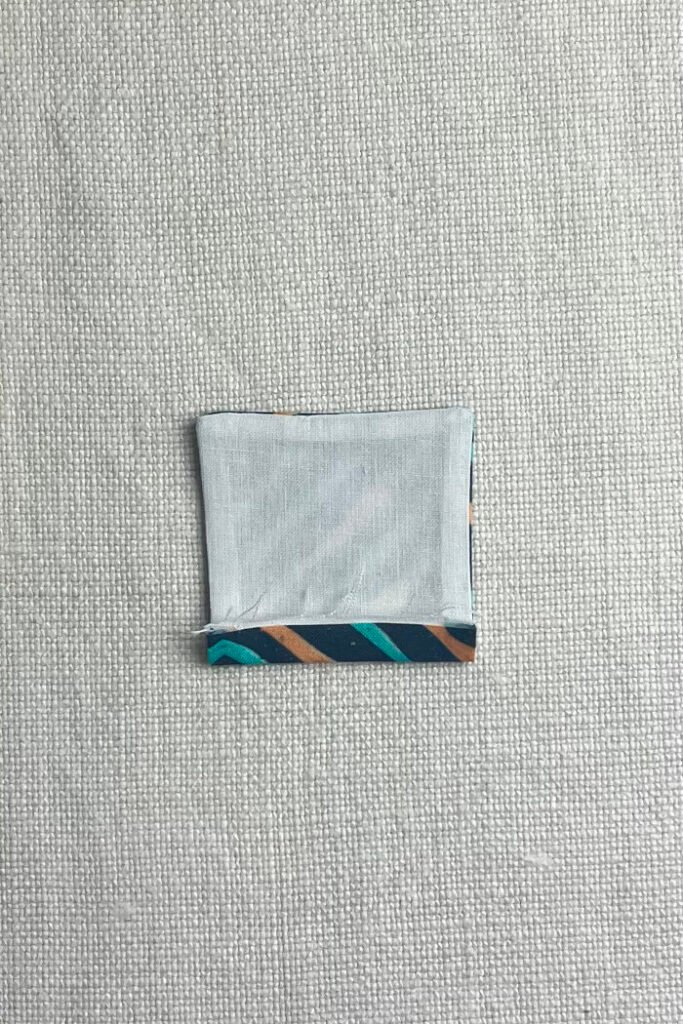
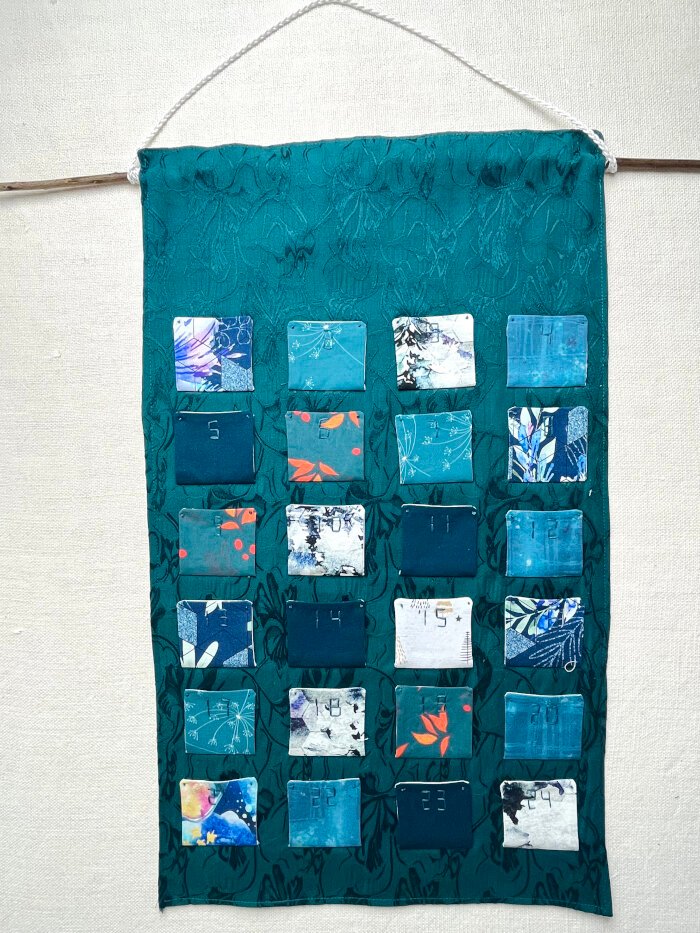
Before adding the numbering to the pockets, decide on the position of each pocket on the backing of the fabric advent calendar. Lay the pocket pieces on the backing and play around. The dimensions of the backing fabric allows 6 rows of 4 pockets on each row. Do not worry about the spacing at this stage. You will get to it in the following steps.
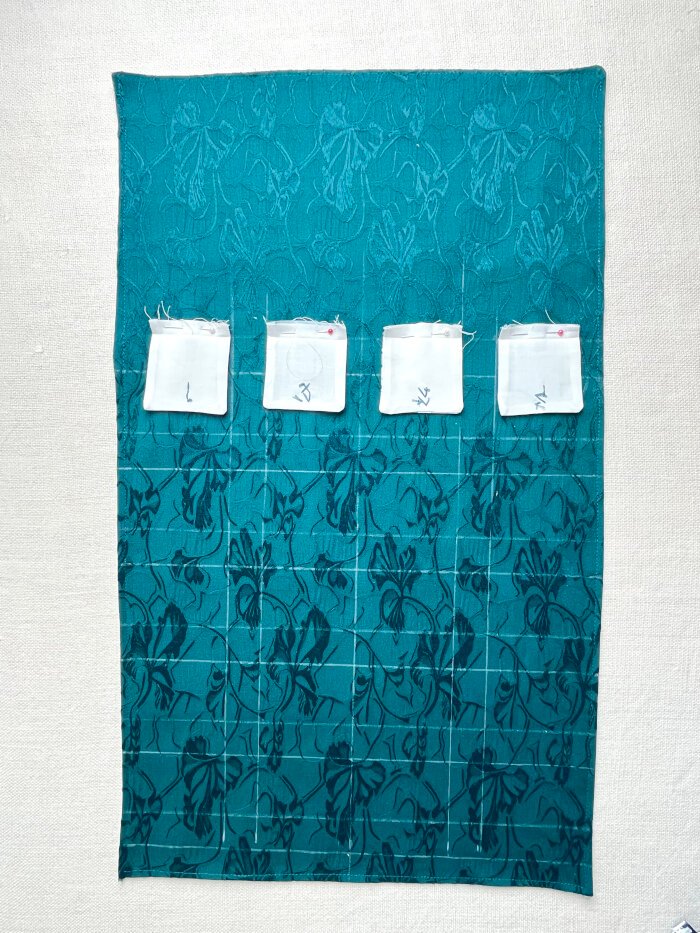
Once you are happy with the layout, temporarily pin the pockets to the backing piece to keep the visual arrangement in place.
Add Numbers and Decorative Details
There are multiple ways how you can add the numbers to the pockets. My preferred option is to hand embroider them, but you can go add an iron-on appliqués, sew on appliqués or just tie on clip on paper numbers. The latter can be done at the final stage and gives you the chance to move the numbers around later. The former option requires sewing before the pockets are attached to the backing of the fabric advent calendar.
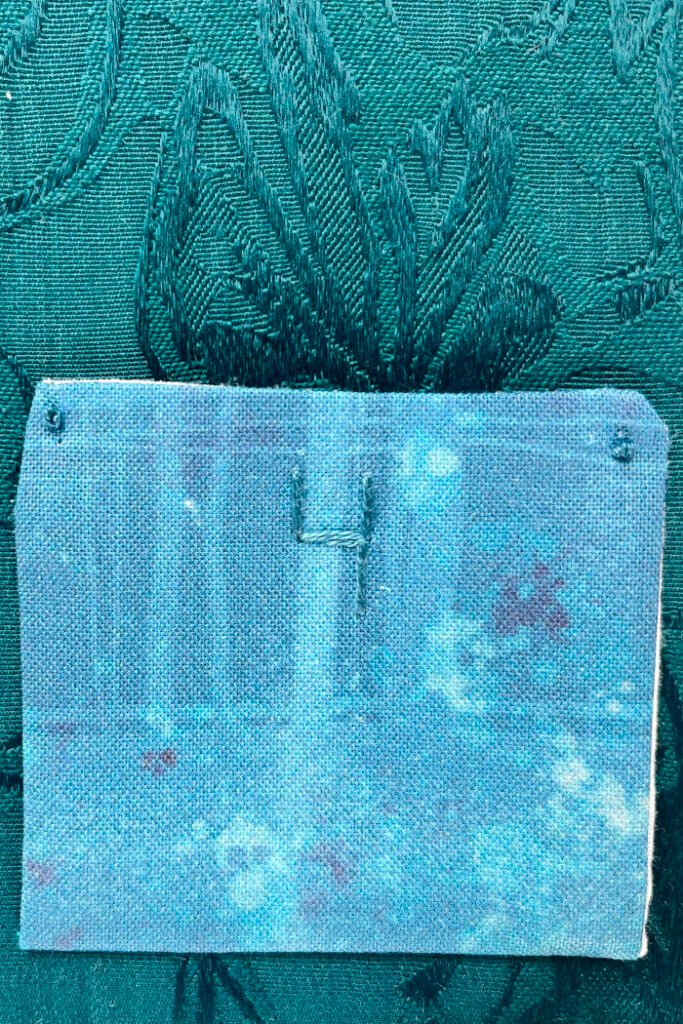
Decide on the style of the embroidered numbers and mark them directly on the pockets with heat erasable pen or a piece of soap (both can be erased by steam pressing). I have opted for the digital clock style numbers and I practice them on paper before marking the numbers on the pockets.
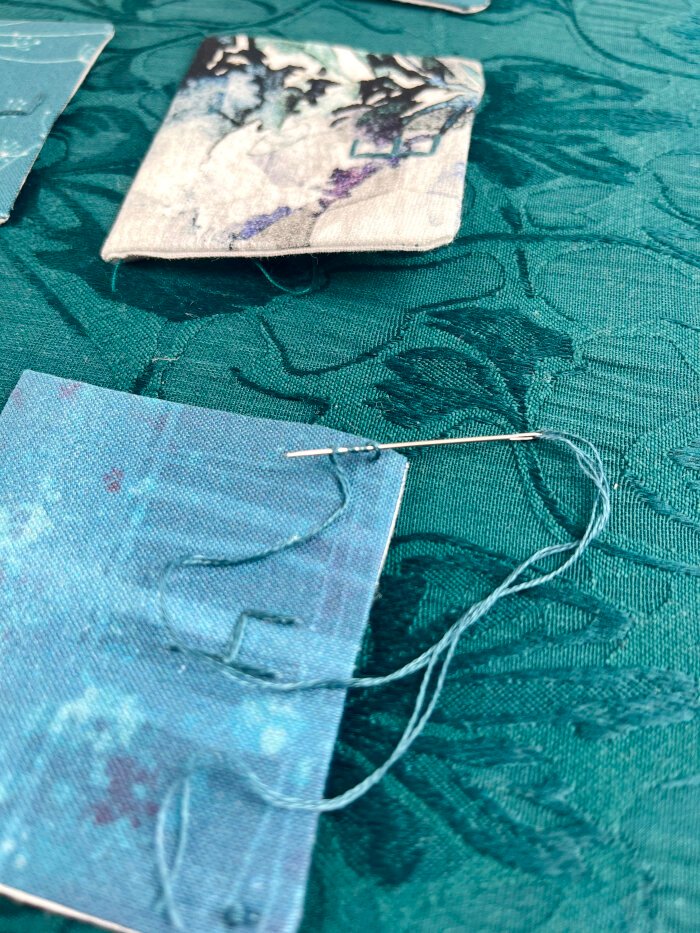
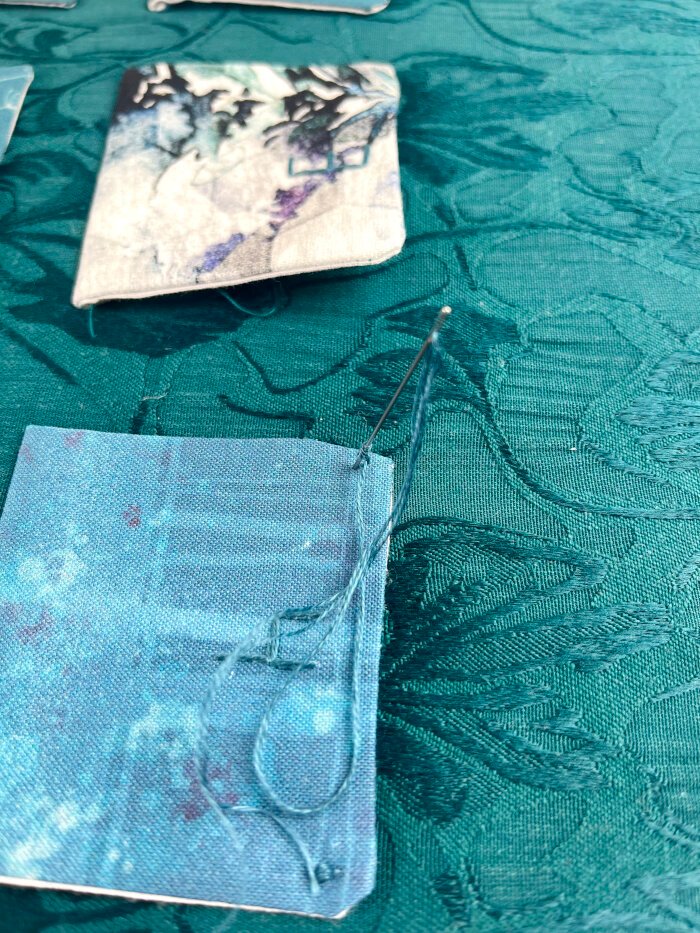
Using a matching or contrasting embroidery thread, handstitch along the marked numbers in either simple straight stitch or in any decorative style of your preference. I am going for straight stitch for each segment of the number and drew a guide on my finger to help the first numbers to stay consistent (I was not too careful in drawing the numbers evenly at the start). It is a lot easier to do if you “pencilled” accurate stitching lines and the embroidery goes quicker.
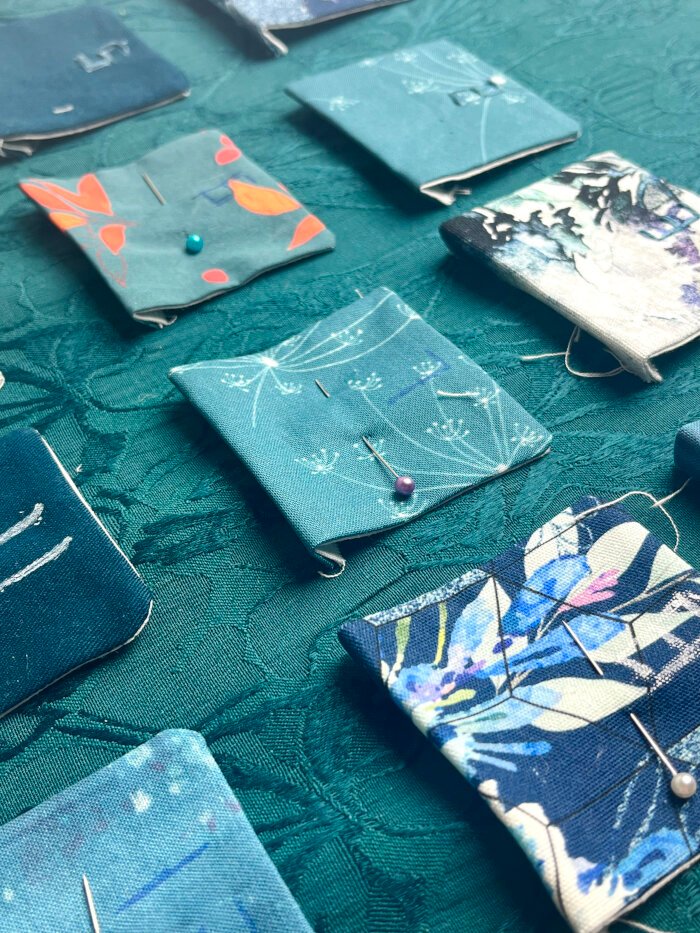

If you have gone for simple solid colours for the pockets for the DIY fabric advent calendar, then you can be as decorative as you want with the embroidery, while keeping within the same colour harmony.
Attach Pockets to the Base
Once all the numbers are embroidered, draw a gridline on the backing fabric of the fabric advent calendar, to mark the pocket placement. The pockets will be arranged with 1″ spacing vertically and 3/4″ spacing horizontally. From the bottom of the backing, measure 2″ and draw a line from side to side. From this line, draw 5 more parallel lines with 3″ spacing. Then, find the middle of the backing vertically and draw a vertical line. Then draw parallel lines either side of this line, with 1/2″ spacing. Then draw two more lines, on both sides, the first with 2.5″ spacing and the second with an 1″ spacing.
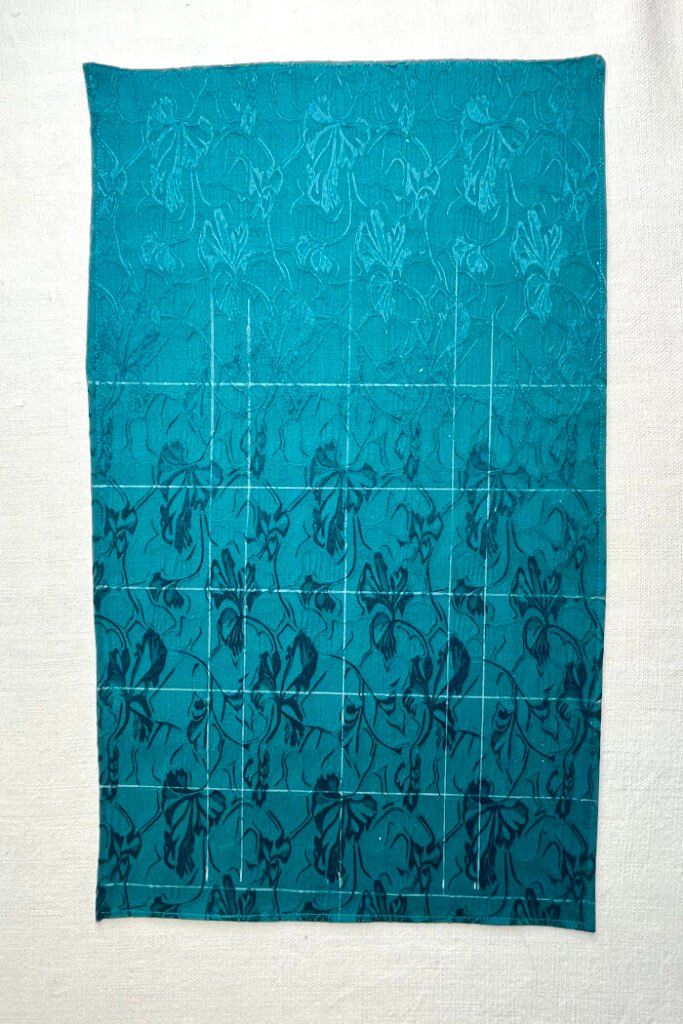
Next, you are going to add pockets, starting from the top row. Open up the pressed up bottom edge of the pocket and align the pressed line of the bottom edge with the top horizontal line. Pin in place. Add further three pockets on the same horizontal line, at the spacings marked.
Stitch the pockets down, slightly to the right of the steamed crease line (this will make it easier to fold the pocket up).
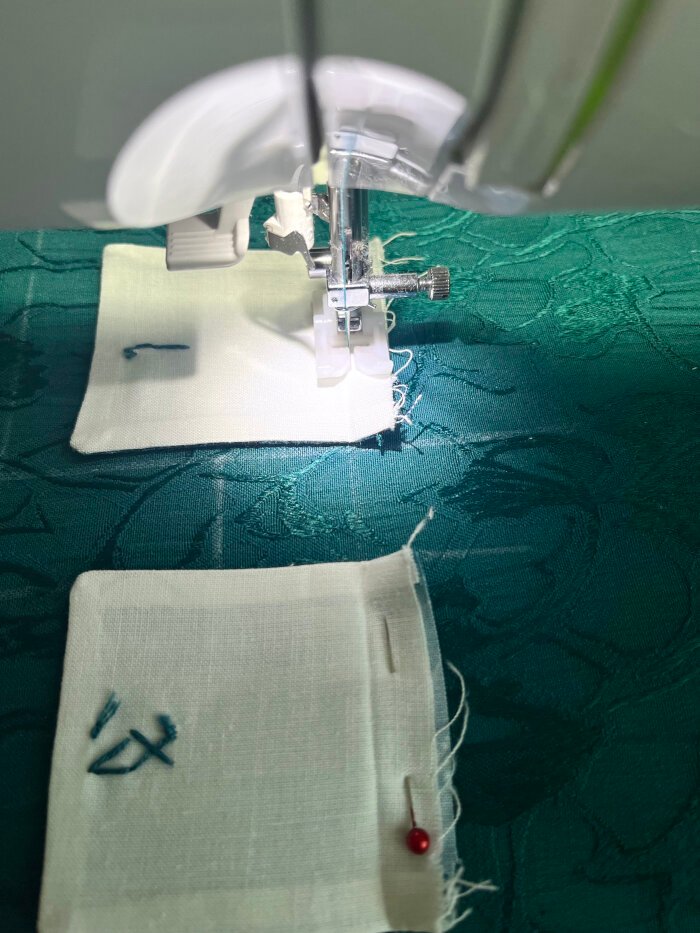
Sew on all the other pockets on the row. Then repeat the same on all the other lines, making sure that you attach them in the order as planned.
Once all the pockets have been attached, press the DIY fabric advent calendar pockets up, folding in the corners of the seam allowance as shown. This will hide the edges from being displayed.

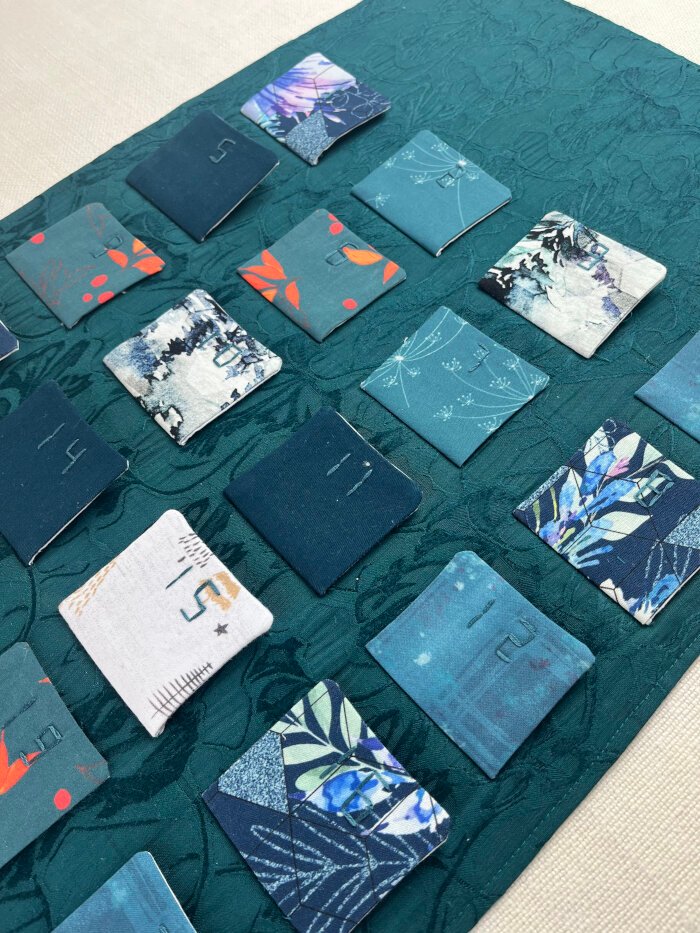
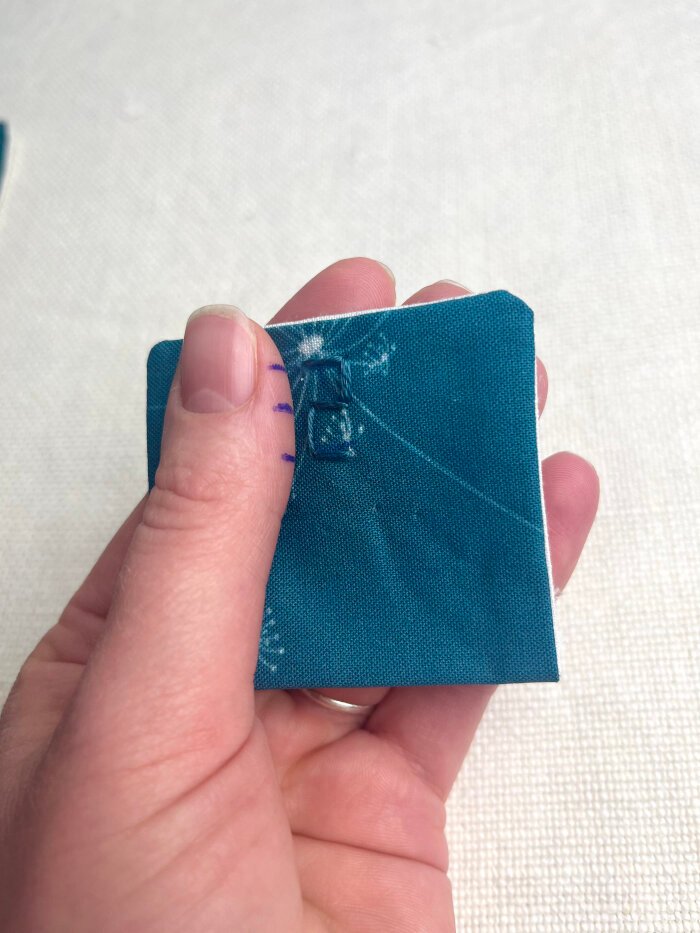
Then, with a hand needle, tack down the top corners of each pocket. You can use either a decorative embroidery stitch or just catching the lining from the wrong side of the fabric advent calendar. I went for this French knot.
Add Hanging Loops
The last step left to do is to insert the stick or rod into the opening and tying on the ribbon or thread for hanging.
Customisation Ideas for Fabric Advent Calendar
While writing this post I had so many idea on how else I can embellish the DIY advent calendar. This project can easily turn into a rabbit hole of possibilities, but I have decided to pace myself and not to do it all at once, leaving some improvement projects for years to come.
Here, I will list the ideas that sprung to mind with what to decorate the advent calendar and how I could have made it differently:
- Embroider some snowflake shapes on the bottom corners on each of the pocket.
- Add some embroidered and appliqué snowflakes on the backing of the fabric advent calendar using matching scraps.
- Make DIY advent calendar with quilted background.
- Change the shapes of the pockets into tiny stocking shapes.
- Quilt or hand embroider the pockets into a shape of presents, complete with a bow to tie the top onto the backing.
- Add a loop to the pocket instead of hand tacking at the top, so it is obvious which pocket has been opened (this will mimic the shop bought chocolate advent calendar).
What to Fill the Advent Calendar With
Now that the fabric advent calendar is complete, what is left to do is decide what to fill it with. The most popular option is going to be sweets. You can buy various chocolates and fill each pocket with a different sweets. You could make some caramel sweets yourself to keep with the theme of intentional and sustainable holidays.
Depending on who will be opening the each fabric advent calendar pocket, you can go outside the traditional route and d fill with items that are of inteset to that person, such as tiny handmade skincare potions, little handmade or bought toys, or even a bigger present that each item combines into, to be completed or used on Christmas Eve. Like a puzzle with an image on where a bigger present is hidden! Aw, I would love the latter!
Frequently Asked Questions
Conclusion
This is a fun project that you will enjoy making with a nice audio book or podcast in the background!