In this beginner-friendly tutorial, I will show you how to draft a T-shirt sleeve pattern step by step, designed to match a custom T-shirt bodice block. This sleeve drafting method uses stretch jersey measurements and creates a sleeve block that fits the arm comfortably without restricting movement or overstretching the fabric.
This tutorial builds directly on my T-shirt bodice block drafting tutorial, which you should complete first for accurate results.
In this tutorial you will learn how to:
- Measure and draft a T-shirt sleeve block
- Draft a sleeve cap for stretch fabrics
- Match a sleeve to a T-shirt bodice armscye
- Adjust sleeve width for bicep, elbow and wrist
- Test and fit a DIY T-shirt sleeve pattern
What Is a T-Shirt Sleeve Block? (Stretch Fabric Sleeve Pattern)
A T-shirt sleeve block is a basic sleeve pattern for stretch fabrics, drafted without wearing ease and designed to match a fitted T-shirt bodice block. Unlike a sleeve block made for woven fabrics, the T-shirt sleeve block does not include a wearing ease as it is not required for stretch fabrics.
A sleeve drafting can appear difficult for most beginner pattern drafters and beginner sewers due to the sleeve crown and its curves. However, with a right technique and some secret know-how that I will share it is actually a quick and easy process.
Tools and Materials Needed to Draft a T-Shirt Sleeve
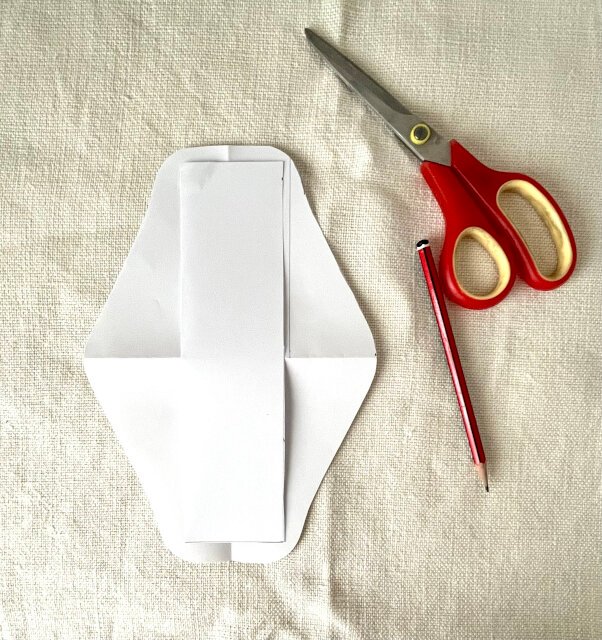
These tools are required to draft a T-shirt sleeve pattern accurately from measurements.
- A piece of paper that is large enough to include the pattern
- Sharp pencil
- Pencil eraser
- Square ruler (a small triangle ruler from a typical Maths set is fine)
- A long ruler (around 60 cm long)
- French curve
- Protractor
- Tape measure
- Completed list of your accurate sleeve measurements for pattern drafting
Measurements Needed to Draft a T-Shirt Sleeve
The following body measurements are needed to draft a T-shirt sleeve block. They are listed in the exact order I used in this tutorial.
- Upper Arm length
- Lower Arm length
- Bicep circumference
- Armscye measurement (taken from the T-shirt block)
- Wrist to Bicep
- Wrist to elbow
- Elbow circumference
- Wrist circumference
Step 1 – Measure the Armscye from the T-Shirt Bodice Block
Firstly, measure the armscye length along the T-shirt pattern block, between points A1 and S, with a tape measure on its side. This is going to be the guide for the width of the T-shirt sleeve block.
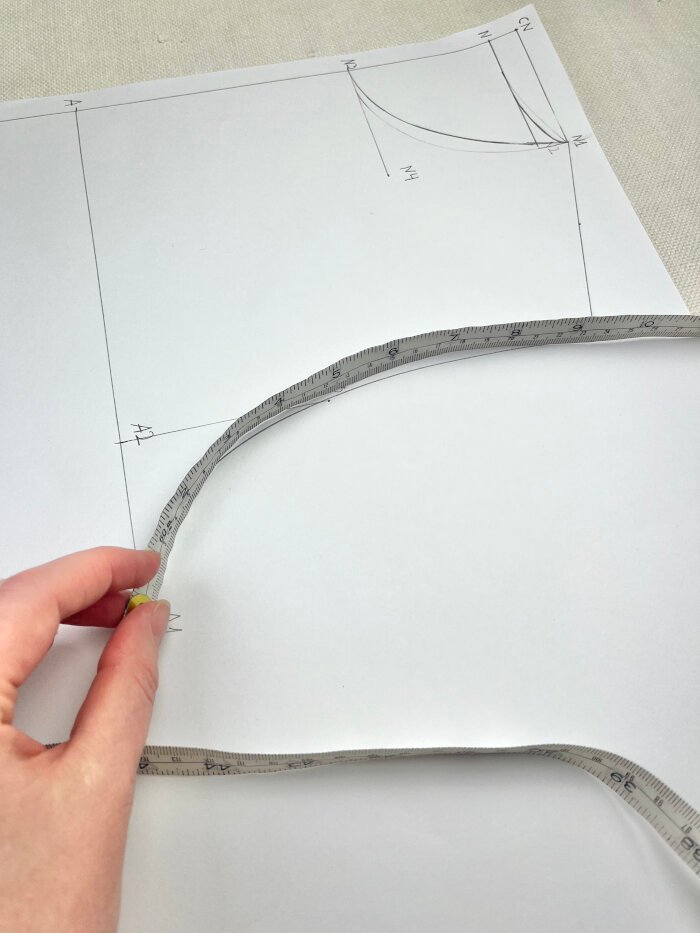
This armscye measurement comes directly from the T-shirt bodice block, so accuracy at this stage is essential.
Step 2 – Mark Sleeve Length and Fold Line
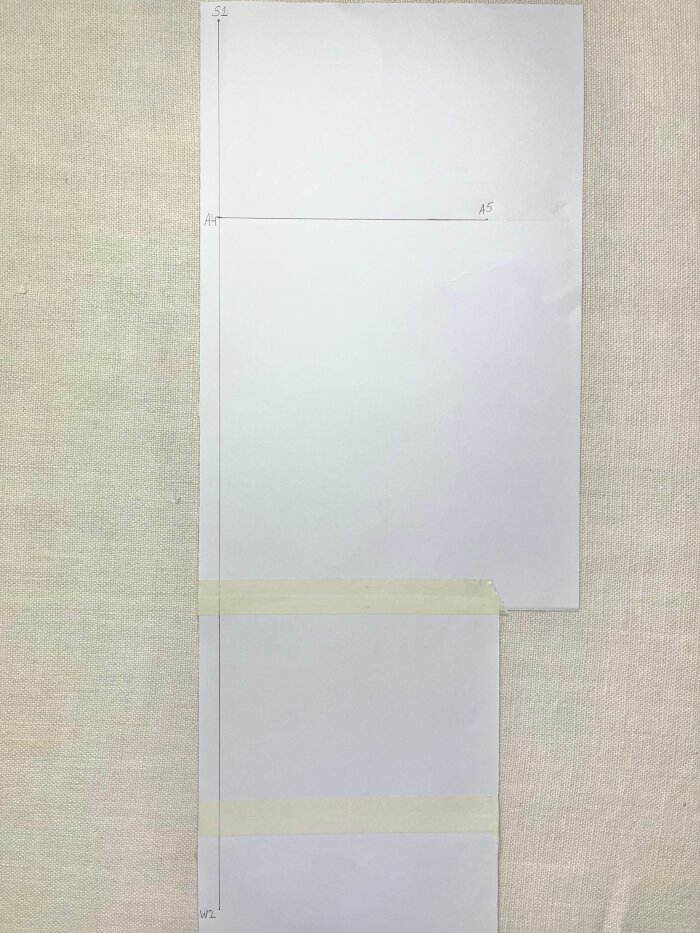
On a separate piece of paper that is at least the length of your upper arm + 3 cm and the width of half of the bicep measurement + 5 cm, mark a point S1 on the top left corner (approximately 1cm from the left and top).
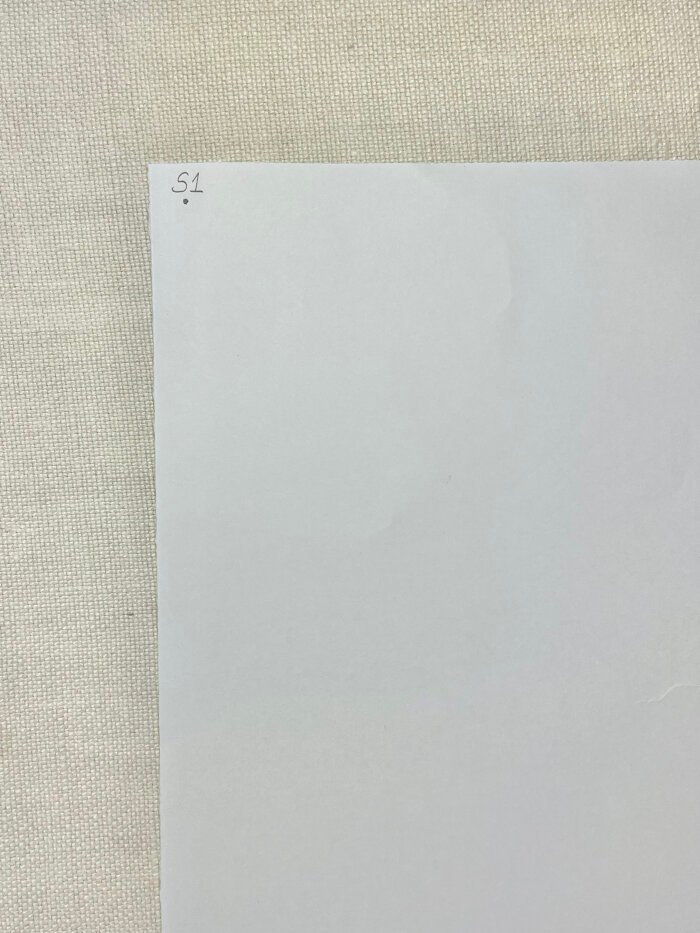
From this point, square down your upper arm length to point W2. The line from S1 to W2 is going to be the sleeve pattern fold line.
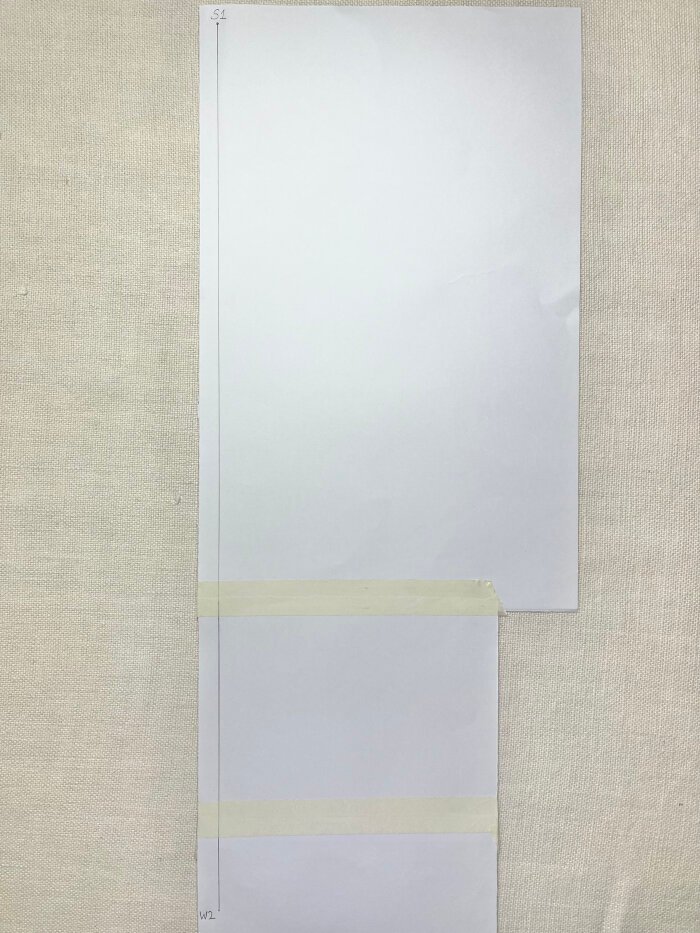
Step 3 – Draft the T-Shirt Sleeve Crown
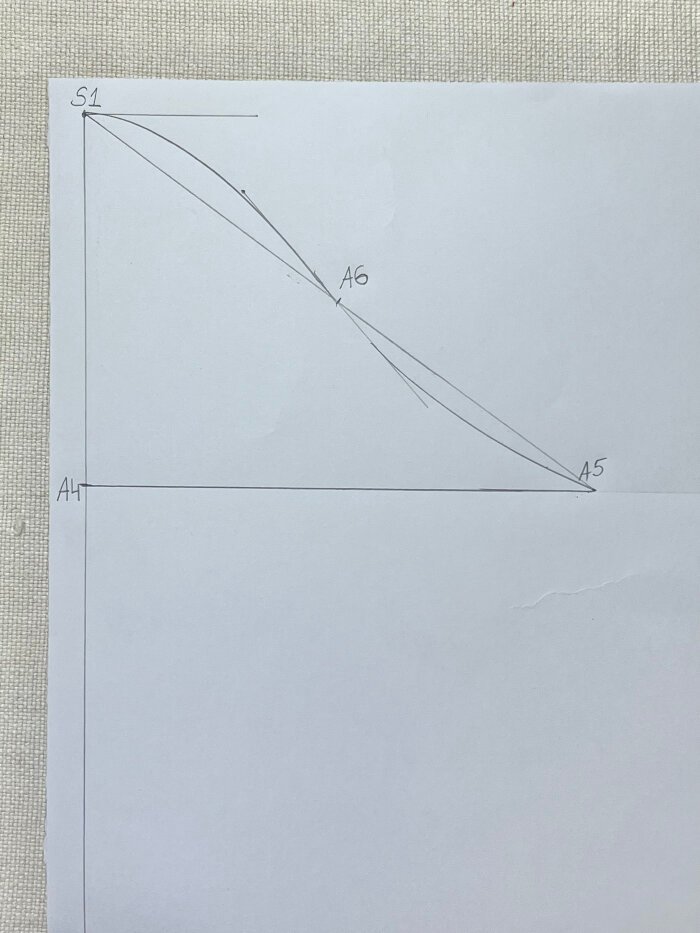
Then, from point W, measure up and mark a point A4 that is the length of your Lower Arm measurement. The distance from S1 to A4 is going to be the height of DIY T-shirt sleeve crown. The difference between the upper and lower arm measurement is quite important. When I made my first sleeve pattern, it took me a while to figure out why there is a pulling at the sleeve cap. The reason for that was that I had not measured my upper arm length correctly. I have addressed the correct method of taking this measurement in my pattern drafting measurement guide.
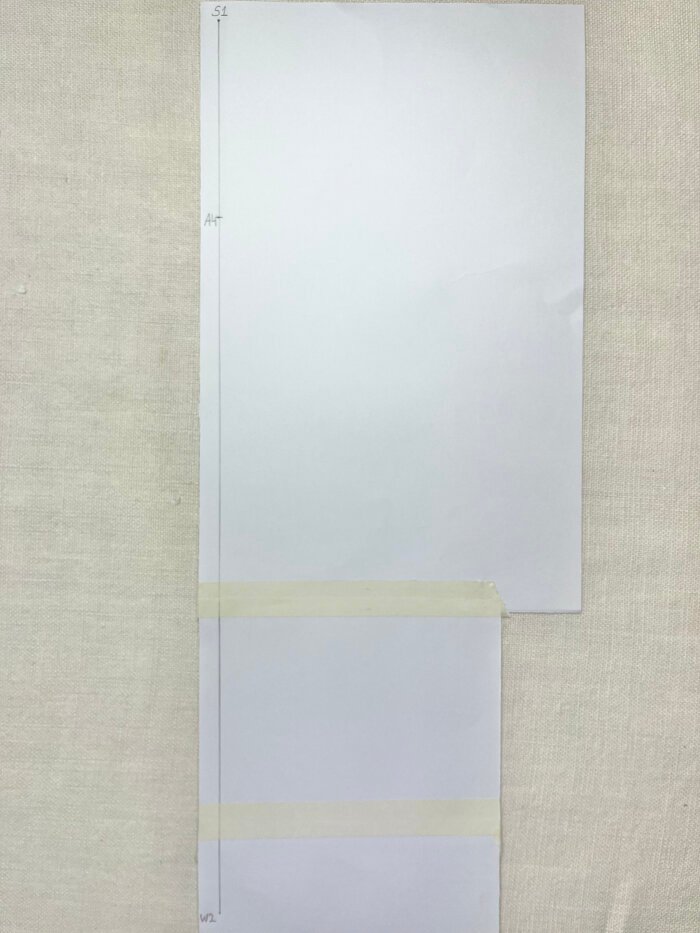
Square to the right from point A4 the half Bicep circumference. Mark the end point as A5. This measurement is going o be the half width of the sleeve crown.
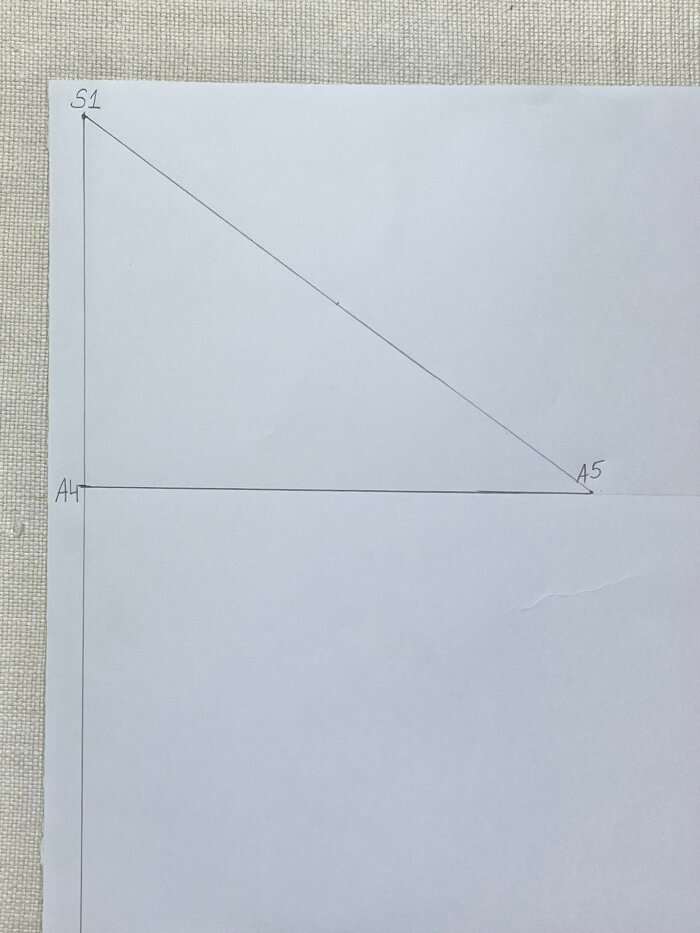
Then, connect S1 with A5 with a straight line.
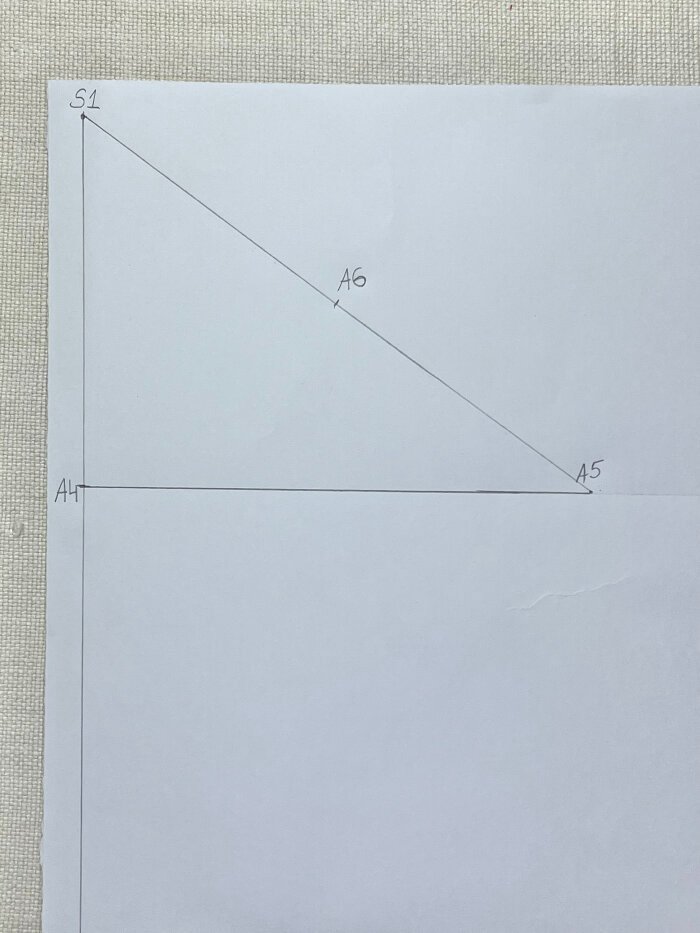
Mark a point A6 half way between points S1 and A5. This line will indicate the middle of the armscye curves.
Step 4 – Draft the Sleeve Cap Curve for Stretch Fabric
Next, place protractor with a vertex on on point A6, with 0 and 180 degrees on the line S1 to A5. Mark a point at 12 degree angle. This is a tricky stage if you have not used a protractor for a while, however I have added clear photos for you to follow along. If this causes some headache, in my basic bodice block tutorial I have provided a further explanation.
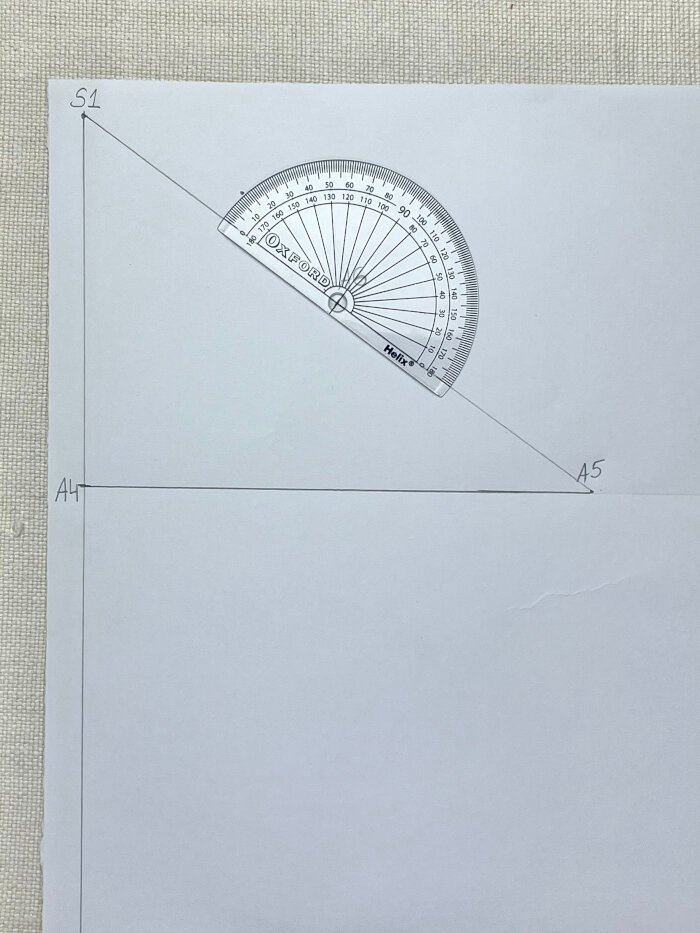
Then, connect the 12 degree point with A6, extending the line below the line S1 – A5. This line will guide the French curve placement when drafting the sleeve cap curve.
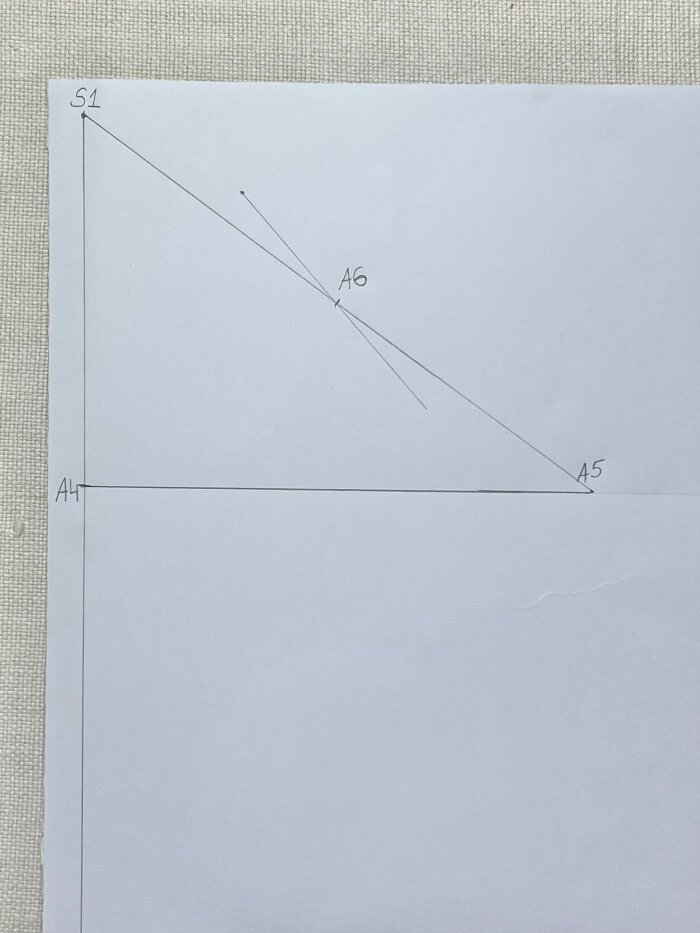
From the point S1, square to the right some 5 cm. This will be a guide to ensure the sleeve cap is a straight line for a smooth transition on the fold line.
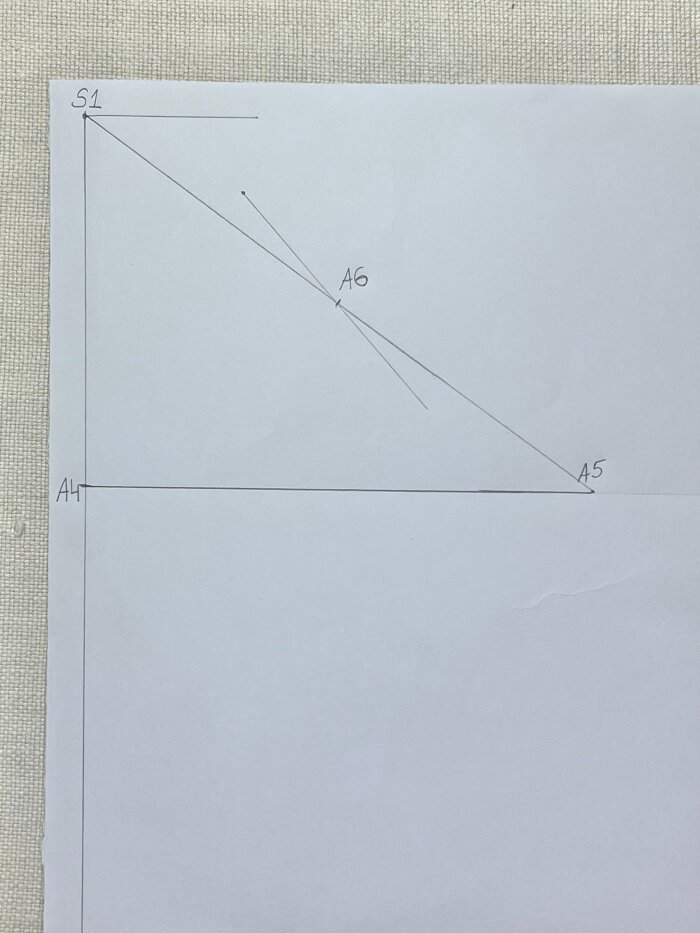
Next, with a French curve, connect point S1 with A6 and point A6 with A5 with smooth curves, touching at the 12 degree line. It is fine if the curve does not quite touch A6, it is more important that the curves touch the 12 degree line. Also make sure that the curve at S1 transitions into a straight angle by touching the guide line we squared to the right from S1. This will ensure that the S1 transitions to the other side of the fold in a straight line.
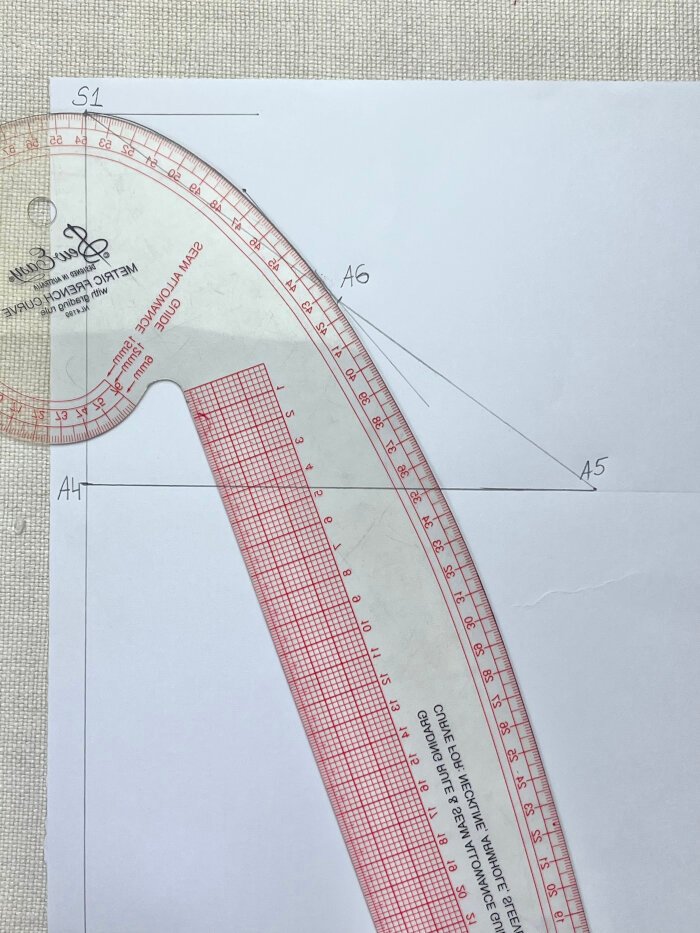
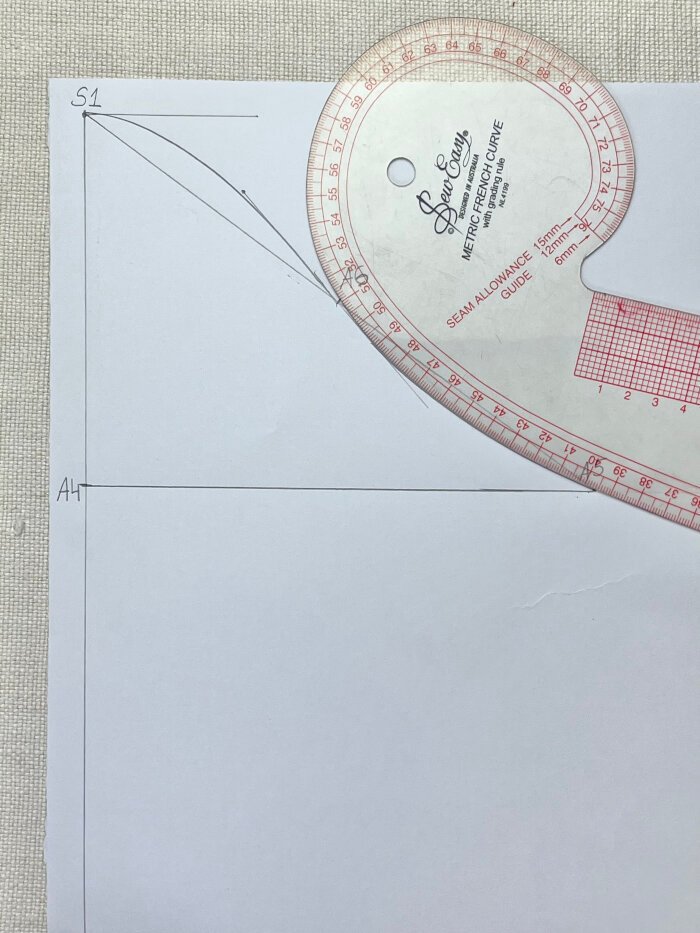
Step 5 – Check and Adjust Armscye Length
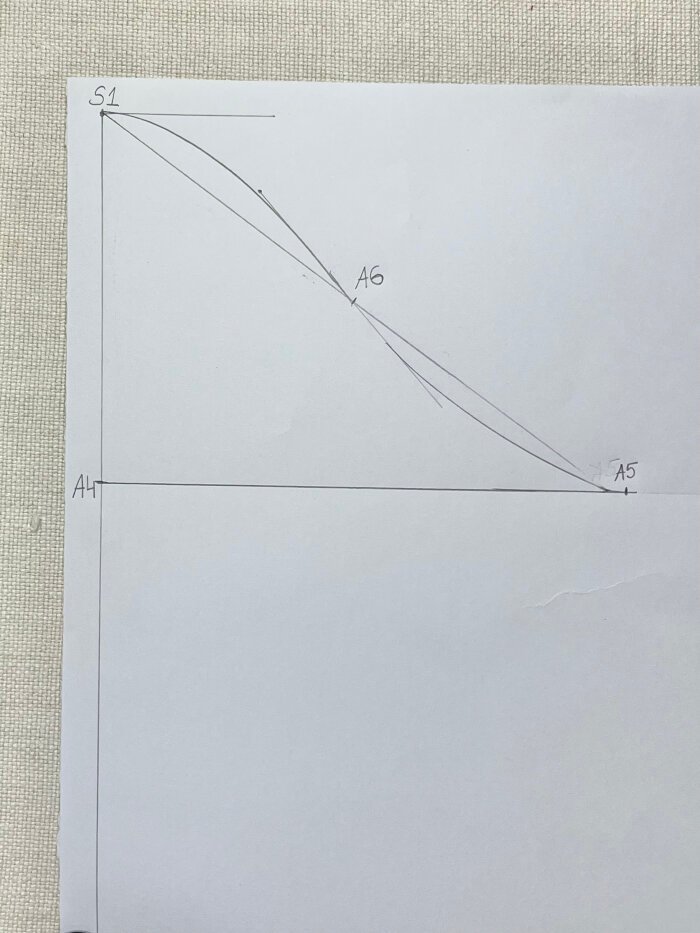
Measure the length of the armscye curve and compare with the measurement form the T-shirt block.
If the measurement on the sleeve pattern is shorter, move the point A5 to the right by the amount required, by extending the line from A4. If it is shorter, either move the point A5 to the left or leave as is. The pattern is going to be used on a stretch fabric and the difference of up to 1.5 cm will not be noticeable.
In my case, the armscye on the sleeve is 0.7cm shorter so I moved point A5 to the right.
Step 6 – Mark Bicep, Elbow and Wrist Measurements on the T-Shirt Sleeve pattern
To ensure that the final pattern fits over the bicep, elbow and wrist, you need to mark the measurements of these on the T-shirt sleeve pattern. While the bicep and elbow measurement will not necessary make it on the pattern outlines, they will guide you and give you a reference point when completing the block and when making adjusted sewing patterns for garments. These checkpoints will also help you maintain accuracy in your sleeve drafting method.
Bicep measurements on the T-shirt sleeve block
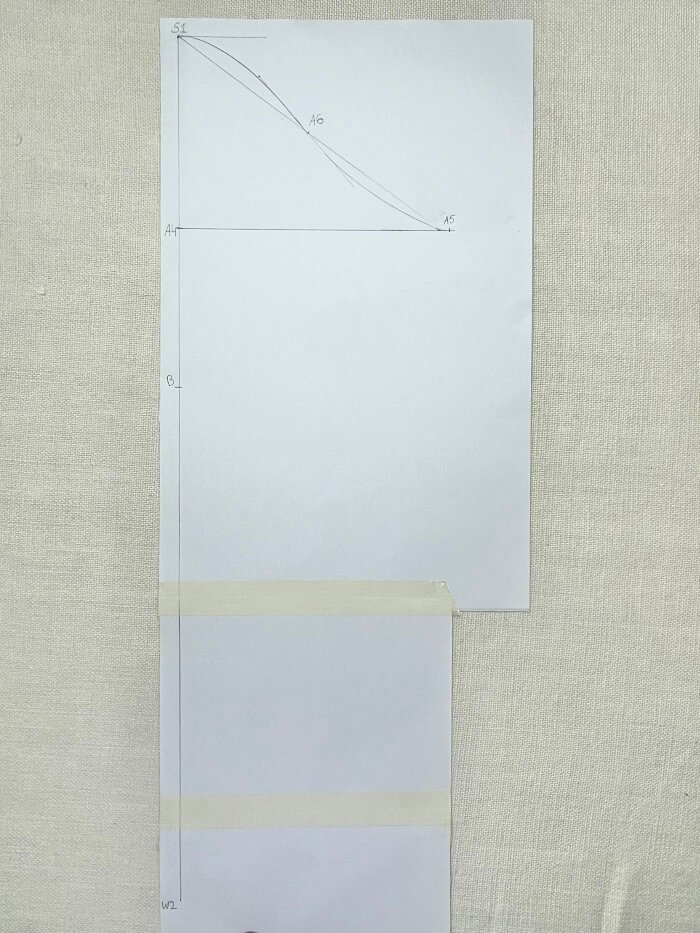
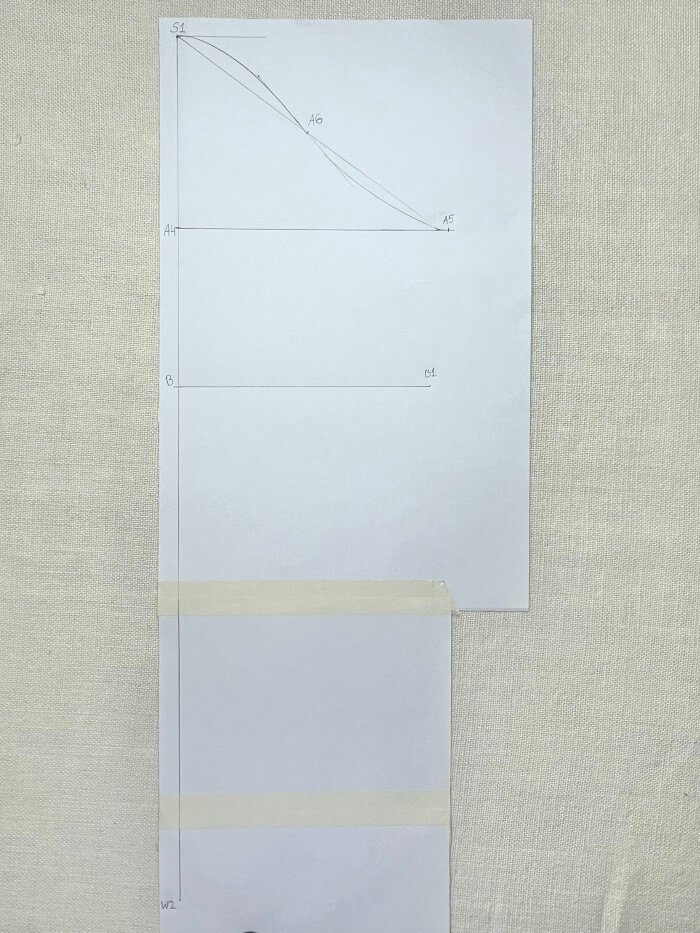
From W2, measure the wrist to bicep measurement on W2-S1 line. Mark the point on W2-S1 line as B. Square to the right half width of bicep circumference. Mark this point as B1.
Elbow measurements on the T-shirt sleeve block
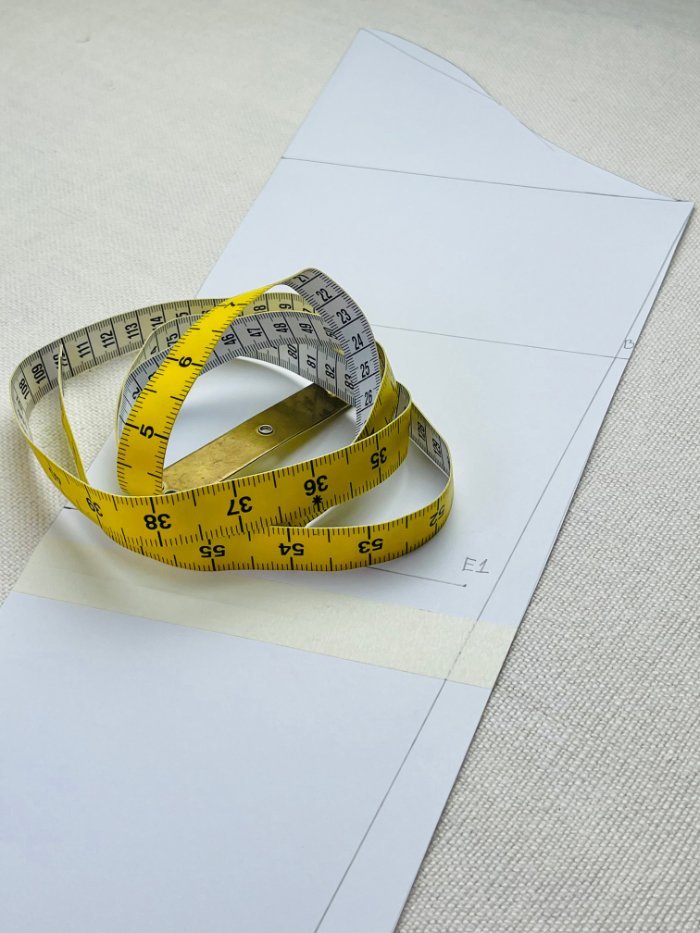
From W2, measure the wrist to elbow measurement on W2-S1 line. Mark the point on W2-S1 line as E. Square to the right half width of elbow circumference. Mark this point as E1.
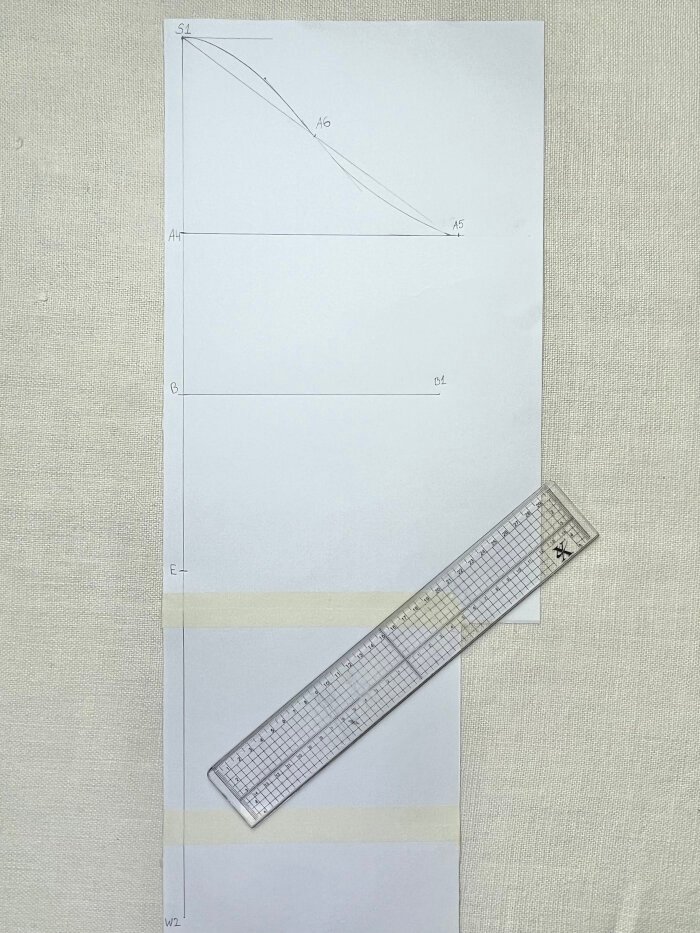
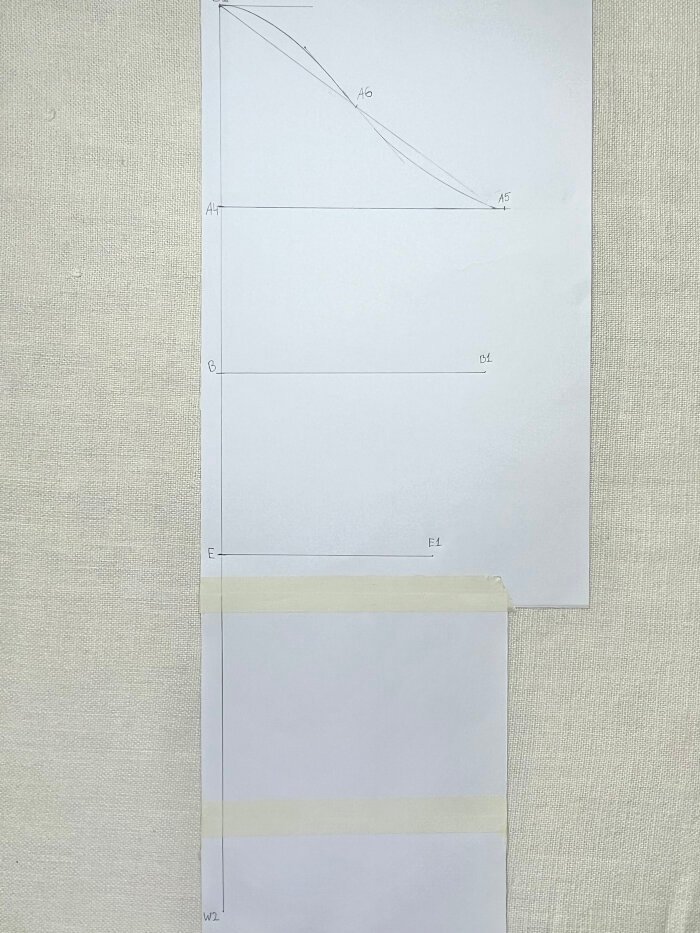
Wrist measurements on the T-shirt sleeve block
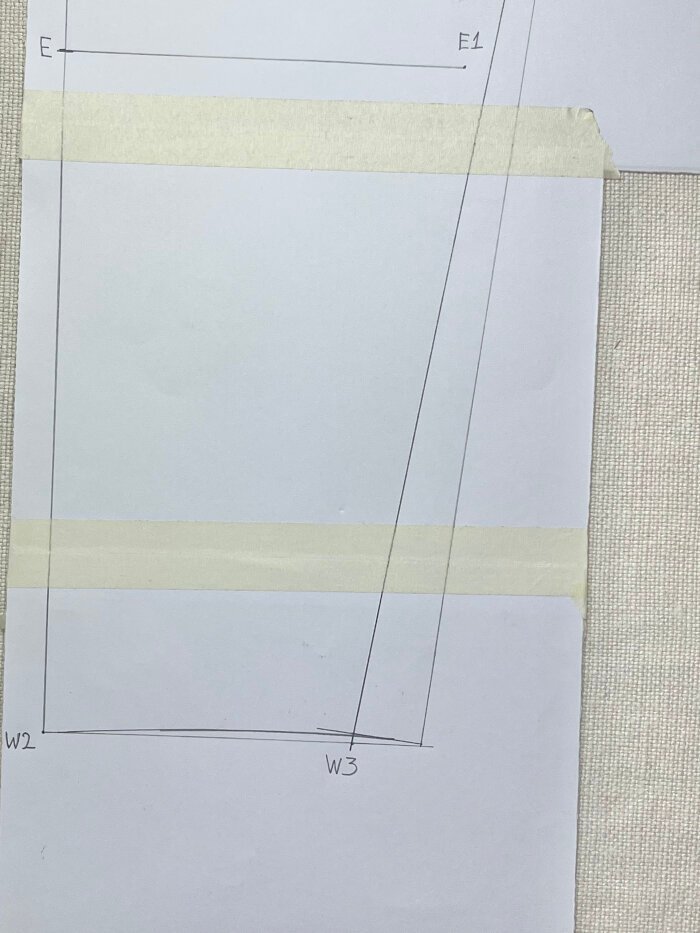
From point W2, square to the right your half width of the wrist circumference. Mark the end point as W3.
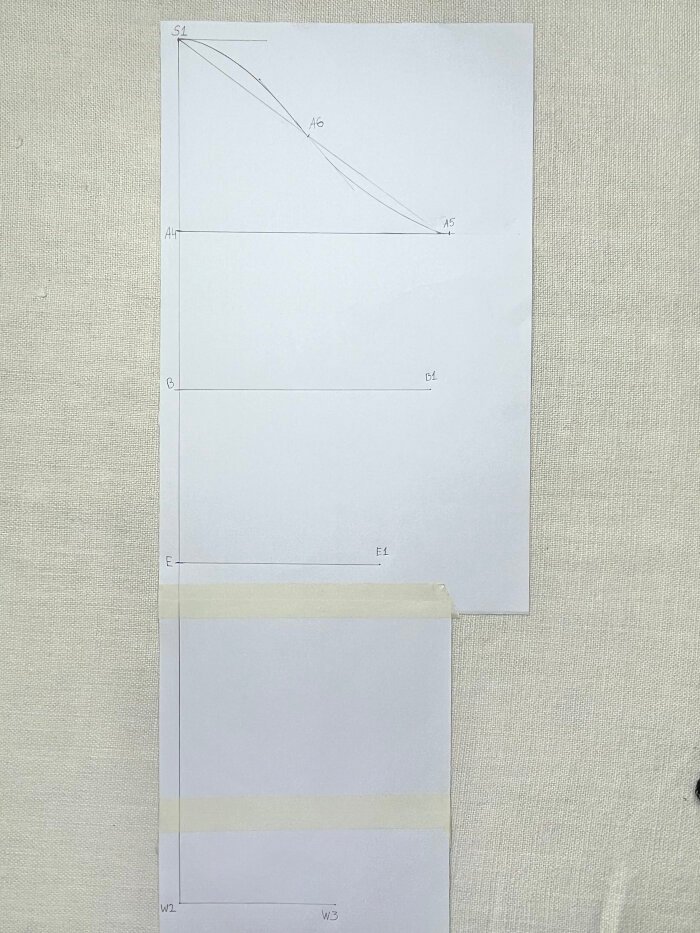
Step 7 – Draft the Sleeve Side Seams
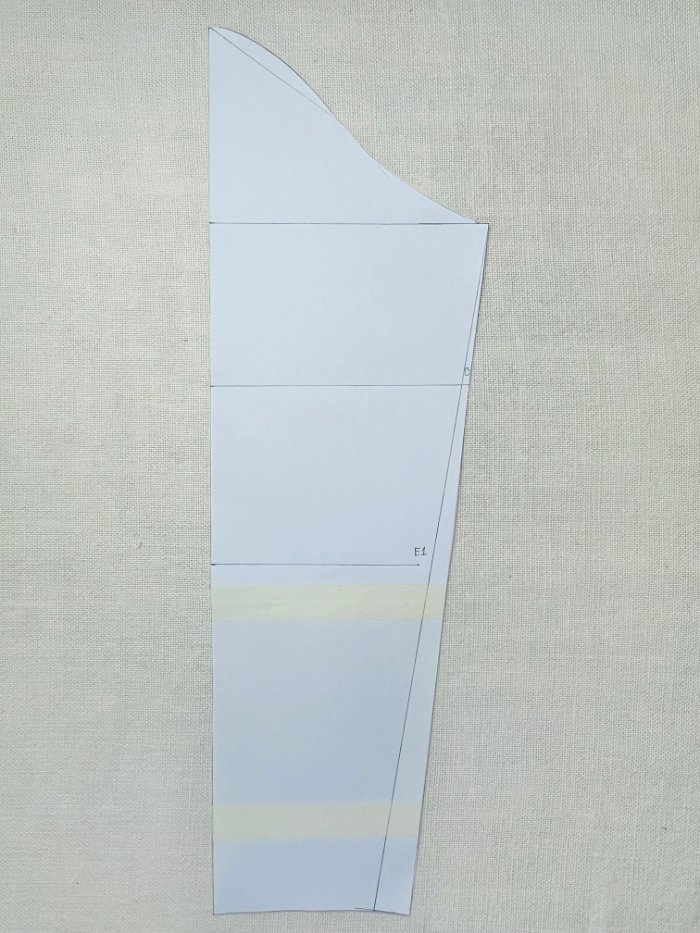
Next, you need to connect the armscye to wrist line to form a basic sleeve block. To do that, connect points A5 with W 3 with a straight line.
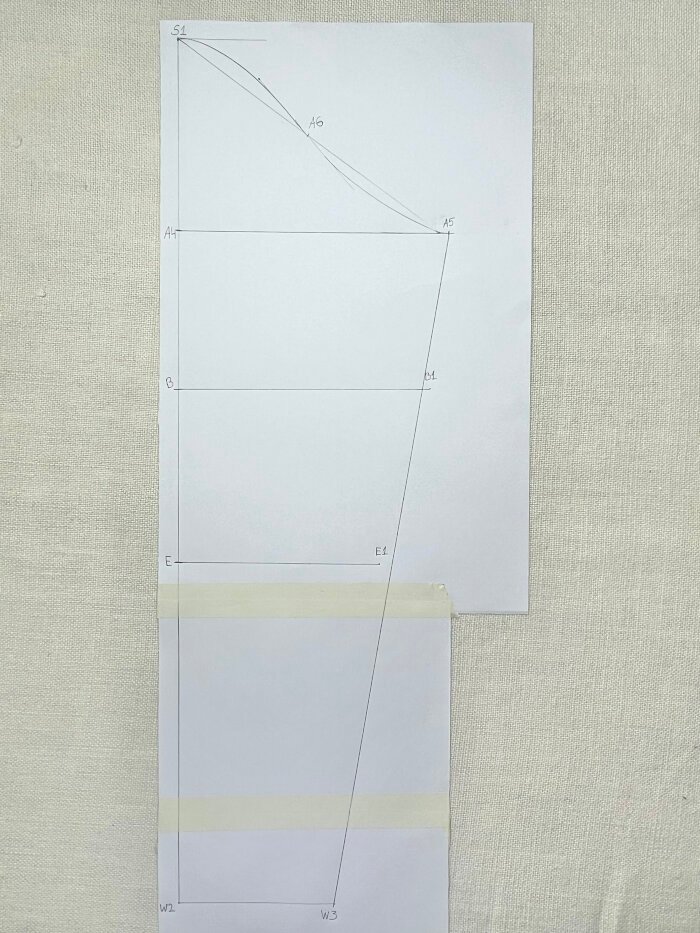
If any of the points at Bicep or Elbow lines are outside of the sleeve pattern, redraw the side seems via those points that are outside the pattern. The wrist allowance would then be larger now to accommodate the larger bicep or elbow.
In my case, point B1 falls outside the line from A5 to W3. So I extended the line from W to W3 and redrew the side seam, connecting points A5 and B1, extending it all the way to the wrist.
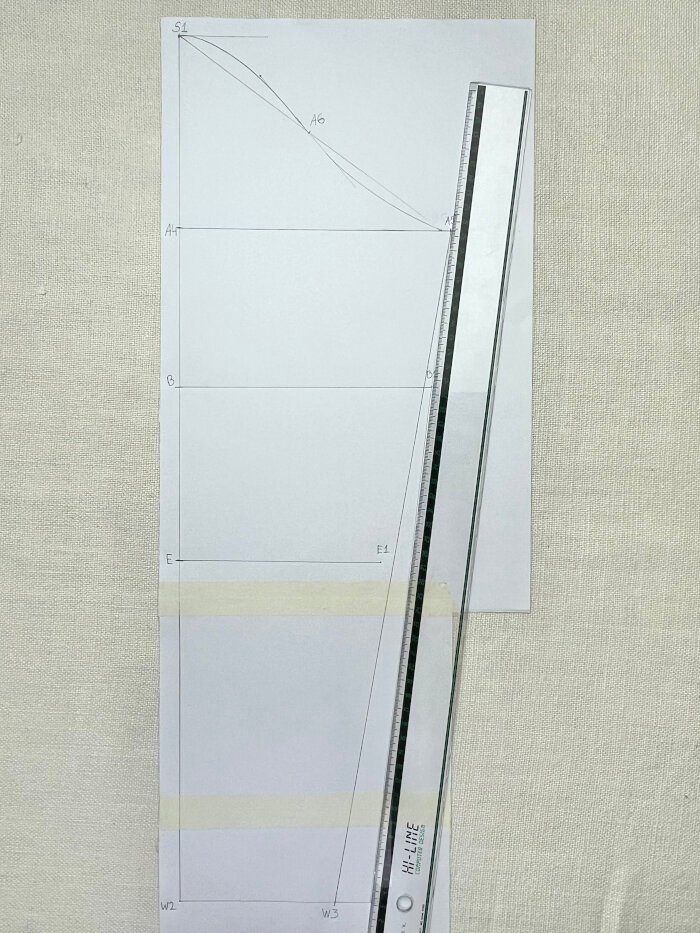
This adaptation has left me with a wearing ease both at the wrist and the elbow. The elbow allowance I can reduce when I draft the fashion pattern, by curving the side seam slightly to the inside. The wrist allowance can be reduced the same as the elbow or by adding a cuff at the wrist that is smaller measurement.
Final adjustments to the T-shirt sleeve pattern
Ensure the line makes square at point A5 For that you may need to drop the armscye curve to connect with side seam as I showed in my sleeve block pattern drafting tutorial.
The angle at the point W3 needs to square up to ensure that there is no weird curve on the wrist when sewn up. To do that, place a square ruler at the point W3, aligned with the side seam and draw in the square line as shown.
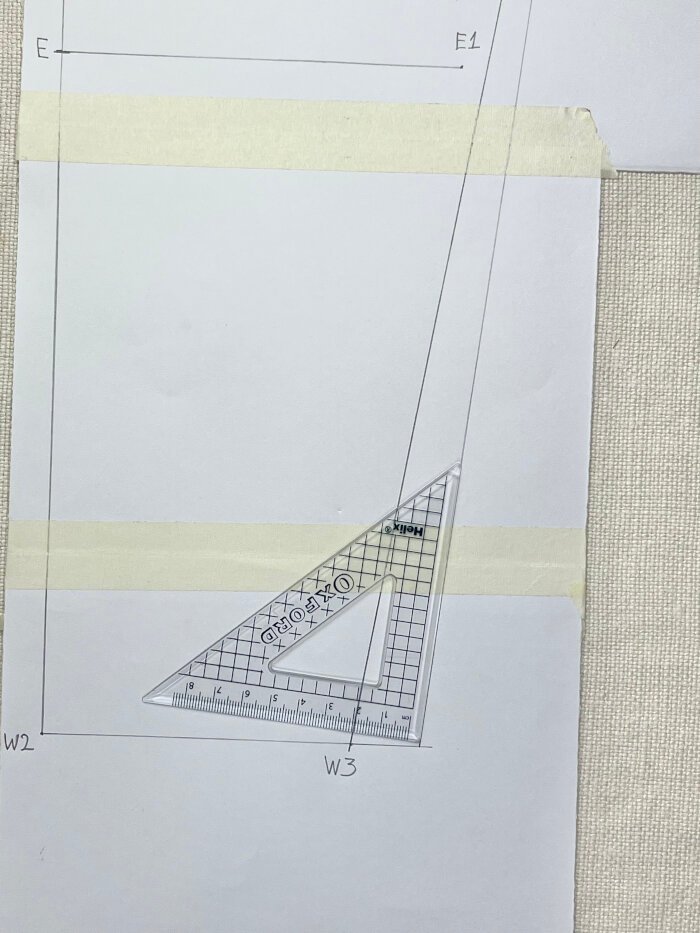
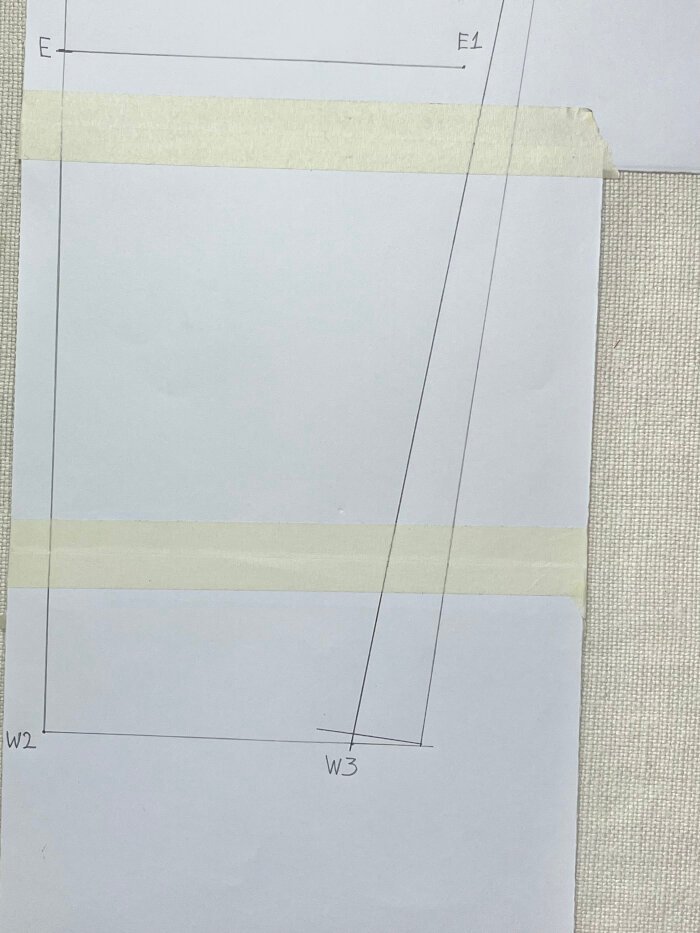
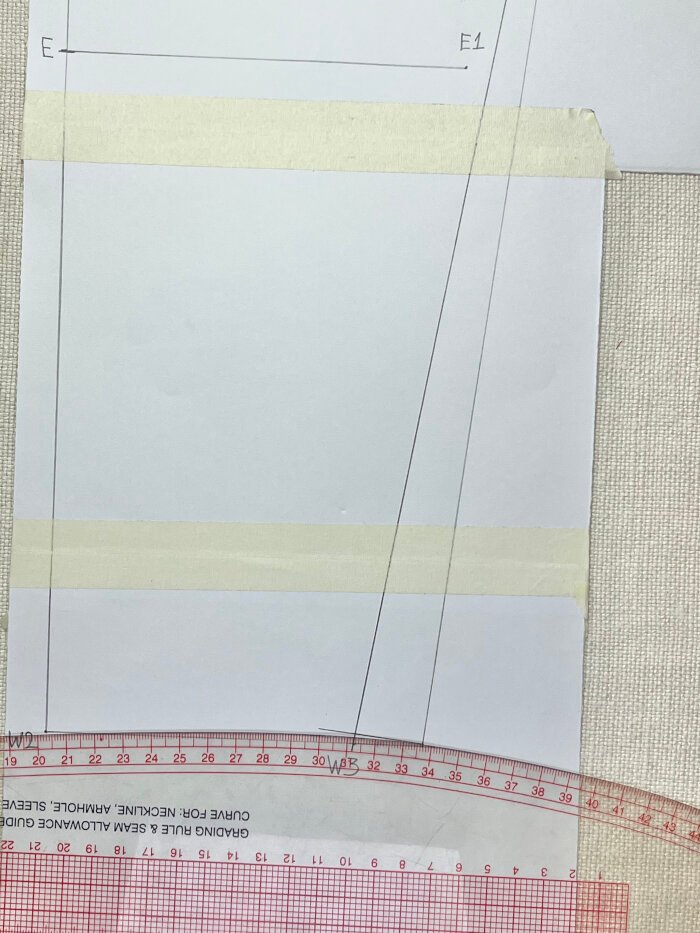
Then reconnect the line with W2 – W3 with a smooth curve, ending before the point W2.
No Ease Explained: T-Shirt Sleeve Fit for Stretch Fabrics
T-shirt sleeve patterns drafted for stretch fabrics do not include wearing ease.
There is no ease added to the measurements for this T-shirt sleeve pattern. This DIY sleeve block is made specifically for stretch fabrics that already expands to accommodate the natural body movements without constricting it in any way. However, if you are going to use the T-shirt sleeve pattern for a heavy weight fabric with less stretch then you may need to consider adding a little ease of around 5% of your horizontal measurements at each point.
How to Test and Fit a T-Shirt Sleeve
Once you have drafted your DIY T-shirt sleeve pattern, it is best practice to test the fit before using it in future sewing patterns. To be absolutely honest, I do not test the basic T-shirt sleeve pattern as I am confident in my measurements and the knowledge that the jersey materials stretch. However, it is advisable to always test the basic blocks for any fit issues with at least sewing up a wearable test garment. The reason being that the basic block will be reused in all the future fashion garment adaptations and if the basic bodice fits, then the final sewing pattern will fit too.
To test the T-shirt sleeve pattern, place the pattern on the fold of the fabric and cut out with seam allowance of 1cm added to sleeve cap and side seams. There is no need for a sleeve hem allowance to be included if you are only testing the fit rather than making a wearable garment. Then sew the side seams and attach the sleeve to the T-shirt bodice block toile.
You will need to look out for the fit around all the horizontal measurements, the fit in the armpit area and where the sleeve attaches to the bodice.
The common mistake is the pulling around the sleeve cap if there is not a sufficient length for the upper arm. If that happens, you will need to remeasure the upper arm’s length following my instructions in the measuring guide.
Overall, there should not be much of an adjustment required as the fabrics would stretch enough to cover minor irregularities.
How This Sleeve Block Can Be Used
This T-shirt sleeve block pattern can be used for:
- T-shirts and jersey tops
- Stretch fabric dresses
- Activewear and sportswear
- Short sleeves, half sleeves and 3/4 sleeves
You can adapt the T-shirt sleeve to be short sleeve, half sleeve or 3/4 sleeve by reducing the sleeve length. For a short sleeve, reduce length to the bicep line. The half sleeve would end at the elbow line and the 3/4 sleeve half way between elbow and the wrist.
For the sleeve length alterations you will need to adjust the sleeve hemline the same as we did for the wrist line after Step 7.
Frequently Asked Questions
Final Thoughts and Conclusions
This T-shirt sleeve drafting method works best when combined with a well-fitting bodice block. For best results, follow this tutorial together with my T-shirt bodice block before progressing onto the post on step-by-step guide on how to sew a T-shirt.
It is worthwhile drafting your own T-shirt sleeve pattern to achieve a perfect fit each time and to reduce the waisted time and materials making something that does not fit as expected.
This basic T-shirt sleeve pattern is quick to make and will give you a lot of versatility for any future pattern drafting and sewing projects with stretch fabrics. If you drafted the sleeve pattern on a flimsy pattern drafting paper or lightweight paper, I recommend to save the DIY T-shirt sleeve pattern on a sturdier cardboard for frequent use. Either by glueing the pattern directly on the cardboard (this may change some dimensions a little if you let the paper to be to wet with glue) or by retracing it on the cardboard with marks for bicep, elbow and wrist dimensions.
If you enjoyed this beginner friendly pattern drafting tutorial you may also like my other tutorials on basic sleeve pattern drafting, close fitting bodice block pattern drafting and the complimentary T-shirt bodice block pattern drafting.