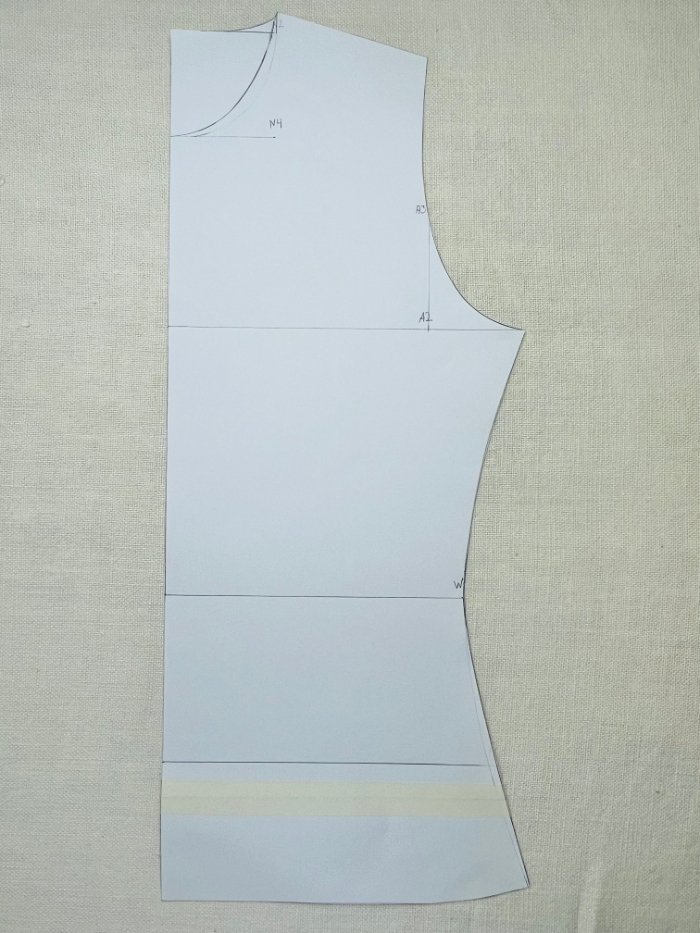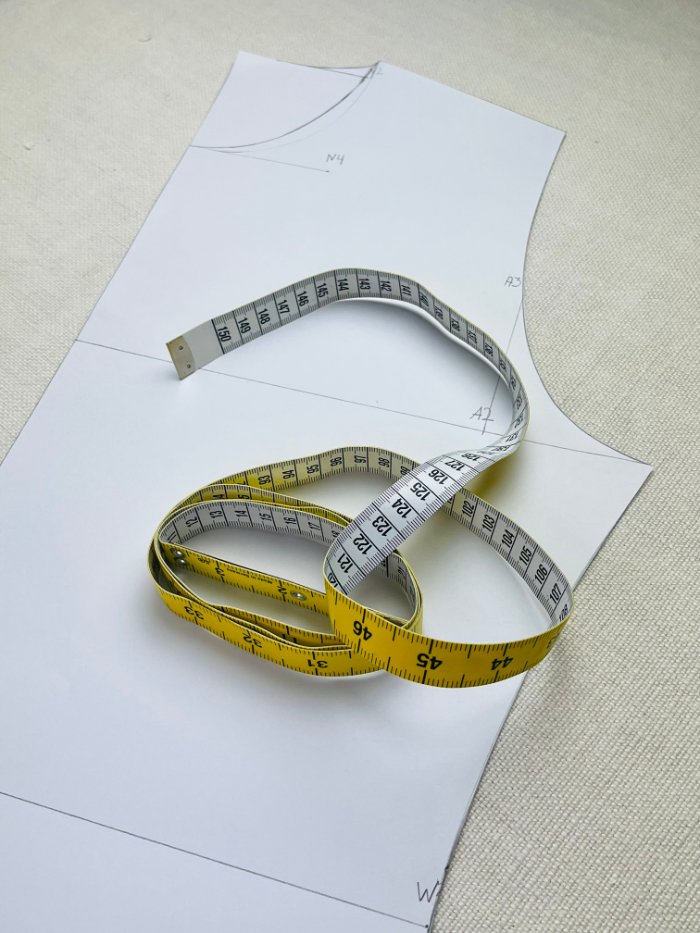
Drafting a basic T-shirt pattern from measurements is one of the most useful skills in pattern drafting for beginners. In this tutorial, you’ll learn how to draft a a bodice block for a perfect T-shirt pattern for stretch fabrics, step by step, using your own body measurements. There is a separate post on how to draft a matching sleeve block.
This basic T-shirt bodice block forms the foundation of many DIY T-shirt patterns and is designed specifically for knit and stretch fabrics.
The basic T-shirt pattern is a staple in my self drafted pattern stash. I have made many quick t-shirts and dresses with this block. While I opt for woven clothing for office, my casual wear wardrobe consists of many stretch tops and dresses. This beginner friendly T-shirt pattern along with the basic bodice block and basic sleeve block are the key patterns from which I make majority of my clothes.
What Is a T-Shirt Bodice Block?
A T-shirt bodice block is a basic pattern drafting template designed for stretch fabrics and used as the foundation for T-shirts, tops, and jersey dresses. Where a bodice block for a woven fabric includes a wearing ease, the T-shirt bodice block does nor include any. This DIY T-shirt bodice block works for stretch fabrics as the stretch fabrics contain enough stretch to fit and be comfortable when the body is moving. In fact, you can even make a T-shirt bodice block with a negative ease. That is, you take up to 10% off the all the horizontal measurements for even tighter and body hugging fit.
Tools and Materials Needed to Draft a T-Shirt Pattern
These tools are required to draft a T-shirt bodice block accurately from measurements.
- A piece of paper that is large enough to include the pattern.
- Sharp pencil
- Pencil eraser
- Square ruler (a small triangle ruler from a typical Maths set is fine).
- A long ruler. Longer the better. The one I use are around 60 cm long. You can get away with shorter ones but you will need to be very careful ensuring that the lines are still straight.
- French curve
- Protractor
- Tape measure.
- Completed list of your accurate body measurements for pattern drafting.
I have a separate blog post dedicated to accurate body measurements for pattern drafting, including a free template and guide.
As a guide your paper should be quarter of your bust measurement plus 10 centimetres wide and front body length plus 4 cm high. A1 sheet of paper is sufficient. You can stick together multiple sheets of paper with tape or use wrapping paper or a roll of brown crafts paper to make a paper large enough for T-shirt pattern drafting. This is what I usually do when I draft custom patterns from scratch or when I make a fashion sewing pattern.
Measurements Needed to Draft a T-Shirt Pattern
To draft a T-shirt pattern from measurements, you will need a specific set of bodice measurements taken directly from the body.
If you have completed the accurate body measurements for pattern drafting, then refer to that. But to make life easier, I always write down the names and the measurement that I will need for the specific drafting projects, in the order I will use them. I stick that list in front of me for a quick reference. So, to draft a T-shirt pattern from measurements you will need the following:
- Back Body Length
- Waist to Mid Hip length
- Waist to Hip length
- Nape to Waist
- Armhole Depth
- Neck Circumference
- Bust Circumference
- Waist
- Mid Hip circumference
- Hip circumference
- Shoulder Length
- Back Across Shoulders
These measurements are used to draft a quarter T-shirt pattern, which fits both the front and back bodice with minimal modification. I will not add any wearing ease as this T-shirt pattern is made for stretchy cotton or viscose jersey.
How to Draft a T-Shirt Pattern Step by Step
I have broken down the guide for DIY T-shirt pattern into smaller chunks to keep similar steps and measurements together. I work from top to bottom and left to right so if my drafting process is interrupted, I can find my place fairly easily.
Step 1 – Mark the Vertical Measurements for the T-Shirt Bodice
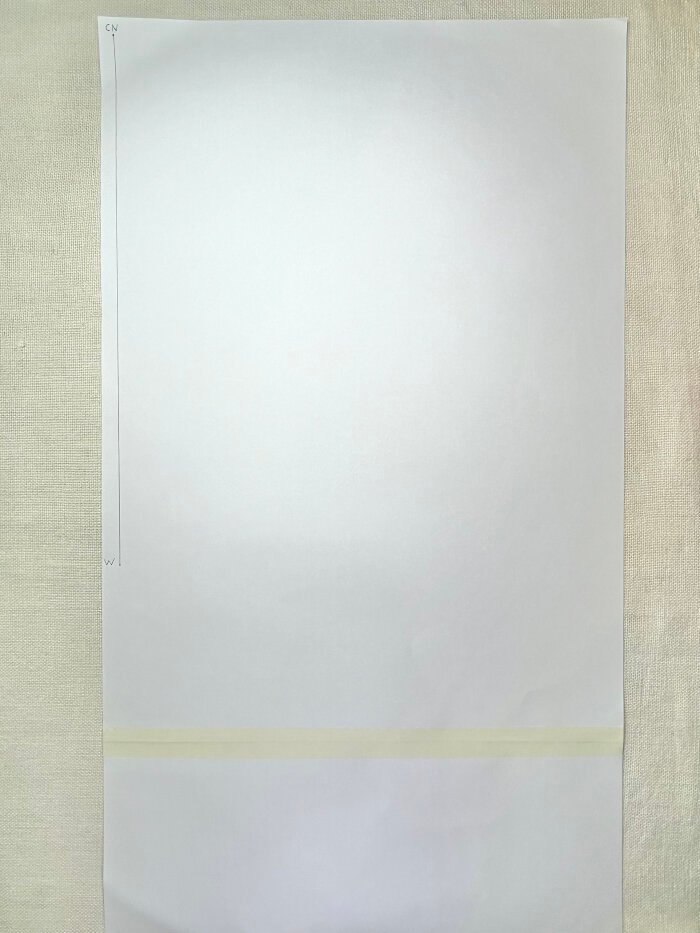
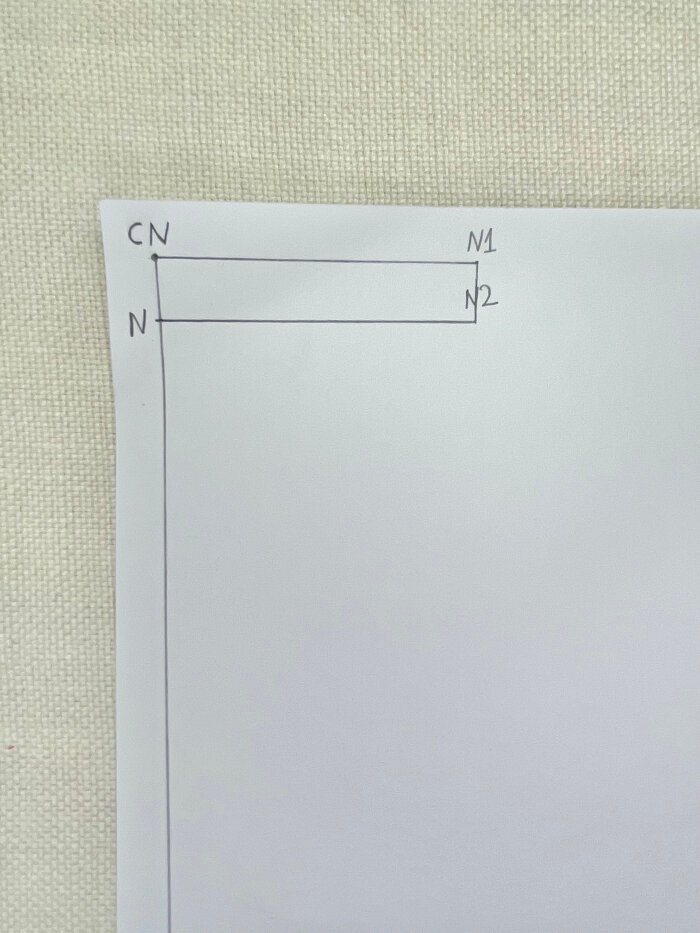
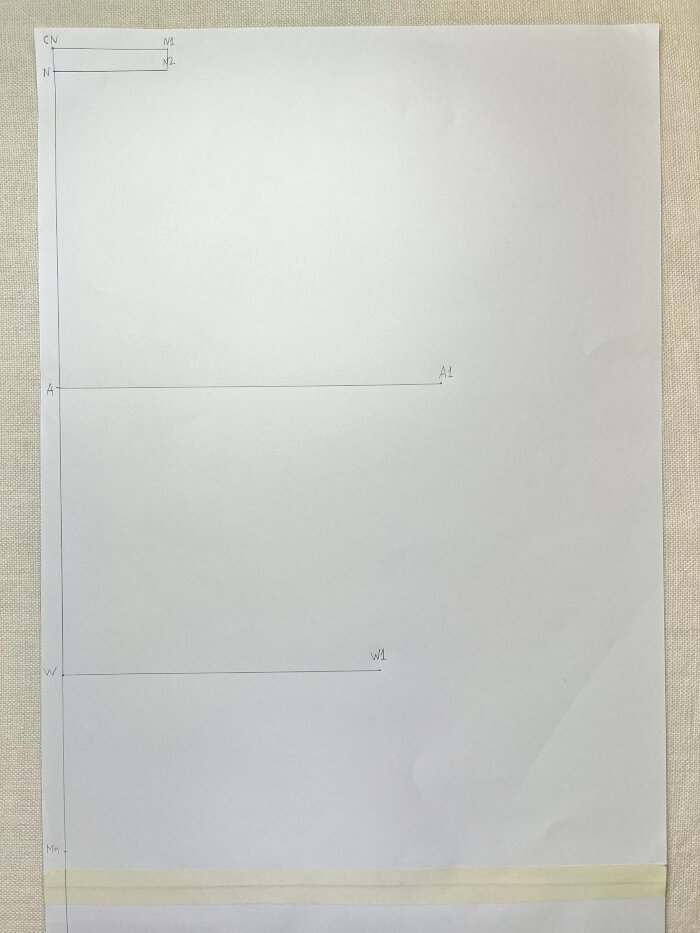
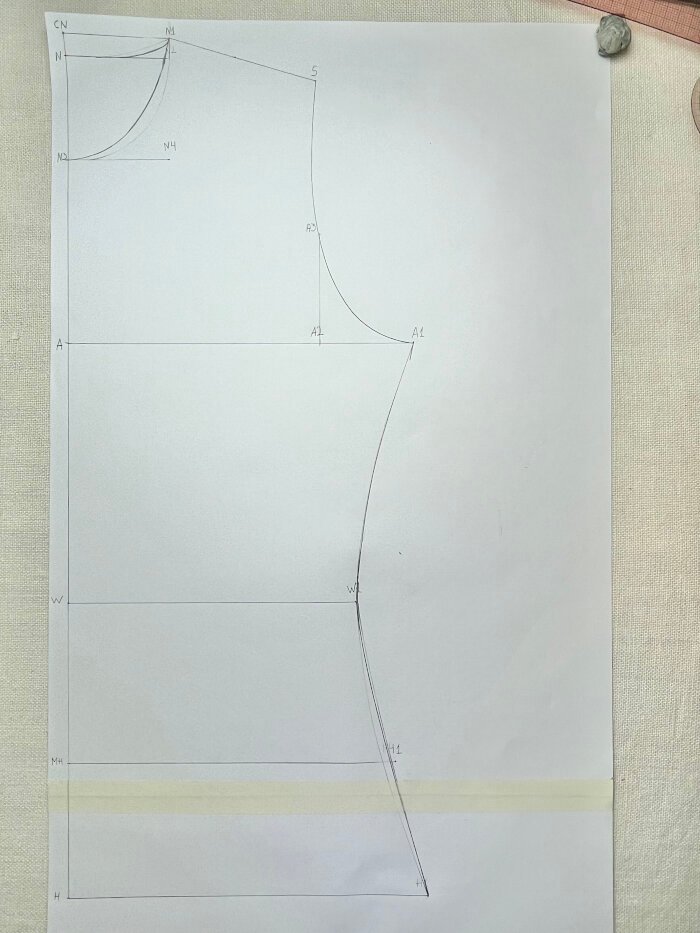
Firstly, around 1 cm from the top and the left side of your paper, mark point CN. You will need to the square down the back body length measurement to W. My back body length is 42.5cm so on my pattern the distance between CN to W is 42.5cm. This measurement on the draft is for your bodice length to waistline and will be a centre fold line both for the back and the front of the DIY T-shirt pattern.

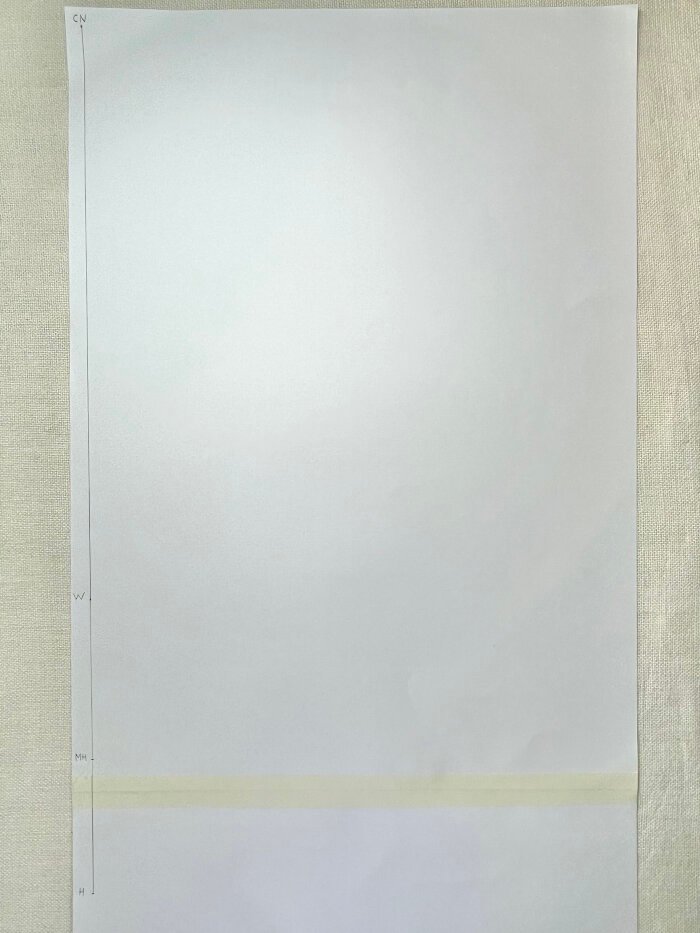
Similarly to the waistline, from W, square down to point MH your Waist Mid Hip length and to H, your Waist to Hip length. The marks here will indicate your mid hip and hip location in relation to the central axis of your bodice.
My measurements are 12 cm from W to MH and 22cm from W to H.
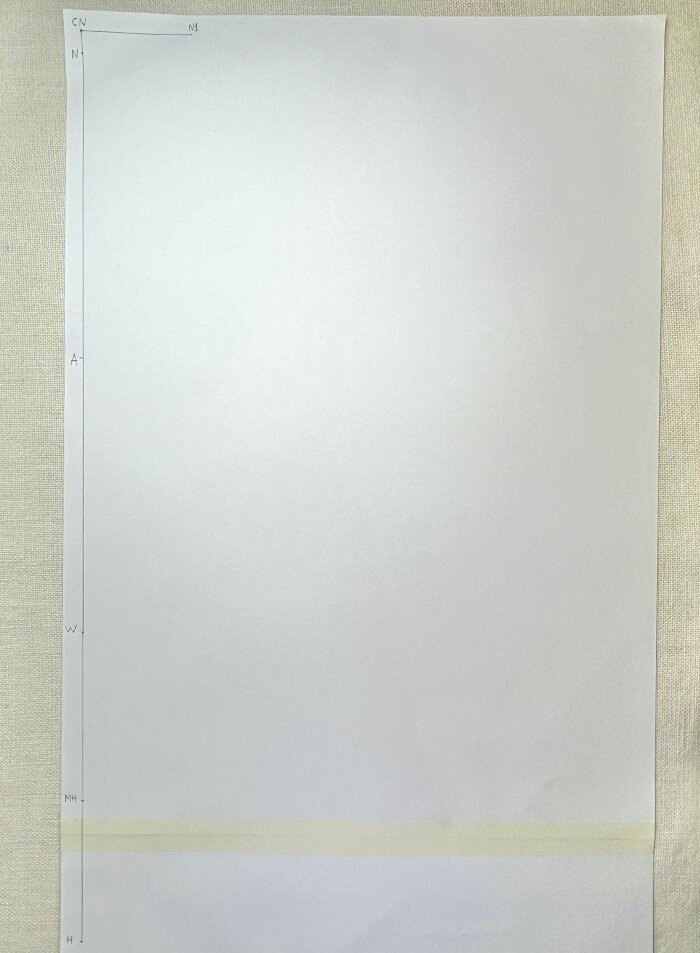
From W, measure up Nape to Waist measurement and mark this point as N. This mark indicates the depth of the back neck opening.

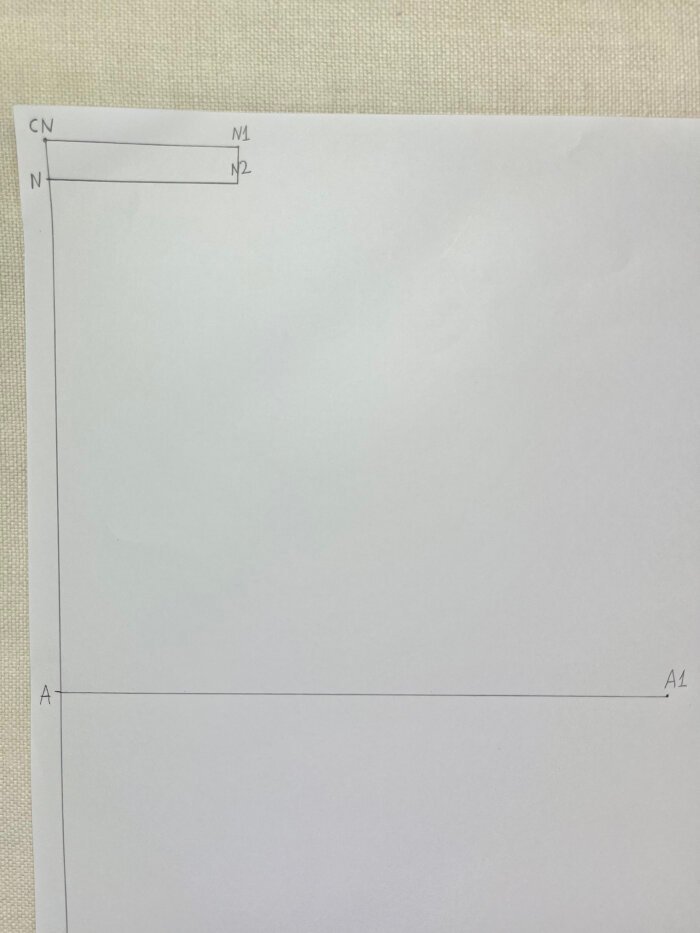
From point N, measure your armhole depth and mark this point as A. Technically, you should be measuring from point CN, but I am lowering the armhole by the depth of the neck opening to give your arms a space to move without the armhole seam digging into your armpit. This will also help later when drafting a matching sleeve pattern by having a longer armschye curve and narrower sleeve.

Step 2 – Mark the Horizontal Measurements for the T-Shirt Bodice
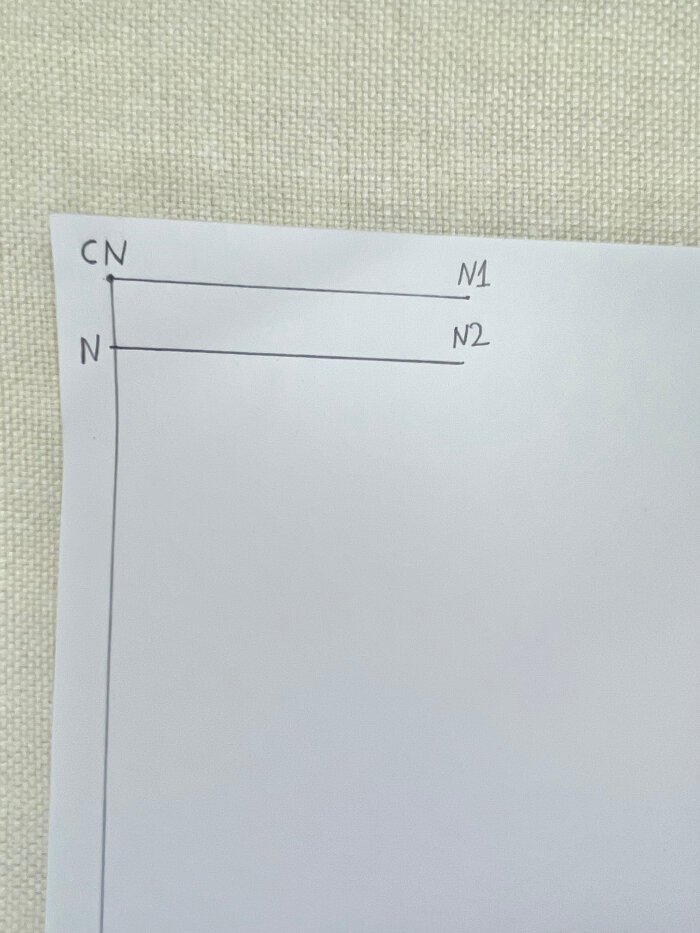
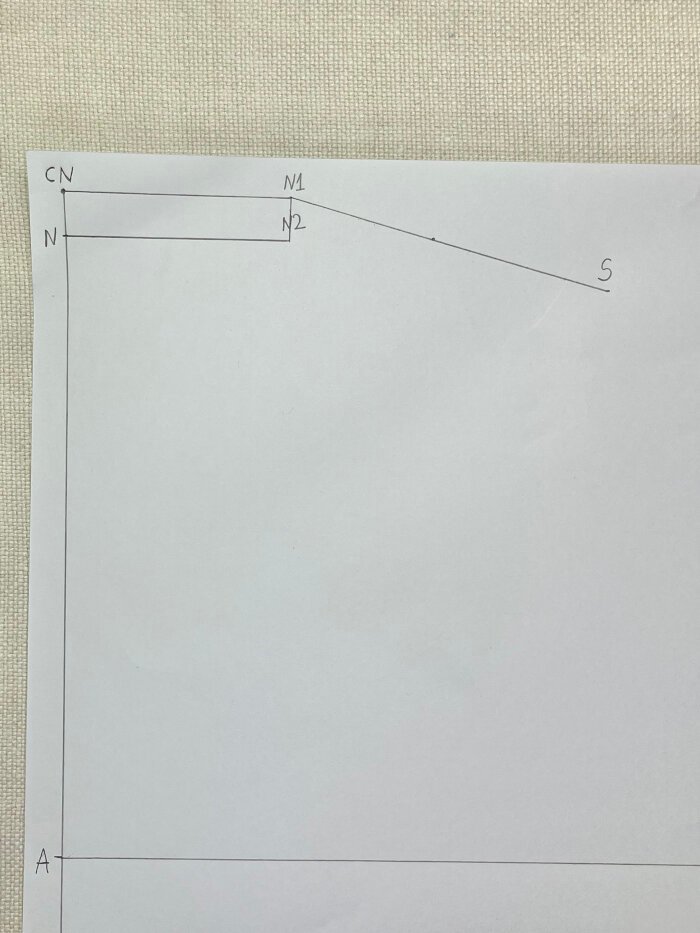
Square to the right from CN to N1 one fifth of your neck circumference. My neck’s circumference is 38 cm, so the distance from CN to N1 is 7.6cm.
Then square to the right from N to N2 the same measurement as above. Connect N1 and N2 with a straight line. This has created a bounding rectangle for the back neck opening that we will finish in Step 5.
From point A, square to the right to point A1 one quarter of your bust measurement. My bust is 104 cm so the distance between A to A1 is 26cm.
Next, from point W square to the right to point W1 one quarter of your Waist measurement. My waist is 86cm so the distance between W to W1 is 21.5cm.
Then, from point MH square to the right to MH1 one quarter of your Mid Hip Circumference. My mid hip is 98 cm so the distance between MH and MH1 is 24.5cm.
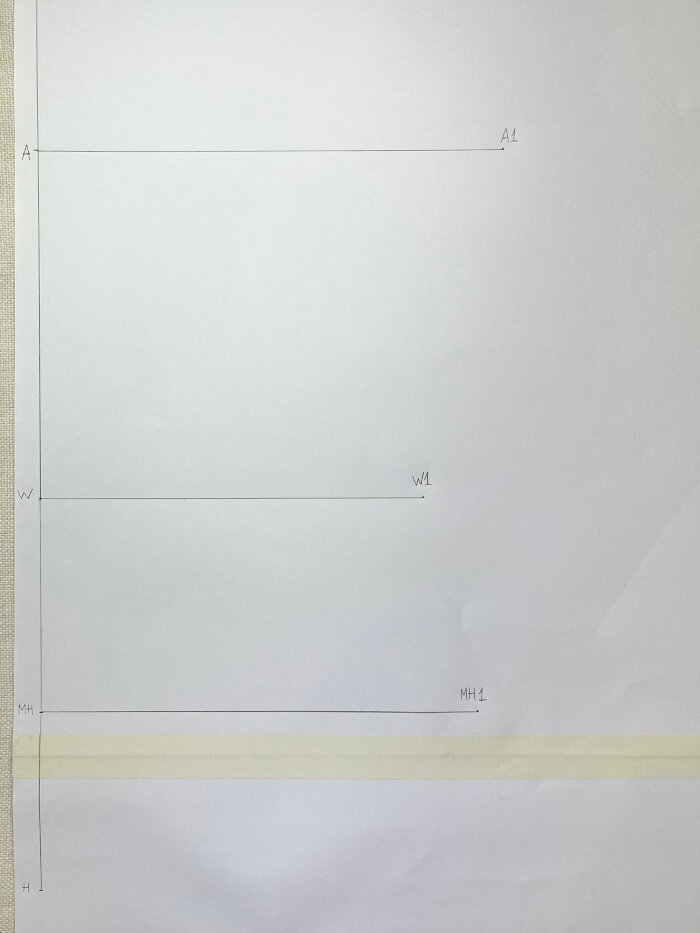
Lastly, from point H square to the right to point H1 one quarter of your Hip circumference. My Hip circumference is 107cm so the distance between H and H1 is 26.75cm (I rounded it up to 26.8cm).
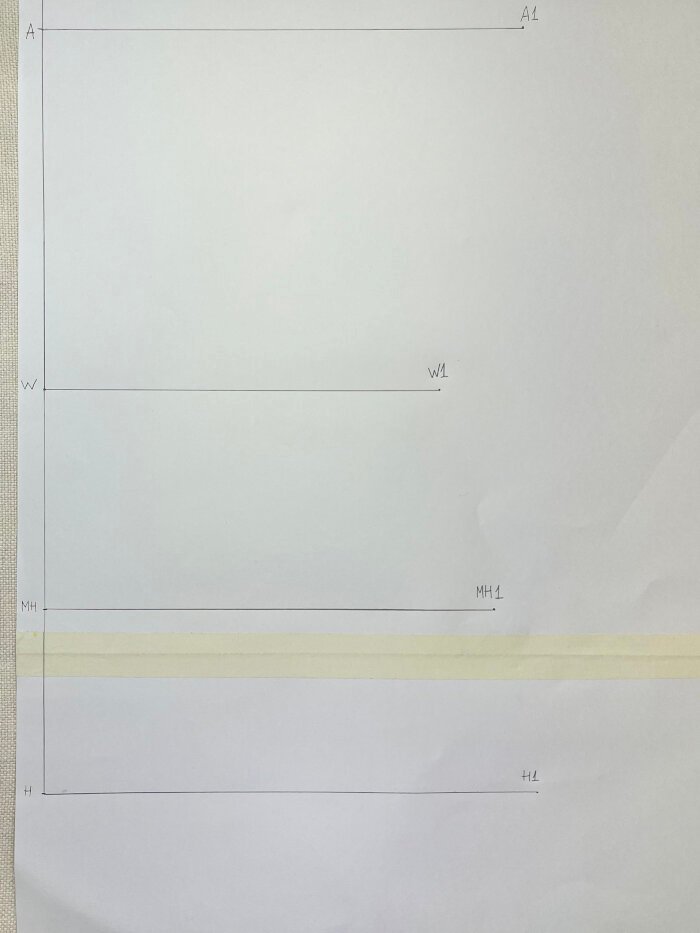
For this section we used quarter circumference measurements for bust, waist, mid hip and hip as you will create a quarter of the pattern that will fit both for the front and the back sections. There are no darts in this pattern because they would not hold up to the stretching, would look unsightly if a stretch or zig zag stitch was use and are not needed due to the stretchiness of the fabric.
Step 3 – Draft the shoulder line on the DIY T-shirt pattern
You will need to use a protractor to shape the shoulder line. Here is a quick recap on how to use the protractor in case it has fled your memory, but I am providing photos below to show how to use it in this exact application. It is not that hard albeit a bit daunting at first.
Place the centre of the protractor on the point N1 (N1 Is going to be a vertex of the angle). The CN to N1 line has to go through the 0 or 180 degree angle. Find the mark for 15 (similar to ruler measurement but on a curve) on the protractor on the right side and place a dot there.
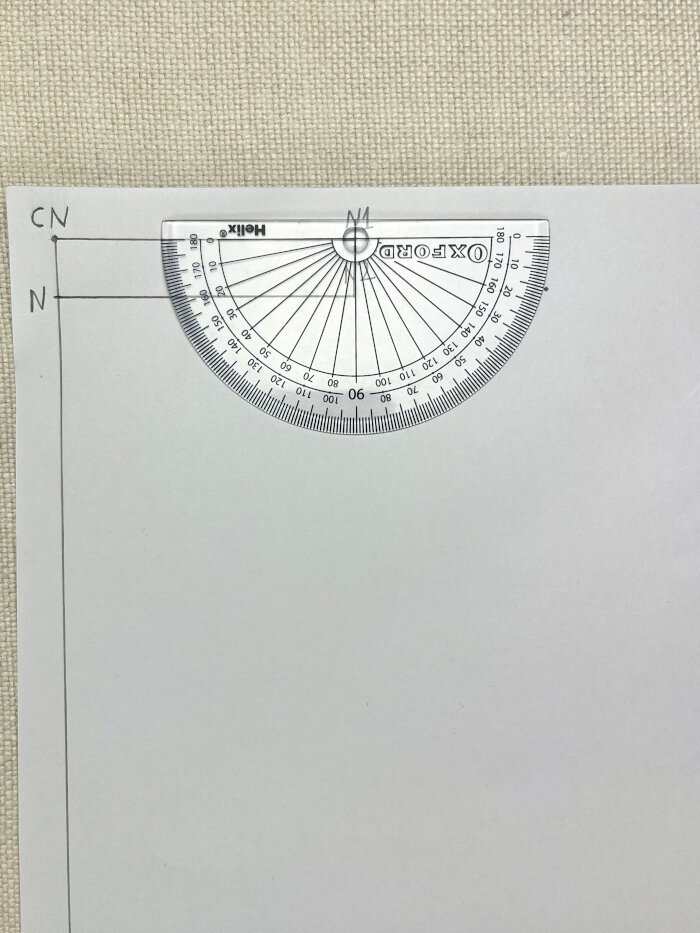
Then, from the point N1 draft a line that goes through the 15 degree point you made above, the length of your shoulder. Mark the end point as S.
Step 4 – Draft the Armhole (Armscye) Curve on the T-shirt pattern
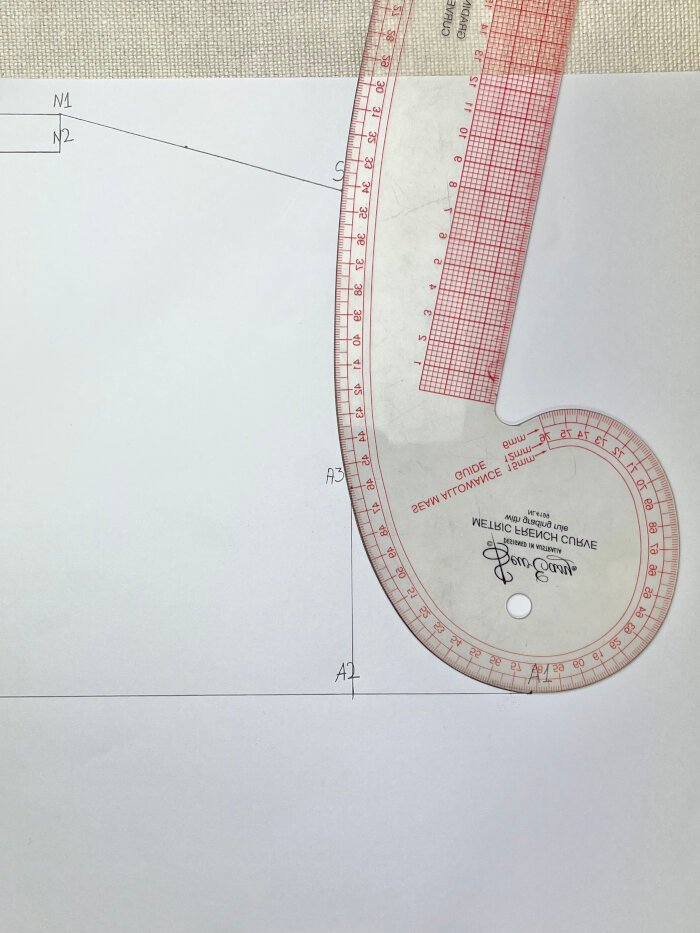
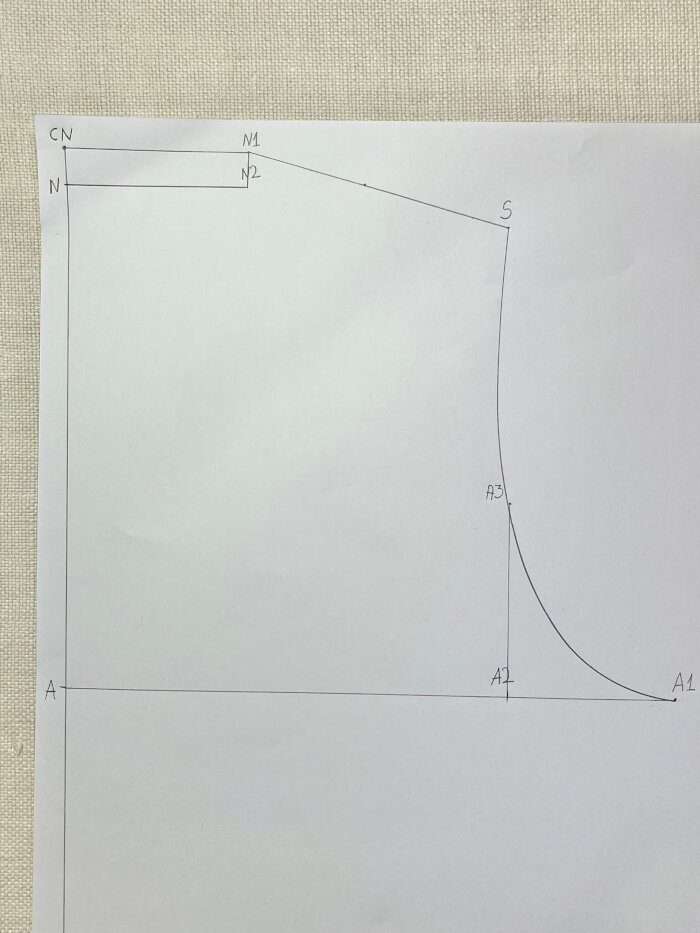
Next step is to locate armhole middle point on the T-shirt pattern. To do that, mark half of your Back Across Shoulders measurement on the armhole line, from point A to point A2. My across back measurement is 38 cm thus the point A2 for me is 19 cm from A.

From A2 you will need to square up to A3 one third of your armhole depth measurement plus 1 cm. My armhole depth measurement is 21.5 and therefore the point A3 is located 8.2cm from A2.
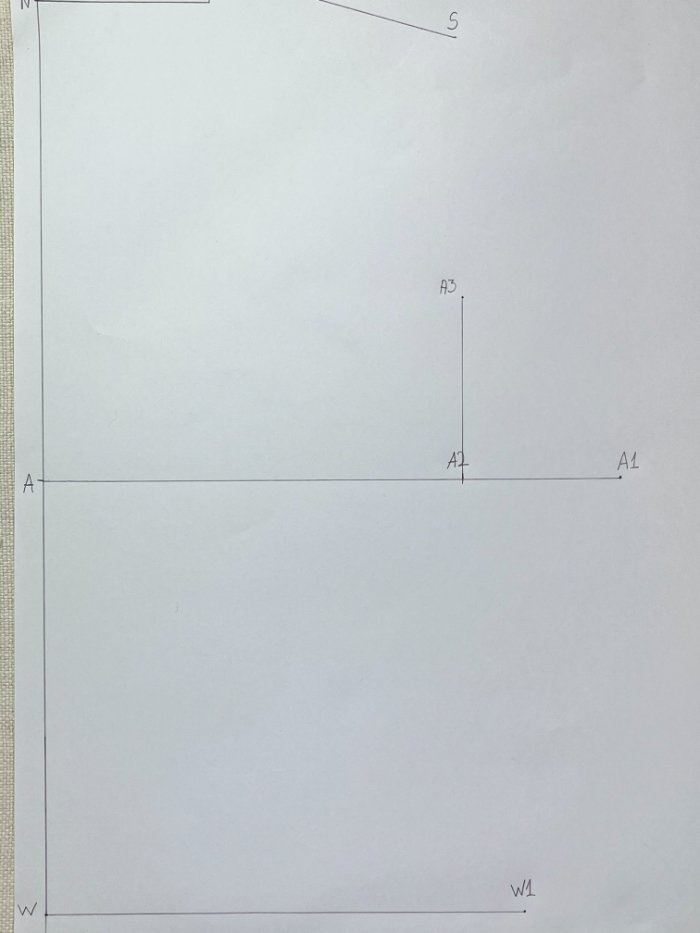
Now connect points S, A3 and A1 with a curved line, using French curve. It is absolutely fine if the French curve does not quite go over the point A3 exactly. As long as the curve it somewhere near, you will be ok. After all, this pattern is for a T-shirt and T-shirts stretch!
Step 5 – Draft the Neck Opening
As we are making just one pattern for both back and front, we will need to draft different neck openings, depending on whether you are going to use it for front or back.
To draft the back neck opening, connect N and N1 with a curved line, either by using French curve or freehand. Keep the angle at N 90 degrees for a smooth transition.
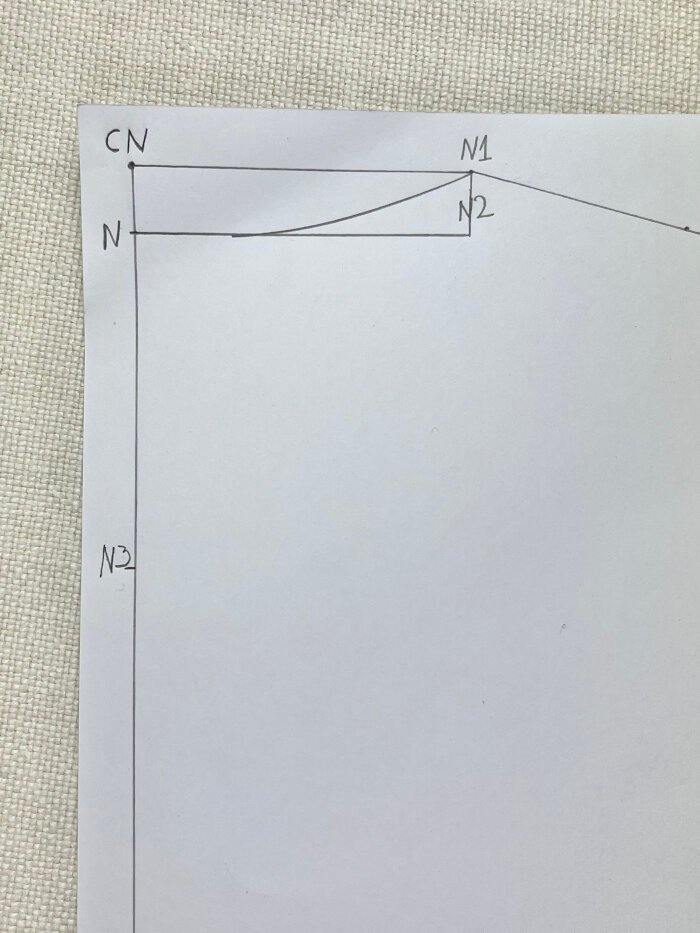
The depth of the front neck opening is one fifth of the neck circumference. Mark this as N3 measured from CN. Square to the right the same amount to point N4.
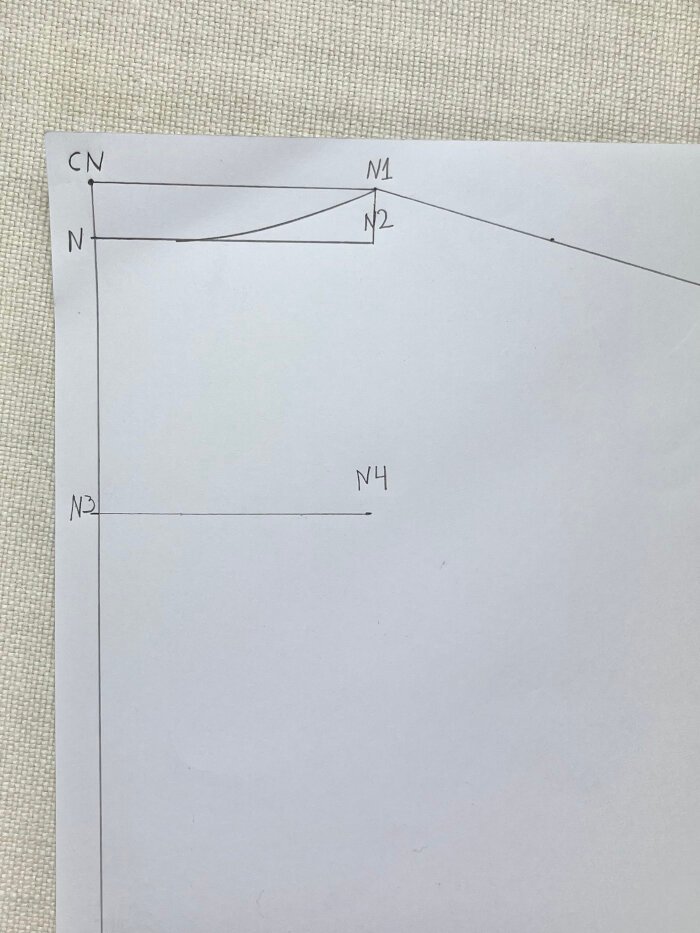
Connect N2 with N1 with a curved line freehand or by using French curve, touching the line N to N4, keeping angle at N2 straight.


At this point, you may need to redraw both the front and back neck curves to keep angles at point N1 straight for both. Alternatively, you can cut two separate patterns for back and front and align at the side seams to correct any weird angles. I have explained in this blog post on how to perfect a custom bodice block.
I opted for the former and redraw the curves to create 90 degrees angles art N1.
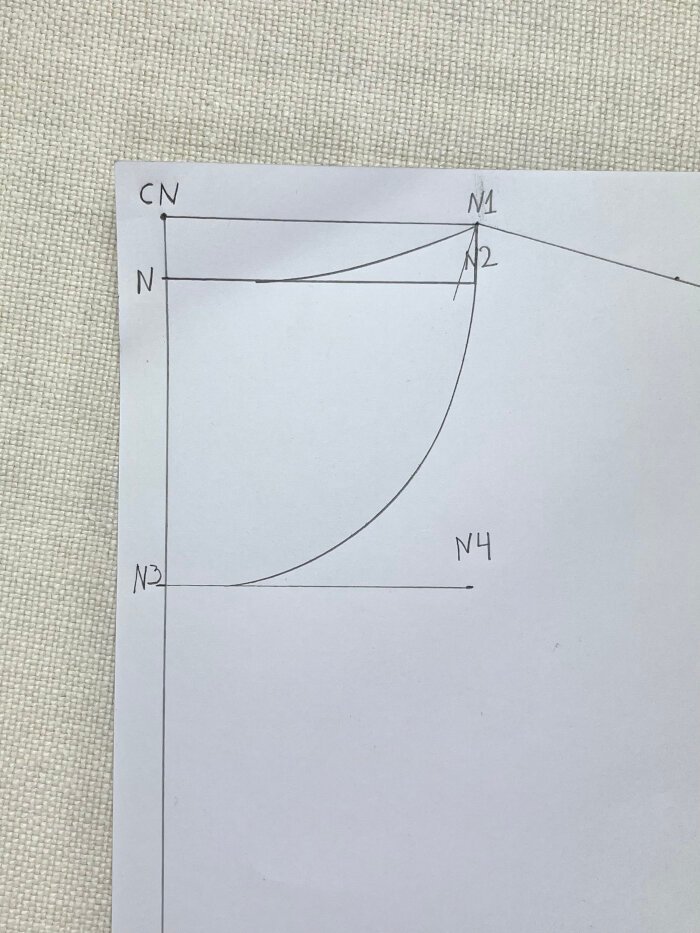
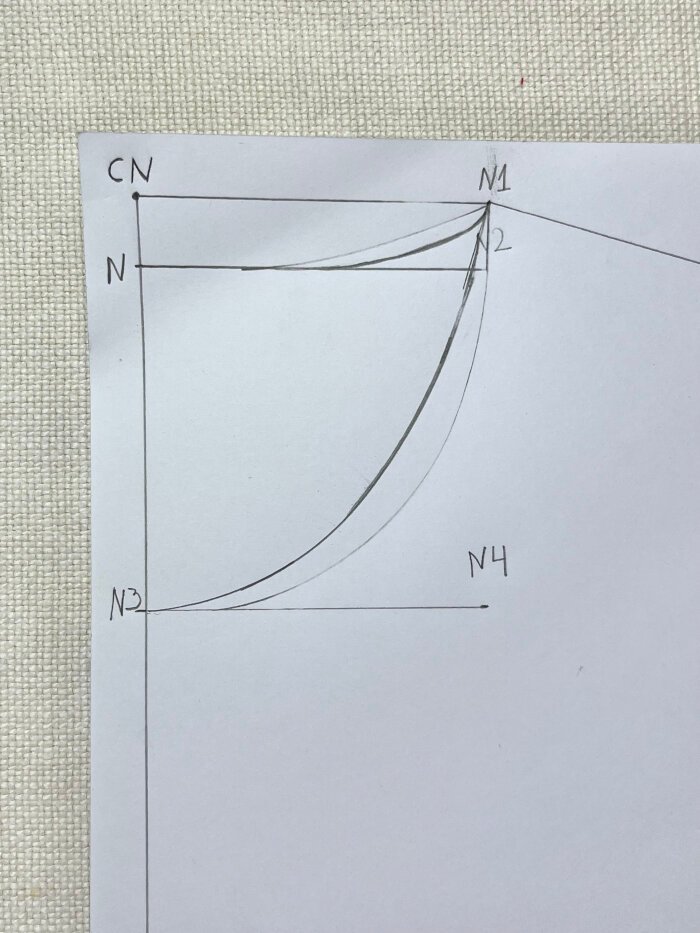
There are two necklines now not he same pattern but that is ok. You do not need to create another pattern as all you have to do is gently cut out the front neck opening (the deeper neck opening) almost all the way up to the shoulder but not quite cutting it off. Then, when you are cutting out the pattern pieces not eh fabric, you can keep the front neck opening in place with a paper weight for the back pattern and fold it back behind the pattern for the front pattern piece.
Step 6 – Draft the Side Seams on the T-shirt Pattern
To complete the side seams, you have two options:
- Either square up and/or down from the widest of the points A1, W1, MH1 or H1. You may need to extend A1 to the right if any of the other points are wider than bust circumference. In my case the hip circumference is larger than A1. I could either connect A1 with H1 with a straight line, keeping angles straight both points, or extend the A1 to the right. If I moved A1 to the right. I would end up with larger wearing ease at the bust and armhole line.
- Or, you can connect all the points A1, W1, MH1 and H1 with curved line. I find this option the most useful as I can redraw the straight lines for easy fitting T-shirt block at any time and use this block also for close fitting T-shirts and jersey dresses without any major modification.
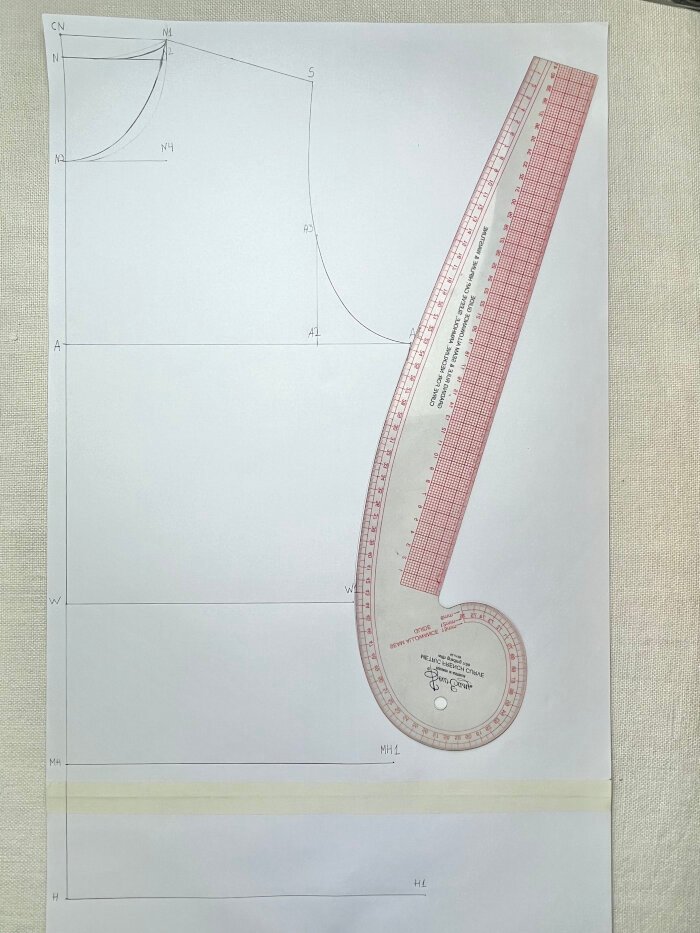
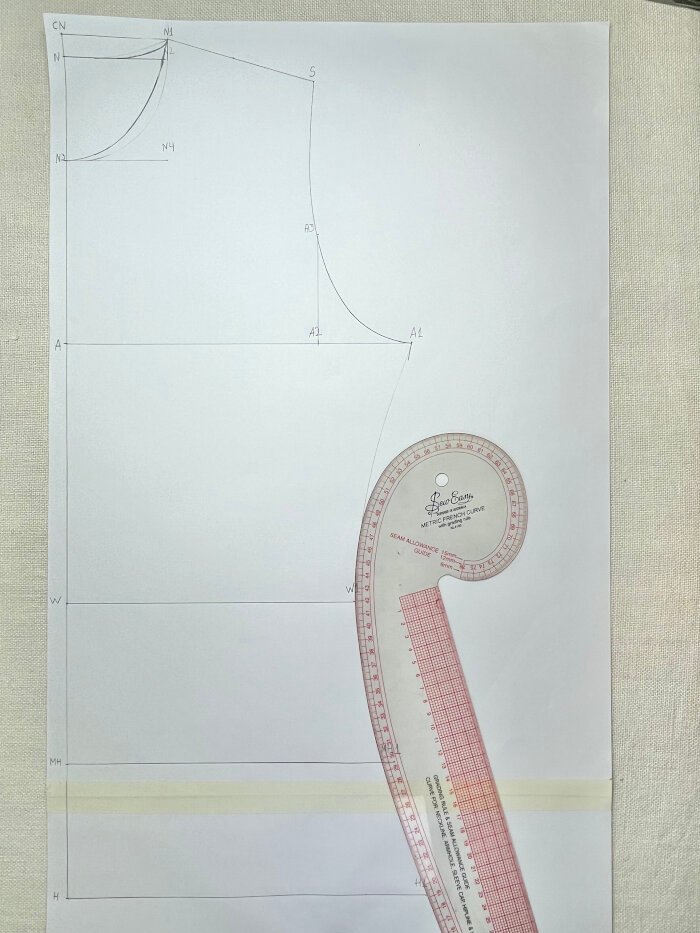
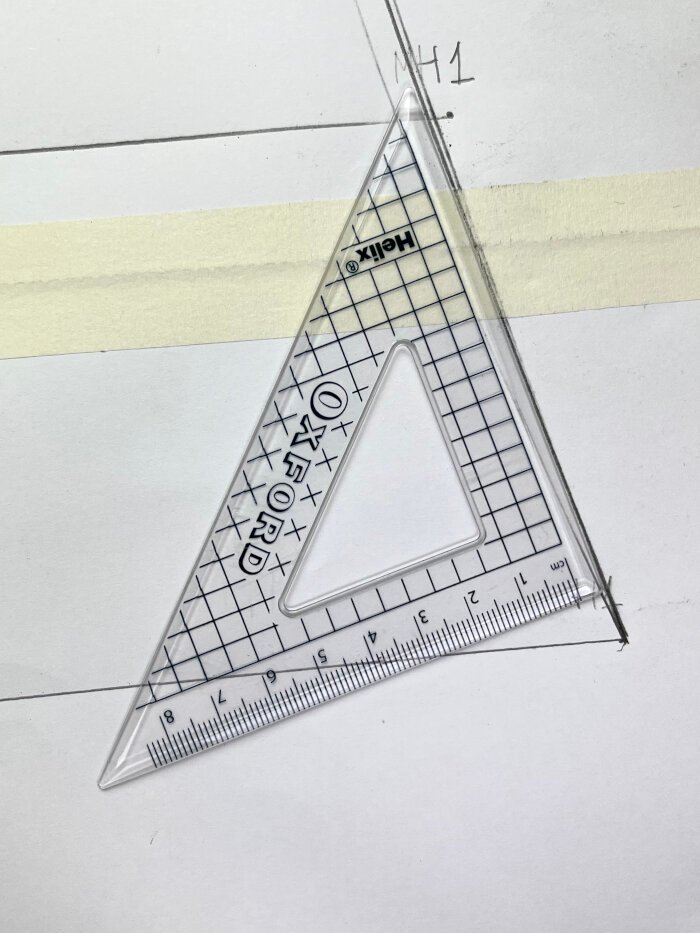
If, like me, you end up with a sharp angle at H1, you will need to redraw the H to H1 line, by raising the H1 to create a 90 degree angle at this point and then connecting with H with a curved line.
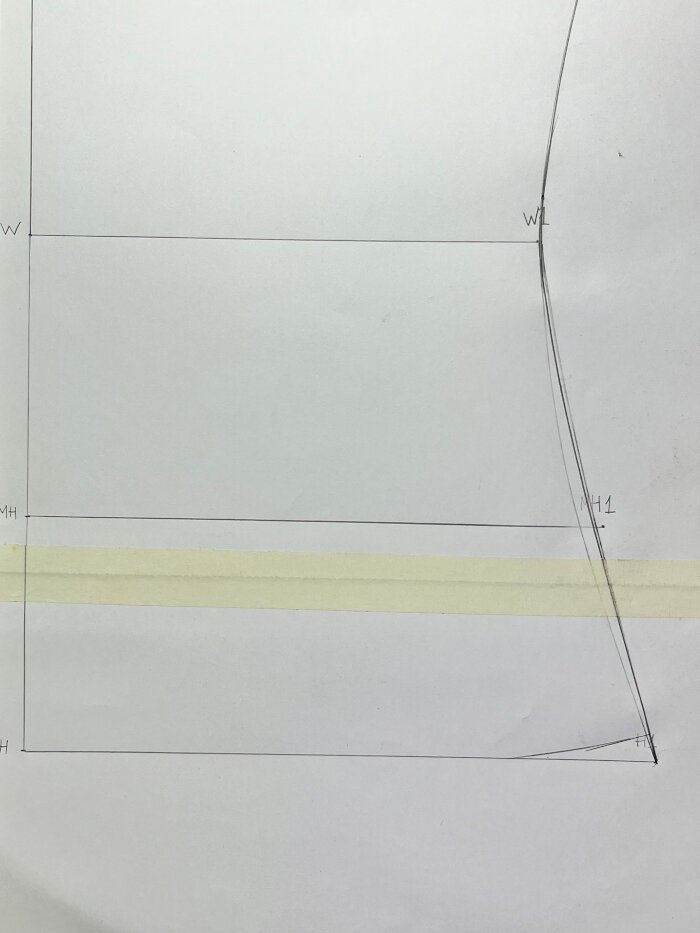
At this stage, you have completed a basic T-shirt bodice block drafted entirely from your own body measurements.
No Ease Explained: Why This T-Shirt Pattern Uses Stretch Fabric
This T-shirt bodice block is drafted with zero wearing ease because it is designed specifically for stretch knit fabrics.
For woven fabrics you need to add wearing ease to allow the chest and tummy to expand a you breath or go through the day. The ease is also required for the movements – woven fabrics are stiff and the fibres do not give in. This is not required for the stretch fabrics as they are constructed as knits (think knitted mittens). Knits are made of looped strands of fibre that allow some movement in them. There are knits that are made with Lycra or Spandex added to them, to allow for even more movement and expansion, some can stretch to 70% of the original length or width.
For that reason, patterns that are made specifically with knit fabrics in made do not require a wearing ease. The only time when you would need to include an ease is if the knitted fabric has a combed (fluffy) backing as that does not stretch much more than woven. I would also consider adding some ease for heavy weight cotton jersey (anything above 240 GSM) if the final garment does not need to be figure hugging.
This pattern is perfect for viscose jersey, cotton jersey with Lycra or Spandex, and French Terry.
How to Test and Fit Your T-Shirt Pattern
Now that you have completed the T-shirt pattern, you need to test it by sewing it up. Testing a T-shirt pattern before final use ensures correct fit, comfort, and sleeve mobility.You will need to add seam allowances to the side seams and the shoulder line but you do not need the seams allowance for the neck line, hem or sleeve (unless you want to test the fit of the sleeve pattern at a later stage).
Once sewn with zig zag stitch or overlocker, check the fit around bust, mid hip and hip, armhole, shoulders and neck. If there is a tightness or looseness in any of them, then you can make the adjustments directly on the test garment and transfer them to the pattern by careful measurement or use of tracing wheel.
If you have made correct measurements following my guide on accurate body measurements for pattern drafting, then the pattern should fit you without needing any adjustments.
Once you are happy with the T-shirt pattern, you can retraced them on a stronger paper, like a cardboard paper. You are going to use this pattern a lot and this step will protect it from disintegration for years to come.
How This T-Shirt Bodice Block Can Be Used
This pattern is perfect for various casual tops, such as T-shirts, tank tops, vests with straps. By extending the centre back and front line and with adjustments to the side seams, the DIY T-shirt pattern can be easily transformed for a fitted jersey dress.
This basic T-shirt bodice block can also be adapted for layered garments, loungewear, and fitted knit tops.
Frequently Asked Questions
Conclusions
Thank you for following this pattern drafting tutorial for beginners.
Drafting your own basic T-shirt pattern gives you a versatile block you can use for stretch tops, jersey dresses and design variations. Once tested, this DIY T-shirt pattern becomes a foundation for countless garments.
This self-drafted T-shirt bodice block is a core pattern drafting tool you can reuse and adapt for countless knit garments.
Do not forget to save the T-shirt block for your future projects!
If you enjoyed this tutorial, you may like to read my blog post on how to create a close fitting bodice block tutorial or create a sleeve pattern to complement this block. I also have a post on how to sew a close fitting T-shirt using this block.