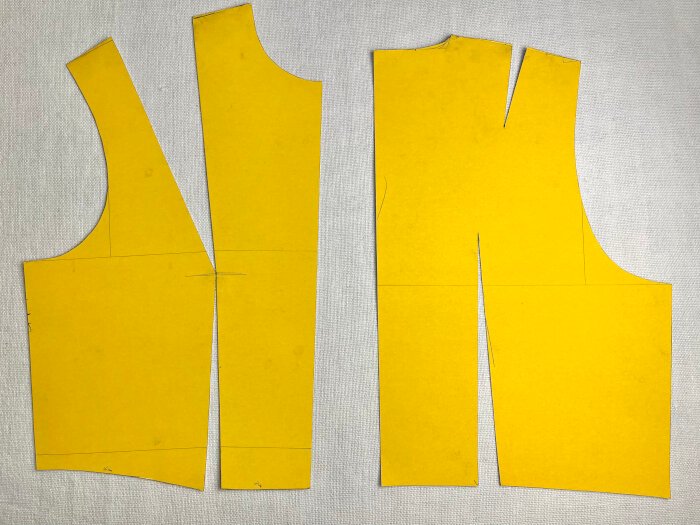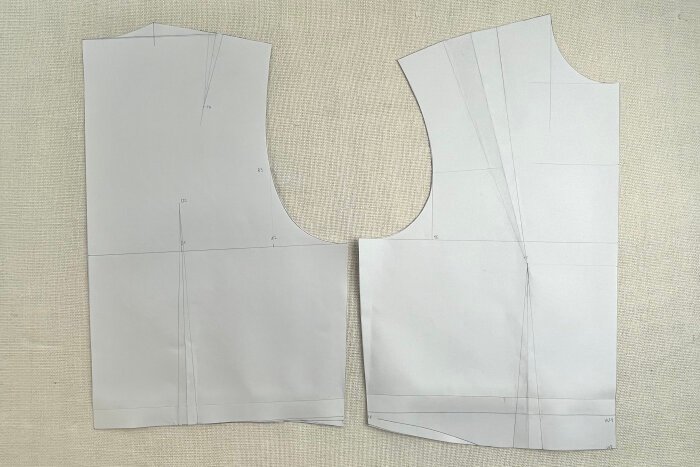
In this tutorial, you’ll learn how to draft a close-fitting women’s bodice block using your own body measurements. This made-to-measure bodice sloper is designed to fit close to the body without feeling restrictive, using controlled wearing ease and clearly explained calculations.
Many bodice block drafting methods produce patterns that are either too loose to be useful or so tight they function more like a second skin. Others rely on unexplained formulas that are difficult to adjust or troubleshoot.
This step-by-step bodice block drafting method removes guesswork. Every measurement, angle, and dart is explained so you understand not only how to draft the block, but why each step works. The result is a reliable foundation pattern you can use for fitted dresses, blouses, and future pattern developmen
Who This Bodice Block Drafting Tutorial Is For
- Home sewists drafting patterns for their own body measurements
- Beginners who want a structured, explained drafting method
- Intermediate pattern drafters looking for a reliable close-fitting sloper
- Sewists frustrated with standard sizing or poorly fitting commercial patterns
Tools and Materials Needed to Draft a Bodice Block
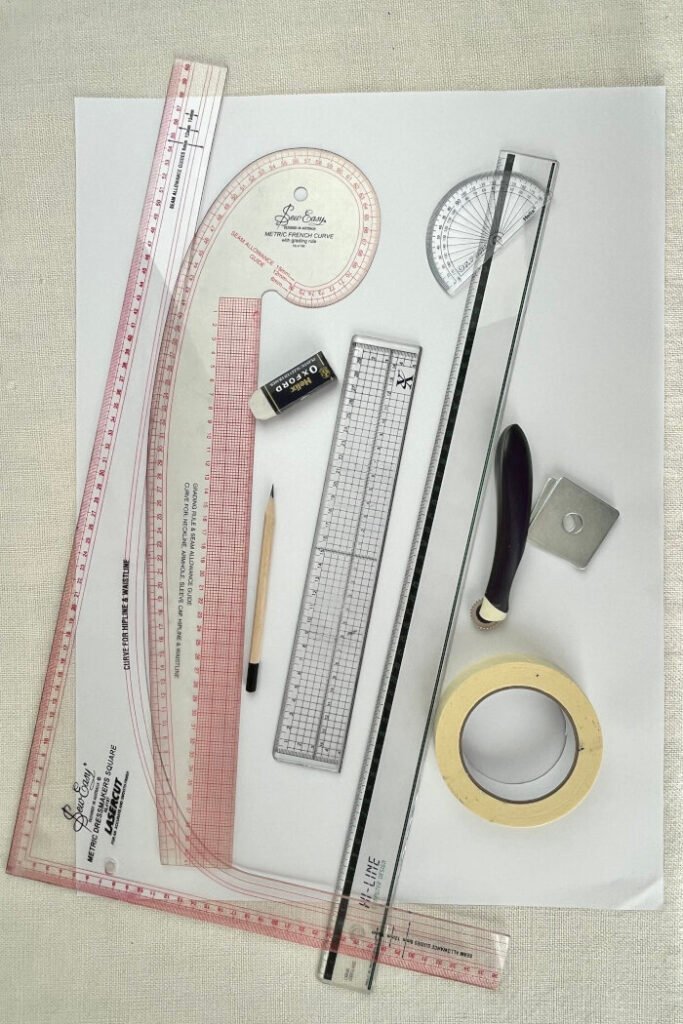
- A piece of paper that is large enough to include the pattern. To paper should be half of your bust measurement plus 10 centimeters wide and front body length plus 4 cm high. A1 sheet of paper is sufficient if your bust is less than 150cm. You can stick together multiple sheets of paper with tape or use wrapping paper or a roll of brown crafts paper.
- Sharp pencil
- Pencil eraser (trust me, you are going to make a few mistakes. Even I do them when I let my mind wander).
- Square ruler (a small triangle ruler from a typical Maths set is fine).
- A long ruler. Longer the better. The one I use are around 60 cm long. You can get away with shorter ones but you will need to be very careful ensuring that the lines are still straight.
- French curve
- Protractor (does it feel like geometry class yet? 😀 )
- Tape measure.
- Tracing wheel (optional, but super handy if you have it).
- Completed list of your bodice block measurements. I have a separate blog post dedicated to measurements and how to take them accurately by yourself, with a free template and guide)
Body Measurements Needed for a Custom Bodice Block
If you have completed the list of the body measurements, then refer to that. But to make life easier, I always write down the names and the measurement that I will need for the specific drafting projects, in the order I will use them. I stick that list in front of me for a quick reference. So, to the measurement that you will need for the basic bodice block are as follows:
- Bust Circumference
- Back Body Length (SNP to waist)
- Nape to Waist
- Armhole Depth
- Neck Circumference
- Shoulder Length
- Bust Points:
- Shoulder Neck Point to Bust
- Apex to Apex
- Back Width
- Chest Width
- Waist
- Front Body Length
Now you are ready to draft the pattern!
We will be drafting a half back and half front pattern, so all your horizontal measurements will be halved.
How to Draft a Custom Bodice Block (Step-by-Step)
Step 1: Define the Bodice Block Drafting Frame
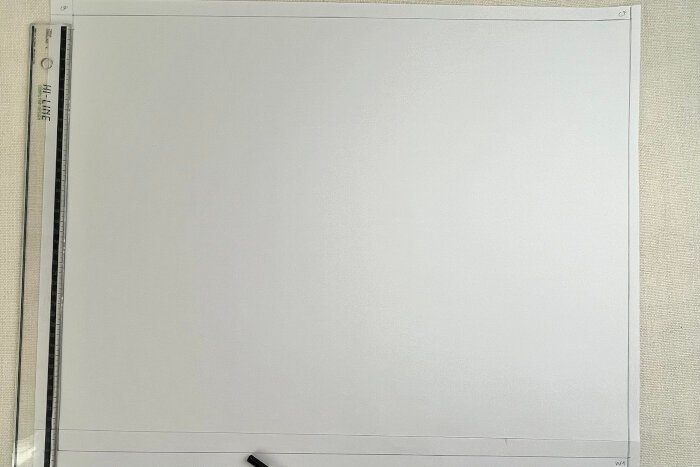
Firstly, we will define the bounding borders of the close fitting womenswear bodice block. Around 1 cm from the top and the left side of your paper, mark point CB. You will need to draw a rectangle from this point that is half width of your bust plus 3 cm ease wide and back body length high. This will give you 6 cm wearing ease around the bust area. We will keep the same ease for other horizontal measurements below bust.
6 cm gives enough ease to be able to just pinch the sides of your garment. For a close fitting bodice block the wearing ease should be between nothing and 7 cm. I find 6 cm to be the most comfortable for most garments, however, if I was to make a wedding dress or a close fitting evening wear with boning, I would reduce the ease to 3 or 4 cm, however the 6 cm ease would also work and provide the close fitting silhouette.
My measurements are 104 cm bust and one half with the wearing ease gives me 55 cm for width, and my back body length is 42.5cm.
Mark top right point as CF for Centre Front, bottom left as W and bottom right as W1. To clarify, the left vertical line is centre back, the right vertical line is centre front. The top horizontal line is the highest point of the pattern on which the shoulder neck point sits. The bottom horizontal line is waistline.

Step 2: Mark Back Neck and Armhole Depth Lines
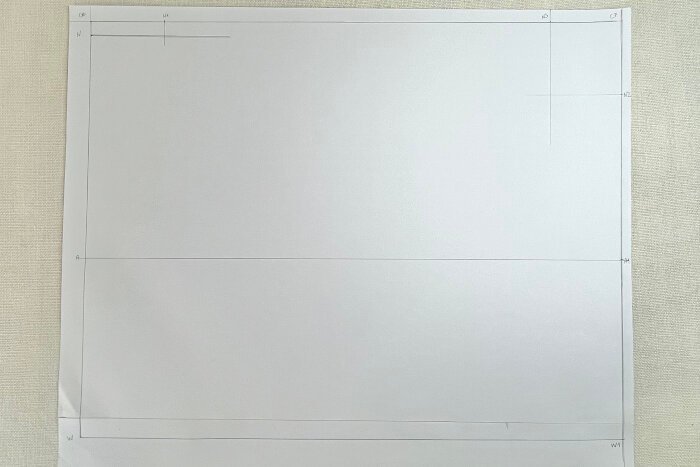
From the point W, measure up along the centre back line the Nape to waist measurement. Mark this point on the centre back line as N. CB to N will be the depth of the neck opening. Square across to the right approximately 9 cm long support line.
From CB, measure down an armhole depth plus 3 cm. Mark this point as A. Square across to A1 on centre front. Alternatively, you can measure the same distance from CF to A1 and then connect A and A1 with a straight line (this is my preferred option as it is easier than fighting with a long square ruler).
Step 3: Draft the Back and Front Necklines
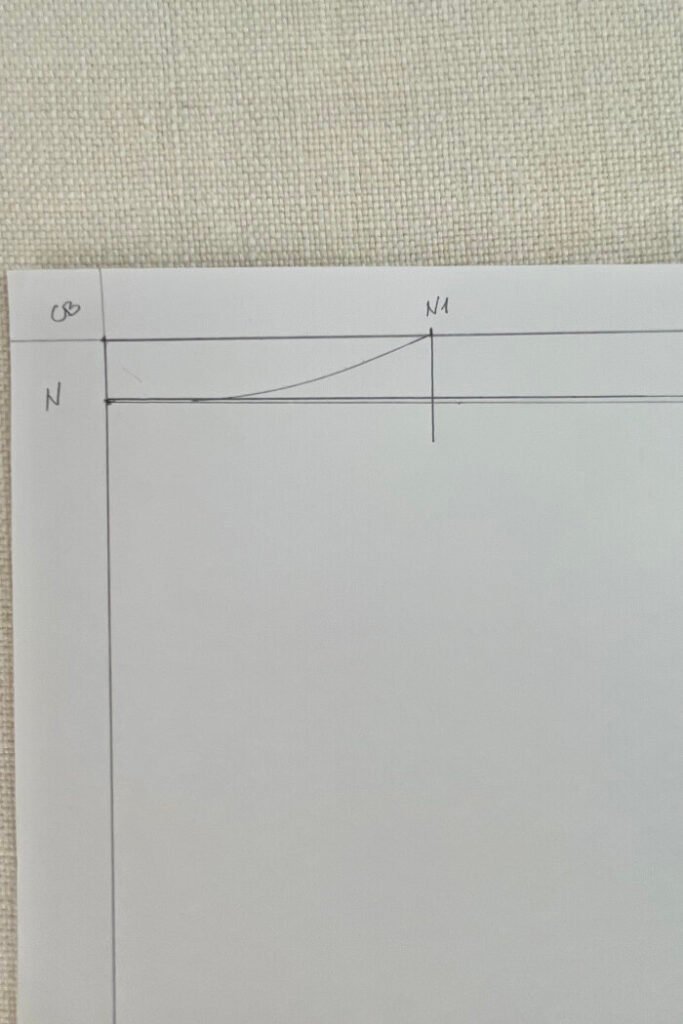
We move on to draft neckline. I like to work left to right, top to bottom, so we will draft the back neck opening first. Measure one fifth of the neck circumference from CB on the line from CB to CF and mark this point as N1. Square down to meet the line from N. Connect N and N1 with a curve either with french curve or freehand. Back neck opening is completed.
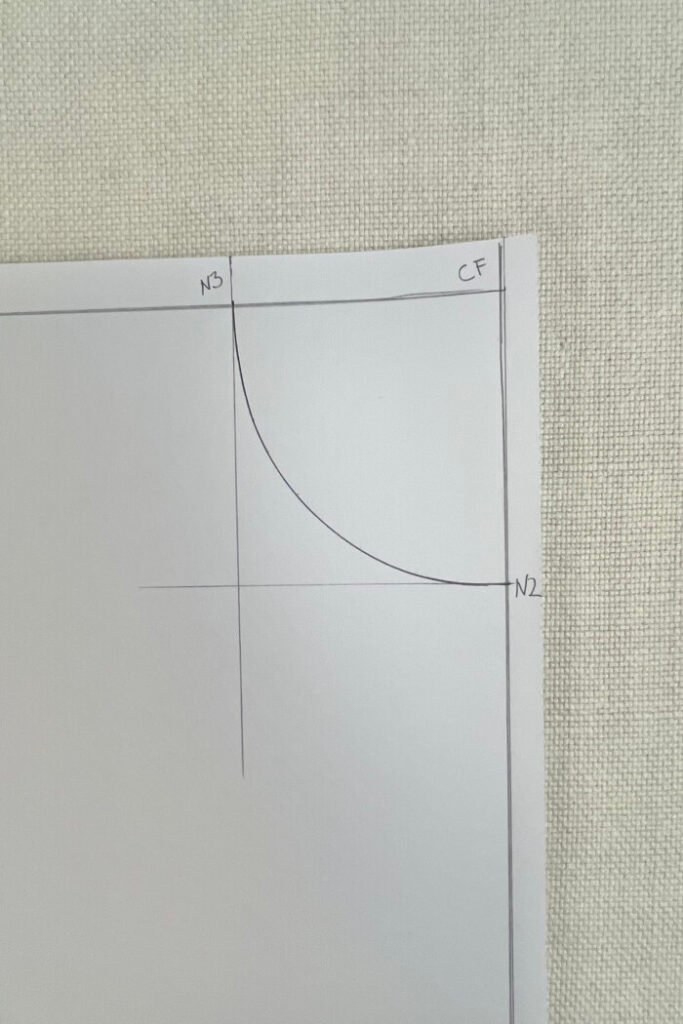
The depth of the front neck opening is one fifth of the neck circumference. Mark this as N2 measured from CF on centre front line.
For the front Neck opening, measure one fifth of the neck circumference less half a centimeter from CF to N3 on the line from CB to CF. This is the width of the neck at the front and is narrower than back neck width to give extra space for the back of the neck to lay neatly around the neck. Connect N1 to N1 and N2 to N3 with a curved line, using the French curves. Keep the angles straight at the points N and N2. I usually finish the curve before the points N and N2 to help with that.
Step 4: Draft the Back Shoulder and Shoulder Dart
This is the first of two steps that you will need to use a protractor. Here is a quick recap on how to use the protractor in case it has fled your memory, but I am providing photos below to show how to use it in this exact application. It is not that hard albeit a bit daunting at first.
Place the centre of the protractor on the point N1 (N1 Is going to be a vertex of the angle). The CB to CF line has to go through the 0 angles both directions. Find the mark for 12 (similar to ruler measurement but on a curve) on the protractor on the right side and place a dot there.
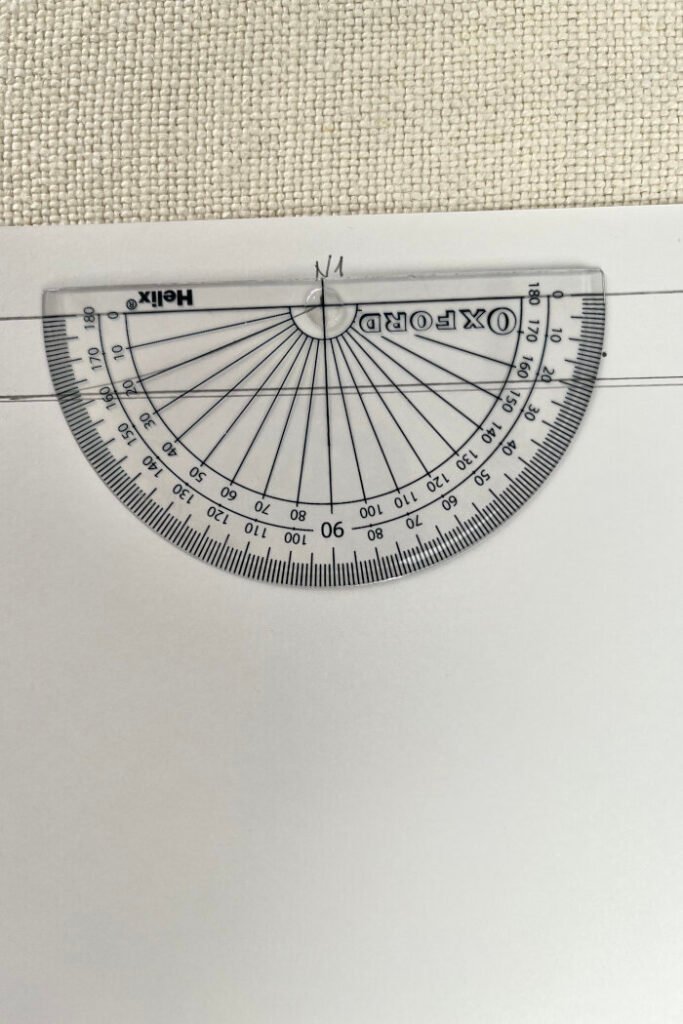
Draw a line from N1 to the point marked with the protractor that is around 10 cm long. Mark a point S1 from N1 that is half width of the shoulder length, rounded to the nearest natural number. My shoulder length is 11.5cm, so nearest natural number to the half measurement of that is 6cm.
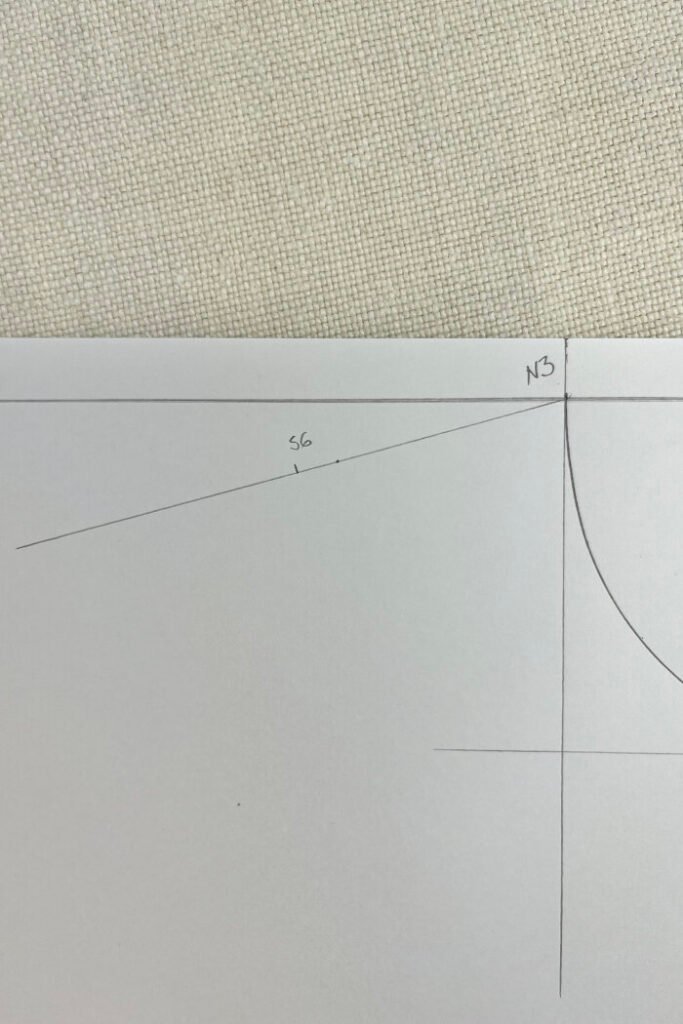
Mark further point S2 that is 1.5 cm away from S1 to the right. This is the back shoulder dart width. Mark S3 point halfway between S1 and S2. Square down 8 cm from S3 to S4. Join S4 to S1 and S2 with a straight line.
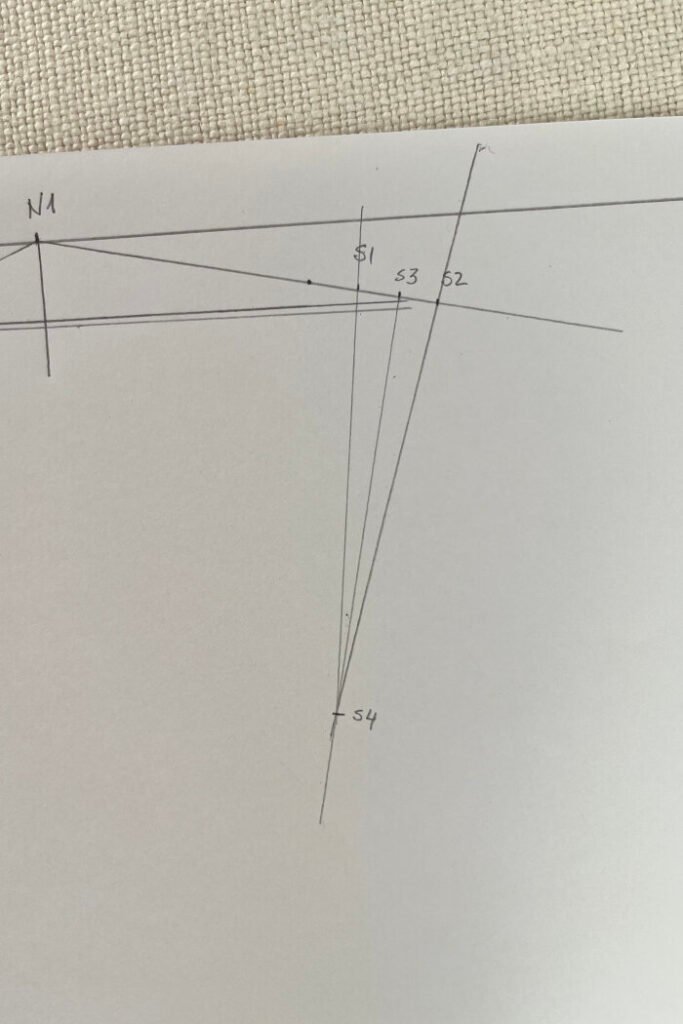
Now fold the paper to close the dart as it would be sewn together, using a sticky tape. It is easier if you fold the line S3 and S4 first. With the dart closed, extend the line between N1 and S1 to be the length of the shoulder measurement. Mark the end of the line as S5.
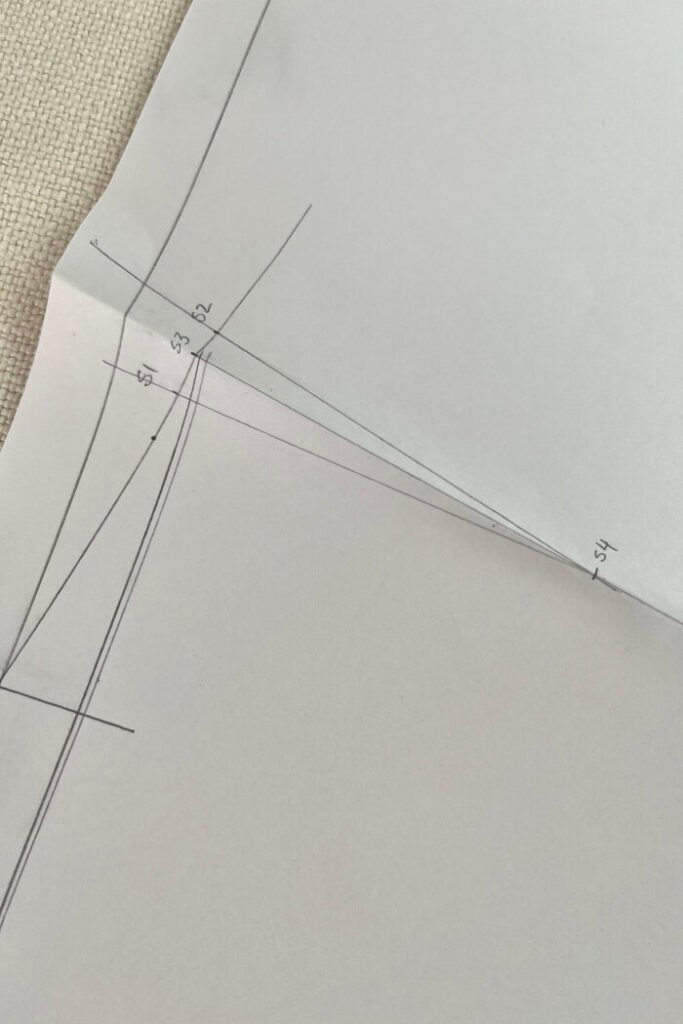
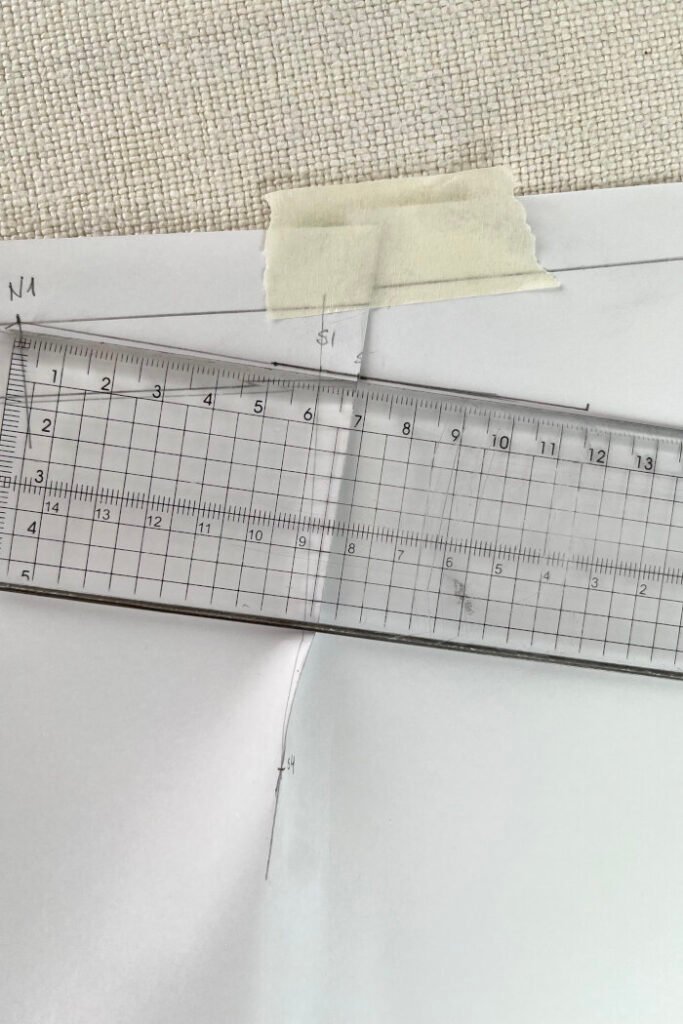
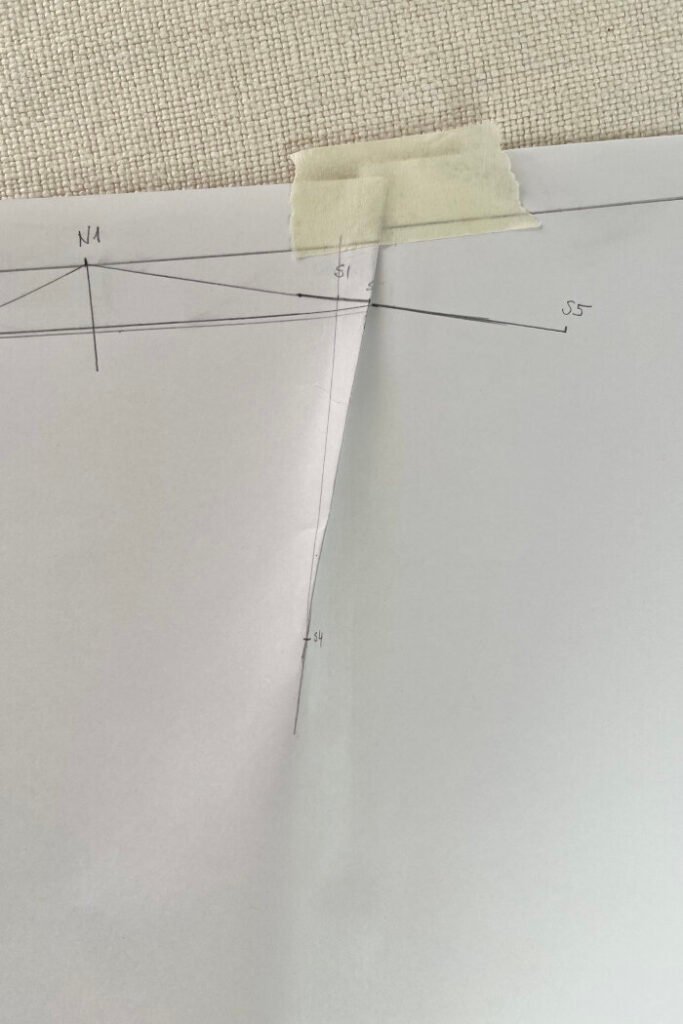
Open up the closed dart and connect the end of dart with the extended shoulder line.
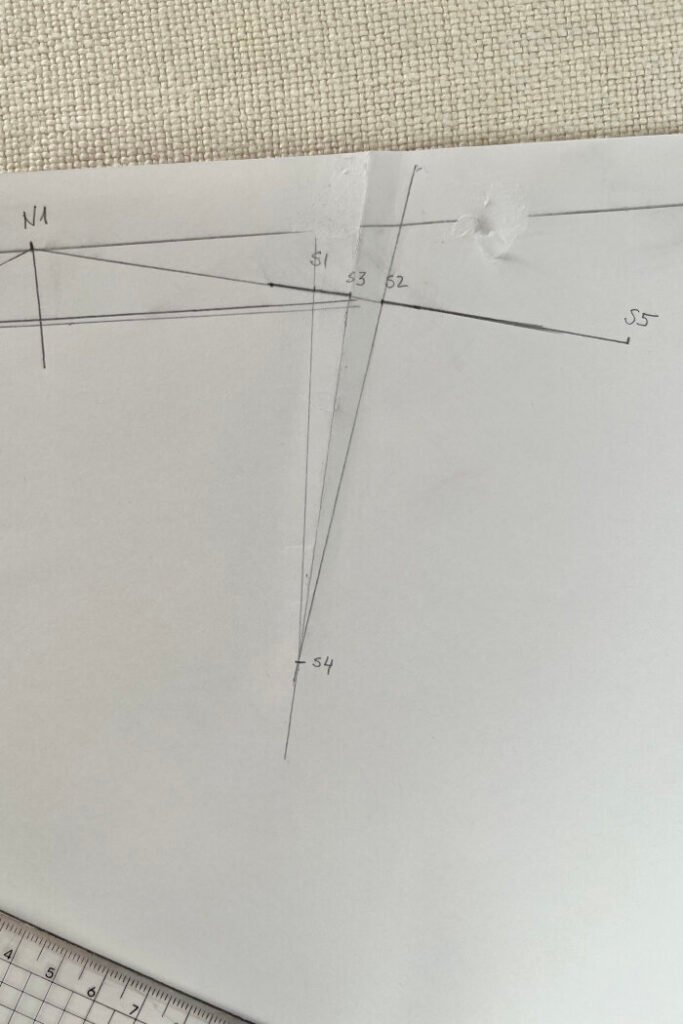
The sticky tape was sticking to the paper too much so I moved to use pattern weights for the next step. But you can carry on using the sticky tape if your paper behaves well. Alternatively, instead of removing the sticky tape, you could carefully cut it open, without cutting the paper.
Step 5: Draft the Front Shoulder and Bust Dart
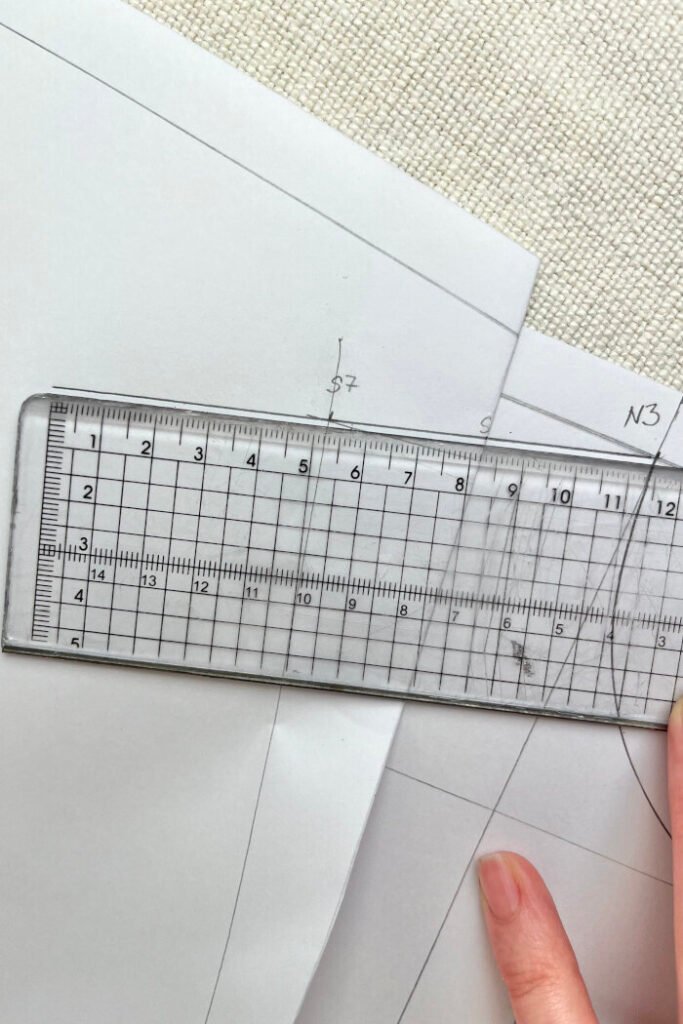
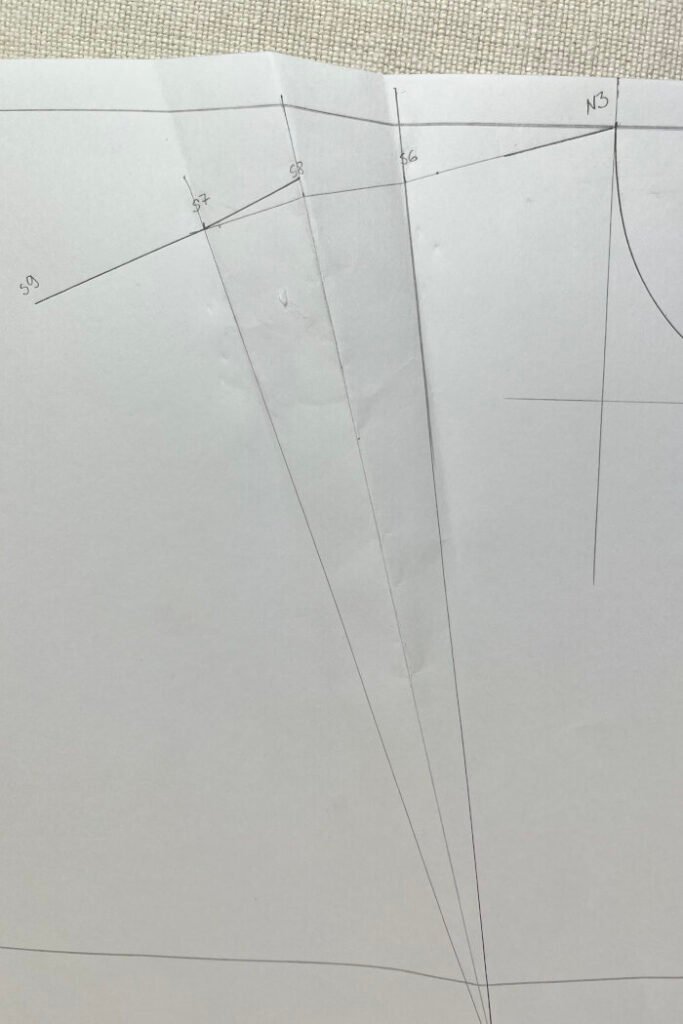
From the neck point N3 with protractor mark a 15° angle (follow the same steps as above but this time mark the 15 angle on the left side, with N3 as a vertex).
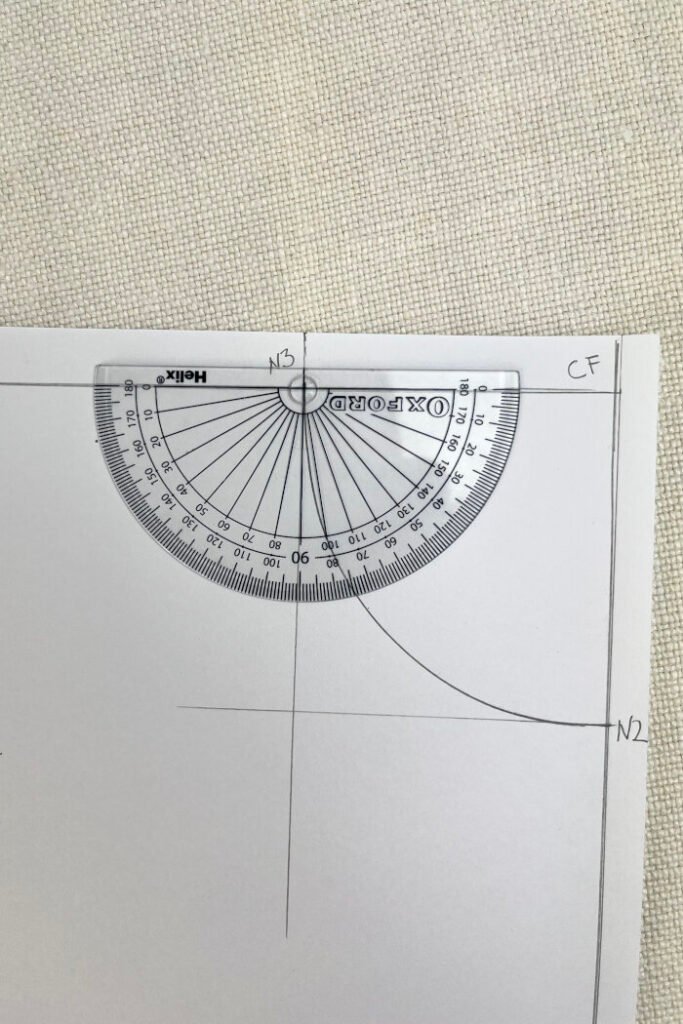
Connect N3 with the point just marked and extend the line to be around 14 cm long.
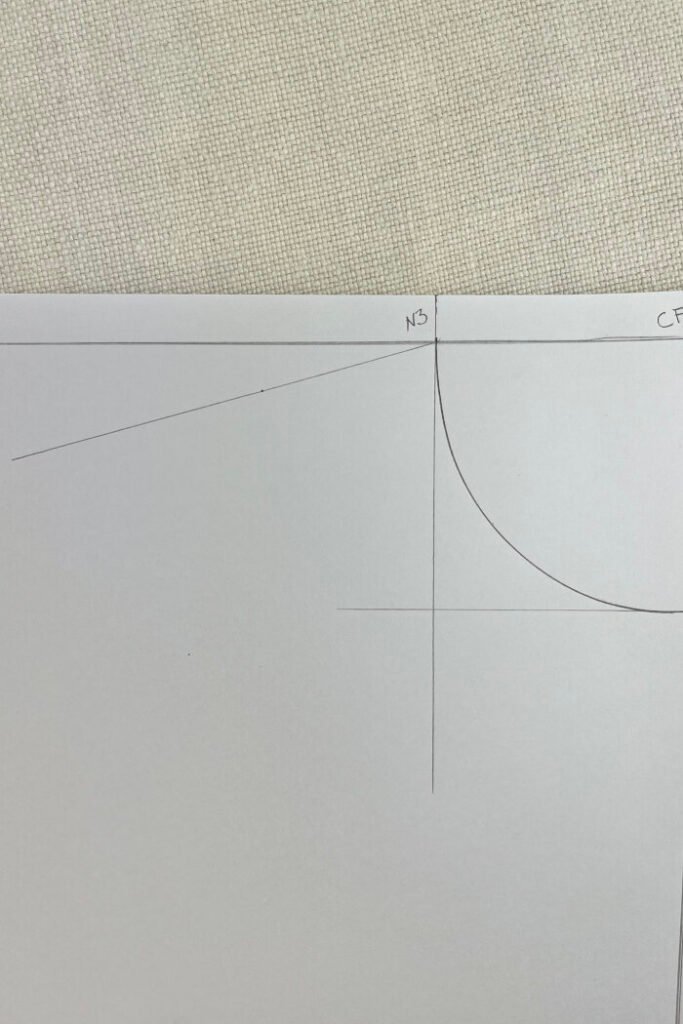
Mark a point S6 from N3 that is half width of the shoulder length, rounded to the nearest natural number. For me that is 6cm. Mark S7 further 6 cm from S6. S6 to S7 is the dart width. Now, find a middle point between S6 and S7, by measuring the distance between the points and dividing the measurement in half. Mark this point as S8.
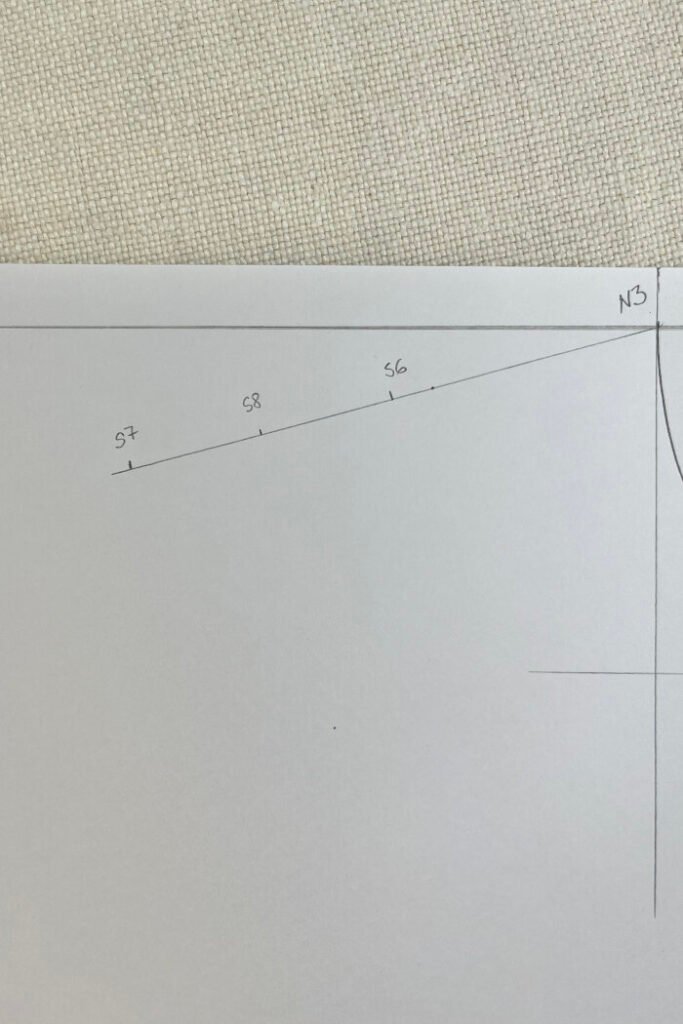
Next, you will need to locate a bust point on the pattern. To do that, from CF measure the distance of your shoulder to bust point along the CF to W1 line. From this point, square to the left the half width of the measurement between your bust apex. This is your bust point. Mark it as BP.
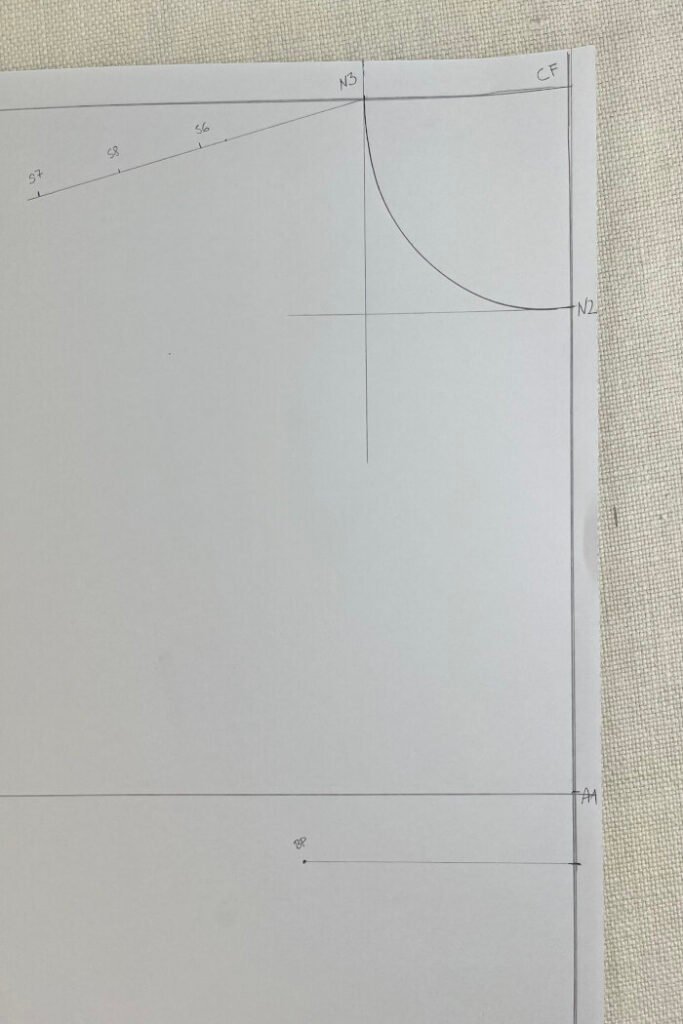
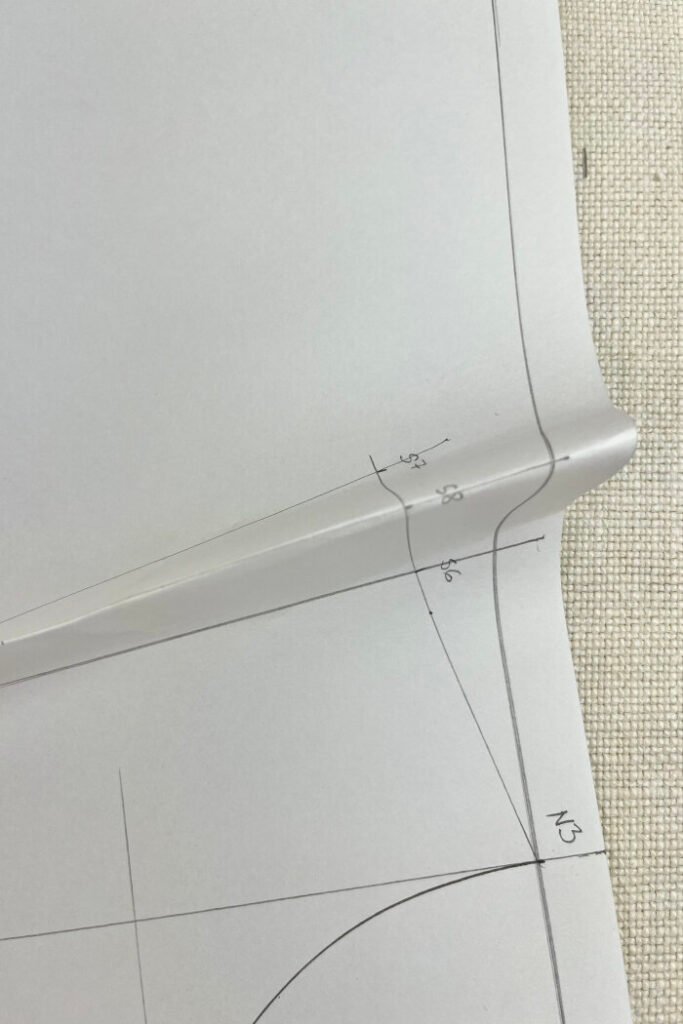
Connect BP with S6, S7 and S8 with straight lines. Next, you will need to close the dart as if it was sewn together. It is easier if you fold the line S8 to BP first. Then, extend the line that is between N2 and S6 over the folded dart to be the length of your shoulder and mark the end of the line as S9. Open up the closed dart and connect the end of dart with the extended shoulder line.
Step 6: Mark Back Armhole Control Points
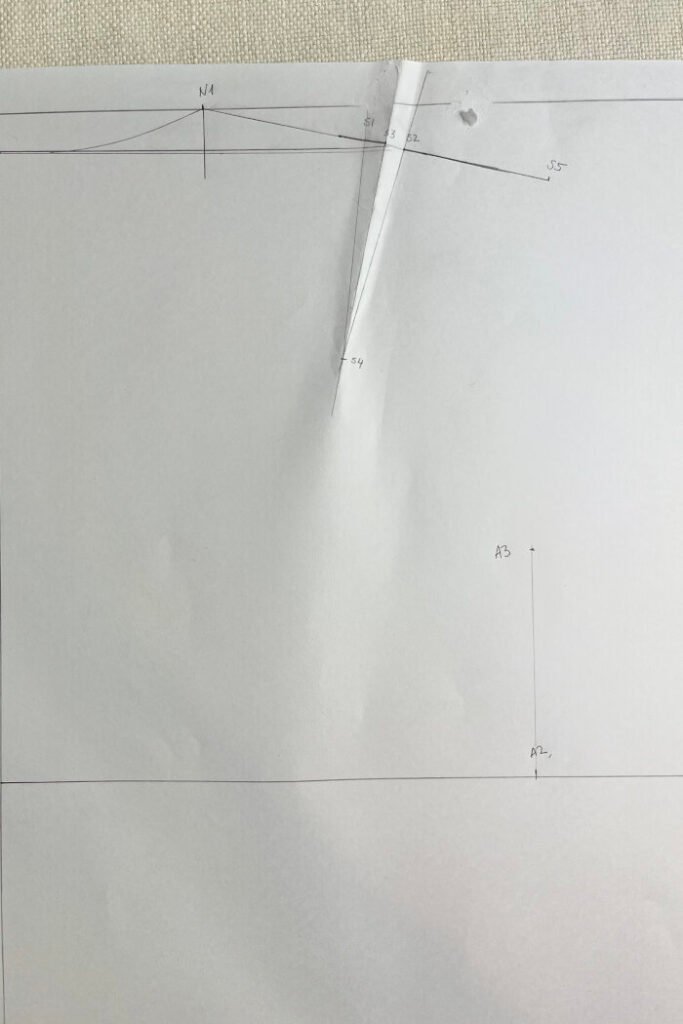
Next step is to locate armhole point on the back pattern. To do that, mark half of your back width measurement plus 0.5 cm ease on the armhole line, from point A. My accross back measurement is 38 cm thus the pount A2 for me is 19.5cm from A.
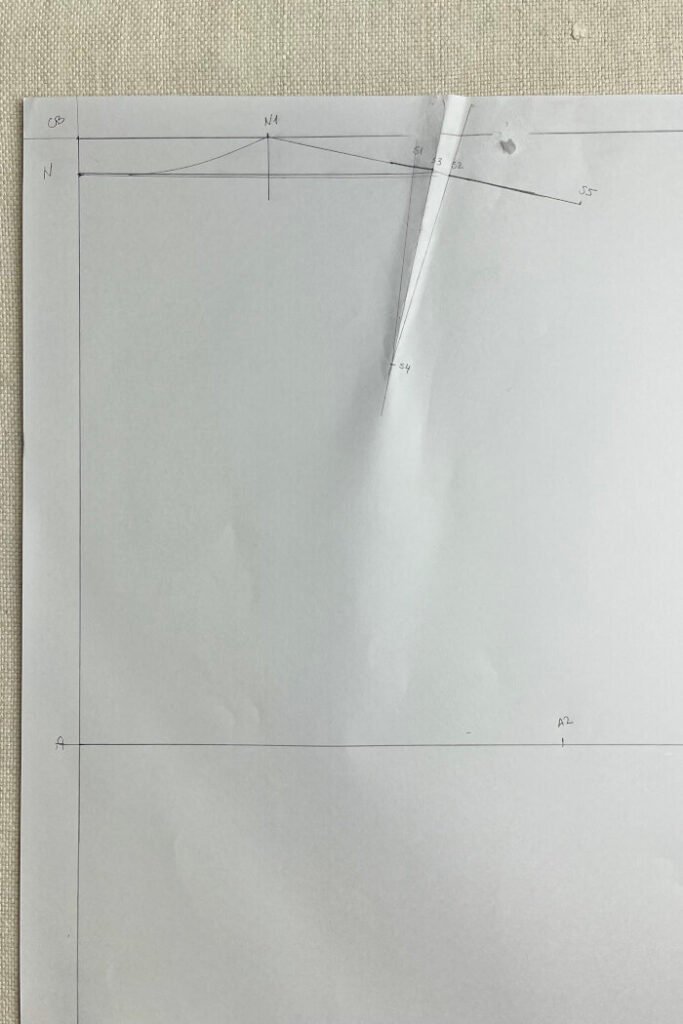
From A2 you will need to square up one third of your armhole depth measurement plus 1 cm. My armhole depth measurement is 21.5 and therefore the point A3 is located 8.2cm from A2.
Step 7: Mark Front Armhole Control Points
Along the line A1 to CF, from point A1 you will need to measure one third of your armhole depth measurement plus 1 cm. Mark this point as A4. My armhole depth measurement is 21.5 and therefore the point A4 is located 8.2cm up from A1.
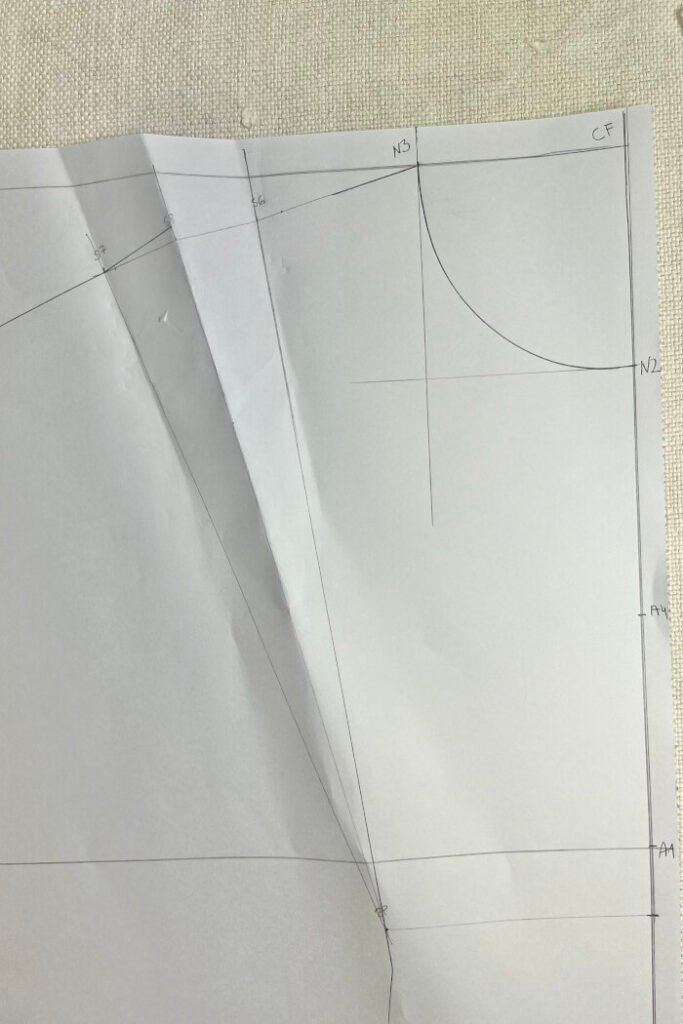
Next, close the front dart and square left from A4 half of your chest width measurement. It is a little tricky to fold this dart and drew the line, as you are kind of flattening a three dimensional shape. My advice is to walk the dart up as if sewing, from BP to roughly the opposite of point A4, and then close the dart with a sticky tape or pattern weights there. Then draw a line perpendicularly from A4 the required length. My YouTube video posted below tries to explain and show more accurately how to mark this line. Mark the end of the line as A5. My chest width measurement is 34 cm, thus the point A5 is 17cm from A4.
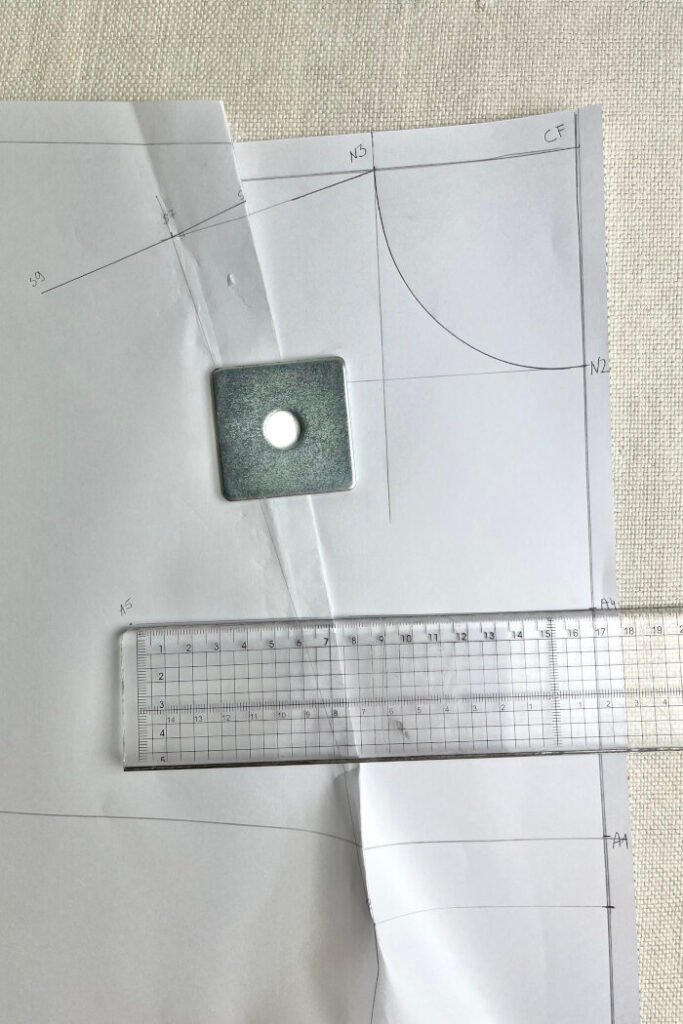
Square down from A5 to armhole line. Mark this point as A6.
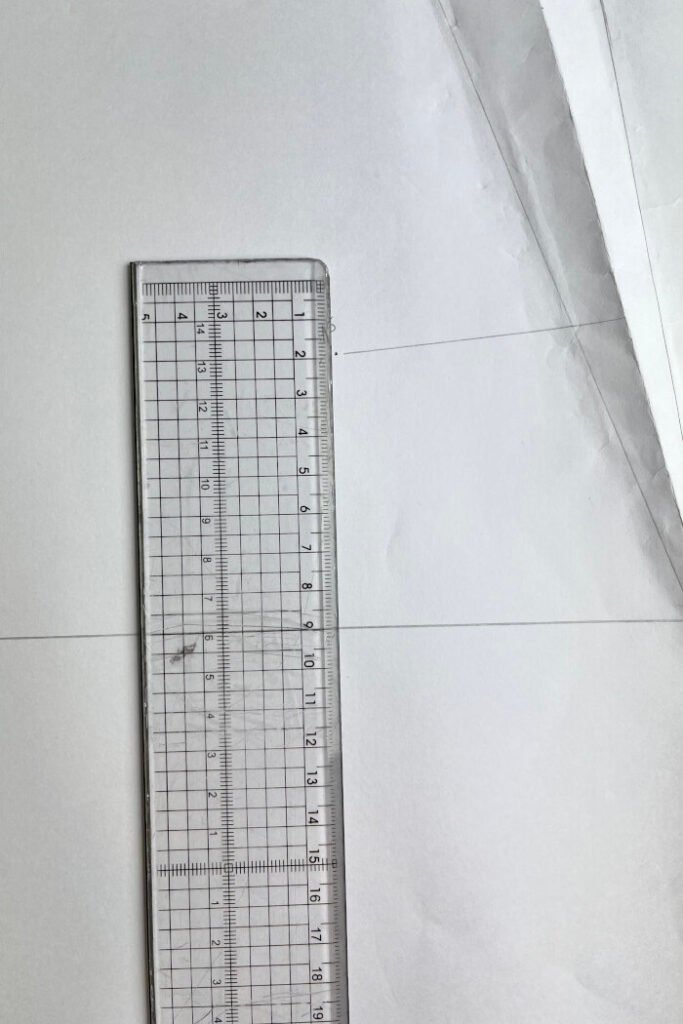
Now we need to find a side seam point on the armhole line. To do that, measure the distance between A2 and A6 and find a middle point, by dividing this measurement in half. Mark it as A7.
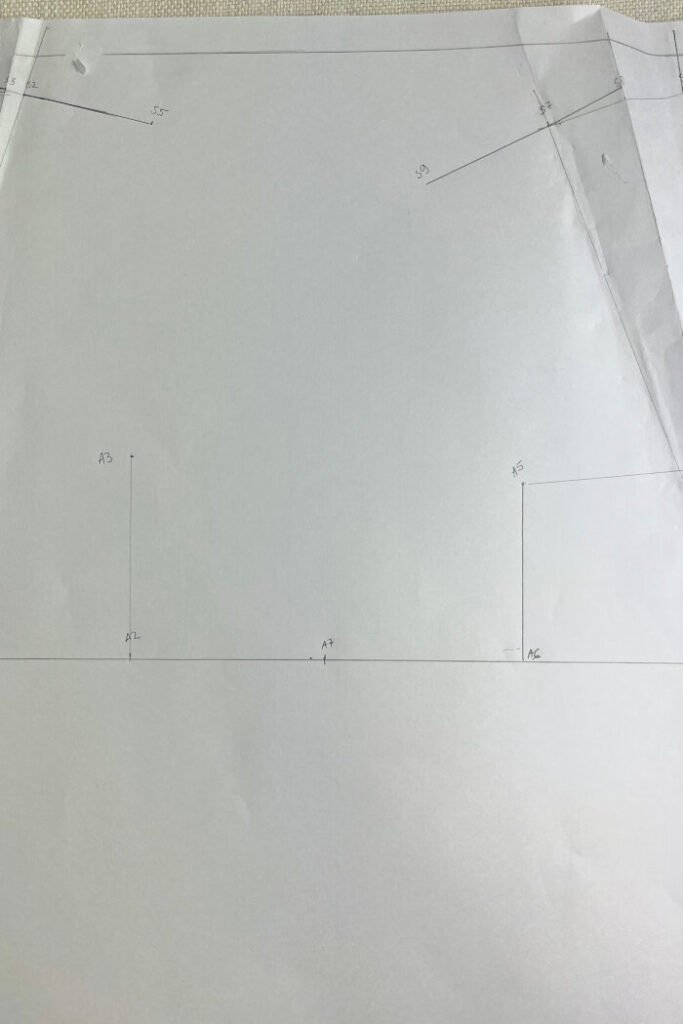
Step 8: Draw the Bodice Armhole Curves
With all the required points in place you are ready to draw the armhole curves.
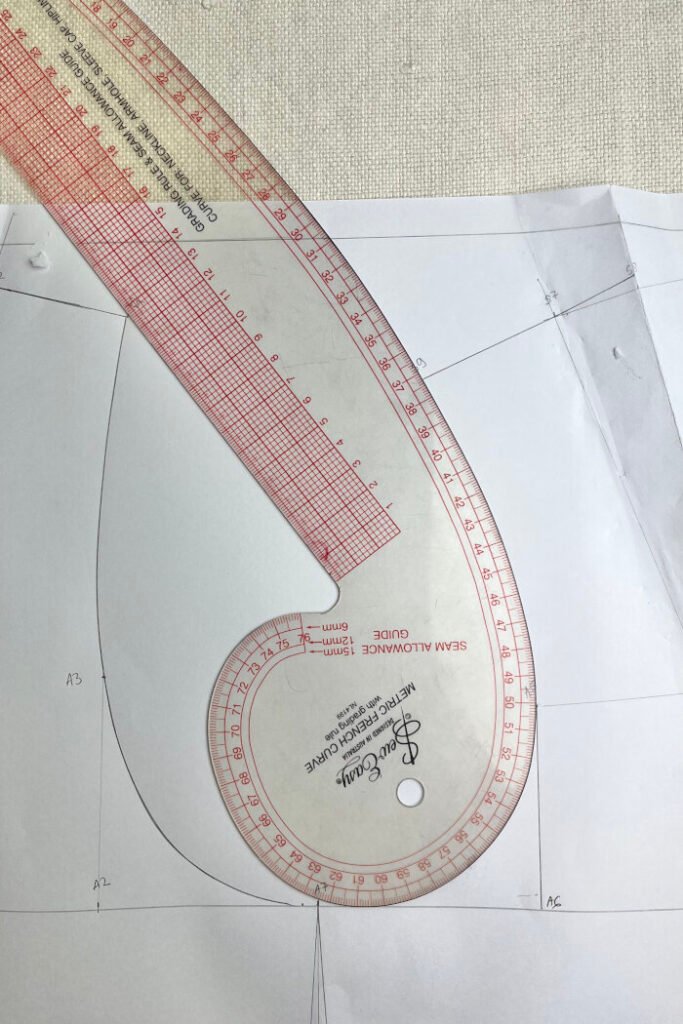
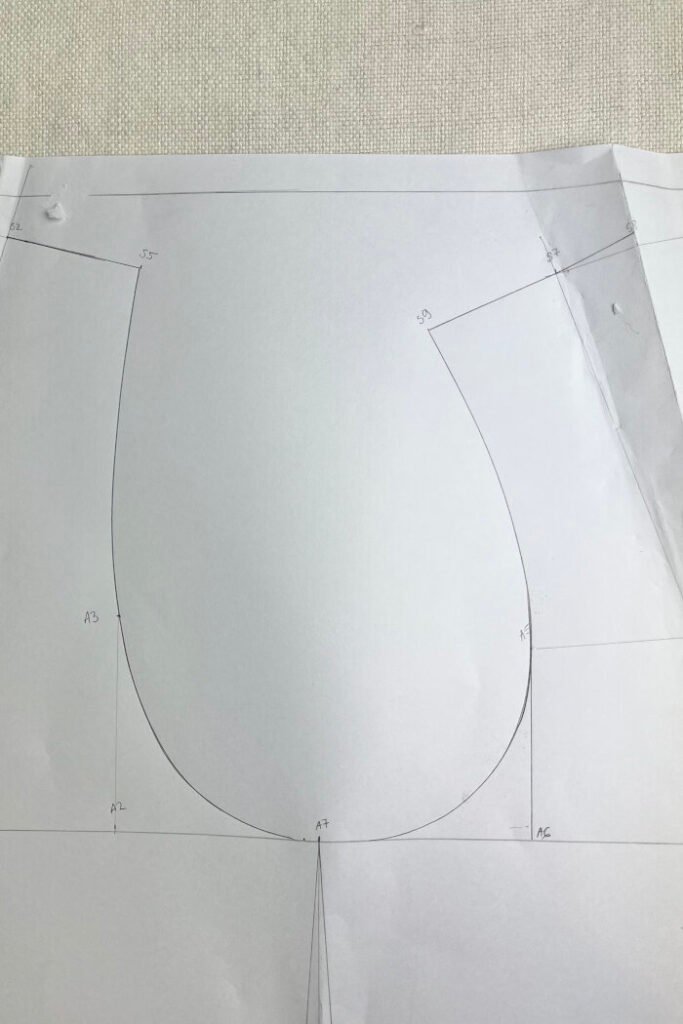
Place the French curve on the back armhole line, meeting the points S3, A3 and A7. Then draw the curve, keeping the angle at S3 and A7 as straight as possible. Do not worry if it is a little curved, you can correct it later when cutting out the pattern. I will explain and show more on my next blog post on how to do that.
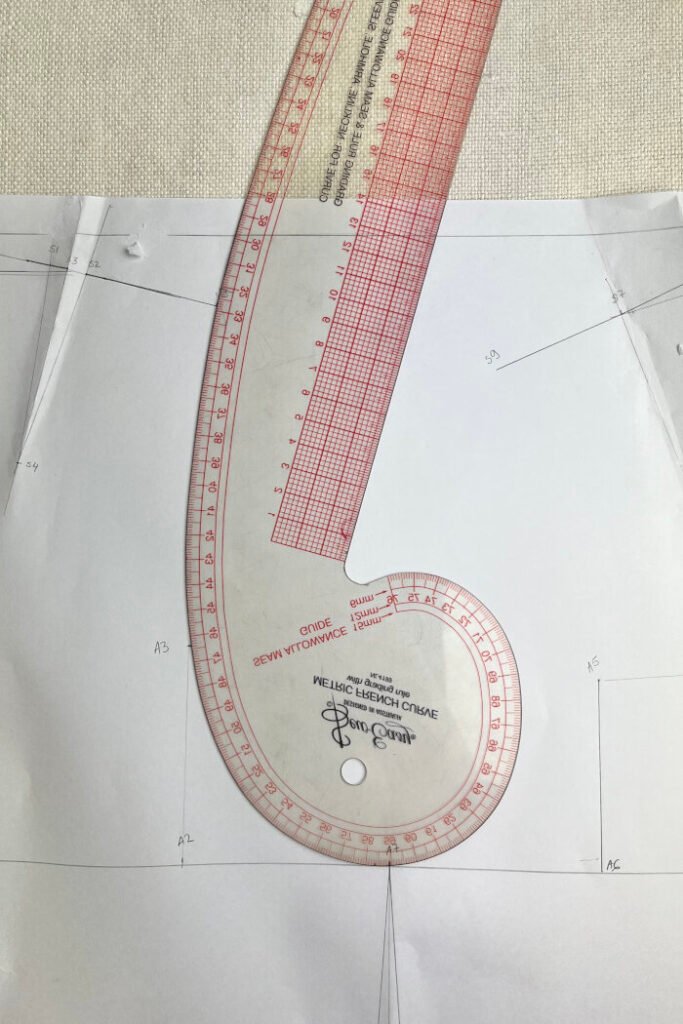
Repeat the same on the front piece, by connecting S9, A5 and A7 with a curved line, using the French curve.
Step 9: Calculate Waist Shaping for the Bodice Block
Now that you have fitted the custom bodice block to your bust in the above steps, you need to fit the waist next. To do that, let’s work out the dart widths. With the same wearing ease for the waist and the bust, the total waist shaping (the amount that we have to remove from the waistline on the block as it stands) is half the difference between bust and waste circumferences. My bust is 104 cm and my waist is 89cm, so the waist shaping is 7.5cm (calculated as (104-89)/2).
To work out the required widths for each of the dart at the back, side and front, divide the total shaping with 3. If the resulting number is not a round number, round up the front dart width to the next natural number and round down the back dart to the nearest natural number. The side seam would have the reminder.
So, let’s work out my options for 7.5 cm waist shaping. If this amount is divided equally, it would give 2.5 cm for each dart. Instead, I split the measurement with the rounding suggestion above so that the front dart has 3 cm, back dart 2 cm and side seam remains 2.5cm. If my waist shaping was 7, that would give me 2.3 cm when divided by 3. Instead, I would have front rouded up to 3 cm, back rounded down to 2 cm and the side seam would be the reminder, 2 cm. By increasing the front dart and reducing the back dart you are increasing the space for the bust.
When you have decided on how you are splitting the waist shaping allowance, let’s make those darts!
Step 10: Draft the Back Waist Dart
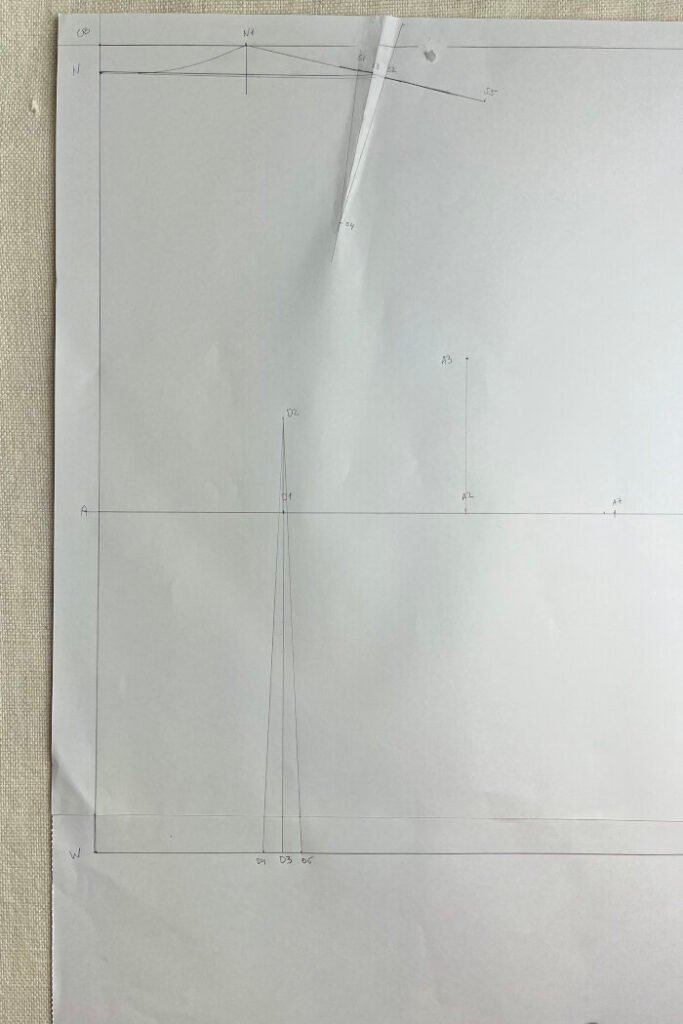
Mark a point D1 that is located half way between A to A2.
Square up 5 cm from point D1. Mark this point as D2. Square down to waistline, and mark the point at the crossing with the waistline as D3.
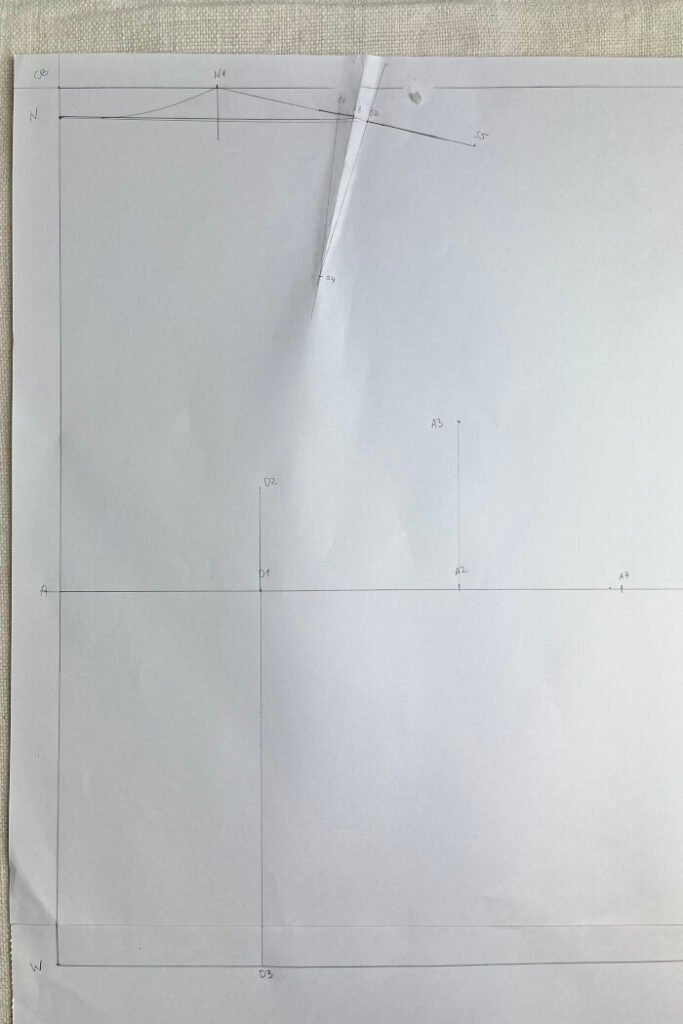
Place points D4 and D5 that are half back darts width each to either side of D3 (you worked out the dart widths in the previous step). My back dart is 2 cm, so the measurement between D4 and D3 is 1 cm, and the same between D3 and D5. Connect D4 and D5 with D2, to create the dart.
Step 11: Draft the Side Waist Dart
The side seams are technically darts, you will see why in this step.
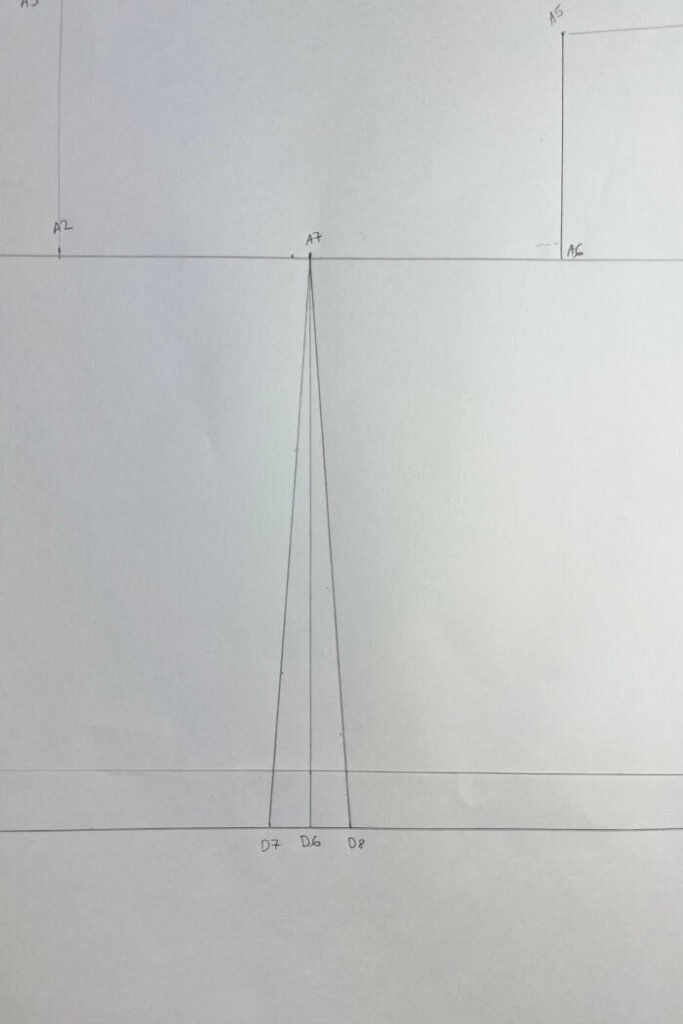
Square down from A7 to waistline. Mark the point crossing the waistline as D6.

Mark points D7 and D8 on either side of D6 that are half width of the side dart each (the distance between D7 and D8 is the full width of the back dart allowance). Connect D7 and D8 with A7 with straight lines to create the dart.
Step 12: Draft the Front Waist Dart and Waistline
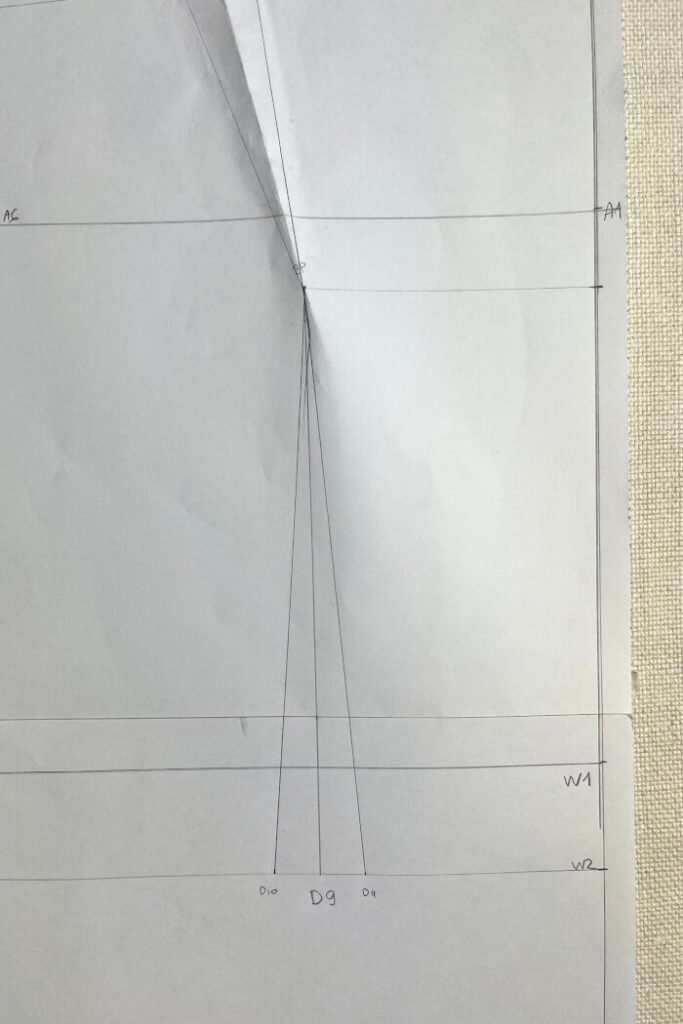
Next, you will need to drop the front waistline. To do that, calculate the difference between your front body length and the back body length. Mark this difference on the line pattern, by extending the CF – W1 line. Name the end point as W2.
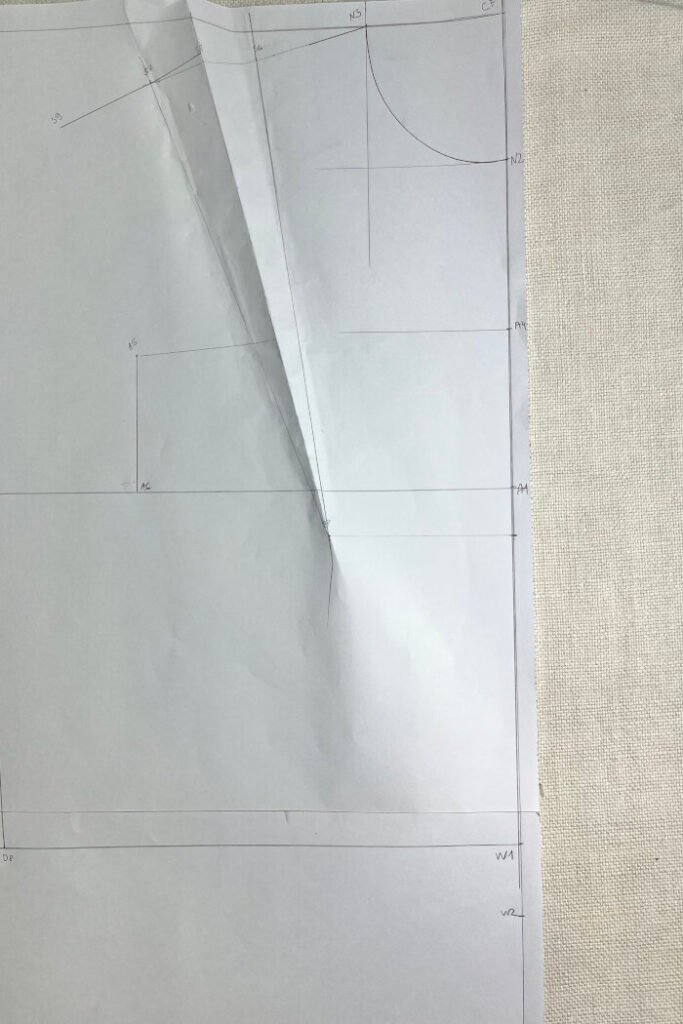
Then square across from W2 some 15 cm to the left. This is going to be your new waistline on the front bodice block.
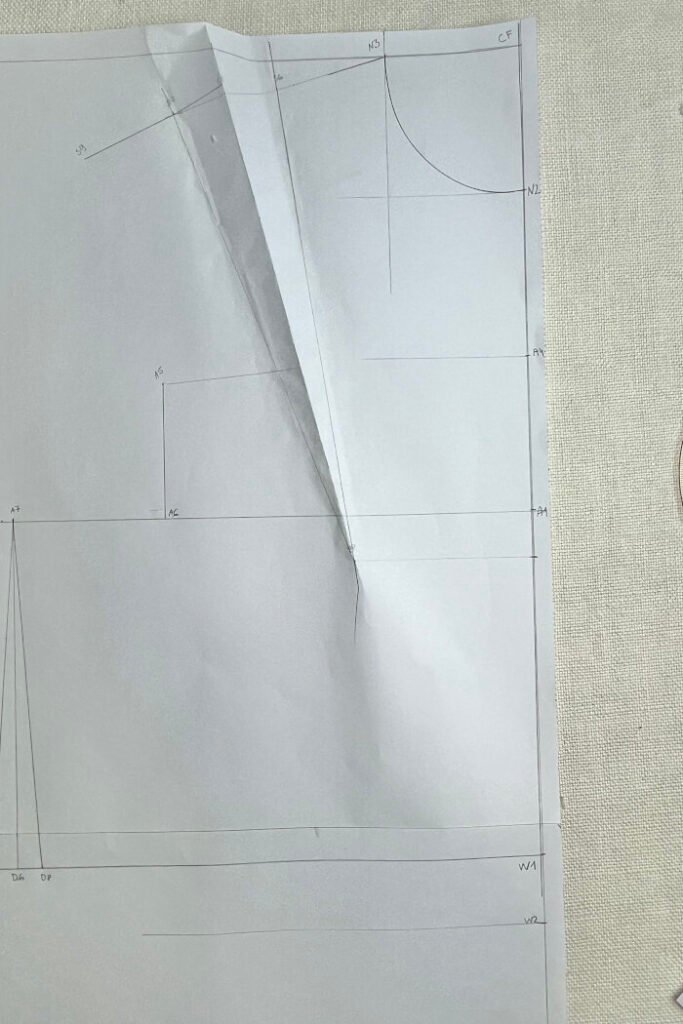
Next, square down from the bust point BP to the new waistline. Mark the point at the crossing as D9. Mark points D10 and D11 on either side of D9 that are half width of the side dart each (the distance between D10 and D11 is the full width of the front dart allowance). Connect D10 and D11 with BP with straight lines to create the dart.
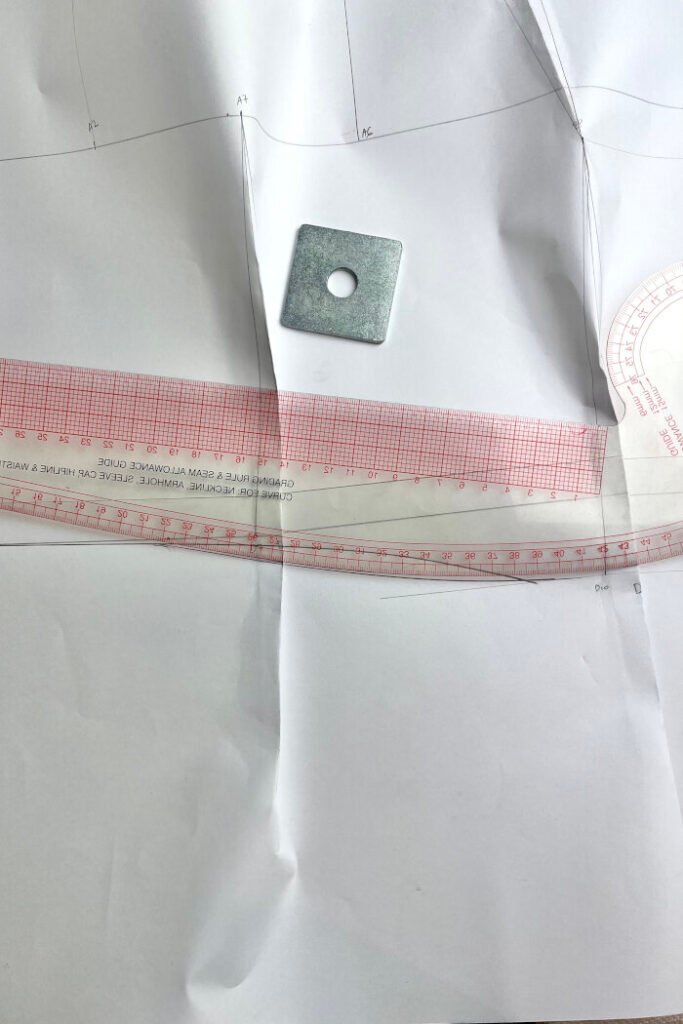
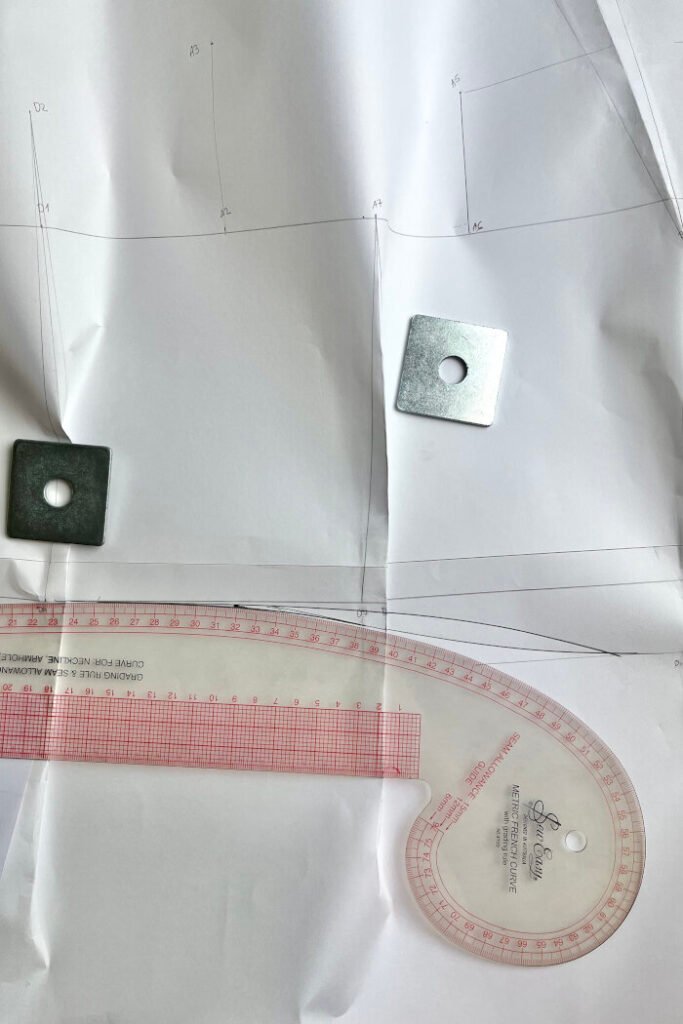
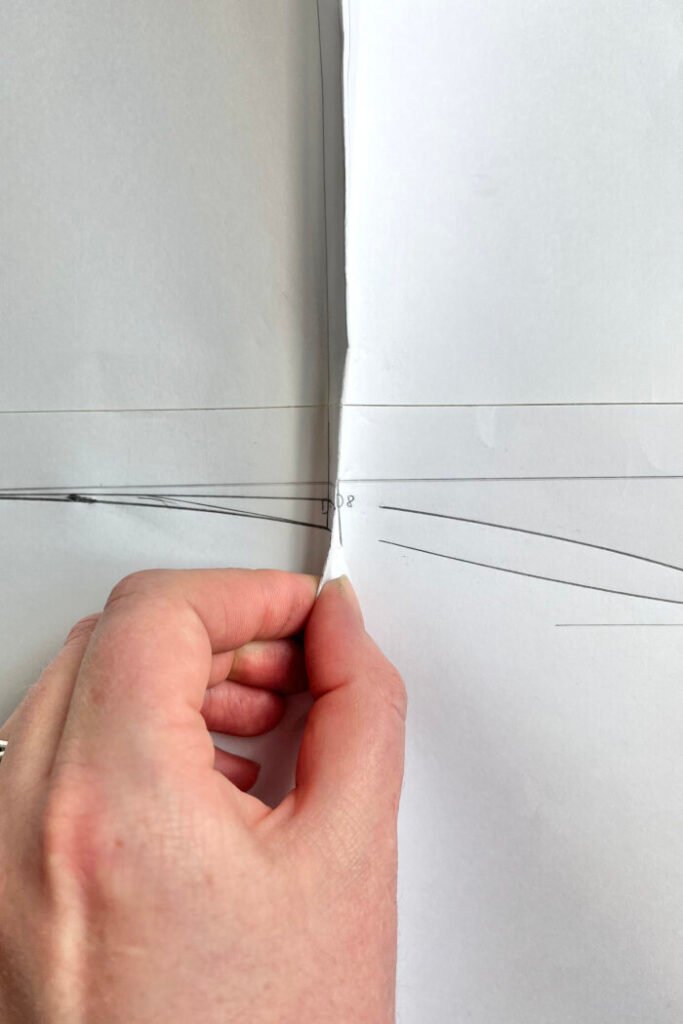
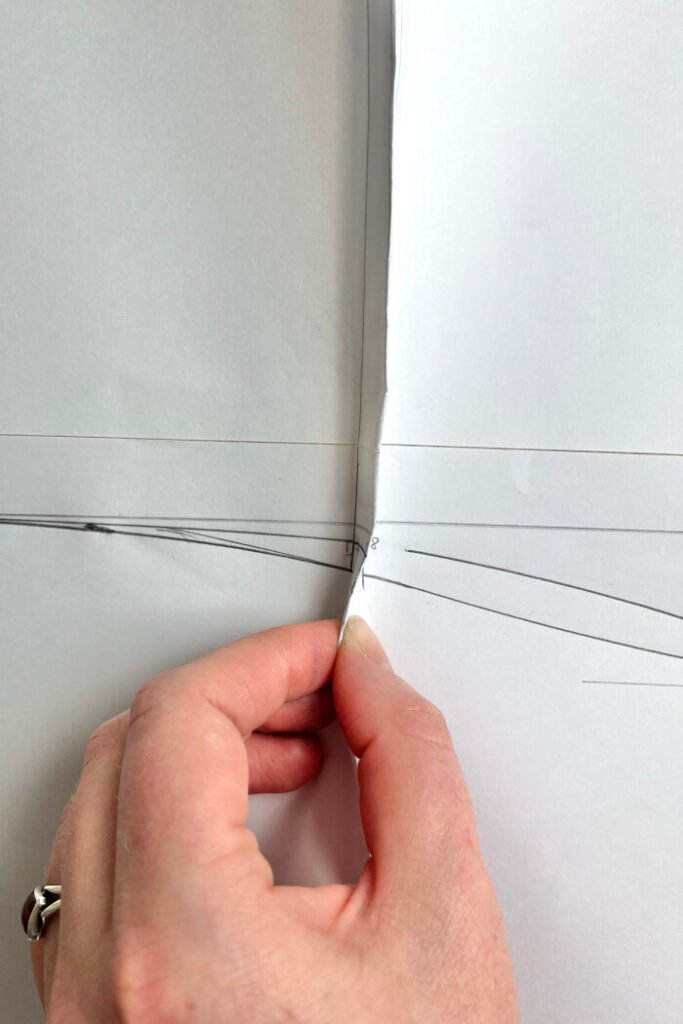
Then, fold all the waist darts as if sewn together and smooth the waistline curve with French curve. You may need to flip the French curve to the other side if the line does not appear as a smooth curve. Then open up all the dots and connect the new waistline with the darts.
Common Bodice Block Drafting Mistakes to Avoid
These are common bodice block drafting mistakes that you should avoid:
- Adding too much wearing ease, resulting in a loose or shapeless block
- Incorrect bust point placement, which affects dart accuracy
- Drawing armholes before closing shoulder or bust darts
- Ignoring the front waist length difference when shaping the waistline
- Skipping dart closure when smoothing the waistline
Frequently Asked Questions
Conclusions
You now have a close-fitting, made-to-measure bodice block drafted to your own body measurements. This bodice sloper can be used as the foundation for fitted dresses, blouses, and future pattern adaptations.
In the next tutorial, I show how to make final adjustments before using it for garment design.
My Youtube video may give you more explanation on how to create the close fitting bodice block.