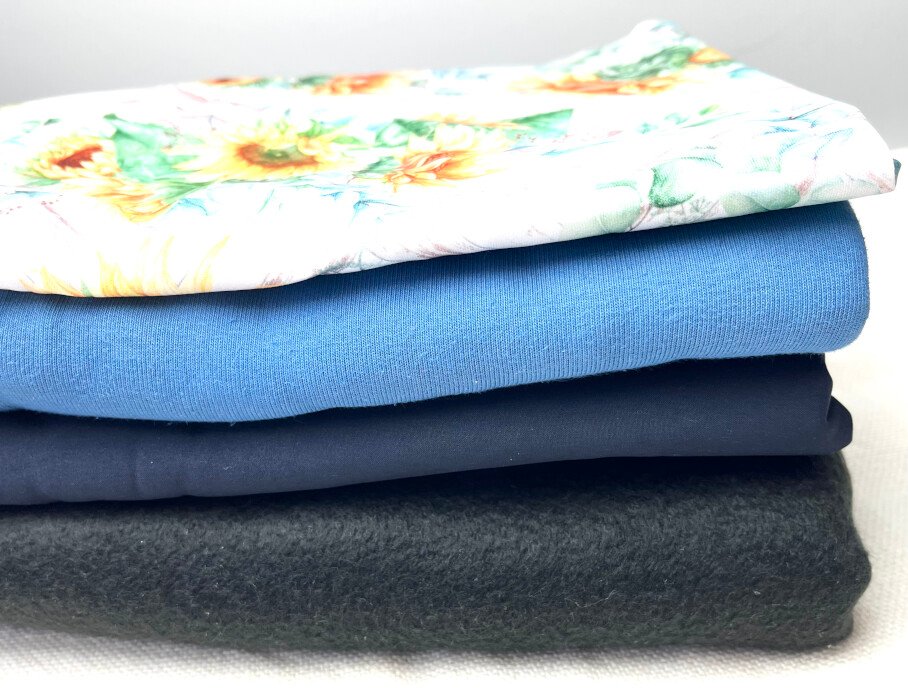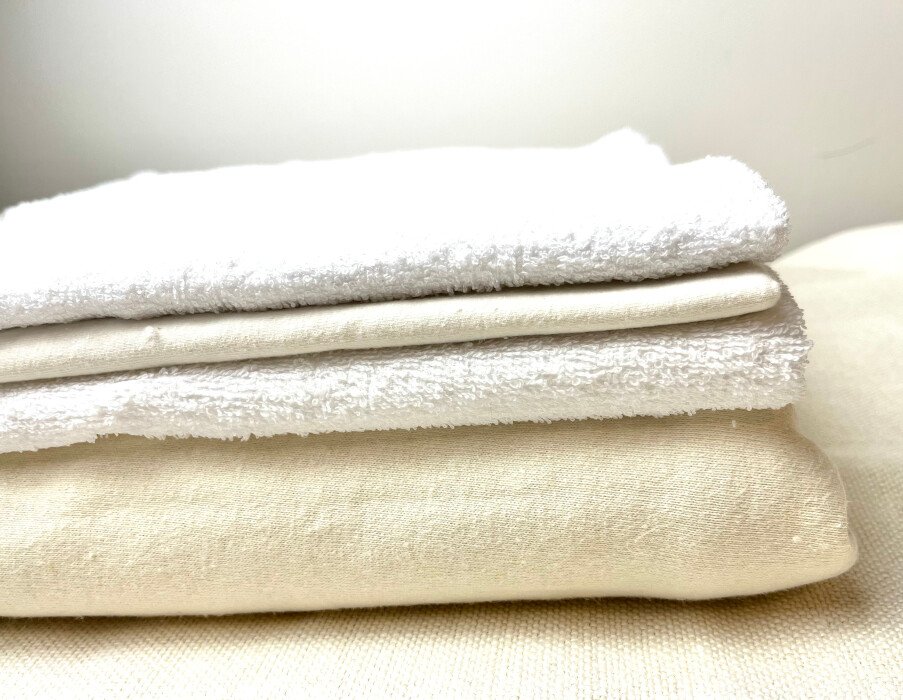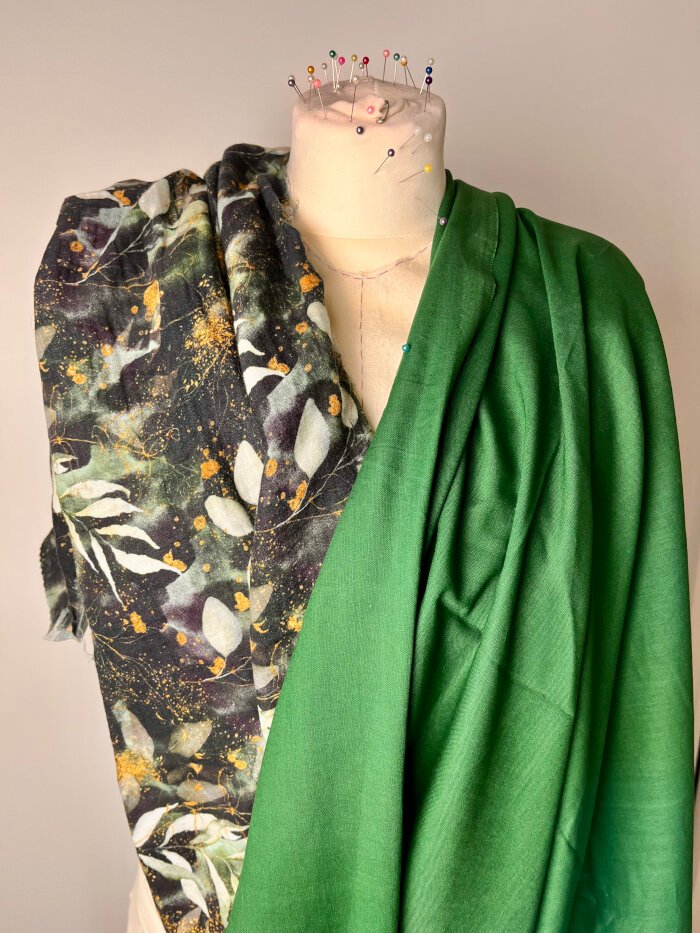
These days I only buy and use natural fibres for garment sewing. In the past, especially at the start of my sewing journey, I bought the cheapest fabric available in a shade of my preference. However, as I was getting more experience and my priorities shifted to reducing the impact on the environment. At some point, the concern for the speed at which the fabric breaks down when discarded at the end of its useful life, became a priority. Of course, I am turning my clothes into something else when they become threadbare before opting to throw into the bin. But at some point, it will end up in the landfill.
To reduce the chance of the discarded garments lingering around longer than they have been on my back, I switched to the natural fibres. In the blog post, I will discuss the best fabrics for dressmaking, natural fabric types, their applications and features, specifically concentrating on sustainable sewing fabrics. The post should help you to be more intentional when buying the fabric for your next project.
Why Choose Natural Fibres for Garment Sewing
The first and in my opinion the greatest benefit of using natural fibres for garment sewing is that most of these fibres came from earth in least processed ways, compared to synthetic equivalents. There are no plastics involved and natural fibres inherently do not contain PFAS forever chemicals). European Environment Agency has highlighted that
Textiles are one of the biggest sources of PFAS pollution in Europe. PFAS are used in textile products to provide properties such as water repellence, oil repellence, stain resistance, durability and thermal stability.
So, as long as you are not specifically looking for these features in natural fibres for garment sewing, then you are safe where PFAS are considered. You can read more on PFAS impact on the human health in the EEA press release.
Secondly, the natural fibres break down quicker when disposed. The review of Biodegradability of Cellulose Fibers, Films, and Particles: A Review by Martin A. Hubbe et al goes into a lot more detail on the biodegradability of natural fibres, but the key finding is that
plastics show much lower rates of biodegradation, or even no measurable biodegradation under conditions that lead to substantial degradation of MCC [Microcrystalline Cellulose] and other cellulosic materials.
Thirdly, natural fibres are breathable and will keep you cool in hot weather. Depending on the type and weight of the sustainable sewing fabric selected, the natural fibres will also keep you warm in cold weather without making you feel sweaty.
Lastly, the fabric made of natural fibres is a sustainable sewing material. The plant derived materials regenerate very quickly. Hemp, linen and cotton require just one season to grow. Wool from sheep is trimmed yearly, without harming the animal, especially where organic variety is selected.
Let’s dive deeper into each natural fibre.
Cotton – Versatile & Beginner-Friendly
The most popular natural fibres for garment sewing , especially for beginners are cotton. And for a good reason.
How Cotton Is Made
Cotton fabric is made from a cotton plant. After the cotton plant flowers, the flower withers and turned into a cotton boll. The dry cotton bolls are then harvested, cleaned and broken down to be spun into a yarn. From there the yarn is either knitted or woven into a fabric. It takes roughly a half a year to grow cotton from seed to be harvested. You can read the full story of the cotton growing and production on National Cotton Council of America website.
Types & Fabric Weights
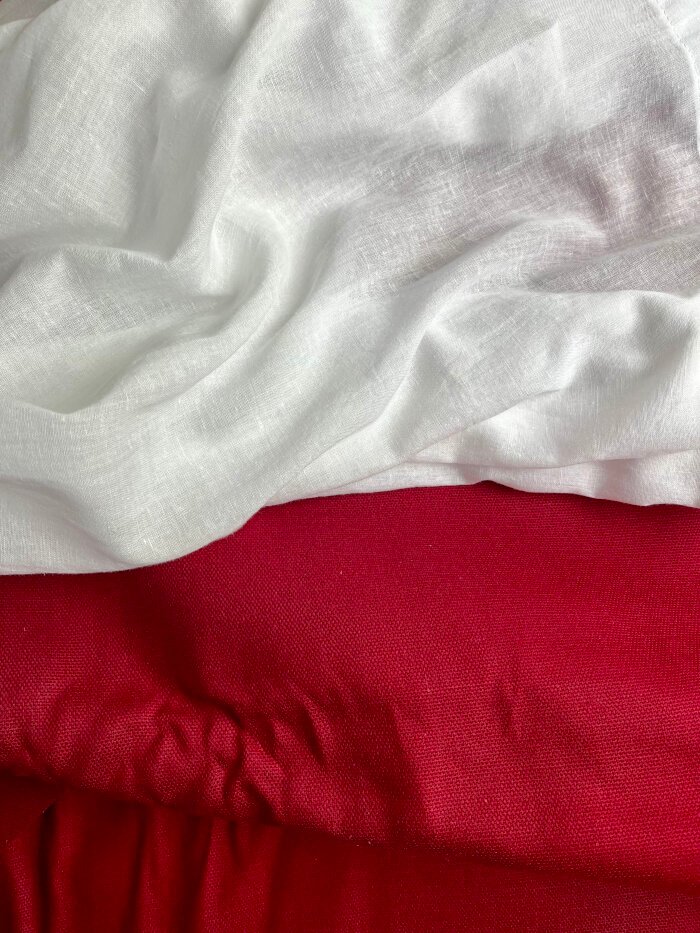
There are multiple types and weights of cotton fabrics available. To list a few, starting from lightweight to heavy weight woven cotton:
- Muslin, voile and double gauze are the lightest fabrics, that drapes softly and are see through.
- Lawn and poplin are still light but with more structure and slightly stiffer.
- Cotton satin fabric is soft and pliable fabric with a light sheen on one side. For a very long time this was my favourite type of cotton fabric.
- Craft cotton and fabrics listed as woven or plain cotton are medium weight, that holds shape well and therfore the most suitable for quilting and beginner seamstresses. The very first garments that I made where from plain cotton.
- Cotton canvas and cotton drill fabric are stiff, heavy weight fabric.
- Denim is the heaviest type of cotton fabric.
Knitted cotton fabrics include jersey, French Terry and combed French Terry or sweatshirt fabric.
When to Use Cotton in Garments
You can make pretty much any garment or home decor from either of the woven cotton fabrics. If you aim for soft, lightweight garment with a good drape, such as a blouse or summer dress, lightweight muslin, voile, double gauze and even cotton satin are your best choice. For more structured garments, such as trousers, shift dresses and skirt, use cotton drill, denim or plain cotton.
Plain cotton fabric is most versatile, reasonably durable compared to other types and can make any garment or home decor.
Knitted cotton fabrics are great for clothes that require some stretch and figure hugging abilities. For underwear, t-shirts, leggings and socks, use cotton jersey. Hoodies are best made out of French Terry or sweatshirt.
Knitted cotton material is also a perfect choice for children’s wear as it is quite durable. It can take the stretches that is required by active children, without limiting their freedom.
Pros and cons
Cotton is very breathable material, that is suitable for most seasons. It dries fairly quickly, reducing a chance of dreaded mould development in colder and wetter climates, such as UK, when the clothes are dried inside.
Cotton is very easy to sew with and for that reason is great choice both for beginner and seasoned seamstress. Some 90% of my fabric stash is comprised of cotton fabrics.
The negatives of cotton fabric includes that is wrinkles and shrinks, especially after the first wash. However, knitted cotton will not have the same level or wrinkling and shrinkage as woven kinds.
There are also environmental negatives in the cotton fabric production process, such as the use of water and pesticide to grow the plant. This depends on where the fabric was produced and what manufacturing process was followed. If the production process is a concern, I would recommend opting for organic cotton fabric. It will have a higher pricing point but at least should put your mind at ease that the water and people involved in the production process have not suffered any ill health.
Linen and Hemp – Crisp, Cool & Long-Lasting
How Linen and Hemp Fabric Is Made
Linen is made from a flax and hemp is made from Cannabis sativa plant’s stalks through a process of retting and spinning. In contrast to cotton, it is the stalks of the linen and hemp that are turned into a yarn. Linen is one of the oldest fabric and can be traced back to many civilisations across the world. The origins of hemp also dates back to BC.
Types & Fabric Weights
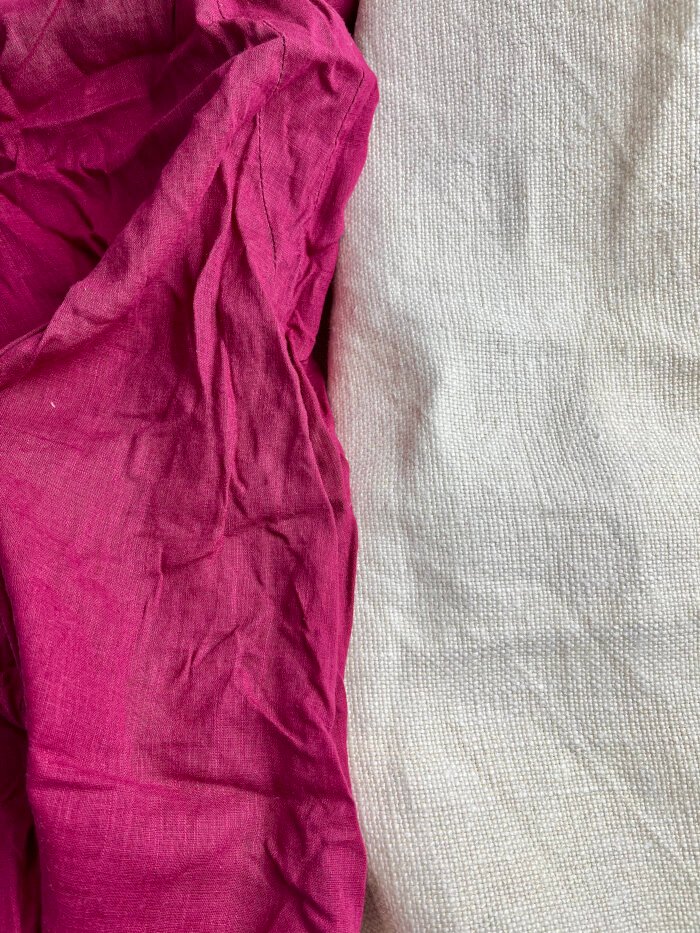
You will find linen in mostly woven fabrics while hemp more frequently appears as a knitted fabric. Woven hemp is almost indistinguishable from linen as both have very similar crisp and cool feel. However, hemp is a lot stronger than linen.
Most fabric stores, however, will mostly carry just linen fabric as it is more widespread, easier to come by and the production process is automated. Furthermore, if you do manage to find a store that offers both, you will soon realise that linen will come in different colour shades while hemp is most likely to be just plain natural shade. That s not a bad thing, hemp can be easily dyed at home and the colour will hold very well as hemp is more absorbent than linen or cotton.
Nevertheless, both materials are offered in lighter and heavier weight, mostly marketed as light, medium or heavy linen, hemp canvas, hemp jersey and blended with other (preferably natural) fibres.
Best Uses for Linen and Hemp Clothing
Both linen and hemp will make wonderful summer clothes – summer dressed, skirts, shirts and jackets. They will have their distinguishable crisp, wrinkly texture that you cannot ver quite pressed out. The two are and will stay evergreen materials so you should feel confident investing in these sustainable fabrics for sewing.
Pros and cons
Linen and hemp are most sustainable and environmentally friendly fabrics for sewing as the production process does not use pesticides when produced in Europe. In fact,
70% of all flax is grown in European Union. (Victoria and Albert Museum)
Both, the linen and hemp fabrics are breathable and will keep you cool in scorching weather. The pair is also resistant to mildew and will keep for a long time.
The negatives include the tendency to wrinkle and hold onto them. Linen does not stretch so you will not find a knit fabric made of linen. Both are pricier than cotton alternatives due to lower production volumes, with hemp being the most pricier option. There are also limited prints and colours available. If your heart is set on using hemp, you may need to consider creative hand dyeing to create interesting fabric for garment sewing.
While most places online characterise hemp as soft fabric, my experience has been somewhat different. I find it a little “grabby” and hard but it would not deter me from keeping it in my fabric stash.
Wool – Warm, Resilient & Naturally Elastic
How Wool Is Made
Wool is an animal derived natural fibre that is sheered from wool bearing animal (mostly sheep) once or several times a year. The wool then is washed to remove the dirt and lanolin, cleaned from any stray hay, thighs or grass and sorted, before spinning into the yarn. Yarn is then woven or knitted into a fabric.
Types & Fabric Weights
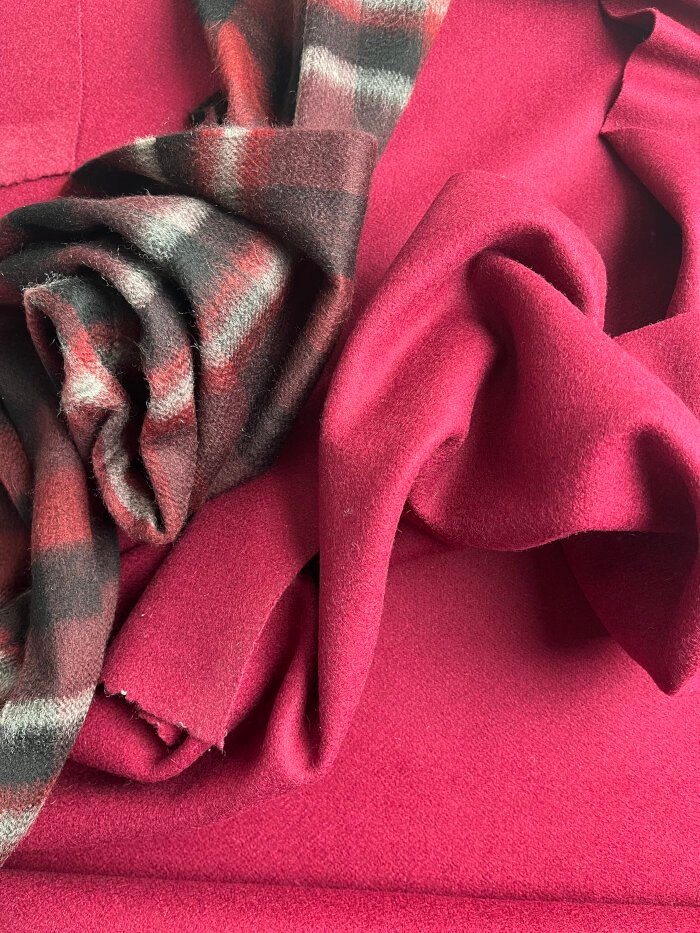
Wool is going to be heavier than the plant based fibres but even in this category you all find lighter weight merino knits. The medium weight range includes suiting wool and wool crepe with boiled wood falling in the heaviest of the medium range. Coating wools are the heavy weight with melton being the heaviest garment fabric.
When to Use Wool in Garments
The first thing that springs to my mind when I think of wool is wool coats. I have made wool coats from boiled wool and have melton put aside for another winter coat once I get around drafting a classic coat pattern.
Boiled wool is also superb for professional looking skirts and jackets. I have made a tailored sleeveless shift dress from Haris Tweed. While I have not ventured into sewing garments from merino wool, merino knits are quite luxurious fabric for activewear. Any suiting fabric will make very good trousers, dresses and skirts.
Wool fabrics lends itself quite well to steam manuipulations, however be careful when ironing it as to enthusiastic approach may leave a shiny surface! I would recommend to use a pressing cloth or just a steam. As wool fabric is one of the priciest, you do not want to ruin it before even wearing it.
Pros & Cons
Wool is quite pliable and insulating fabric, while remaining breathable. In my opinion, the biggest benefit of using the wool is that you do not need to wash it regularly. It is possible to get even a year’s worth of regular wear before requiring the garment to be laundered. This is due to the fact that wool is antibacterial and it is one of the reason why it is very popular in reusable nappy world.
On the flip side, wool fibres will shrink and/ or felt if mishandled in the washing routine. My advice is to always handwash garments made out of wool in summer, when the weather is hot and dry to air dray it while the wool garment is laid flat. When handwashing, only use gentle natural soap. Essentially, when it comes to laundry, you need to treat wool the same way as your own hair.
Another negative of the wool is that it can be itchy. Funnily enough, I found wool to be itchier when I was a child but not so much now that I have grown up.
The last, but not the least negative side of the wool is the controversy around shearing methods. PETA paints a very dire picture of the wool industry that may make your skin crawl, however there have been several pushbacks to their claims. RSPCA has listed their findings and recommendations on animal welfare with shearing that is not quite as aggressive. Either way, I would urge you to be mindful when procuring wool fabric. And, if possible, look for locally manufactured wool that follows rules that appeal to your consciousness. There are also various certifications that ensures that the fabric made with their practice ensures anima welfare,. The certifications to look out for include Responsible Wool Standard (RWS), ZQ Merino, OEKO-Tex.
Silk – Luxurious, Lightweight & Naturally Strong
How Silk Is Made
Silk comes from silkworm cocoons. The cocoons are then unwound and spun into a yarn to be weaved into a fabric.
Silk Weaves & Fabric Types
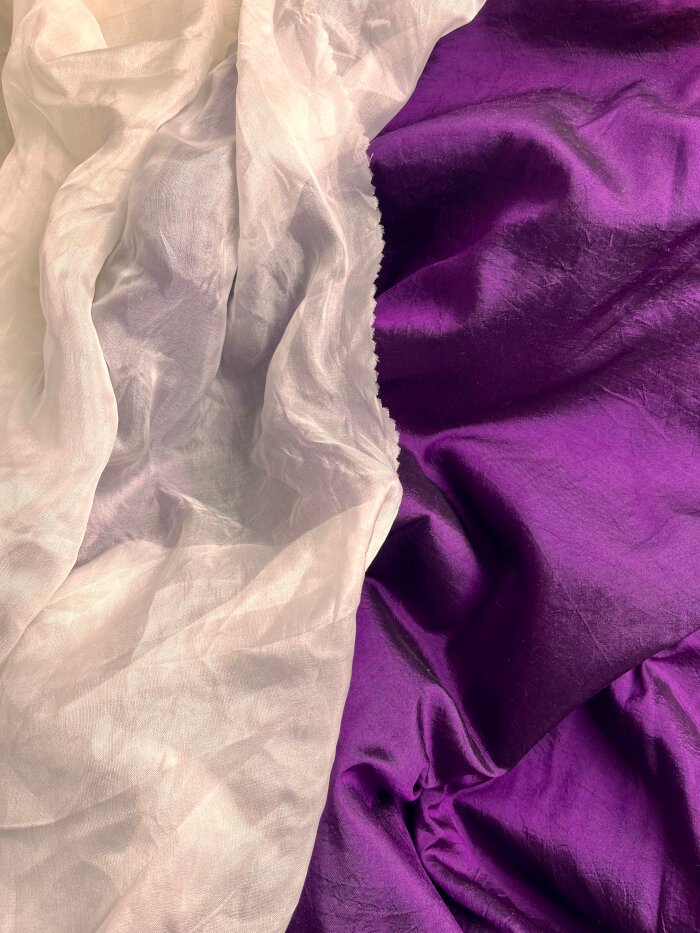
There are many silk types that you may come across, in various weights and properties.
- light weight fabrics include:
- silk organza (fantastic option for interlining)
- georgetta
- chiffon
- medium weight:
- satin
- charmeuse
- crepe de chine
- taffeta
- habotai
- heavy weight:
- dupioni
- raw silk
Best Uses for Silk Garments
As the most precious of the fabric world, the silk is mostly used for special occasion wear (think wedding dresses). Accidentally, I actually did not make a wedding dress from silk for the reason that silk is so pricey and I did not want to make an expensive dress that I would only wear for couple of hours once in my lifetime. It felt too wasteful. I did, however, made a silk dress for my mother from a medium weight silk satin.
Lightweight silk, however, can make a great blouse and lingerie that can be worn more frequently than wedding or special occasion dress without making you feel wasteful. Either of the silk weights can make a wonderful silk tie or pocket square.
Pros & Cons
Silk is superbly soft fabric with exceptional drape. It is a surprisingly strong fabric while remaining quite thin. There are so many synthetic fabrics that try to imitate the sheen of the silk and failing to reach that soft, natural shine.
The negative sides include the high price point. Silk requires a delicate care and should be hand washed very gently. I never opt for chemical dry cleaning as that negates the reason why I would make a garment form natural fibres in the first place.
Then there is a matter of life of the worm that lived in the silk cocoon. The traditional methods kill the worm by heating or boiling the cocoon, but there are more ethical methods. If that is a concern for you, I would recomend to seek Ahimsa / peace silk with organic credentials.
Rayon – Soft, Breathable & Drapey Cellulosics
How is Rayon Made
Rayon is made from cellulose (trees and bamboo) that gets transformed into a fabric through a heavily chemical process. While the core ingredient is natural, the end material cannot be classes as such and is refered as synthetic. However, due to its degradability, I am including rayon in this list.
Fabric Types & Weights
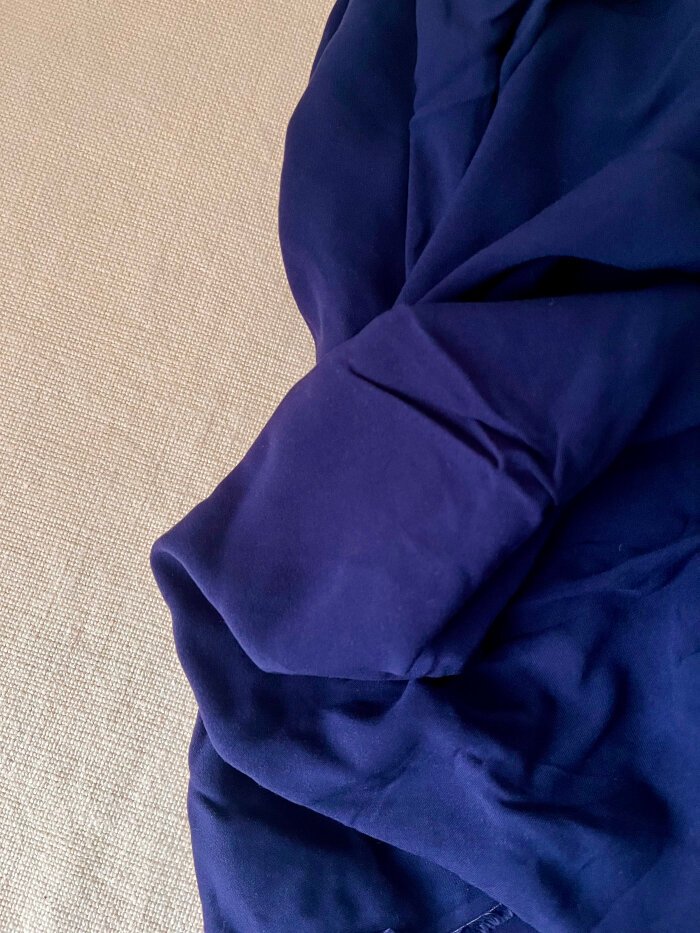
There are essentially tree types of rayon – viscose, modal (Tencel) and lyocell. Viscose is the oldest of the three with lyocell the newest. Most of the fabrics that I have across are lightweight and floaty. They tend to be poplin, twill, jersey knit and viscose towelling.
When to Use Rayon Fabrics
Rayon makes a wonderfully floaty summer dresses and all season blouses. Viscose or bamboo towelling or knit jersey are popular choices for reusable absorbent items, such as cloth sanitary pads and reusable cloth nappies. The viscose poplin makes a dreamily soft scarf and skirts with lots of movement (I would recommend to line the latter as the material is quite see through).
Pros & Cons
Rayon is a very soft and drapey fabric with a gentle feel against the skin. It was created as an alternative to silk and it is very obvious why as both share many characteristics.
However, the manufacturing process is not environmentally friendly as there is a lengthy transformative process that uses caustic soda (key component of soaps) and other chemicals. Despite it, I do like rayon as at the end of the day, it degrades rapidly rather than float about some 200 years like polyester. If you are concerned about the production waste, then lyocell is the best option as the chemicals and water in the production system gets reused rather than wasted.
The other negative is that rayon use trees as a source material. The birch trees take a while to regenerate but bamboo is a quick growing and a lot more sustainable. Unfortunately, not every fabric will specify what cellulose was used in the production so your guess is as good as mine.
Conclusions
Well, firstly, congratulations for getting to the end of this rather lengthy blog post about natural fibres for garment sewing. I could have delved deeper into each subject but I was risking you falling asleep in the first half. Let me know in comments if you wanted me to write a more extensive blog post on either of the sustainable fabrics or natural fibres.
There are pros and cons of each of the materials I mentioned . While there are no truly eco friendly textiles out there, you will need to outweight the importance of each criteria yourself. Be it the speed of degradation, use of dyes or chemicals in the production process or how ethical the manufacturers are to the animals and their workforce. Life is quite challenging when one turns to eco and sustainable choices. And short of returning to growing your own flax, your decision will bear various degrees of impact on the environment whether you make or don’t make your own cloths.