To make sewing pattern blocks that fits perfectly, it is important to take accurate body measurements. I started pattern drafting in 2018 and have done and redone the basic blocks a few times, either to address the fit issues, changes in the body or inaccurate measurements. What I learnt over the years is that it matters how you prepare before the measurements and that you keep precise reference points. So, in this post I will endeavour to address all the lessons that I have learnt on how to take accurate body measurements.
Why Accurate Body Measurements Matter
Pattern drafting is essentially folding a two dimensional fabric or paper on a three dimensional form of a body or mannequin. It is easier done on the paper for your own personal sewing blocks and patterns. There are several standard steps and stages that you have to go through to create well fitted garments. And you need to know what to carve out of a rectangle to create a desired outcome and form.
And it all starts with measurements. More accurate the measurements are, better the finished item will fit you and you will not waste material and time recreating the sewing pattern blocks.
What You’ll Need Before You Start making Accurate Body Measurements
- Measuring tape
- Mirror
- Elastic band long enough to tie around your waste
- Pen and paper
- Chalk or soap (or erasable pen)
- Kohl eyeliner or soft eyebrow pencil (though you can use gel pen)
- Hair band
- Necklace.
How to Prepare Your Body for Measuring
You need to wear close fitting clothes, such as tank top and leggings or shorts. Make sure you are wearing your usual underwear that supports you in the right places. Believe me, I have made mistakes before where I totally did not account for the changes my body will go through after 3+ years of breastfeeding.
Tie your hair back, to not to interfere with the accurate body measuring process. Put on a necklace that will serve as a reference point.
Key Tips for Measuring Yourself Correctly for Accurate Body Measurements
Try to stand relaxed as you would normally be when wearing your clothes. This way you will note the subtle changes in measurements and will ensure that you are always starting from the same reference point. For this reason, I would also recommend to make the measurements in the same session so as not to forget where was your last point of reference.
Step-by-Step: How to Take Each Body Measurement
I have given a free handy downloadable reference guide at the end go the post that will help you keep on track on what you have already measured and what is still outstanding. I would recommend to print it out and place near yourself when you take the measurements.
Horizontal body measurements
You will start with horizontal body measurements. Many of them contain important reference points that will be needed when you progress to the the other sections.
- Head circumference – This measurement is required for garments that you are going to pull over your head. It will not appear in any bodice block drawing process but you have to keep in mind that if you are making a block for a woven fabric. The woven fabric will not stretch and you will either need to make the neckline deeper or bigger or add a closure, such as button or hooks. To take the measurement, place the measuring tape around the head, finding a spot where it gives you the largest reading.
- Neck circumference – measure loosely around the neck, along the lines of the necklace at the back and over the protruding collar bones at the front. You do not need the measuring tape to fit snuggly as the garment might be very uncomfortable if the neck is measured too close.
- Shoulder length – You need to make some reference points before you measure your shoulder points. With a kohl eyeliner, mark a spot on the shoulder at the point where it meets the necklace. This is going to be a shoulder neck point (SNP). Use a mirror to position this spot somewhere in the middle rather than towards a back or front. At the end of the shoulder, find a shoulder bone or go with what appears reasonable for the end of the shoulder length. Mark a spot with an eyeliner that is also well balanced. Measure the distance between these points to take the reading for the shoulder length. In this Youtube video I try to explain further how to take the shoulder measurement.
- Front across shoulders – measure between the matching shoulder end points, parallel to the floor. I do don’t tend to use this measurement in my pattern blocks but it is useful as a reference.
- Chest width – Some 10-13 cm below the neck, measure the distance between imagined armhole points. I take a reading between armpit wrinkles but be careful not to take them too close tot he ams as this will lead to difficulty moving your arms at the front due to excess fabric. This measurement will not only place your armhole curve, but will also reduce the any gaping at the neckline if you have a hollow chest.
- Bust – measure around the bust, keeping the measuring tape at the back in line with the front, parallel to the ground. For bodice block this is going to be the measurement that defines the width of the basic bodice block.
- Under bust – measure around the under bust, keeping the measuring tape at the back in line with the front, parallel to the ground. Note also how far from the parallel bust circumference this measurement is.
- Waist – Waist is the key measurement for the overall balance. This is going to be your reference point as most vertical measurement will rely on this line. To ensure that you are always measuring from the same reference point, tie an elastic band around your waist. the elastic band should be tighten and you need to move around a little for it to settle into a natural waist position. Then measure the circumference, following the elastic. Keep the elastic in place for the vertical measurements later on.
- Mid Hip – this is a circumference measurement taken over the hip bones or around the belly button if that is the largest measurement. This is a handy reference point for bodice and trouser blocks. Note the location for this measurement in relation to waist.
- Hip – Measure around the largest circumference on buttocks or thighs. Note the location in relation to waist for later measurements. You could mark a line on your legging (or legs) on side seam for vertical measurement.
- Thigh – Measure around one your thighs, close to crotch area.
- Mid thigh – measure around the leg, halfway between upper thigh and knee. This is a useful measurement if you have prominent or strong thigh muscles. Note the location in reference to waist.
- Knee – measure loosely around the knee. This measurement needs to be looser to account for body movement in woven garments.
- Calf – measure around the largest part of your calf muscle. Note the location of this measurement.
- Ankle – while this measurement is refered to as ankle, you are not actually going to measure the circumference of ankle. Unless you make a slit in your final garent, any clothing cut to fit the actual ankle measurement will not be able to pass over the heel. For that reason you are going to measure circumference around your heel and ankle as in this post on how to make socks.
- Back across Shoulders – similarly to front across shoulder measurement, measure between the shoulder end points but on the back. While the next measurement is more accurate for armhole placement, this one will be easier to measure on yourself can be used instead of the back across armpits.
- Back Width – This is very useful and needed measurement, however it will be near impossible to take it yourself. If you do not have a buddy next to you whom you trust to follow your instructions, then opt for the measurement above instead. If you have someone else to measure you, then ask them to measure your back width from armpit line to armpit line, over the shoulder blades, noting the location in relation to shoulder neck point (SNP).
Vertical Body measurements
For vertical measurements use the gravity as your aid when taking accurate body measurements. I have added helpful tips that should support you.
- Front body length from Shoulder Neck Point (SNP)- This is another key measurement in pattern drafting basics. This measurement will define the ultimate height of the bodice block, from neck to waist. To find this measure, place the end of the measuring tape at the shoulder neck point that you marked when you measured shoulder length. Measure the distance from here to waist elastic, going over the apex of the bust.
- Back Body Length from Shoulder Neck Point (SNP) – measure the same as the previous measurement but on the back.
- Outside leg – measure from waist to floor at the side of the leg. The easiest way to do it on yourself is by danglig the end of the tape that shows 0 on the floor and taking the reading at the waist.
- Waist to Mid Hip – measure at the side from waist to mid hip position that you noted when measuring the mid hip circumference.
- Waist to Hip – measure at the side from waist to hip position that you marked earlier when measuring hip circumference.
- Waist to knee – measure at the side, from waist to knee, approximately to the crease of the back of knee. Easier done by dangling the tape from the waist, taking a reading at the waist elastic. You could even feed the tape throigh the elastic to help to keep it in place and adjusting the length as necessary.
- Waist to calf – measure the same way as the waist to knee, but to calf position that you marked earlier at the horizontal measurements.
- Waist to ankle – measure the same as waist to knee, but to your ankle position.
- Inside leg – measure from crotch to the floor by dangling the end of the welastic on the floor and taking the reading at the crotch.
- Nape to waist – The nape is the point on your spine on which the necklace rests. Measure from this point to the elastic tied around your back. It is a little tricky but try holding the top of the tape on the neck and let the gravity hold the other part of the tape. With the free arm reach behind yourself to pinch the fingers on the tape where it brushes against the elastic. Bring the tape to the front while holding the point and note the nape to waist measurement on your chart.
- Back shoulder length from shoulder neck point (SNP) – measure the length from the mark you made at the shoulder neck point to the waist elastic.
- Body Rise – take this measurement while seated on a hard surface, like wooden chair, bench or floor. Place a hardcover book under yourself if the flooring is soft, like carpet or rug. Measure yourself at the back from waist elastic to the floor.
- Shoulder Neck Point (SNP) to Chest width – measure from the SNP to the line you measured for chest width.
- Shoulder Neck point (SNP) to Back width – measure from the SNP to the line you measured for back width.
Bust points
Bust points are very important measurement that will make it obvious whether the garment does or does not fit you. Be extra vigilant at this stage.
- Shoulder Neck Point to Bust – For a perfect fit at the bust, both this and the next measure is the most critical. Measure from the shoulder neck point (SNP) that you marked at the shoulder measurement to the apex of the bust (the highest point of your bust).
- Apex to Apex – measure the distance between the highest points of your bust.
- Shoulder neck point to under bust point – this measurement I have not marked on the free resource below, however it can be very useful if you want to make very close fitting garments, by increasing (or reducing) the waist darts. This point will mark where the increase or decrease needs to be located.
Sleeves
Some seamstresses find sleeves the most challenging to draft and sew. However, once you have created your own sleeve block you will realise that there is nothing too challenging as you willl know how each line of the block is meant to fit with the bodice block. All you have to do, is take the measurements at the same time as when you are measuring upper part of the body.
- Upper arm length – put on a hairband on your wrist. Feed the measuring tape through the elastic and pull it up all the way to the shoulder end point that you marked when determining the shoulder length. Make sure that you keep the elbow slightly bent and that the tape goes over the elbow. Make a reading at the hairband at the wrist.
- Armhole depth – is easier to measure if you hold a ruler in your armpit or tie a thread or elastic around your chest, to go parallel to the ground and under the armpit. Now take a measurement from the shoulder neck point you marked on your skin, to the armpit line.
- Lower arm length – feed the tape through the hairband at the wrist, to the armpit point that you made in the previous point. Take a reading at the wrist, at the hairband.
- Wrist – this measurement, similarly to the ankle measurement is not really a circumference of the wrist. Rather, you need to take the measurement of the largest circumference of your hand. This will ensure that your hand will fit through the sleeve opening. However, if you intend to only make sleeves with slits, then you can make the exact wrist circumference measurement.
- Bicep – flex your arm, to increase the to its max. Measure at the widest point. With a kohl eyeliner mark the point on the outside of your arm that was the widest point.
- Elbow – measure loosely around the elbow, with your arm bent. You do not want the measurement to be snug as otherwise the resulting garment will not be comfortable.
- Wrist to Bicep -feed the tape measure through the hairband at the wist, all the way up to the bicep mark that you made earlier. Keep your arm bent and ensure the tape goes over the elbow. Take a reading at the wrist, near the hairband.
- Wrist to Elbow – feed the tape through the hairband at the wrist to the elbow bone. Take a reading at the wrist as above.
Common Measuring Mistakes to Avoid
One of the common mistakes is not wearing the right undergarments when taking accurate measurements. You need to wear underwear that supports your bust in the expected way (or no support at all if that is your preference).
You also need to make sure that the measurements you are taking are not too tight. To ensure that, you either need to wear a light layer of cotton jersey or similar top and leggings or place a finger under the measuring tape then you take the data reading.
Take all the measurements int he same session to ensure that they all start or go back to the same reference points.
How to Record and Store Your Measurements
The ideal way to record your measurements is electronically so you can access them at any time. Or you can draw a table with all the measurements points required and some reference images on where to measure as a reminder. To make your life easier, I have attached a guide and template for your own custom body measurements.
When to Re-Measure and Update Your Numbers
You will need to re-measure yourself and re-draft or adjust the bodice block when you notice changes in the fit of your clothes. The fit changes with weight fluctuations, pregnancy, gravity or age. While during the life the biggest changes will be your horizontal measurements, with advancing age the vertical measurements will change too due to spinal compression.
Final Checklist for Accurate Body Measurements at Home
- Wear the right type of undergarments.
- Make the reference points for shoulder and shoulder neck points with kohl eyeliner.
- Place an elastic around the waist.
- Put a hair band on the wrist.
- Wear a necklace.
- Make all the accurate body measurements in the same session.
- Write down all the measurements on the handy Measurements Table on my free resource below.
- Update the measurements as and when you notices changes in the fit of your clothes.
Follow along YouTube video
In my YouTube video I try to explain each measurement point for the bodice block. This does not include all the measurements required above but lists all the data points required for close fitting bodice block.
Reference and free resources
Here are the reference points for the measurements that you will need to take. The below downloadable pdf lists all the data points that you can update with your own accurate measurements.
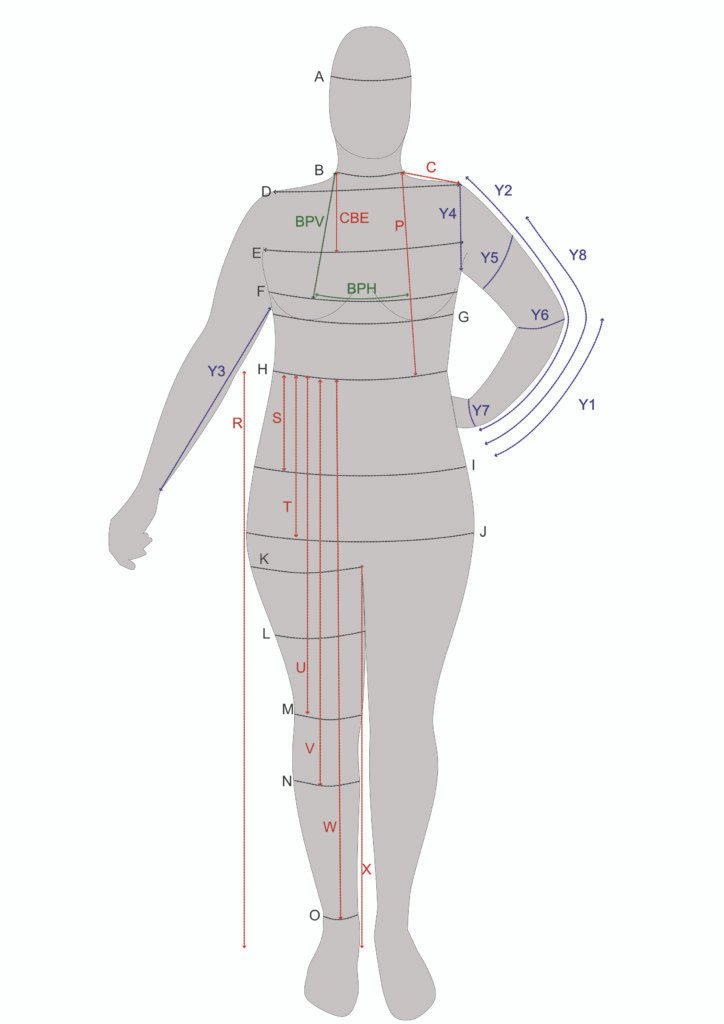
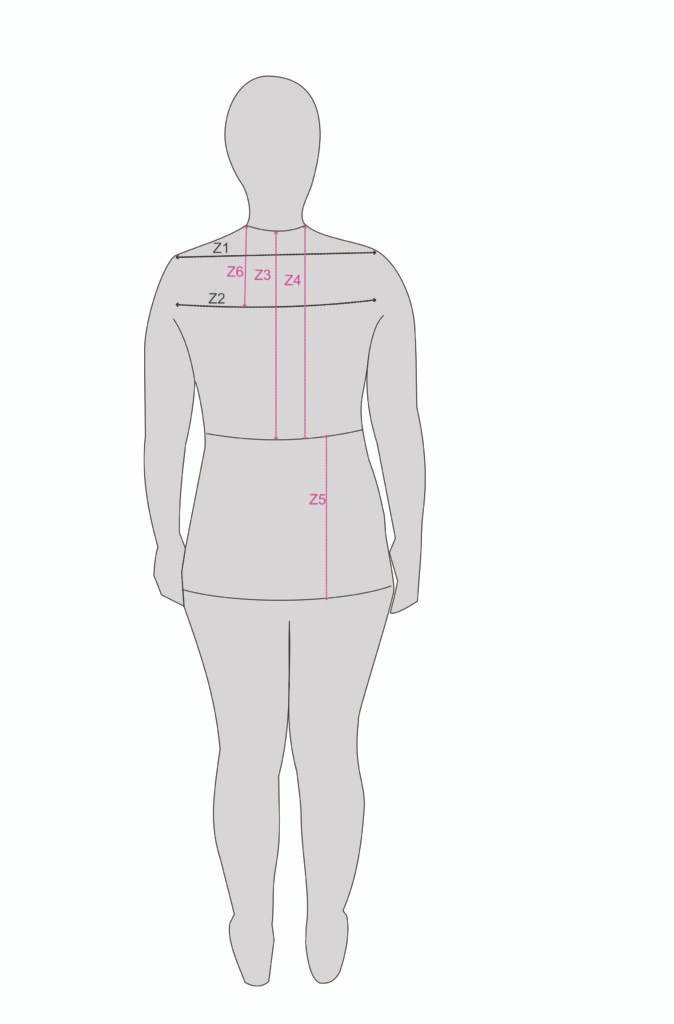
Here is the link to the free downloadable measurement chart that you can print out and add your own measurements.