
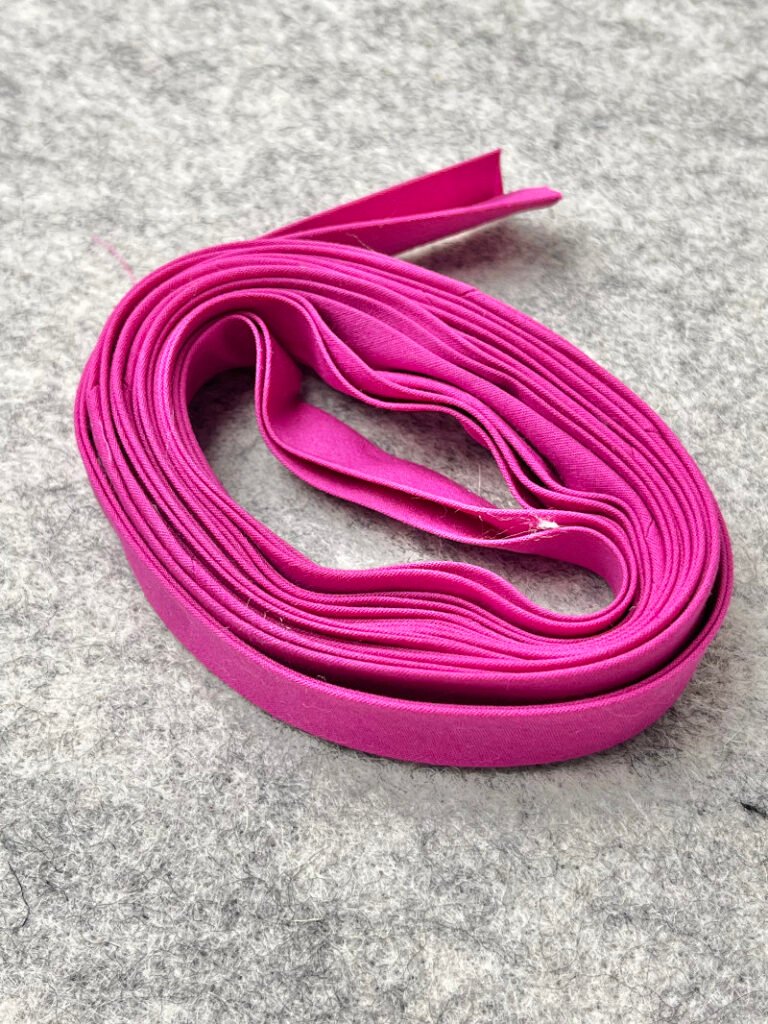
In this step-by-step bias binding tutorial for beginners, you will learn exactly how to make bias binding (also called bias tape) using three practical methods: individual strips, continuous bias binding (no-waste method), and semi-continuous bias strips. Whether you need single fold bias tape, double fold bias tape, or a simple raw-edge bias finish, this guide explains when and how to use each one.
This tutorial is based on how I make bias binding for my own sewing projects, including bags, baby items, and garment necklines.
I prefer to make my own bias tape because it allows to use custom fabric, supports my sustainable sewing aspirations of having control over what fibres are used. The DIY bias tape also gives a better finish and I can match the fabrics easier.
In this blog post, I will address a single fold bias tape, double fold bias tape and creating a bias binding using a continues method. Learning how to make your own bias binding is an essential sewing skill for beginners because it gives you full control over fabric choice, width, and finish.
Prefer to watch instead? Here is my full step by step video tutorial:
What Is Bias Binding?
Bias binding or bias tape is a strip of fabric that is cut at 45 degree angle. This allows the fabric to stretch when sewing over curved lines, such as quilt corners and necklines.
If you want to see bias binding used in a practical project, my laptop bag sewing tutorial shows exactly how I apply double fold bias tape to finish structured bag seams cleanly.
What Is Bias Binding Used For?
Bias binding is used to finish raw fabric edges, especially around curves such as necklines, armholes, quilt edges, and bag seams. Because it is cut at a 45-degree angle to the grainline, bias binding stretches slightly, allowing it to lie flat around curved edges without puckering.
Tools & Materials
To make your own bias binding, you will need these tools and materials:
- Woven fabric (cotton, lawn, poplin, lightweight linen)
- Rotary cutter or scissors
- Quilting or grading ruler
- Iron
- Pins or clips
- Bias tape maker (optional but helpful)
- Sewing machine
I use fabric remnants for bias binding. You do not need a large amount of fabric, some 10″x10″ can make bias too. Obviously, larger the fabric, easier it ill be to sew the seams for continues bias binding and less fabric wastage you will have overall.
You could even piece multiple rectangles together to make a larger square, mixing and matching different colours and patterns but staying within the same fabric type.
Understanding Bias Grain (With Simple Diagram Explanation)
Before cutting out the bias binding, let’s look at how to identify the threads on the fabric to find the true bias.
If you look at the fabric very closely, you will see different strands of fibres weaved together. The type of the weave will differentiate the type of the fabric. The bias binding works best on a simple weave that is prevalent in most basic woven cotton fabrics and quilting cotton.
This image shows the straight grain, crossgrain and bias.
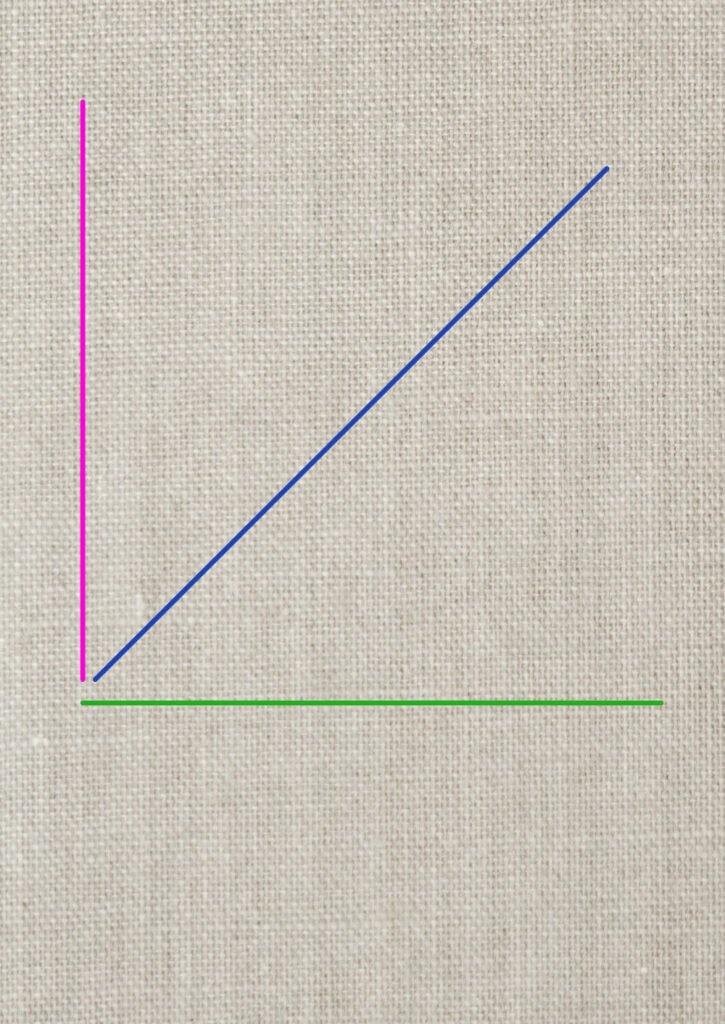
The threads going up and downtime fabric are called straight grain (pink line). In a traditional loom they are the first threads that are threaded and are the toughest. Hence it is important to mark straight grain on your sewing patterns as this will indicate which direction the fabric is less likely to stretch or warp.
The threads that are going from selvedge to selvedge are called crossgrain (green line) as they cross the straight grain. Neither straight grain or crossgrain have much stretch or give and will remain its rigidity. This is why it is important to cut the bias tape correctly to fully harness the flexibility of bias.
The bias (blue line) is the exact 45 degree angle from straight or cross grain. If you pulled a square fabric from its opposite corners, the fabric will stretch. This stretch is the one that we want to capture in bias for edge finish.
Method 1: Cutting Individual Bias Strips
The simplest method to make bias binding, is to cut the individual bias strips and sew them together.
Step 1 – Square Your Fabric
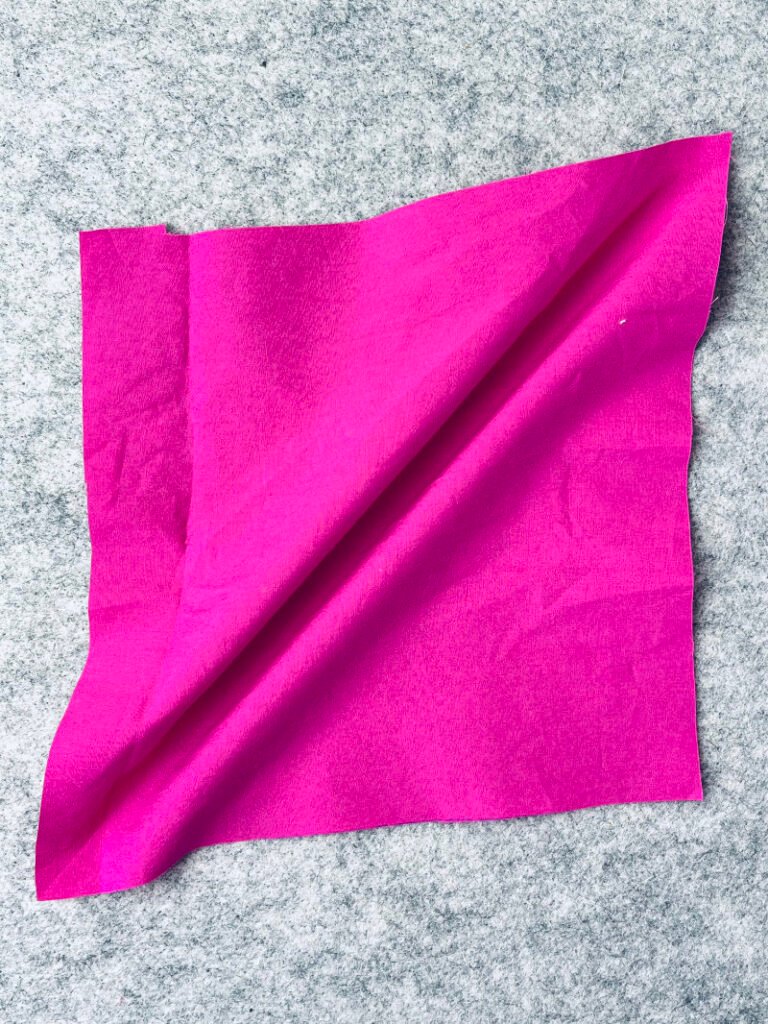
Identify the straight grain or cross grain on your fabric. It does not matter which is which for bias binding. Just look for straight lines on your fabric (not the surface pattern, but the individual threads).
If the fabric is not cut along the straight grain or cross grain then straighten it by cutting off the pieces that do not follow either straight grain or cross grain, to get at least two straight edges that connect at the same angle.
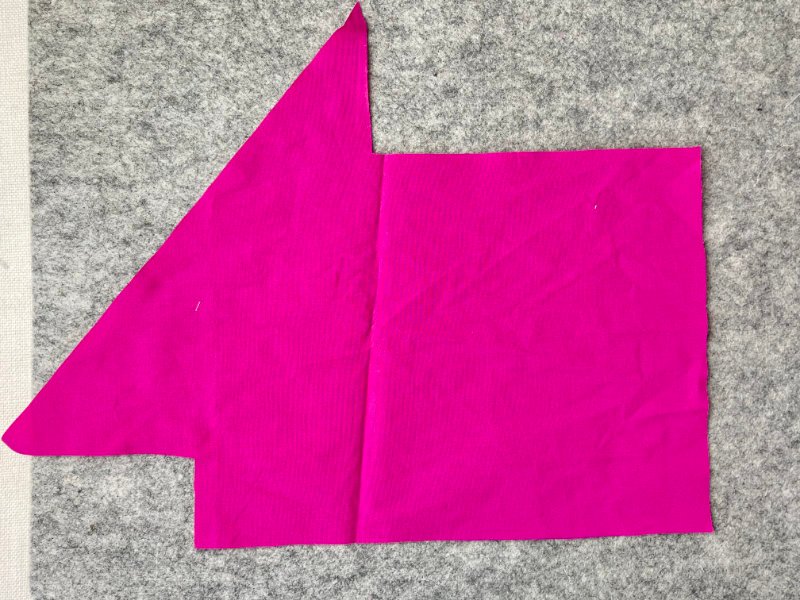
Then fold up the corner where the straight grain and cross grain meets cleanly and fold it up as far as you can without going over the other two edges to create a triangle with two equal length sides.
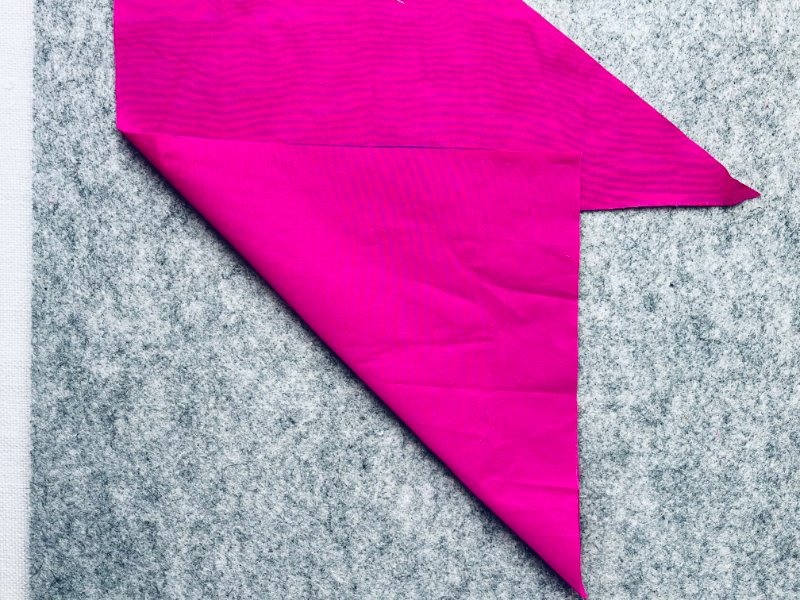
The fold line now is one of your two potential 45 degree angles.
Cut out the fabric by following the folded sides as a cutting guide.
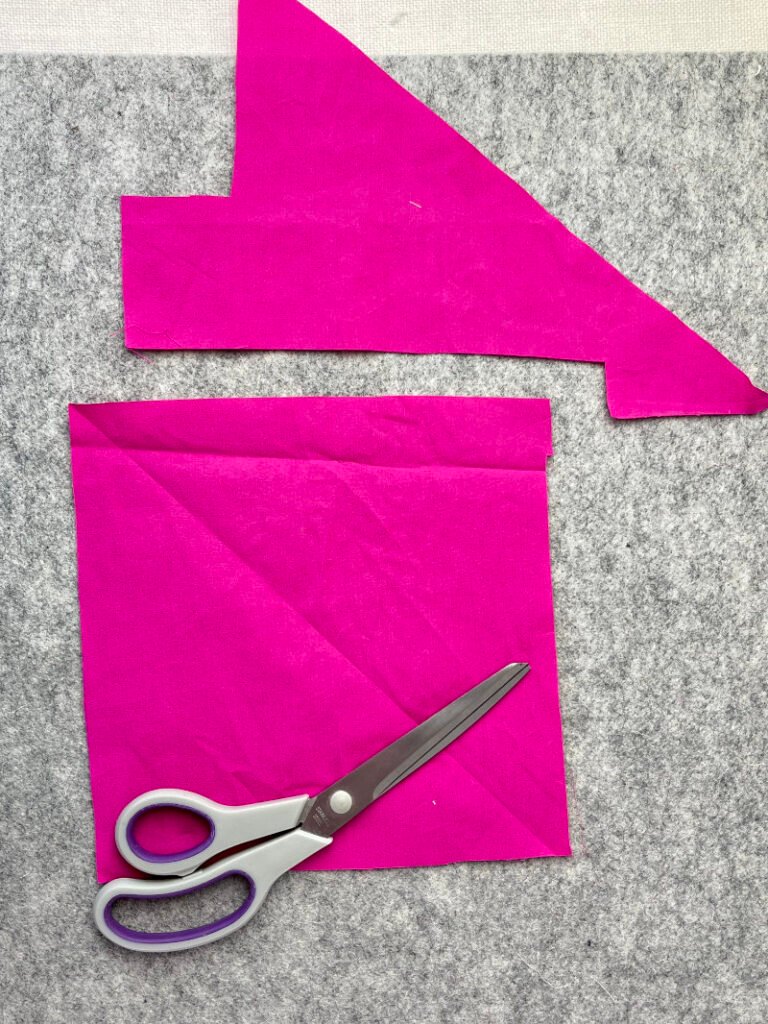
Step 2 – Mark the 45° Angle
Unfold the triangle to reveal the square.
With a long straight ruler connect either of the opposite corners with a straight line. This is your guide for bias strips.
Step 3 – Cut Strips (width guide included)
Then, using a quilting ruler or grading ruler, draw parallel lines to this centre line that are the width of your desired bias strips.
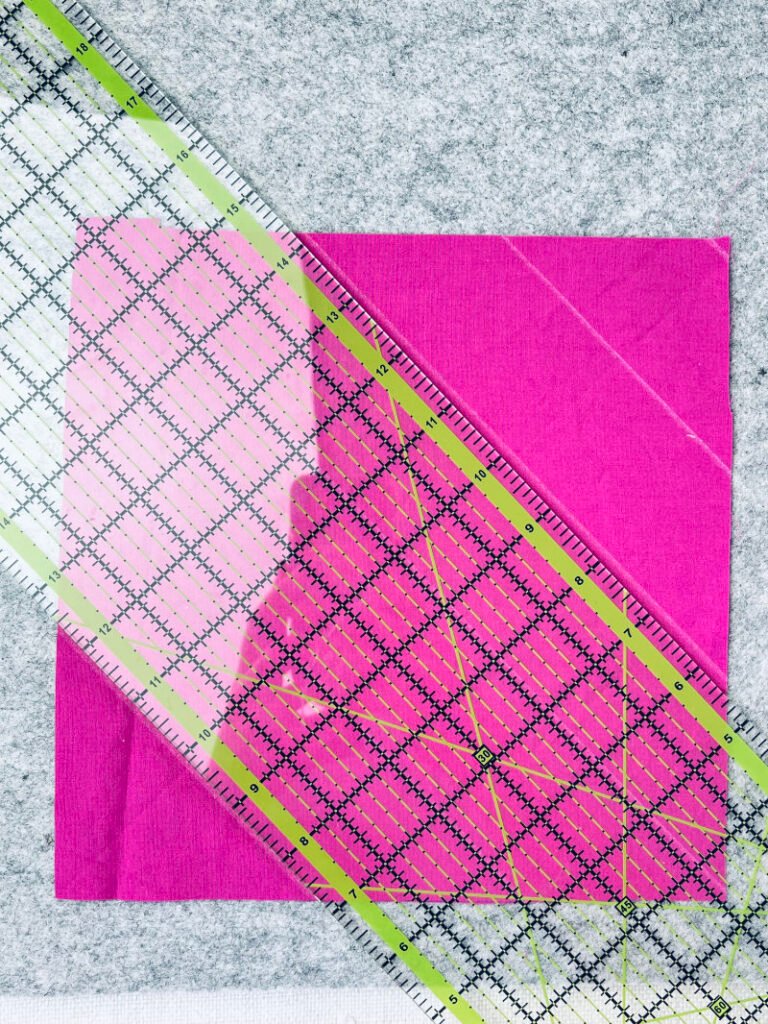
This is quick reference for the width of bias binding that you could consider and how wide the strips should be for double fold or simple bias binding. As a rule of thumb, the strip width should be four times the finished binding width for double sided or simple bias binding and twice the width for single fold bias binding.
| Finished Binding Width | Strip Width to Cut (Double Fold /Simple) | Strip Width to Cut (Single Fold) |
|---|---|---|
| ¼” | 1″ | ½” |
| ½” | 2″ | 1″ |
| 1″ | 4″ | 2″ |
Cut out all the strips following the drawn lines as guides.
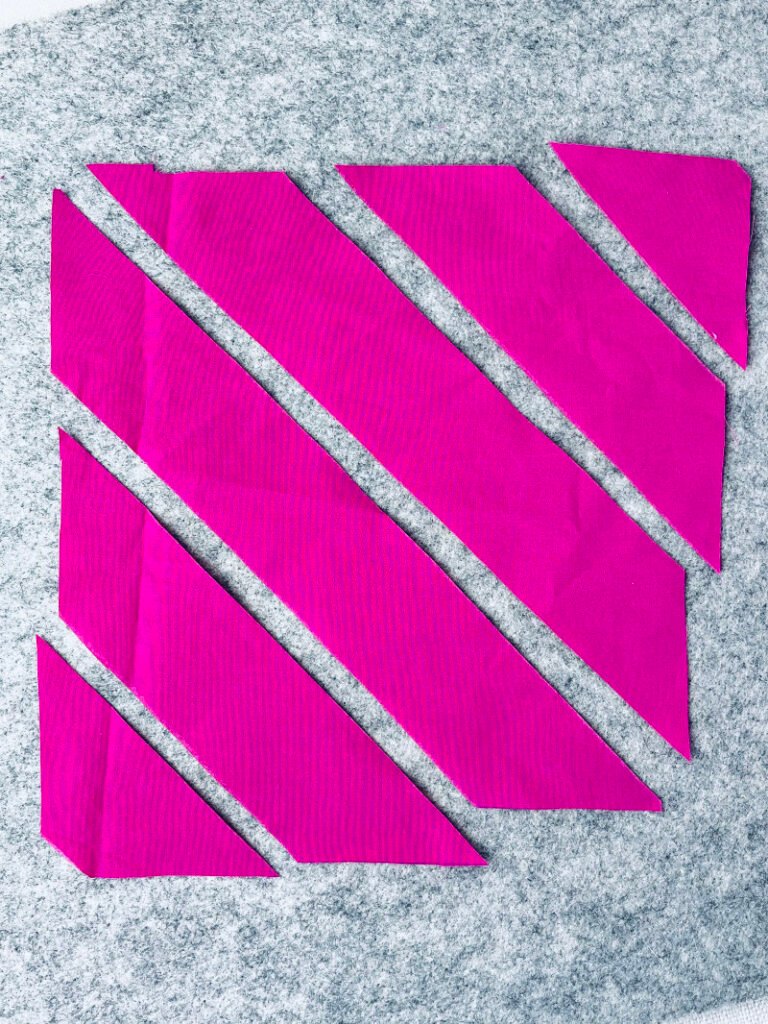
Step 4 – Joining Bias Strips Correctly
Now, lay the bias strips across each other with right sides together and matching the ends for diagonal seams. You need to position the strips in a way that there is a gap at the pointy bits the width of your chosen seam allowance. I am using 1cm seam allowance so the gap is 1cm on both ends.
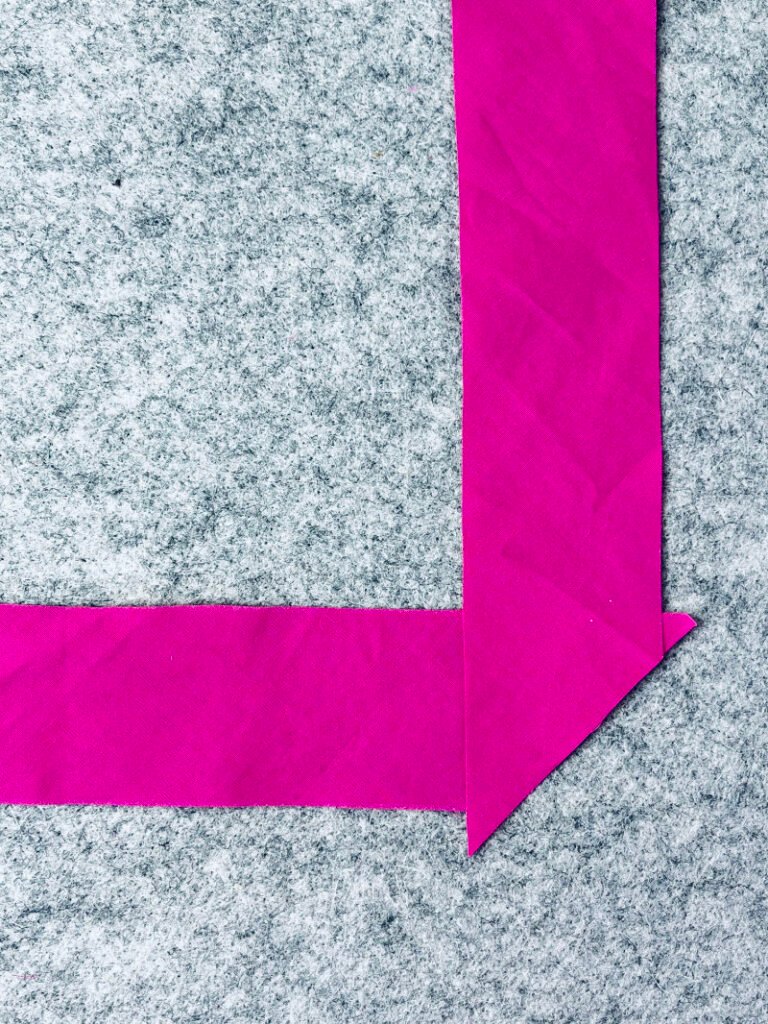
Then connect the corners with a straight line, creating a seam guide. Pin in place before sewing the seam.
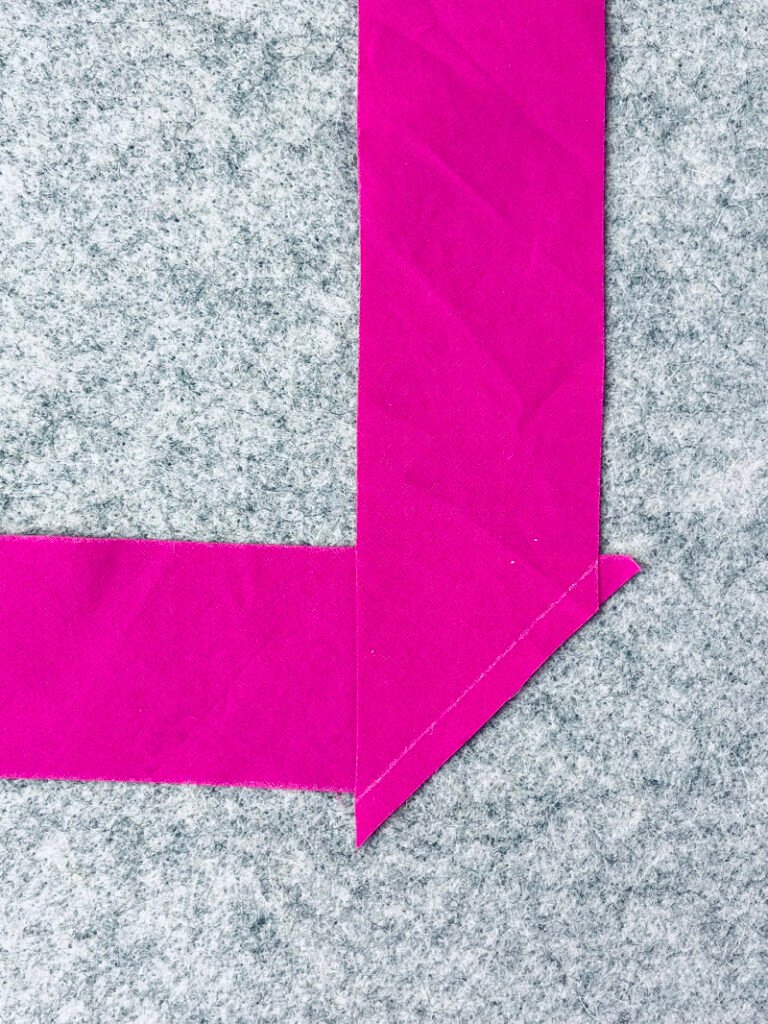
Connect all the pieces the same way. Then press the seams open and trim any excess fabric that pokes out. If you used 1cm seam allowance then you do not need to trim the seams allowance. You do not want to have it less than 1 cm to maintain the stitch integrity.
Why not to sew straight across
If you have bias strips with straight angles at the strip ends, then do not connect the strips together with a straight seam. The straight seam will create a visible bulk when using the completed bias binding. Instead, overlap the ends the same as with the diagonal ends, leaving the overlap and connects the corners with a straight line to create diagonal seam guide.
Why the Individual Strip Method is Not Optimal
While the method of cutting individual strips is simple, it actually creates a lot of waste if you do not fancy sewing together all the tiny pieces of the bias strips that are closer to the corners of the square. For that reason this is not the method I would choose. Depending on the mood, I would choose either of the other methods discussed below.
Method 2: Continuous Bias Binding (No Waste Method)
This method reduces the fabric waste and makes the process quicker by cutting out the need to sew all the tiny strips together. It creates a long strip of bias tape that you can use for quilts or projects that require long bias tape.
Step 1 – Prepare the Fabric
This is the same as the Step 1 for the previous method.
Step 2 – Cut Two Triangles
Connect two opposite corners of the fabric with a straight line. Then cut the fabric in two triangles along this line.
Place one triangle over the other with right sides together and the short side matched. It does not matter which sides you are matching as long as you get this shape that resembles cat ears.
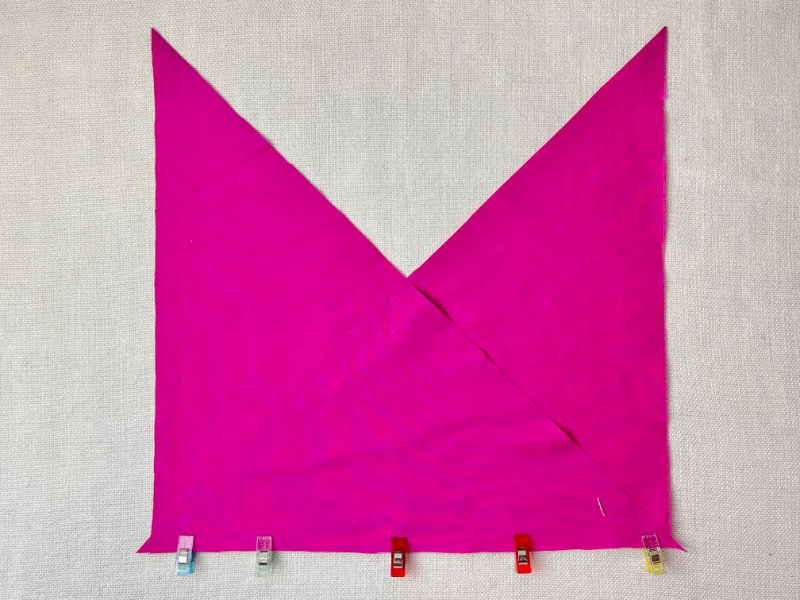
Step 3 – Sew Triangles Together
Nudge the fabric pieces a little to get a triangle at the bottom that is the width of your seam allowance. Pin in place.
Then sew from one side to the other side, connecting both triangles. Press the seam allowance open and trim the triangles that poke out.
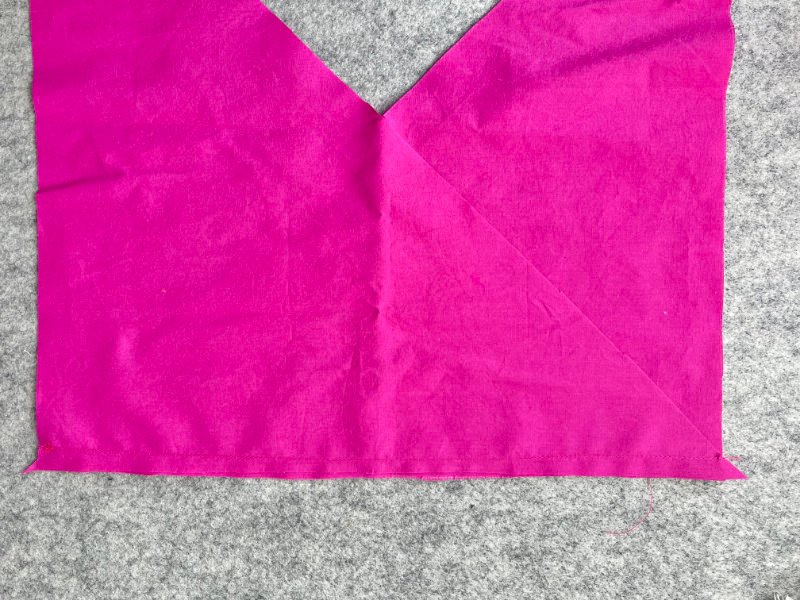
Step 4 – Draw the Lines for Bias Strips
Starting from one short edge, draw lines that are the width of your chosen bias strip on the wrong side of the fabric.
NB!
Here it is important that you draw these lines parallel to the long edge, keeping the seam allowance diagonal across the bias strips. This is one of the two mistakes that will derail your attempt to make a continues bias binding.
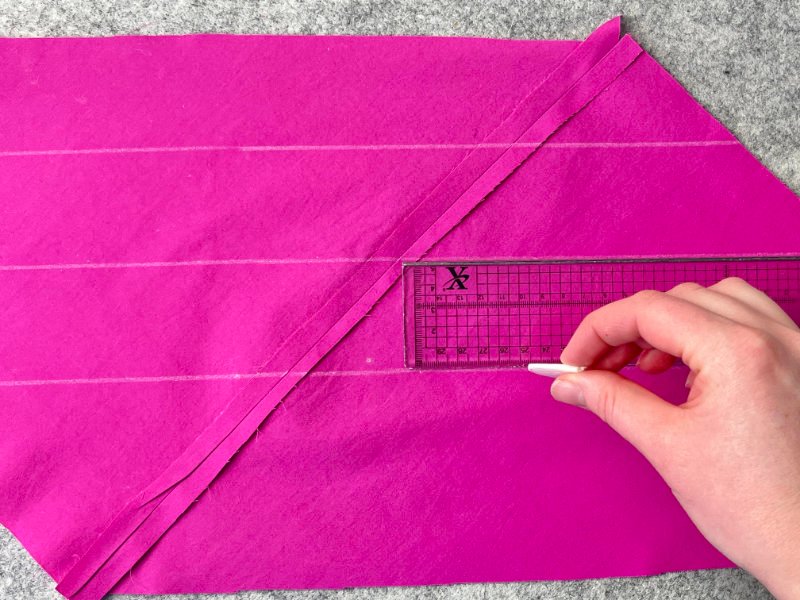
You may end up with the last strip narrower than the rest. Either cut it off or keep in mind that that this narrower and will not form the bias tape.
Step 5 – Create a Tube for Continues Bias Binding
Now the little bit more challenging step is to create the tube for continues bias binding.
Align the shorter edges of your rhombus with right sides together matching the drawn lines. Align the edge of the fabric where the bias strip is the exact width (as opposed the narrower left over fabric if you chose not to cut it off) with the first drawn line. If you matched with the narrower strip then it would be the second mistake that you could make that would lead to frustrations that this method is not working.
Use pins to match the lines 1 cm from the edge of the fabric (or the measurement of your chosen seam allowance), with the first pin prick connecting both lines and the second prick witthin the seam allowance.
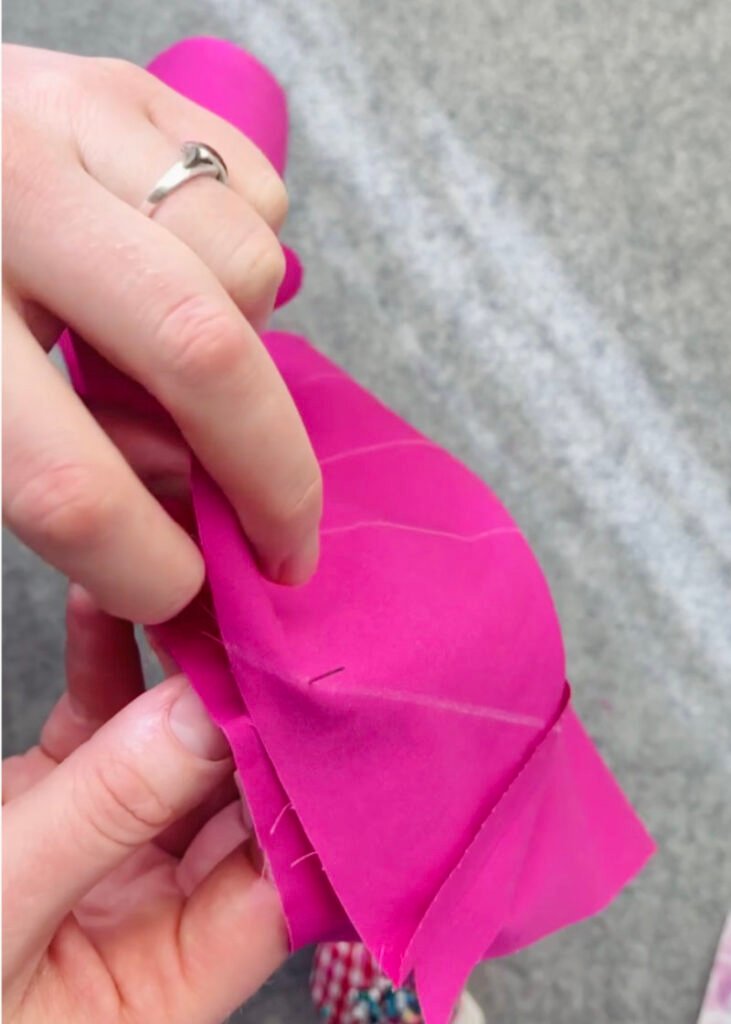
It is trickiest to match up the first two to three lines but after these the rest start to behave themselves.
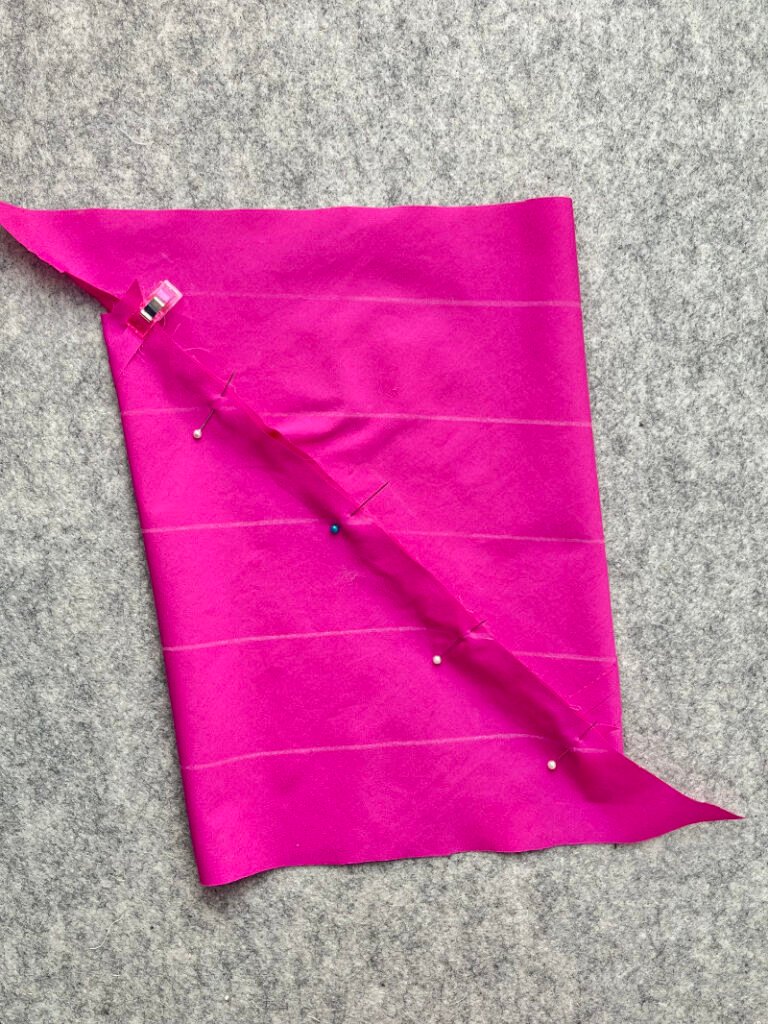
Sew the pinned edge with 1cm seam allowance (or the width of your chosen seam allowance). Press the seam allowance if you used a chalk. If you used a heat removable fabric marker or soap then do not use steam iron! Instead, press the seam open with your fingers.
The first time I tried the continuous bias binding method, matching the drawn lines felt confusing, but once the first two pins are aligned correctly, the rest becomes much easier.
Step 6 – Cut the Continues Bias Strip
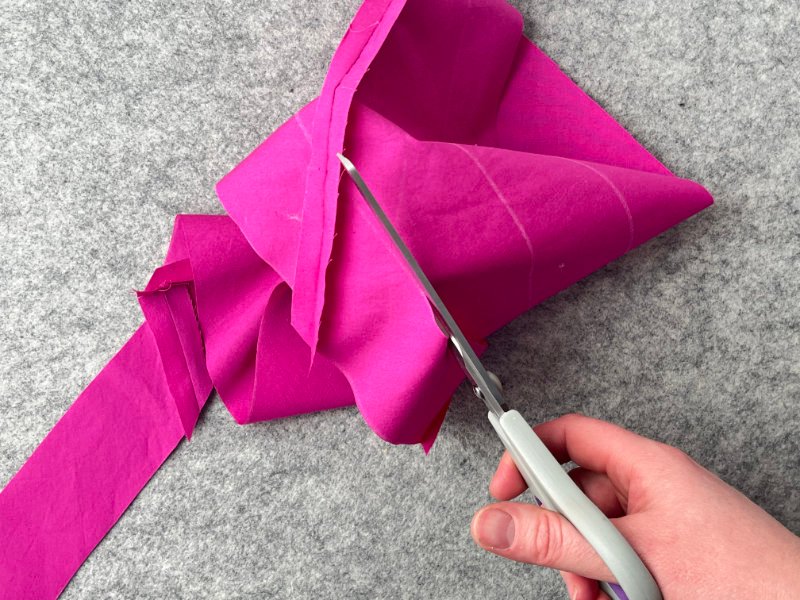
The fun bit is now to cut the continues bias strip, following the marked line.
Method 3 – Semi Continues Bias Binding
This method follows the same first four steps of the continues bias tape. Then, instead of sewing the tube together, you cut out the strips as is and then join them together the same as for the first method or leave the shorter bias strips.
I like this method when I only need short bias strips. This method also works great if you cannot get your head round how to create the tube for continues bias binding!
The advantage over the first method is that you do not need to sew together the short pieces of fabric. All the bias strips are exactly the same length.
Pressing the Bias Binding
Regardless of which method you are using to make the bias binding, this step is the same for all of them. You have a choice of pressing the strip just with steam iron or by using the bias tape maker. Before using either method, press the bias strip, stretching it lightly as you do. Press open all the seams and cut off any seam edges that poke out beyond the strip.
Option A: Without a Bias Tape Maker
Making the bias tape without the bias tape maker is my preferred method. It is a little longer than using bias tape maker but gets me a neater bias tape.
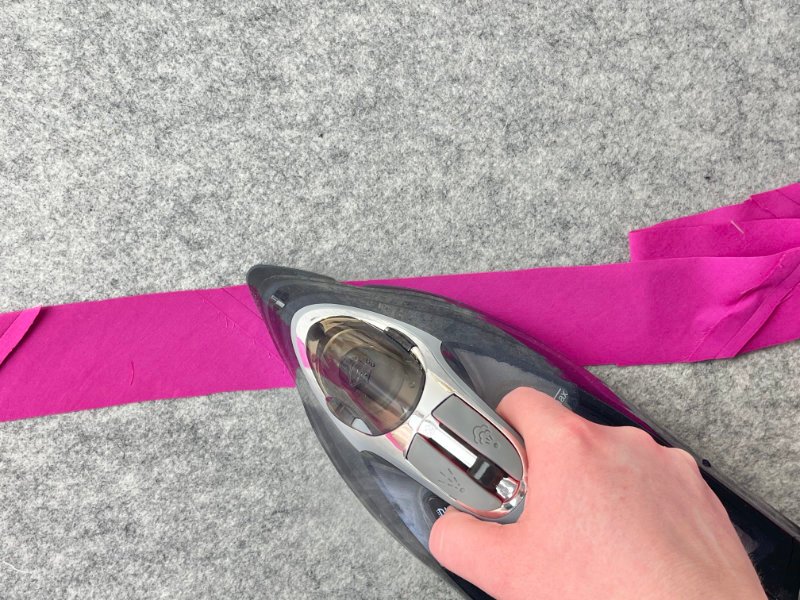
Fold the bias strip in half lengthways, with right sides facing. Press the crease line.
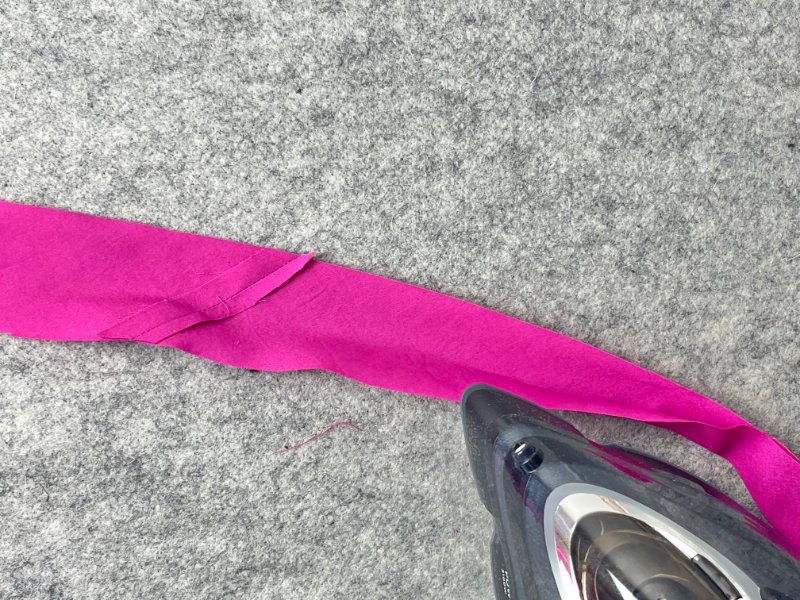
Then open the bias strip and fold one raw edge to almost to the middle, to the crease line, and press. Do not fold it to the crease exactly as this will create a bulk and will make it harder to get smooth bias tape.
Then repeat the same with the other raw edge.
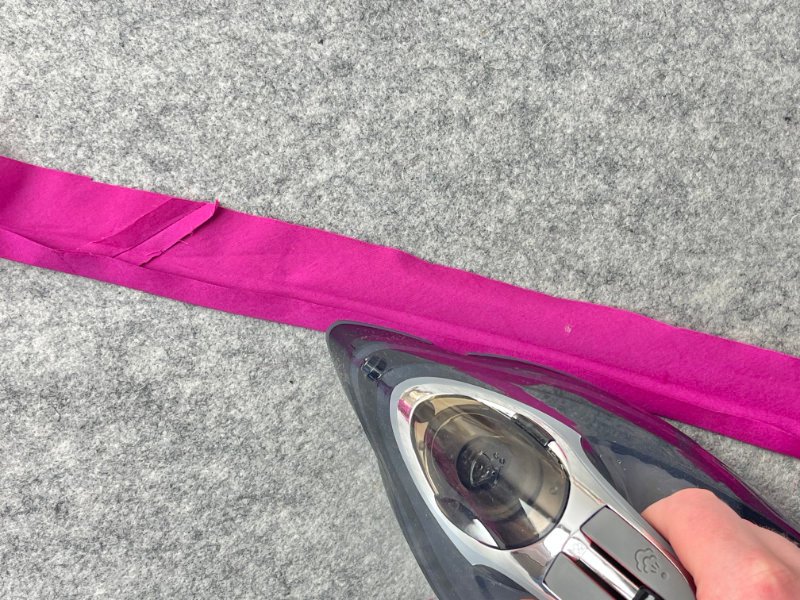
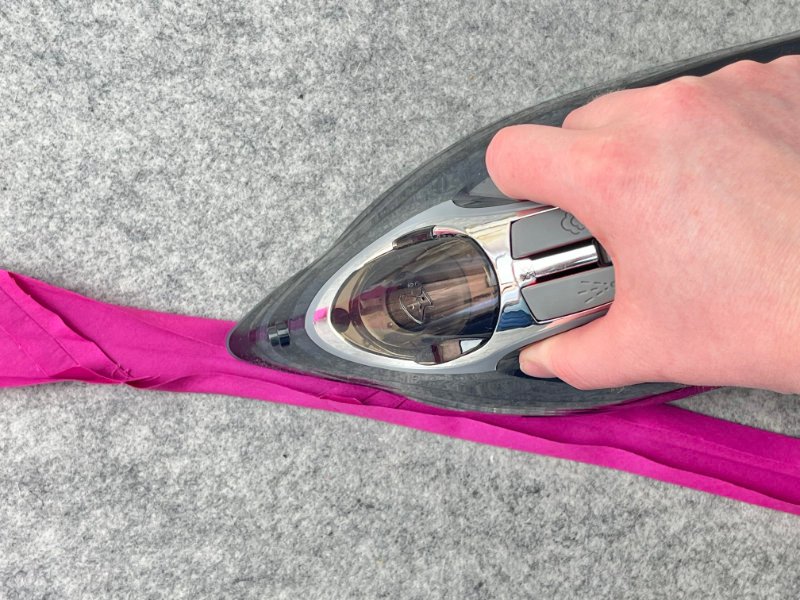
This has create a single fold bias tape. To make a double fold bias tape, fold the bias tape in half lengthways and press. At this step, make sure that you align both outer edges to get a straight and neat looking bias tape.
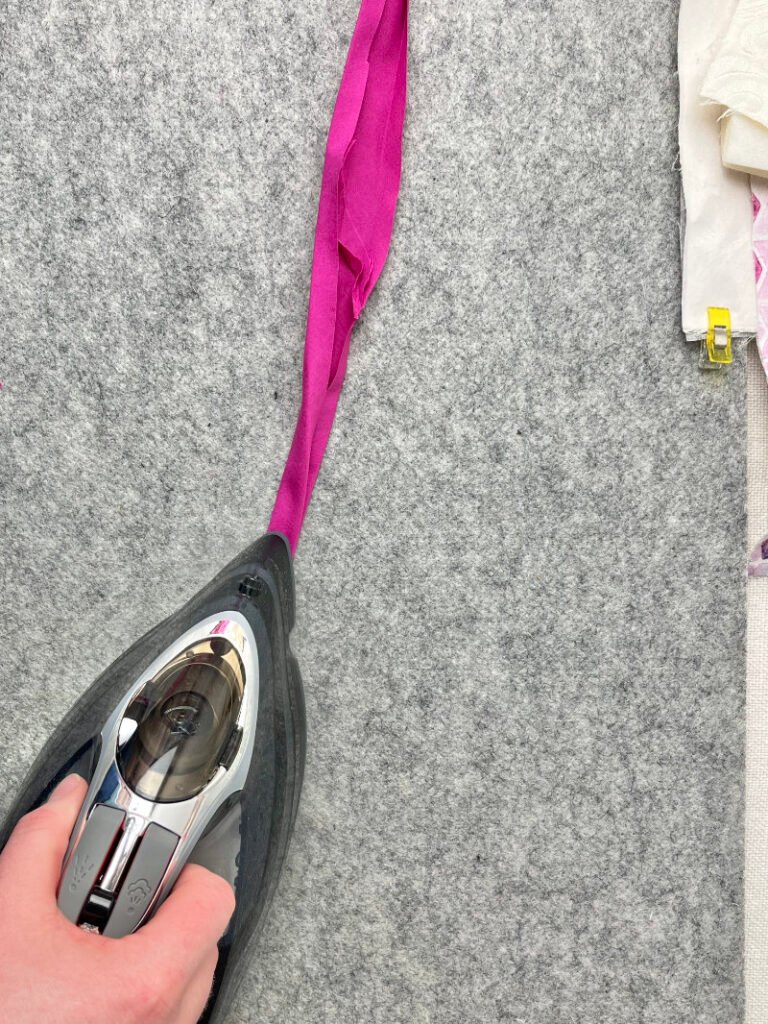
Option B: Using a Bias Tape Maker
Slide the pointy end of the bias strip into the bias tape maker. If your bias strip does not have a sporty bit, cut the end to create one.
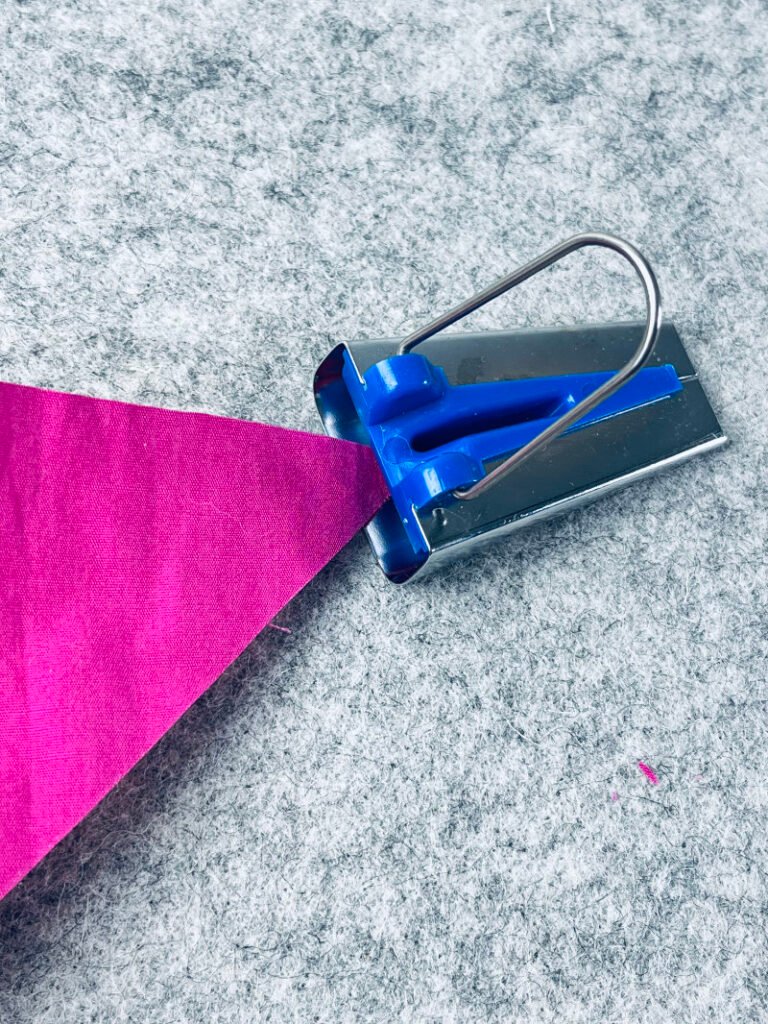
You may need to use a pin to feed the fabric through at the start.
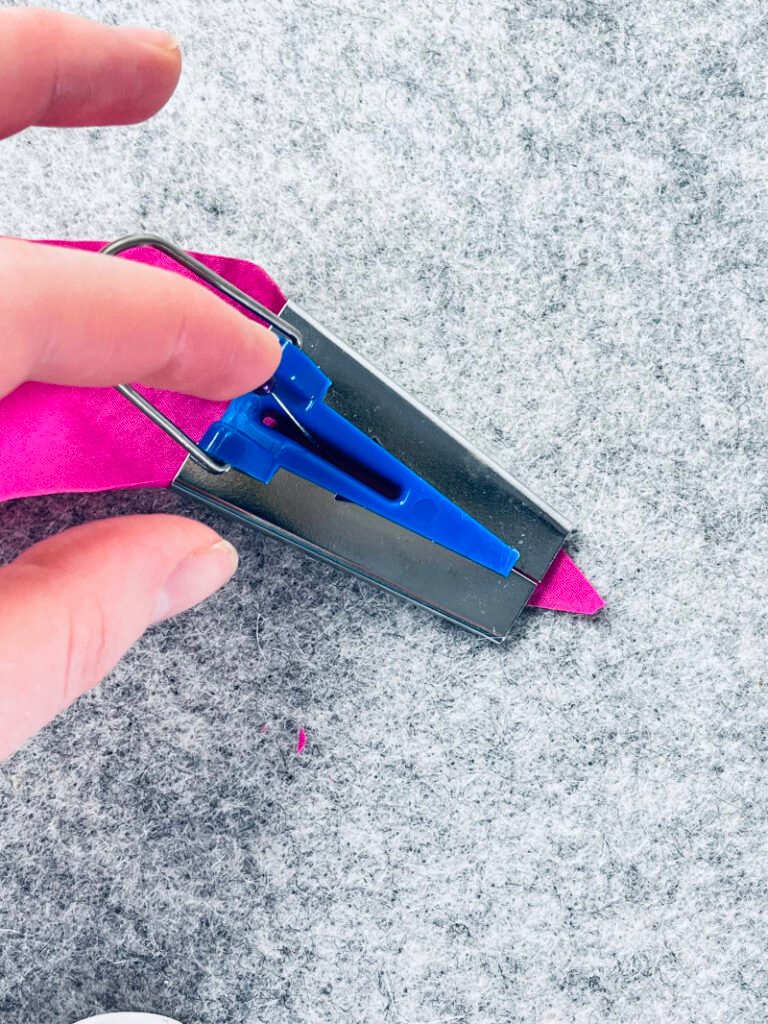
Once it has popped out on the other side, pull it gently and press with the iron. You may need to wiggle the bias tape out a little before pressing to get even finish.
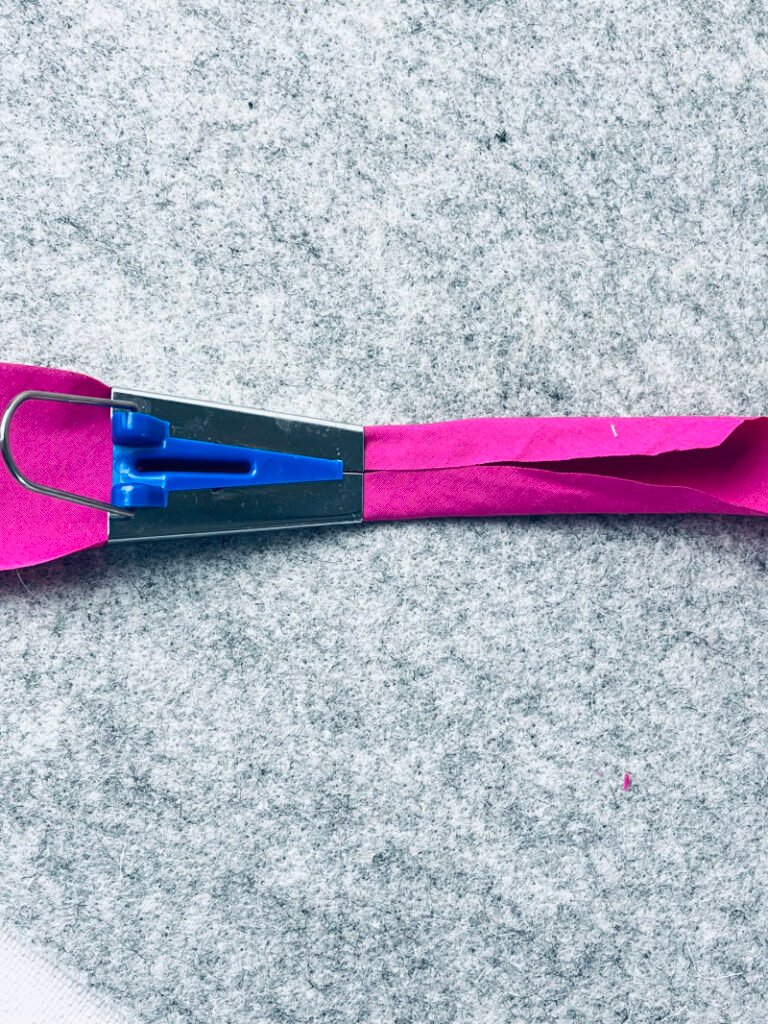
This method is quicker because you do not need to press each side individually, the bias tape maker sort of does it for you.
The reason why I don’t tend to use bias tape maker regularly, is that, firstly, I need to find it! Secondly, the seams sometimes get stuck within the bias maker, especially the smaller width one. That leads to uneven sides .
Thirdly, you have to make sure that both sides of the bias tape is feed through the bias binding maker evenly, otherwise one side may have larger fold than the other.
Option C: Simple Bias Strip with One Raw Edge
For a simple bias strip that can be used one most sewing projects, you can simple fold the bias strip the lengthways as for the Option A. Then , instead of opening and pressing the raw edges inside, you keep the bias binding as is with one side having a fold and the other two raw edges.
For this bias tape you would need to use at least 5 cm (2″) bias strips. When using on a project, align the raw edges of the simple bias strip with the raw edges of the project on either side, sew with a narrow seam allowance (it needs to be less than 1/3 width of your bias binding). Then fold the folded edge dot bias binding over the raw edges with the fold going over the previous seam line. Then sew the other side with a stitch in a ditch method or by hand sewing.
Single Fold vs Double Fold vs Simple Bias Binding
The difference between the single fold and double fold bias binding is that the double fold binding is folded again, making a narrower binding. The simple bias binding will have two layers over the raw edge adding a little more bulk compared to double fold bias binding.
While single fold bias binding is meant to be hidden on the reverse of the garment, home decor or accessory, the double fold and simple bias binding is used to show up on both sides. From practical point of you, you can use either for all types of sewing project with different final look.
Typically, single fold bias binding is used on necklines and armholes instead of facing. The double fold and simple bias binding is used on quilts, baby items and bag edges. I used the double folded bias binding in my laptop bag sewing tutorial.
How to Calculate How Much Bias Binding You Need
To calculate how much bias binding you need, measure the full length of the edge you plan to bind using a flexible tape measure. Add at least 5 cm (2″) extra for overlap and seam joining. For quilts or large projects, I recommend adding an additional 10–15 cm to avoid running short.
Once you have the required bias binding measurements, you can work out the dimensions of the fabric square you will need to use.
How Much Fabric Do I Need to Make a Bias Binding
This is basic math calculation, and the standard formula is this:
Here is a quick calculator that you can use to work out the fabric size.
Continuous Bias Tape Calculator
Enter your project measurements to find the exact size of the fabric square you need.
Common Mistakes (And How to Avoid Them)
These are typical mistakes when making the bias binding and the methods of fixing them.
- Cutting off grain. Identify the straight grain and / or cross grain before cutting the square for the bias binding.
- Bulky seams. Use 1cm seam allowance when joining the bias strips together and press the seam allowance open. If you use a wider seam allowance, trim it after pressing the seam allowance open.
Where to Use Bias Binding (Project Ideas)
Bias binding is simple and quick solution for most edge finishes on the sewing project.
- Baby bib – sew the front to the back with wrong sides facing and finish the raw edge with double fold or simple bias binding
- Bag edges – use double fold or simple bias binding to hide the raw edges in the inside of the bag
- Neckline finishes – use either single, simple or double fold bias binding
- Armhole – either a single, simple or double fold bias binding
- Reusable kitchen cloth – use double fold or simple bias binding to finish the raw edge.
- Hair scrunchie – for a quick and uncomplicated construction, use double fold or simple bias binding
- Quilt edging – use either simple or double fold bias binding.
Frequently Asked Questions About Bias Binding
Conclusion
Making your own bias binding is a valuable sewing skill that improves both the finish and flexibility of your projects. Whether you choose individual strips or the continuous bias binding method, mastering this technique gives you more creative control and reduces fabric waste.
Once you understand how bias tape works, you will start seeing opportunities to use it everywhere — from garment necklines to bag interiors and quilt edging.
If you would like to see bias binding used in a structured sewing project, my laptop bag tutorial shows exactly how I apply it for durable seam finishes.
About the Author: Pattern Drafting & Garment Sewing

I’ve been sewing for over 30 years and drafting my own patterns for more than a decade. I work almost exclusively with self-drafted patterns, which means I don’t rely on instructions—I rely on understanding how garments fit and come together.
Most of my methods come from figuring things out through testing, adjusting, and breaking down common problem areas using logic and geometry rather than guesswork.
On this site, I share step-by-step tutorials on pattern drafting, garment construction, and sewing techniques to help you create well-fitted, professional-looking clothes from scratch.
👉 Read more about my approach to pattern drafting and sewing here: About Me
the tutorial is great, thankyou. However I came here from YouTube to find a guide for the calculation about how much bias binding to make, thinking you would give a table of “if you need x amount, make your square y size”. But I can’t see that anywhere!
Hi V. Apologies for the oversight on the fabric calculation. There is a simple calculation, with a formula “Total length = usable fabric area / width of the desired bias strip (before folding)”. The usable area is either a square or rectangle piece of fabric with seam allowances removed. Since I am using a square fabric in the example, I will assume that the sides are equal. I will also assume that you need a specific length of the bias strip and are using 1cm seam allowance.
Therefore, to work out how much fabric you would need for your specific bias length, use formula of “the side of the square = square root of (total length of bias required x width of the bias strip before folding) + the seam allowance. For example, if I needed 400cm of bias that is 2.5 cm finished width (5cm unfolded), then the side measurement for the fabric square would be “square root of (400cm x 5cm) + 1cm” , and that’s 44.7 cm + 1cm. So the fabric square to cut would need to be 45.7 cm x 45.7cm. If you are using imperial, use exactly the same formula.
I will update the blog post with the formula, worked example and some examples of how much bias strip you can get from specific squares, both in metric and imperial.