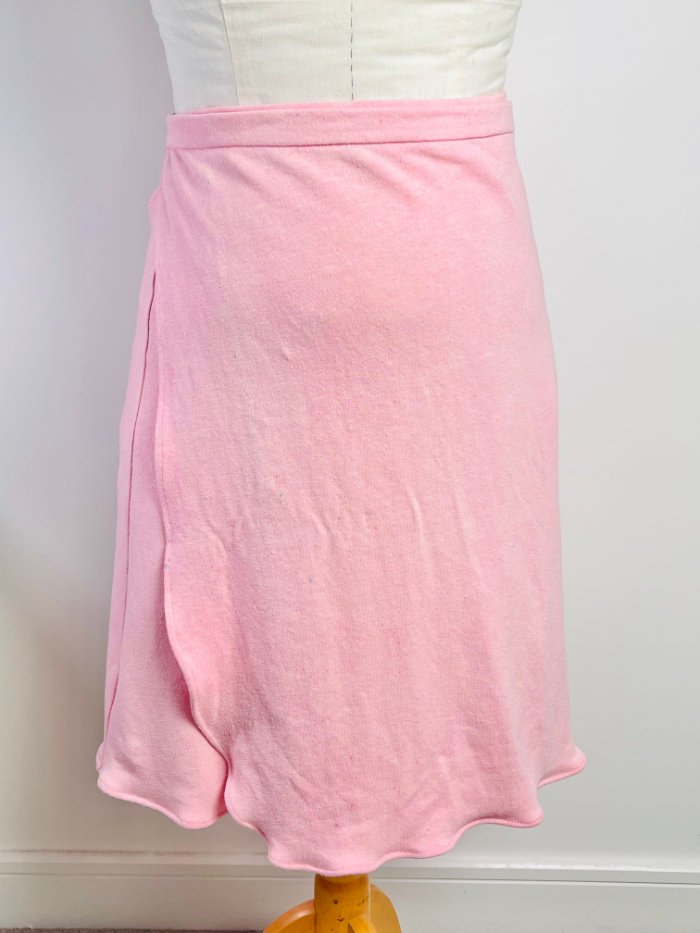
In this beginner-friendly wrap skirt sewing tutorial, I’ll show you how to sew a simple wrap skirt using an A-line skirt block—no zips, no buttons, and no complicated construction. This tutorial follows directly from my wrap skirt pattern drafting guide, where I show how to draft the pattern from a basic A-line skirt block.
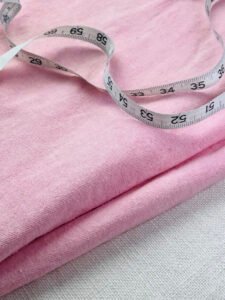
I’m sewing my skirt in self-dyed hemp French terry knit, but this method works equally well with woven or knit natural-fibre fabrics.
The hemp French Terry knit fabric will work well for this sewing project as it has some structure, is not see through, can withstand some gust of wind without revealing too much and it is very comfortable and sustainable fabric.
Quick Project Overview
- Skill level: Confident beginner
- Time required: ~60 minutes
- Pattern base: A-line skirt block
- Closures: Wrap ties (optional buttonhole)
- Hem finish: Rolled hem
- Fabric type: Knit or woven natural fibres
Finished Wrap Skirt Overview
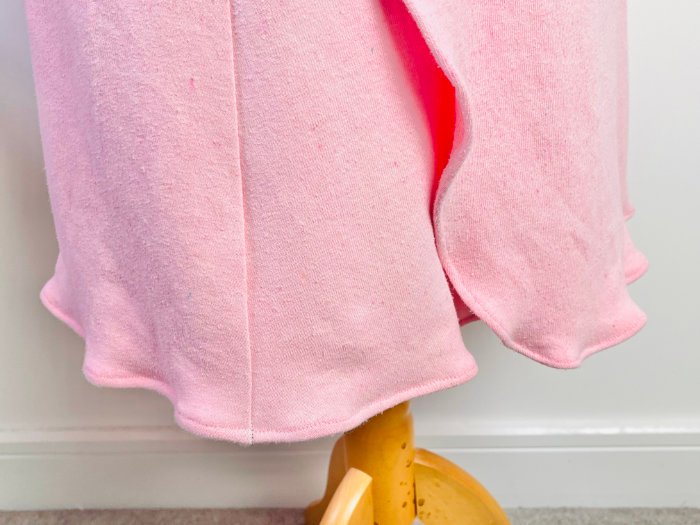
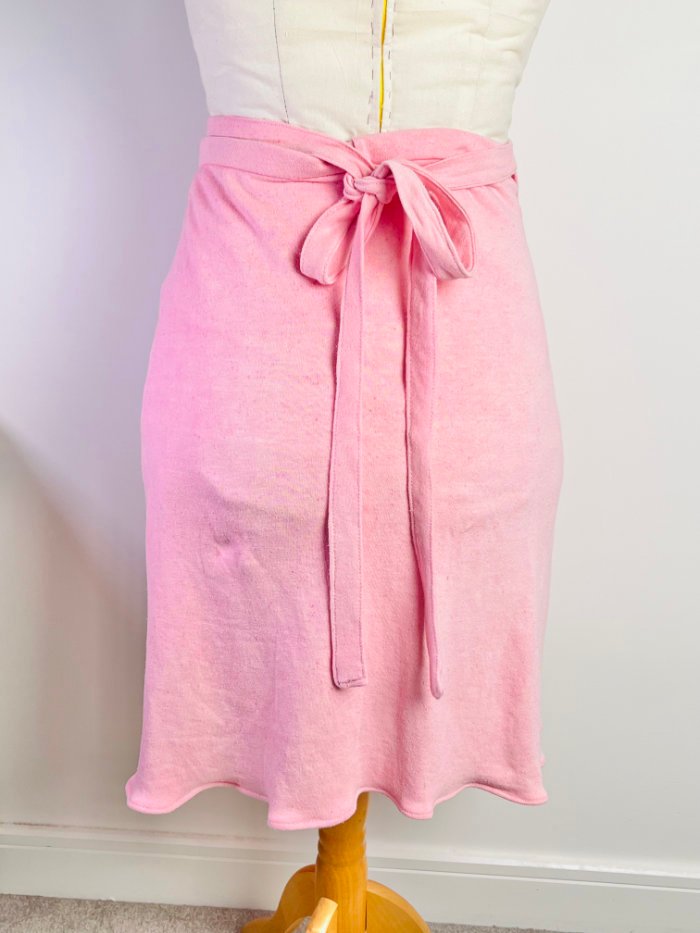
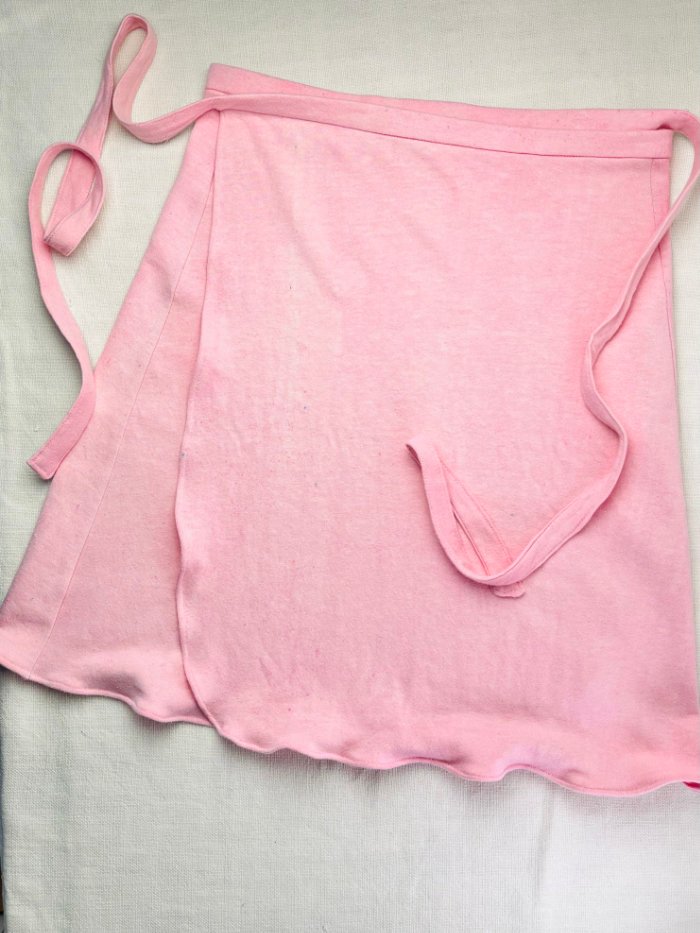
The wrap skirt is made from an A-line skirt block, giving it a nice flare at the hem while the skirt skims over the hip and tummy, without adding any bulk. It has a waistband that extends into ties and has one buttonhole on a side to feed through the tie for the lower wrap section. The DIY wrap skirt is finished with rolled hem.
This is a confident beginner wrap skirt sewing project that will take less than 60 minutes to complete from cutting to sewing.
Fabric & Materials Required to Sew a Wrap Skirt
Hemp French terry knit works particularly well for this wrap skirt because it has enough structure to skim the body without clinging, is not see-through, and holds up well in movement and wind. It’s also breathable, comfortable, and a sustainable fabric choice.
If you’re using a different fabric, choose a light- to medium-weight natural fibre such as cotton, linen, or lightweight wool. Both woven and knit fabrics work for this design, though the drape and stretch will affect the final look.
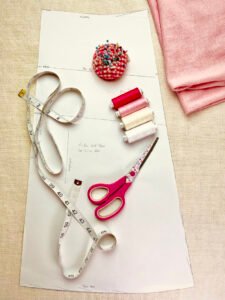
Below is everything you need to sew a wrap skirt from an A-line skirt pattern, including fabric, tools, and optional notions.
- 1.5m prewashed fabric (woven or knit fabric made out of natural fibres such as cotton, hemp, linen, lightweight wool).
- machine needle (use stretch or ballpoint needle for knit fabric)
- matching thread
- buttonhole foot (optional)
- interfacing (ideally a knit interfacing for knit fabrics but a basic lightweight interfacing will work too)
- sewing machine (optional: overlocker/serger for knit fabrics)
- scissors
Pattern Preparation (From Draft to Sewing Pattern)
In my wrap skirt pattern drafting tutorial, I show how to draft a custom wrap skirt pattern from an A-line skirt block. This sewing tutorial uses that drafted pattern and assumes your pattern pieces are already prepared.
The pattern has a front pattern piece, a back pattern piece and a guide for extended waistband, with seam allowances of 1.5cm for side and waist seams and 2cm for hem and overlap sides.
If you haven’t drafted your pattern yet, I recommend completing the drafting guide first before continuing with the sewing steps below.
Cutting the Fabric for Wrap Skirt
You will need to cut two mirrored pieces of front pattern piece, one back pattern piece cut on fold, and the waistband that consists of either of two or three pieces. In my wrap skirt drafting guide I explained why you would need two or three waistband pieces as well as explaining that I do not use a pattern piece for waistband.
I cut out the waistband pieces first before the front and back panels as this way I have the straight edges that make the waistband cutting easier. For quicker cutting, I also folded the fabric in four layers, pinned in place and marked the cutting lines. I have to admit, cutting four layers of hemp French Terry with basic scissors is quite painful. While I have electric scissors, I did not use them this time as I did not want to wake my sleeping baby!
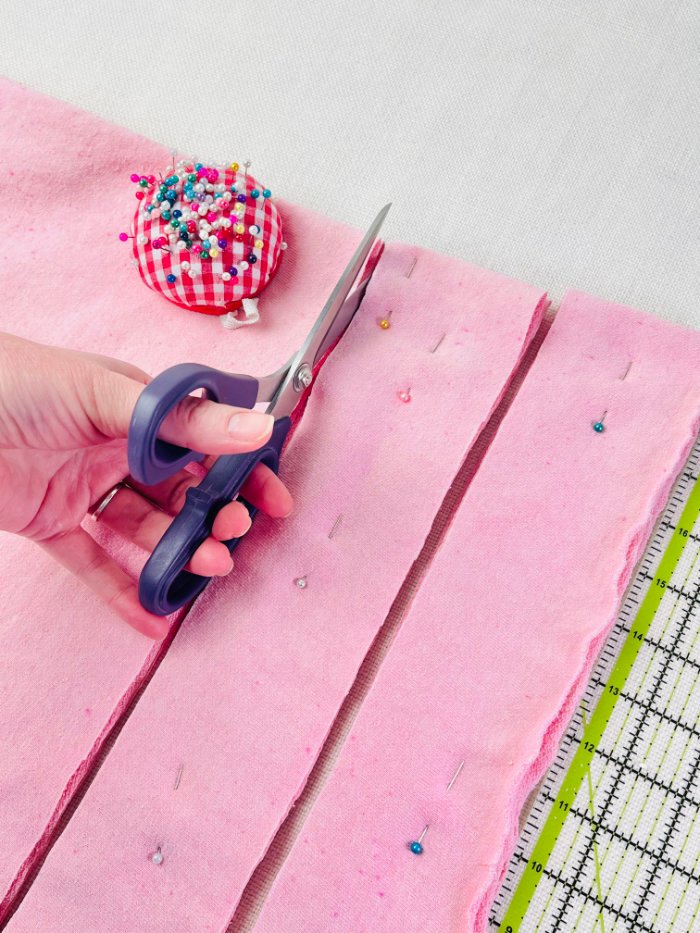
Next, I cut out the back pattern piece because that needs to be cut on fold. Mark a centre back line on the waistline for matching later with waistband.
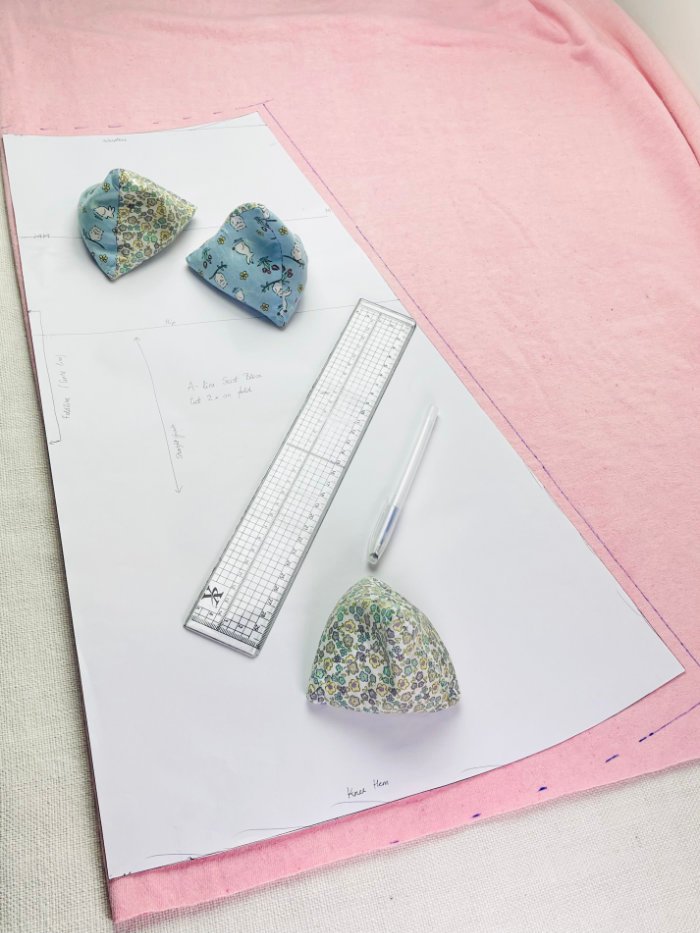
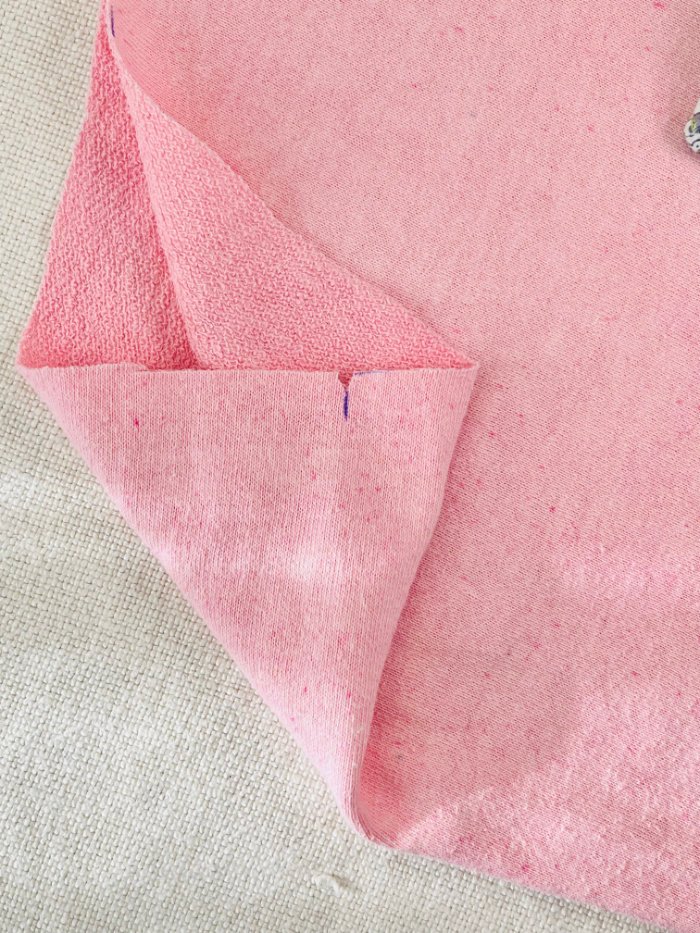
The front pattern pieces then can be cut out individually, finding the positions which uses up less fabric and still is on the correct straight grainline. Just make sure that you either flip the front pattern piece upside down or flip the fabric from right to wrong side before cutting the other front fabric piece (both the other way round if you cut the first one on wrong side). If your fabric has a directional print, then place the pattern pieces with hems in the same side of the fabric.
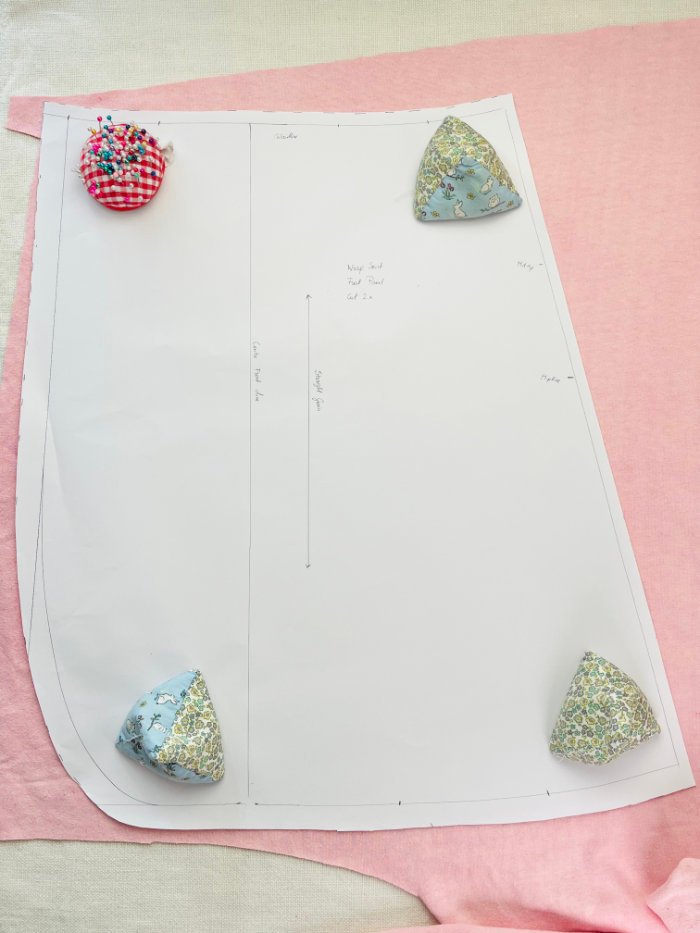
You probably spotted that my back pattern paper does not include seam allowance. I have a blogpost on how to add seam allowances, explaining why I add the seam allowances at the point o cutting fabric. I hint a little on this in my yellow dress sewing video tutorial.
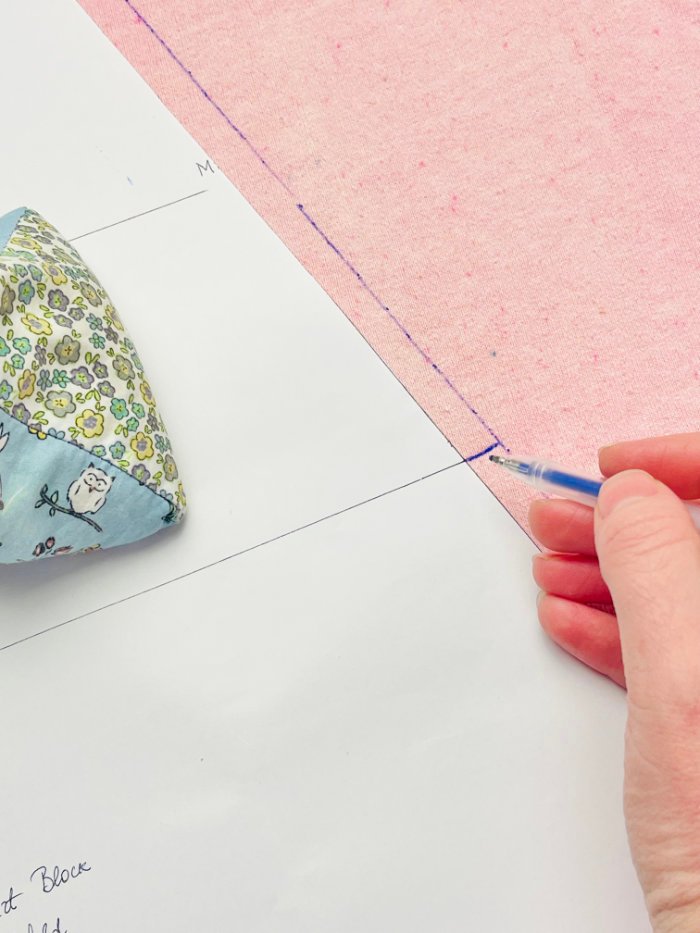
Mark hip markings on both the front and the back fabric pieces.
How to Sew a Wrap Skirt – Step-by-Step Instructions
Step 1: Prepare the Extended Waistband
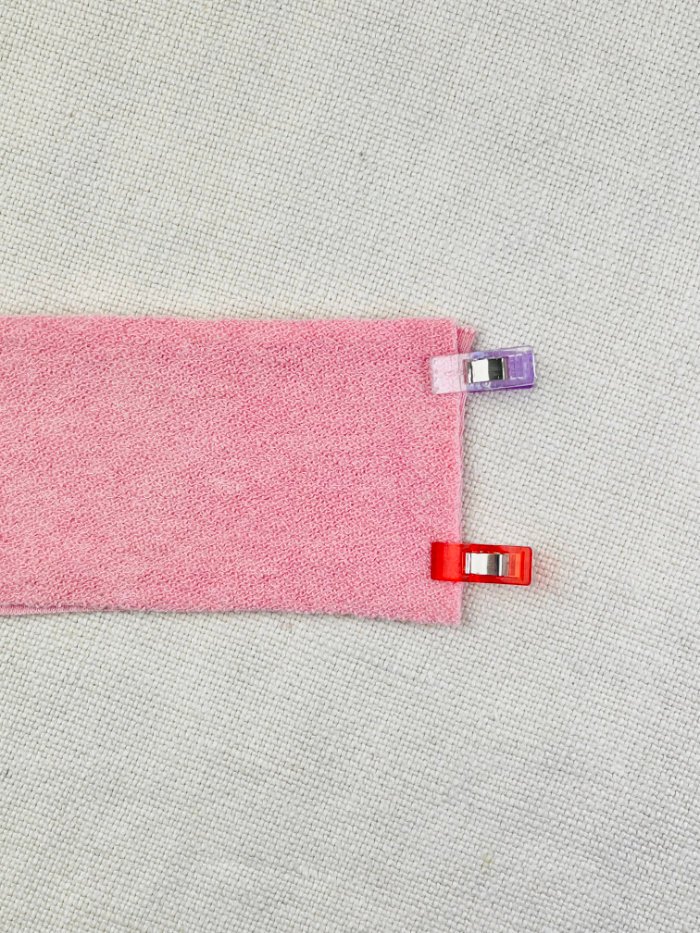
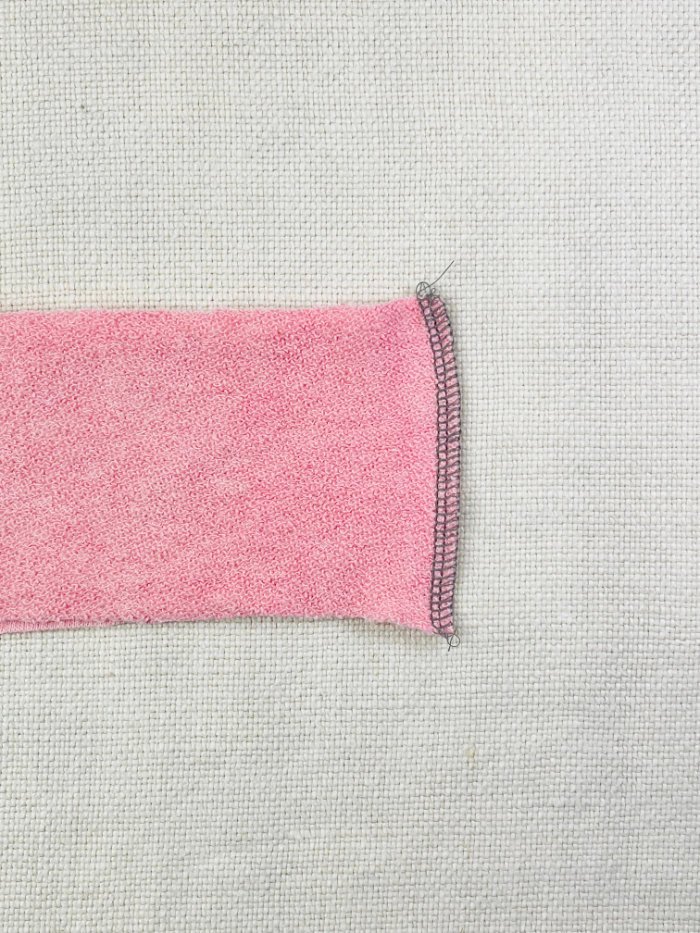
First, sew together the short ends of the waistband pieces to form one long waistband. As my fabric is a stretchy hemp jersey, I am sewing with an overlocker that not only news the garment together, but also finish the seam without me worrying about how to finish raw edges. If you do not have an overlocker, you can explore other options in my basic sewing stitches guide.
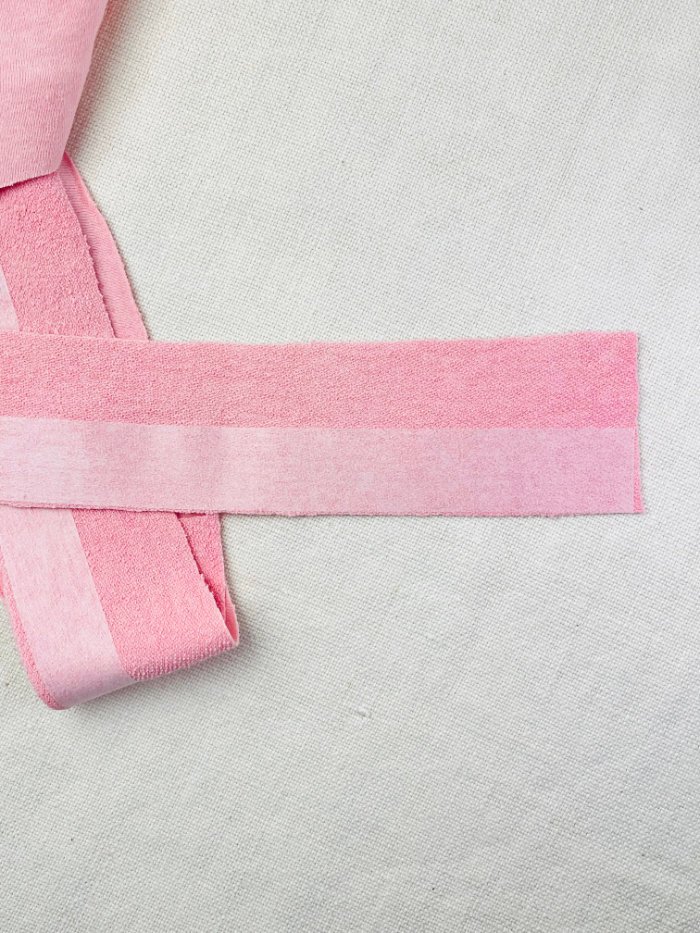
Then cut a fusible interfacing that is half width of your waistband but the same length. Fuse it to the wrong side on one edge of the waistband. This is going to be the outside part of the waistband. The interfacing will stabilise the waistband, making it stand up straight without rolling over. If you are going to create a buttonhole, the interfacing will prevent the buttonhole from overstretching and becoming misshapen.
Most likely your fusible interfacing will not be as long as the finished waistband, so you will need to patch together a few strips as you fuse the interfacing to the the waistband. To ensure stable waistband, overlap the fusible interfacings to avoid gaps.
Put the prepared waistband to one side.
Step 2: Sew the Skirt Panels
Place one front panel on top of the skirt back piece, with right sides facing and matching the notches for the hipline. Pin the sides together.
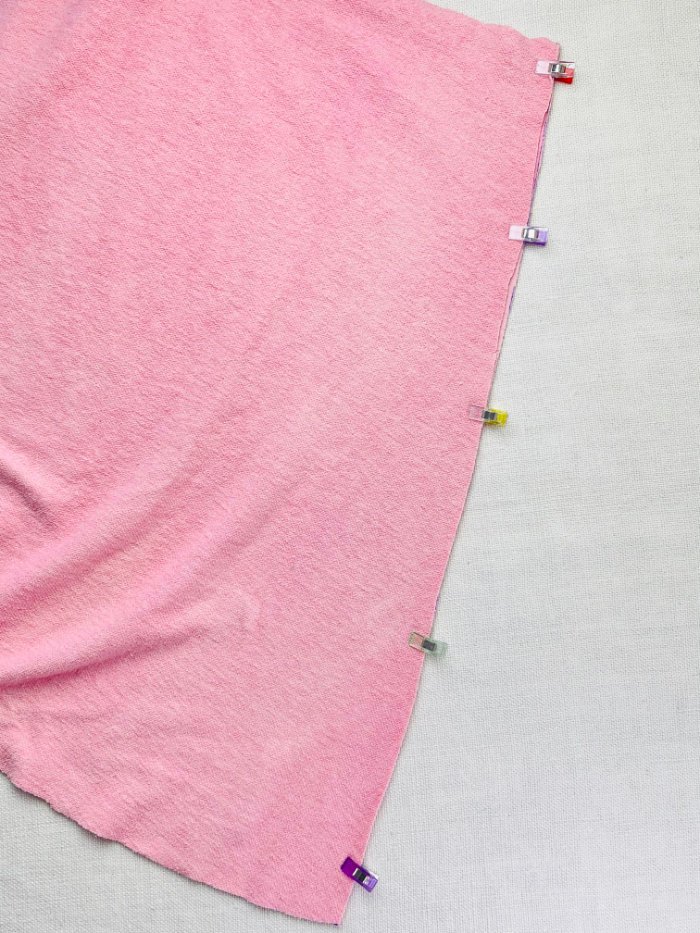
Then sew the side seams with 1.5cm seam allowance, backstitching at the start and the end.
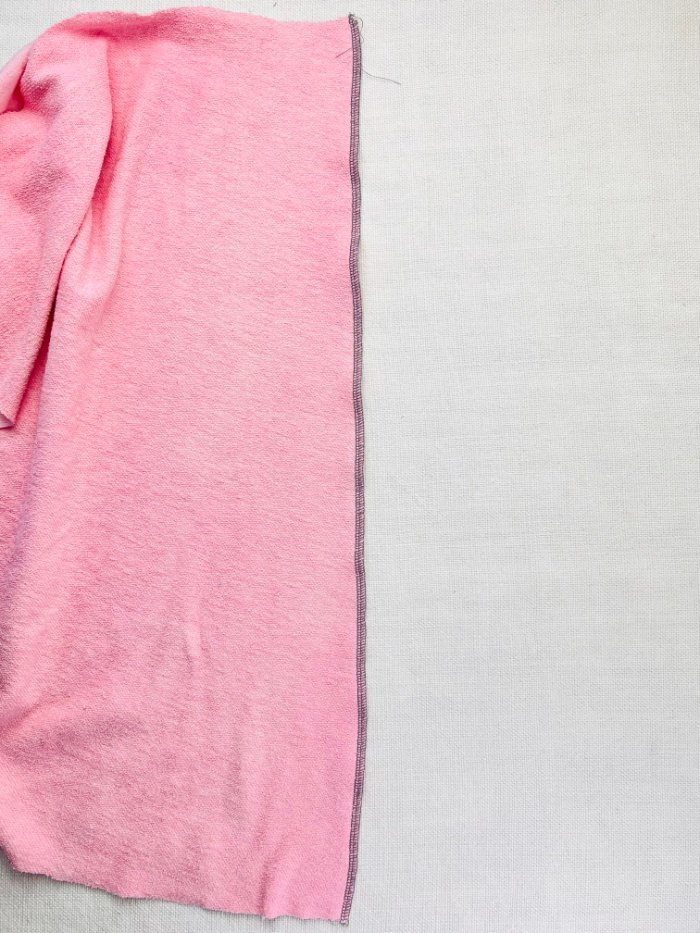
Repeat the same with the other front panel. When you sew the side seam together, start sewing from the same edge as you did with the first side seam. So, if you started the seam from the waist, then start the second seam from the waist as well. This will prevent the skirt misaligning itself if the fabric shifts slightly. It is not mandatory requirement but it will make the garment sit and look better.
Once you have sewn through side seams, press the seam as seen to embed the stitches and then press the seam open or towards the back.
Step 3: Sew a Rolled Hem on the Wrap Skirt
In contrary to any other skirt type, on the wrap skirt we need to finish the hem before attaching the waistband. In this tutorial I will show you how to do the rolled hem the easy and foolproof way regardless of the fabric thickness. I am choosing the rolled hem finish because it looks the best on the wrap skirt. The rolled hem does not add bulky seams or edges and will look nice from both sides if the wrap gets lifted to reveal the reverse.
Starting from the waistline, fold and pin 1cm of the side edge to the wrong side. You need to fold and pin the whole open skirt edge.
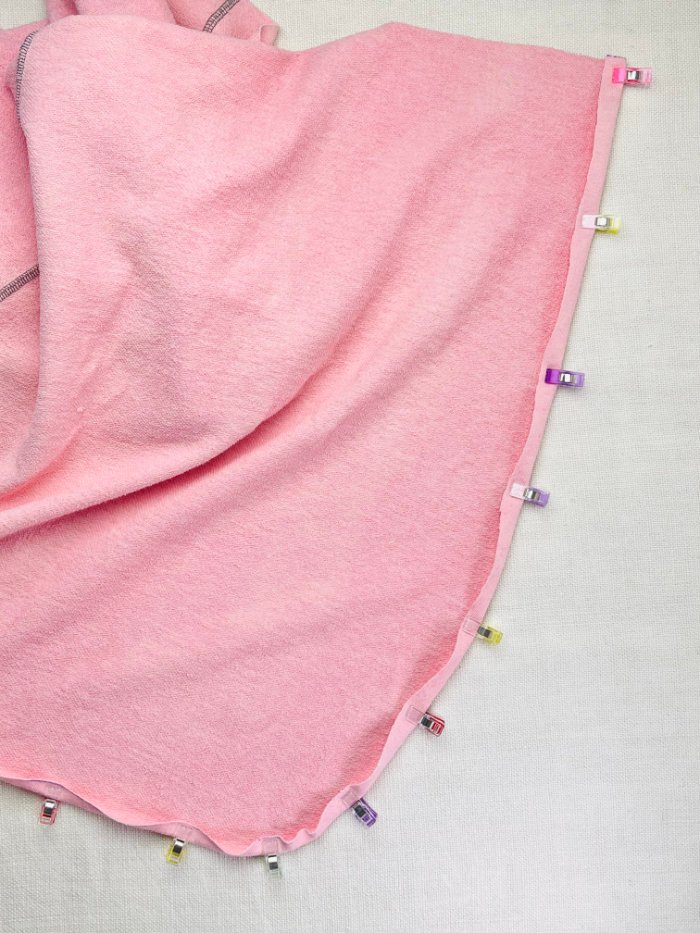
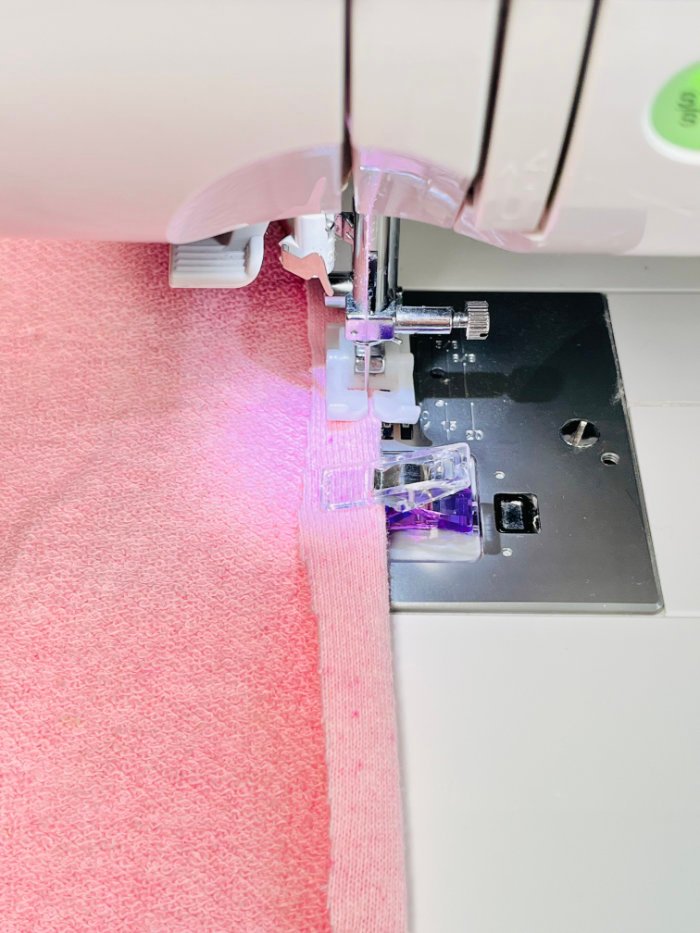
Then sew a straight stitch close the fold line. Closer the seam is to the fold, smaller the finished hem will be.
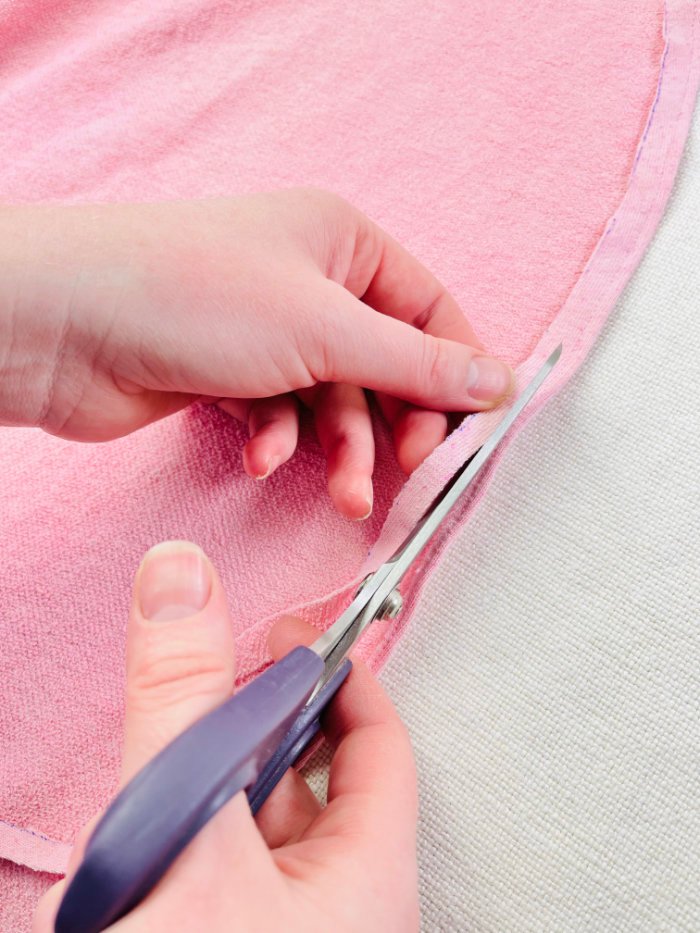
Once you have sewn the whole hem this way, you need to trim the seam allowance as close to the stitch line as you can go, without snipping the stitches or the skirt.
Then fold up the edge once more, hiding the raw edge. Pin in place.
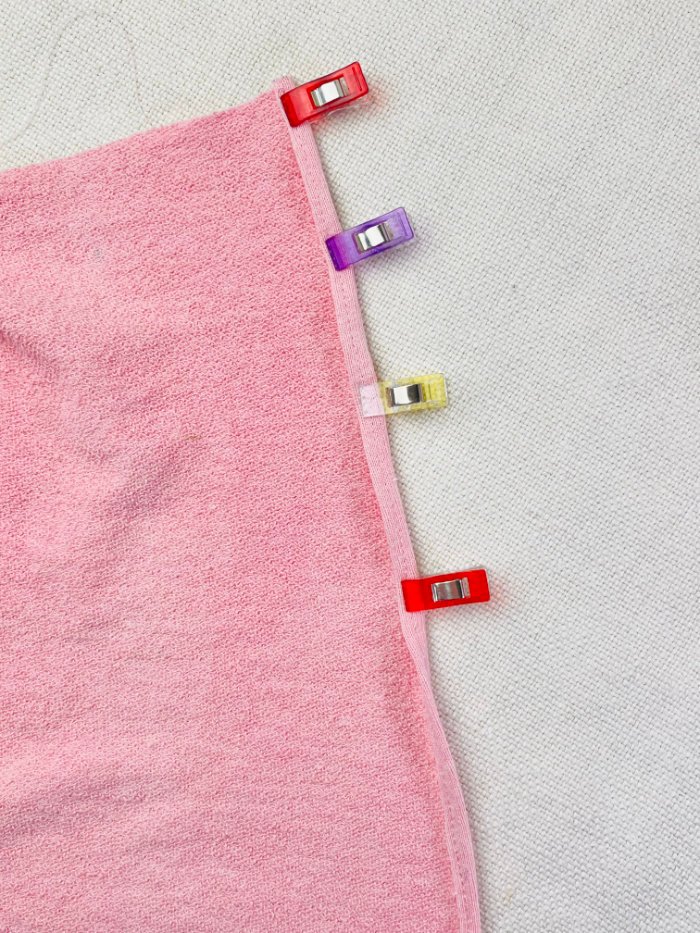
Then sew all around to finish the wrap skirt hem. This time you need to sew as close as you can to the left side of the seam.
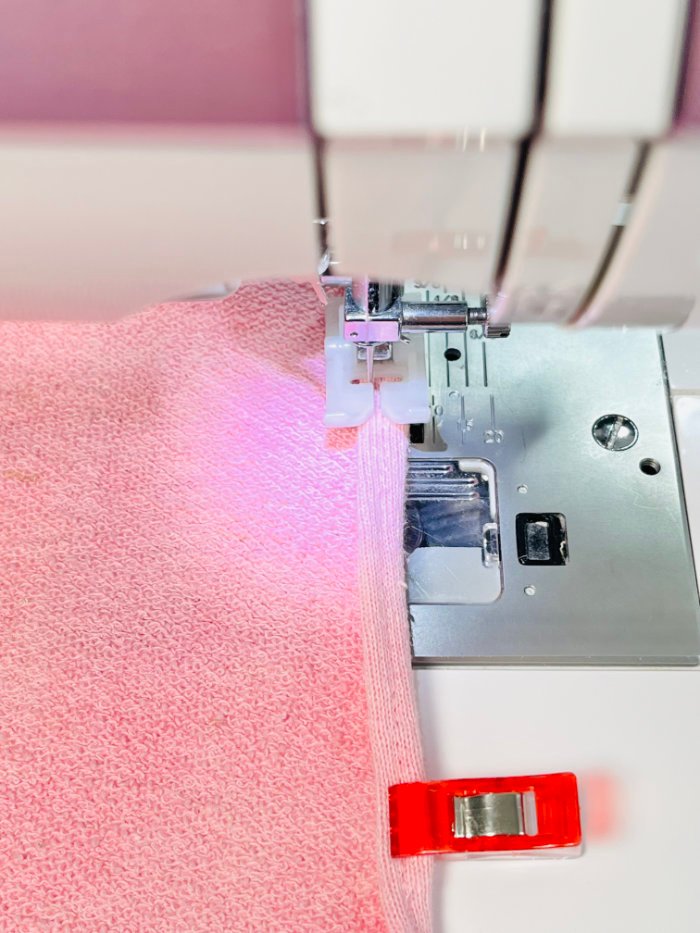
The finished hem will have a wavy appearance but that is beauty of a rolled hem. If you do not like the wavy hem you can carefully steam the hem with the iron to reduce the waviness.
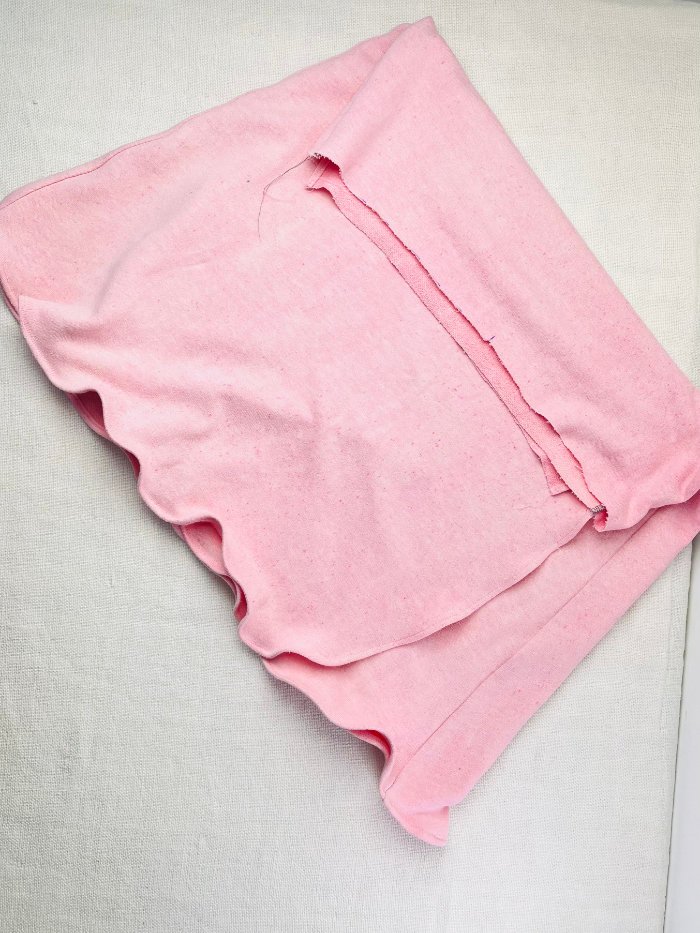
I do not use rolled hem foot or a zig zag stitch when doing the rolled hem because neither of the approaches work well over the seams. My method above has always produced a nice hem finish regardless of the fabric or seam choice.
Step 4: Sew the Extended Waistband & Ties to the Wrap Skirt
Next, find the centre of the waistband. Pin the interfaced side to the skirt waistline, with right sides together and matching the centre lines. The tie sections will hang loosely beyond the skirt.
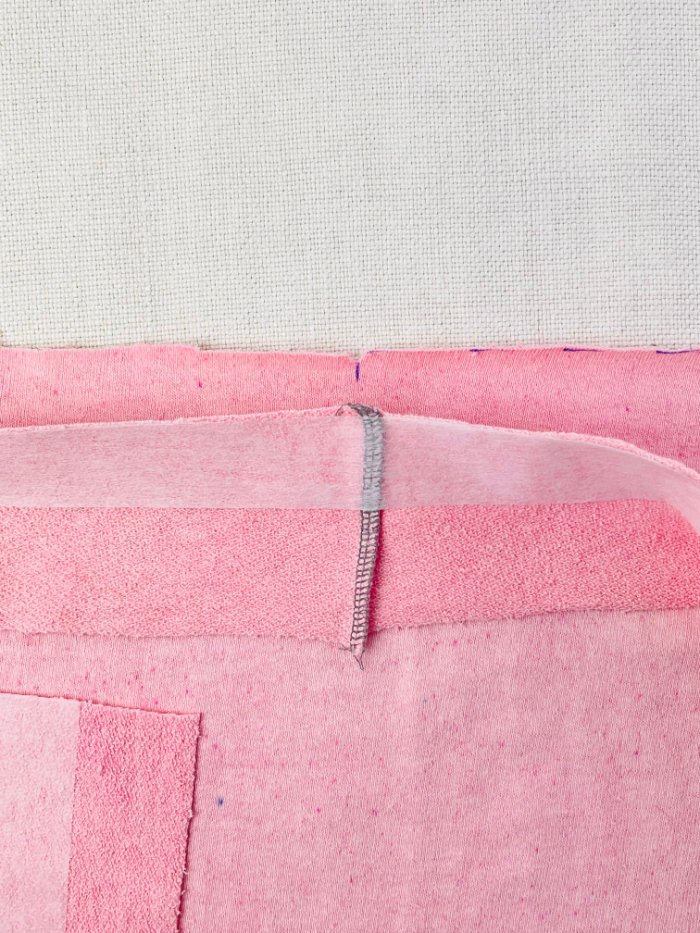
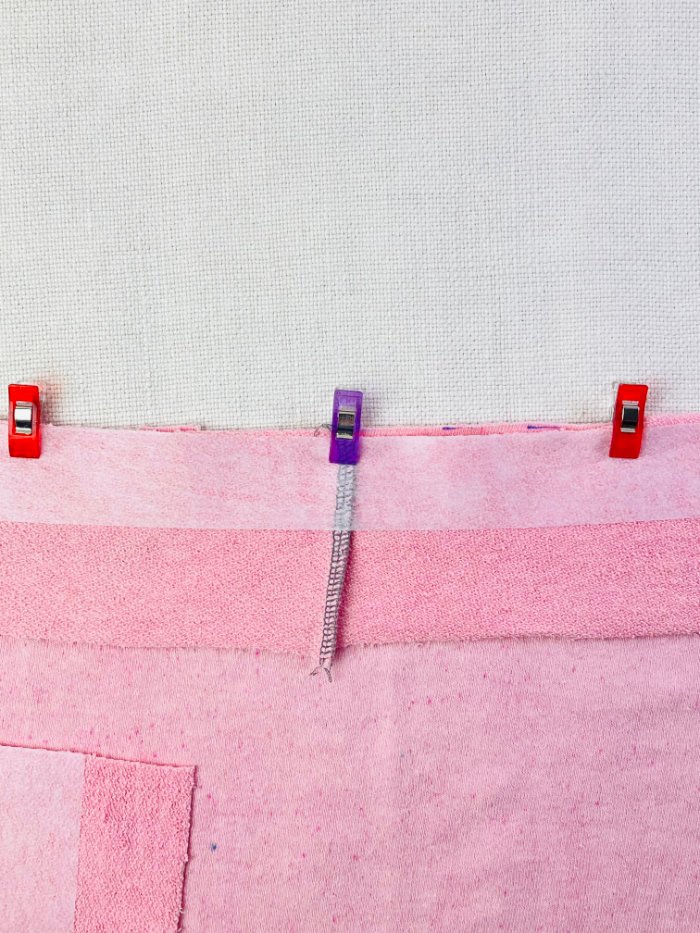
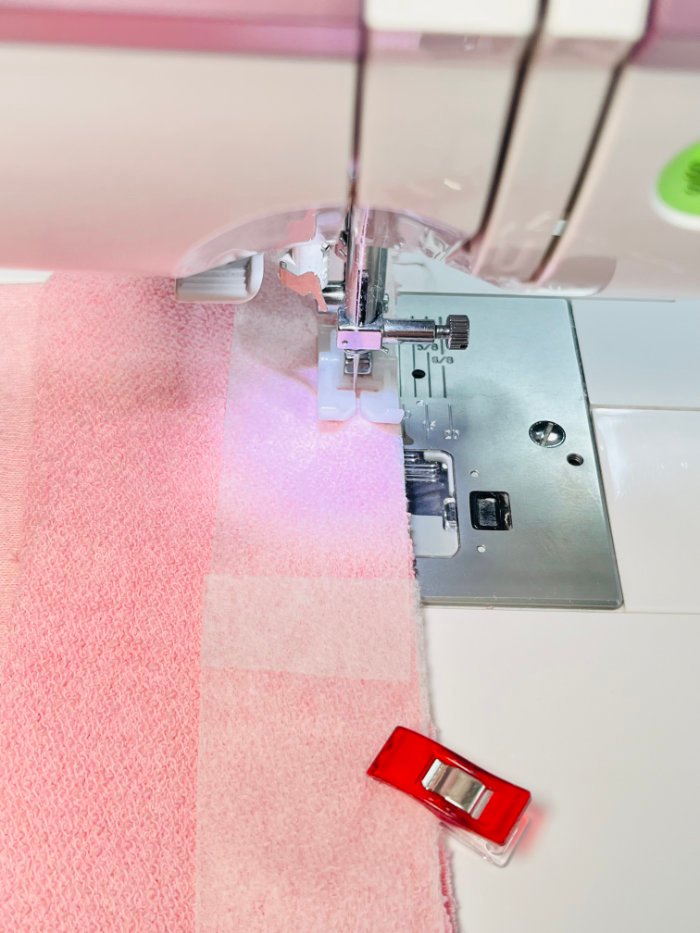
Sew the pinned waistband to the skirt with 1.5 cm seam allowance, starting from one side of the skirt overlap to the other side, backstitching at the start and the end. As you sew from one edge to the other, you may notice that the lower skirt section is shifting. Don’t worry about it, continue sewing, moving and repositioning pins as necessary to realign the fabric at the raw edges. Technically, you should be starting sewing from the centre back to the skirt sides to avoid fabric shifting unevenly, but since the waistband turns into ties then a little mismatched length of the ties will not be noticeable.
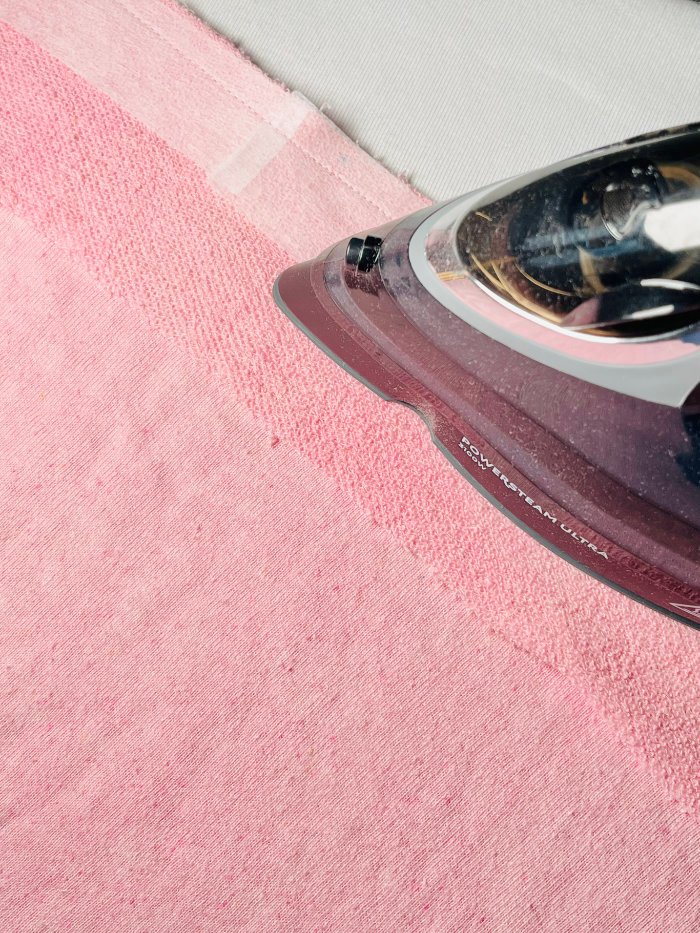
Press the seam as sewn to blend the stitches and then press the seam allowance up, towards the waistband.
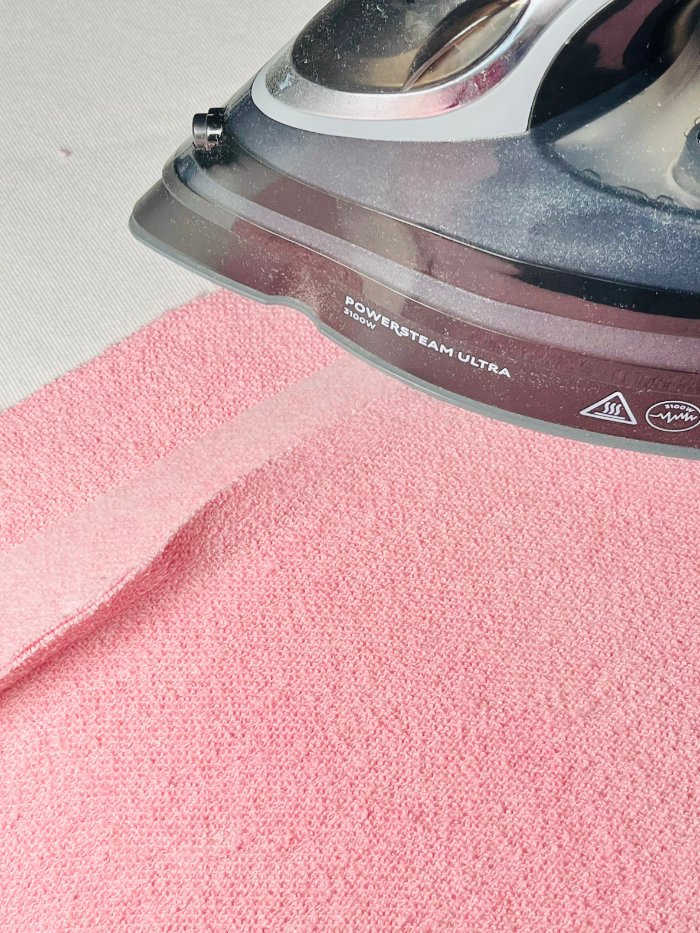
Next, fold the tie section of the waistband with right sides together.
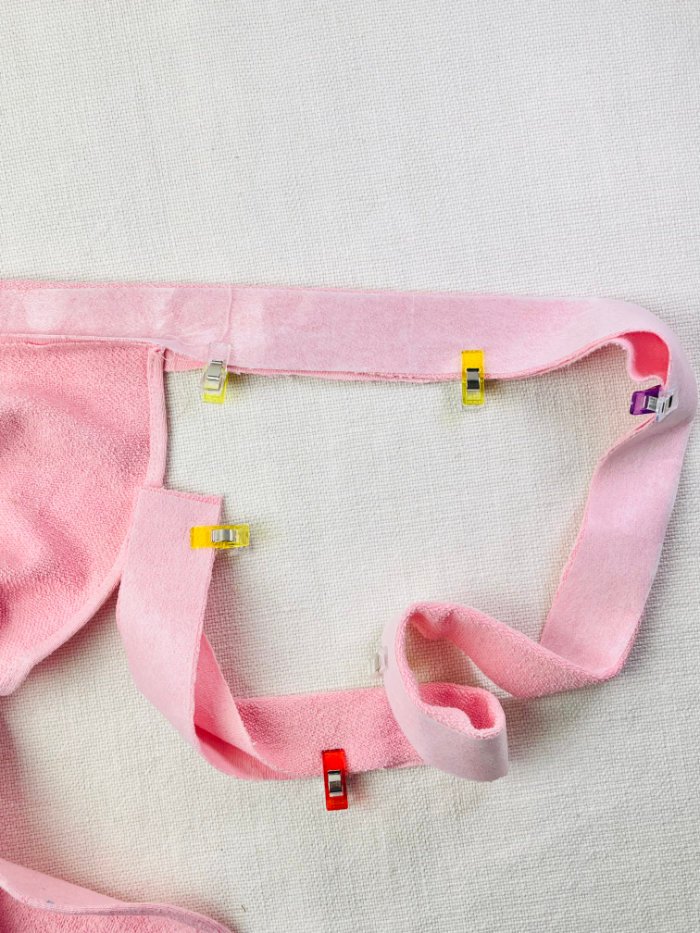
Sew the ties close along the raw edges with 1.5 cm seam allowance, starting a little after the skirt edge. By starting at the skirt edge rather than the end of the tie you will avoid mismatched ends in case the fabric shifts as you sew. Repeat the same with the other tie. Sew together the end of tie as well.
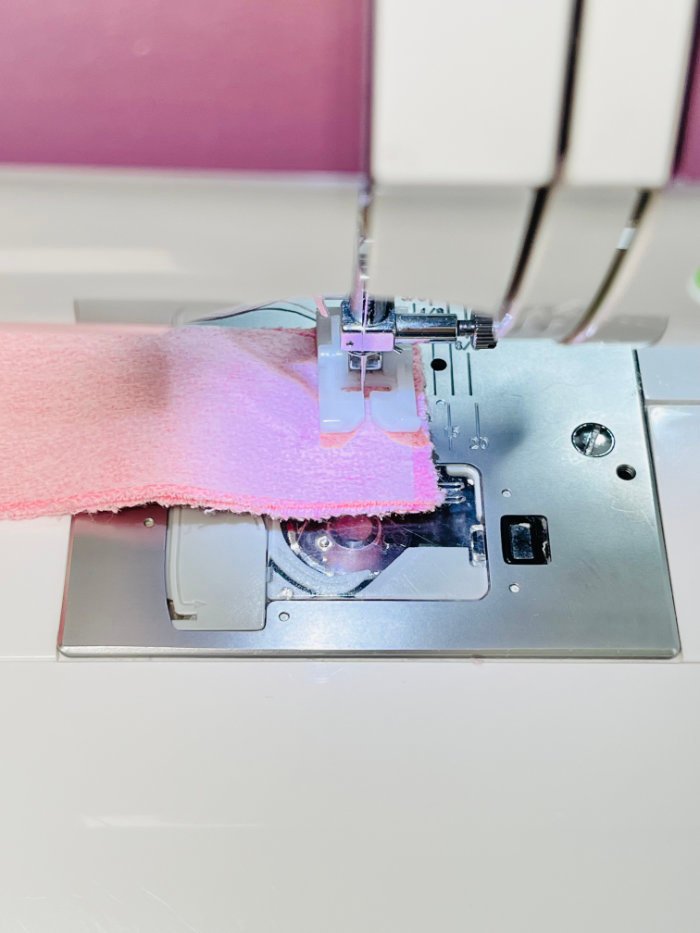
Press the seams to blend the stitches. Then press the interfaced seam allowance up to open the seam. This will help to have a crisper edge once the ties are turned inside out.
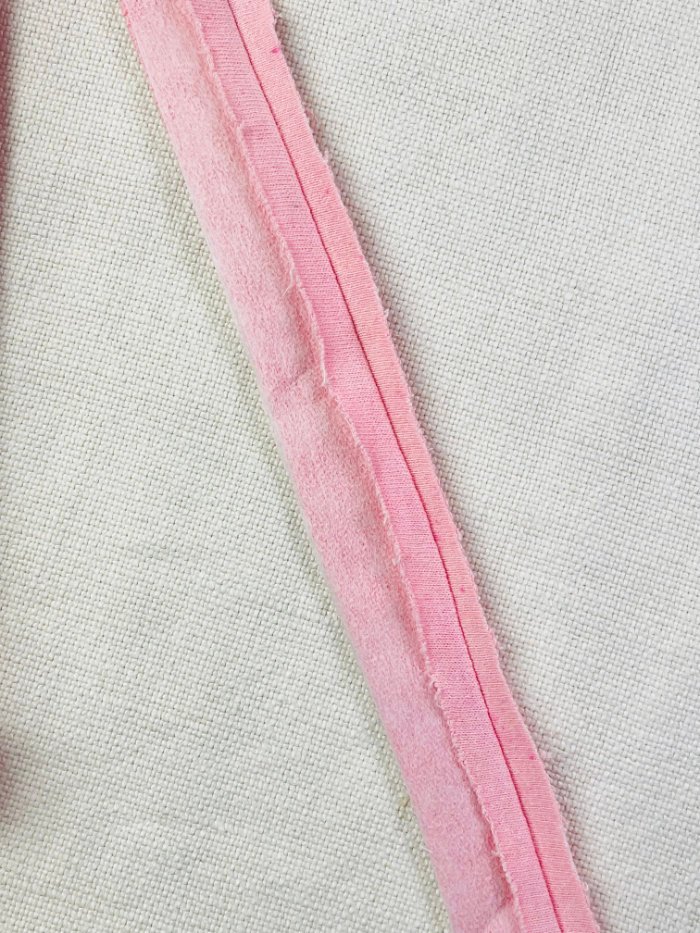
Then clip the seam allowances to around 0.5 cm for easier turning. Leave a little seam allowance untrimmed near the overlap.
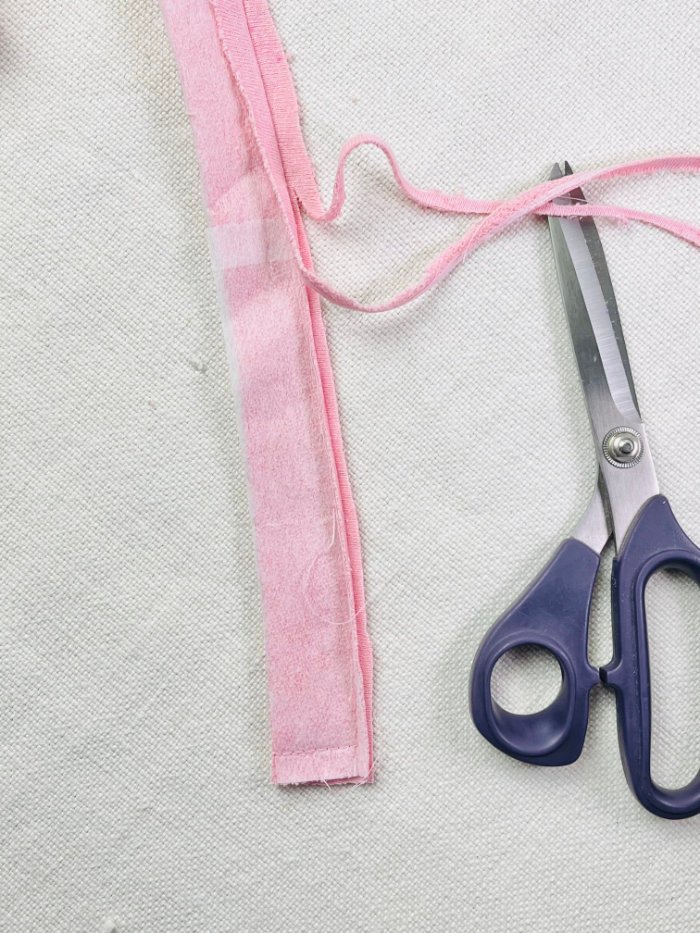
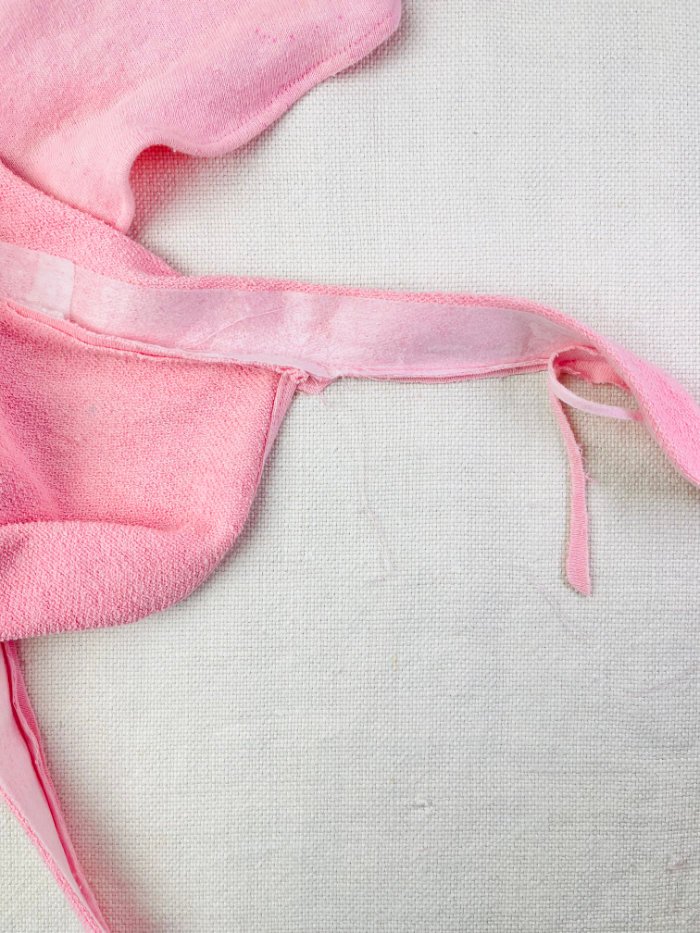
Next, push the end of the tie to inside, creating a little well. Then, using a chopstick, long knitting needle or any similar tool, push the tie to right way out. It is ok if the fabric is bunching, you may need to guide it a little over the point where it turns on itself to avoid ripping the seams there.
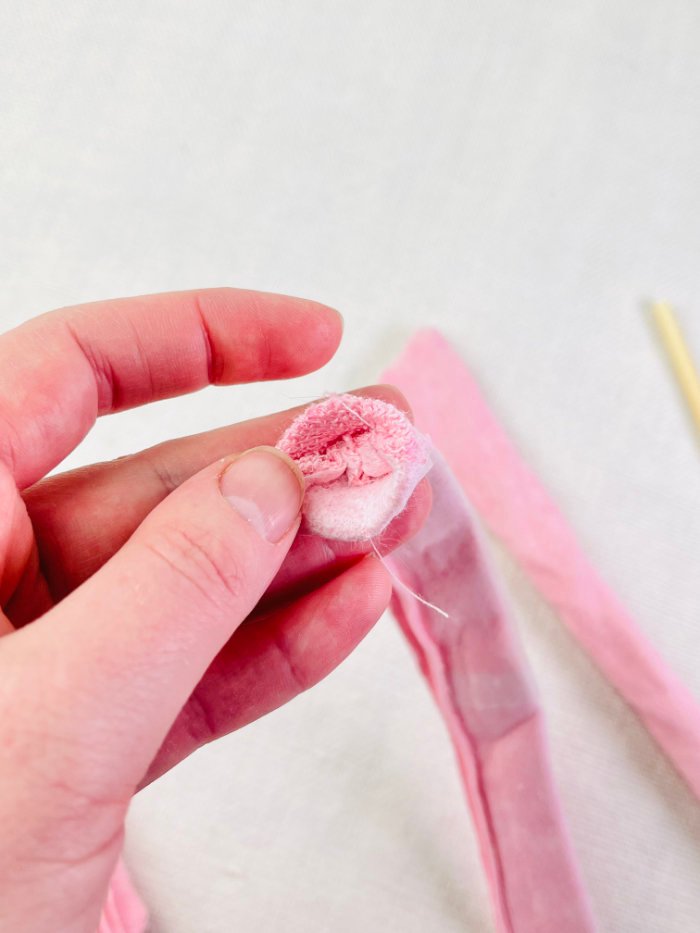
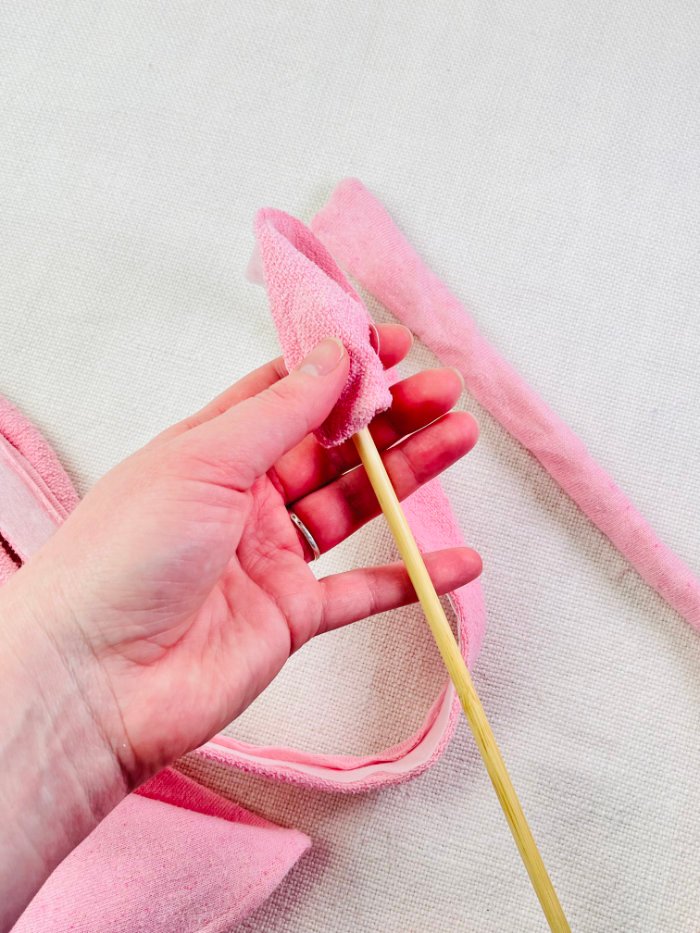
Once you have turned both ties inside out, press the ties. You may want to wiggle the seam along the edge with your fingers first, to open it up a little more before pressing.
Next, trim the seam allowance of the interfaced waistband side to reduce the bulk at the waist. Do not trim the seam allowance near the overlap edge as that will make it harder to create smooth transition from waistband to tie. A little bulkier seam will not be noticeable here but will give extra strength to the seams.
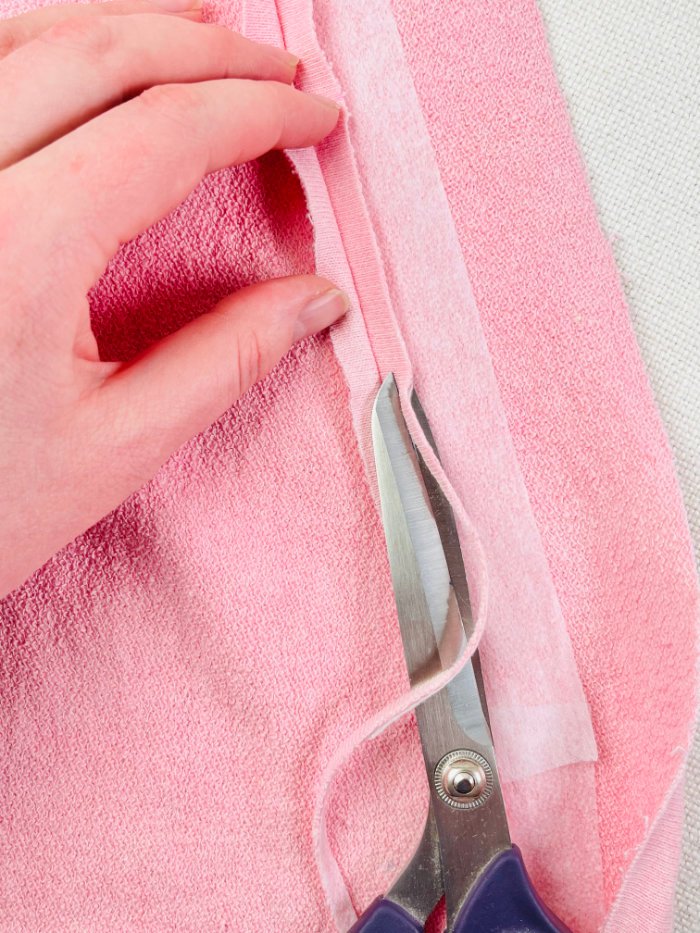
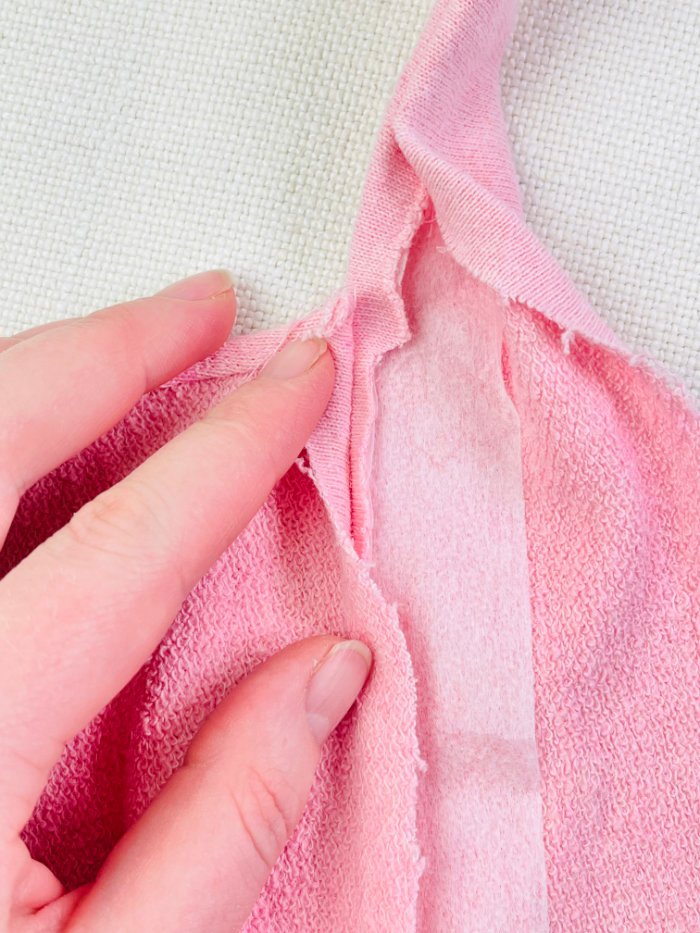
Then fold the raw edge of the waistband to the inside by around 0.5cm, place it over the seam line and pin in place from the right side.
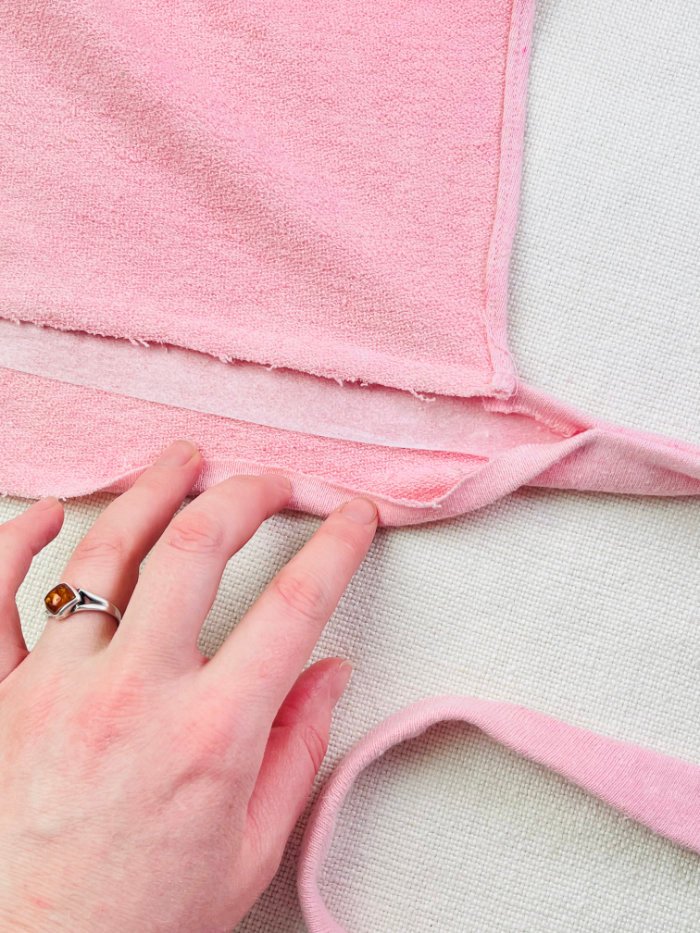
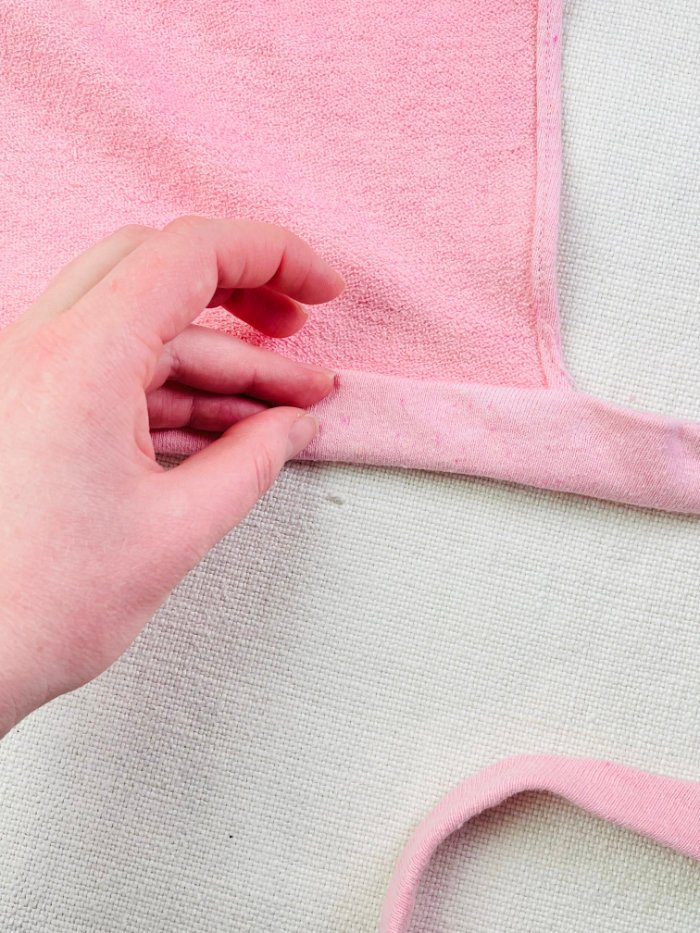
You need to insert the pin in the seam ditch to catch the folded edge and then up through the waistband.
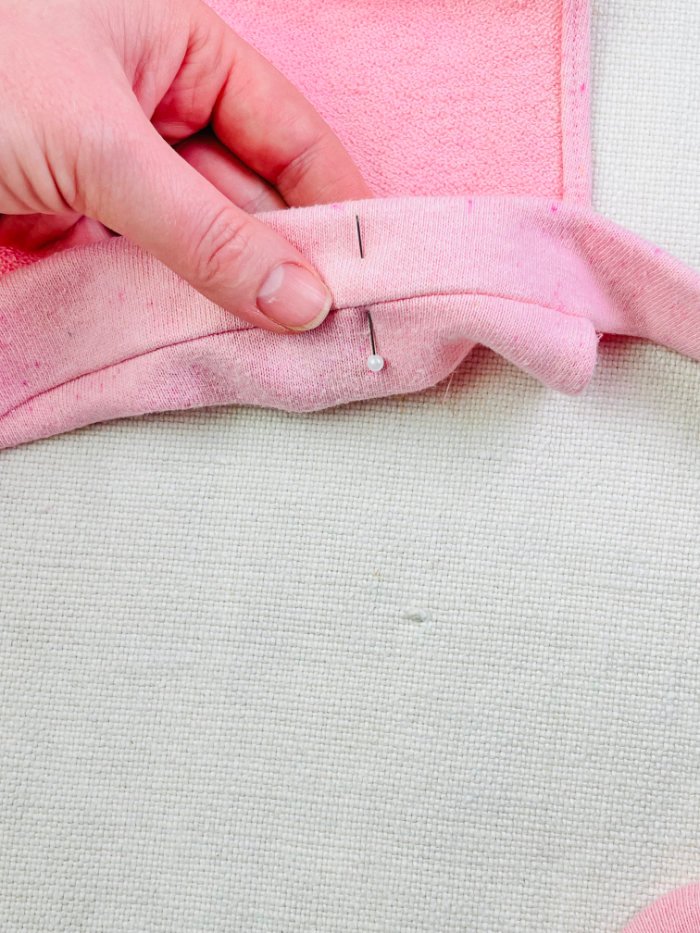
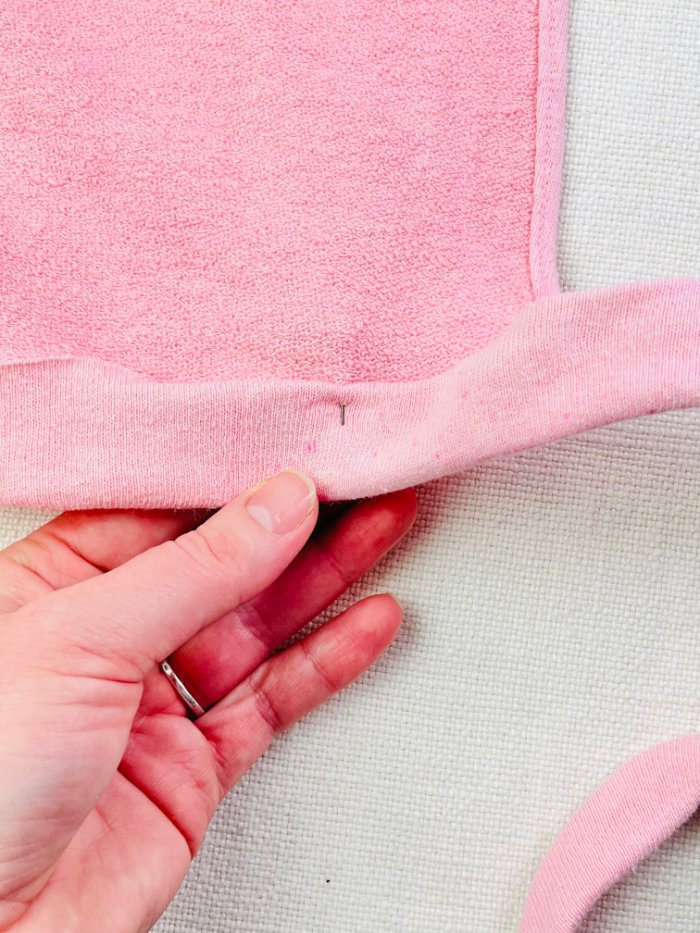
Insert as many or as little pins as you need all along the waistband. I find that too many pins make it actually harder catch the edge of the fabric when sewing. But this is something that you need to try out for yourself.
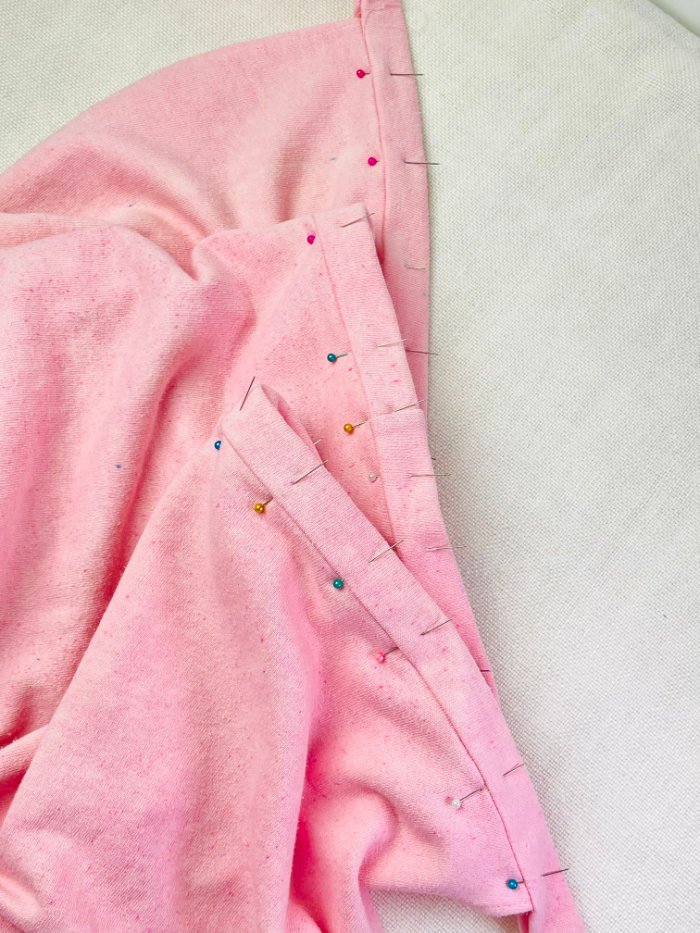
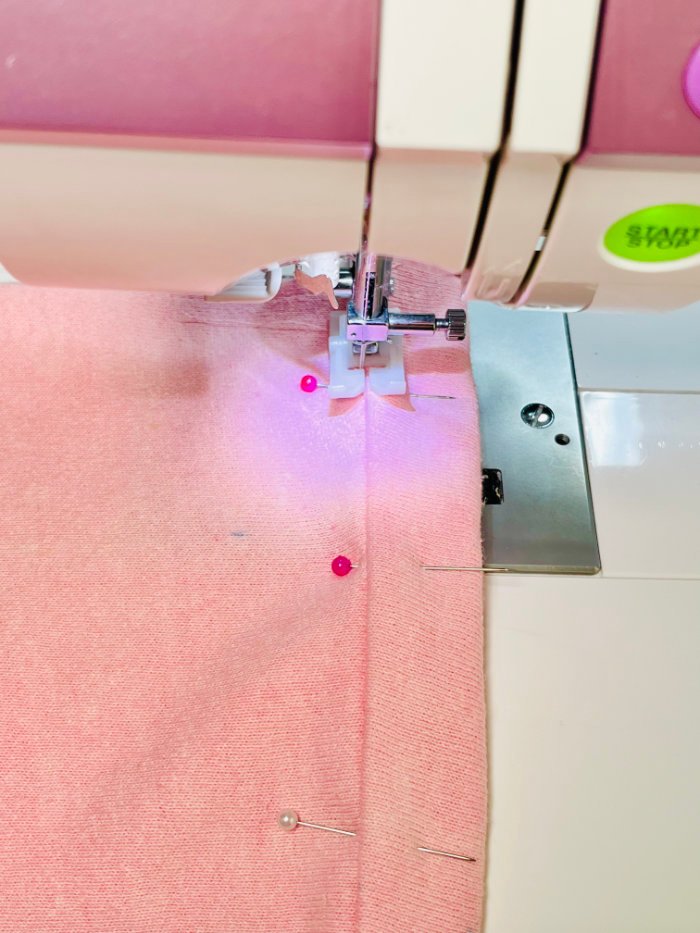
Then complete the waistband by sewing from the right side along the ditch created by previous stitching, catching the folded fabric behind (this is called stitch in the ditch). Sew from once end of the skirt overlap to the other. Do not worry if you miss some fabric. You can always go back and resew the bits that you missed. It gets easier as you practice this technique.
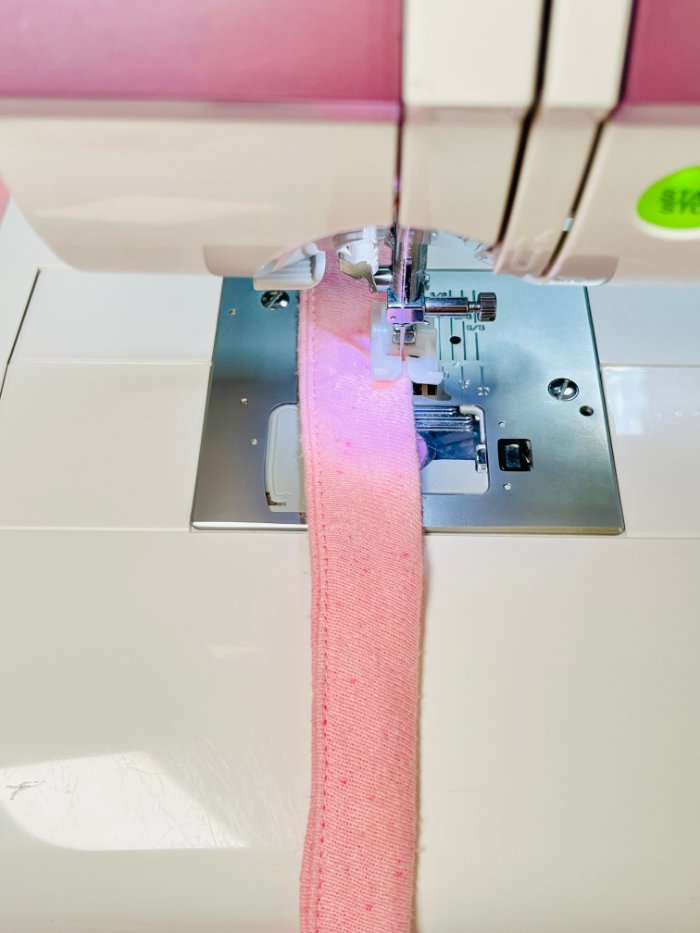
Once the waistband is complete, you can sew any gaps left on the ties, by topstitching all the edges of the tie. Do not topstitch the waistband. You need to cut the threads and move onto the other side the skirt.
Buttonhole for Wrap Tie
Adding a buttonhole for the inner wrap tie is optional and depends on fabric thickness and personal fit preference.
I opted not to create a buttonhole to guide the inner tie through for my skirt as the tie is narrow enough not to create unsightly transition at the side back. However, you can create a buttonhole opening on the waistband near the side seam or near where the inner overlap ends. I would recommend going closer to the side seam to make the skirt more versatile if you drop a dress size.
At your chosen location, mark and sew a buttonhole following the instructions on your sewing machines manual. The buttonhole needs to be positioned vertically.
Optional Pocket Variation
You can create and attach pockets to the DIY wrap skirt. The in-seam pockets would work the best but a simple patch pocket would be suitable too if you can find a good placement for it. The in-seam pockets will need to be attached before sewing together the side seams while patch pockets you can add at any stage in the construction.
In future posts I will address the drafting and construction of both pocket options.
Final Fit Notes & Styling
I tie the wrap skirt ties on the back or on the side. Never tie them on your tummy as that will make your belly look bigger. If you find that your ties are too long, you can always cut off the ends, fold them back to the inside and sew over them to hide the raw edges.
You can wear your wrap skirt with a simple fitted t-shirt, oversized flowy blouse tucked in the waistband or a jumper.
Care & Wear
There is no denying that the wrap skirt is a large piece of fabric. You will need to place the wrap skirt in a mesh washing bag or tied pillowcase before washing to avoid the ties and the skirt panels wrapping over everything else during the laundering.
I hang my skirt with wraps folded over each other for compact storage and to reduce over stretching of the waistband.
Wrap Skirt Sewing FAQ
Conclusions
This wrap skirt sewing tutorial shows how versatile an A-line skirt block can be when paired with simple construction techniques. Once you’ve sewn one, you can easily customise length, fabric, or tie placement for future versions.
Bookmark this tutorial or save it on Pinterest so you can come back to it later.
About the Author: Pattern Drafting & Garment Sewing

I’ve been sewing for over 30 years and drafting my own patterns for more than a decade. I work almost exclusively with self-drafted patterns, which means I don’t rely on instructions—I rely on understanding how garments fit and come together.
Most of my methods come from figuring things out through testing, adjusting, and breaking down common problem areas using logic and geometry rather than guesswork.
On this site, I share step-by-step tutorials on pattern drafting, garment construction, and sewing techniques to help you create well-fitted, professional-looking clothes from scratch.
👉 Read more about my approach to pattern drafting and sewing here: About Me
If you’d like to receive new sewing and pattern drafting tutorials straight to your inbox, sign up for my newsletter below.