In this pattern drafting tutorial I will show you a beginner friendly skirt drafting method that you can use for various A-line skirts and reuse for wrap skirts and custom designs.
Why a Simple A-Line Skirt Is the Best Beginner Pattern
A-line skirt pattern is one of the simplest and easiest pattern drafts that you can make. It takes less than 10 minutes to draft but gives you endless possibilities. You can reuse it to design a flared skirts, wrap skirts and even pair it with dresses, supporting a slow fashion sewing.
I absolutely love A-line skirt over other circle skirt types. Just like any of the circle skirts, this A-line skirt is fitted at the waist and then flows over hips and flares at the hem. Unlike a circle skirt, an A-line skirt can be drafted closer to the body—no dramatic wind incidents required. After one very public Marilyn Monroe moment in Rome, I’ve been firmly team A-line ever since.
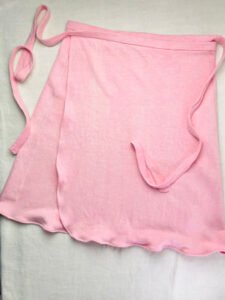
I am reusing this pattern for a wrap a-line skirt.
What You Need to Draft an A-Line Skirt Pattern
Before you start, you will need personal body measurements, some pattern drafting tools and a decision on what wearing ease to add.
Body Measurements Needed for an A-Line Skirt Pattern
You will need these key measurements from your personal measurements table to draft an A-line skirt. My post on how to take accurate body measurements is a great starting point for any pattern drafting and will help you achieve a perfect fit.
- Horizontal measuremetns:
- Waist circumference
- Mid Hip circumference
- Hip circumference
- Vertical measurements:
- Waist to Mid Hip
- Waist to Hip
- Waist to Knee (or waist to calf, waist to ankle)
I suggest that you write these measurements down on a small piece of paper and place it nearby for quick reference during the A-line skirt drafting process.
Pattern Drafting Tools for an A-Line Skirt
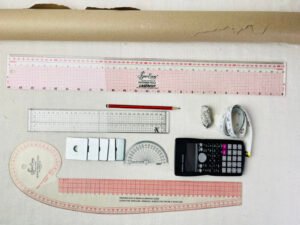
To draft the A-line skirt, you will need these tools and materials:
- Paper (pattern drafting paper, A1 size slip chart paper, roll of crafts paper or you can stick several pieces of paper together to achieve the required size)
- Long Ruler
- L shaped ruler or triangle ruler to make squared lines
- Pencil or pen
- Measuring tape
- Pencil eraser
- French curve
Wearing Ease vs Design Ease (Explained for Beginners)
The pattern piece will need a wearing ease. The wearing ease can be achieved from a stretchy fabric ease or by adding a design ease into the A-line skirt pattern.
Most woven fabrics have no fabric ease as the fibres are woven and do not stretch, unless some spandex or lycra is added. Knit fabrics are made of interlinked loops that allow the fabric to expand as the wearer moves, thus giving some wearing ease.
To make the pattern truly versatile, I suggest that you add a 2-5% design ease to the A-line skirt pattern. That is, for each horizontal measurement you will need to add 2-5% of that horizontal measurement. This amount of ease will achieve a close fit silhouette and will allow the body to move and expand throughout a day.
If you prefer a looser fit, add 5-10% of design ease.
You could also match the ease to the basic bodice block if you intend to use the skirt pattern for a dress. I personally would draft an ease that I closer to the body and then adjust the skirt pattern to fit with the bodice block at the stage when I want to use the A-line skirt pattern for a dress.
I will be adding 2% ease throughout this tutorial, providing an explanation on how to do it at each step.
Quick rule of thumb
– Close fit: 2–5% design ease
– Relaxed fit: 5–10% design ease
– Dress conversion: match bodice block ease later
What Is an A-Line Skirt? Shape, Fit, and Differences
Let’s look at the A-line skirt pattern drafting basics.
A-line skirt is a skirt that has a letter A silhouette on the body. It is fitted at the waist and hips and then flares out at the hem. In comparison, straight skirt’s hem is the same circumference as the hip while A-line skirt’s hem is larger than hip circumference. It is similar to circle skirts but provides a closer fit and uses less material, which is one of the reasons why I prefer it over the circle skirts.
One could say that it is easier to draft a quarter circle skirt and achieve similar outcome. But I would argue that a quarter circle skirt does not suit all body shapes as it only looks at one horizontal measurement. Personally, the quarter circle skirt does not fit me at all as my hips are wider than the hip space on the quarter skirt. Whereas, the method for drafting A-line skirt that I am sharing with you takes into consideration unique characteristics of individual body, to achieve an A-line skirt that fits perfectly and is easy to draft.
Step-by-Step: Drafting the Basic A-Line Skirt Pattern
Marking the Vertical measurements
We will start by marking the vertical measurements for the A-line skirt pattern.
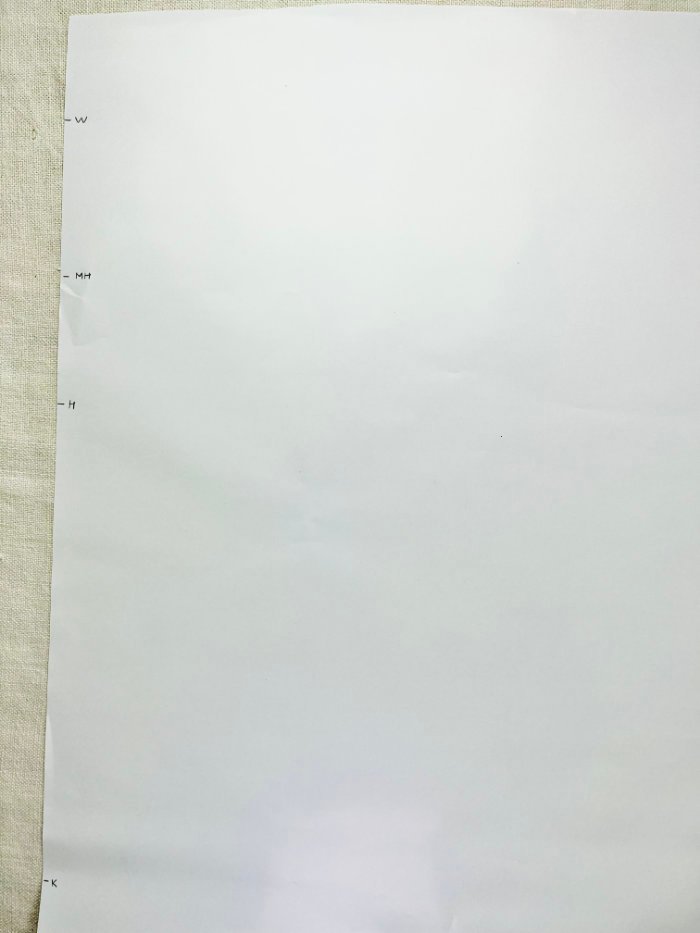
If your paper has a straight edge that is at least your knee to waist plus extra 8 cm long, then you will mark the vertical measurements on the left edge of the paper and it will be the centre fold line. However, if the edge is not straight, then draw a line on the left side, close to the edge, that is your waist to knee measurement plus 8 cm. This line will be your centre fold line.
I am using A1 flip chart paper and it has a straight long edge and I will be marking my measurements on the edge.
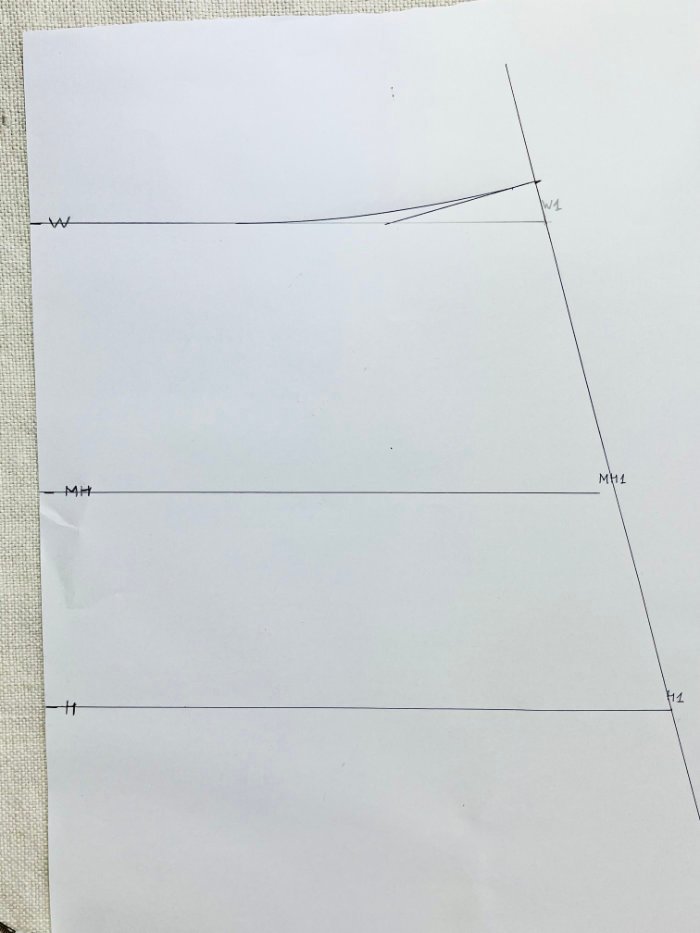
From the top of the paper, measure 8 cm and mark a point W for your waistline. From point W, measure down your waist to mid hip measurement to point MH, your waist to hip measurement to point H, and your waist to knee measurement, to point K. If you wanted a longer or shorter skirt, then you can replace waist to knee measurement with your prefer measurement from waist and abbreviate accordingly).
Drafting the waist and hip line
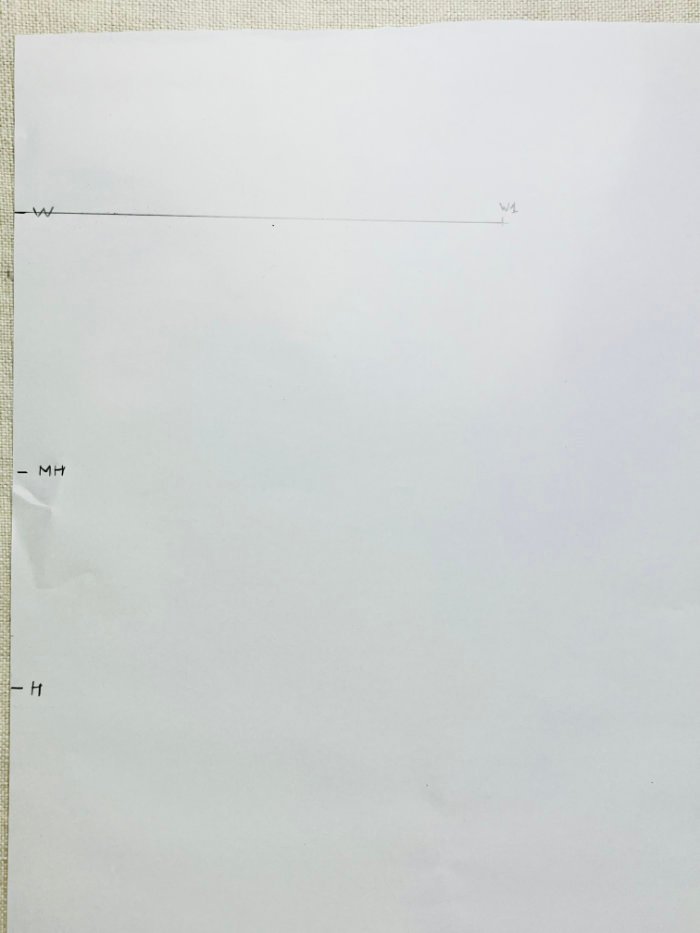
Next, from point W square to the right to point W1 your quarter waist measurement plus the design ease. I am using 2% design ease and my waist measurement is 89cm. Therefore, the measurement between W and W1 is 22.69cm (89cm / 4 x 1.02).
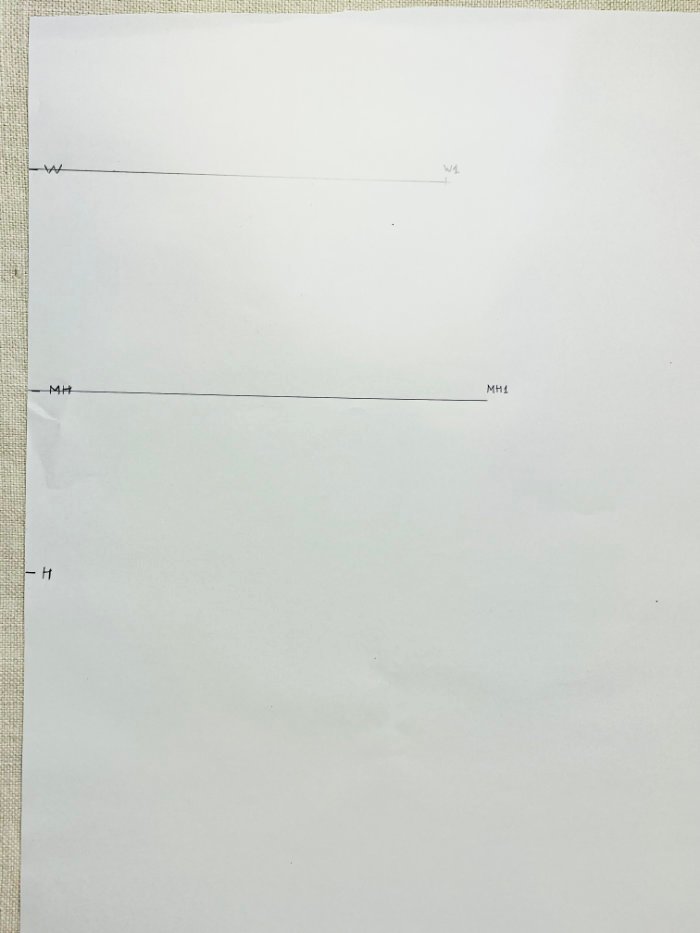
Then, from point MH square to the right to point MH1 your quarter mid hip circumference plus the design ease. I am using the same 2% ease here and my 99cm mid hip circumference gives me 25.245cm that I round up to 25.25cm.
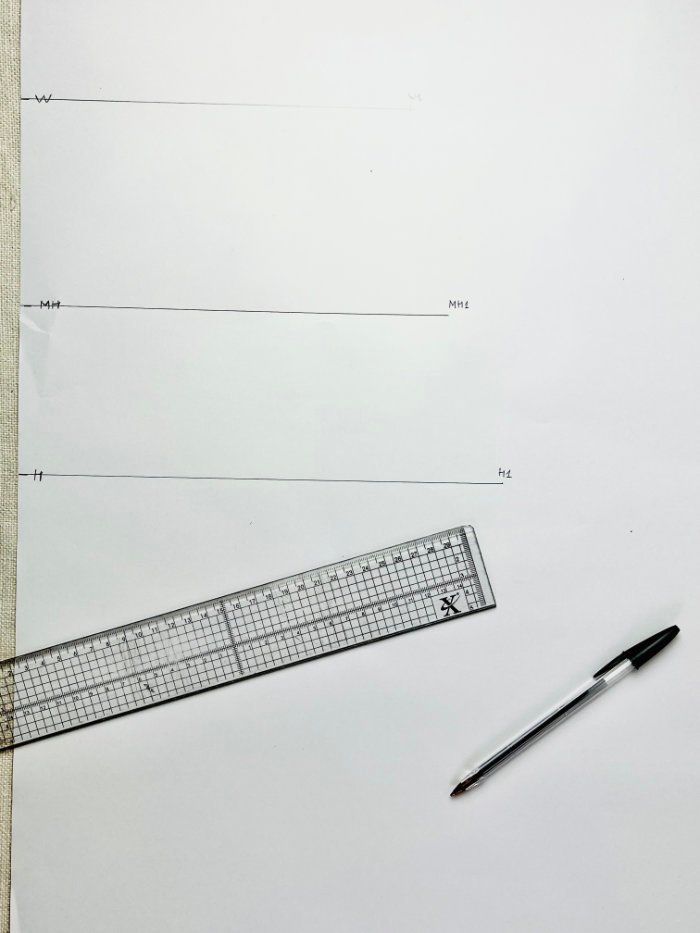
Repeat the same for hip circumference, squaring to point H1 a quarter of your hip circumference plus the design ease. My 112cm hips with 2% wearing ease give me 28.56cm rounded up to 28.6cm.
Marking the skirt length
Now, square to the right from point K a line that is longer than either MH or H line. You may want to extend it as far as the other side of the paper to ensure that the side seam ends on this line once drafted.
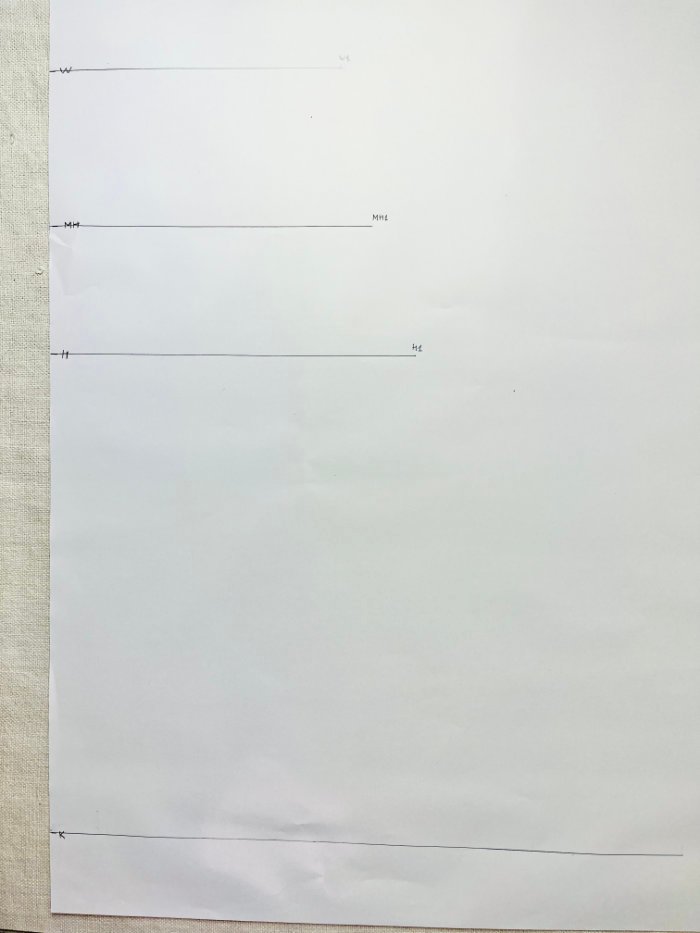
For this pattern draft I am using waist to knee measurement as a skirt length but if you went for longer or shorter skirt then your hemline would be higher or lower than mine.
Creating the Side Seam on an A-line skirt
Let’s look at what you have drafted so far. You should have your vertical and horizontal measurements marked for the base of the skirt.
We now need to draft a side seam. To do that, you need to place a long ruler connecting points W1 and either MH1 or H1, whichever is the widest. This will ensure that the skirt fits around each key area of your body.
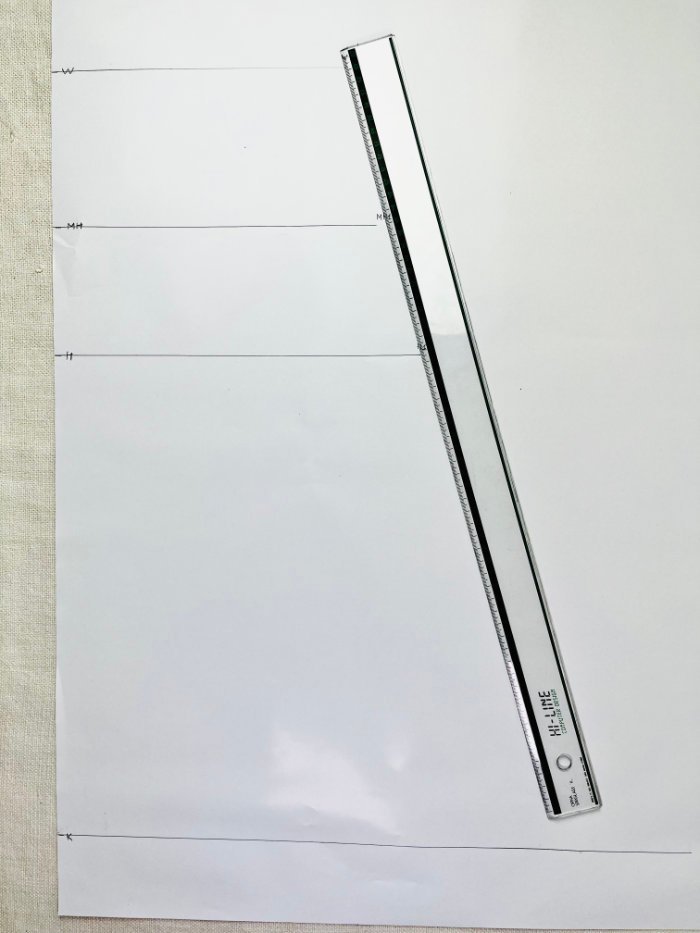
Then, draw a line connecting these points and extending above W1 and all the way down to connect with the knee line. This line will form your side seam but is not yet the final side seam. It requires some work to eliminate the sharp points and ensure smooth hemline.
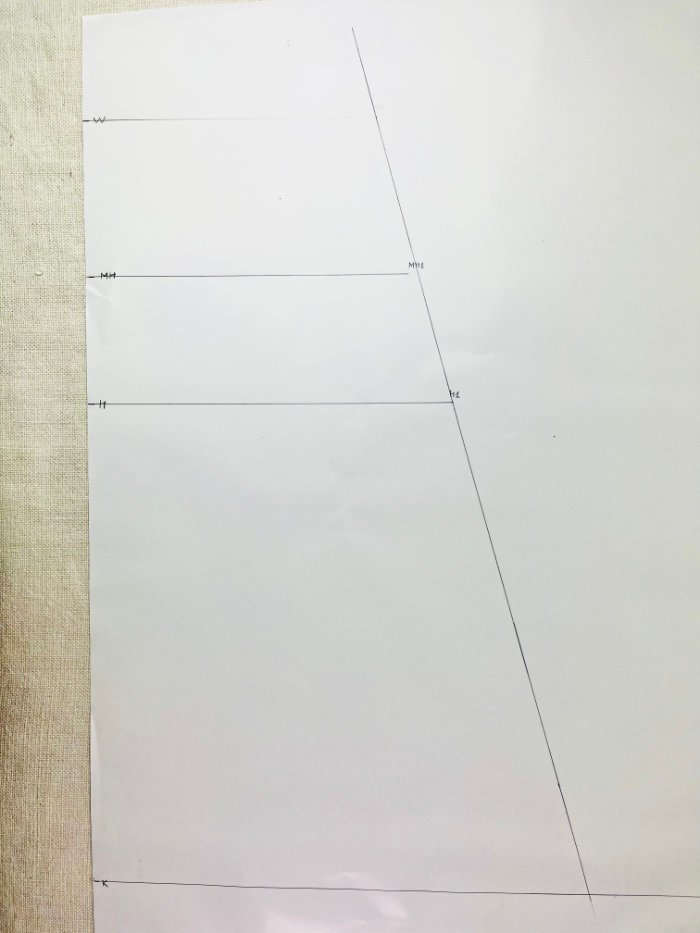
Correcting the side seam
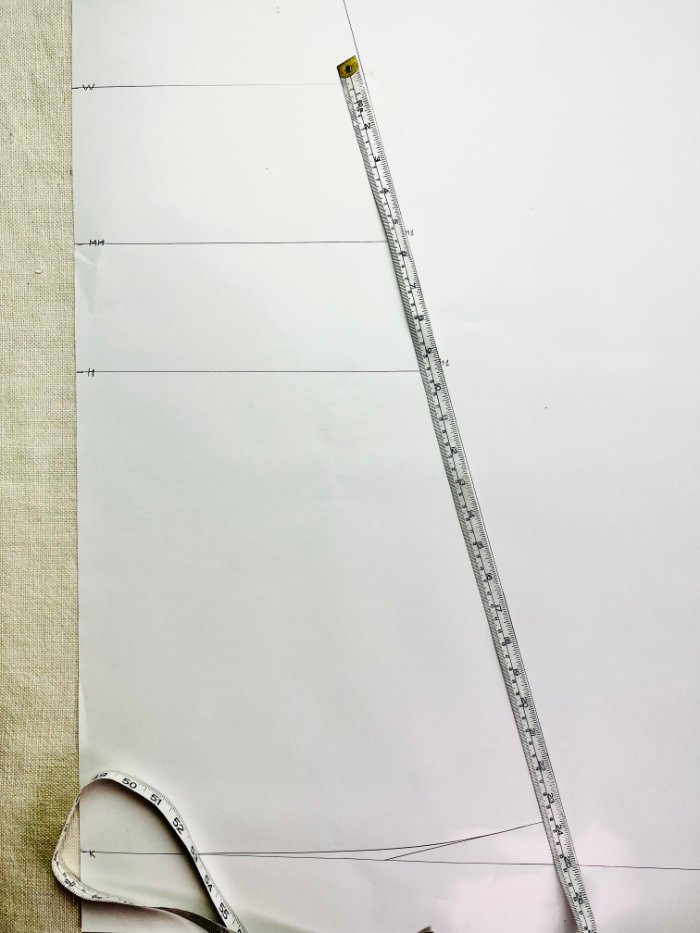
If you measured the current side seam, you will notice that is much longer than the measurement from W to K. This is as to be expected and we need to bring it back to the correct side seam length and create a smooth hem and waistline transition.
Firstly, place a square ruler against the side seam and connect to the hemline to create a 90 degree angle on the side seam. You want this line to be long, to touch at around 1/3 of the hemline from the side seam. Further in on the hemline you go, further up the side seam the hemline will be.
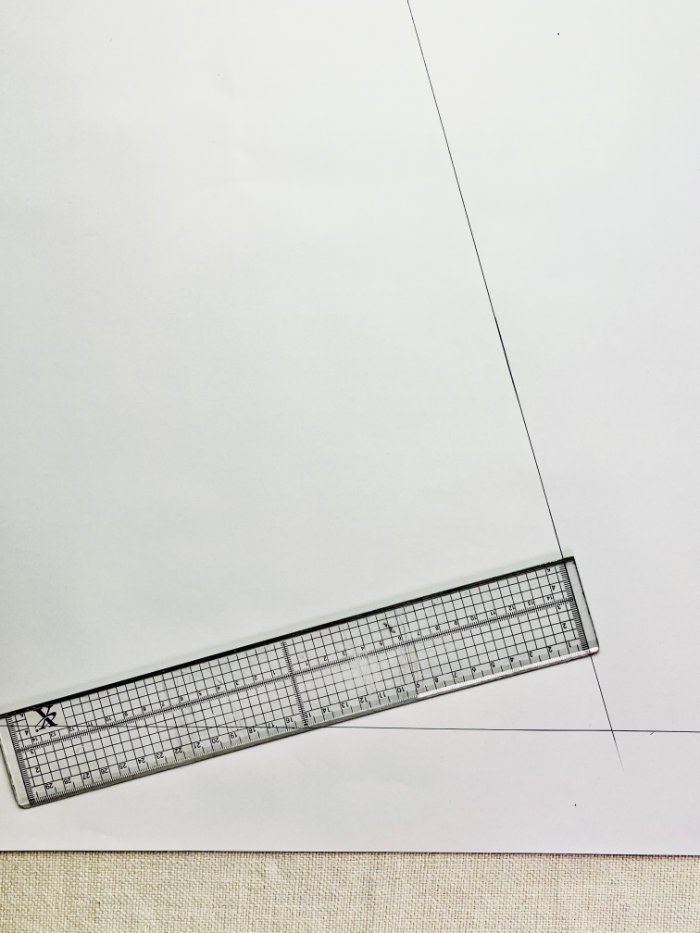
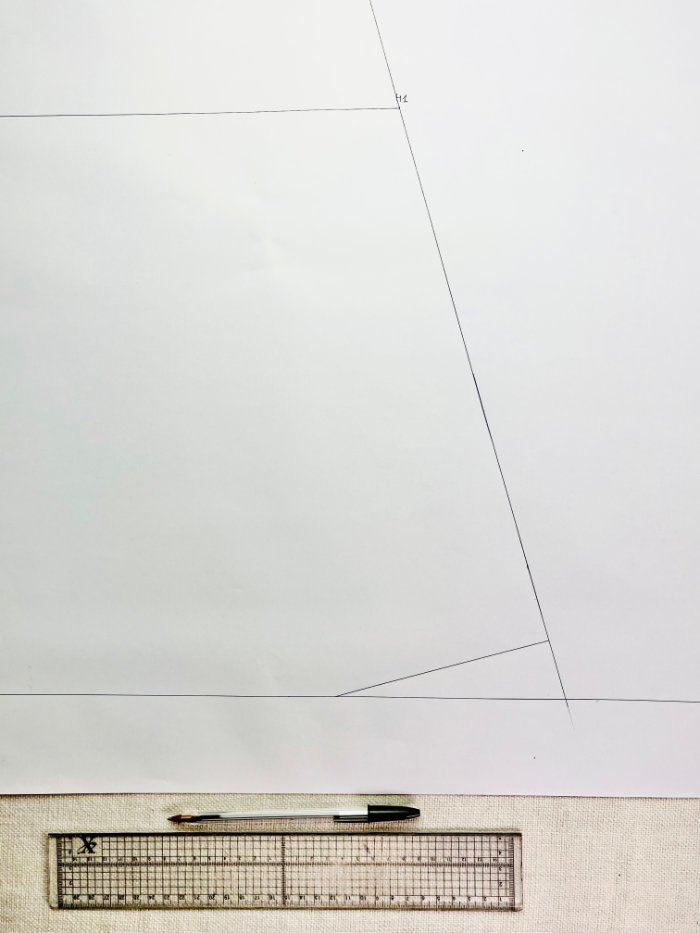
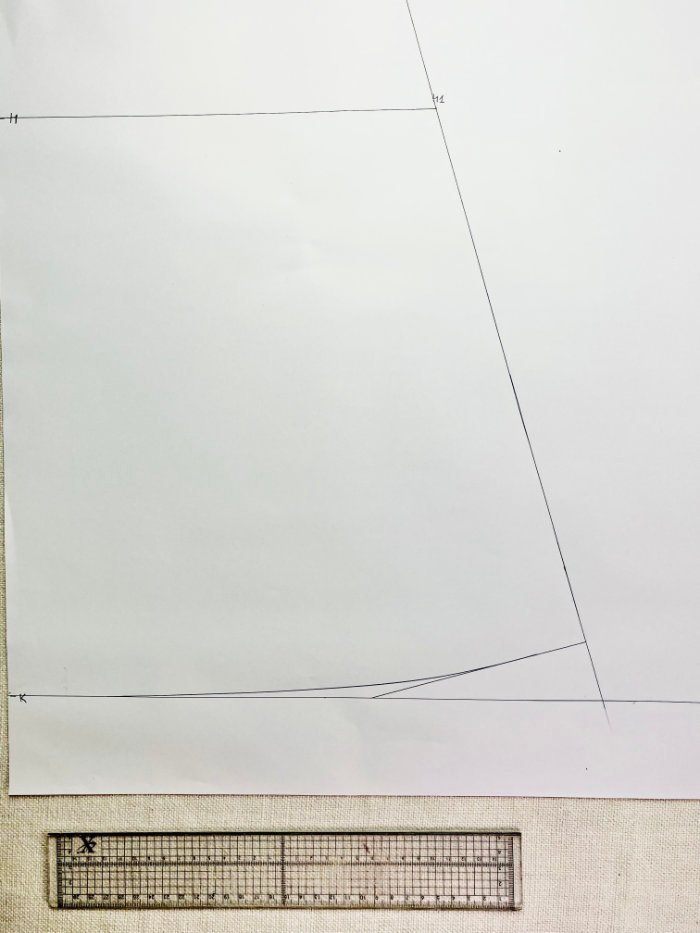
Then, either free hander with French curve, smooth out the new hemline, keeping the 90 degree angle at the side seam.
Next, you will need to correct the waistline point on the side seam. Remeasure the side seam from the new hemline. You will not that the point W1 needs to go up higher. Mark the new W1 point on the extended side seam line.
Then, similarly to the hemline, connect the new W1 point back to waistline, creating a 90 degree angle at the side seam. Contrary to hem, the point from which to draw the 90 degree angle is already marked for you.
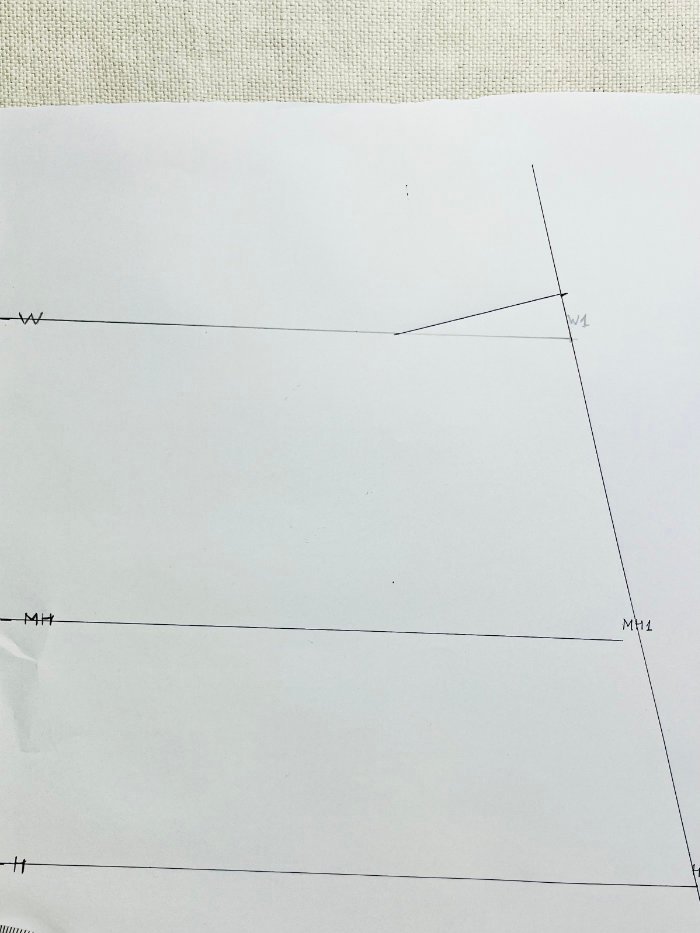
Then with a French curve or free hand, smooth the waistline with a curved line.
In my post on how to eliminate the pointy side seams I explain why this step matters and what other alternatives you have to correct the issue of jagged edges.
Cutting Out Your A-Line Skirt Pattern (Block Method)
Mark the fold line on the straight edge. This is going to be your centre front and centre back line for the pattern. Also mark the straight grainline, going parallel to the centre fold line. This will remind you how to place the pattern on the fabric once it is complete.
I am not adding seam allowances for this pattern because it will be used as a basic A-line skirt block rather than a finished design sewing pattern. If you plan to use the pattern just for a specific project, then go ahead and add the seam allowances between 1-1.5cm all around, except for the hem. For the hem use a 2 cm seam allowance.
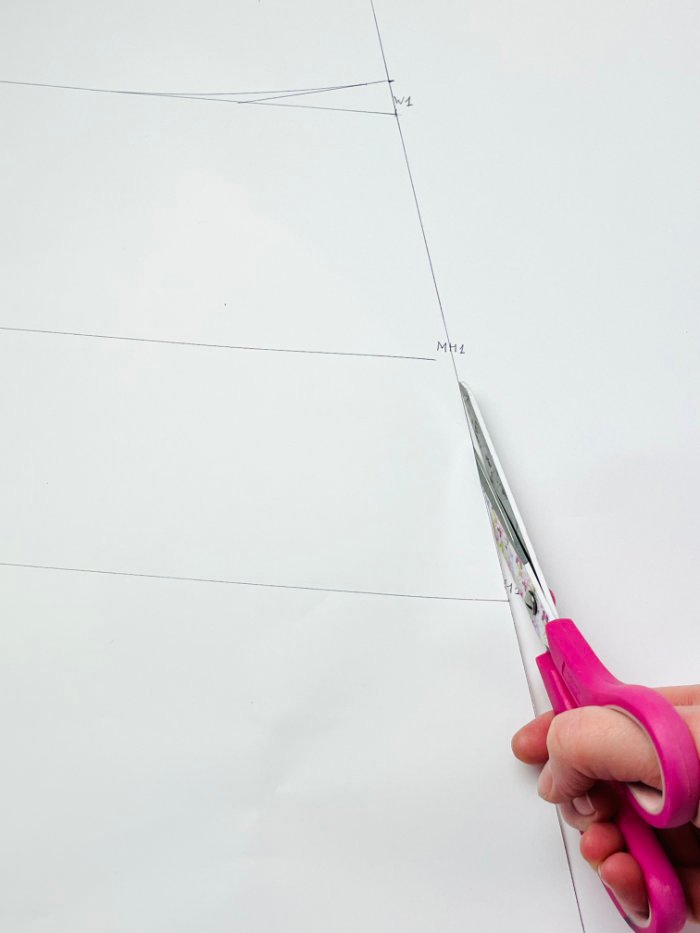
Now that the pattern is complete, you need to cut it out.
How to Adapt This Draft for a Wrap A-Line Skirt
My new project is to convert the A-line skirt pattern to a wrap A-line skirt. I will keep the pattern as is for the back piece but the front piece will need to be modified for the overlap section. It will also need the waist ties adding and, depending on the width of the waistband, I will also need to mark the buttonhole placement to guide the tie on one side.
The basic A-line skirt pattern draft will save time when drafting the wrap A-line skirt as I will just need to add the design elements without worrying about the fit issues.
A-Line Skirt Design Variations You Can Create From This Draft
You can transfer the A-line skirt into a gored skirt and a gored skirt with low flare. You can add pockets, gathers, godets and flounce, as well as play with various waistband options and depth. I will endeavour to write tutorials on all of these in due course.
Fabric Suggestions for a Simple A-Line Skirt
The best fabrics for the beginner will include women cotton, linen and hemp or you may also want to experiment with wool and knit cotton or hemp jersey or French Terry. I have written in detail about the various natural fabrics and how their suitability for sewing projects. You may also want to look into hemp fabric dyeing if the hemp is the fabric that speaks to you.
Who This Pattern Draft Is For (And When to Use Another Method)
This pattern draft is suitable for most beginner and experienced sewers. The A-line skirt pattern does not require any advances skill but provides a great versatility.
The A-line skirt is suitable for all body types as it is fitted on the waist and skims over the tummy, hips and thighs, without drawing attention to either. I am a pear shaped and I love how A-line skirt hides my larger hips, giving illusion of slimmer waist and hides my mum-tum!
This skirt pattern is even suited for a bike ride or commute as there is plenty of fabric to allow leg movement and comfort on the seat while pedalling around the city with a fresh bread or pot of flower in the front basket.
However, if you’re looking for a body-hugging, hourglass-enhancing skirt, a pencil or straight skirt draft will suit you better than an A-line.
Next Steps: From Draft to Finished Skirt
You can dive straight into the sewing project with this A-line skirt pattern by modifying it slightly. You will need to plan which seam will hold a zip, add the waistband and seam allowances.
I am planning to convert the A-line skirt pattern into a wrap skirt and show you how to sew it. The sewing of a basic A-line skirt is also on my pipeline projects. If you like the sound of any of these, join my newsletter to find out first when they are published.
Give this pattern a go to discover how easy and fun it is to make clothes that fit you!
Happy sewing!
About the Author: Pattern Drafting & Garment Sewing

I’ve been sewing for over 30 years and drafting my own patterns for more than a decade. I work almost exclusively with self-drafted patterns, which means I don’t rely on instructions—I rely on understanding how garments fit and come together.
Most of my methods come from figuring things out through testing, adjusting, and breaking down common problem areas using logic and geometry rather than guesswork.
On this site, I share step-by-step tutorials on pattern drafting, garment construction, and sewing techniques to help you create well-fitted, professional-looking clothes from scratch.
👉 Read more about my approach to pattern drafting and sewing here: About Me