In this step-by-step tutorial, I share my first-hand experience dyeing hemp fabric at home using fibre-reactive dye and a washing machine. You’ll learn whether hemp fabric can be dyed successfully, which dyes work best, how to avoid patchy colour, and what results to realistically expect. This guide is written for home sewists and sustainable makers who want even, long-lasting colour on hemp fabric.
Can You Dye Hemp Fabric at Home?
You can dye hemp fabric at home. Hemp is a natural fabric made of plant fibres and will take the dye readily. Hemp blends with other natural fibres also absorb the dye while any synthetic fibres will end in uneven colour.
What Makes Hemp Fabric Different to Dye Than Cotton
Hemp fabric is a denser fibre compared to cotton. It is also a lot more absorbent. Both these features mean that the hemp will absorb the colour better than cotton. However, since the hemp fabric is a lot more dense, the same length and width of fabric will require more dye compared to cotton. So the weight of the fabric is more important than the yardage. If you used the same amount of dye that you would use for cotton fabric, you will end up with a lighter shade than expected.
As hemp is made of long plant fibres (compared to short cotton strands), the dyed hemp fabric may have speckles of different shade of colours due to the natural variety of plant fibres and comparatively lower processing of the hemp fabric during its production. This might make the hemp fabric appear like it has changed texture after dyeing.
Best Fabric Dyes for Hemp Fabric (What Actually Works)
There are three different categories for fabric dyes that can be used to dye hemp fabric:
- Fibre-Reactive Dyes that promise the best results as the colour react with the natural fibres to form a strong electron sharing bond and provide an intense lasting colour.
- All Purpose Dyes work with range of fingers, including some synthetics, however the outcome may be lighter shade of colour that does not last as long.
- Natural Dyes made using plants, such as onion skins, turmeric, avocado skins and pip. The natural dyes are fun but they require fixative such as salt for plant fibres and vinegar for protein fibres (silk, wool) and will fade quicker compared to the other two options.
I am using Fibre reactive dye as that is something that I already had to hand. However, I was considering dyeing with natural dyes as they look like a lot of fun and I do not mind redoing the dye once the colour has faded. Having said that, I would opt for natural or white cotton sewing thread if I used natural dye and I would dye the finished garment rather than the precut fabric.
I believe fibre-reactive dye is the best dye for hemp fabric when you want long-lasting, intense, and even colour.
Best dye for hemp fabric: fibre-reactive dye (by weight, not yardage).
Supplies Needed to Dye Hemp Fabric at Home
To dye the hemp fabric at home, you will need these items:
- hemp fabric – either 100% hemp or a blend with another natural fibre. I am going with 55% hemp and 45% cotton knit fabric.
- a dye of your choice
- salt as a fixative if you are using natural dye or a dye that does not include it
- a washing machine or large pot/bucket that you can put on a stove and heat for hand dyeing
- gloves and stainless steel stirring tool if dyeing by hand
I am using a dye that is formulated for use in a washing machine so I only needed fabric, dye and the washing machine.
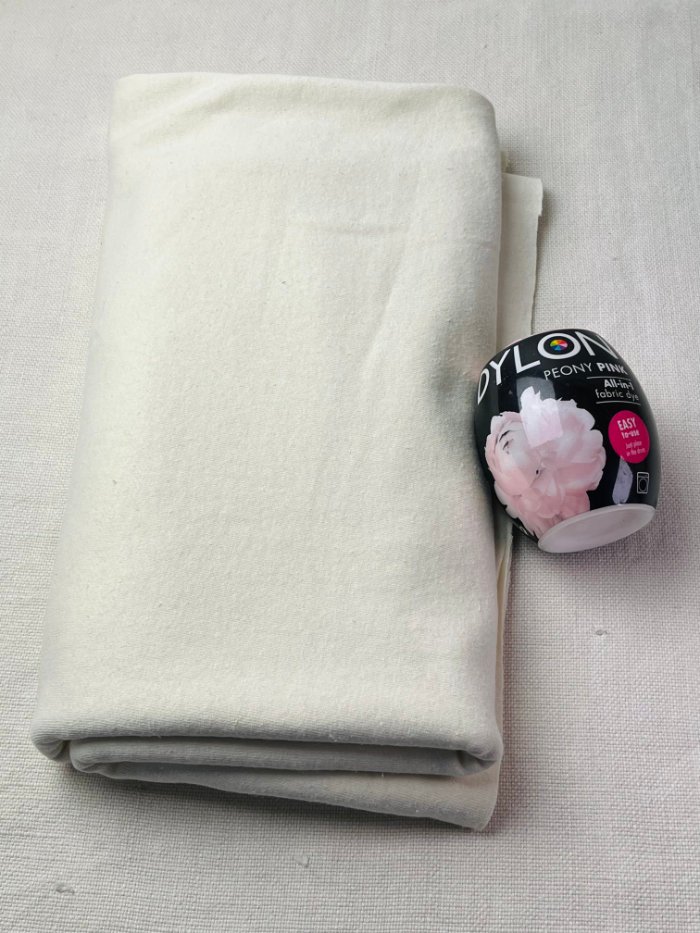
Step-by-Step: How to Dye Hemp Fabric in a Washing Machine
In this section I will explain how to approach the hemp dyeing process at home using a washing machine.
Before You Start
Hemp weight matters more than yardage. Weigh your fabric to ensure that the dye and fabric ratio is correct for a predictable result.
Step 1 – Pre-wash the Hemp Fabric
It is utterly important that you prewash the fabric before attempting to dye it. The prewashing is required to remove any manufacturing oil or chemical residues on the fabric that may prevent the dye absorbing into the hemp fibres evenly. If you do not prewash the hemp fabric, you will end up with an uneven shade of colour. However, if you do skip this step, you may have an interesting result that actually might look quite nice.
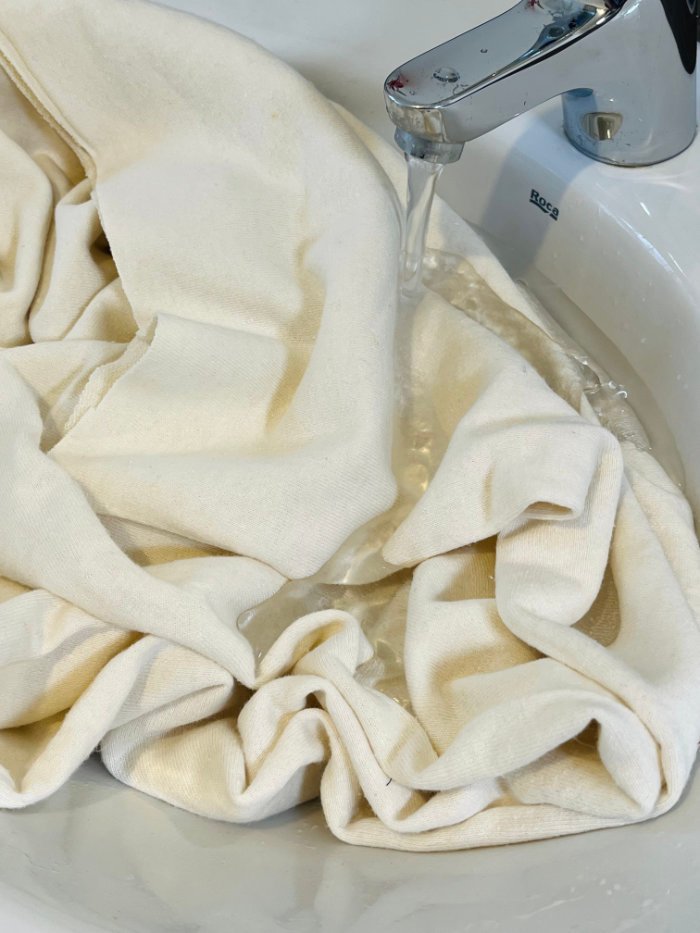
You do not need to dry the fabric before dyeing as the hemp fibres needs to be damp or wet before dyeing.
In my case, the fabric was prewashed as it arrived and was bone dry. So I dampened it in a cold water in the sink and wrung it out to remove the excess water.
Step 2 – Prepare the Dye
The dye that I used was already premixed with salt and washing soda so I did not need to mix anything else. If you only have neat fabric dye, you will need to add washing soda and salt as instructed on the packaging. You can still use the dye in the washing machine even if it does not state that on the packaging (unless the product specifically advises against it), just make sure that you add the salt and the washing soda and follow the steps below.
Step 3 – Dye the Hemp Fabric in the Washing Machine
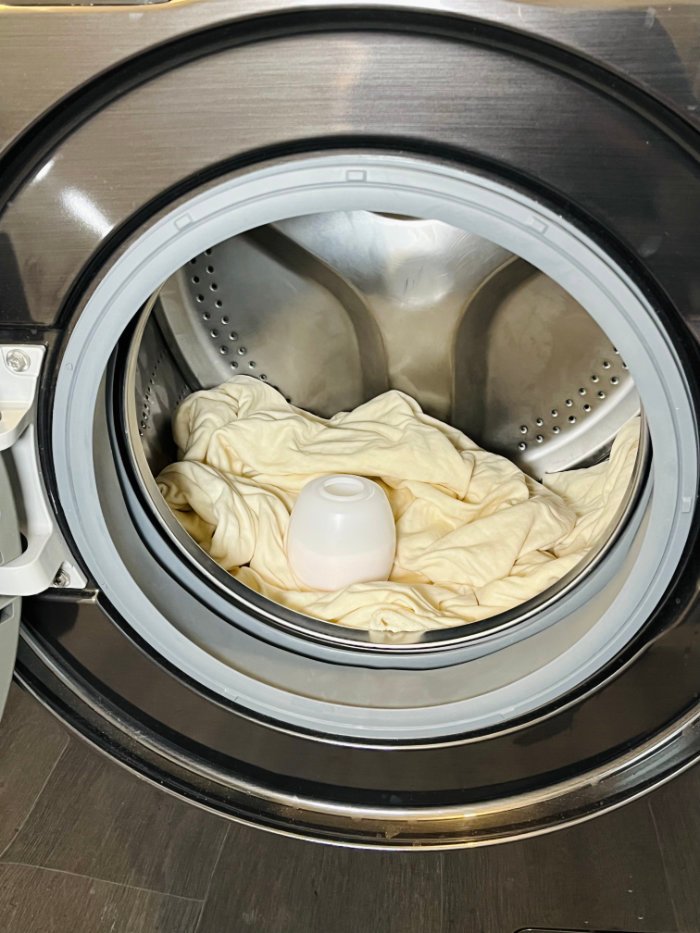
If your dye does not come in a handy pod like the one I had, place the premixed dye powder in the washing machine drum first and then place the hemp fabric on top. If your dye come with a pod, place the pod on top of the fabric. Then close the washing machine.
Select the full cotton cycle on your washing machine with at least 40 C. Do not use the eco setting as that uses less water. For the dye to work, you need the full water amount on a regular setting.
Start the wash cycle.
Step 4 – Rinse and Set the Colour
Once the wash cycle is complete, remove the pod from the washing machine if used. Then start another full cotton cycle with your regular detergent. I additionally added half and half vinegar and water mix in the softener compartment to soften the water and fix the colour to extend the hemp fabric lightfastness. I already use vinegar and water mix softener in my daily laundry routine as I live in a hard water area.
Step 5 – Dry the Fabric
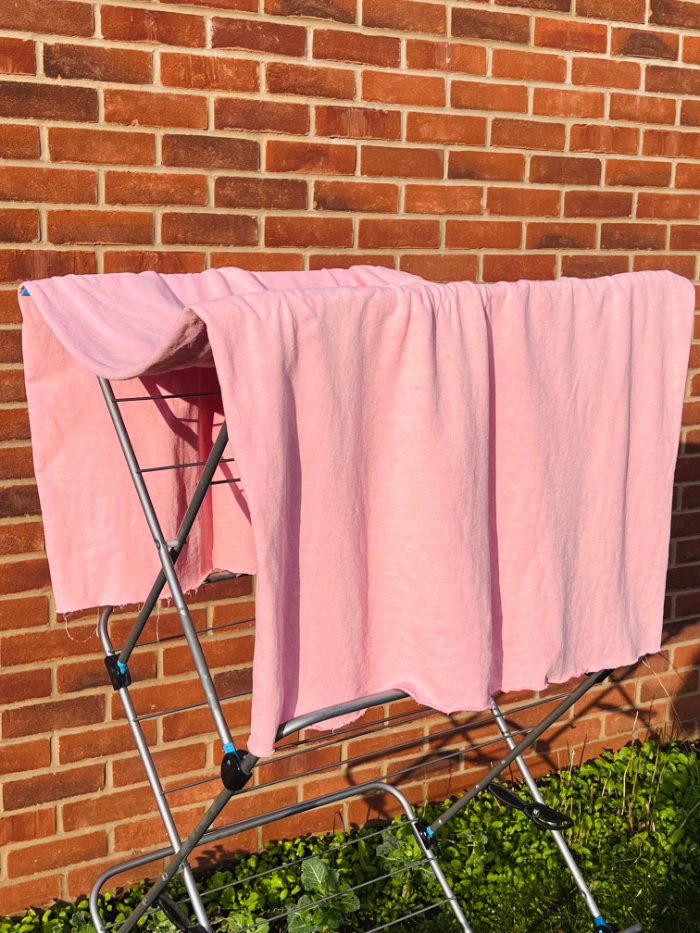
Once the washing machine cycle finishes, hung the dyed hemp fabric to dry. I am using a stretchy hemp French Terry so I have to be extra careful that the fabric is well and evenly supported to avoid stretching the fabric. Therefore I am not using pegs and carefully fold the fabric over a fabric drying horse, avoiding overhung on the sides.
You, of course, can use tumble dryer but be mindful that the hemp shrinks in heat.
As the fabric dries, it will shift from a dark shade to a lighter shade so the first impressions of the colour as you take it out from the washing machine will be misleading.

Dyeing Results on Hemp Fabric
This was my first time dyeing hemp fabric, and the results reflect real-world home dyeing conditions rather than a controlled studio setup.
Let’s have a look at the results to my attempt to dye hemp fabric.
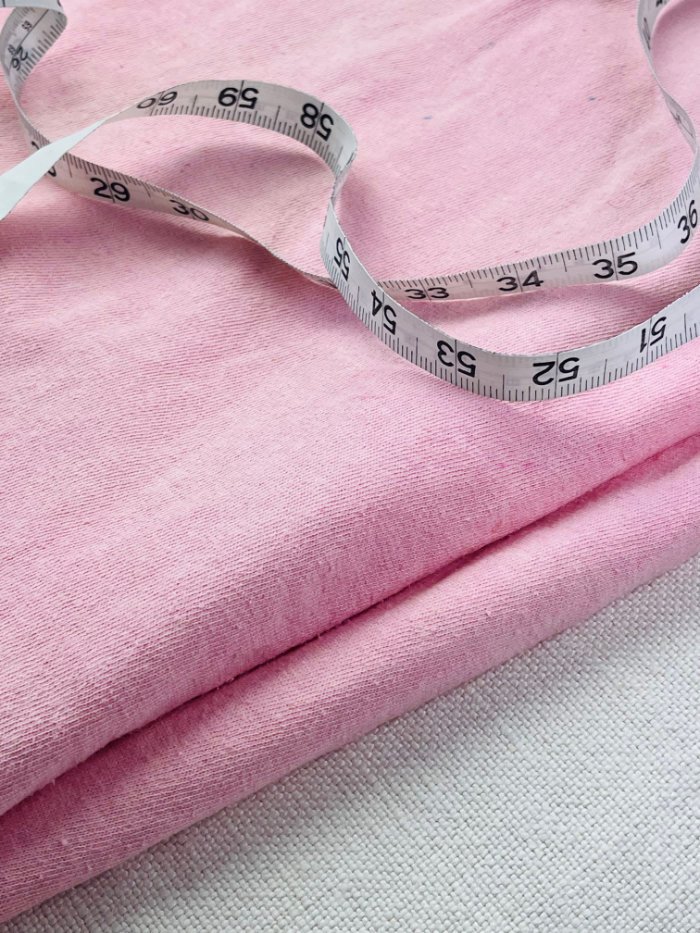
I expected the colour to be warmer pink shade than the colour depicted on the packaging, as my hemp fabric was neutral natural unbleached shade before dyeing. The result, however, is very close to the colour on the dye wrapper.
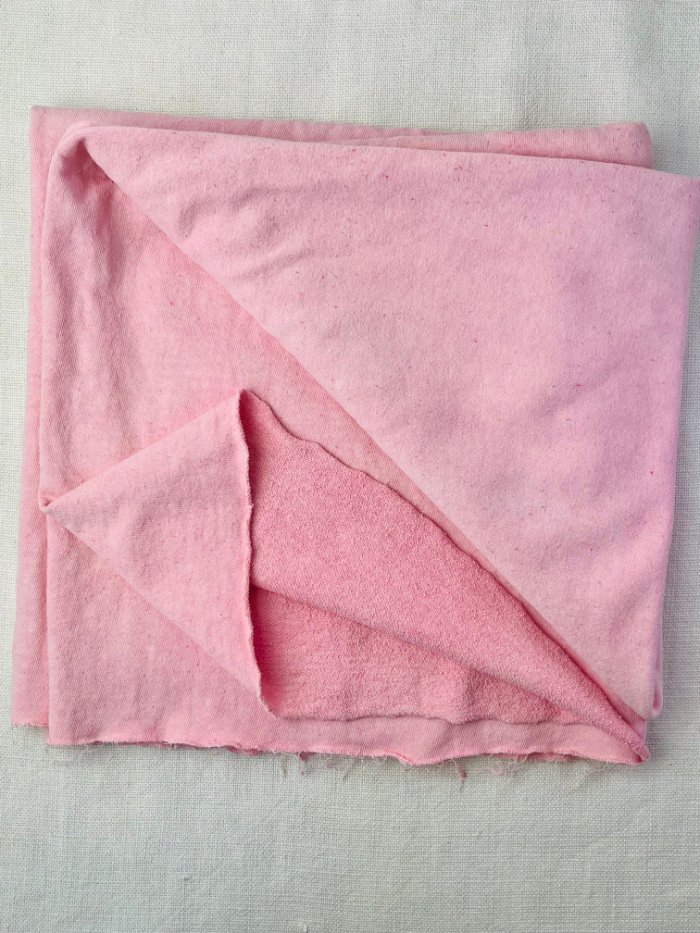
The hemp fabric, however has not dyed evenly. There are a lot of pink (and some random blue) specks spaced evenly across the whole hemp fabric. At first I thought that it might be due to old pigment that did not dissolve in the water. However, upon inspecting the packaging, there is no end date on the dye so my conclusion is that the specks are due to natural hemp fibre properties and are more absorbing elements or natural impurities. Interestingly, I find these specks add rather than detracts from the appeal of the hemp fabric.
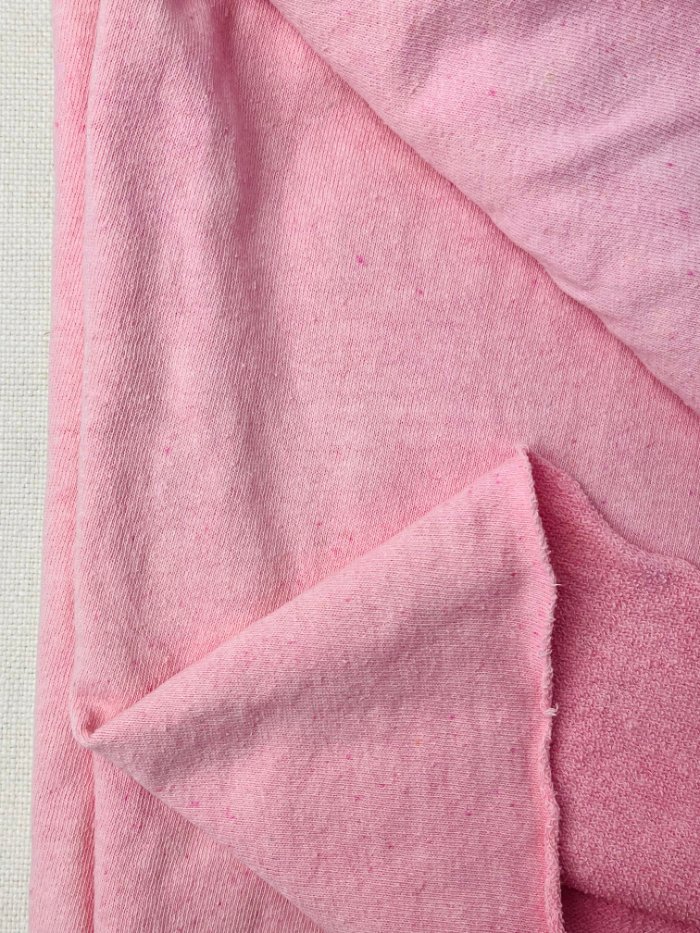
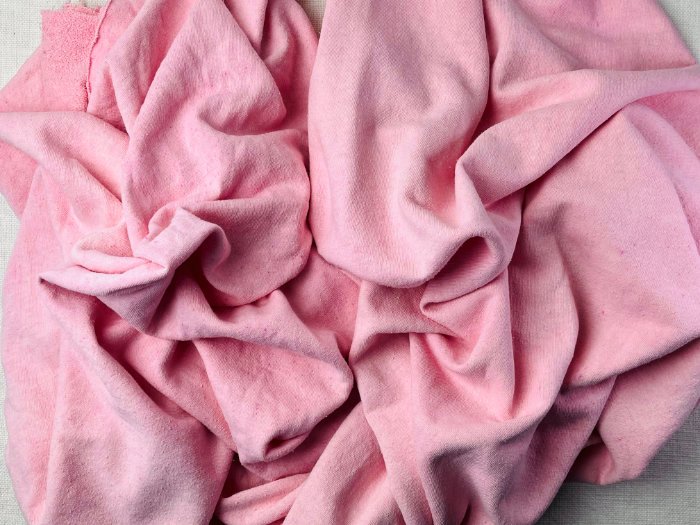
There are also lighter streaks across the fabric which makes me think that I had not pre washed the hemp fabric on a full cotton cycle before dyeing or had not used sufficient amount of detergent. Therefore some manufacturing fixative was left on the fabric. Again, I actually like the result.
All in all, the natural hemp impurities and insufficient fabric pre-wash has provided an attractive colour depth with enough interest compared to a flat even colour.
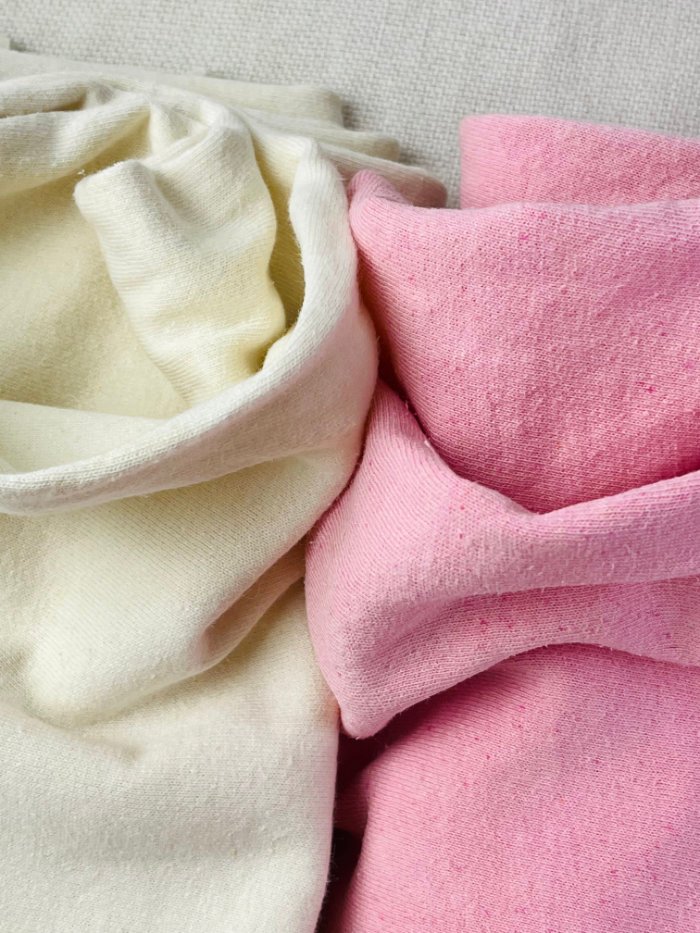
The hemp fabric itself has gone a little stiffer compared to the texture before the dye process. However, it is hard to judge whether it is due to the addition of the dye or because the hemp gets a little scratchier as a result of washing.
It is also a lot thicker as you can see in this comparison photo. Similarly to the stiffness, it most likely is because of the shrinking rather than dyeing.
Washing and Colourfastness Test
Once I make up the garment that I have planned, I will wash it separate from white colours to avoid any colour run. To be fair, I do not expect much colour bleed from such a shade and the high absorbent properties of hemp but it is always best to wash the garment separately at least once after dyeing.
The key advice I can give you before you dive into sewing, make sure that you change the sewing machine needle before and after sewing the hemp fabric. Hemp is such a dense fabric as evident in this dye experiment, that your needle will go blunt very quickly and will lead to breakage or skipped stitches.
I’ll be turning this dyed hemp fabric into a handmade skirt, which I’ll share in a separate step-by-step sewing tutorial.
Hemp vs Cotton Dyeing: Key Differences
To draw a comparison to dyeing a cotton fabric, these are the key differences that I observed:
- Hemp takes a lot longer to dry compared to cotton fabric.
- There were no uneven colour spots on cotton fabric.
- Cotton fabric did not get stiffer or thicker as a result of dyeing.
- Both sides of the cotton fabric was evenly colour while the hemp fabric had a colour texture on the smooth side and even colour on reverse.
Common Problems When Dyeing Hemp Fabric (and How to Fix Them)
Let’s look at the problems that you might come across in dyeing the hemp fabric and how to fix them:
Patchy or uneven colour
If your hemp fabric ends up with patchy or uneven colour, there are two things to consider. Firstly, you did not prewash the fabric as thoroughly as it needed. Make sure you go for hot full cotton cycle wash with appropriate detergent amount and do not use synthetic fabric softener. You can use vinegar and water solution as a softener. The fabric softener will coat the fibres and will prevent the fibres from grabbing onto the dye pigment.
Second reason for patch and uneven colour could be due to the fabric composition. If there are any polyester fibres mixed in with hemp, then these fibres will not get dyed.
Colour too light
If the dyed hemp fabric is lighter than you expected, then you have not used the right amount of the dye versus the amount of fabric you used. Make sure you read the dye instructions carefully and weigh your fabric instead of eyeballing.
My dye instructions stated that I can dye 600g of fabric for a full saturation and 1.8kg of fabric for lighter colour. I used 850g of fabric and achieved a colour that was very close to the colour on the packaging.
Stiff fabric after dyeing
The hemp fabric goes stiff after dyeing. It is not necessary because of the dye process but because of the water hardness and / or the natural tendency for the hemp to shrink, ending in a denser fabric. The hemp fabric stiffness is intensified by air drying, leading to a crisp and scratchy texture.
You can soften the hemp up by rubbing it against itself to soften the fibres. If you used the tumble dryer then the fabric will be softened up enough and the rubbing by hand will not add anything to it.
Dye fading quickly
If the dye is fading quickly on the dyed fabric, then it could be due to a fugitive dye pigment or insufficient salt, washing soda, temperature or wash cycle. Follow the instructions on the dye packaging and repeat the dyeing process. If the instructions are followed correctly, then the dye should hold on the same as on any other garment you own.
There are some colour pigments that are not lightfast and will fade in a prolonged exposure to the sun. The pinks and reds are notorious for that but I would not expect the fabric to fade within the same day if you used the fibre reactive or all purpose dye. The fading would be observed across the first six months of continuous sun exposure, so not during the garments life with you on occasional wear in sunshine.
Tips for Better Results When Dyeing Hemp Fabric
These are my tips for a successful results when dyeing hemp fabric:
- Prewash hemp fabric on full cotton cycle with detergent but without a softener (unless using vinegar)
- Make sure you follow the instructions on the dye packaging and use the right fabric to dye ratio
- Dampen hemp fabric before dyeing if the fabric is dry.
- Dye the fabric in washing machine on full cotton cycle at 40C as a minimum.
- Use a premixed washing machine dye for foolproof dyeing.
- Stick to fibre reactive dye for an expected result.
Frequently Asked Questions About Dyeing Hemp Fabric
Is Dyeing Hemp Fabric at Home Worth It?
Dyeing hemp at home will definitely add an expense. However, most hemp fabrics are offered in neutral natural tone and there are not a large colour selection available due to lower manufacturing quantities. There may not even be any pre-dyed hemp fabric available where you are. This means that you will need to resort to dyeing hemp fabric at home if you want colourful garments made of hemp.
It is possible to mix various dye pigments to achieve interesting colour combinations and the world of natural dyes gives more economical options (think of onion skins that cost nothing if you already use onions).
The largest hemp fabric distributor in the UK, where I am based, does not carry colourful hemp fabrics so for me the dyeing the only option for a vibrant hemp fabric. But if the fabric stockist near you have different shades of hemp fabric then it might more sense for you to omit the dyeing.
To conclude, if you want a colourful hemp fabric and the nearest stockist does not have the required shade, then it is worth dyeing hemp at home. If you are a frugal sewist, do not mind the available colour choices and the cost of natural hemp fabric and dye is much greater compared to the available shades, then dyeing the hemp fabric will not be worth it.
Final Thoughts and Conclusions
If you want colourful hemp fabric and limited ready-dyed options are available, dyeing hemp at home with fibre-reactive dye is a practical and reliable solution.
I’ll be turning this dyed hemp fabric into a handmade wrap skirt using a drafted A-line skirt pattern, which I’ll share in a separate step-by-step tutorial.
About the Author: Pattern Drafting & Garment Sewing

I’ve been sewing for over 30 years and drafting my own patterns for more than a decade. I work almost exclusively with self-drafted patterns, which means I don’t rely on instructions—I rely on understanding how garments fit and come together.
Most of my methods come from figuring things out through testing, adjusting, and breaking down common problem areas using logic and geometry rather than guesswork.
On this site, I share step-by-step tutorials on pattern drafting, garment construction, and sewing techniques to help you create well-fitted, professional-looking clothes from scratch.
👉 Read more about my approach to pattern drafting and sewing here: About Me