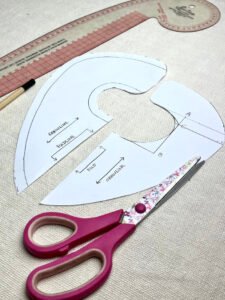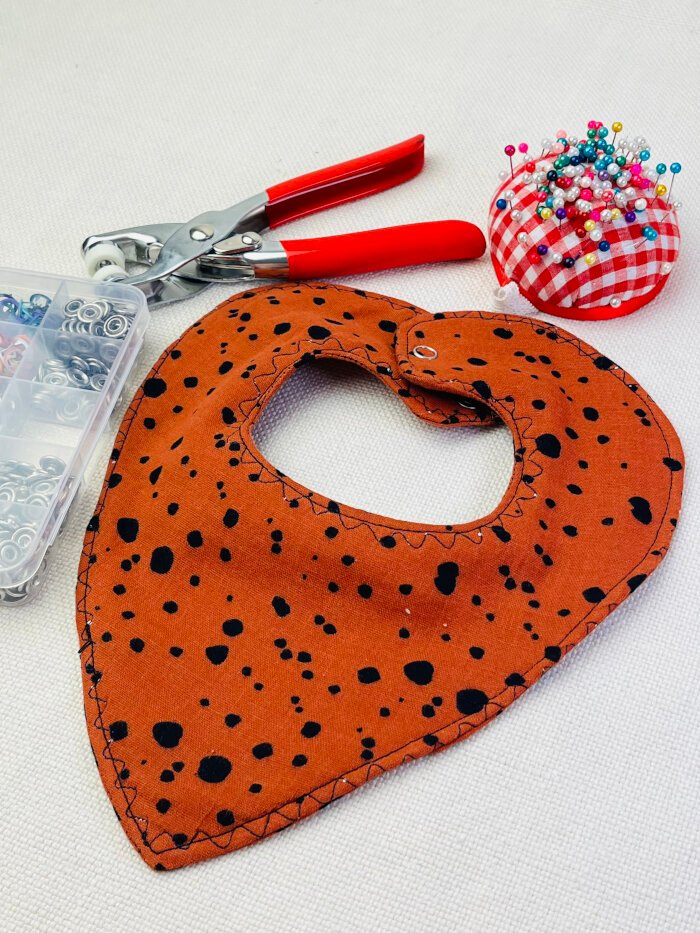
In this step-by-step baby drool bib sewing tutorial, I will show you how to sew a baby drool bib using a drafted pattern. This tutorial follows directly from my post on how to draft a baby drool bib pattern, where you can create a custom-fit pattern before sewing.
You can customise the handmade baby teething bib to be super absorbent by taking control on what absorbency, fabric layers, and materials you use, creating a unique super-absorbent baby bib that truly works for the intended purpose of catching the teething drool. These DIY baby bibs also make a wonderfully thoughtful and practical gift for a new mum!
I have written this DIY baby bib sewing tutorial to be beginner friendly and explained each step in as much detail as I could without turning it into a War and Piece by Leo Tolstoy. I hope! So even if you are new to sewing baby accessories, you can confidently complete this project.
The DIY baby bib tutorial will list materials required, sewing steps and the finishing touches.
Materials & Tools Needed to Sew a Baby Drool Bib
Below is the complete list of materials and tools needed to sew a baby drool bib, including fabric recommendations for different absorbency levels.
- Quick absorbing top layer of fabric (muslin, cotton jersey, French Terry, viscose, double gauze)
- Absorbent middle layer fabric (cotton or bamboo towelling, French Terry, cotton or viscose jersey, hemp jersey)
- Backing fabric – either additional absorbency or you can opt for waterproof layer
- metal snap fasteners with a snap setting tool or hook and loop tape
- chalk, bar of soap or erasable pen for fabric marking
- matching thread
- pins
- scissors
- sewing machine
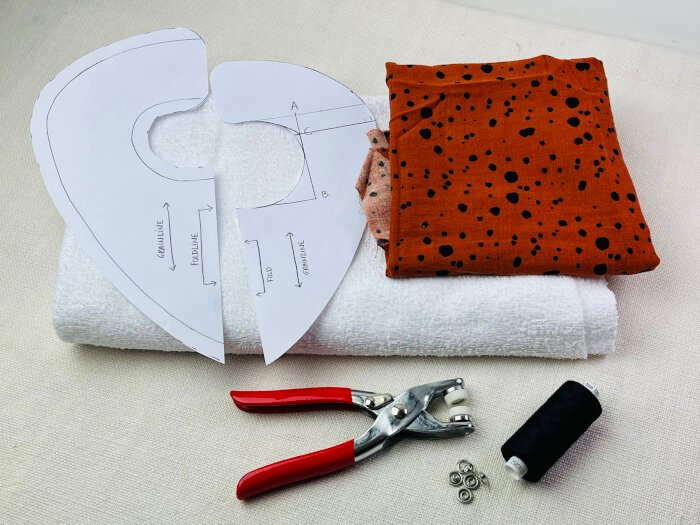
Choosing the right fabric combination is essential when sewing a reusable baby drool bib with high absorbency and fast drying time. I have written quite extensively on materials for reusable pads and truth be told, all these work for baby drool bib, even down to specific recommendations. If you wanted to read more about each of these, then follow the links in the list above. My preference is to use all natural fibres for all three layers to aid faster drying and reduced impact on environment.
When sewing a baby drool bib, closure choice is important for both safety and comfort. In terms of closure options, the most suitable would be hook and loop tape but you would have to be careful to trim the sharp edges before attaching to the bib and be mindful of which way the sharper hook tape face. Alternatively, a quick release metal snaps will do but make sure you do not attach more than one pair to avoid any potential but unlikely strangulation risk.
You can download the sewing pattern that I used in this post by subscribing to my newsletter.
How to Sew Baby Bib
Prefer to watch instead? Here’s the full step-by-step video tutorial:
Step 1 – Prepare the Fabric for the Baby Bib
You will need to cut two pieces of the outer layer pattern on fold. Start by folding back the fabric, and then place the pattern piece with seam allowance on top, with fold line aligned with fold of the fabric. Pin or use fabric weights to keep the pattern in place.
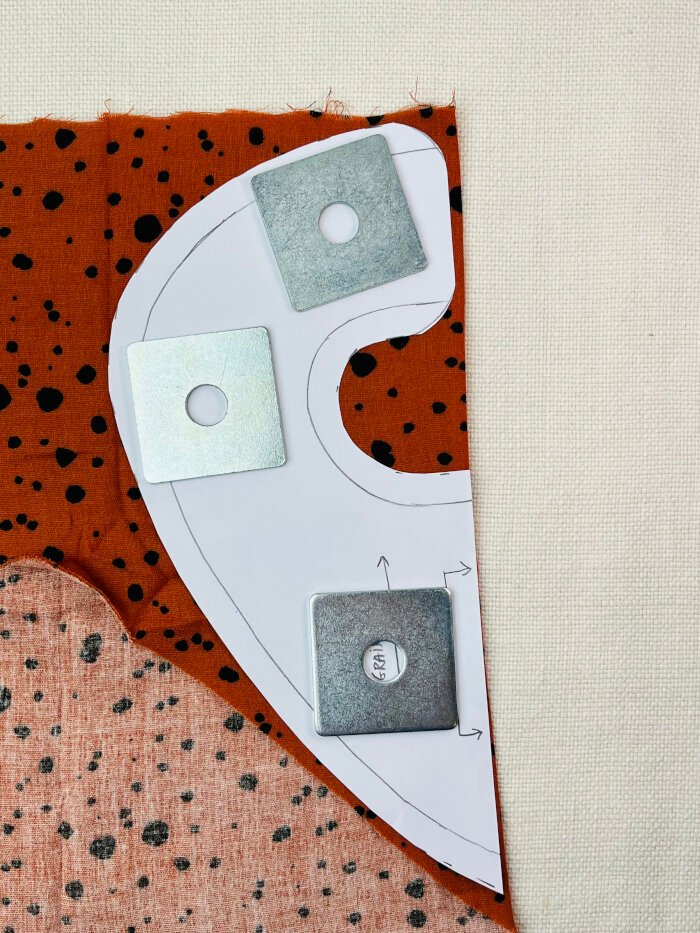
The best practice is to fold the fabric with right sides facing, however I am using a soap to trace around my pattern and it is easier to see the outline on the darker right side of the fabric.
Trace around the DIY baby drool bib pattern piece with chalk or bar of soap. Alternatively, I could have used a pencil or heat erasable pen. The pencil marks cannot be removed but if you trace it accurately and no retracing is required, the seam allowance would be trimmed down afterwards and the pencil marks would removed.
Remove the pattern but keep the pattern weights in place or re-pin to stabilise the fabric from shifting.
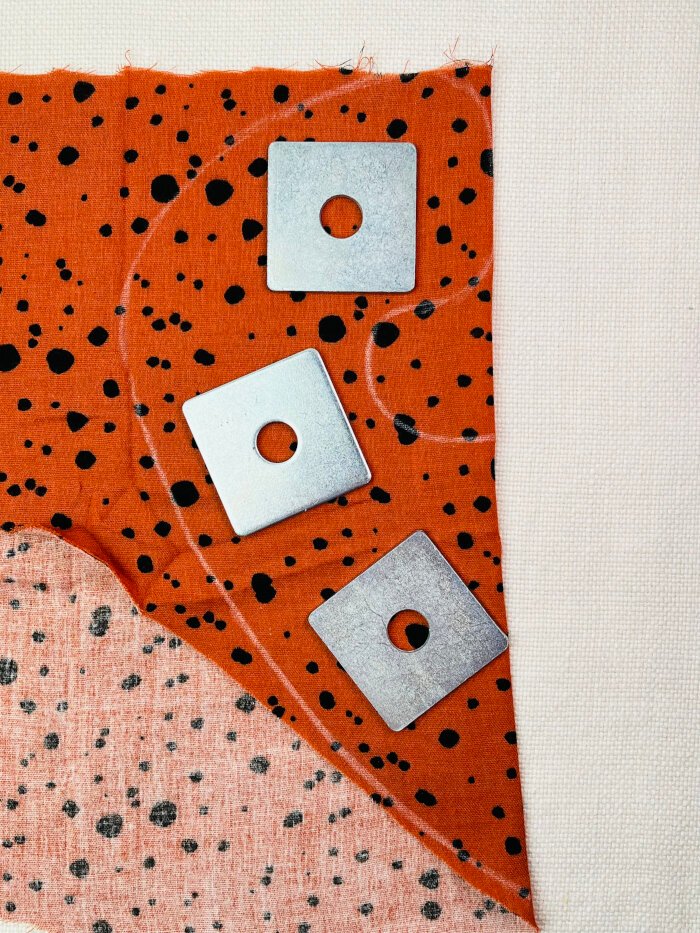
Then cut along the traced line. Alternatively, you can cut around the paper pattern but I find that paper gets in the way and the fabric pattern ends with jagged edges.
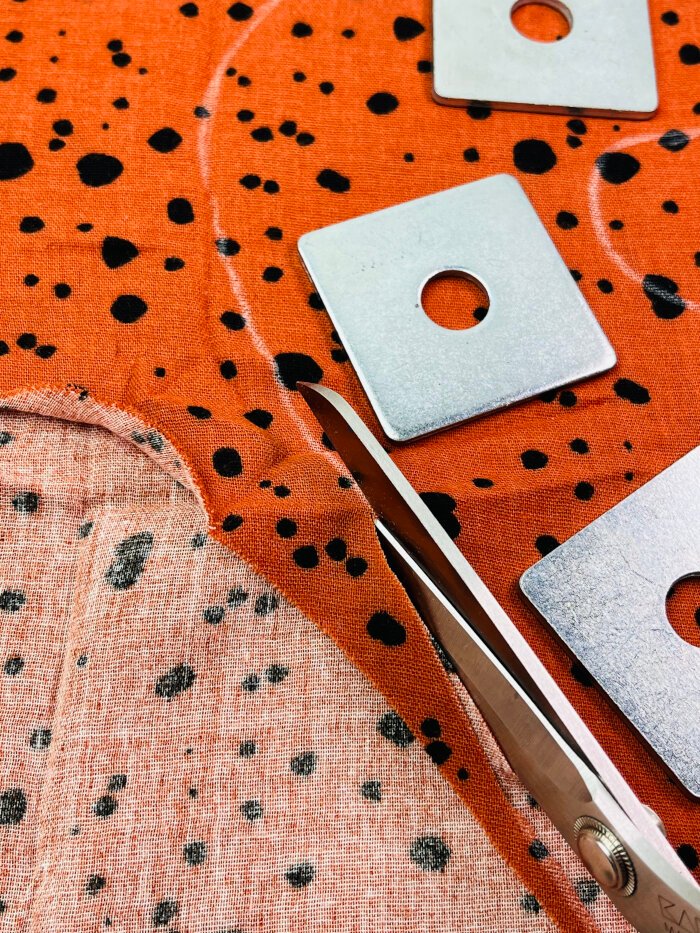
Then cut open the back part along the fold line as indicated.
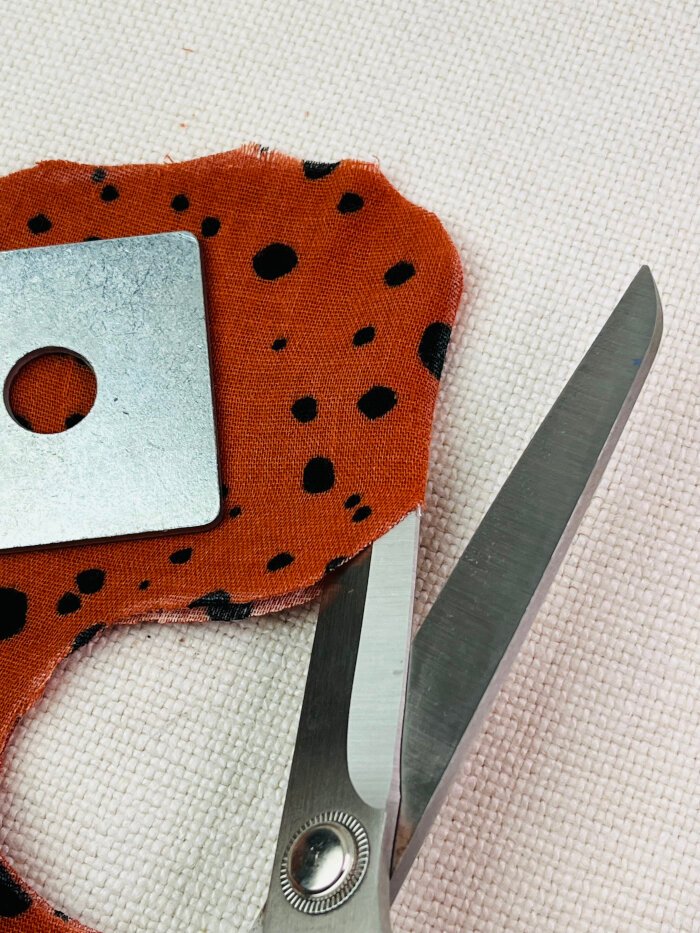
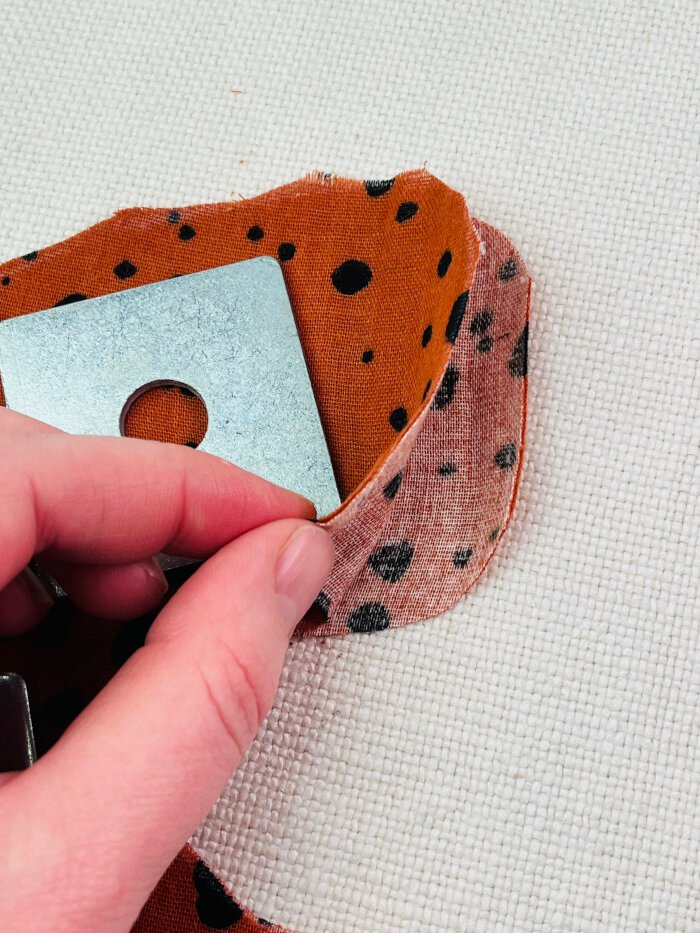
Repeat the same for another outside piece.
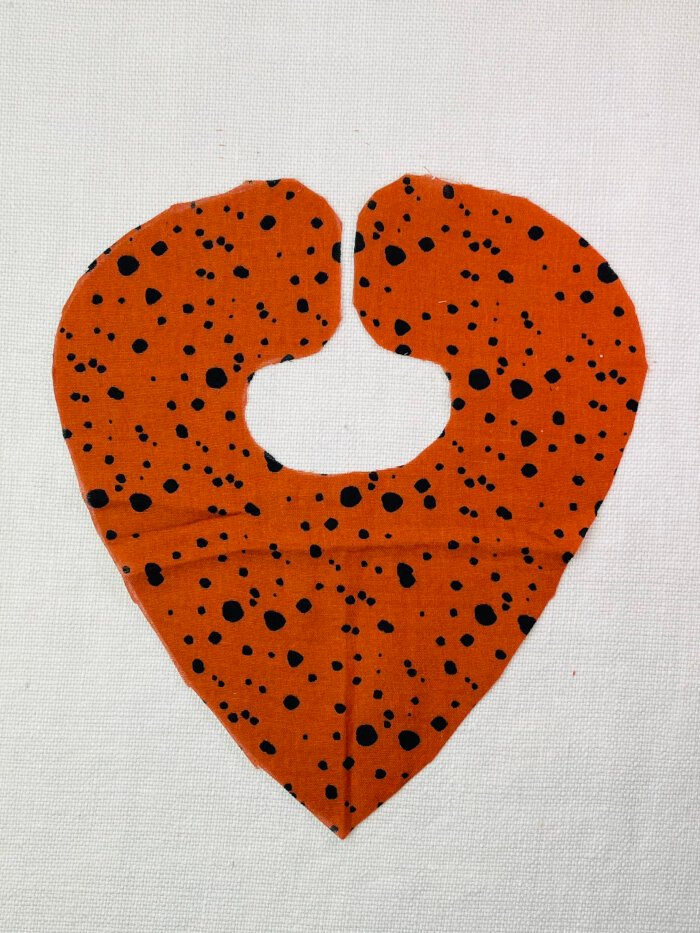
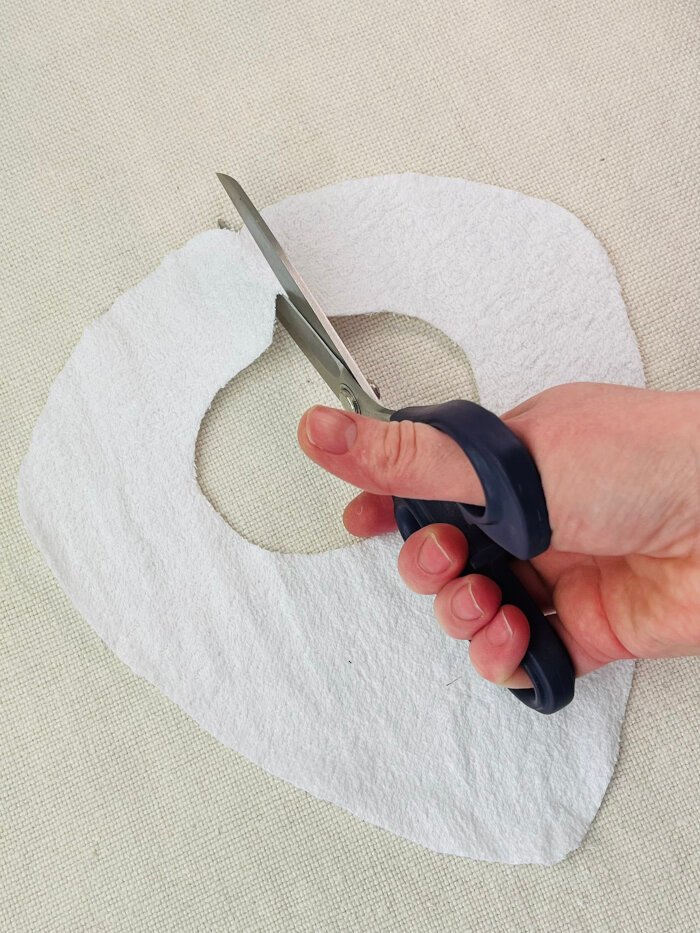
Next, cut the inside layer for absorbent material with the inner pattern piece. You will need to fold the fabric, trace around the pattern piece and cut it out the same way as you did for the outside layers.
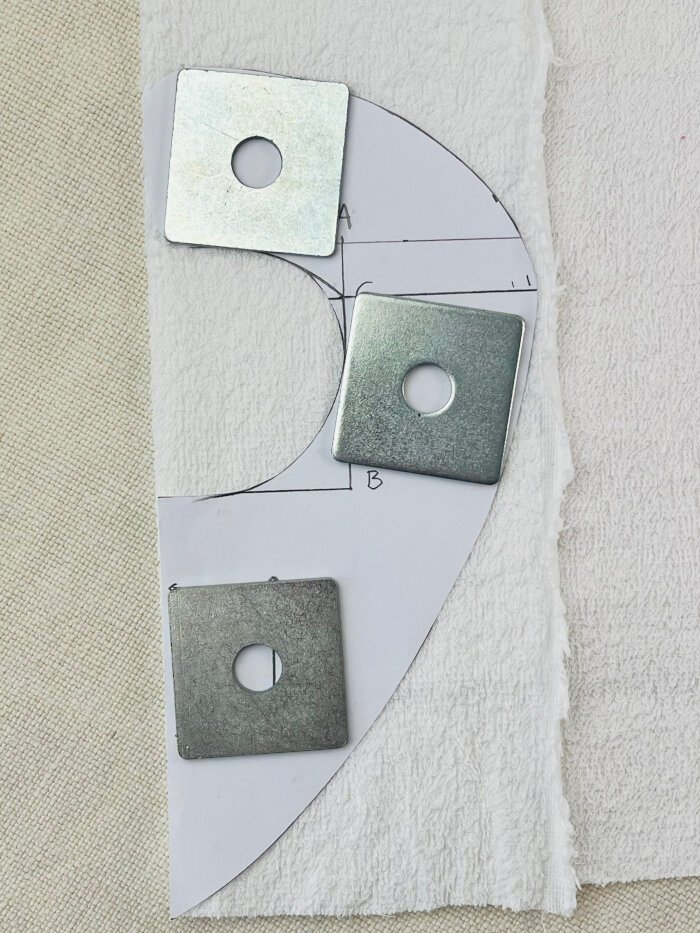
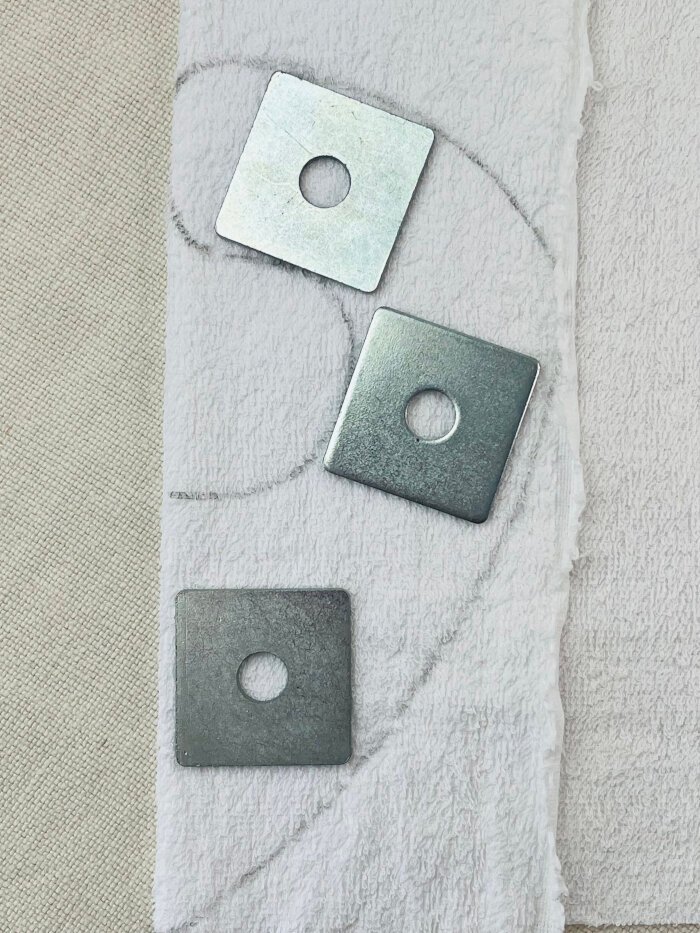
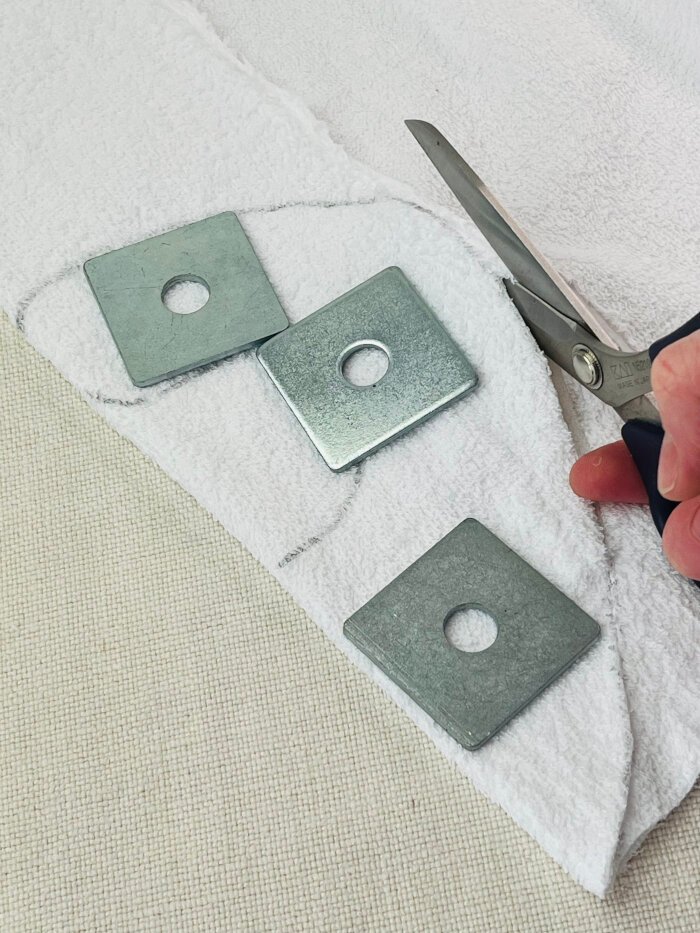
Do not forget to cut open the back part along the fold line.
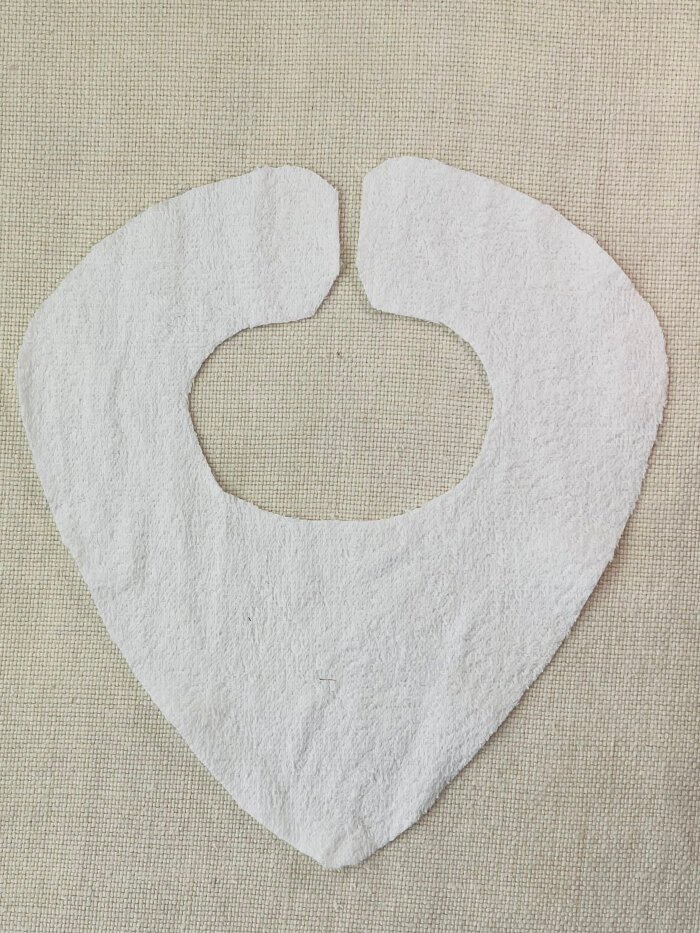
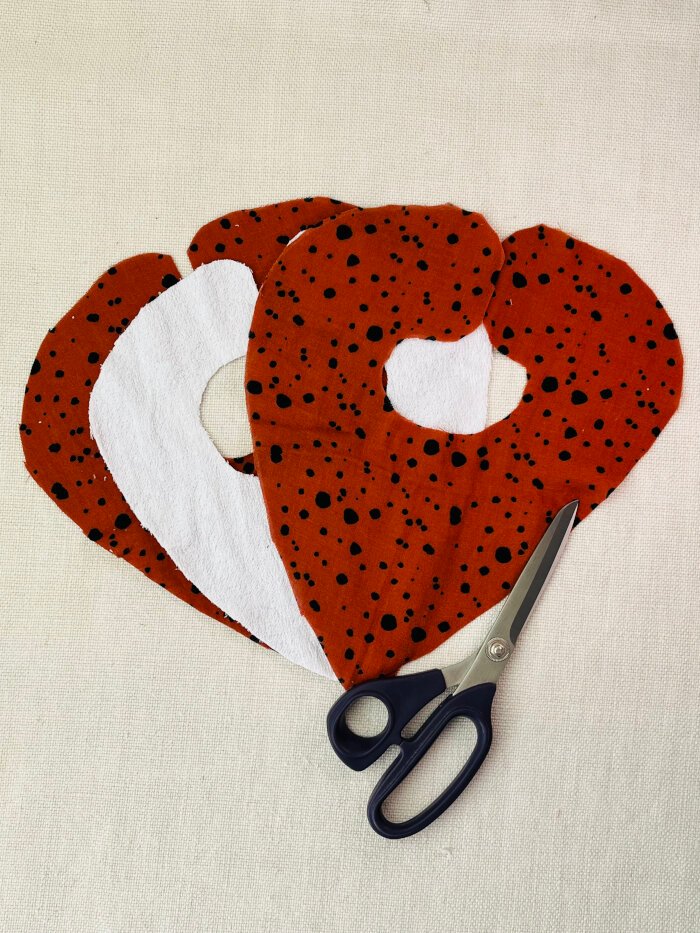
You will have three layers prepared in total the front, middle and backing layers. I have opted to have the front and the back layers in the same fabric.
Step 2 – Pinning and Sewing the Baby Bib
Once the three pieces of fabric are cut out, place the inside layer on the wrong side of one of the outside layers, aligning the pieces in the middle with even gap on the sides. Pin it in place. I place pins inside the middle layer rather than along the edges. I find this keeps the layers more stable as I sew.
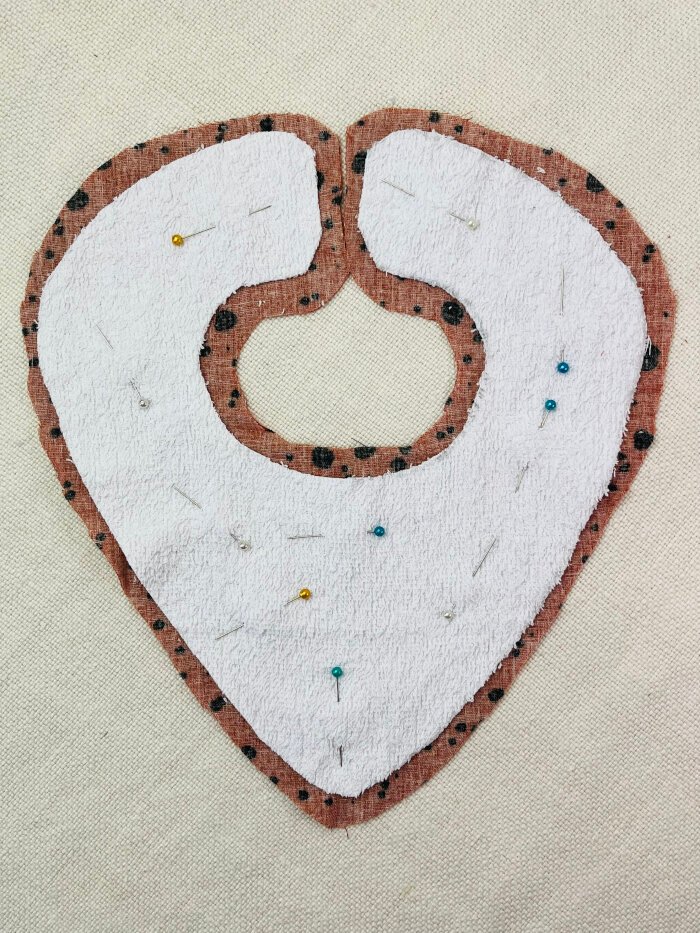
Then, sew along the edge of the middle layer with a zig zag or decorative wavy or zigzag stitch, close to the edge.
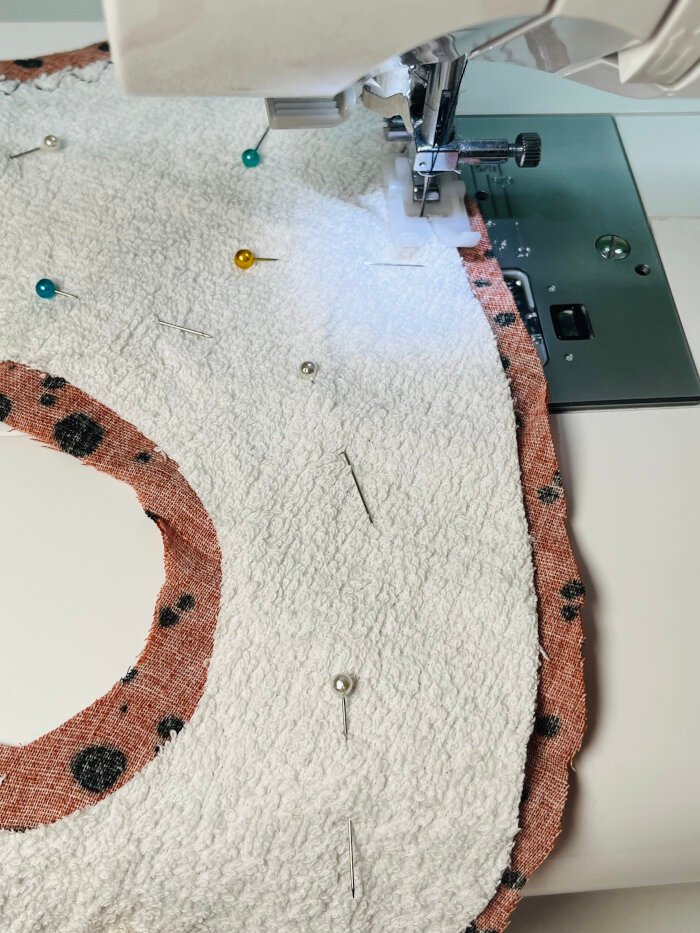
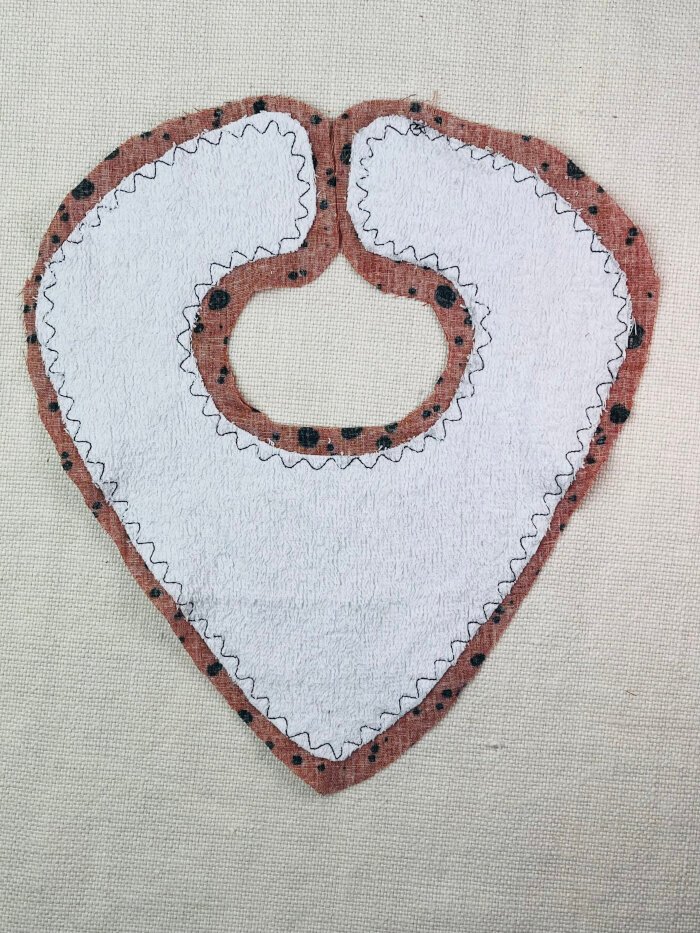
Press the stitch line to embed the thread into the fabric. Take the other outside layer and place it on the table with a right side up. Place the layer with absorbency sewn in on top of it, with right sides facing. Pin along the edge to keep the pieces from shifting.
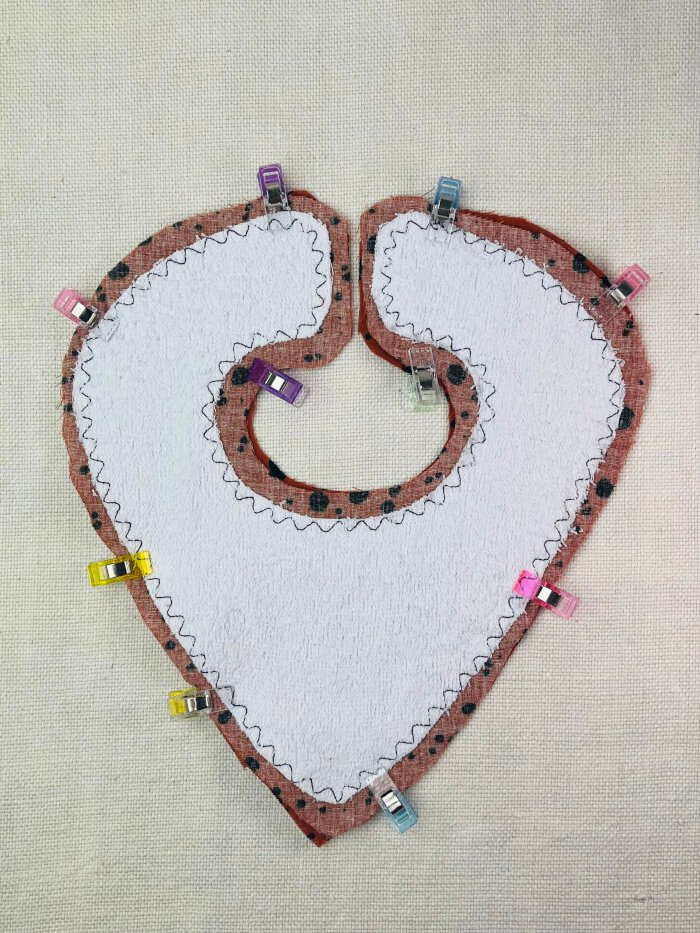
Mark a 3cm turning hole on the straight side.
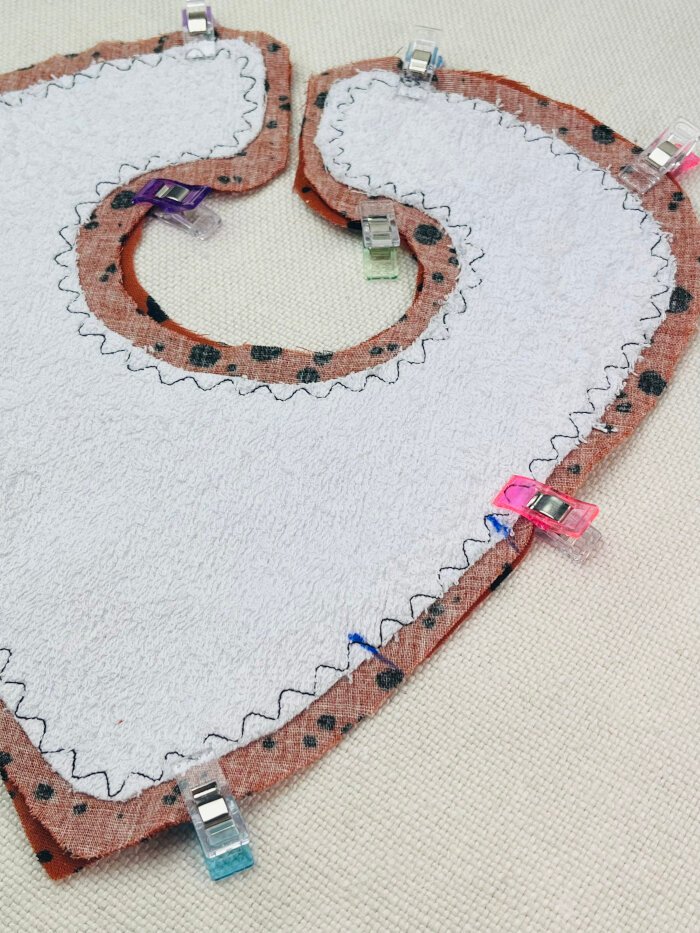
Start sewing from one side of the turning hole with a 1cm seam allowance. Do not forget to backstitch to stop the threads from unravelling when you turn it inside out later. Go slow around the curves to keep the same seam allowance. You will need to lift the pressure foot to turn the bib at the back corners and at the front pointy part.
Once you have sewn all around to the other side of the turning hole, backstitch to secure the thread.
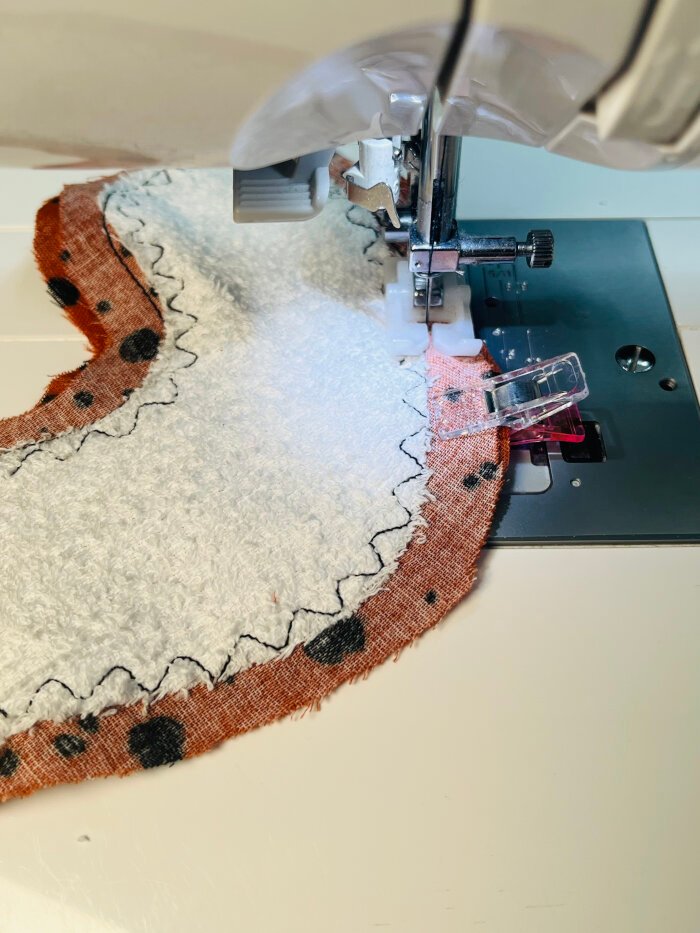
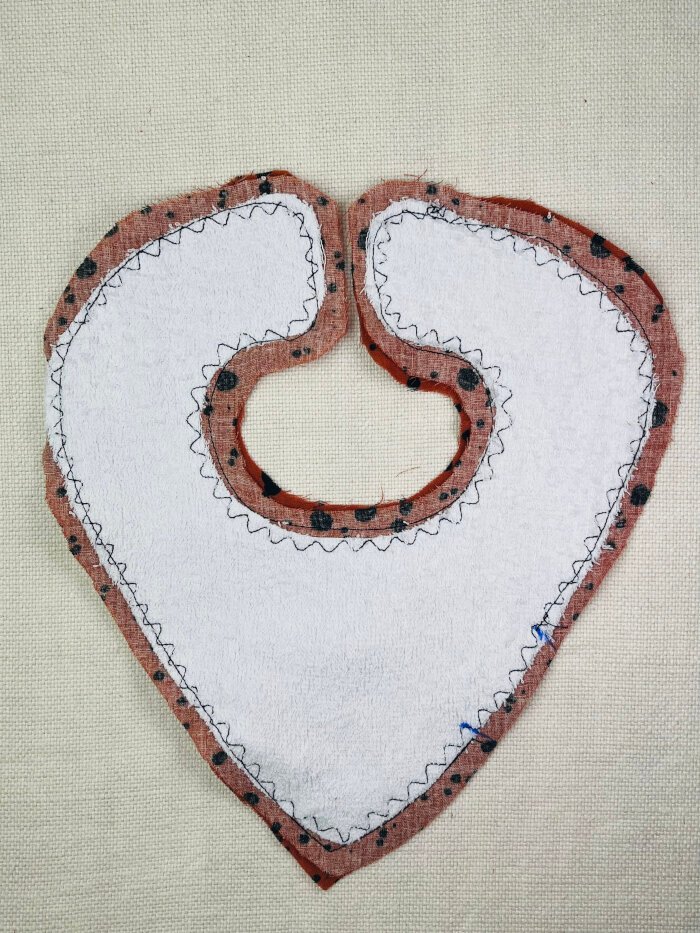
Press the seams flat to embed the stitches.
Step 3 – Clip and Turn the Baby Drool Bib
Next, trim the seam allowances with a pinking shears to 0.5cm. If you do not have pinking shears, trim the seam allowance with usual scissors and then clip notches around the curved lines without cutting the stitches. Do not trim the seams at the turning hole. The clipping will reduce the bulk at the seams and will keep the curved seams nice and round.
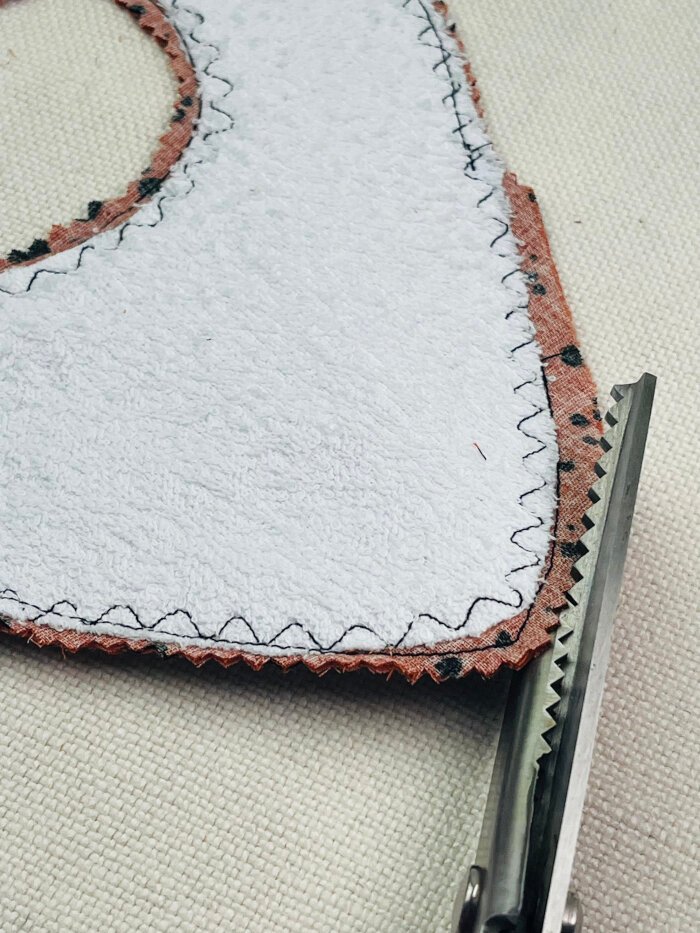
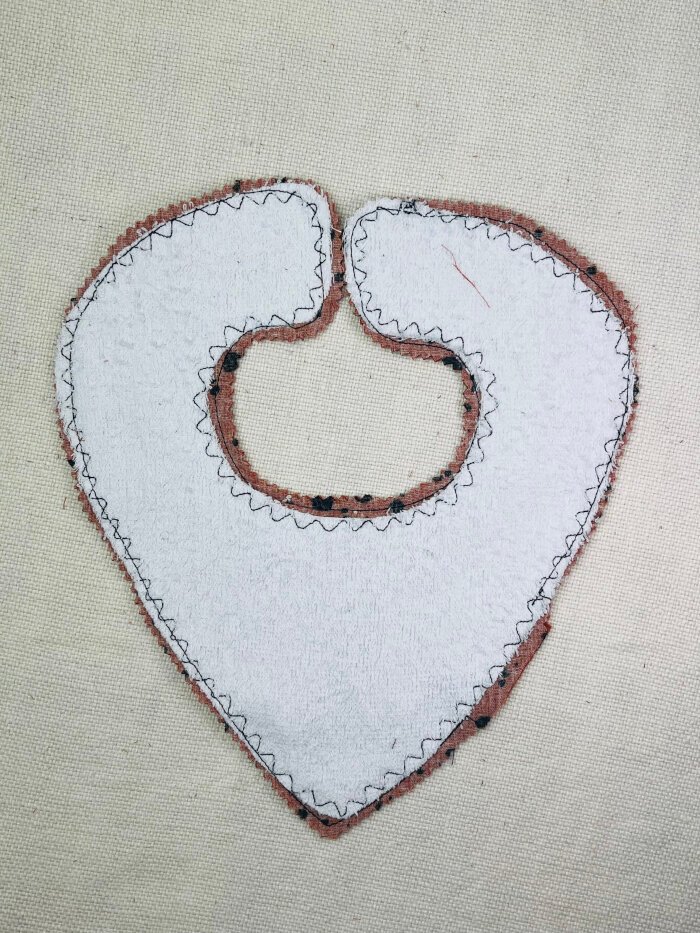
Then turn the baby bib the right side out and press. I find it easier to push the back pieces through the opening hole first, then the rest will slide out without a fight.
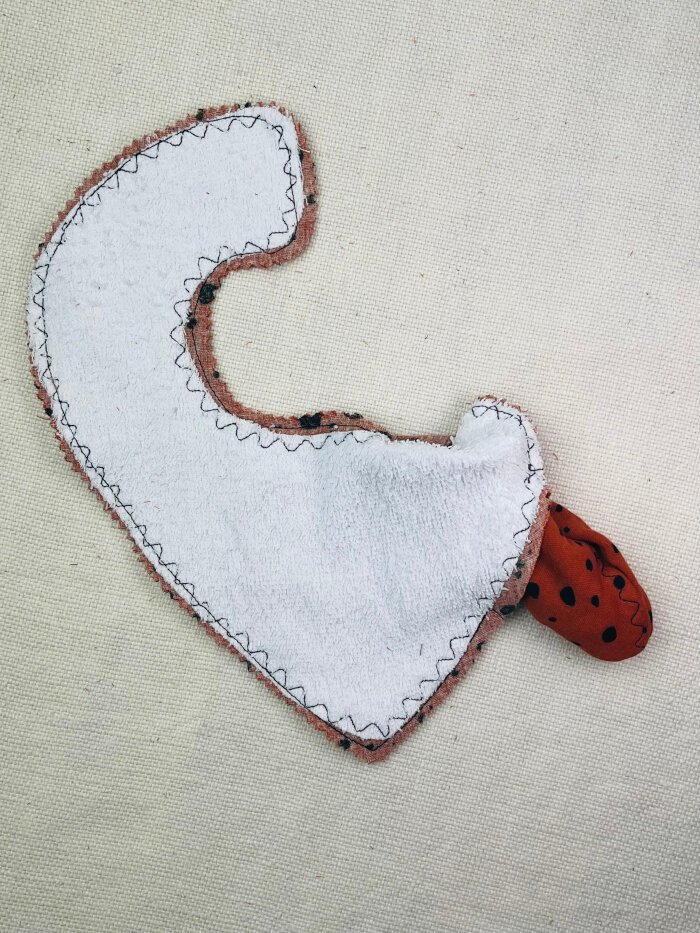
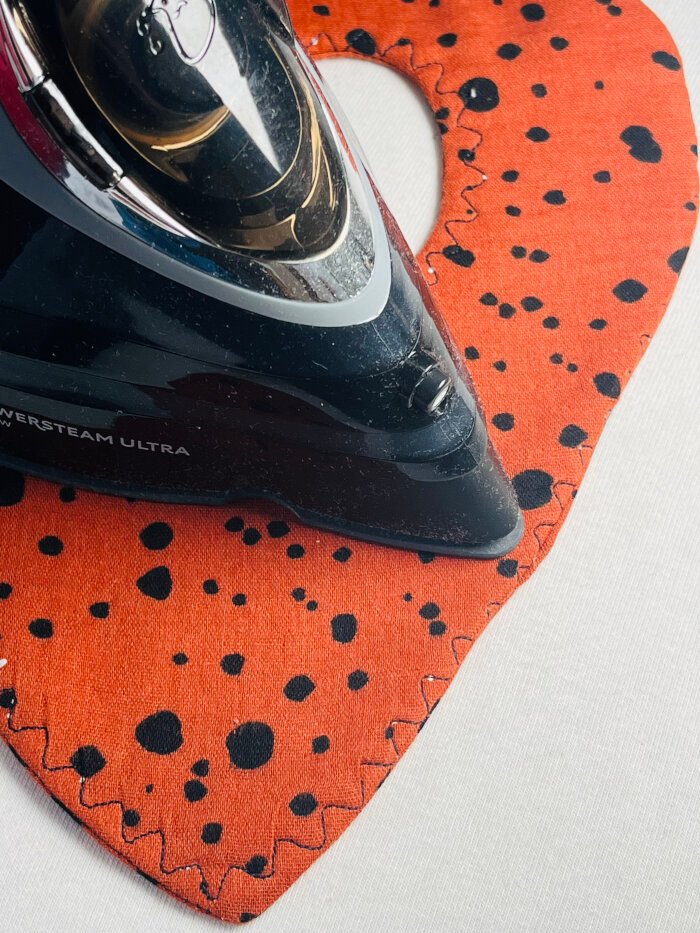
Step 4 – Topstitching and Finishing the Baby Bib
Next, you will need to topstich the baby bib to close the turning hole and to secure the shape of the bib, preventing the layers shifting out of the shape. Topstitch evenly, close to the edge. This is the most tricky part as the stitching will be visible. If you do not feel confident that you can get the stitching straight, use a thread that closely matches with the background colour and go for a slightly wider topstitching line, ie., further in from the edge. I also find a notch or groove in the presser foot that aligns with the edge of the fabric to keep the same narrow topstitching.
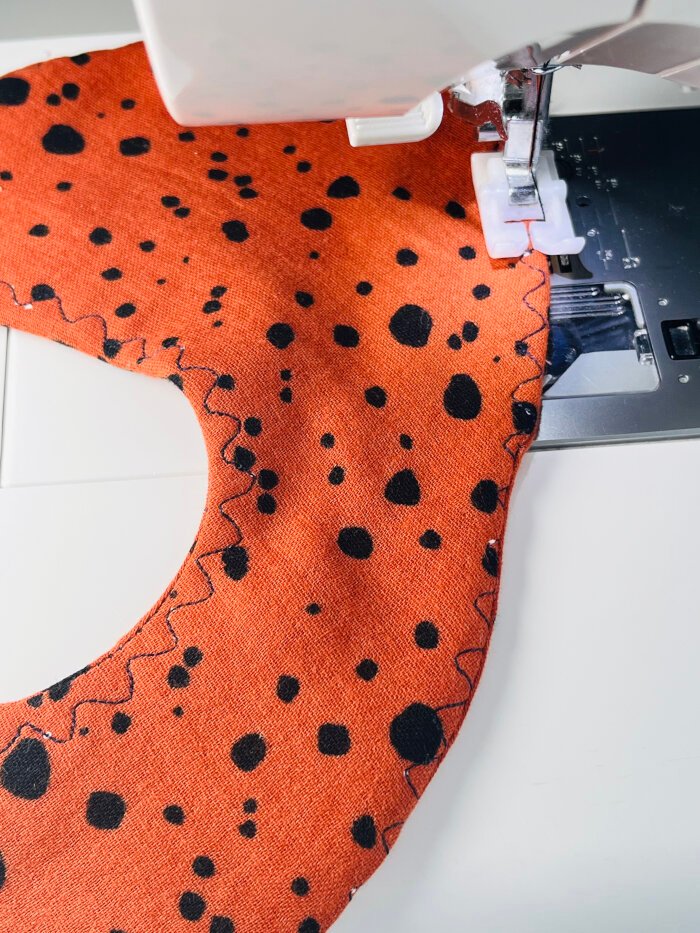
I usually start at the turning hole, keeping the seams to the inside and stitch close to the edge. We left seam allowance unclipped to make the topstitching in this part easier.
Do not worry if the stitching line is not too straight, it will get straighter with a practice. And if you make a lot of these baby drool bibs, then by the 10th you definitely will have a topstitching that you will be proud to share with others 🙂
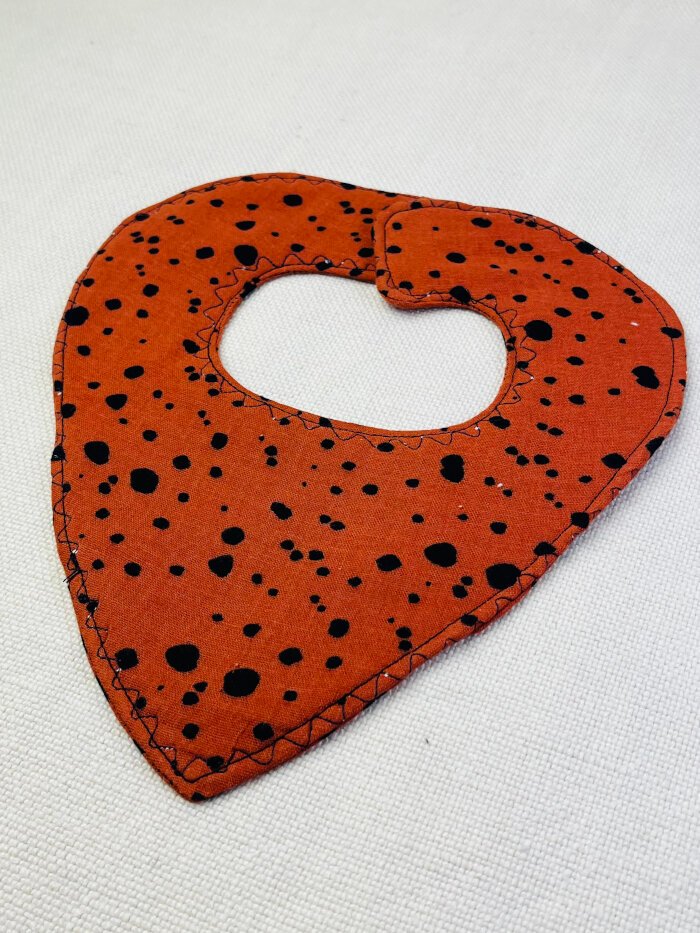
Neat topstitching improves both the durability and appearance of a handmade baby bib, especially when sewing multiple fabric layers.
Step 5 -Adding Closures to the Baby Drool Bib
The last step is to add closures – either metal snap buttons or hook and loop tape.
The safest option is to go for hook and loop tape or Velcro, however I can understand some hesitation in that regard. Baby can pull off the baby drool bib hook and loop tape easier than any other closure option. But when it comes to child’s safety, you do want the baby to be safe!
The other downside is that hook and loop tapes tend to have sharp edges and they are quite inflexible. If you cut the edges off of the tape and make a smaller circular shapes, with dimensions of roughly 1 x 2 cm, then both the issue of edge sharpness and rigidity goes away.
You then need to sew on the shaped hook and loop tape, with two smoother loop tapes facing up on one side of the baby drool bib and the hook tape facing down on the opposite side of the other side.
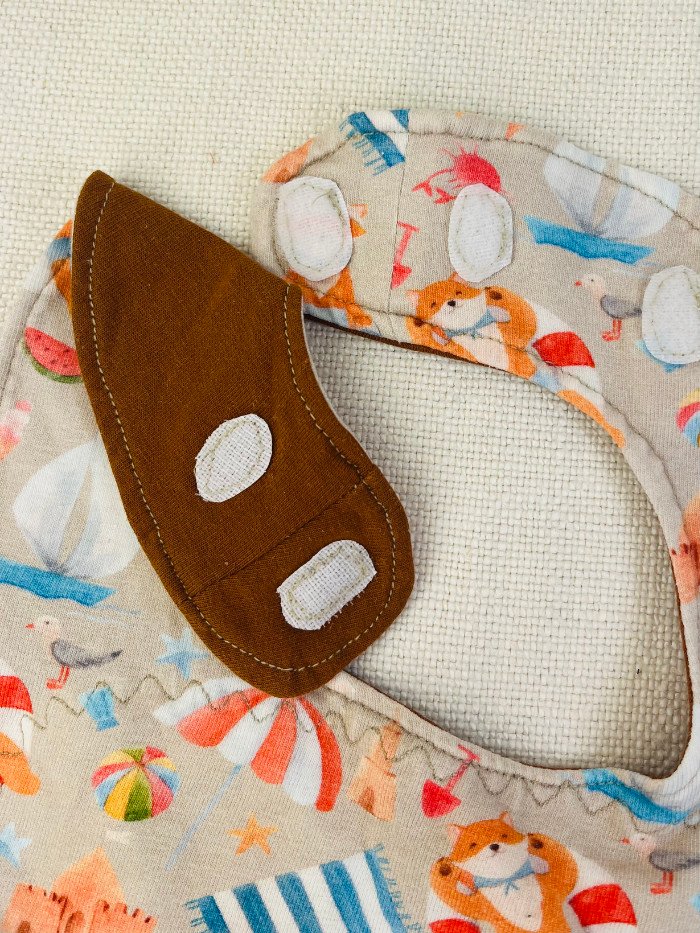
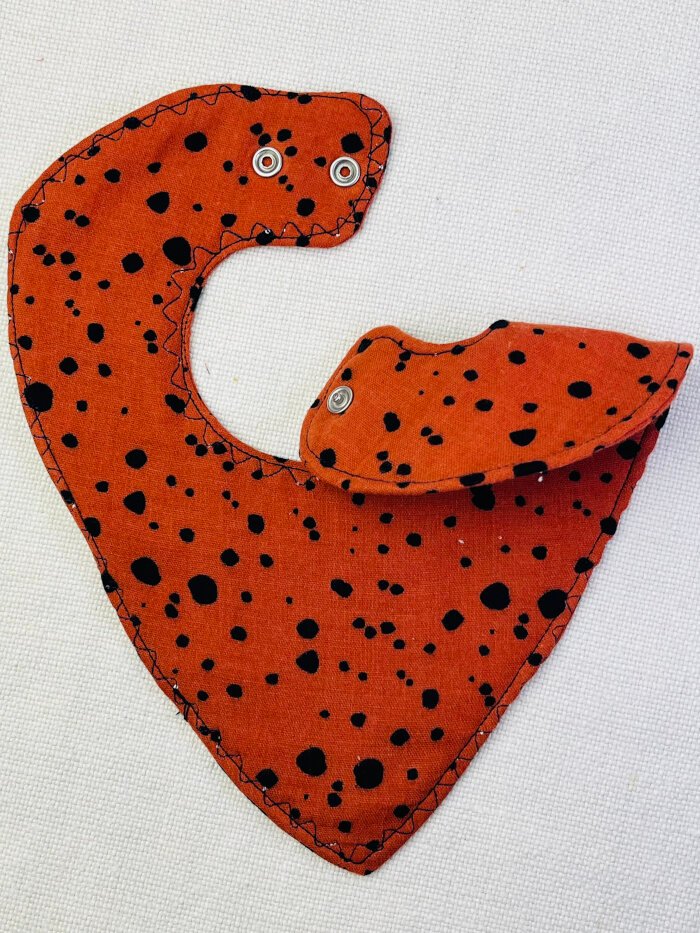
The most popular option is to use metal snap buttons. Attach two socket metal snap buttons on one side, with 2-2.5cm spacing and one stud metal snap button on the other side with a snap tool. Do not add more stud snaps, so that snaps can come undone if the bib catches on anything.
I have written a separate post on how to attach metal snap buttons without a tool or pliers, addressing the exact method on how to attach them without sharp prongs sticking out.
Baby Drool Bib Customisation Ideas
Customising your DIY baby drool bib allows you to personalise the design while using up fabric scraps and reducing waste.
You can make the baby drool bibs as plain or as interesting as you wish. Use colourful top layer of fabric or go plain and add some embroidery on top. My grandma made some very beautiful baby teething bibs for my nephew from plain cotton flannel topper and hand embroidered various cartoon characters with a simple hand stitching on top.
Or, my favourite option is to make a bib top layer from quilted scrap pieces to add interest and to reduce the fabric waste.
Care & Washing Tips
You can wash these DIY baby drool bibs with the rest of your clothing, without a need for gentle handwashing. If you opted for hook and loop closure, place the fastened reusable baby drool bibs in a pillowcase or in a laundry washbag to protect the other clothes from catching on the hook tape.
Troubleshooting & FAQs
Conclusion + Next Steps
In this tutorial, you learned how to sew a baby drool bib from a drafted pattern, including fabric selection, sewing steps, closures, and care tips. This DIY baby teething bib is practical, customisable, and ideal for everyday use.
If you found this tutorial helpful, share it on Pinterest or Instagram, and explore the pattern drafting tutorial to create more perfectly fitted baby sewing projects.
About the Author: Pattern Drafting & Garment Sewing

I’ve been sewing for over 30 years and drafting my own patterns for more than a decade. I work almost exclusively with self-drafted patterns, which means I don’t rely on instructions—I rely on understanding how garments fit and come together.
Most of my methods come from figuring things out through testing, adjusting, and breaking down common problem areas using logic and geometry rather than guesswork.
On this site, I share step-by-step tutorials on pattern drafting, garment construction, and sewing techniques to help you create well-fitted, professional-looking clothes from scratch.
👉 Read more about my approach to pattern drafting and sewing here: About Me