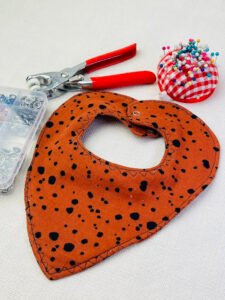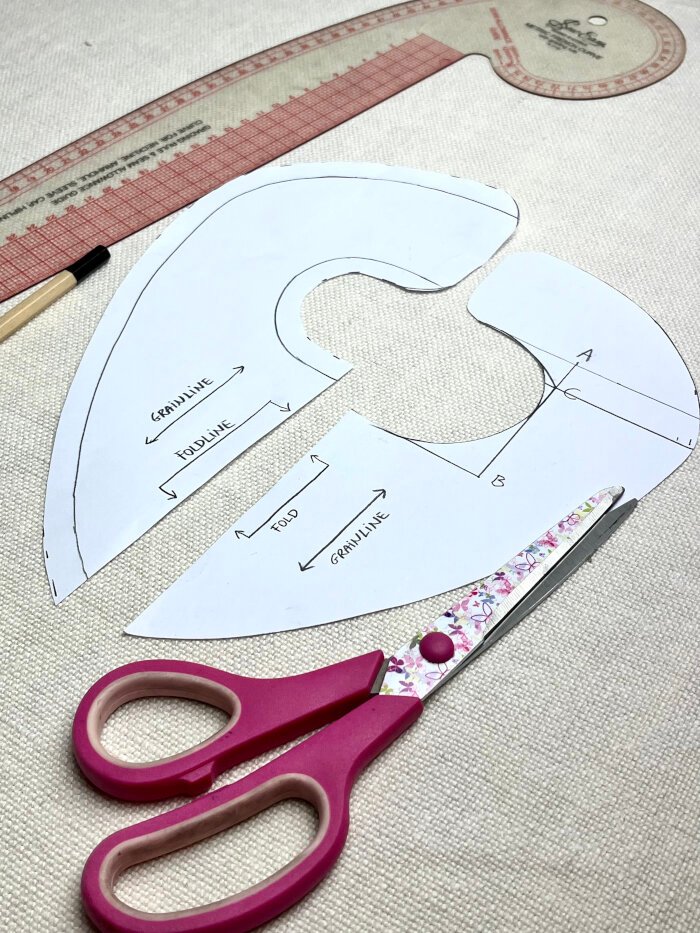
In this blog post, you’ll learn how to draft a baby drool bib pattern designed for heavy drooling and teething. This bib shape covers the key wet areas around the neck, chest, and shoulders, helping to keep baby’s clothes dry underneath. In a separate follow-up post, I’ll show you how to sew the drool bib step by step.
Let’s be honest, at this stage in baby’s life they definitely do not enjoy being changed into a new outfit. My firstborn definitely did not drool and I could not figure out what’s the point of these tiny bibs. Not until the second one turned up with a drool that could take out some minor fires. However, I realised that not all baby bibs are designed with the right shape or absorbency for teething babies.
Why Drool Bib Shape Matters for Teething Babies
If you have observed the wet zone on a soaked baby’s top, you will not that the wetness does not just cover the front of their chest. The drool lands even on the shoulders as baby twists and turns and look at the world around them.
There is nothing worse than chaffed skin on baby’s face, neck or chest. Or changing a baby into a new outfit when the previous has been soaked though or the bib did not quite cover all the areas. I definitely do not enjoy making my little one upset with frequent outfit changes. While letting the drool to air dry in hot summer is not entirely a bad idea, for the rest of the seasons the wetness will make baby cold and uncomfortable. From personal experience, I still remember how uncomfortable chafed skin felt after wearing a wet scarf in cold weather. And while babies cannot advocate for themselves clearly, I will attempt design a drool bib pattern that prioritises comfort, coverage, and practicality.
Best Bib Shapes for Heavy Drooling (Bandana vs Full Bib)
If you search fort eh bibs on the market, you will see two major types of the bibs – a full baby bib and a bandana bib. While I absolutely love the shape of a bandana and how it appears to be a part of the outfit, the wet folds touching my baby’s face is not something that sits nicely with me.
On the other hand, the full bibs do not quite cover the shoulders enough and their wide shape interferes with the baby’s arm movements.
In this tutorial, I combine the best features of both styles and add a few functional improvements to create a baby drool bib pattern that works for most teething babies.
Tools and Materials Needed to Draft a Baby Bib Pattern
These tools are required to draft a baby drool bib pattern accurately from measurements.
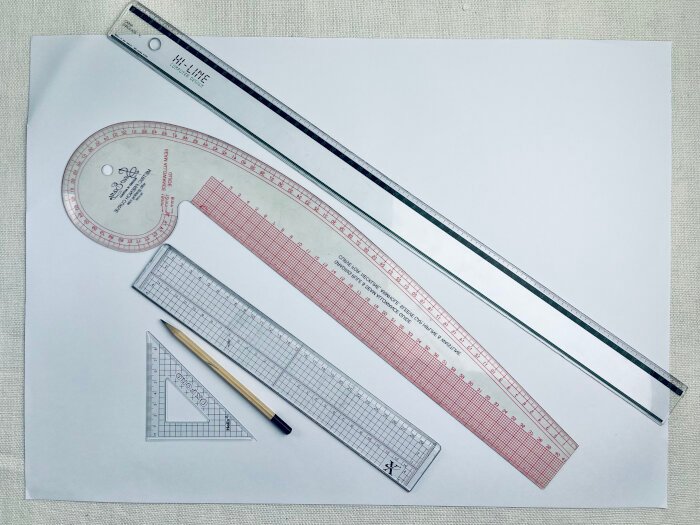
- A piece of paper that is large enough to include the pattern – A4 is sufficient
- Sharp pencil
- Pencil eraser
- Square ruler (a small triangle ruler from a typical Maths set is fine)
- A long ruler (around 30 cm long)
- French curve
How to Measure a Baby for a Drool Bib Pattern
In this tutorial I will make one-size baby drool bib pattern to fit babies from 3 months to up to 2 years. If you’d prefer a custom fit, you’ll need the following measurements:
- Baby’s neck circumference
- Shoulder length (from neck base to shoulder edge)
- Front bib depth (from neckline down to desired coverage)
In the next section, I’ll explain exactly how to convert these measurements into the pattern.
Neck sizes by age group
- Up to 3months – 22 cm
- 3 – 6 months – 23 cm
- 6 – 12 months – 24 cm
- 12-18 months -25 cm
- 18 – 24 months – 26 cm
Shoulder length by age group
- Up to 3 months – 4 cm
- 3 – 6 months – 4.5 cm
- 6 – 12 months – 5 cm
- 12-18 months -5.5 cm
- 18 – 24 months – 6 cm
Drafting the Baby Drool Bib Pattern (Step-by-Step)
Follow these step-by-step instructions to draft a baby drool bib pattern suitable for teething and heavy drooling.
Step 1 – Draft the Neckline
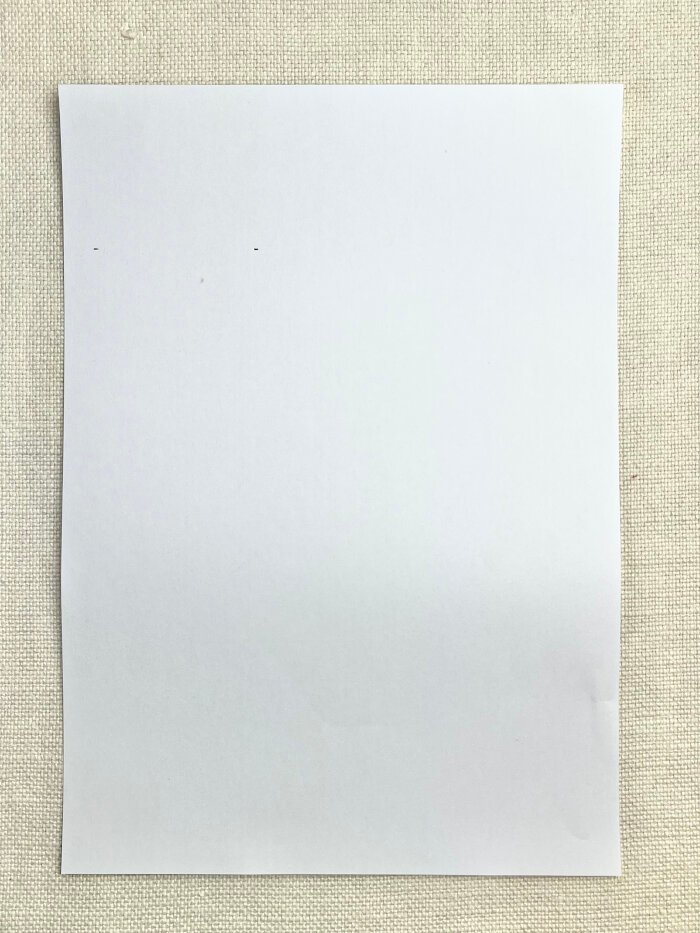
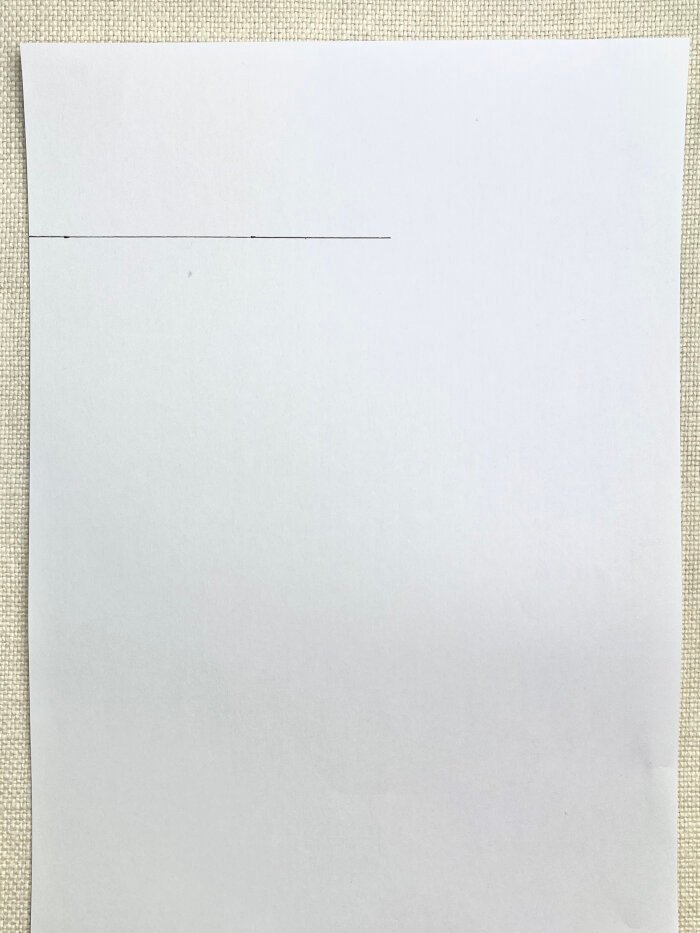
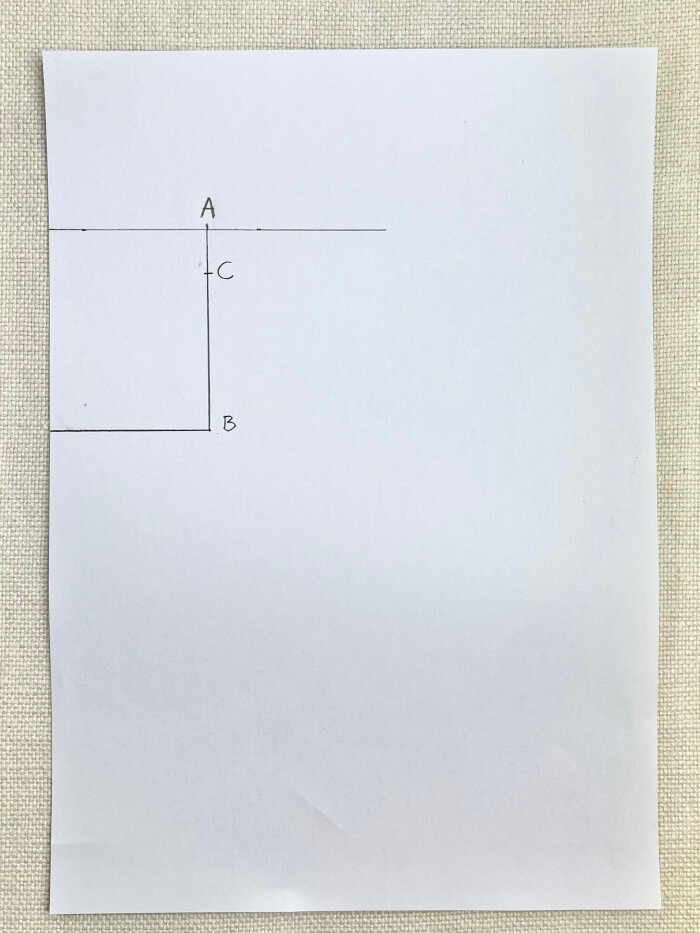
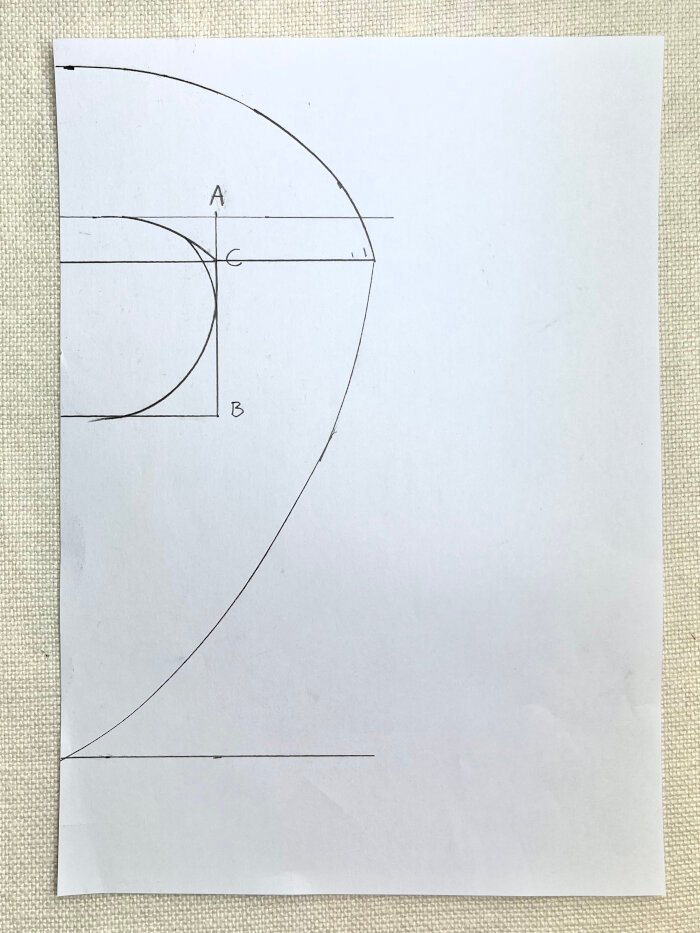
At the top of an A4 sheet of paper, mark two dots, each 6 cm down from the top edge. Connect these dots with a straight line — this line represents the depth of the back neckline. The left edge of the paper will act as the centre fold line for the front of the bib and the back seam for the back part of the bib.
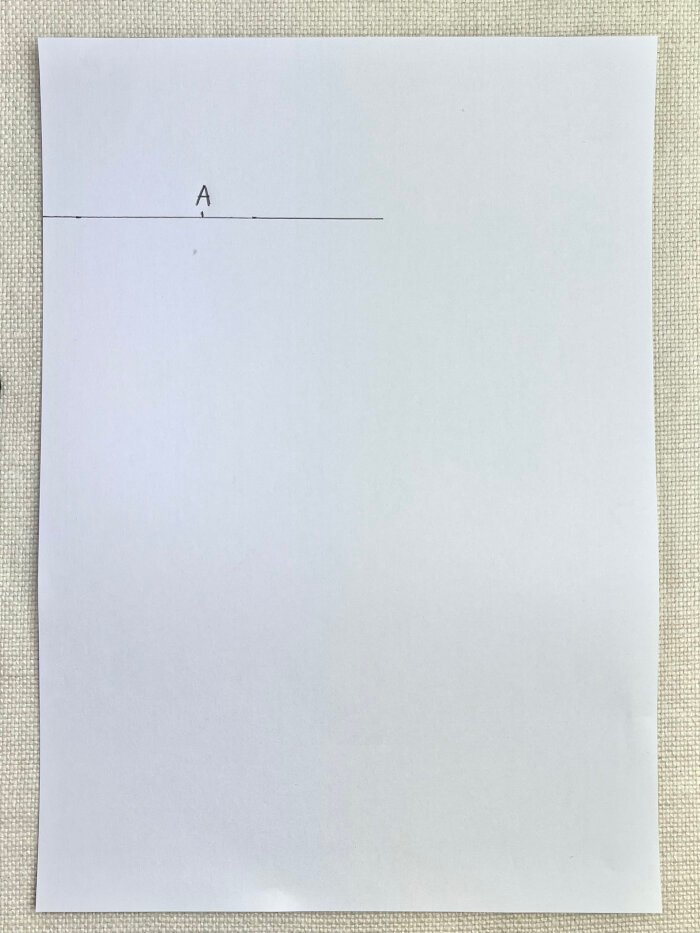
On this line, mark a point A , 5.5 cm from the left edge. This is the width of the neckline opening. For a custom-sized bib, use one-fifth of the baby’s neck measurement instead.
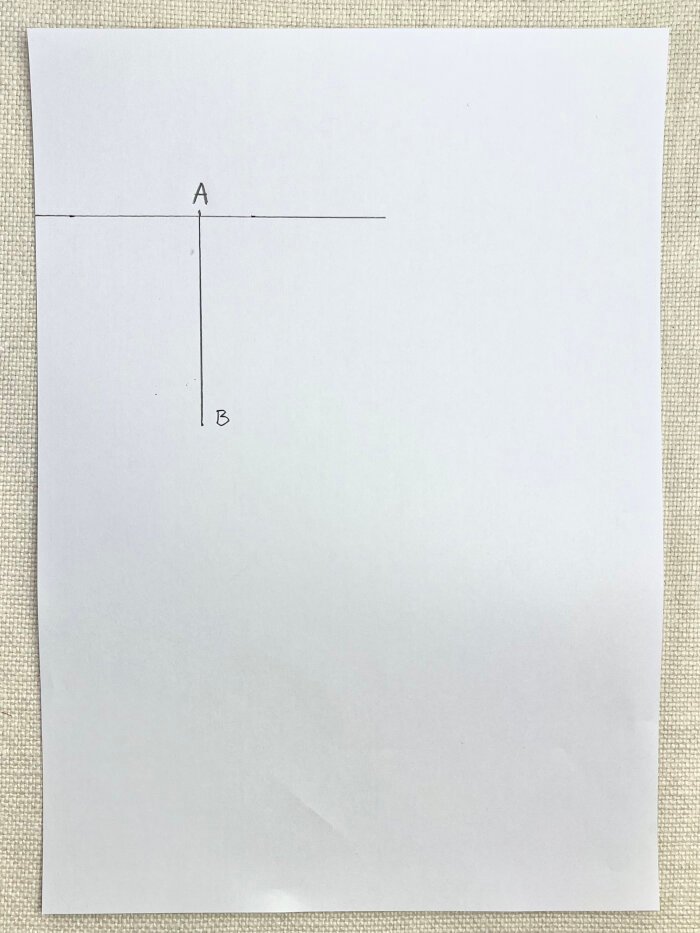
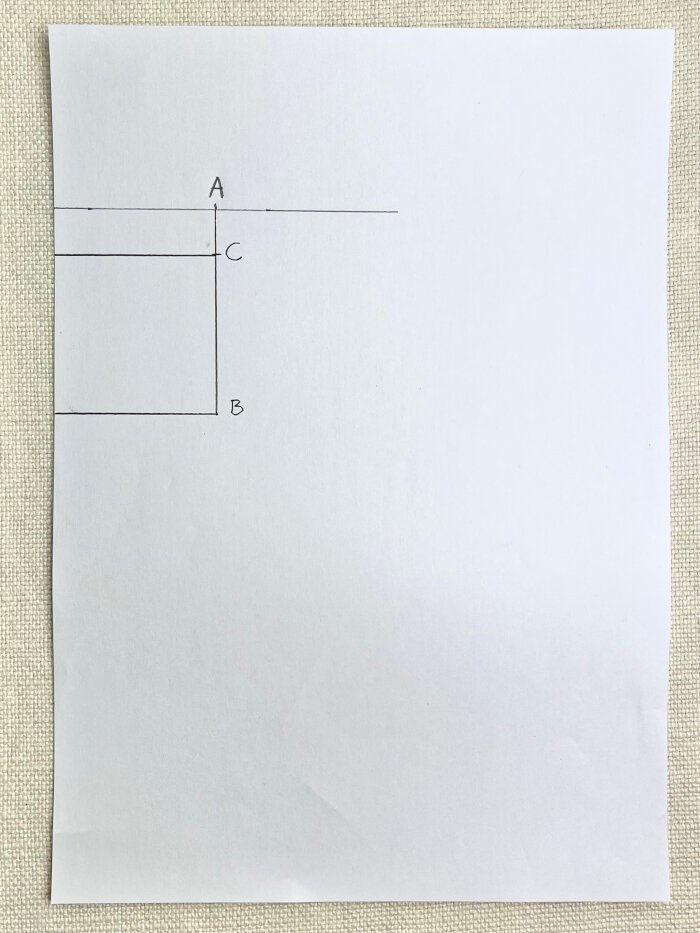
Square down 7 cm to point B. From point B, square all the way to the left edge of the sheet. This is the depth of the front neckline. For a custom sized bib, instead of 7cm square down one fifth of the neck measurement plus 1.5cm.
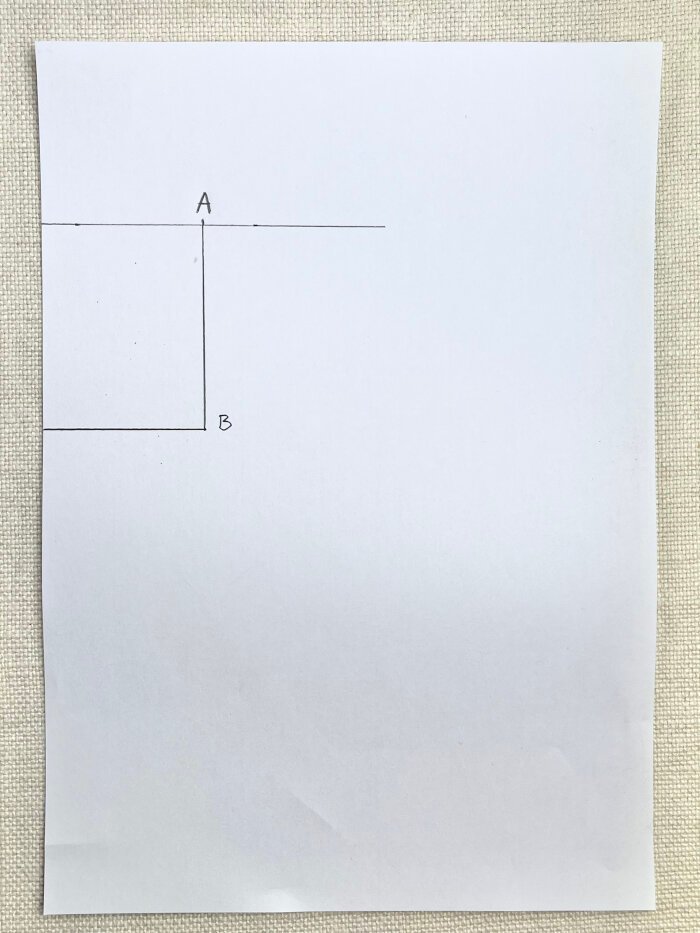
Then, from Point A measure down 1.5cm to point C on A-B line. Square to the left edge. This line will be the point at which the back neckline turns into a front neck line.
Step 2 – Draw a Neckline Curve with a French Curve
With a French curve or freehand, draw a curve from the edge of the paper along the top line to point C. This is the back neckline.
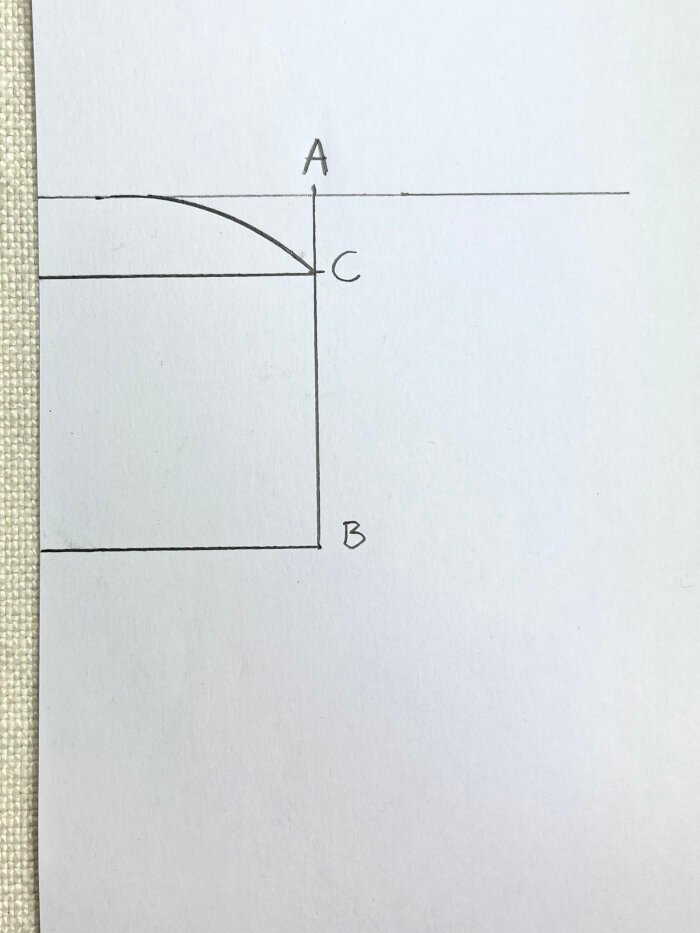
Then, draw a front neckline from the edge of the paper, along the bottom line to point C.
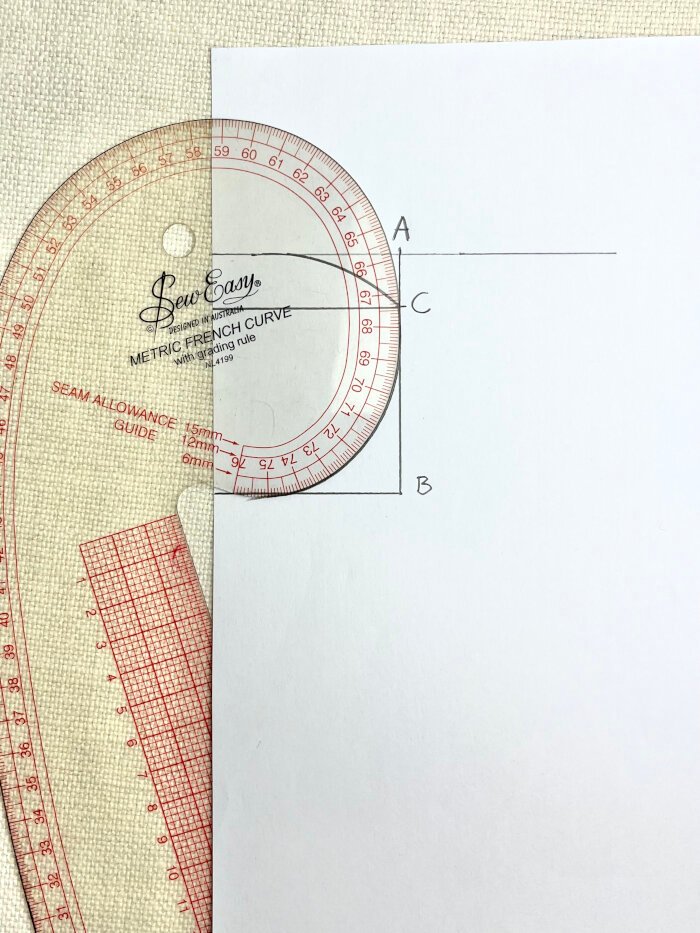
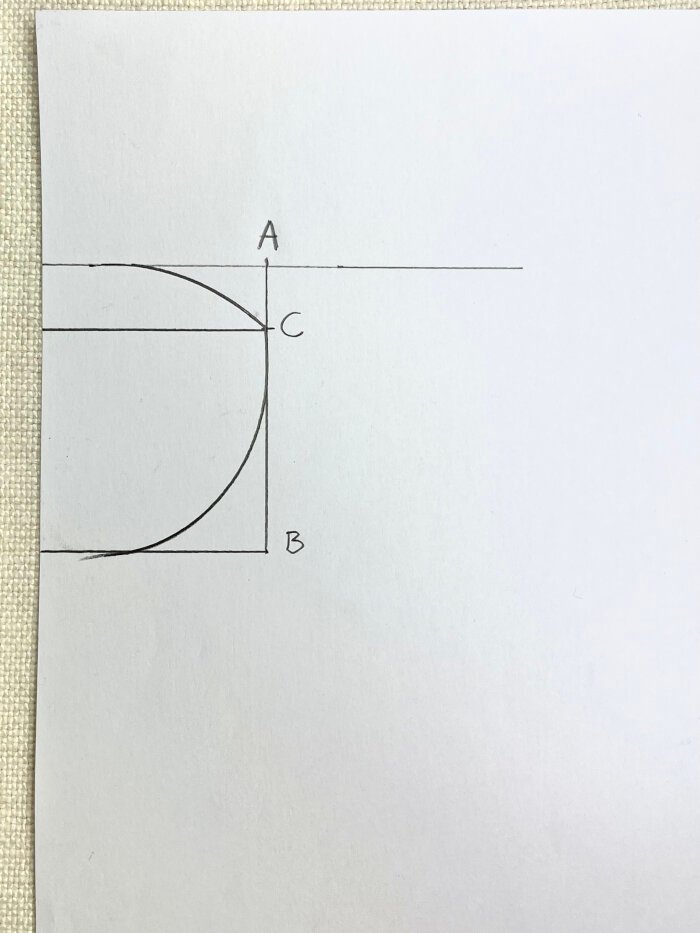
Next, smooth out the connection point at C to have a rounded transition rather than a sharp corner. It will make easier to sew the bib.
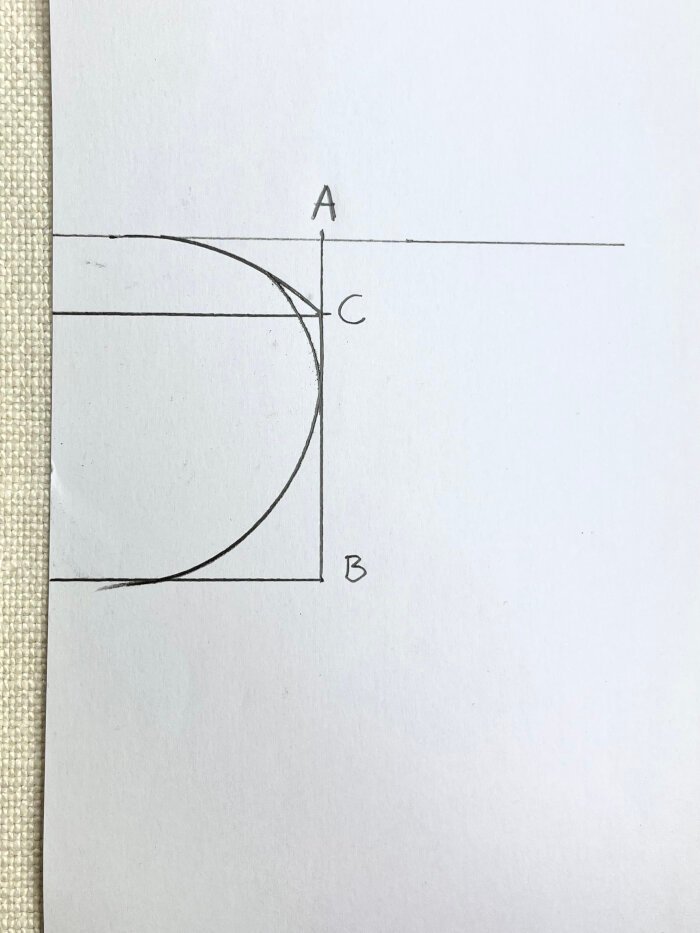
Step 3 – Draft the Depth of the Bib
Then extend the line drawn to the point C to be 11 cm long. For a custom fit, extend the length to be one fifth of the neck measurement plus the shoulder width instead.
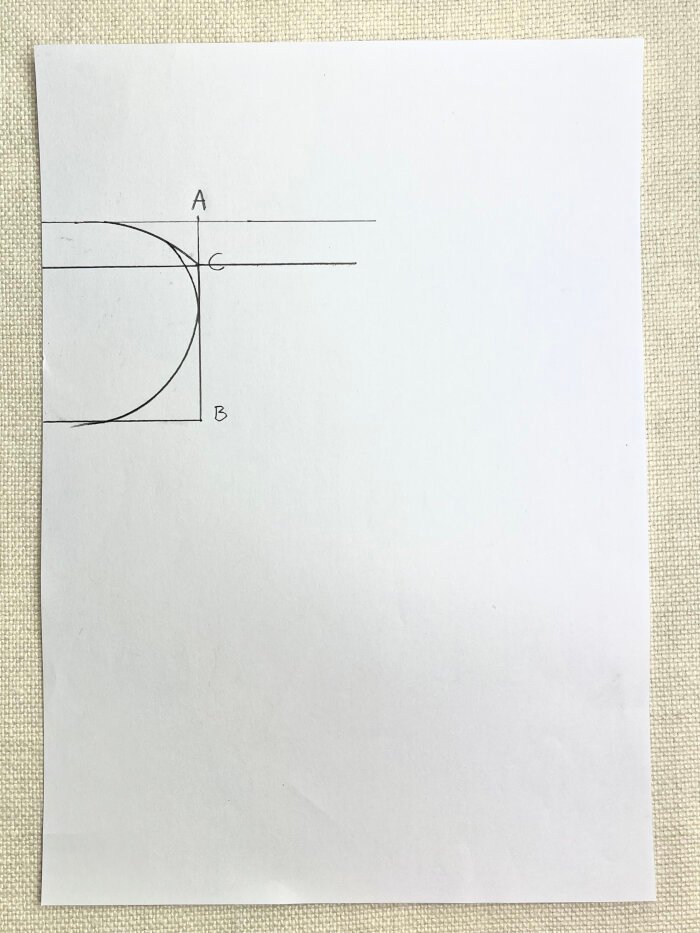
Then mark two dots 12 cm below the line going to point B. For a custom fit, use the neck to front depth measurement of your choice. Connect both dots with a straight line, extending the line to be approximately 11 cm long.
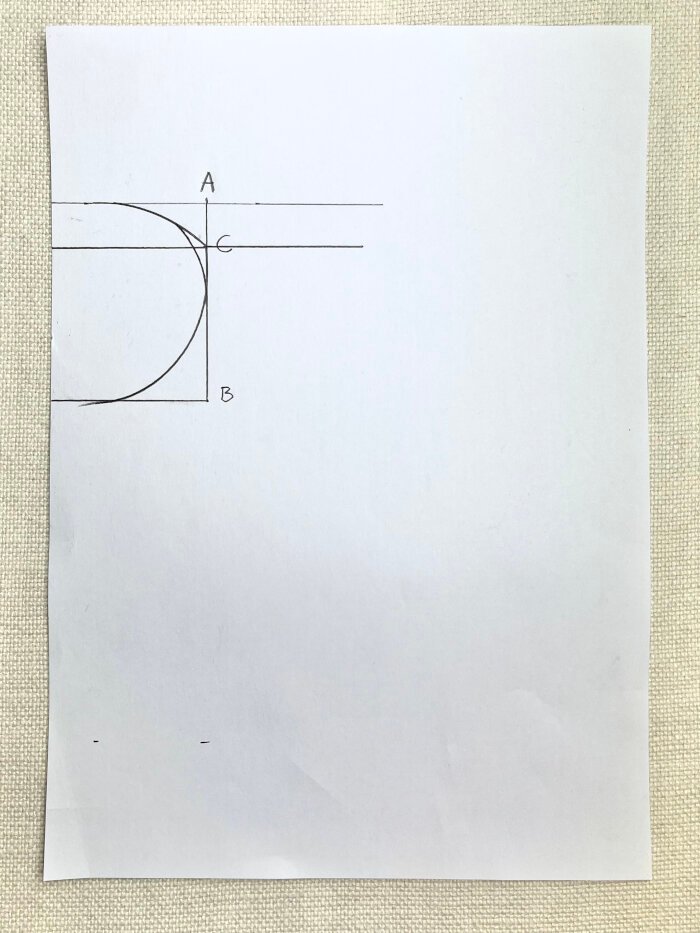
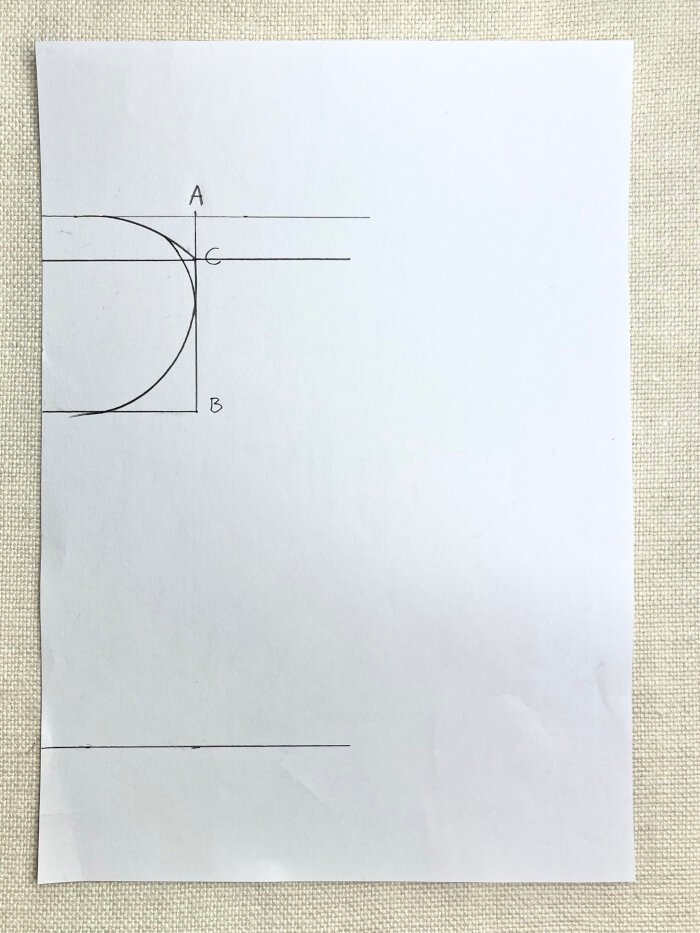
Connect the end of the line that goes through point C with the line you draw in the previous step with a curved line. Here you can make it as wide as you want or as pointy as you want. I like to keep mine quite tapered so that the resulting bib does not interfere with the baby’s arm movements.
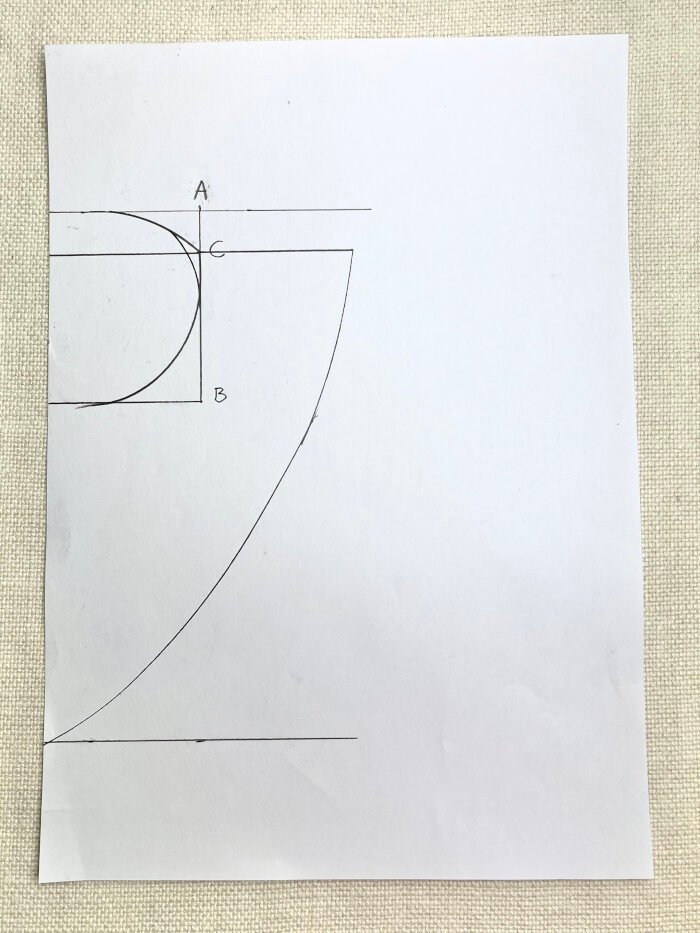
Next, with a ruler mark some dots 5 cm away from the back neck line, indicating the width of the back of the DIY baby drool bib. Closer to the shoulder line (the line going through point C), you will need to mark some dots that are 5.5 cm from the neck line, to smoothly connect with the front of the bib. For a custom fit, the back width should be the one fifth of the neck measurement.
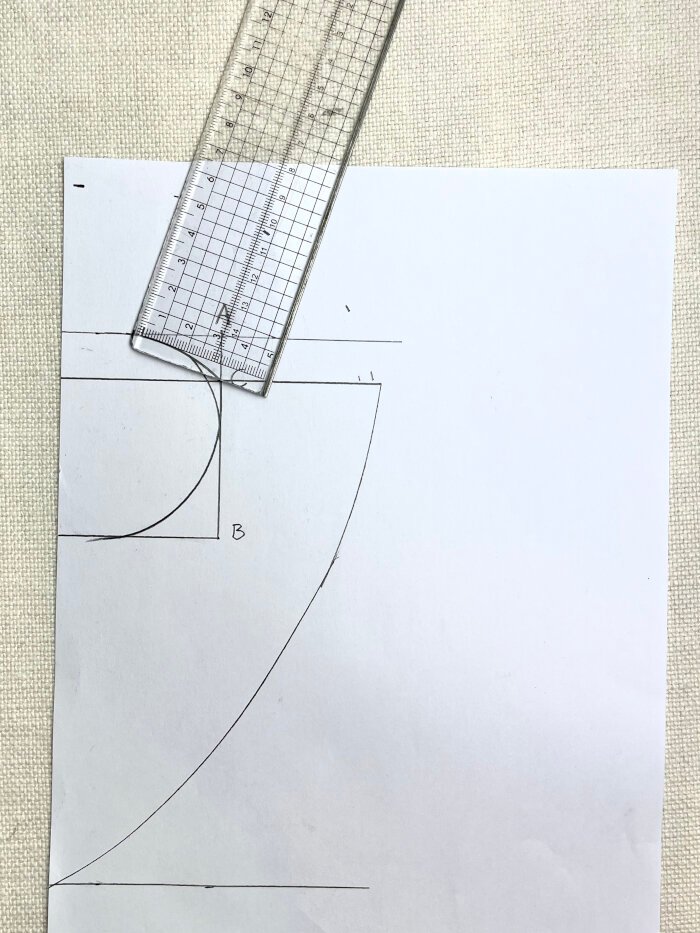
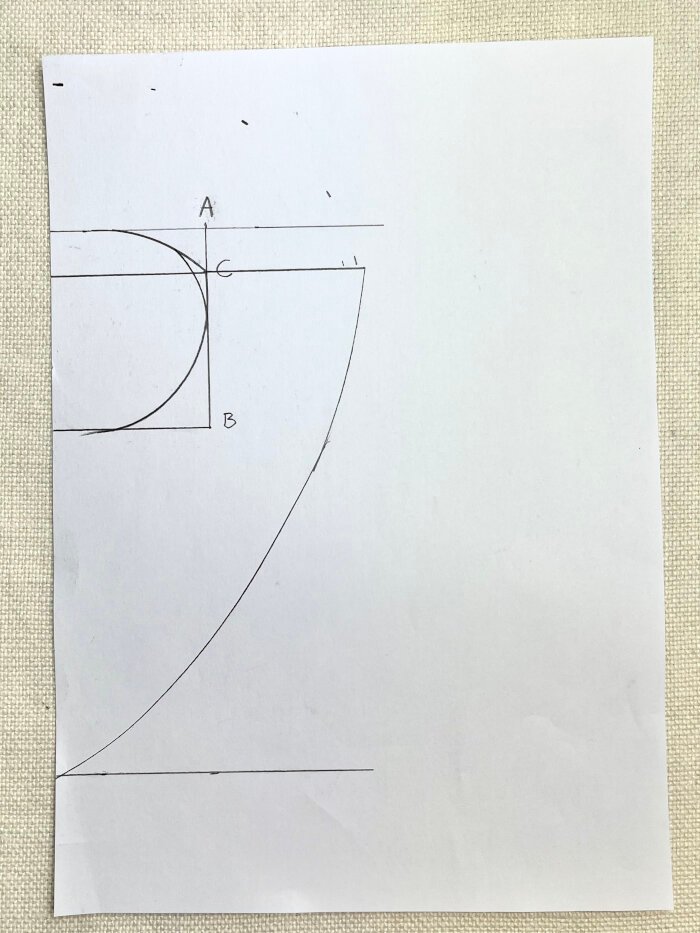
Then, either freehand or with the help of the French curve, connect these dots to form the back of the bib.
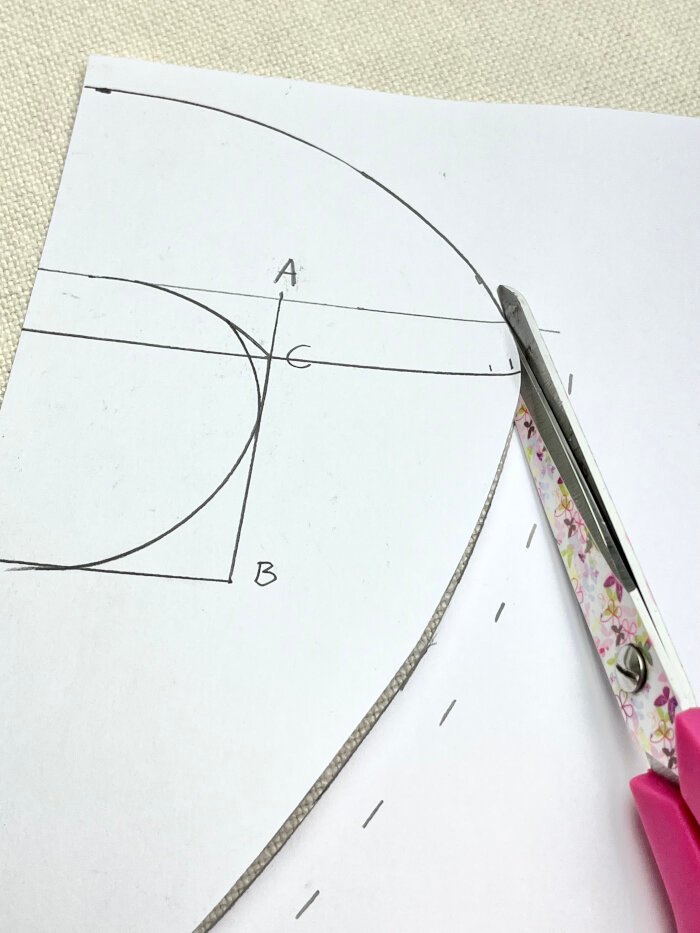
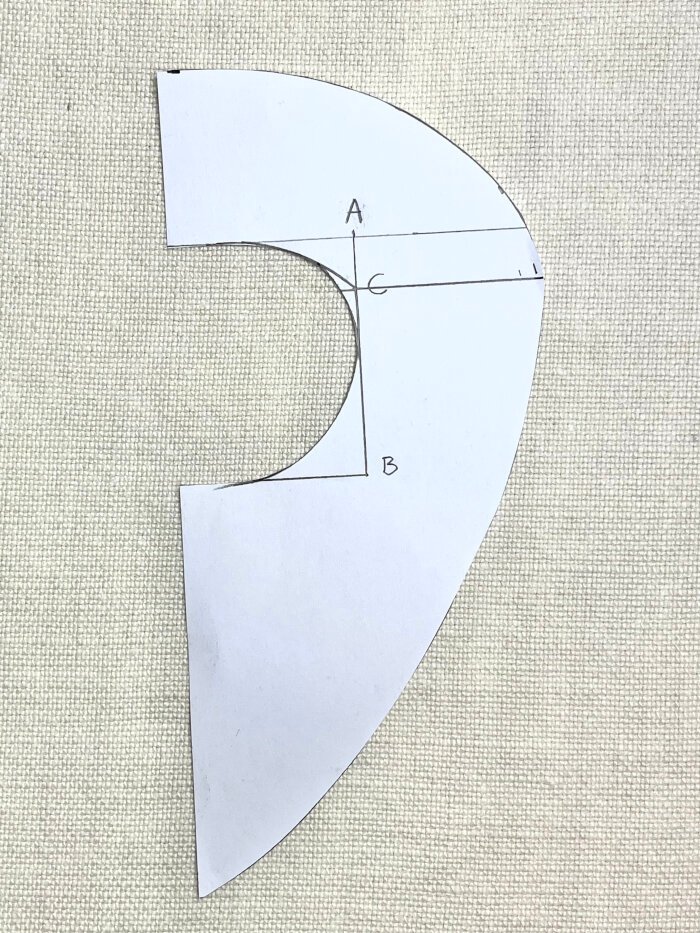
Next, cut out the bib shape with scissors. This will be a pattern for the inside layer of the bib.
Adding Seam Allowance and Grainline
Once the baby drool bib pattern is drafted, the next step is adding seam allowances and marking the grainline to prepare the pattern for cutting fabric.
To do that place the bib back on the back of the same sheet of paper if there is enough space, or on a new A4 sheet of paper, with the centre fold line on the edge of the paper. I had to turn my pattern upside down to fit. Then trace the shape on the paper. We are tracing a new pattern because the first one without the seam allowances will be used for inside absorbent layer.
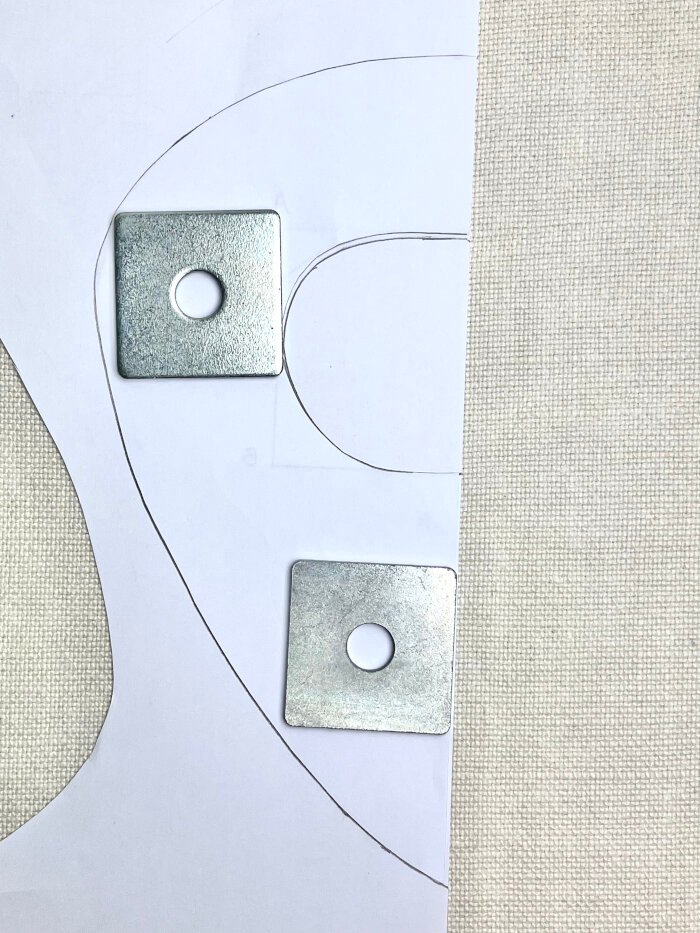
Then add 1cm seam allowance by marking dots 1cm from the traced line along the side of the bib and at the neckline.
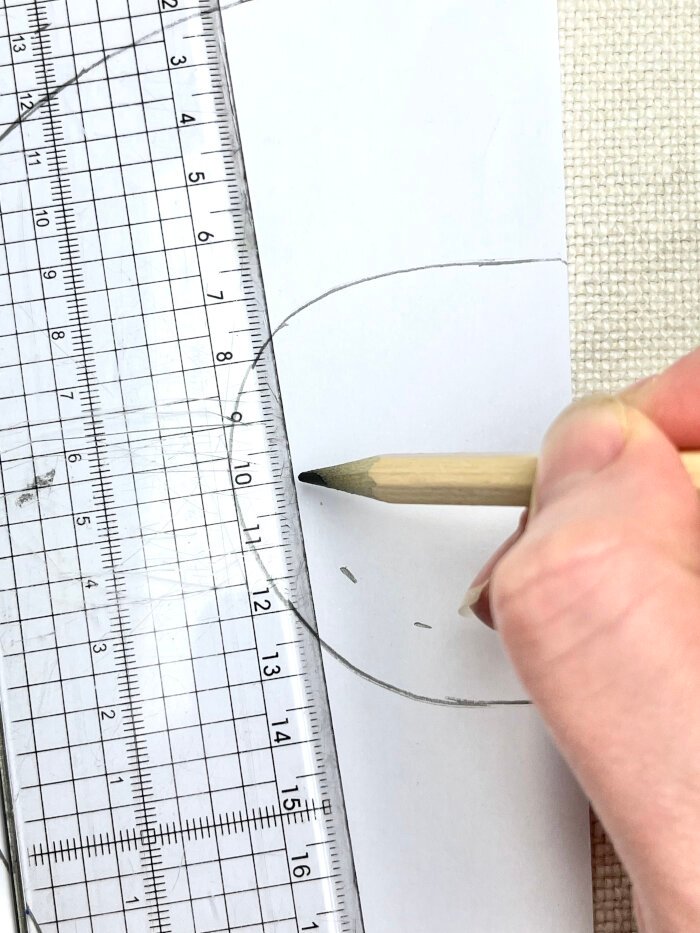
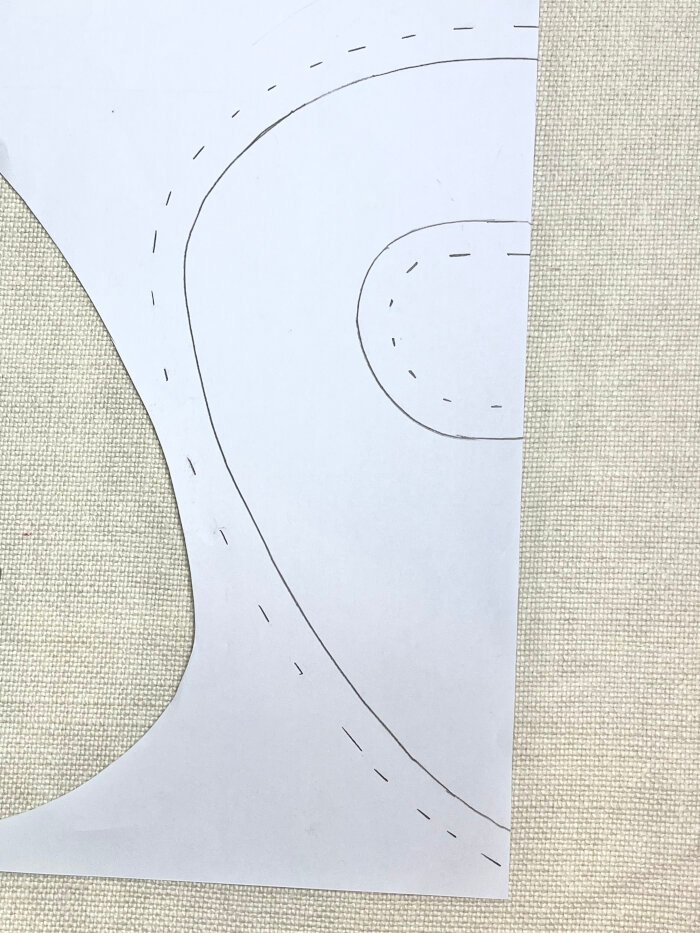
Cut the outside and the back layer for the bib along the seam allowance line.
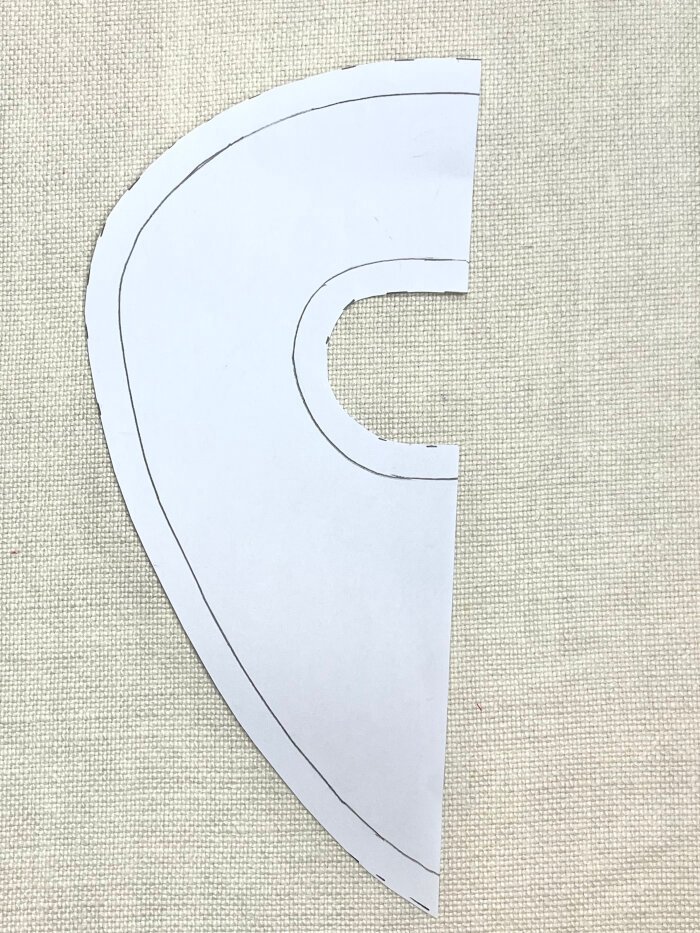
If you want to, you can round the corners on the back part of the bib, for both the inside and the outside layers.
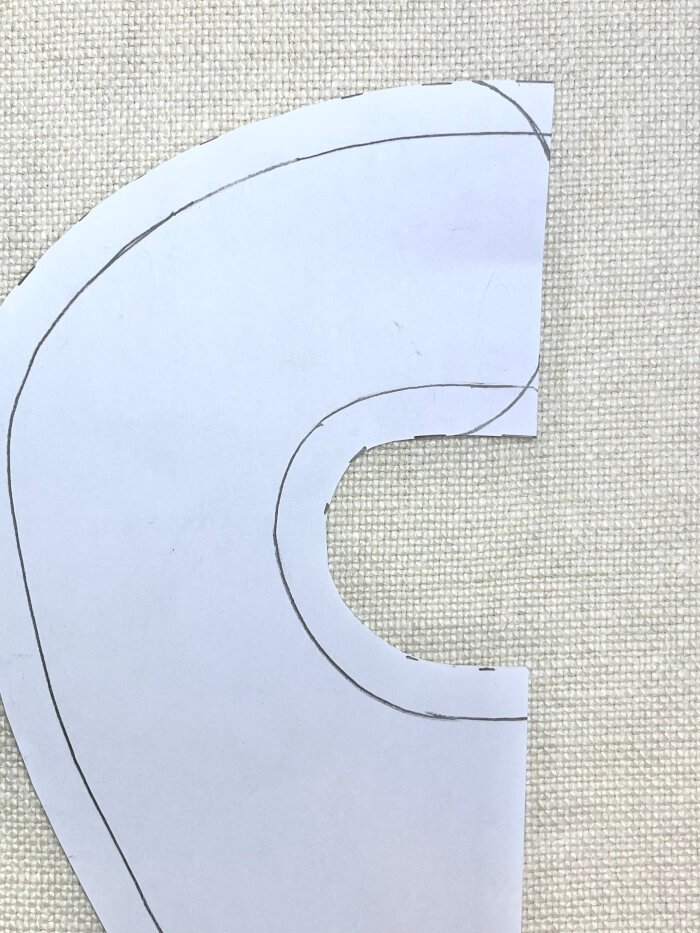
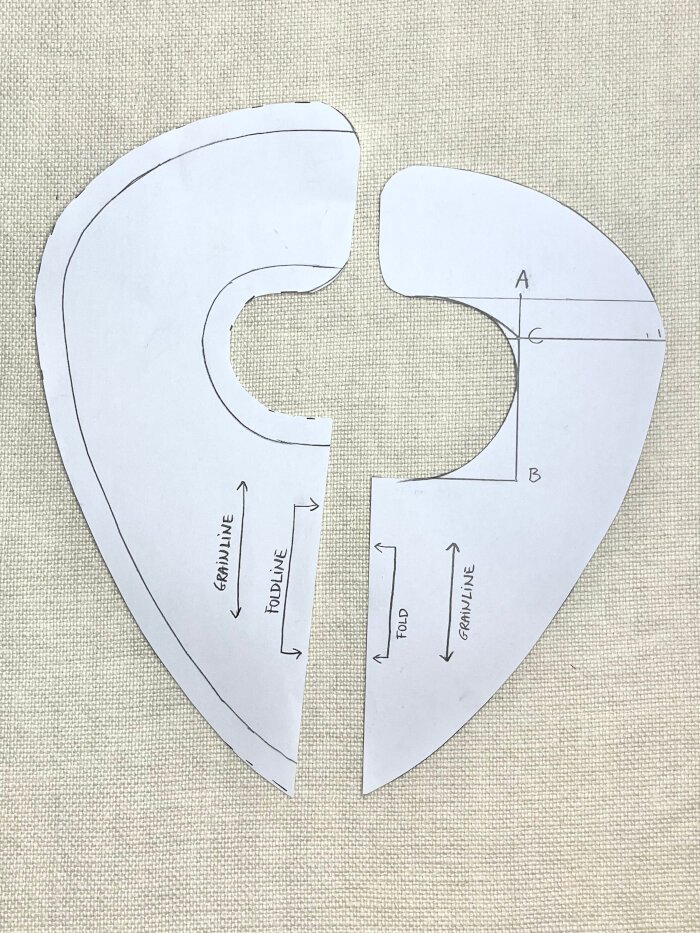
Mark the fold line and the grainline on both pattern pieces.
Adjusting the Pattern for Different Ages (Newborn–Toddler)
The visual guide shown here demonstrates a one-size teething bib pattern, but you can easily adjust the measurements to draft a custom baby drool bib for newborns through toddler sizes. Throughout the drafting steps, I’ve indicated exactly where to substitute your own measurements for neck size, shoulder width, and bib depth.
If you prefer to use the baby bib pattern that I created in this post, you can download it by subscribing to my newsletter.
Sewing Next Steps
Once your baby drool bib pattern is complete, you’re ready to move on to construction. In my next blog post, I’ll walk you through how to sew a super-absorbent baby drool bib step by step, including fabric choices and finishing tips.
Related: How to Sew a Super-Absorbent Baby Drool Bib (Beginner-Friendly Tutorial)
About the Author: Pattern Drafting & Garment Sewing

I’ve been sewing for over 30 years and drafting my own patterns for more than a decade. I work almost exclusively with self-drafted patterns, which means I don’t rely on instructions—I rely on understanding how garments fit and come together.
Most of my methods come from figuring things out through testing, adjusting, and breaking down common problem areas using logic and geometry rather than guesswork.
On this site, I share step-by-step tutorials on pattern drafting, garment construction, and sewing techniques to help you create well-fitted, professional-looking clothes from scratch.
👉 Read more about my approach to pattern drafting and sewing here: About Me